SAN FRANCISCO--(BUSINESS WIRE)--May 11, 2026--
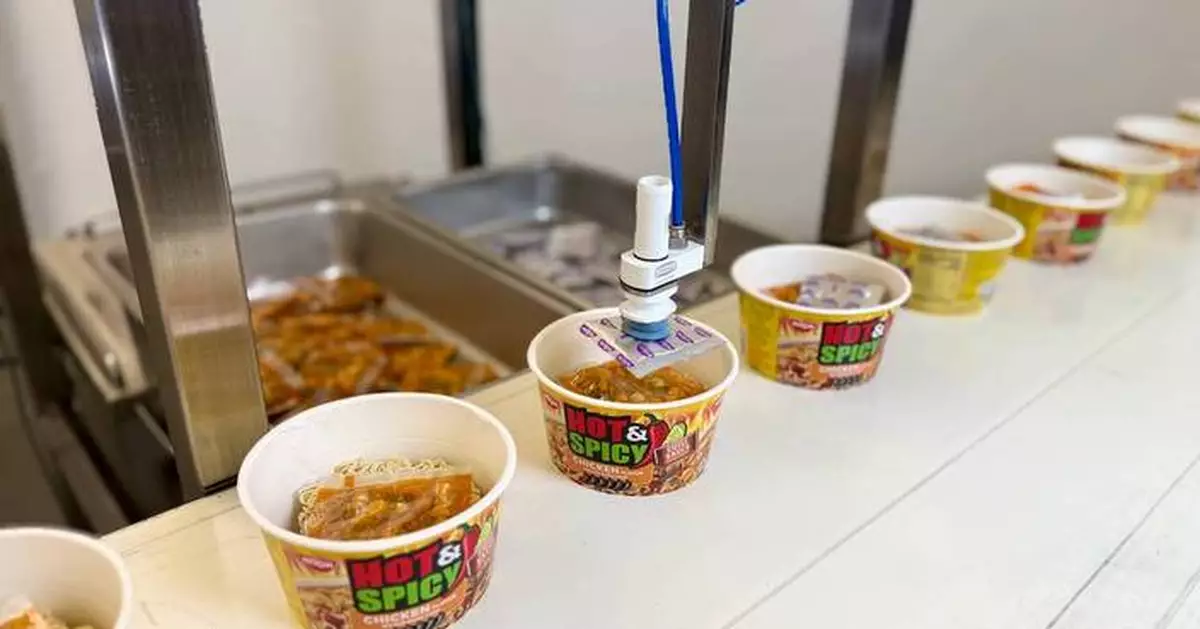
Chef Robotics, a leader in physical AI for the food industry, today announced that Chef robots can now automate secondary packaging and kitting automation for consumer packaged goods (CPG) lines. The application places discrete items such as sauce sachets, seasoning packets, garnish toppers, dried proteins, foil-sealed pouches, and other irregular inclusions into cups, bowls, trays, and packaging containers. The capability is not limited to edible ingredients; Chef robots can also place non-food inserts such as plastic-wrapped cutlery kits, desiccant packets, folded instruction cards, and even non-consumable items (i.e., shaving kits, accessory packs for MRE assembly).
This press release features multimedia. View the full release here: https://www.businesswire.com/news/home/20260511526181/en/
The most common applications for Chef’s CPG line automation include shelf-stable products like instant noodles and ramen bowl assembly, multi-compartment trays, global meal kits with sauce pouches and bread accompaniments, premium snack cups with toppers, and any product that requires a cutlery drop.
Watch Chef robots in action.
CPG assembly lines have historically relied on manual labor for secondary packaging. Unlike scoopable ingredients or whole produce, these items are often lightweight, flat, and deformable. A sauce sachet, a folded cutlery pouch, and a dried shrimp packet each behave differently in a bin; they crinkle, shift, and sit at different angles after every pick. This variability has made it challenging for automation systems to handle these items reliably at production speed, leaving food manufacturers dependent on manual labor to staff this step.
To address this problem, Chef built its CPG assembly application on its existing piece-picking capability. Using AI-powered computer vision, Chef robots assess each item’s position, shape, and orientation in real time and determine how to pick and place it precisely into the correct location within each bowl, cup, or tray without damaging it. Chef’s physical AI models are trained across diverse real-world production environments, allowing robots to adapt to pose variability in items within unstructured bins without requiring any pre-sorting or fixed bin placement.
The CPG assembly application introduces three distinct placement capabilities.
First, Chef’s vision system detects each item’s orientation in the bin and reorients it mid-pick so it arrives at the exact angle required, regardless of its orientation in the source container. This enables precise angular placement for SKUs that require sachets, pouches, or cutlery packs to land in a specific position.
Second, Chef robots can pick and place multiple components, for example, placing several seasoning sachets into the same bowl in a single automated pass, completing the full packaging step without any manual intervention between picks.
Third, for products with multiple compartments, each holding a different item, Chef’s AI vision model detects the position and orientation of each compartment in real time, ensuring each section receives the correct item without migrating into adjacent areas.
For food manufacturers, the CPG assembly application offers higher throughput, lower labor dependency, and consistent item placement across shifts. The capability runs on Chef’s existing robotic hardware and software, allowing manufacturers to deploy it without changing existing line infrastructure.
Chef’s CPG assembly application is available in the US, Canada, the UK, and Germany, and is included as part of Chef’s robotics-as-a-service (RaaS) pricing model.
About Chef Robotics
Chef is the first company to have commercialized a scalable AI-driven food robotics solution. With over 100 million servings made in production, Chef leverages ChefOS, an AI platform for food manipulation, to offer a Robotics-as-a-Service solution that helps industry-leading food companies increase production volume and meet demand. Headquartered in San Francisco, CA, Chef aims to empower humans to do what humans do best by accelerating the advent of intelligent machines. Visit https://chefrobotics.ai to learn more.
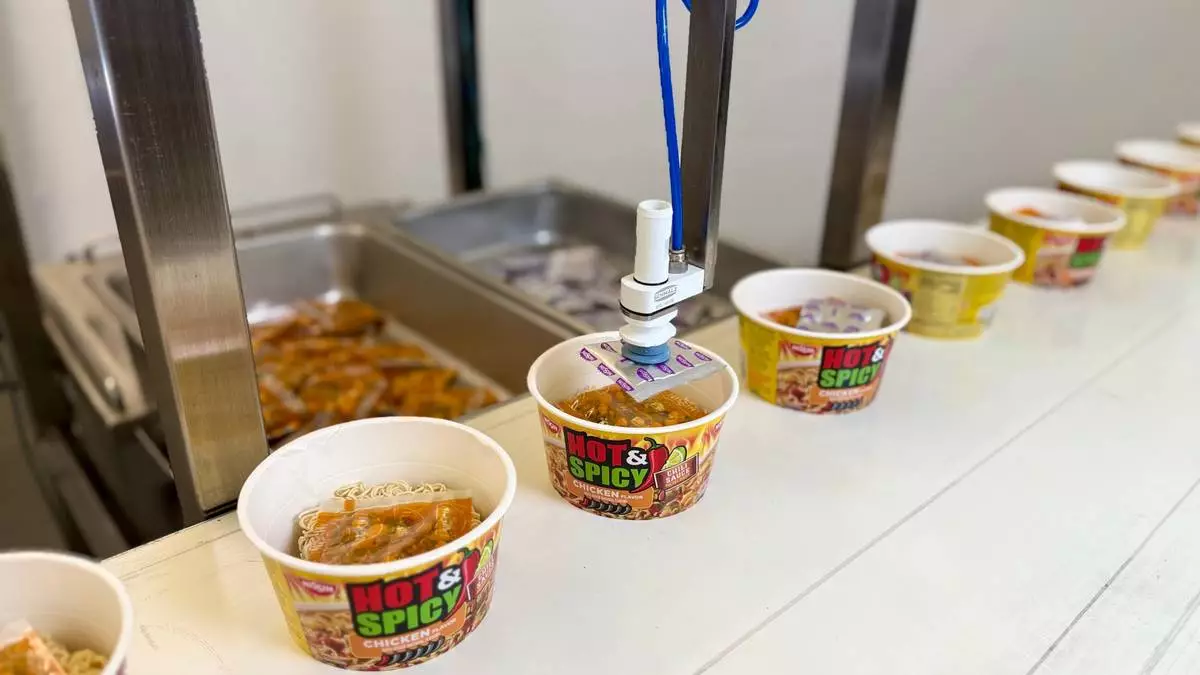
The most common applications for Chef’s CPG line automation include shelf-stable products like instant noodles and ramen bowl assembly.
DUBAI, United Arab Emirates (AP) — U.S. President Donald Trump on Monday said the Iran ceasefire is on “life support” after he rejected Tehran’s latest proposal to end the war. Officials said the proposal included some concessions on Iran's disputed nuclear program, but Trump dismissed it as “garbage.”
The stalled diplomacy and recent exchanges of fire could tip the Middle East back into open warfare and prolong the worldwide energy crisis sparked by the conflict, with Iran’s chokehold on the Strait of Hormuz and America’s blockade of Iranian ports still in place.
Asked at an unrelated White House event if the ceasefire was still in place, Trump said it’s “unbelievably weak” and on “life support.”
“I would call it the weakest right now after reading that piece of garbage they sent us,” Trump added. “I didn’t even finish reading it.”
Trump said he would suspend the federal tax on gasoline to help Americans shoulder higher fuel prices caused by the war.
Trump is expected to use a trip this week to China to urge President Xi Jinping to pressure Iran. Beijing is the biggest buyer of Iran’s sanctioned crude oil, giving it leverage.
But the U.S. and Iran remain far apart on a host of issues. Trump has demanded a major rollback of Iran’s nuclear activities, while Iran is pushing for a more limited agreement that would reopen the strait and lift the blockade ahead of further negotiations.
Two regional officials told The Associated Press that Iran has offered to dilute part of its highly enriched uranium and transport the rest to a third country. Russia has previously offered to take it. The officials spoke on condition of anonymity to discuss the sensitive diplomacy.
Trump has demanded that the nuclear material be removed completely, and is unlikely to accept other Iranian proposals for the formalization of its control of the strait and for U.S. reparations.
Trump said Sunday that Iran’s response to his latest proposal was “TOTALLY UNACCEPTABLE!” Ending the blockade before discussing Iran’s nuclear program would eliminate a major point of leverage for Trump.
In the meantime, the standoff over the strait, which is a key transit point for the world's oil and natural gas exports, has sent fuel prices skyrocketing and rattled world markets.
Israeli Prime Minister Benjamin Netanyahu, who launched the war with Trump on Feb. 28, insisted that the conflict was “not over,” telling CBS’ “60 Minutes” in an interview that aired Sunday that a critical goal is getting the nuclear material out of Iran. If that can't be accomplished with negotiations, Netanyahu said that Israel and the U.S. agree “we can reengage them militarily.”
Netanyahu also said the current Iranian government's “days are numbered — but it could take a lot of days.”
The U.S. and Israel have killed dozens of high-ranking Iranian officials, including the country’s supreme leader in the opening salvos of the war, and the conflict has inflicted heavy damage to Iran’s economy, but its theocracy maintains its grip on power.
Iran's proposal asked that the U.S. recognize its sovereignty over the Strait of Hormuz, formalizing its control over the international waterway. Iran has effectively closed the strait since the start of the war, allowing only a small number of ships to pass and charging tolls.
But experts say such an arrangement would likely violate international law that provides for freedom of navigation. That proposal is also likely to be widely rejected by the international community. The strait was open to international traffic before the war.
Iran is also demanding war reparations from the U.S., the lifting of international sanctions, the unfreezing of Iranian assets held abroad and an end to the war between Israel and Lebanon's Iran-backed Hezbollah, according to Iranian state TV.
Israel and Hezbollah have continued to exchange blows, mainly in southern Lebanon, since a nominal ceasefire took hold last month.
“We did not demand any concessions — the only thing we demanded was Iran’s legitimate rights,” Iranian Foreign Ministry spokesman Esmail Baghaei said Monday. “The American side still insists on its one-sided views and unreasonable demands.”
Iran still insists on its right to enrich uranium and that its nuclear program is entirely peaceful. The U.S., Israel and others have long accused it of seeking a nuclear weapon and want most of its program dismantled.
Two regional diplomats familiar with the ongoing talks said that Pakistan was continuing its efforts to broker a compromise.
One of the diplomats said Pakistan was trying to arrange a memorandum of understanding aimed at ending the war and paving the way for a broader dialogue on issues where the two sides remain divided.
Pakistan had hoped to help finalize the memorandum last week, but the effort did not materialize, and mediators are still working on various proposals, the diplomat said.
The diplomat, speaking on condition of anonymity to discuss the behind-the-scenes diplomacy, added that Islamabad is receiving support from other regional countries in its peace efforts.
Meanwhile, Iran executed another man it accused of spying for both the CIA and Israel's Mossad intelligence service. Iran's state-run IRNA news agency said Erfan Shakourzadeh had worked on satellite communications and relayed classified information to those intelligence services.
Iran has carried out a string of executions since nationwide protests swept the country in January. Activist groups have long accused Iran of carrying out closed-door trials during which defendants are unable to fully defend themselves. Iran's judiciary chief has repeatedly said that Tehran would increase the speed with which it carried out hangings to fight back against its enemies at home and abroad.
Magdy reported from Cairo. Associated Press reporter Munir Ahmed in Islamabad contributed.
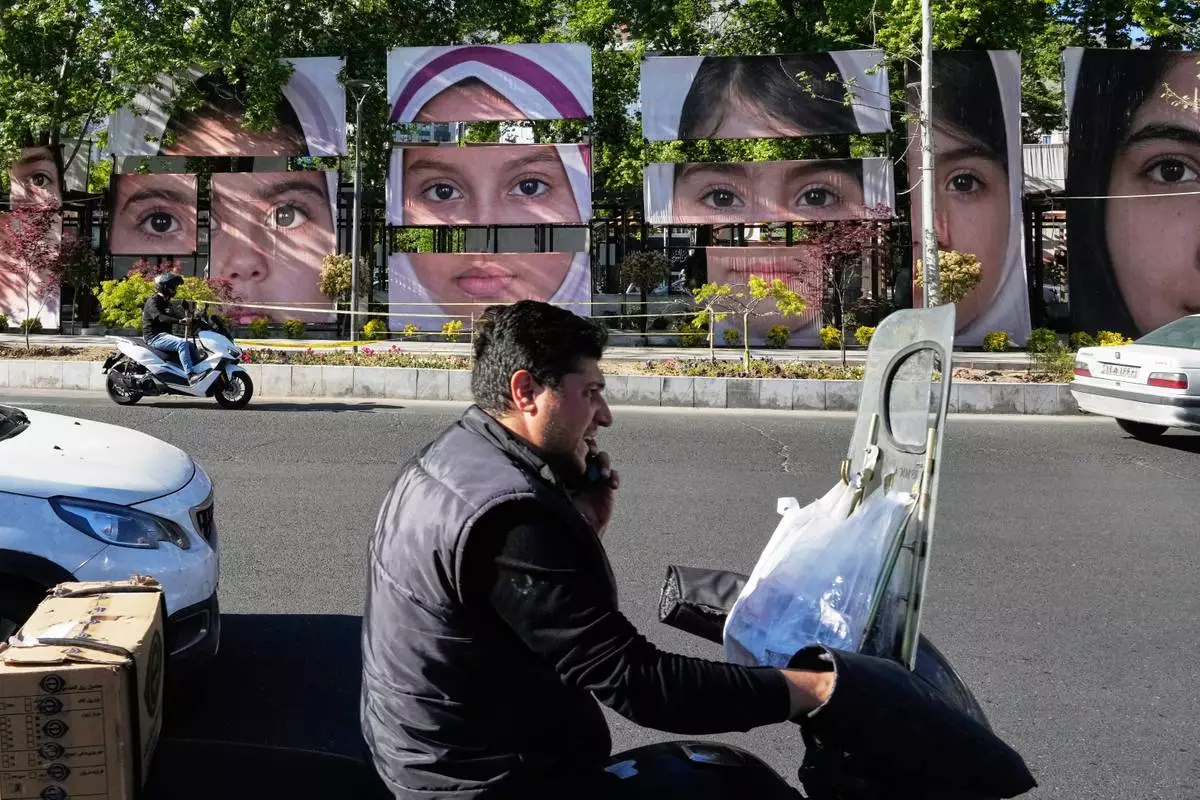
Vehicles drive past banners showing portraits of the school children who were killed during a strike on a school in southern town of Minab on Feb. 28, at Tajrish square in northern Tehran, Iran, Sunday, May 10, 2026. (AP Photo/Vahid Salemi)
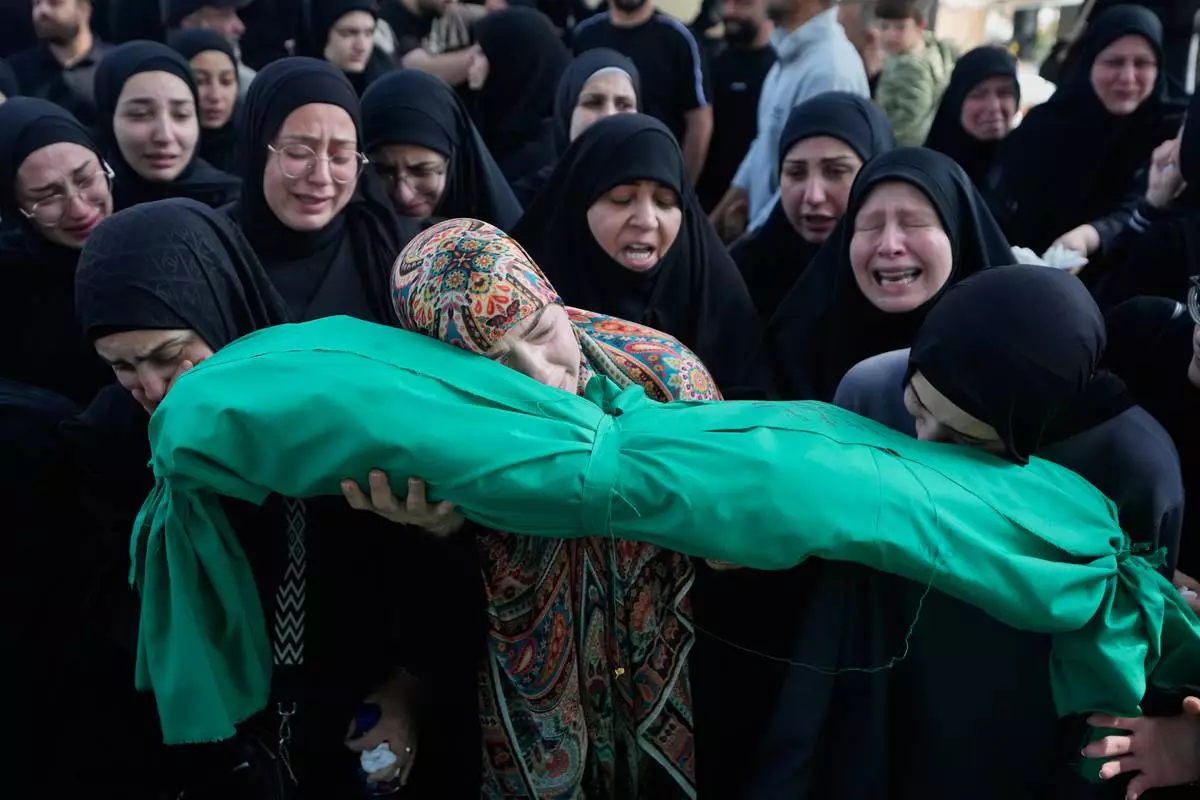
Women grieve as they carry the body of 6-month-old Mariam Fahos during a funeral procession for people killed a day earlier in an Israeli airstrike in the village of Saksakieh, in the southern port city of Sidon, Lebanon, Sunday, May 10, 2026. (AP Photo/Mohammed Zaatari)
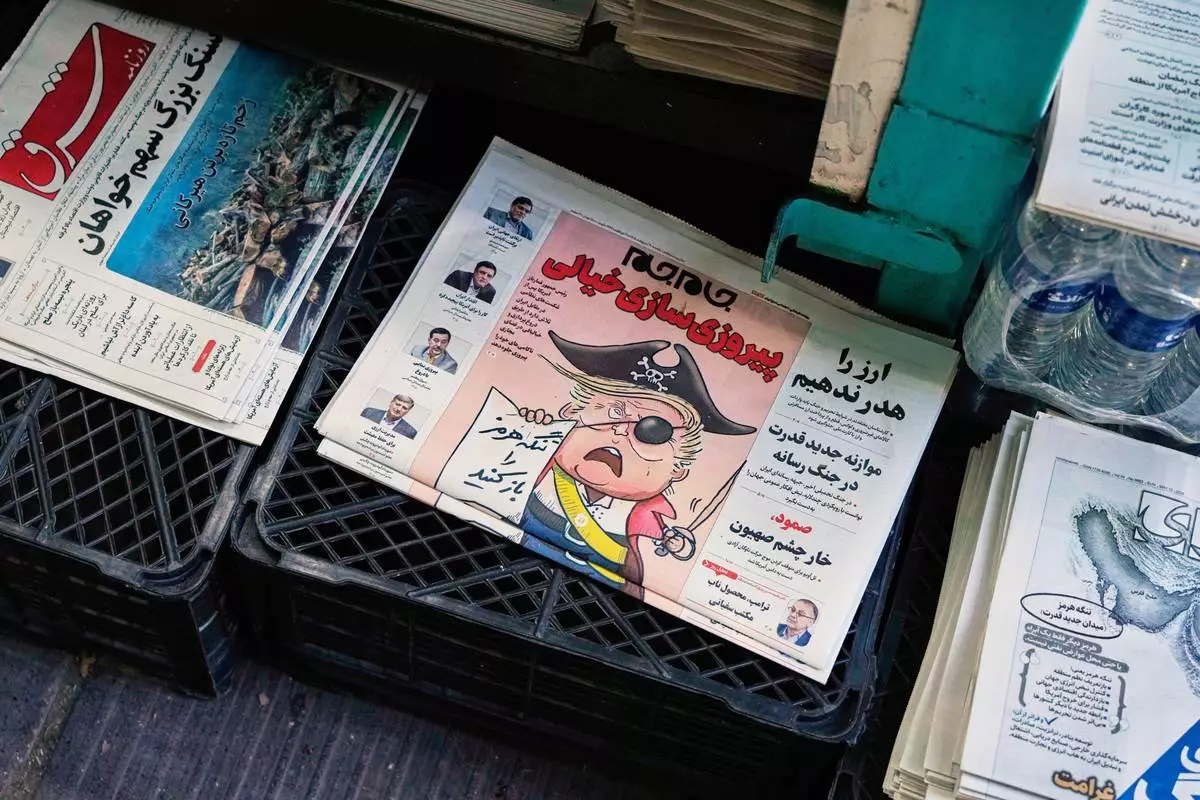
The front page of the Sunday May 10, 2026, edition of Iranian newspaper, Jamejam, is seen with a cartoon satirizing the U.S. President Donald Trump that asks: "Open the the Strait of Hormuz" on a news stand in northern Tehran, Iran, Sunday, May 10, 2026. (AP Photo/Vahid Salemi)
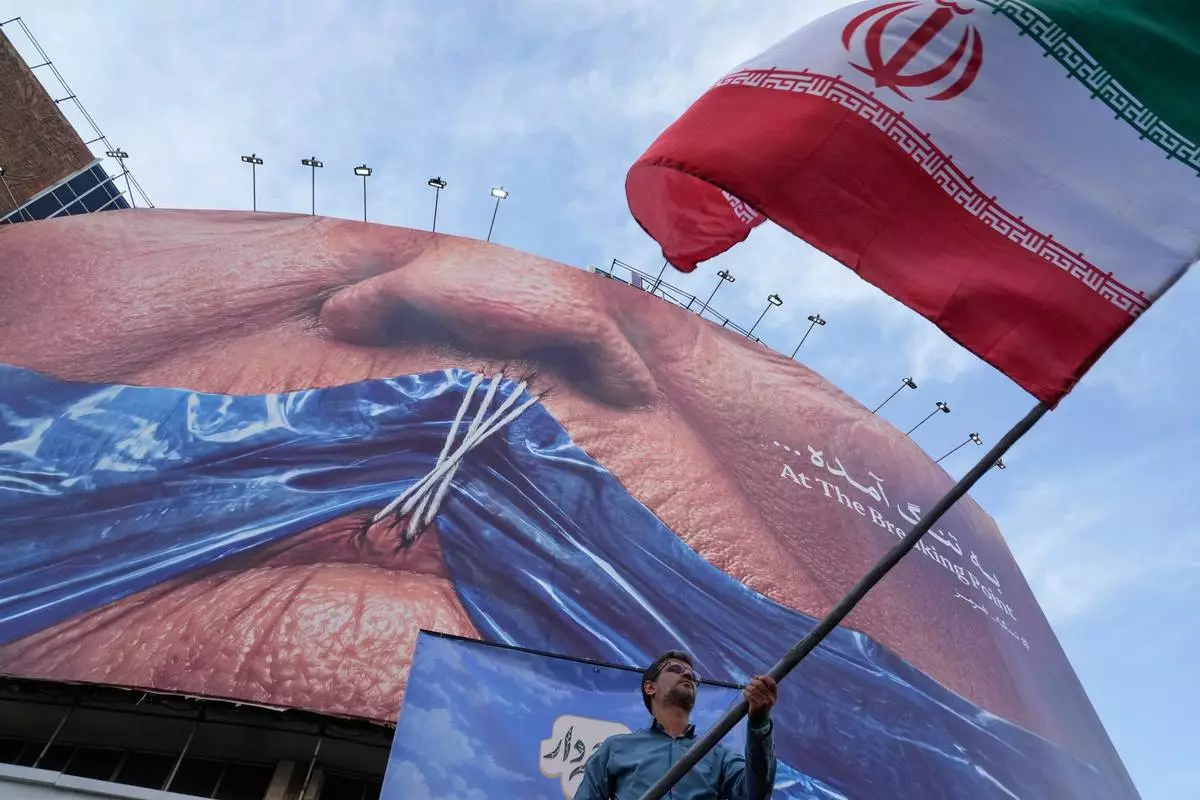
A man waves an Iranian flag for a pro-government campaign under a billboard with graphic showing Strait of Hormuz and sewn lips of U.S. President Donald Trump in a square in downtown Tehran, Iran, Wednesday, May 6, 2026. (AP Photo/Vahid Salemi)
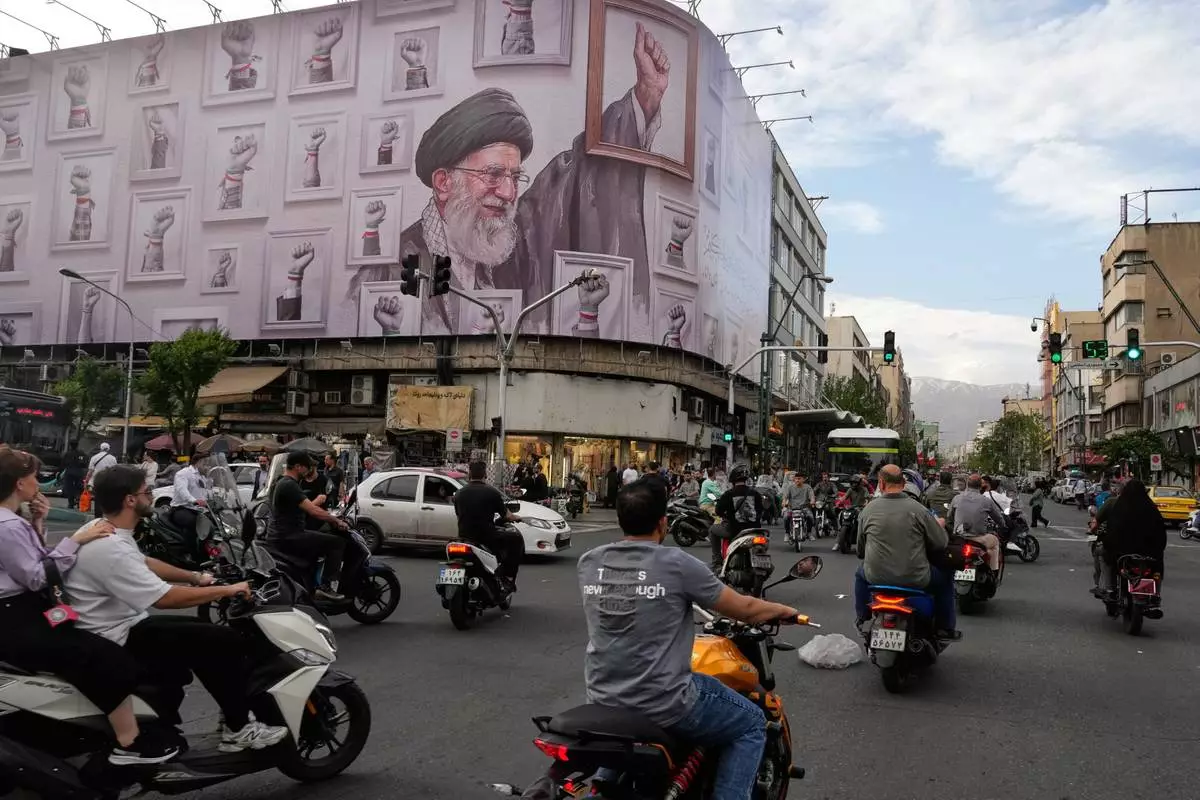
Motorbikes drive past a billboard with graphic showing the late Iranian Supreme Leader Ayatollah Ali Khamenei, who was killed in the U.S. and Israel strikes on Feb. 28, with his framed fist amongst his supporters framed fists in downtown Tehran, Iran, Wednesday, May 6, 2026. (AP Photo/Vahid Salemi)