Skip to Content Facebook Feature Image

Supreme Court halts order for Alabama to use US House map with 2 largely Black districts

News

Supreme Court halts order for Alabama to use US House map with 2 largely Black districts
News

News

Supreme Court halts order for Alabama to use US House map with 2 largely Black districts

2026-05-12 08:19 Last Updated At:08:20

WASHINGTON (AP) — The U.S. Supreme Court on Monday set the stage for Alabama to eliminate one of two largely Black congressional districts before this year’s midterm elections, creating an opening for Republicans to gain an additional U.S. House seat in a partisan battle for control of the closely divided chamber.

The decision follows a Supreme Court ruling in April that struck down a majority-Black U.S. House district in Louisiana as an unconstitutional racial gerrymander, significantly weakening a provision of the federal Voting Rights Act.

Alabama officials had pointed to the Louisiana case as reason for the Supreme Court to end a judicial order to use a court-imposed House map until after the 2030 census. The high court on Monday overturned that order and directed a lower court to reconsider the case in light of the Louisiana decision. That could free the state to instead use a map approved in 2023 by the Republican-led legislature that includes only one district where Black residents comprise a majority.

Anticipating a court reversal, Alabama officials recently enacted a law allowing it to void the results of a May 19 primary for some congressional districts and instead hold a new primary under the revised district boundaries. Alabama had asked for an expedited decision ahead of the primary.

Alabama Republicans praised the decision.

“Today, the Supreme Court vindicated the state’s long-held position. Now, the power to draw Alabama’s maps goes back to the people’s elected representatives. That’s our Legislature,” Alabama Attorney General Steve Marshall said in a video statement. Marshall said his job was “to put the legislature in the best possible legal position to draw a congressional map that favors Republicans seven-to-zero.” He concluded with the statement, “Stay tuned.”

Republican House Speaker Nathaniel Ledbetter called the decision “a massive victory not just for Alabama, but for conservatives across the country.”

In a dissent to Monday's brief ruling, Justice Sonia Sotomayor said the Louisiana case had reversed only one of the grounds upon which the Alabama case had been decided. Although the Voting Rights Act violation is gone, Sotomayor said a lower court could still find that Alabama had intentionally discriminated against Black voters in violation of the 14th Amendment.

The decision was a setback for Black residents and groups that had waged a legal fight for several years to get a second Alabama congressional district where Black voters had an opportunity to elect a candidate of their choice.

“We are witnessing a return to Jim Crow. And anybody who is alarmed by these developments — as everybody should be — better be making a plan to vote in November to put an end to this madness while we still can," NAACP National President Derrick Johnson said in a statement.

Deuel Ross, the NAACP Legal Defense Fund attorney who argued the Alabama case, said, "We will consider all of our options to fight to protect the rights of these voters and keep the court ordered map in place.”

Shalela Dowdy, a plaintiff in the Alabama redistricting case, said she was disappointed in the decision.

“For me, I feel like this is a step backwards towards the Jim Crow era for congressional representation. The state is not going to stop here,” Dowdy said, predicting Alabama will eventually go after the remaining district.

The decision comes a week ahead of the May 19 primaries, setting up a potentially confusing scenario for voters. Alabama lawmakers last week approved legislation to allow special primaries in four impacted congressional districts if the state is able to switch maps. The special elections would be set by the governor.

Alabama Secretary of State Wes Allen called the decision a “historic win for Alabama voters.” Allen said the May 19 primaries will proceed as scheduled and his office will remain in close contact with the governor’s office "as this situation continues developing.”

The change would give Republicans a chance to reclaim the district now represented by Rep. Shomari Figures, a Democrat. Figures was elected in 2024 under the court-ordered map. His election gave the state — where Black residents comprise more than one quarter of the population — two Black representatives in its congressional delegation for the first time in history.

Figures called the Supreme Court action an “incredibly unfortunate decision” that “sets the stage for Alabama to go back to the 1950s and '60s in terms of Black political representation in the state.”

Alabama is one of several states trying to change their congressional district boundaries before the November elections as part of a nationwide redistricting battle being won, so far, by Republicans.

Voting districts typically are redrawn once a decade, immediately after a census, to account for population changes. But President Donald Trump urged Texas Republicans last year to redraw congressional districts to their advantage in a bid to hold onto a narrow House majority in the midterm elections.

Democrats in California countered with their own redistricting. And numerous Republican-led states have followed. The high court’s Louisiana ruling provided fuel for Republicans to intensify their redistricting efforts.

So far, Republicans think they could win as many as 14 additional seats in the November elections from new districts enacted in Texas, Missouri, North Carolina, Ohio, Florida and Tennessee. Democrats think they could win up to six additional seats from new districts in California and Utah. But Democrats suffered a major setback when the Virginia Supreme Cour t overturned a voter-approved redistricting amendment that could have yielded four more seats for the party.

Lieb reported from Jefferson City, Missouri, and Chandler from Montgomery, Alabama.
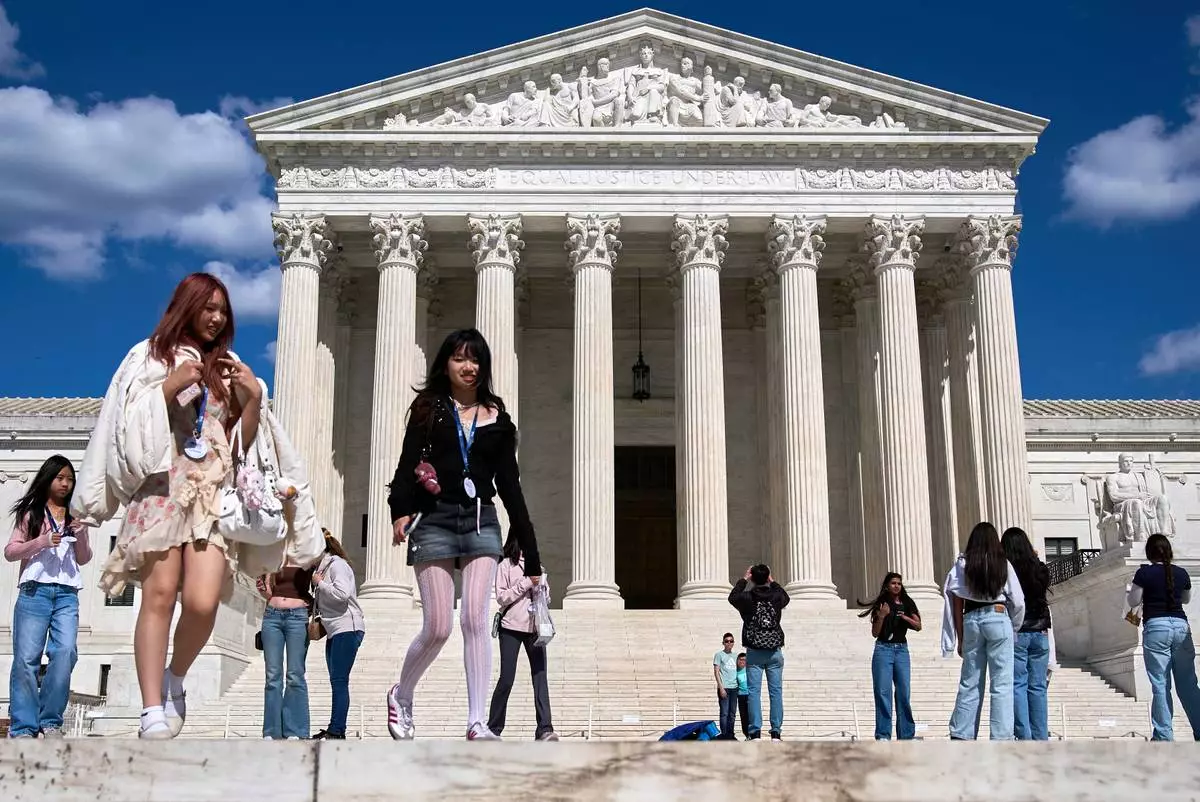
Students visit the Supreme Court, Thursday, April 30, 2026, in Washington. (AP Photo/Jacquelyn Martin)
Students visit the Supreme Court, Thursday, April 30, 2026, in Washington. (AP Photo/Jacquelyn Martin)

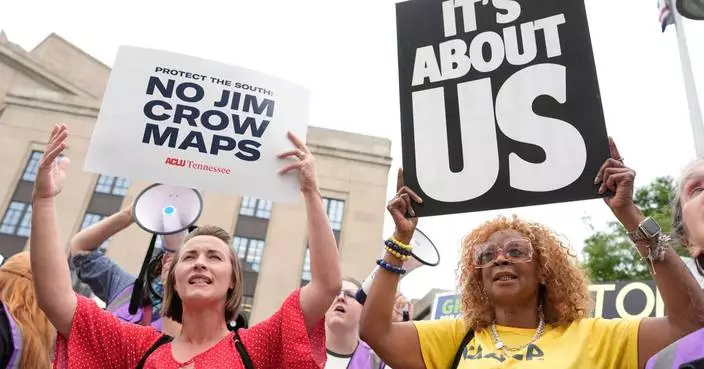
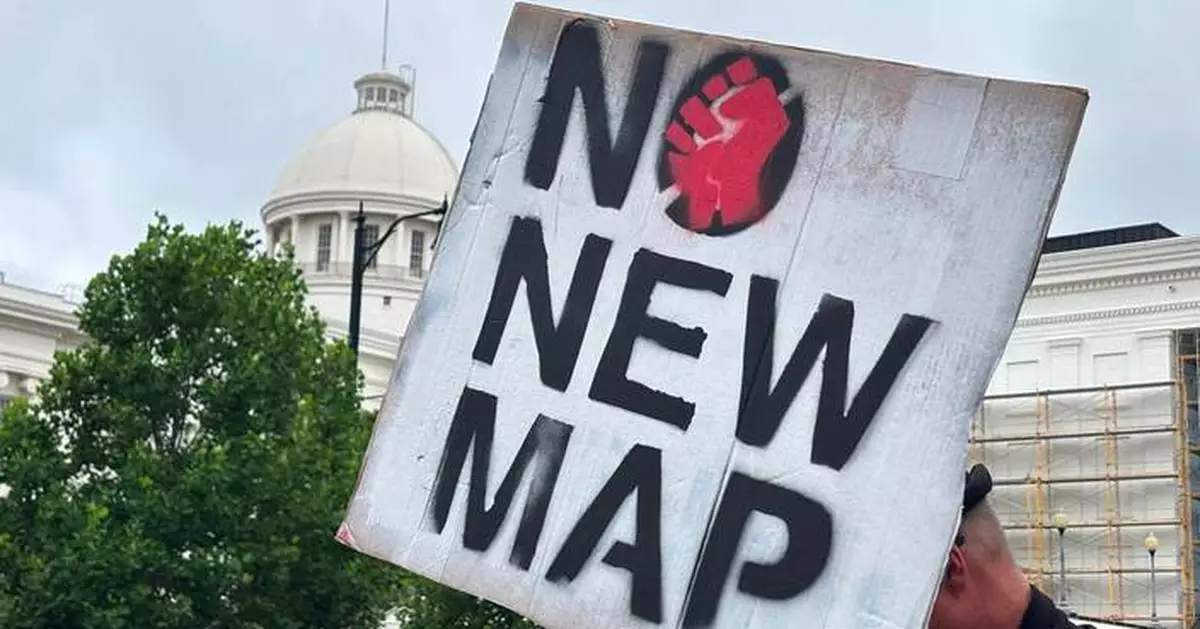
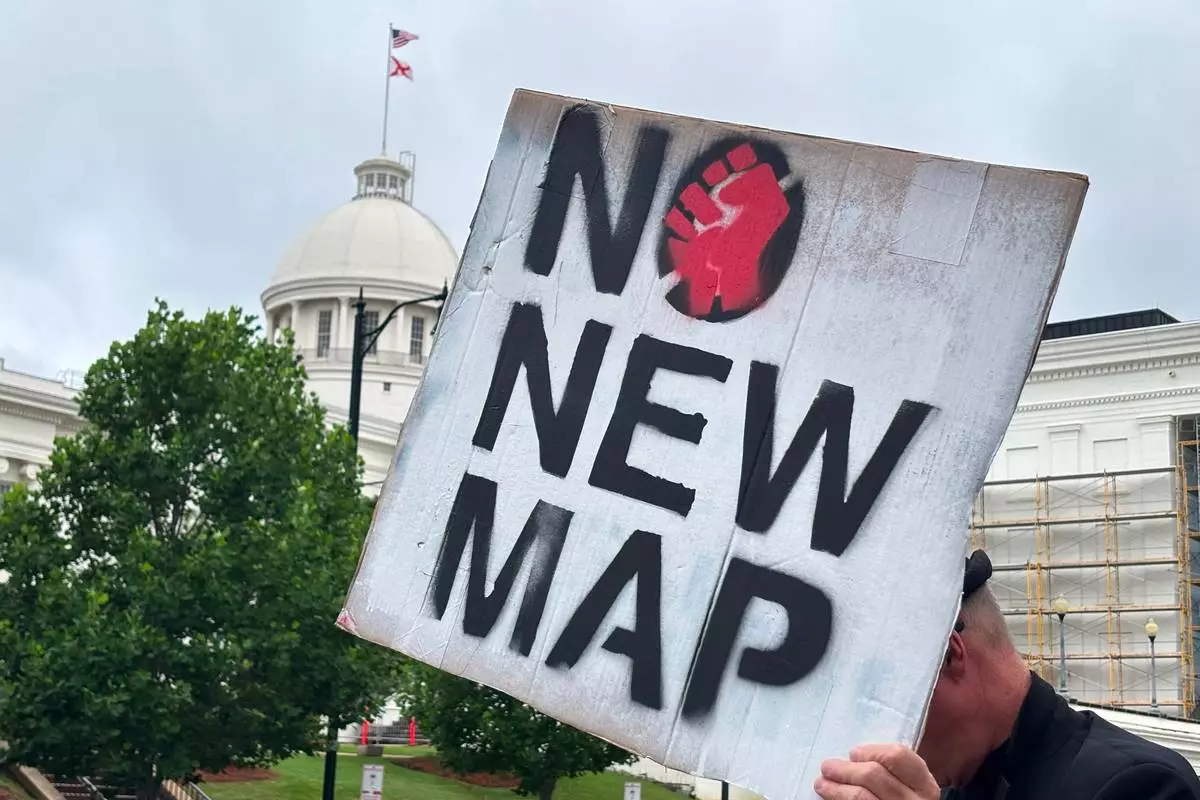
A demonstrator holds up a sign outside the Alabama Statehouse in Montgomery, Ala., on Thursday, May, 7 2026. (AP Photo/Kim Chandler)

A demonstrator holds up a sign outside the Alabama Statehouse in Montgomery, Ala., on Thursday, May, 7 2026. (AP Photo/Kim Chandler)
WASHINGTON (AP) — Senate Republicans say they will move forward with a proposal to give the Secret Service up to $1 billion for security upgrades to Donald Trump’s White House ballroom project, arguing that more security is needed for the president after a man was charged with trying to assassinate him last month.

Republican senators returning to Washington on Monday faced questions about the plan, which would spend taxpayer dollars to secure the East Wing project after Trump had said it would only be paid for with private donations. He has said the construction would cost around $400 million, but the White House had not previously proposed a number for security costs.

Senate Majority Leader John Thune, R-S.D., said the total is “what it costs to protect the President of the United States in a very dangerous time and a dangerous world.”

“Keeping the leader of the free world safe is an expensive proposition,” Thune said. ”The Secret Service has a job to defend and protect the president, and we need to make sure they have the tools to do it.”

Democrats say they will try and defeat the plan, which Republicans added to a partisan spending bill that would restore funding for immigration enforcement agencies that the Democrats have blocked since February.

Senate Democratic leader Chuck Schumer said in a letter to colleagues Monday that they will push Republicans to strip the security money, noting that Trump said a few months ago not one penny of taxpayer money would be used for the ballroom.

“Well, give me a break. He’s put a billion dollars in the budget for it. This staggering waste of taxpayer dollars has nothing, nothing to do with security and everything to do with Trump’s ego,” Schumer said.

Republicans are using a partisan budget maneuver to push the spending legislation through Congress without any Democratic votes. But it is still unclear if the security money will have enough backing among Republicans to advance, as some have said they are not yet ready to support it.

Senate Appropriations Committee Chairwoman Susan Collins, R-Maine, said she wants clarification on how the funding would be used from the Secret Service Director Sean Curran, who is expected to attend a closed-door lunch with GOP senators Tuesday. Collins said the ballroom should be paid for with private donations, “as the president had indicated.”

Senate Homeland Security Committee Chairman Rand Paul, R-Ky., also said the funding should be private. “That's still my preference,” he said, adding that Congress had also increased the Secret Service budget after the attempted assassination attempt on Trump in Butler, Pennsylvania, during the 2024 campaign.

“Was it spent wisely? Do they really need more at this time?” Paul asked. "And a lot of people think this might be papering over for the, you know, the ballroom.”

Other Senate Republicans said they would support the request. Missouri Sen. Josh Hawley said he had “no problem” with it. Wyoming Sen. Cynthia Lummis said the private funding would go for construction of the ballroom, but “the security part, there’s a role for the taxpayers.”

Speaker Mike Johnson, R-La., was also expected to attend the Republican lunch Tuesday as some House Republicans were already questioning whether they could support the Senate plan. The House has not yet released its own bill.

Republican Rep. Rob Wittman of Virginia said last week that he would look at the Senate security proposal “very carefully and make sure those things are in the national interest.”

Rep. Mike Haridopolos, R-Fla., also said he wanted to hear more details. He asked colleagues to recognize the “volatile times” and the need to ensure the president, members of Congress and guests can gather in a safe location.

"If Republican and Democratic members can take a step back and say this is a real security issue, then maybe it will get done. But if Democrats dig in, it’ll be really challenging to pass that, as you can only imagine,” Haridopolos said.

Schumer said Democrats will push the Senate parliamentarian to strike the ballroom security money from the budget bill and offer amendments that force Republicans to vote on it if it remains in the legislation when voting is expected to begin next week.

Lawmakers in both parties were looking for more detail about how the money would be spent. The Senate bill would designate the money for the U.S. Secret Service, including for “security adjustments and upgrades” related to the ballroom project, but there was little additional detail.

The legislation says the money would support enhancements to the ballroom project, “including above-ground and below-ground security features,” but specifies it may not be used for non-security elements.

The White House has said in court documents that the East Wing project would be “heavily fortified,” including bomb shelters, military installations and a medical facility underneath the ballroom. Trump has said it should include bulletproof glass and be able to repel drone attacks.

Trump said Friday that the money would be for “many of the projects" and it wouldn't all be for the ballroom.

“They want to do certain things militarily with respect to the ballroom, having nothing to do with us or having to do with the safety of the president,” Trump said. “So having to do with a lot of things, but we are going to have a safe ballroom.”

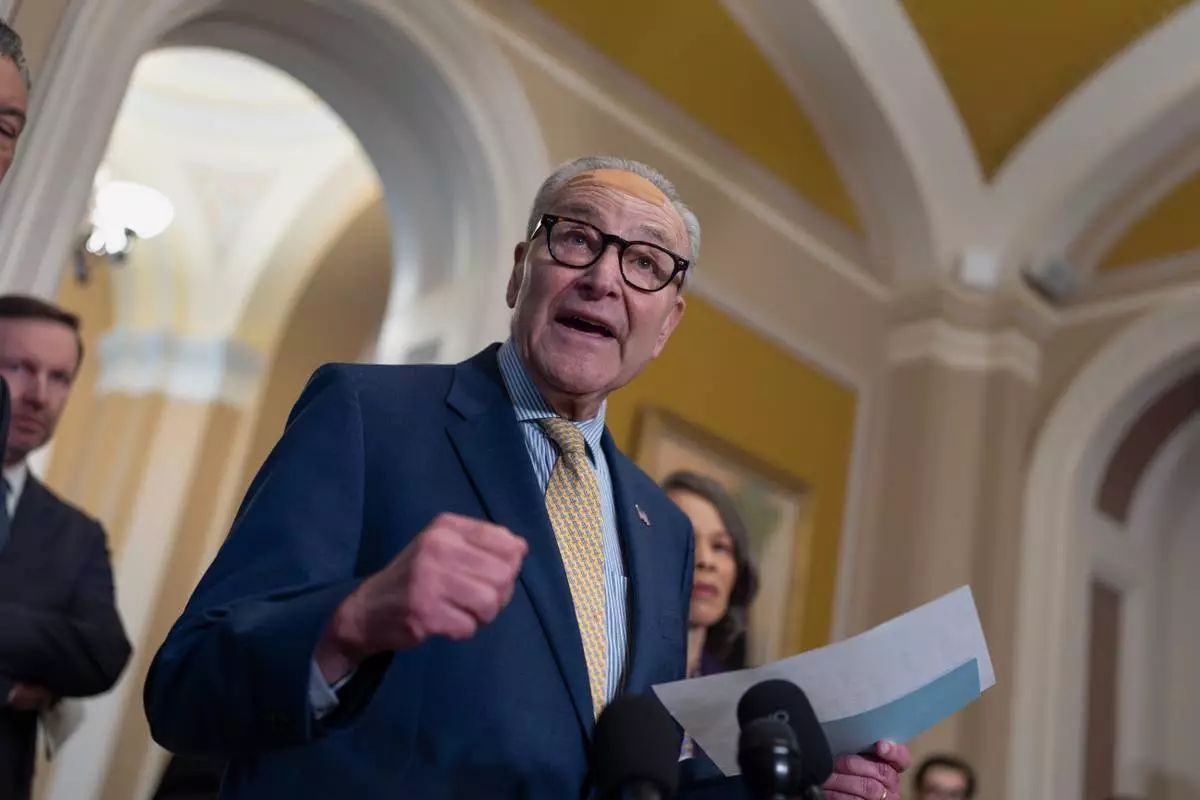
Senate Minority Leader Chuck Schumer, D-N.Y., speaks on fair elections and the Supreme Court's ruling to strike down a majority Black congressional district in Louisiana, at the Capitol in Washington, Wednesday, April 29, 2026. (AP Photo/J. Scott Applewhite)

Senate Minority Leader Chuck Schumer, D-N.Y., speaks on fair elections and the Supreme Court's ruling to strike down a majority Black congressional district in Louisiana, at the Capitol in Washington, Wednesday, April 29, 2026. (AP Photo/J. Scott Applewhite)

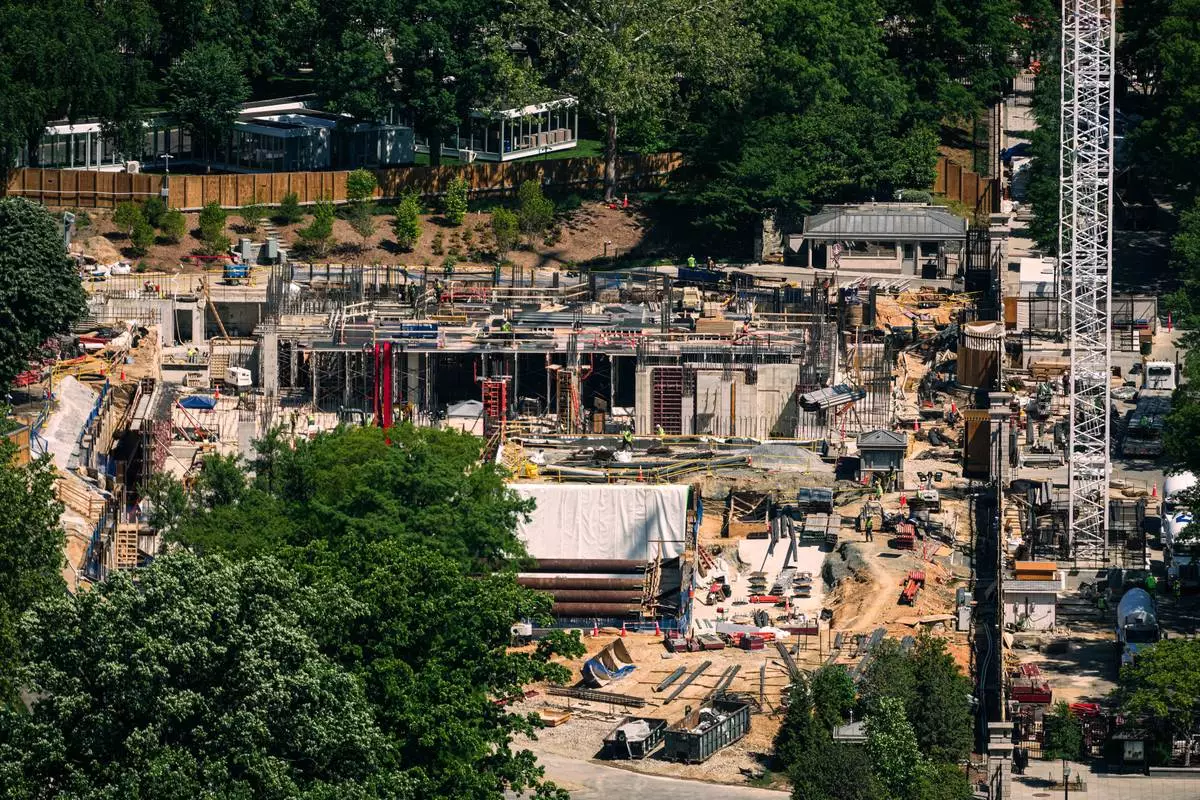
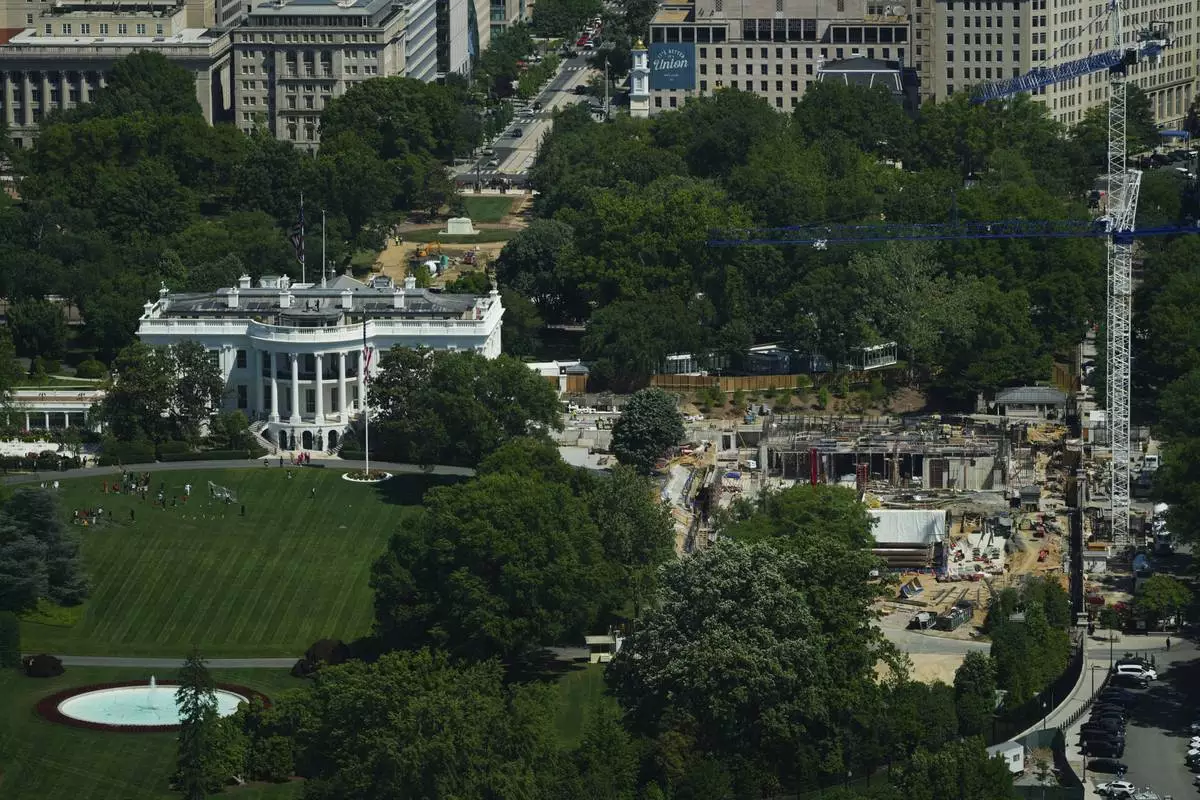
Construction on the new White House ballroom is seen from the Washington Monument, Tuesday, May 5, 2026, in Washington. (AP Photo/Julia Demaree Nikhinson)

Construction on the new White House ballroom is seen from the Washington Monument, Tuesday, May 5, 2026, in Washington. (AP Photo/Julia Demaree Nikhinson)

Construction on the new White House ballroom is seen from the Washington Monument, Tuesday, May 5, 2026, in Washington. (AP Photo/Julia Demaree Nikhinson)

Construction on the new White House ballroom is seen from the Washington Monument, Tuesday, May 5, 2026, in Washington. (AP Photo/Julia Demaree Nikhinson)

Recommended Articles