A Montana judge has blocked the state from limiting voter registration on Election Day, concluding the move would disproportionately harm Native American and young voters.
The ruling prevents a law that was enacted last year by the Republican-controlled Legislature from being enforced that would have prevented voters from casting ballots in presidential, U.S. Senate and U.S. House races if they register after noon on Election Day. It was the second time in five years that legislators attempted to move away from Election Day registrations.
District Judge Adam Larsen's order, issued late Friday, is to remain in effect through the trial of a lawsuit filed by the Montana Federation of Public Employees, later joined by Native American tribes, including the Blackfeet and Northern Cheyenne. However, the state's primary elections are June 2, and the trial isn't until late August.
Larsen, sitting in the county that's home to the state capital of Helena, noted that registering on Election Day is “wildly popular.” Montana has allowed it since 2006, and in 2014, 57% of voters rejected a statewide ballot initiative to end it.
“The undisputed record demonstrates that a substantial number of Montana voters rely on Election Day registration, including during afternoon hours,” Larsen wrote. “The record further establishes that some voters will be unable to register prior to noon due to work schedules, travel constraints, polling place hours or unforeseen registration issues.”
Montana Attorney General Austin Knudsen's office expressed disappointment in the ruling.
“Unrestricted voter registration on Election Day puts a undue burden on Montana’s election administrators who have very important jobs ensuring our elections are secure and run smoothly,” spokesperson Chase Scheuer said in an email.
But Larsen rejected the state's argument that the law would make administering elections easier, saying local election officials would handle voting in federal races differently from state and local races.
Montana polling places for at least 400 voters must remain open from 7 a.m. to 8 p.m. on Election Day, but those for fewer voters don't have to open until noon, something Larsen noted.
The judge said Native American voters face “unique barriers” to voting, including long travel distances and limited access to transportation. Students and other young voters face obstacles to registering because of “scheduling constraints” and because they move more frequently, he wrote.
Amanda Curtis, the Montana public employees group's president, said its lawsuit defended “the fundamental right of every voice to be heard” from “overreaching politicians.”
The group and the tribes also challenged changes in a state law specifying which IDs students can show at the polls to register and vote, but Larsen concluded that they couldn't show that anyone had been prevented from voting because of them. Scheuer said the changes “bolster the integrity of Montana elections.”
In 2021, the Legislature enacted a law ending voter registration on noon the day before Election Day, but the Montana Supreme Court struck it down in 2024 as a violation of an “unequivocal fundamental right” protected by the state Constitution. The justices said more than 70,000 Montana voters had taken advantage of Election Day registration since its inception.
Before legislators enacted the latest law in 2025, their staff warned in a memo that the measure could conflict with the Supreme Court's 2024 decision.
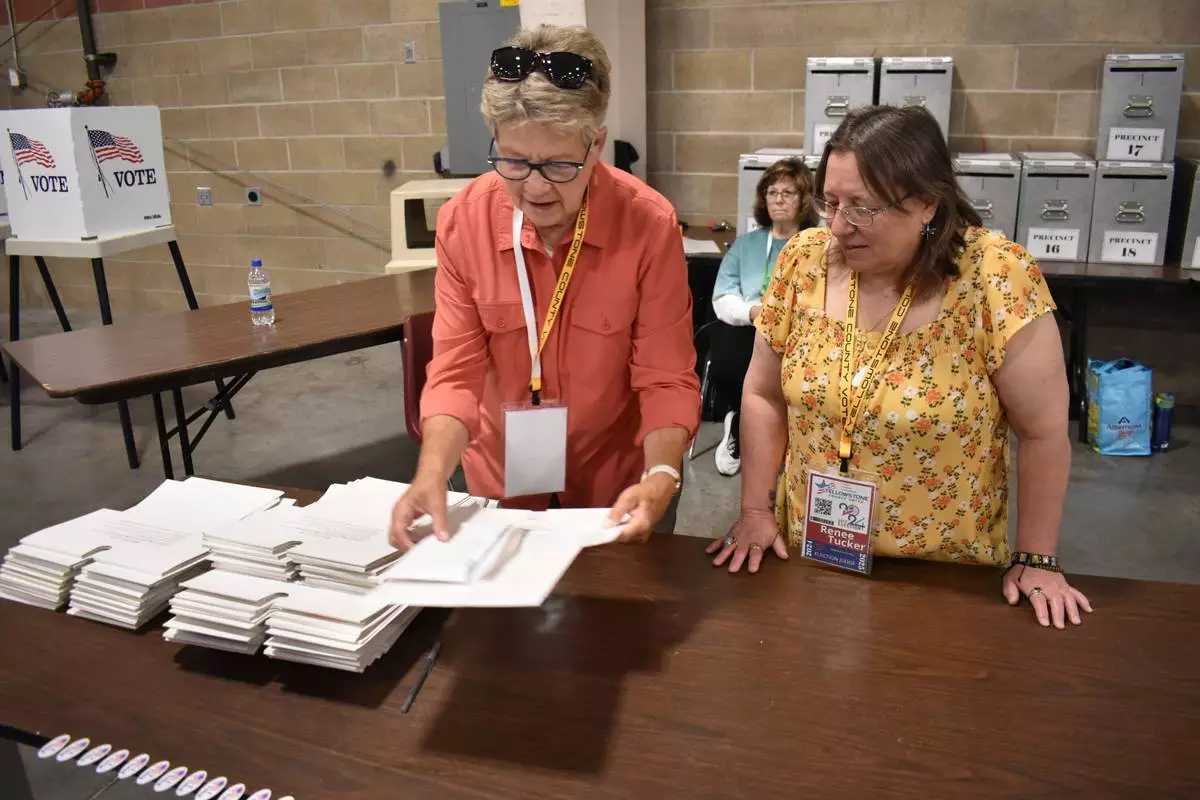
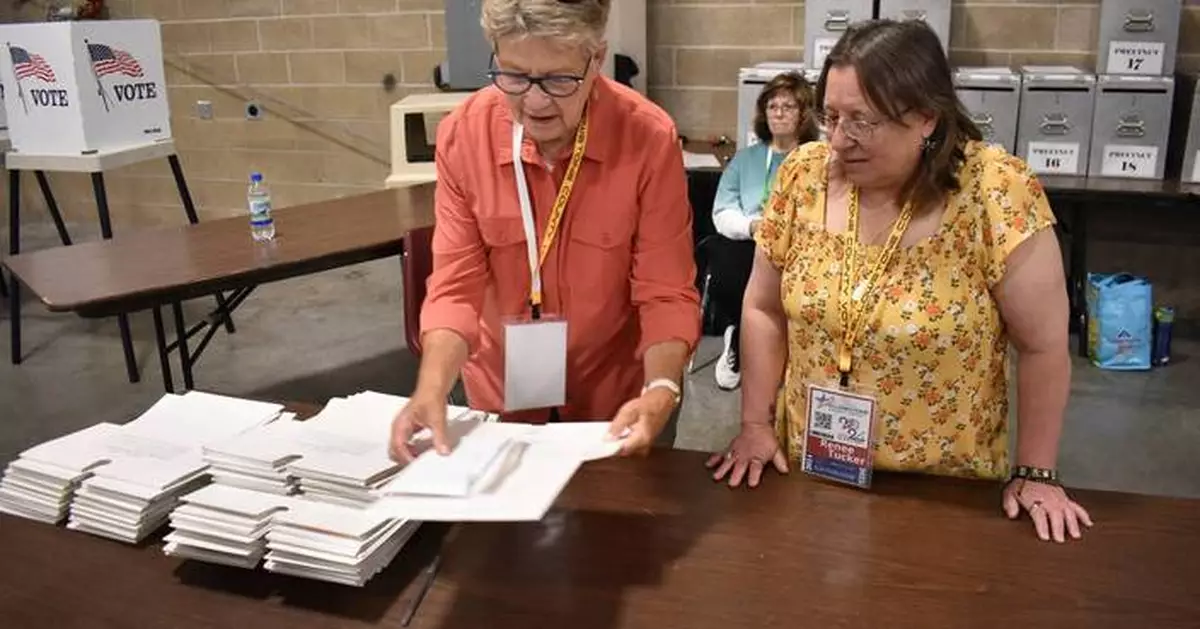
FILE - Election workers Janet Lambert, left, and Renee Tucker are seen sorting ballots at the MetraPark events center, Tuesday, June 4, 2024, in Billings, Mont. (AP Photo/Matthew Brown,File)
WASHINGTON (AP) — The U.S. Supreme Court on Monday set the stage for Alabama to get rid of one of two largely Black congressional districts before this year’s midterm elections, creating an opening for Republicans to gain an additional U.S. House seat in a partisan battle for control of the closely divided chamber.
The decision follows a Supreme Court ruling in April that struck down a majority-Black U.S. House district in Louisiana as an unconstitutional racial gerrymander, significantly weakening a provision of the federal Voting Rights Act.
Alabama officials had pointed to the Louisiana case as reason for the Supreme Court to end a judicial order to use a court-imposed House map until after the 2030 census. The high court overturned that order and directed a lower court to reconsider the case in light of the Louisiana decision. That could free the state to instead use a map approved in 2023 by the Republican-led legislature that includes only one district where Black residents comprise a majority.
Anticipating a court reversal, Alabama officials recently enacted a law allowing it to void the results of a May 19 primary for some congressional districts and instead hold a new primary under the revised district boundaries. Alabama had asked for a expedited decision ahead of the primary.
Alabama Republicans praised the decision.
“Today, the Supreme Court vindicated the state’s long held position. Now, the power to draw Alabama’s maps goes back to the people’s elected representatives. That’s our Legislature,” Alabama Attorney General Steve Marshall said in a video statement. Marshall said his job was “to put the legislature in the best possible legal position to draw a congressional map that favors Republicans seven-to-zero.” He concluded with “stay tuned.”
In a dissent to Monday's brief ruling, Justice Sonia Sotomayor said the Louisiana case had reversed only one of the grounds upon which the Alabama case had been decided. Although the Voting Rights Act violation is gone, Sotomayor said a lower court could still find that Alabama had intentionally discriminated against Black voters in violation of the 14th Amendment.
The decision was a setback for Black residents and groups that had waged a legal fight for several years to get a second Alabama congressional district where Black voters had an opportunity to elect a candidate of their choice.
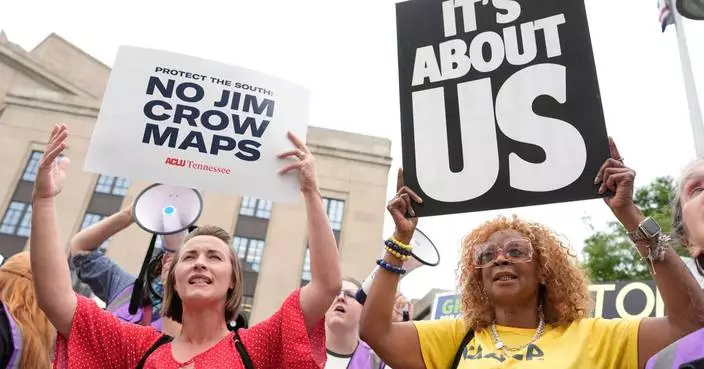
“We are witnessing a return to Jim Crow. And anybody who is alarmed by these developments — as everybody should be — better be making a plan to vote in November to put an end to this madness while we still can," NAACP National President Derrick Johnson said in a statement.
Evan Milligan, the lead plaintiff in the Alabama congressional case, said Monday that he is disappointed in the decision but added that it could be a “call to action” for voters.
“We are not defeated by this,” Milligan said.
The decision comes a week ahead of the May 19 primaries. Alabama lawmakers last week approved legislation to allow special primaries in four impacted congressional districts if the state is able to switch maps. The special elections would be set by the governor.
Alabama Secretary of State Wes Allen called the decision a “historic win for Alabama voters.” Allen said the May 19 primaries will proceed as scheduled and his office will remain in close contact with the governor’s office "as this situation continues developing.”
Alabama is one of several states trying to change their congressional district boundaries before the November elections as part of a nationwide redistricting battle being won, so far, by Republicans.
Voting districts typically are redrawn once a decade, immediately after a census, to account for population changes. But President Donald Trump urged Texas Republicans last year to redraw congressional districts to their advantage in a bid to hold onto a narrow House majority in the midterm elections.
Democrats in California countered with their own redistricting. And numerous Republican-led states have followed. The high court’s Louisiana ruling provided fuel for Republicans to intensify their redistricting efforts.
So far, Republicans think they could win as many as 14 additional seats in the November elections from new districts enacted in Texas, Missouri, North Carolina, Ohio, Florida and Tennessee. Democrats think they could win up to six additional seats from new districts in California and Utah. But Democrats suffered a major setback when the Virginia Supreme Cour t overturned a voter-approved redistricting amendment that could have yielded four more seats for the party.
Lieb reported from Jefferson City, Missouri, and Chandler from Montgomery, Alabama.
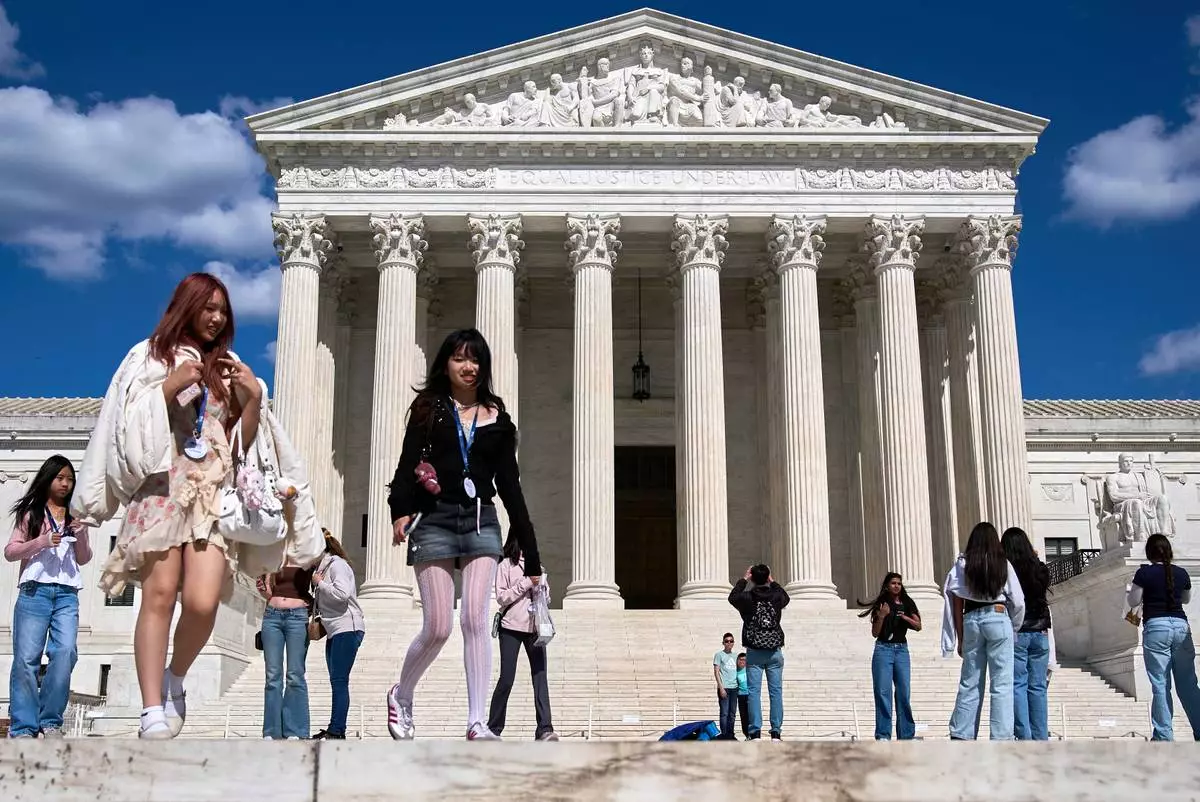
Students visit the Supreme Court, Thursday, April 30, 2026, in Washington. (AP Photo/Jacquelyn Martin)
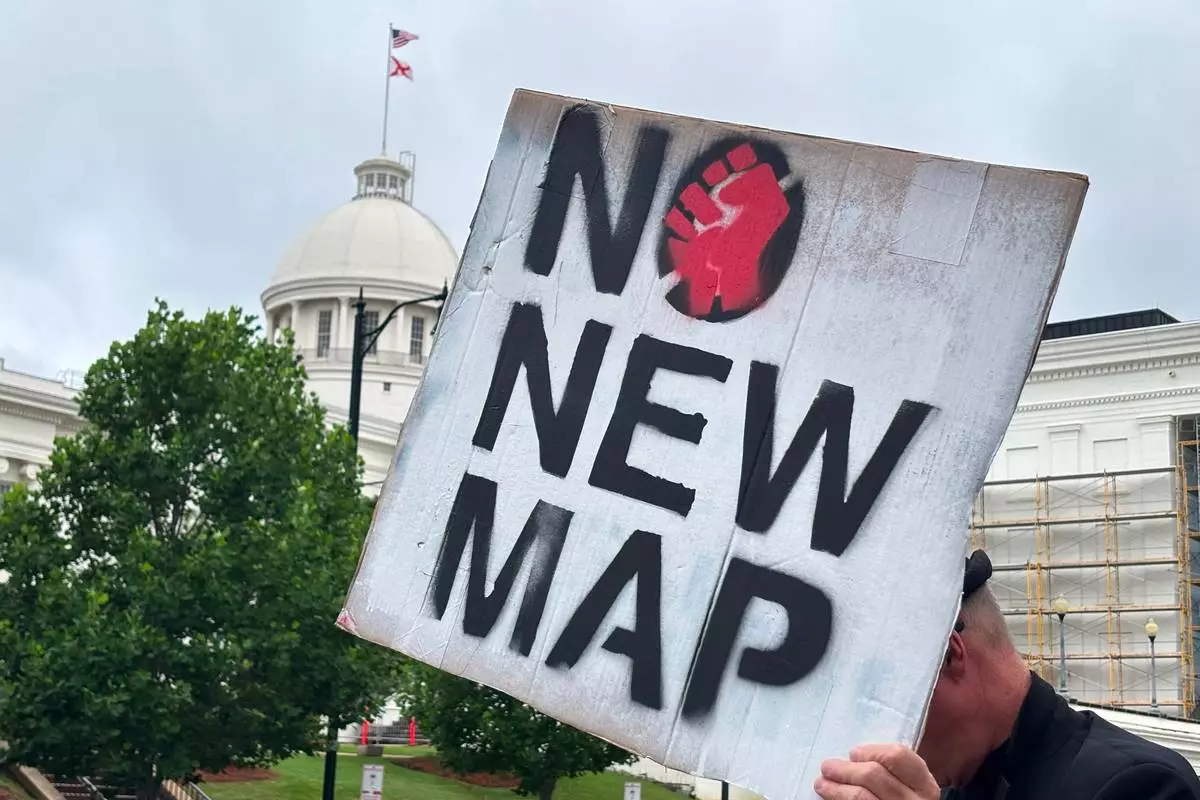
A demonstrator holds up a sign outside the Alabama Statehouse in Montgomery, Ala., on Thursday, May, 7 2026. (AP Photo/Kim Chandler)