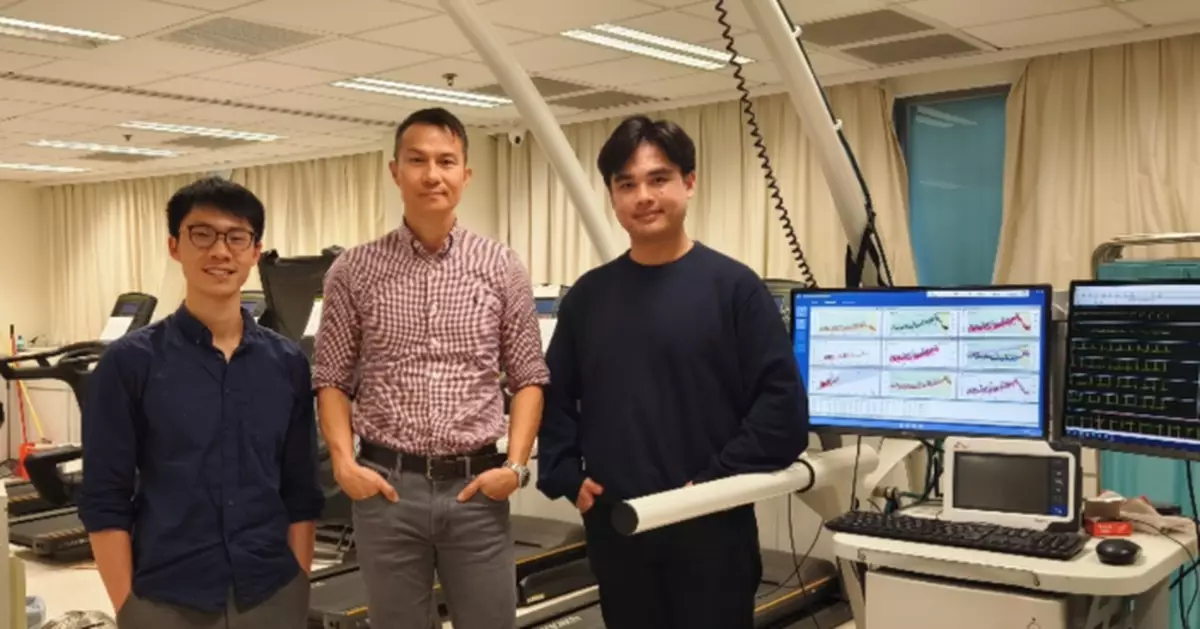
A research team from the School of Public Health at the LKS Faculty of Medicine, the University of Hong Kong (HKUMed), has found that brisk interval walking performed once a week can significantly improve body fat reduction and cardiorespiratory fitness in adults with central obesity, comparable to exercising three times a week – the traditional recommendation for exercise frequency. The study provides strong scientific evidence supporting the therapeutic use of once-weekly brisk interval walking as a convenient exercise approach for adults with central obesity, particularly for those with time constraints. The findings were published in Nature Communications.
A practical, evidence-based exercise approach to combat excess adiposity
Obesity is a common chronic condition characterised by excessive fat accumulation that impairs health. Excess adiposity, particularly when deposited centrally around the abdomen, is linked to negative health outcomes, including cardiovascular disease, metabolic disorders, and increased mortality risk. While regular exercise provides comprehensive health benefits and is integral to obesity management, sustained physical activity remains insufficient, especially for individuals with obesity.
Interval training involves alternating periods of vigorous exercise with lower-intensity active recovery exercise. It is an effective, time-efficient approach for reducing total body and visceral adiposity compared to traditional continuous moderate-intensity training. However, standard exercise guidelines typically recommend interval training three days per week, which may not be practical for individuals with time constraints and limited access to exercise facilities. While previous studies found that the ‘weekend warrior’ exercise pattern, which condenses weekly exercise into one to two days, to have positive effects, there has been limited scientific evidence on the efficacy of interval training performed in this pattern.
Professor Parco Siu Ming-fai, Professor and Head of Division of Kinesiology at the School of Public Health, HKUMed, emphasised the importance of validating whether once-weekly interval training can be as effective as the traditional thrice-weekly regimen, thus offering a practical, evidence-based alternative.
Less frequent, similar efficacy
Between September 2021 and September 2024, HKUMed researchers conducted a rigorous trial in Hong Kong involving 315 Chinese adults aged 18 or older who were overweight and had central obesity. The participants were randomly assigned to one of three groups: a once-weekly interval training group, a thrice-weekly interval training group or a control group.
The control group attended a 2.5-hour health education session every two weeks over a four-month period. The interval training groups performed a total of 75 minutes of interval training per week, either in a single session or divided into three sessions. The participants’ body fat mass was measured using dual-energy X-ray absorptiometry at three assessment points: before the intervention (baseline), at 16 weeks (post-intervention), and at 32 weeks (four-month post-intervention follow-up).
The trial results revealed that at the 16-week assessment, both the once-weekly and thrice-weekly interval training programmes similarly reduced excess adiposity, as measured by total body fat mass, fat percentage and waist circumference, and improved cardiorespiratory fitness compared to the control group.
‘While thrice-weekly interval training remains a commonly recommended approach for the therapeutic management of excess adiposity, our findings show that once-weekly interval training offers similar benefits and represents a practical exercise strategy,’ said Professor Siu. ‘For many adults with central obesity who struggle to balance work, study, family and other commitments, time constraints are a primary barrier to exercising multiple days per week.’
‘Instead of relying solely on high-frequency exercise prescriptions, once-weekly interval training can be considered a feasible and effective alternative,’ added Professor Siu.
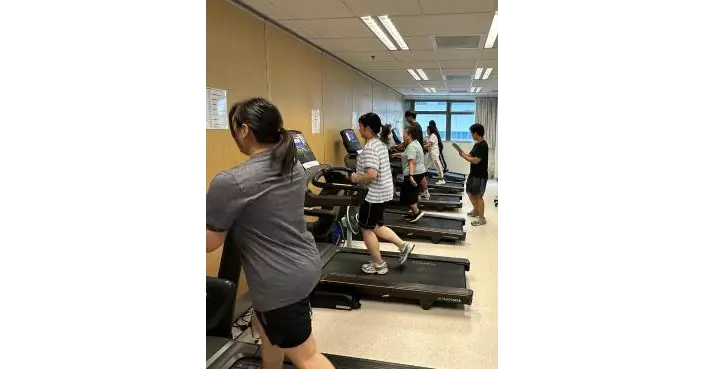
KUMed study finds that, with the same total workout time, weekly brisk interval walking improves fat loss and heart fitness in adults with obesity, comparable to exercising three times a week – the traditional recommendation for exercise frequency.
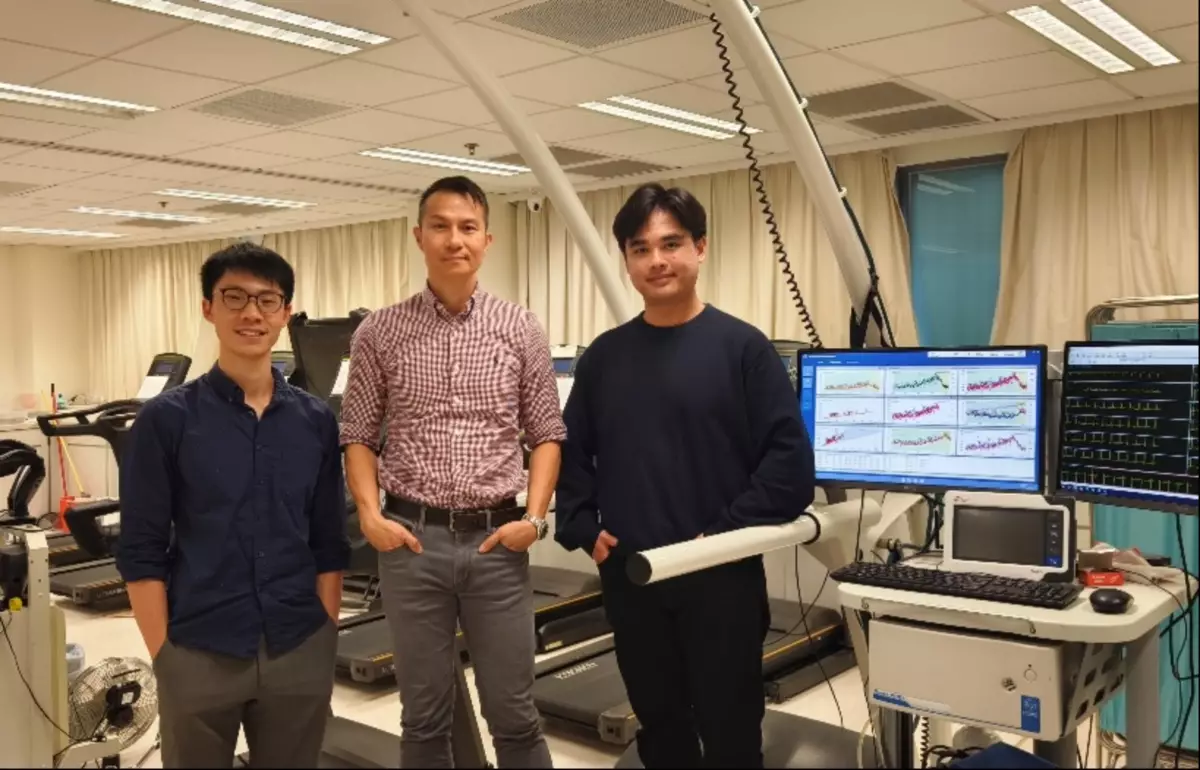
Professor Parco Siu Ming-fai (centre) said that while thrice-weekly interval training is a commonly recommended approach for treating obesity, the study shows that once-weekly interval training with the same total workout time offers similar benefits and is an effective alternative for busy people.
International study shows Hong Kong students' overall performance continues to surpass international average
A spokesman for the Education Bureau (EDB) said the results of the Programme for International Student Assessment (PISA) 2025 released today (September 8) show Hong Kong students' outstanding performance in the innovative domain of "Learning in the Digital World", with their overall performance in mathematical, scientific and mother-tongue reading literacy continuously surpassing the international average.
PISA, organised by the Organisation for Economic Co-operation and Development (OECD), is conducted every three years to assess the mathematical, scientific and mother-tongue reading literacy of 15-year-old students. Hong Kong has participated in PISA in the form of academic research projects. A total of 91 countries or economies participated in PISA 2025 globally. The EDB commissioned the University of Hong Kong (HKU) to conduct the main study in Hong Kong from May to July 2025, which involved 6445 students aged 15 from 230 secondary schools.
PISA features an innovative domain in each cycle to gauge whether students have acquired the knowledge and skills neededfor the future. For PISA 2025, the innovative domain was "Learning in the Digital World", in which Hong Kong students performed exceptionally well, achieving a score of 545, significantly higher than the international average of 500. The OECD's report indicated that Hong Kong was one of the top-performing education systems globally in the innovative domain "Learning in the Digital World", with over 40 per cent of participating students attaining high proficiency levels, capable of undertaking moderate to sophisticated programming and modelling and effectively applying computational logic for analysis.
The EDB spokesman said, "The outstanding performance of Hong Kong students in the innovative domain 'Learning in the Digital World' demonstrates the tangible results achieved through Hong Kong's vigorous promotion of STEAM (science, technology, engineering, arts and mathematics) education. Building on the Blueprint for Digital Education Development in Primary and Secondary Schools announced earlier, the EDB will continue to focus on AI education. Efforts will be directed towards developing curriculum frameworks, supporting teacher training, optimising infrastructure and supporting facilities, as well as promoting cross-sector collaboration to strengthen students' digital literacy and equip the younger generation to meet the opportunities and challenges of the digital era."
The spokesman added, "In terms of education equity, the PISA 2025 results reaffirm that Hong Kong's education system excels in achieving educational equity, consistently ranking among the top three countries or economies with high academic achievements. In addition to establishing a broad and balanced 15-year school curriculum framework, the Government is also committed to providing a diverse range of life-wide learning activities, various programmes to support e-learning, comprehensive learning support for non-Chinese-speaking students, and promoting the Whole School Approach to Integrated Education. These efforts provide all students with high-quality and equal education opportunities, thereby promoting social mobility."
In the three core domains of mathematical, scientific and mother-tongue reading literacy, Hong Kong students' overall performance has consistently surpassed the international average, scoring 522 in mathematical literacy (international average: 463); 496 in scientific literacy (international average: 482); and 480 in mother-tongue reading literacy (international average: 461).
The spokesperson continued,"According to the OECD's report, the impact of COVID-19 on the learning stage of students participating in PISA 2025 during their critical developmental period is one of the factors contributing to the general decline in the overall performance of participating countries or economies. Compared with the results in previous assessment cycles, there is a notable disparity between Hong Kong students' latest scores across these three domains and the observations of the education sector regarding these students' abilities. This phenomenon may be attributable to multiple factors and warrant our in-depth investigation. Among these are Hong Kong's positioning of PISA as an academic research project (distinct from systematic school-based learning assessments or public examinations), Hong Kong students' psychological state and concentration during the test, the test administration arrangements, and students' habits and attitudes towards using digital devices after school, all of which may also have affected their performance in PISA."
Meanwhile, different international studies and assessments are underpinned by unique design concepts and assessment emphases. In recent years, Hong Kong students' overall performance in international assessments has far surpassed the global average. Since 2006, Hong Kong has been ranking among the top three globally for four consecutive cycles in the Progress in International Reading Literacy Study (PIRLS), and ranked second in the latest PIRLS 2021 cycle. Furthermore, Hong Kong has consistently ranked among the top five globally in mathematics in the Trends in International Mathematics and Science Study since 1995, and has also averaged a top-10 global ranking in science.
The EDB attaches great importance to Hong Kong students' performance in major international assessments and studies. As PISA is one of the reference indicators, the EDB will work closely with the project team from HKU and education stakeholders to carefully review the assessment arrangement and results. The EDB will also conduct analyses across various sub-indicators to gain understanding of students' learning needs, with a view to formulating measures to improve assessment arrangements and enhance students' assessment literacy.
With a view to conducting a more comprehensive review of Hong Kong's performance in major international assessments and studies, the EDB has established an Expert Group on Educational Performance Evaluation, which comprises education experts from universities, school principals, representatives from the Hong Kong Examinations and Assessment Authority and EDB officials, among others. The group will conduct an integrated analysis of international and local assessment data, taking into account the current stage and trends of education development in Hong Kong and formulate recommendations on how to systematically incorporate assessment results into education policies. The EDB will take these recommendations into consideration and continue to work closely with various stakeholders to maintain the strengths of Hong Kong's education system, further enhance the international competitiveness of Hong Kong students and optimise assessment literacy in schools.
Background information and key statistics of PISA 2025 are in the Annex.

Source: AI-found images