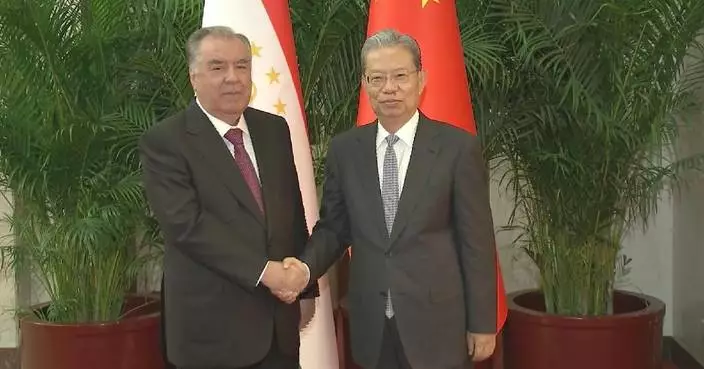
Business leaders, academics and international officials have expressed hopes that U.S. President Donald Trump's upcoming state visit to China will help stabilize China-U.S. relations and expand cooperation between the world's two largest economies amid growing global uncertainty.
At the invitation of Chinese President Xi Jinping, Trump will pay a state visit to China from May 13 to 15.
The two presidents first met in 2017, a year marked by an exchange of state visits that set the tone for their interactions. Xi and Trump last met in October 2025 in Busan, the Republic of Korea.
Over the years, head-of-state diplomacy has played a key role in steering China-U.S. relations and maintaining stability despite shifting global conditions. Since Trump's re-election, Xi has spoken with him by phone five times, maintaining communication on bilateral ties and international issues.
Analysts and business representatives said closer communication and cooperation between China and the U.S would benefit not only the two countries, but also the broader global economy.
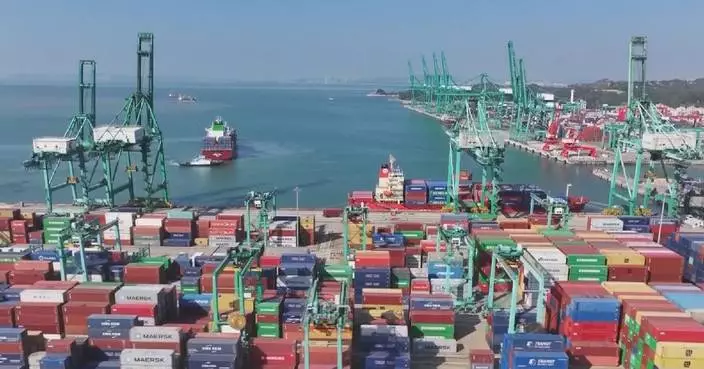
"Honestly, the biggest trading partners in the world are China and the United States, and the fact is we can't ignore that. We need to be working together in some way, in partnership, in an honest and, I think, direct way so that we can continue to build our economies and continue to bring some prosperity to the world, but also in particular to our countries," said John E. Drew, chairman of the World Trade Centers Association.
Anthony Moretti, department head and associate professor at the School of Communication and Media at Robert Morris University in Pennsylvania, said the international community was looking for a positive outcome from the upcoming visit amid global instability.
"There's no question that anytime you get the U.S. president and the Chinese president together, it's good news. We, the global community, need more of that. The reason that I think is particularly important now goes back to that whole idea again of the U.S. has really set up a very unstable international situation. Right now, the world is looking for a successful visit and President Trump can be sure to deliver that if he wants to," Moretti said.
Jim Sutter, chief executive officer of the U.S. Soybean Export Council, said he had seen a genuine desire from both governments and businesses to improve bilateral relations.
"I mean, I just sense a real, sincere desire to see the relationship between China and the U.S. at a governmental level and also at a business level, to see that improving. I think there is this recognition that we are better together, that's sort of a saying that we like to use. But I think it's very appropriate in this case that if we can work together, recognizing there are going to be these differences, but if we can work together, we'll both be better off. And I very much believe the whole world would be better off," Sutter said.
International observers have also voiced hopes that stronger dialogue and cooperation between China and the U.S. could bring greater stability and certainty to the world economy.
"I'm certainly appreciative of the efforts by the two governments to deal with their outstanding issues through dialogue, and we encourage them to keep up with the track of dialogue in order to resolve any differences that they may have. The United States and China are two of the main economic powerhouses of the world. And any way that they can deal with any of their differences in economic policies would be beneficial for the world as a whole," said Farhan Haq, deputy spokesperson for the U.N. secretary-general, at Monday's regular press briefing at U.N. Headquarters in New York.
Jasper Roctus, senior associate fellow at the Royal Institute for International Relations in Brussel, said growing economic interdependence had made cooperation increasingly important in today's world.
"So I think that's very good. We are now living in a world where most countries are interconnected with each other economically. This means that the price of conflict, even economic conflict, is much higher than it used to be in the past. So indeed, the fact that we are still seeing each other despite certain disagreements is also related to the fact that we are interconnected and we should recognize that," Roctus said.
Sizo Nkala, research fellow at the Center for Africa-China Studies at the University of Johannesburg, said countries across the Global South were closely watching the meeting.
"[The meeting] between President Xi Jinping and President Donald Trump is quite important because, one, it demonstrates that the two leaders take the relationship between the U.S. and China seriously and they are committed to making it work not only for them as countries but for the world at large. From a Global South perspective, China and the U.S. are the anchor of the global economy. They control more than 40 percent of the global GDP and the decisions they make have serious repercussions on countries like South Africa and in the broader Global South. So they will be watching and hoping for a positive outcome from these talks," Nkala said.
Global observers expect Trump's China visit to boost stability, cooperation