An increasing number of European companies are selecting Shanghai as the premier launchpad for their latest products and innovations, viewing the dynamic metropolis as a window into China's evolving consumption landscape.
Since 2018, the Shanghai Municipal Government has actively cultivated what it terms the "debut economy," an initiative designed to attract first-in-China product launches, flagship stores, and innovative brand experiences. Building on this, the 2026 "First in Shanghai" campaign features a curated series of global debuts, exhibitions, and brand events across the city from March through May.
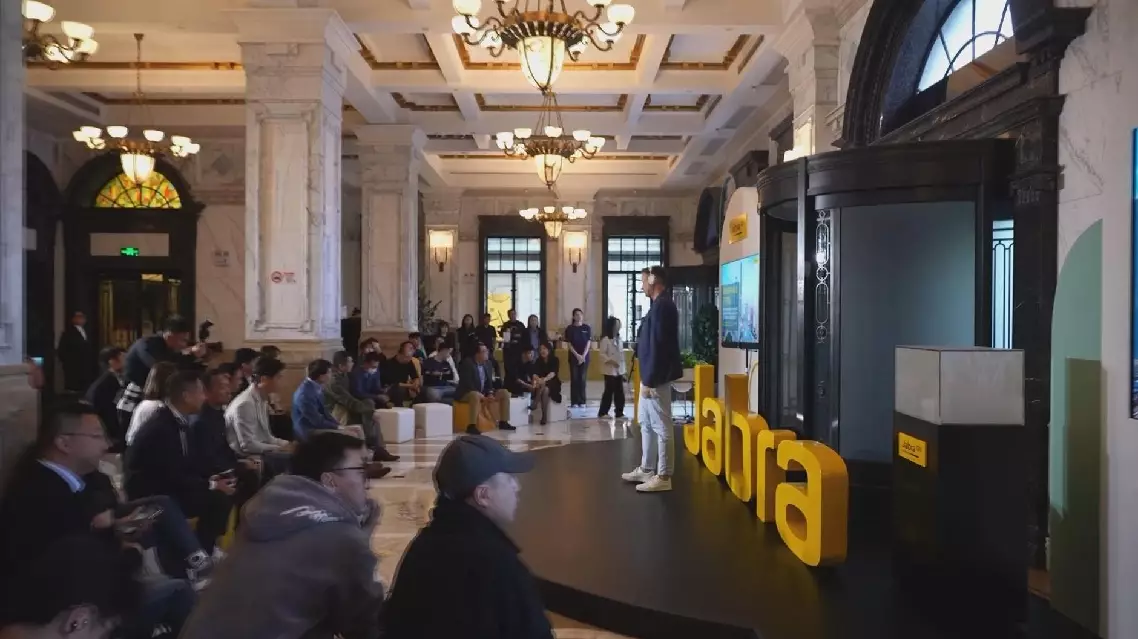
On the Yan'an East Road, a Renaissance-style building now known as the Shanghai Telecom Museum is once again becoming a stage for technological exchange.
More than a century ago, it served as a key hub for Jabra, a Danish telecommunications company, that helped shape early communications in China. Today, the company returns to the very place where its China story began, choosing the city as the launch site for its latest innovations.
"This building was created to remove distance, make it irrelevant. And the technology we're launching today here at this event has exactly the same purpose," said Holger Reisinger, senior vice president of the video business unit of Jabra, on the sidelines of a product launch event.
Choosing Shanghai reflects more than "historical" symbolism. As digital technology reshapes how people work, the rise of the "one-person company (OPC)" is redefining the relationship between work and workplace.
Mobility, flexibility and seamless communication are now essential rather than optional. These new working models are rapidly taking shape in Shanghai.
"The barriers between work and workplace are removed aggressively around the globe, particularly strong here in China. Designing for this environment is quite challenging. There's real market demands here in China in terms of appearance -- strong appeal of the product -- high quality, and also high accuracy," said Reisinger.
In this context, a product launch is no longer just a display of new features; it's a real-world test of innovation and responsiveness.
"For us, it's not just a market we're selling to, it's a market we have actively chosen to improve our products, so we get inspiration for new developments, but we can also prove our products in this market. So for us, it's both: it's an innovation hub and it's a laboratory where we test things," said Reisinger.
For Les Trois Chenes, a French children's nutrition and wellness brand, Shanghai's appeal lies in the rising sophistication and awareness of its consumers.
"Chinese mommies are more and more educated, and they know the formula better and better every year. So clearly, it's a challenge for my company to increase the quality of my product," said Jean-Noel Negroni, CEO of Les Trois Chenes.
In his view, Shanghai offers a window into how China's consumption trends are changing.
"Shanghai is a port, it's a platform, it's a hub for business, for culture, for architecture. And you are among the best places in the world to do business and to bring innovation," said Negroni.
Looking ahead, the French company plans to deepen its presence in China by expanding offline channels and getting closer to consumers.
"We want to improve our presence in the offline market to answer the demands and needs of consumers. In the long term, we clearly believe that the consumption and the education of the Chinese people will help us to strengthen our business," said Negroni.
European brands embrace Shanghai as top gateway to Chinese, global markets