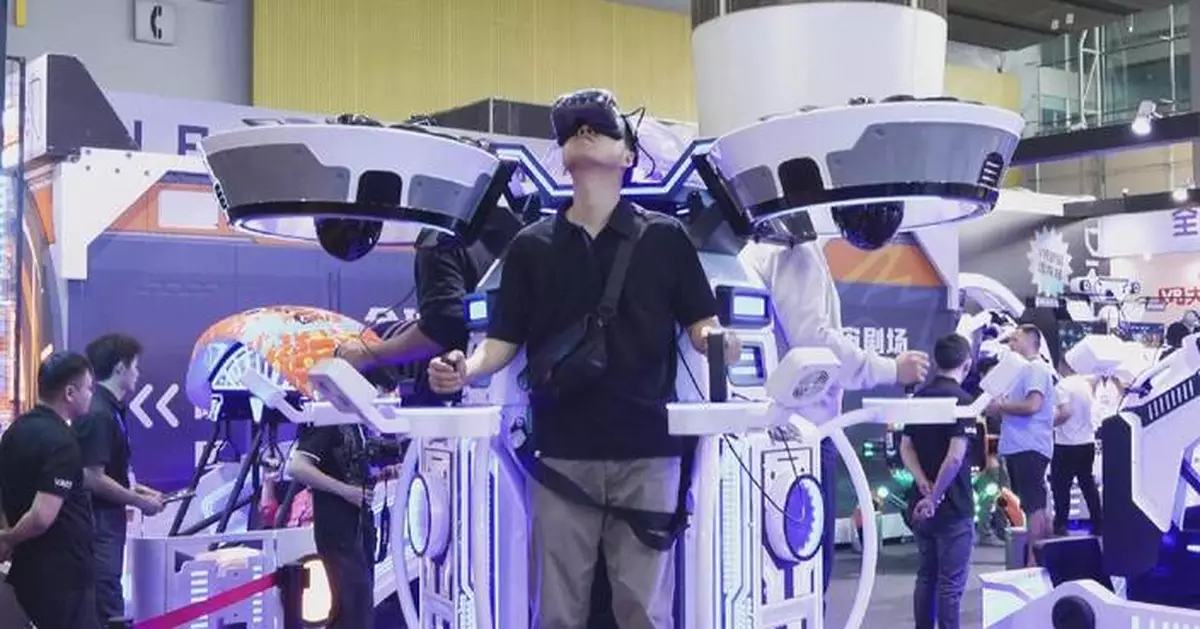
A dazzling lineup of virtual and augmented reality (VR/AR) technologies was on display at an immersive tech fair that just concluded on Tuesday in Guangzhou City, south China, captivating visitors with true-to-life and thrilling game experiences.
Held inside the China Import and Export Fair Complex, the three-day World VR/AR/XR/MR Industry and Smart Glasses Exhibition drew exhibitors from around the world to showcase their hottest immersive products, and tech enthusiasts couldn't wait to test the gadgets and gear firsthand.
"I just experienced the VR skydiving. The sense of weightlessness is very strong, and my experience is fantastic. It feels like real skydiving, but you can't stay for too long, as it's so real that you might get a bit dizzy," one visitor said.
A local company presented several products including a dome-screen theater that delivers glasses-free 3D visuals ideal for tourist attractions.
"The highlight is that we have turned the track-based theater into a dome theater. It offers a 3D audio-visual experience with 8K high-definition images. Our exclusive footage is incredibly sharp, and we've added immersive motion effects along with special effects like wind, rain, thunder, snowflakes, and bubbles," said Liu Jiale, sales manager of the exhibiting company.
The company landed an overseas order on the very first day of the expo, and saw a steady stream of curious visitors stopping by to try out the products.
Another overseas company showcased a VR large-space arena that allows multiple visitors to experience it at once. The game has already attracted players from 35 countries and regions.
"We come here every year to introduce new games. We have many clients, both Chinese and international, from countries like Kazakhstan, Spain, France, and many others. We offer seven VR games with new maps, and our games currently support eight foreign languages," said Denis, the company manager.
China is now home to over 35,000 VR firms, and the whole VR industry is forecast to exceed 350 billion yuan (about 50 billion U.S. dollars) by 2026.
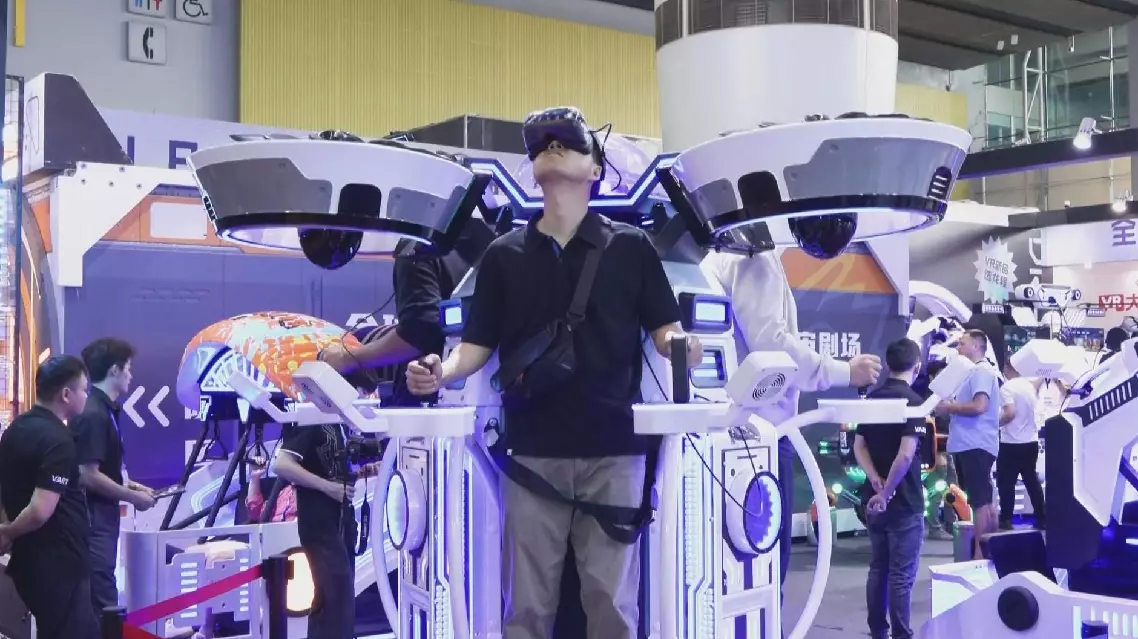
Immersive VR games wow crowds at Guangzhou tech expo
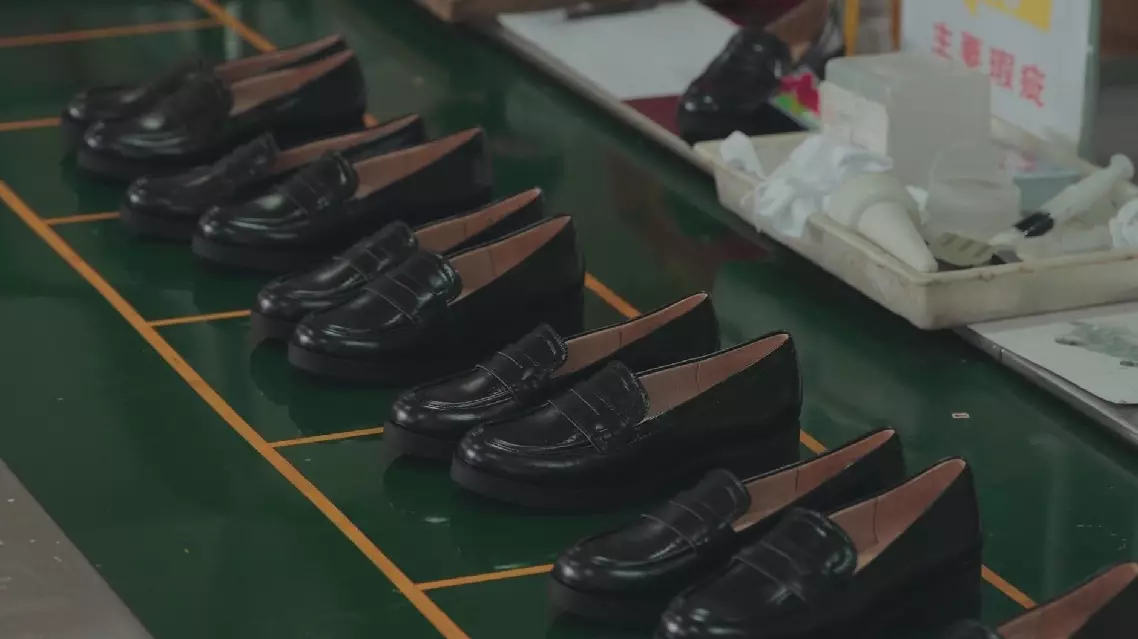
A shoe factory in Wenzhou City, east China's Zhejiang Province, has been working closely with its American partners to weather the sharp ups and downs in US tariff policies over the past year.
The city of Wenzhou is home to thousands of shoe factories, many of which focus on exports. About 1 in 12 pairs of shoes worldwide are made in the city.
Xuda Footwear in Wenzhou City, which manufactures for several major U.S. brands, saw its US orders drop about 40 percent year on year after tariff hikes began last year, according to vice general manager Lin Zhihua.
Then, despite widespread criticism and high volatility in U.S. stock markets after tariff hikes, last April, the White House clarified that the total effective tariff rate on Chinese imports had climbed to 145 percent.
The uncertainty prompted American clients to make practical adjustments. Yuan Weimin, head of Xuda Footwear's foreign trade department, said that clients asked the factory to leave retail prices blank on shoe tags, as final shelf prices in the U.S. remained unpredictable.
"The client felt the tariffs were going up and down, and were very unstable. So they started making some adjustments. For example, on the shoe price tags, we used to print the retail price. But they asked us to remove the price and just leave it blank," said Yuan Weimin, head of the foreign trade department of Xuda Footwear, as the sale price would probably be different when the shoes appeared on the U.S. shelves for customers.
Yuan said the uncertainty was also hitting the factory hard. While fearing last-minute order cancellations, Xuda continued production at the urging of its U.S. partners, who worried that halting orders would quickly empty American store shelves.
Some Americans showed solidarity with Chinese partners and chose to shoulder the risk of keeping things running. In one case, an American client paid for a large order but requested that the shoes not be shipped amid the high tariffs.
The moment of relief came in May, 2025. China and the United States reached a temporary agreement in Geneva, with U.S. tariffs on Chinese goods dropped from 145 percent to around 30 percent.
"By the end of June, production was back at scale. Because a 145 percent tariff isn't really workable for anyone," said Yuan.
Looking back on last year's turbulence, Lin said both he and his U.S. clients and partners were feeling stressed.
"It was a stressful time. Things were very unpredictable. Not just for us, but for the trading companies and the US clients too. Everyone was anxious," Lin said.
At the invitation of Chinese President Xi Jinping, U.S. President Donald Trump will pay a state visit to China from May 13 to 15.
Lin said he is looking forward to the U.S. president's visit.
"I'm actually looking forward to it. Him coming to China is in itself a sign that things might look up," said Lin.
Chinese shoe factory navigates US tariff turbulence through close partnership