SAO PAULO (AP) — Brazil is a politically divided country, but there's one thing that those on all sides of the political spectrum love: PIX, the country's instant payment system that allows users to pay for everything, from ice cream on the beach to clothes in a shopping mall and even a car.
Unlike payment apps run by private banks, PIX is governed Brazil's Central Bank. Its massive popularity drove $7 trillion in transactions last year, though now it faces scrutiny from the U.S. government over claims of unfair trade practices for bypassing traditional credit networks like Visa and Mastercard.
Click to Gallery
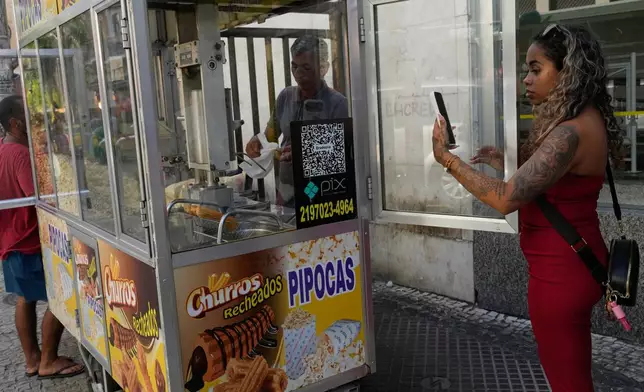
A woman pays for pop corn with the Pix free payment system in Rio de Janeiro, Thursday, April 16, 2026. (AP Photo/Silvia Izquierdo)
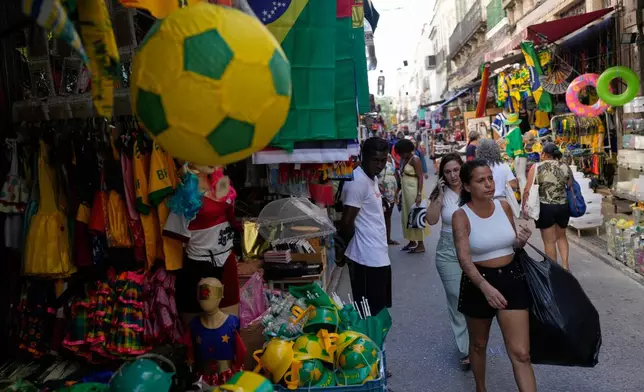
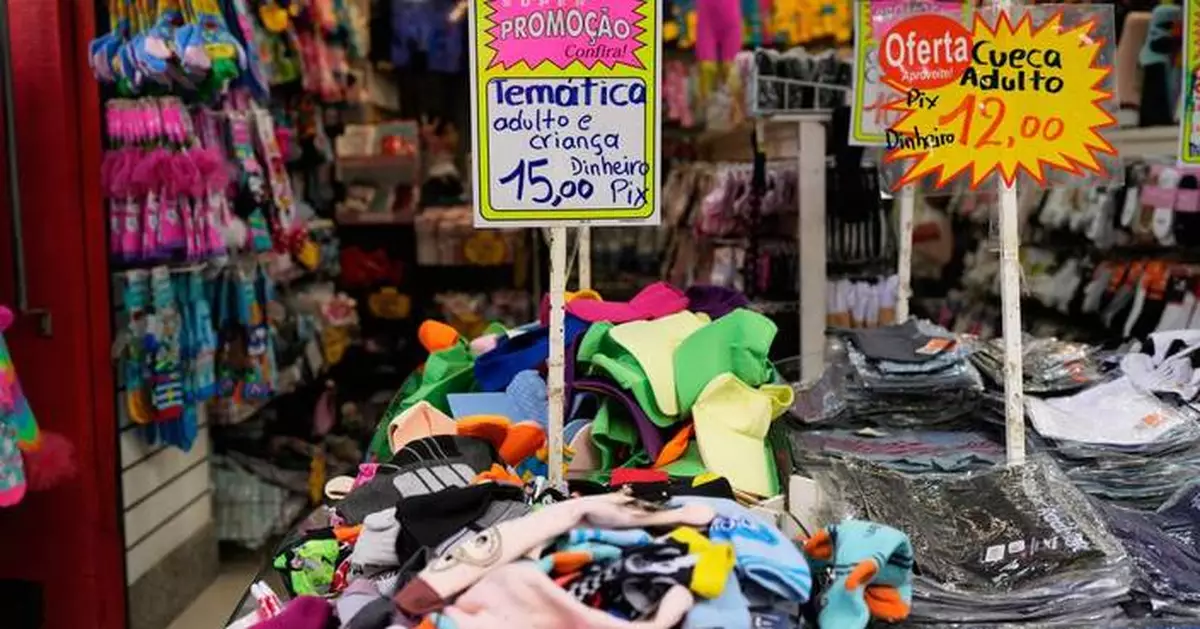
Shoppers walk through the Saara street market in Rio de Janeiro, Thursday, April 26, 2026. (AP Photo/Silvia Izquierdo)
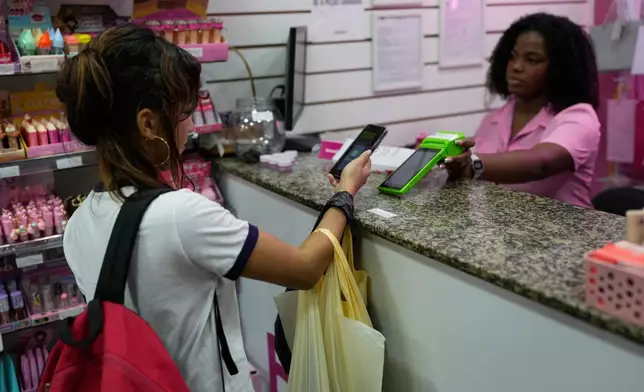
A woman pays using Pix, a free payment system, at a store in Rio de Janeiro, Thursday, April 16, 2026. (AP Photo/Silvia Izquierdo)
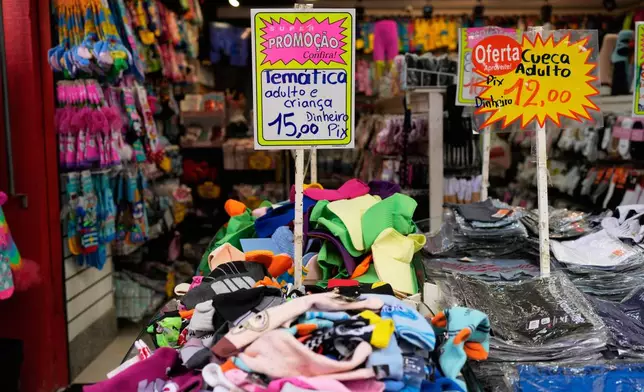
A sign offers payment via Pix, a free payment system, at a store in Rio de Janeiro, Thursday, April 16, 2026. (AP Photo/Silvia Izquierdo)
“The best (payment method) is PIX, the most used,” said Luis Felipe de Almeida, a 21-year-old vendor of iced tea and cassava starch biscuits on Ipanema beach in Rio de Janeiro. “No one walks around with cash anymore, everyone just uses their phone, so they use PIX.”
Launched in 2020, PIX allows anyone with a Brazilian individual taxpayer identification, registered companies or government entities to transfer funds in real time. The only requirement is a Brazilian bank account.
PIX also works with QR codes. Individuals pay zero fees for PIX transfers, and while some banks charge companies a fee for transactions, they are significantly lower than regular bank transfers in Brazil, which could also take hours to be completed.
In July, the Office of the U.S. Trade Representative (USTR) of U.S. President Donald Trump opened an inquiry into PIX, alleging it imposes unfair competition to U.S. credit card operators because it offers an alternative to transaction fees.
India has a similar payment system which is not being challenged by USTR, despite processing $300 billion in payments just in March. Similarly, it has no transaction fees.
Middle-class Brazilians use PIX for everything, for small payments and large purchases.
Marcello Palladini, a 57-year-old restaurant owner in Sao Paulo, uses PIX mostly to pay suppliers for transactions above 1,000 Brazilian reais ($200), since many wouldn't take credit cards for that kind of payment anyway. Still, he said most of his clients still prefer to pay him for lunch with credit cards or meal vouchers, though.
“When I want something quickly, I pay with PIX and it comes right away. I also do PIX with some suppliers who keep a tab and at the end of the month they send me a full bill,” Palladini said.
He criticized the unfair manner some banks charge companies transaction fees, but overall is a PIX fan.
“PIX works great, it is all instant,” he said.
Many large corporations in Brazil use PIX to pay their workers. Houses, cars and even helicopters can be bought through the same system — though hefty sums often have to get a bank approval first.
Despite its success, PIX is not without flaws. Criminal networks realized they could exploit the system by stealing phones and transferring tens of thousands of Brazilian reais instantly, leaving Brazil's police, banks and insurance companies struggling to contain the rapid movement of stolen funds.
Brazilian authorities and companies are tracking and often closing bank accounts that are involved in suspicious transactions and putting caps on PIX transfers from 8 p.m. until the next morning, so fraudsters can't move big sums at once as most clients are not paying attention to messages on their phones flagging a transaction has been made in their account.
The Brazilian Forum of Public Security, a think-tank, estimates between 24 million and 28 million people were hit by PIX-related crimes between January and September of last year, although they don't have an estimate of how much was lost.
“From the technical and legal standpoint, PIX is safe. But it is not immune to fraud because its risks are not in its technology; they are in people trying to fool others,” said Ana Paula Siqueira, an expert on Brazil's digital law. “The most common fraud involves psychological manipulation, fake IDs, urgent requests for payment.”
Still, those risks have not stopped 178 million of Brazil’s 213 million residents from registering for PIX.
“Love doesn't happen suddenly, it takes time,” shouted Claudia Quirino, a vendor of Brazilian dumplings at an open-air market in the Sao Paulo region of Pinheiros. “But PIX is instant! Buy now!”
AP journalists Lucas Dumphreys, Mario Lobao in Rio de Janeiro and Vineeta Deepak in New Delhi contributed to this report.
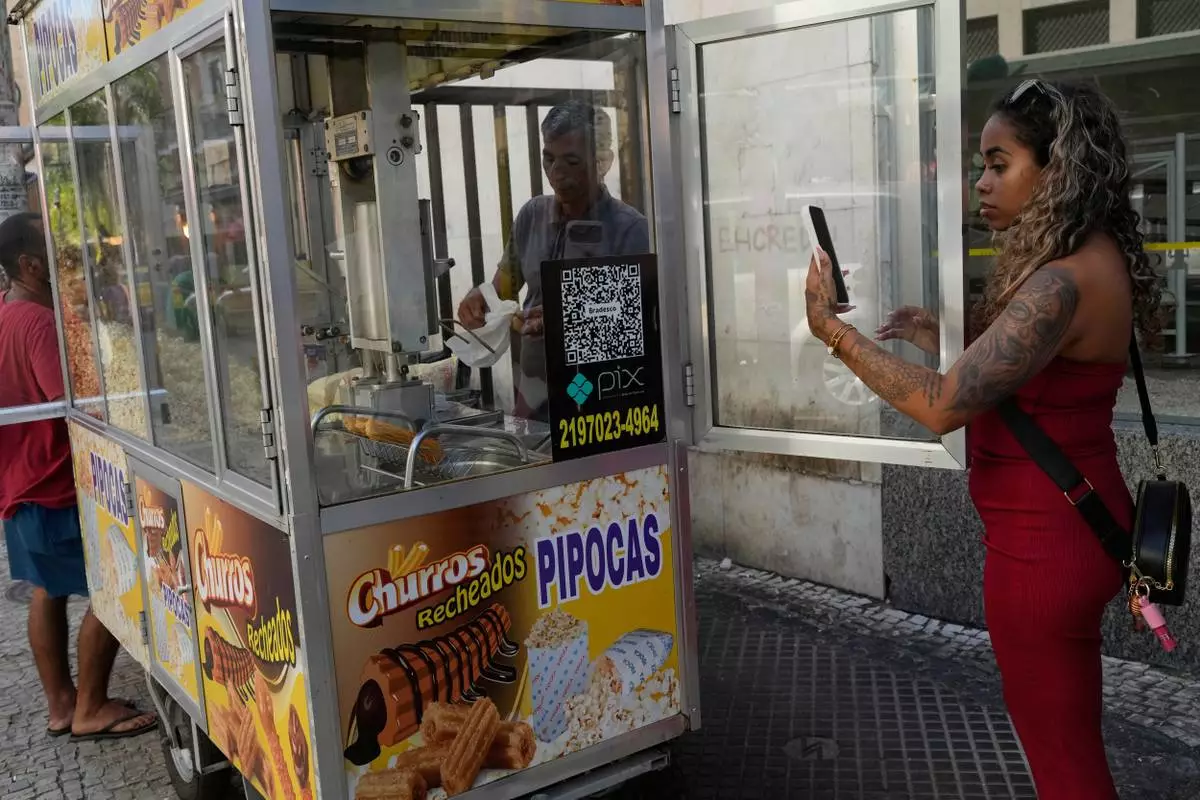
A woman pays for pop corn with the Pix free payment system in Rio de Janeiro, Thursday, April 16, 2026. (AP Photo/Silvia Izquierdo)
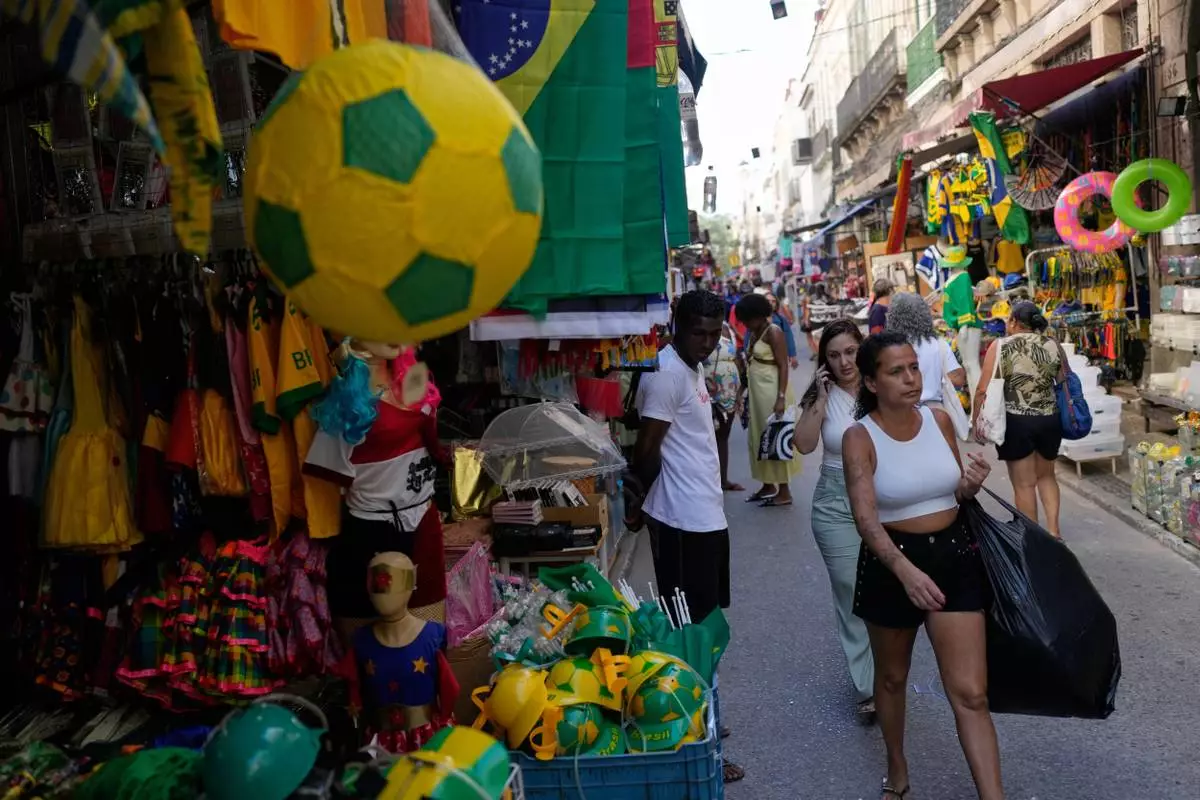
Shoppers walk through the Saara street market in Rio de Janeiro, Thursday, April 26, 2026. (AP Photo/Silvia Izquierdo)
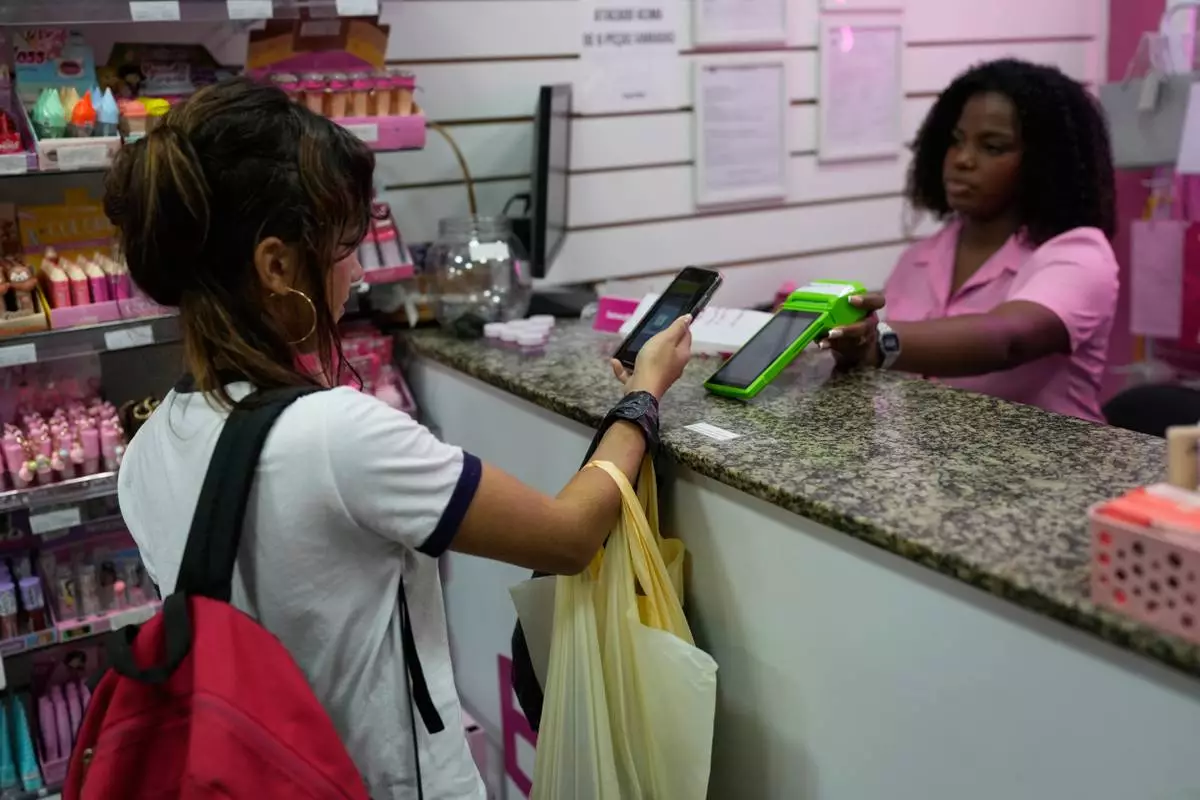
A woman pays using Pix, a free payment system, at a store in Rio de Janeiro, Thursday, April 16, 2026. (AP Photo/Silvia Izquierdo)
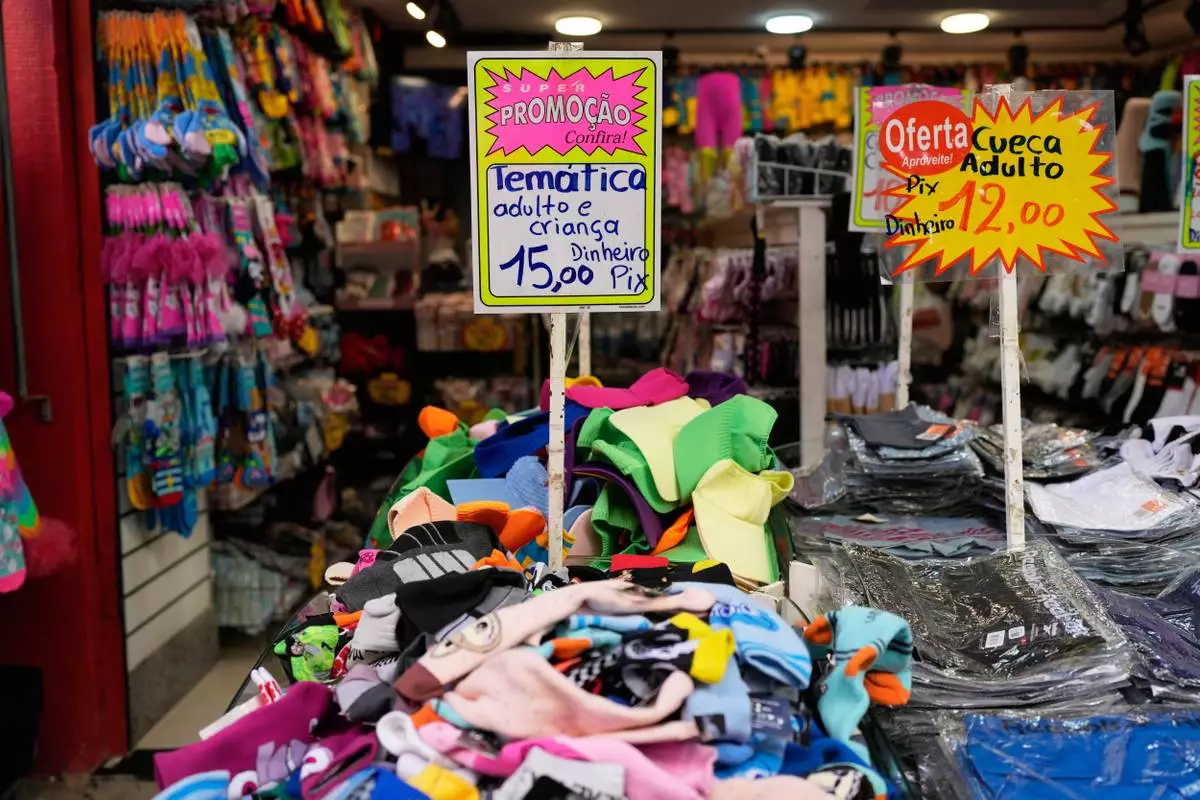
A sign offers payment via Pix, a free payment system, at a store in Rio de Janeiro, Thursday, April 16, 2026. (AP Photo/Silvia Izquierdo)