JERUSALEM (AP) — Palestinian authorities said Israeli police shot and killed a Palestinian man as he attempted to climb the concrete barrier separating the occupied West Bank from Jerusalem.
The Palestinian Health Ministry and the Palestinian Red Crescent identified the man as Zakaria Qatusa, 44, from the town of Deir Qadis, about 20 kilometers (13 miles) northwest of the site of the shooting Tuesday evening in the West Bank town of Al-Ram, which abuts the wall.
Click to Gallery
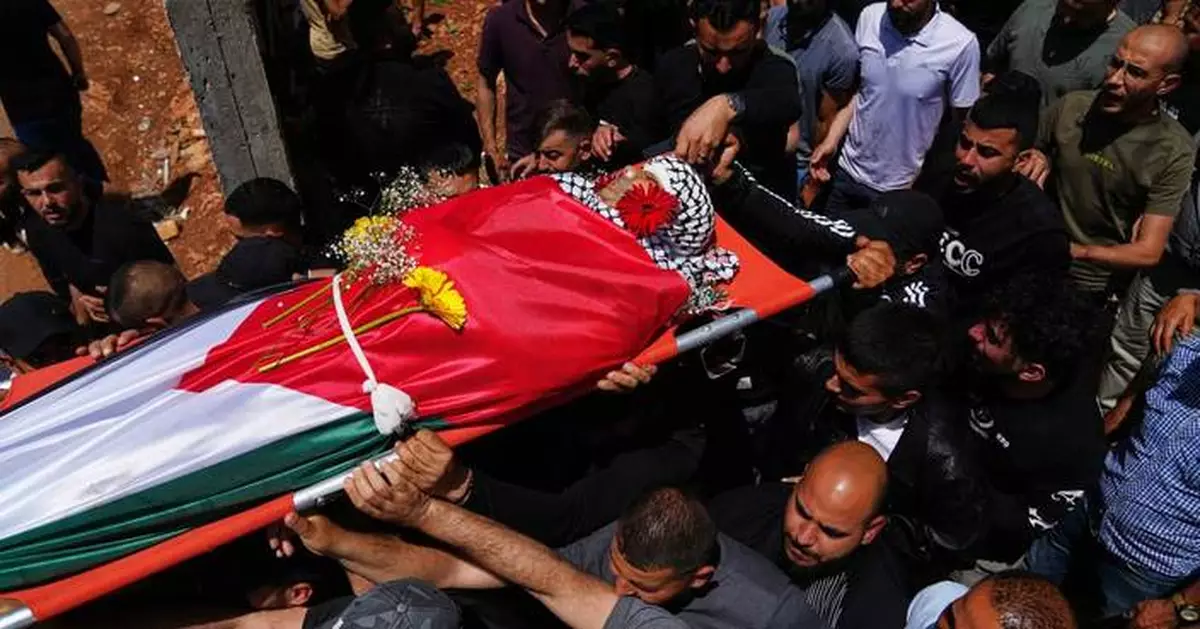
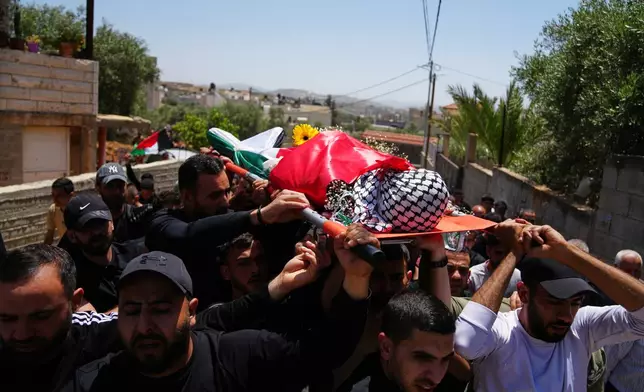
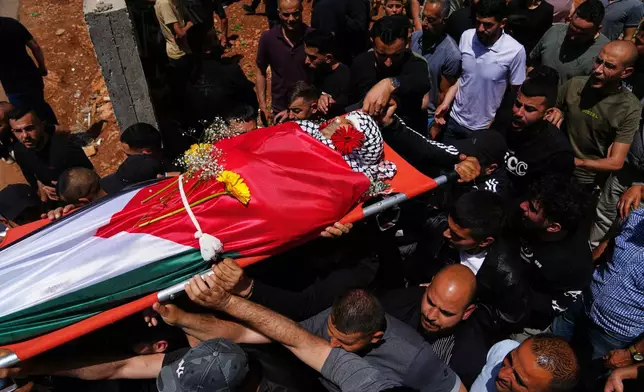
Mourners carry the body of Palestinian Zakaria Qatousa, during his funeral in the West Bank town of Deir Qaddis Wednesday, May 13, 2026. (AP Photo/Mahmoud Illean)
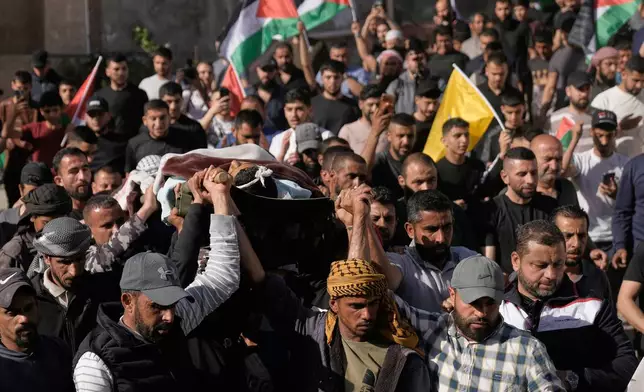
Mourners carry the body of Yousef Ka'abnah, 16, who was killed by Israeli army fire earlier today, during his funeral in West Bank village of al-Lubban al-Sharqiya, Wednesday, May 13, 2026. (AP Photo/Majdi Mohammed)
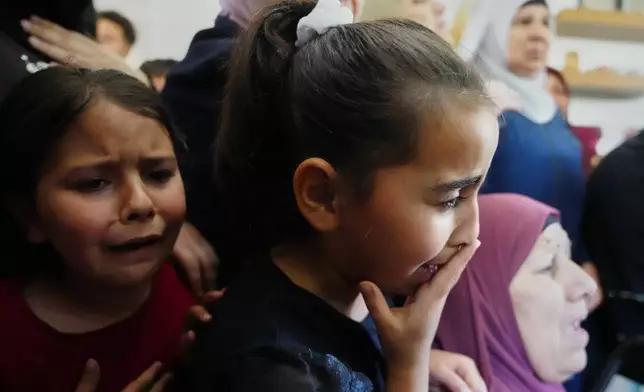
Children cry while they take the last look at the body of Palestinian Zakaria Qatousa, during his funeral in the West Bank town of Deir Qaddis Wednesday, May 13, 2026. (AP Photo/Mahmoud Illean)
Mourners carry the body of Palestinian Zakaria Qatousa, during his funeral in the West Bank town of Deir Qaddis Wednesday, May 13, 2026. (AP Photo/Mahmoud Illean)
Israeli police didn't immediately respond to queries about the shooting. The funeral for the man was held on Wednesday.
Khalid Qatusa, his brother, said that he was a father of four who was crossing the wall in order to work in Israel.
“He was forced to resort to this method as there was no other opportunity to meet the needs of his household and live a dignified life. This was the only way,” he said. “He was neither an aggressor nor a threat.”
An increasing number of Palestinians from the occupied West Bank have attempted to enter Israel illegally to work in recent years. Before the Israel-Hamas war, tens of thousands of Palestinians held permits to work in Israel, but access was sharply restricted after the attack by Hamas-led militants on southern Israel on Oct. 7, 2023.
Since then, unemployment has surged amid a deep economic slowdown and a shortage of jobs in the occupied West Bank. Other shootings have taken place at the same location separating the West Bank town of Al-Ram from Beit Hanina, an east Jerusalem neighborhood.
Also on Wednesday, a Palestinian teenager was killed in a clash with Israeli settlers in the northern West Bank village of Al-Lubban al-Sharqiya. The Ramallah-based Palestinian Health Ministry identified the victim as 16-year-old Youssef Kaabneh.
The Israeli military said soldiers and police officers entered the area in response to reports that livestock from an Israeli outpost was stolen. They said they worked to disperse a violent riot and were investigating the incident.
Family members said settlers and Israeli soldiers descended on the Bedouin community and that Kaabneh was shot during a confrontation involving a sheep herd. As Israeli settlers expand their presence and outposts, livestock theft has been a major source of conflict between Israelis and Palestinians this year.
“Our lives have become a living hell. Settlers can now enter any house or farm and confiscate whatever they want, as if we are spoils of war,” said Ismail Owais, a 60-year-old resident of the village.
According to the U.N. Office for the Coordination of Humanitarian Affairs, Israeli forces or settlers killed at least 47 Palestinians in the occupied West Bank this year as of May 11. Several, like Kaabneh, have been teenagers.
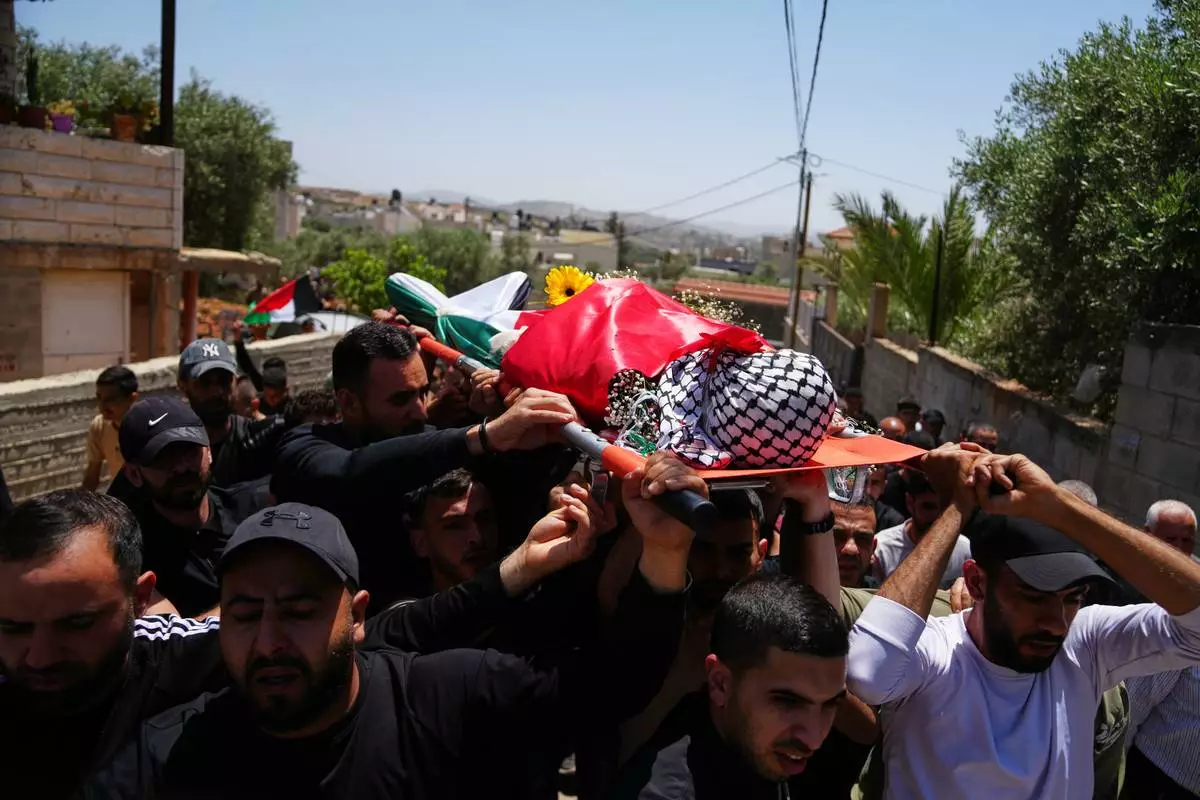
Mourners carry the body of Palestinian Zakaria Qatousa, during his funeral in the West Bank town of Deir Qaddis Wednesday, May 13, 2026. (AP Photo/Mahmoud Illean)
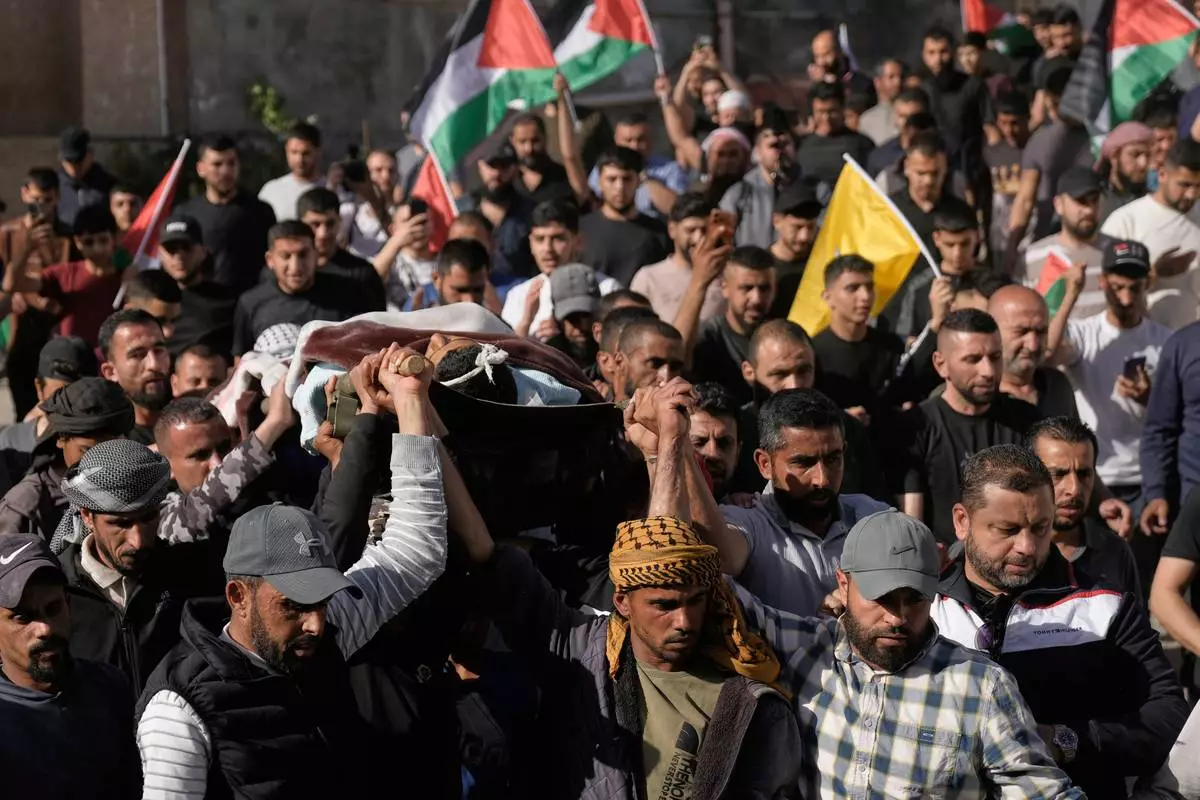
Mourners carry the body of Yousef Ka'abnah, 16, who was killed by Israeli army fire earlier today, during his funeral in West Bank village of al-Lubban al-Sharqiya, Wednesday, May 13, 2026. (AP Photo/Majdi Mohammed)
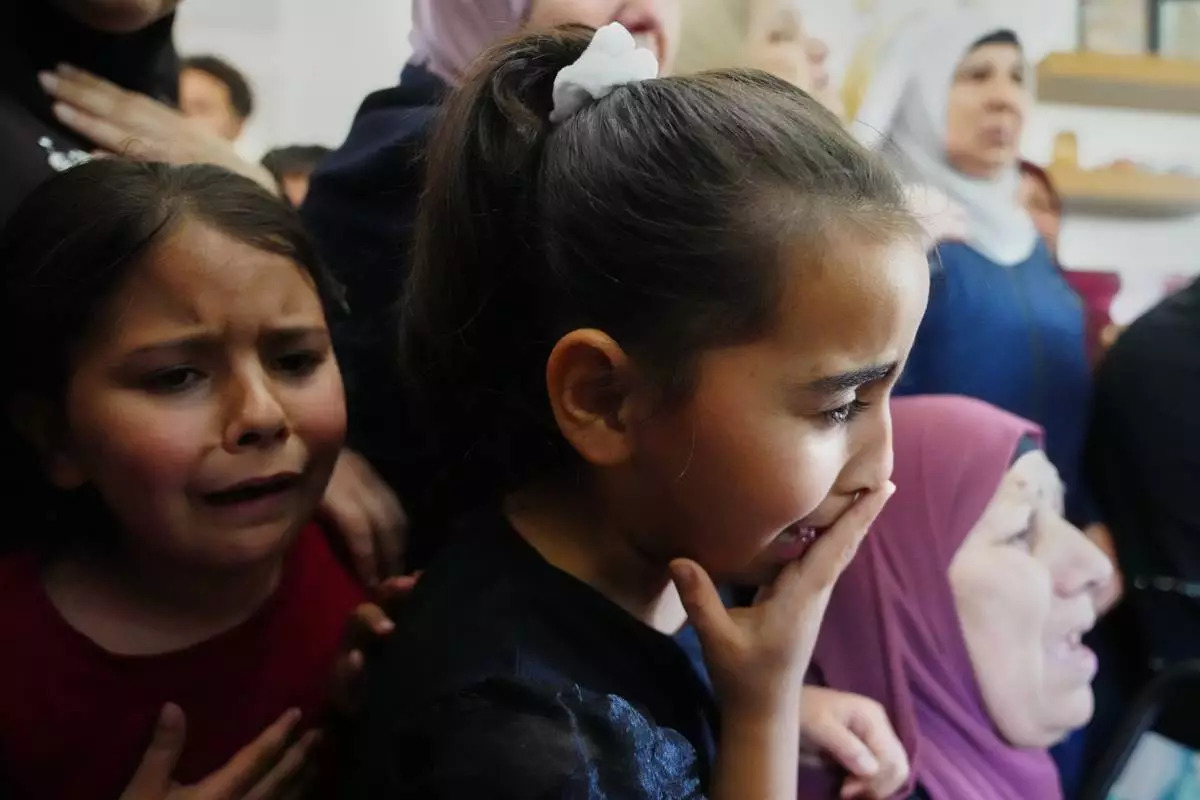
Children cry while they take the last look at the body of Palestinian Zakaria Qatousa, during his funeral in the West Bank town of Deir Qaddis Wednesday, May 13, 2026. (AP Photo/Mahmoud Illean)
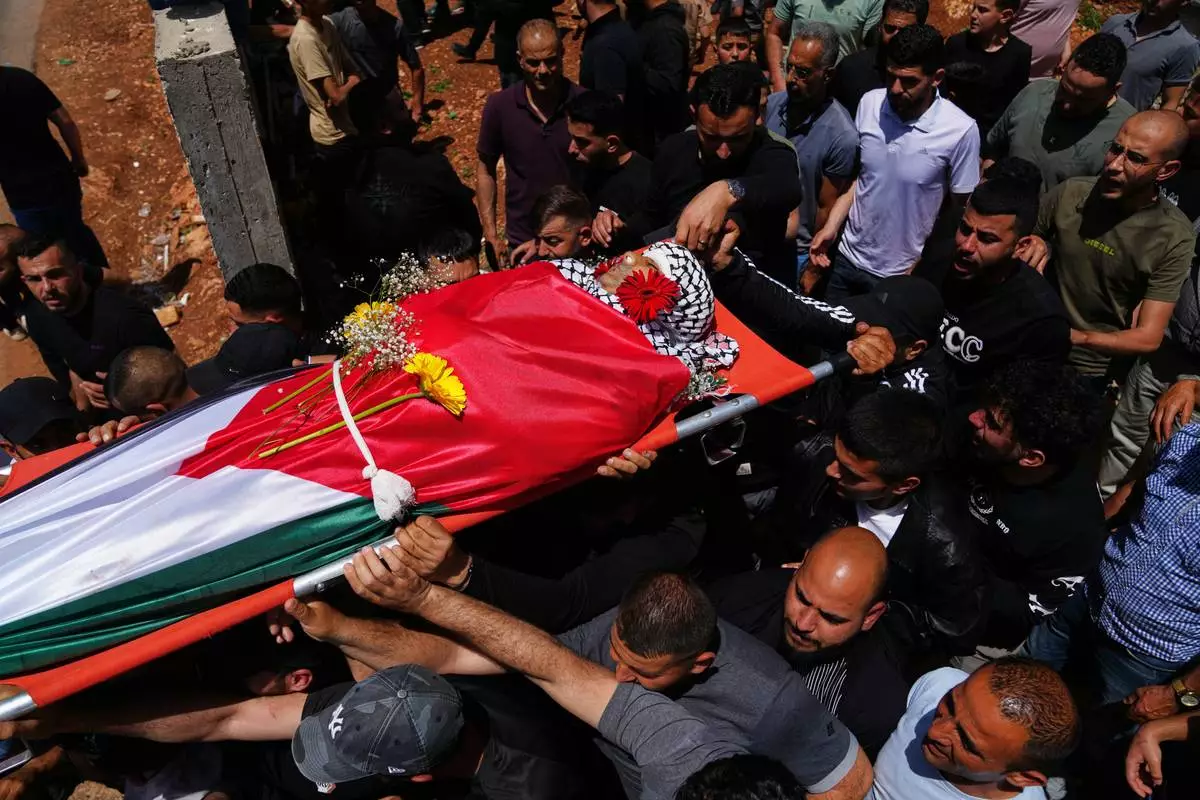
Mourners carry the body of Palestinian Zakaria Qatousa, during his funeral in the West Bank town of Deir Qaddis Wednesday, May 13, 2026. (AP Photo/Mahmoud Illean)
PARIS (AP) — French prosecutors on Wednesday asked judges to send former President Nicolas Sarkozy to prison — again — this time for seven years and fine him 300,000 euros ($330,000) over allegations that the late Libyan leader Moammar Gadhafi secretly funded his successful 2007 presidential campaign.
Sarkozy, 71, was sentenced in September 2025 to five years for criminal conspiracy, becoming the first former French president in modern history to be imprisoned.
He served 20 days in Paris’ La Santé prison before being released in November under court supervision. He appealed; prosecutors followed, seeking to revive the charges he beat at trial and impose a longer sentence. The appeal runs until early June, with a verdict expected Nov. 30.
The former president has faced multiple corruption cases in recent years, but the Libya case carries by far the heaviest political and symbolic weight, alleging that a foreign dictatorship helped bring a French president to power.
The prosecution Wednesday asked the three judges hearing the appeal to find Sarkozy guilty of corruption, illegal campaign financing and concealing the embezzlement of Libyan public funds — three charges of which he was cleared at his first trial. A separate request would ban him from holding public office for five years.
Sarkozy’s lawyer Christophe Ingrain told reporters after the hearing that the prosecution’s request was “strictly identical” to what financial prosecutors had unsuccessfully sought at the first trial. “There is no Libyan money in his campaign, in his estate,” he said. “Nicolas Sarkozy is innocent, and we will demonstrate it in fifteen days.”
Other members of Sarkozy's inner circle, including former chief of staff Claude Guéant, former Interior Minister Brice Hortefeux, longtime Sarkozy fixer Alexandre Djouhri, and Sarkozy's 2007 campaign treasurer Éric Woerth, also face charges in the case. Prosecutors have sought sentences between 10 months and six years and fines between 3,000 and 4 million euros ($3,500 to $4.68 million).
The prosecution also sought an international arrest warrant against Beshir Saleh, once head of Gadhafi’s cabinet, who has lived in exile since the Libyan regime fell in 2011 and never appeared at either trial.
Allegations of Libyan financing first surfaced in 2011. French investigators later established that some 6 million euros ($7 million) were transferred from Libya into accounts controlled by Ziad Takieddine, a go-between who died last September, days before the original verdict.
At the heart of the case are two secret meetings in late 2005 between Guéant, Hortefeux and Abdallah Senoussi — Gadhafi’s brother-in-law and intelligence chief. Senoussi had been sentenced in absentia by a French court in 1999 to life in prison for ordering the 1989 bombing of UTA Flight 772 over Niger, which killed 170 people, including 54 French nationals. Prosecutors say Sarkozy’s camp promised to look into Senoussi’s French conviction in exchange for the campaign money.
Sarkozy has rejected the account. “Why would I have chosen Mr. Gadhafi, whom I had never met before, to set up a suspicious financing arrangement with him during a 30-minute meeting?” he asked the judges at the appeal hearing in April. “It makes no sense.”
“I owe the truth to the French people. I’m innocent,” Sarkozy added, saying no Libyan money had reached his 2007 campaign.
Prosecutors this week called Sarkozy the “instigator” of the alleged corruption deal, going further than the first trial, where judges had found him guilty only of letting his aides approach the Libyan regime on his behalf.
The first court cleared him of corruption on technical grounds, ruling that as a presidential candidate, he lacked the “public authority” status required by France’s anti-corruption law.
Sarkozy has been convicted in two other cases that are now final. France’s top court upheld his conviction in November over the financing of his failed 2012 reelection bid, known as the Bygmalion affair, for which he received a one-year sentence — six months firm and six months suspended.
A French judge ruled last week that he could serve the six-month sentence on conditional release rather than an electronic ankle tag, citing his age, though that ruling is not yet final. He was also convicted of illegally wiretapping a judge.
The three judges are not bound by the prosecution’s requests. Defense lawyers are due to begin their closing arguments in two weeks.

FILE- Former French President Nicolas Sarkozy arrives at the appeals courthouse in Paris, France, Monday, March 16, 2026, for his trial over alleged illegal financing of his 2007 presidential campaign by the government of late Libyan leader Moammar Gadhafi. (AP Photo/Thibault Camus, File)