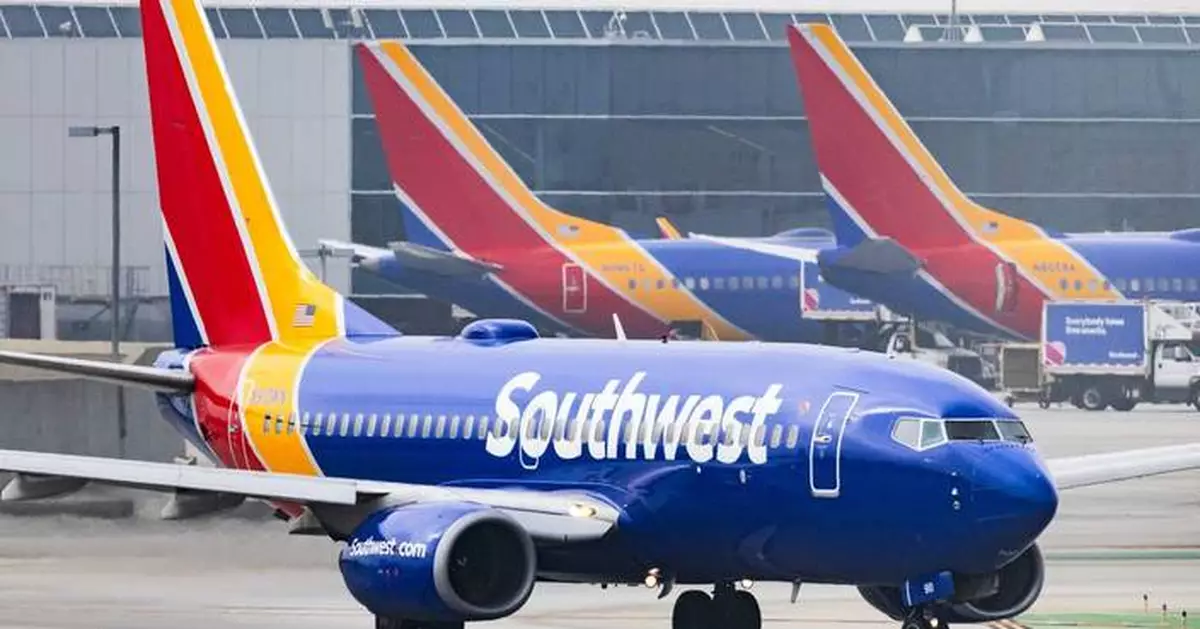
Safety experts recommended Wednesday that airlines develop realistic training to prepare their pilots to deal with smoke filling the cockpit, like what happened on a Southwest Airlines plane after a bird strike.
The National Transportation Safety Board said the pilots who safely landed that plane back in New Orleans told investigators the situation was far more challenging than anything they had ever experienced in training.
“If such an event occurred at night or in instrument meteorological conditions, the consequences could be catastrophic,” the NTSB determined.
The Federal Aviation Administration receives reports of smoke in the cockpit almost daily, but the NTSB said the agency still doesn't require airlines to conduct realistic smoke-in-cockpit simulations. Instead, the training usually just consists of a discussion of what to do in that situation. The FAA didn't immediately respond to the new recommendation on Wednesday.
The Southwest pilots at the controls during this incident in December 2023 said they had trouble seeing their instruments and checklists. They quickly donned oxygen masks and followed emergency procedures to land. None of the 139 people aboard were hurt. In a separate incident nine months earlier involving another Southwest 737 Max, smoke filled the cabin after a bird strike after takeoff in Havana, Cuba.
Aviation safety expert Steve Arroyo, who was a pilot for United Airlines, said it is crucial that pilots are prepared to deal with smoke and quickly shut off the valve letting it into the cockpit, so he supports the recommendation. He said it would be good for pilots to experience dealing with smoke every time they go back for refresher training every nine months, so they’ll have the “muscle memory” to respond.
“Smoke in the cockpit is a very serious and time-critical emergency,” Arroyo said. “And I think creating the pilot awareness through real-life training is essential to reducing this potential safety threat.”
Southwest spokesman Lynn Lunsford said the airline is reviewing the new recommendation, but it is committed to ensuring its pilots can handle these kinds of emergencies and seeing that the underlying flaw in the engines on the 737 Max is fixed.
“Southwest routinely evaluates and enhances pilot training as part of its robust Safety Management System. As part of that effort, Southwest notified its Flight Crews about the effects of certain malfunctions following the two events in 2023 and reiterated the importance of following established safety procedures that are part of the company’s pilot training program,” Lunsford said in a statement.
The Airlines for America trade group said the airlines work closely with the NTSB and FAA “with a continual focus on maintaining safety as the highest priority.”
Last year, the NTSB urged Boeing and engine maker CFM International to quickly develop a software fix for the engines on the 737 Max to help prevent smoke from filling the cockpit or cabin after a safety feature is activated following a bird strike.
Spokesman for the engine and plane makers said the software fix for the engines is still being developed.
Air from the left engine on a 737 Max flows directly into the cockpit, while air from the right engine flows into the passenger cabin.
A safety device CFM added to these engines to help limit damage after a bird strike had the unintended consequence of contributing to smoke inside the plane. The device releases oil after a bird strike, which generates a significant amount of smoke.
Both Boeing and CFM have said they are committed to addressing the engine issue, and the FAA said last year that the repair will be required as soon as it is ready.
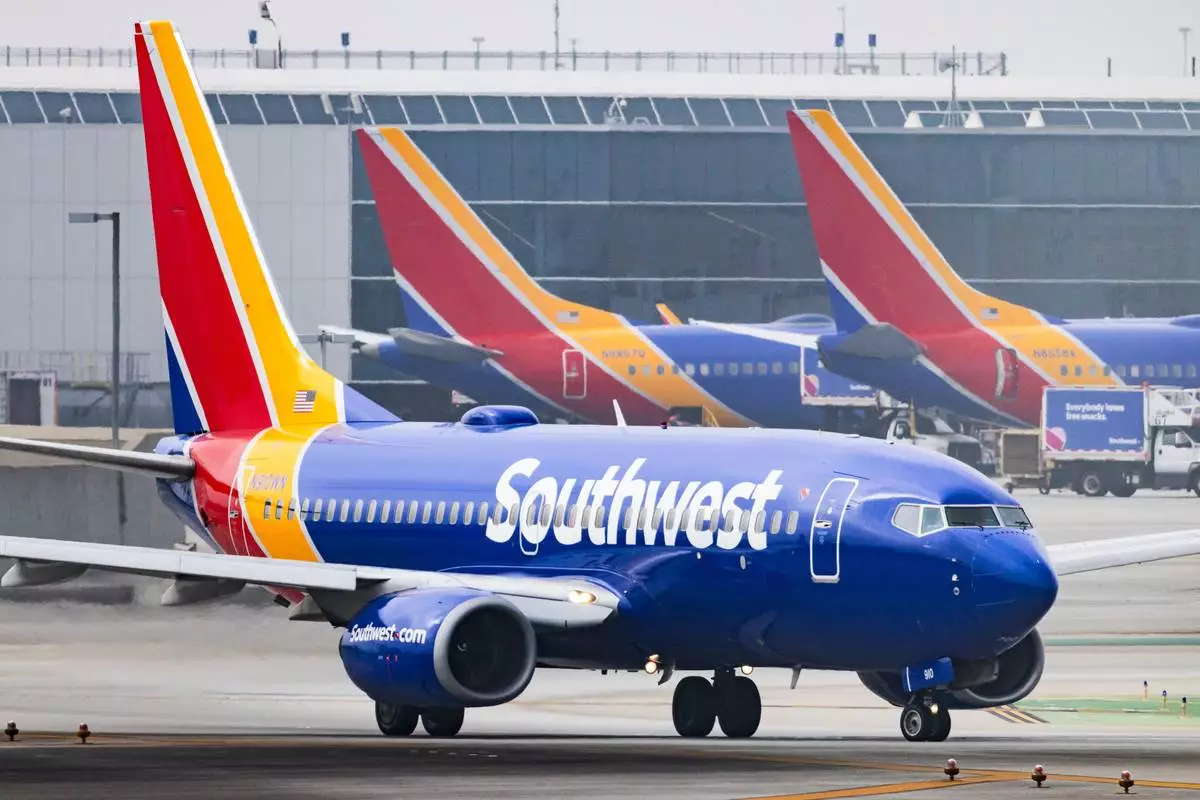
FILE - A Southwest Airlines plane is on the runway at Los Angeles International Airport on March 23, 2026, in Los Angeles. (AP Photo/Ethan Swope, File)
SIOUX FALLS, S.D. (AP) — For America's 250th birthday, the U.S. Postal Service is releasing special edition stamps featuring one of the nation's icons: the bald eagle.
The stamps unveiled Thursday at the National Eagle Center in Wabasha, Minnesota, showcase the bird across five major life stages, from a fuzzy hatchling to the iconic white-headed adult depicted on the country's seal. They were available for immediate purchase across the United States.
“The fact that we’re seeing the eagles in all different stages of its life, it’s sort of making us look back at the stages of the life of our country,” said Steve Kochersperger, a historian at the Postal Service. “At one time, we were just fuzzy little hatchlings, too.”
The bald eagle has been a national emblem since Congress adopted the Great Seal in 1782, though it wasn't designated the national bird until 2024.
The bird has long symbolized American values like strength, freedom and independence, said Kochersperger. At the top of the food chain, the bald eagle dominates in the sky alone with its impressive wingspan and sharp talons.
Some believe Benjamin Franklin wanted the wild turkey to be the national bird because the eagle steals food from other birds, but Kochersperger said that's a myth.
There's another reason why it makes a strong American symbol: the bald eagle is a major conservation success story. In the 1960s, eagles became a rare sight in the U.S. because of poisoning by the pesticide DDT.
But that decline was reversed, thanks to a 1972 DDT ban and the bald eagles' listing as an endangered species in 1978.
“The public relations campaign brought greater awareness that, ‘Hey, this is our national symbol, but they may all be gone if we don’t change our ways,’” Kochersperger said. “And that turned out to be very effective.”
In 2007, the bald eagle was removed from the endangered list, and there are now more than 300,000 eagles in the continental United States, according to the U.S. Fish and Wildlife Service.
David Sibley, the Massachusetts-based artist and bird watcher behind the stamp collection, said the conservation story is part of what makes him think of the bald eagle as a symbol.
“Maybe seeing a bald eagle on the stamp as a bird, living its life from nestling to adult, will hopefully make people think about the natural world and how important things like eagles are, not as a symbol but as part of the ecosystem around us,” he said.
Sibley spent nearly a year working on the digital illustrations for the collection. As someone who usually draws life-sized birds, the tiny stamp size was perhaps the biggest challenge, so he chose to focus on the bald eagle’s head to show as much detail as possible.
Postage stamps have long served as a way to celebrate holidays and highlight American culture, but they can also be educational, if you look closely.
“A stamp does not demand your attention, but it rewards it,” Kochersperger said. “A tremendous amount of planning and effort went into producing that tiny little piece of paper.”
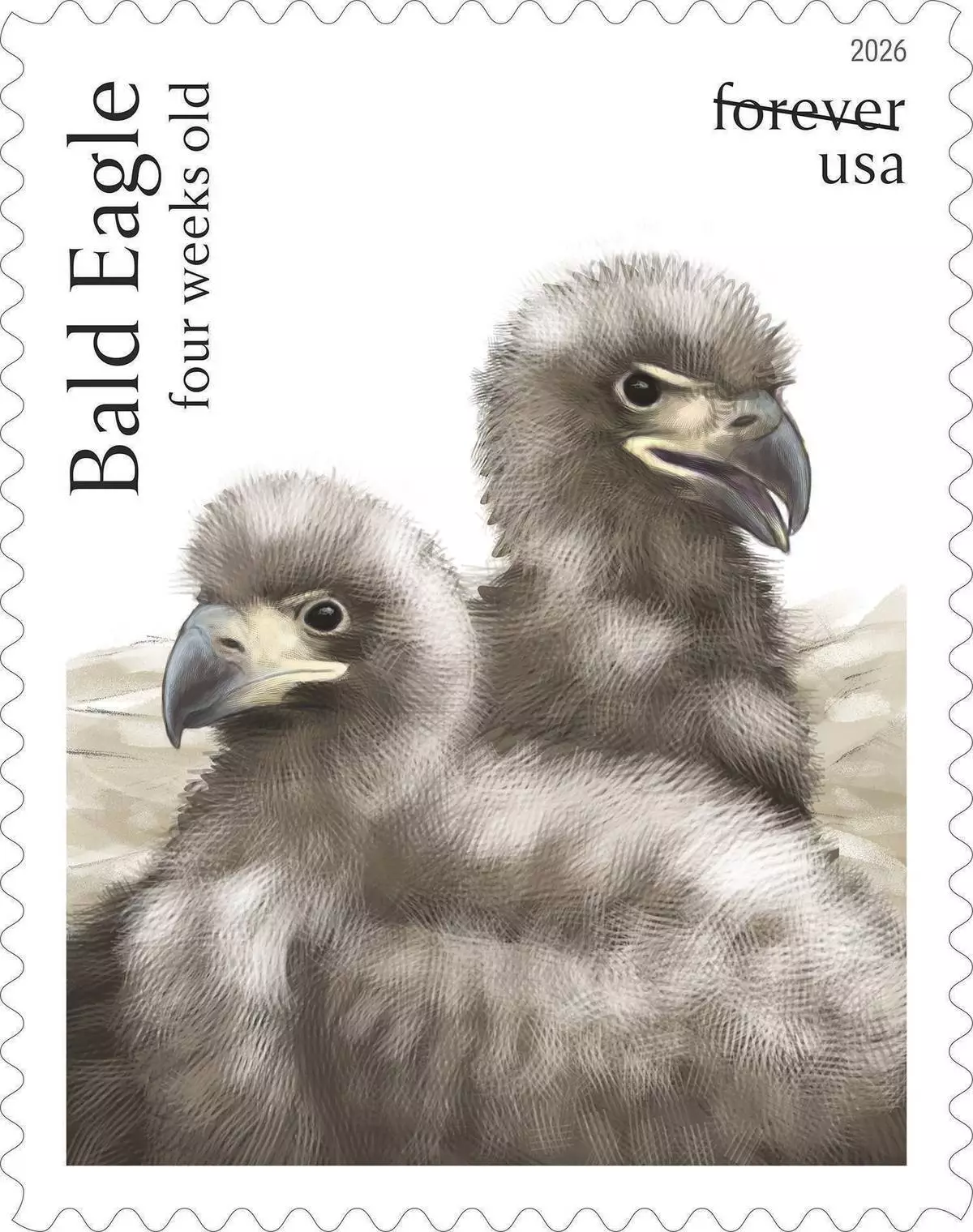
This image provided by the United States Postal Service shows a new bald eagle stamp being released Thursday, May 14, 2026, featuring two four-week-old eagles. (United States Postal Service via AP)
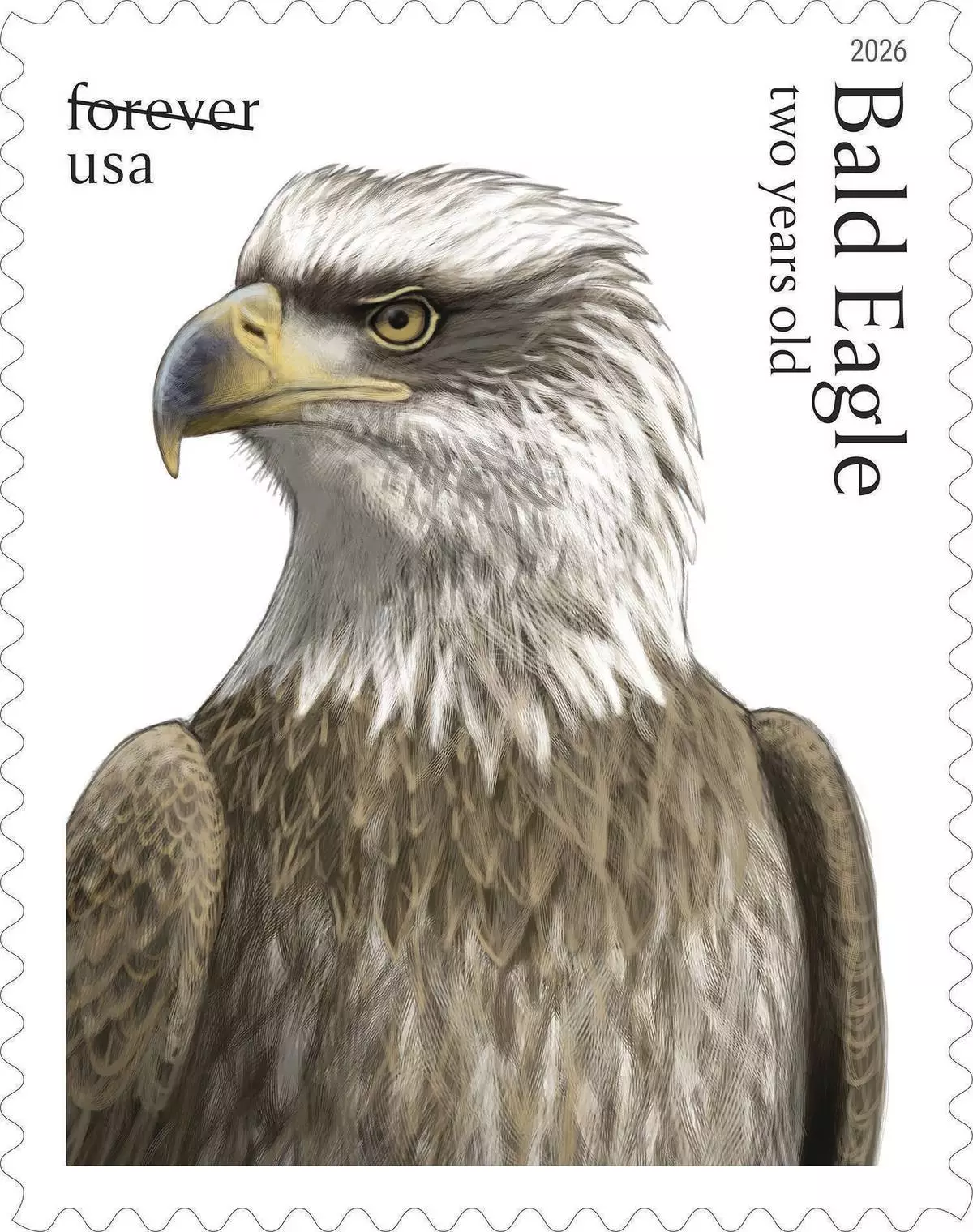
This image provided by the United States Postal Service shows a new stamp being released Thursday, May 14, 2026, featuring an immature adult bald eagle. (United States Postal Service via AP)
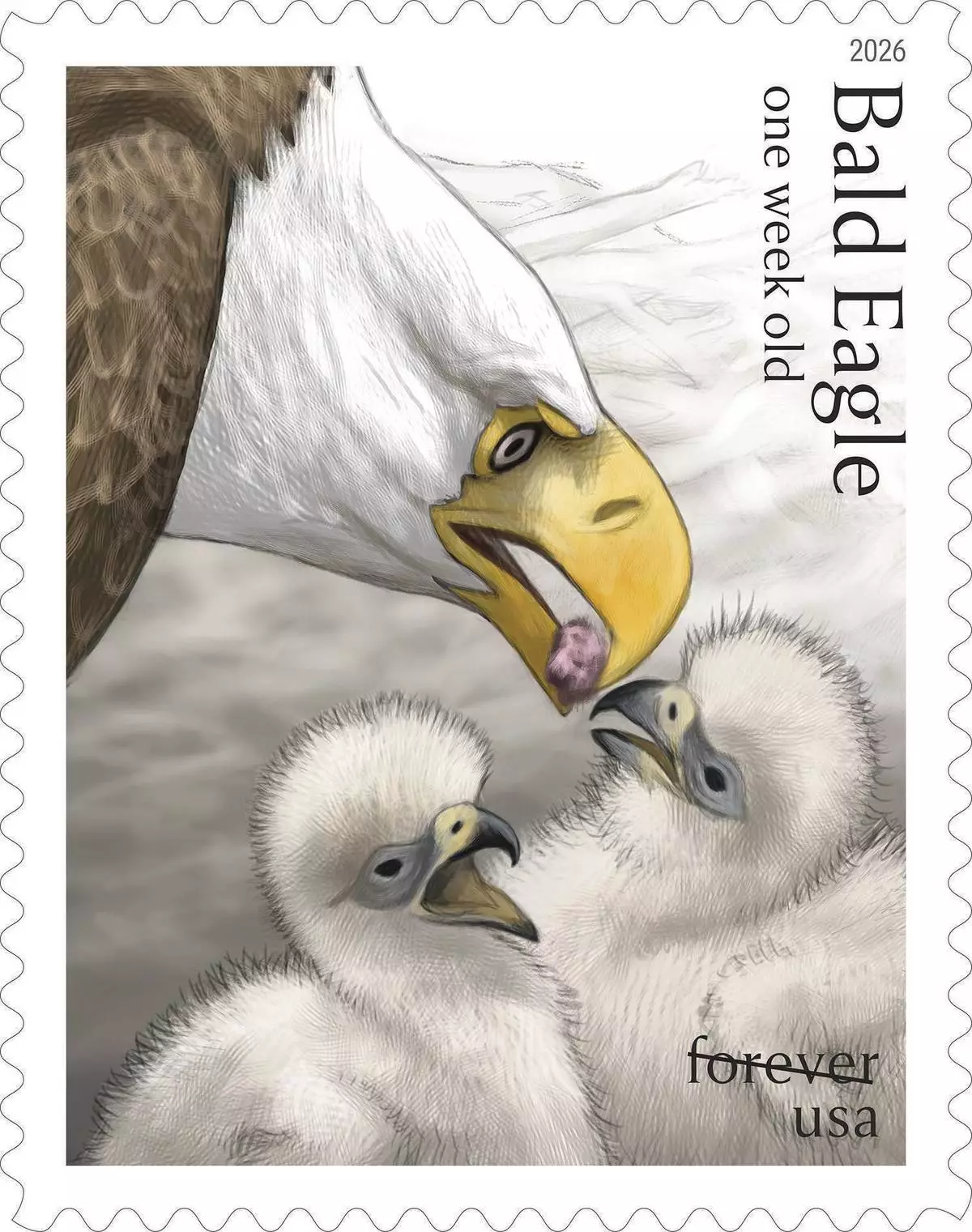
This image provided by the United States Postal Service shows a new bald eagle stamp being released Thursday, May 14, 2026, featuring two fuzzy hatchlings. (United States Postal Service via AP)
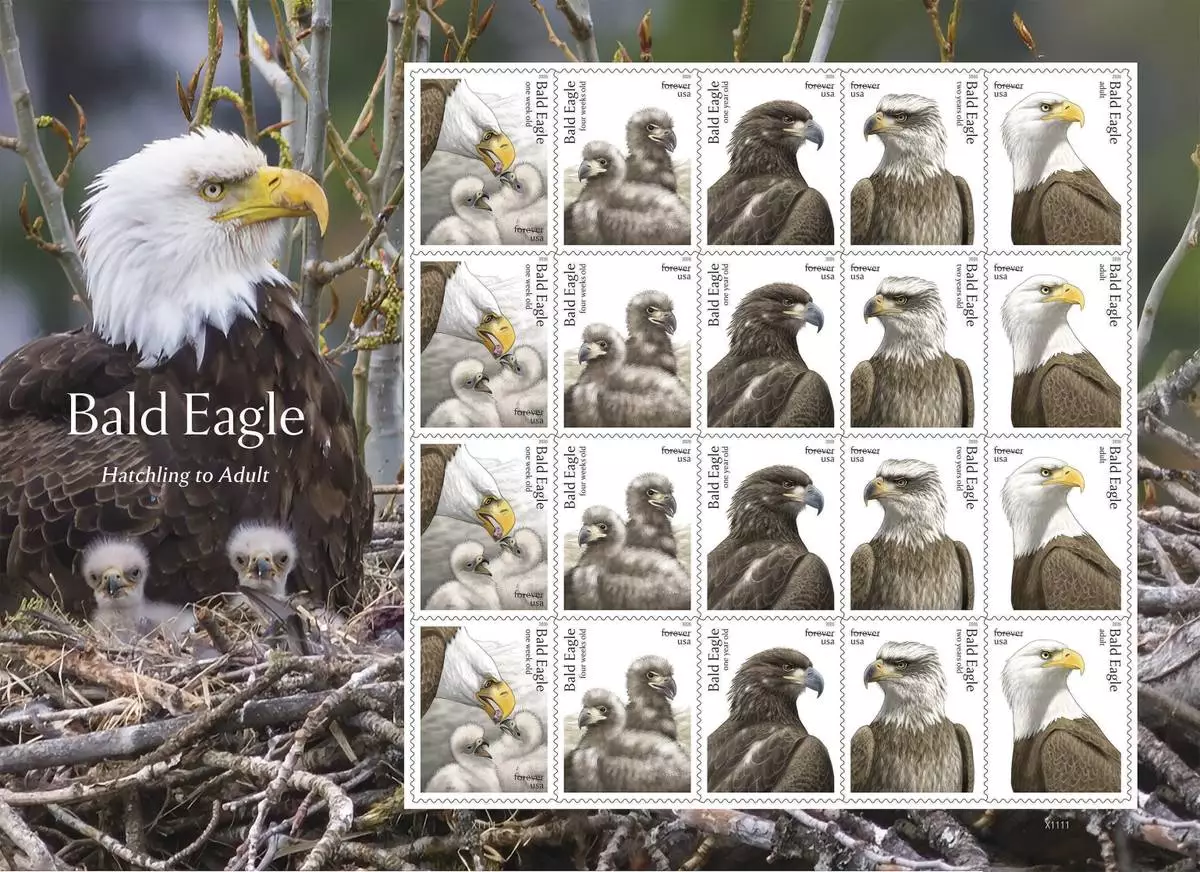
This image provided by the United States Postal Service shows bald eagle stamps being released Thursday, May 14, 2026, featuring five stages of eagle development, from hatchling to adult. (United States Postal Service via AP)
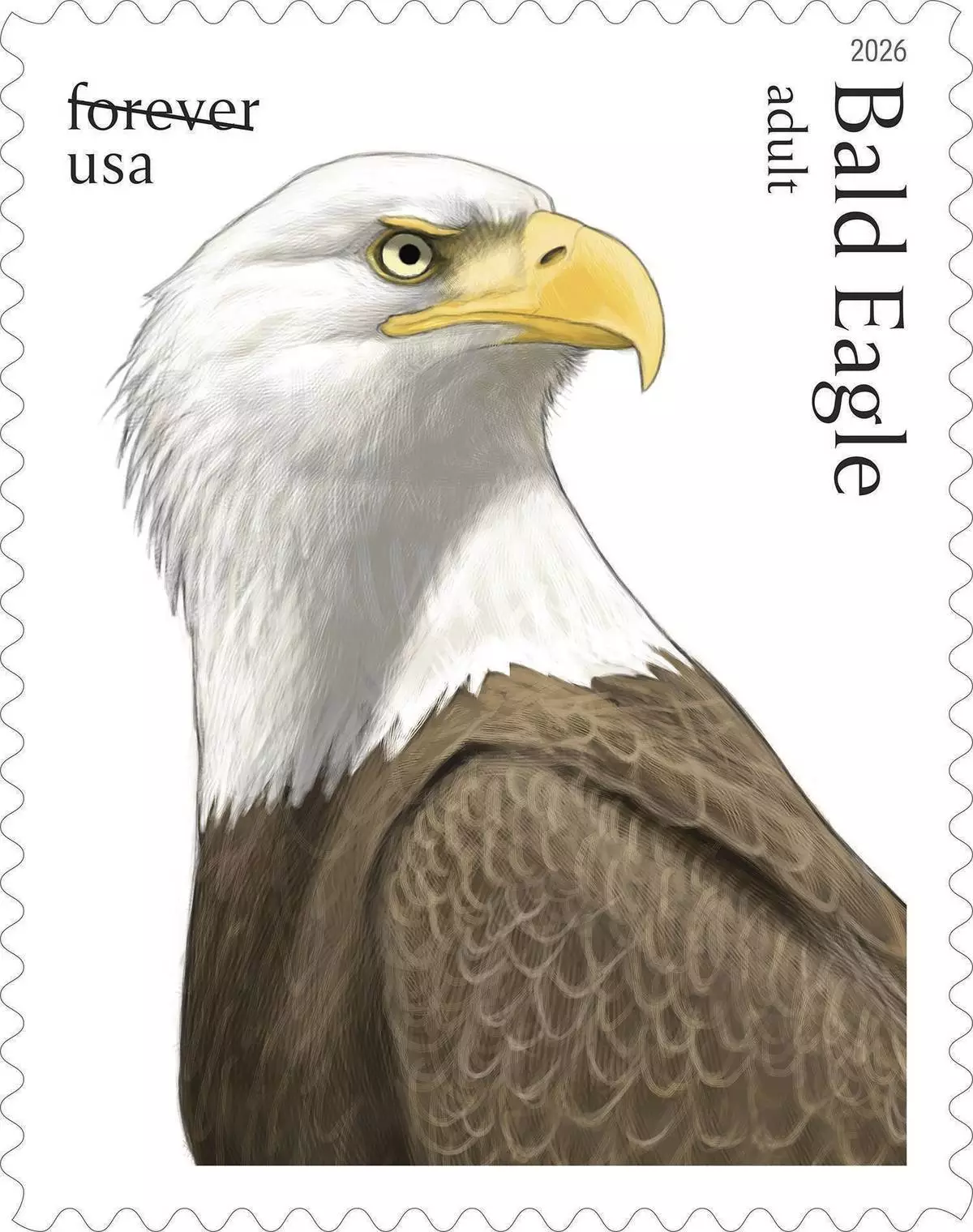
This image provided by the United States Postal Service shows a new stamp being released Thursday, May 14, 2026, featuring an adult bald eagle. (United States Postal Service via AP)