RIYADH, Saudi Arabia & DUBAI, United Arab Emirates--(BUSINESS WIRE)--May 14, 2026--
Stitch, the operating system built for modern financial institutions, today announced it has raised $25 million in Series A funding led by Andreessen Horowitz (a16z). The investment marks a16z’s first in the GCC and brings Stitch’s total funding to $35 million. In addition to a16z, existing investors Arbor Ventures, COTU Ventures, Raed Ventures, and SVC also participated in the round.
This press release features multimedia. View the full release here: https://www.businesswire.com/news/home/20260514070694/en/
Despite spending over $1 trillion on digital transformation in the last three years, most financial institutions are still running on the same fragmented, legacy infrastructure that has defined the sector for decades. Globally, banks spend $700 billion a year on technology — yet launching a new product still takes years, and upgrading a core system still risks bringing operations to a halt.
Now, as AI reshapes every industry, that infrastructure gap has become existential: no financial institution can meaningfully adopt AI without first having a clean, reliable system of record to build on.
Built by operators who spent years at NPCI, FIS, Barclays, Santander, and Azentio, Stitch was designed to lay that foundation. The platform gives financial institutions a single, cloud-native stack spanning lending, cards, payments, and ledgers — one they can adopt gradually, module by module, without ripping out existing systems overnight. By replacing the fragmented core with a modern system of record, Stitch unlocks the AI transformation that institutions have been promised but cannot reach without the right infrastructure.
“Financial institutions globally run on fragmented, legacy infrastructure that should have been left behind 20 years ago. Now every institution wants to adopt AI, but AI on top of broken infrastructure is a dead end,” said Mohamed Oueida, founder and CEO of Stitch. “We built Stitch to fix that, and we're proud to have Andreessen Horowitz alongside us.”
In the last six months alone, more than $5 billion has been transacted on the Stitch platform. Customer numbers grew 10x in 2025, and revenue grew 20x in the same period.
Stitch currently operates across the GCC, Africa — including Egypt and Kenya — and Southeast Asia, with customers including Raya Financing (the lending arm of Hyundai and Peugeot), LuLu Exchange, Noqodi, and Foodics. The company plans to continue expanding with the goal of servicing financial institutions worldwide.
“Financial institutions are sitting on decades of infrastructure debt, and that debt is now the single biggest obstacle to AI adoption. What Stitch is building — a modern, unified system of record — is what makes everything else possible. We're excited to support them, and honored to make this our first investment in the region," said Alex Rampell, General Partner at Andreessen Horowitz.
The fresh capital will go toward accelerating product development, deepening Stitch’s presence across the GCC and broader MENA region, and expanding its global go-to-market operations.
For more information, visit https://stitch.co.
About Stitch
Stitch is a Riyadh-headquartered financial technology provider delivering an operating system built for modern financial institutions.
With a unified platform, Stitch unlocks an expanding set of use cases from lending and cards to payments and ledgers, giving teams everything they need to launch faster, operate leaner, and scale with confidence.
Replacing fragmented and legacy systems with a modern stack, Stitch is on a mission to simplify how the world builds and operates financial products, so the institutions that rely on it can focus on what matters most: their customers.
For more information, visit https://stitch.co
About Andreessen Horowitz
Andreessen Horowitz (aka a16z) is a venture capital firm that backs bold entrepreneurs building the future through technology. We are stage agnostic: We invest in seed to venture to growth-stage technology companies, across bio + healthcare, consumer and enterprise apps, crypto, fintech, infrastructure, and companies building toward American dynamism. a16z has over $90B under management across multiple funds.
*Source: AETOSWire
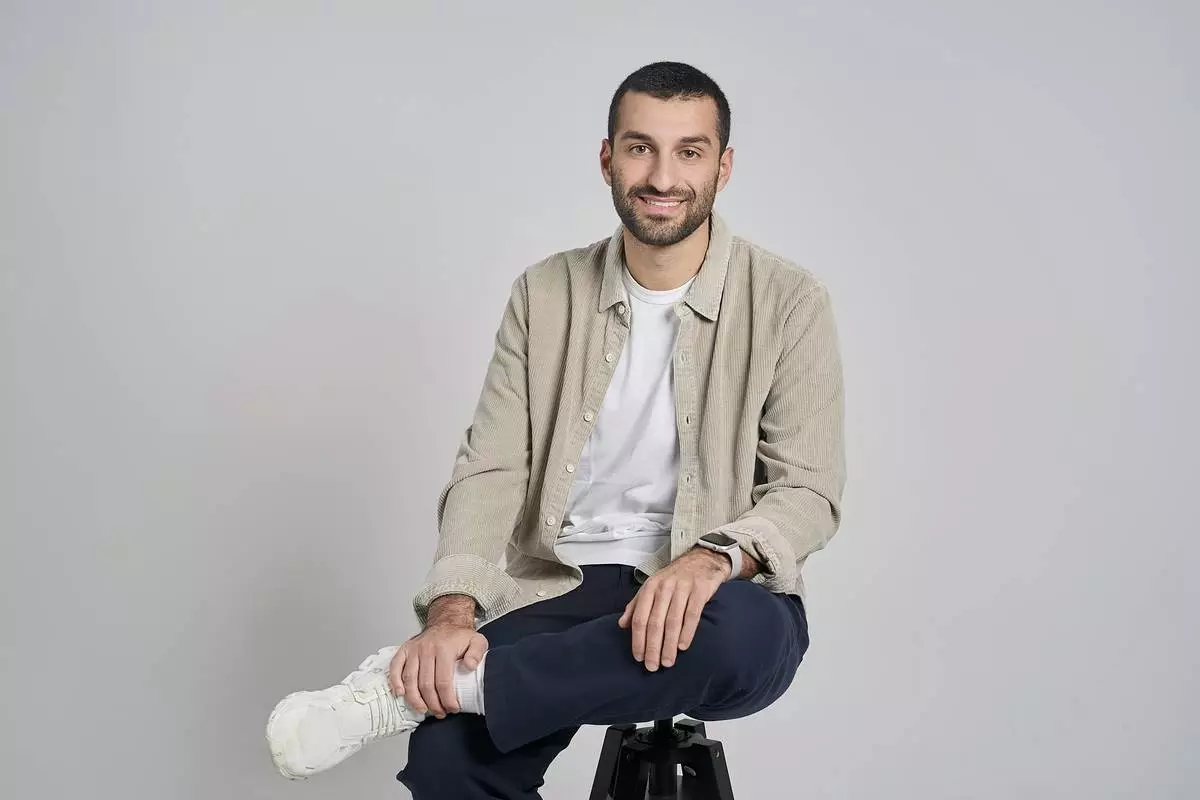
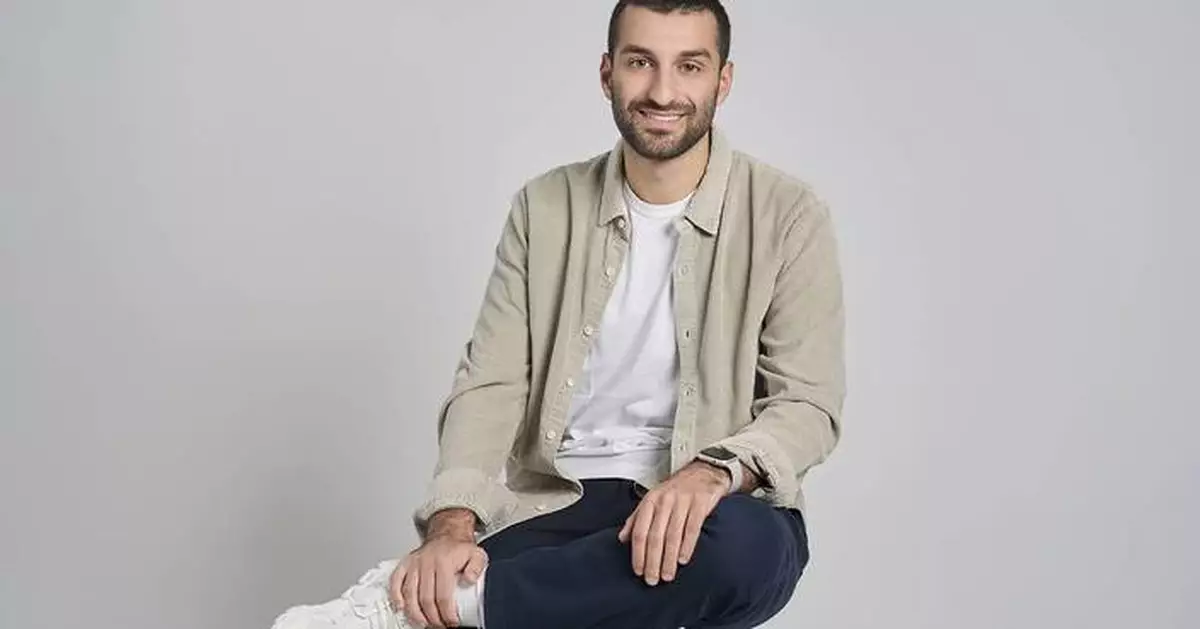
Mohamed Oueida - Founder & CEO, Stitch (Photo: AETOSWire)
PARIS (AP) — World-famous as the resting place of Napoleon, the gilded dome of the Invalides in Paris draws millions of visitors. But behind the landmark’s grand façade lies a lesser-known mission: serving as a home and hospital for wounded soldiers and victims of war for more than 350 years.
Built in the 17th century under King Louis XIV, the National Institution of Invalides houses dozens of residents — among them military veterans, Holocaust survivors and civilian victims of conflicts and attacks who receive long-term, medically supervised care.
The aging facilities are undergoing a major state-funded renovation estimated at 100 million euros ($108 million), with private donors invited to sponsor upgrading individual rooms.
This month, the hospital granted rare access to reporters from The Associated Press, allowing them into rooms that lie on either side of the centerpiece of Les Invalides, a soaring mausoleum that holds Napoleon's sarcophagus. Sometimes visitors will cross paths with residents in wheelchairs on the grounds, not realizing that the Invalides still fulfills the founding mission of Louis XIV, know as the Sun King, to offer “a home for the invalids.”
“The Invalides is a unique place — a magical, incredible and grand site,” said Gen. Christophe de Saint Chamas, a military officer who serves as the Invalides governor. It was “a communication tool to the entire world: it would be splendid so that everyone would know that Louis XIV was building something for his old soldiers.”
Above all, he said, “it was an act of gratitude from the state — actually, the first social gesture of the state. Before that, religious communities were taking in the wounded, by obligation. Here, the state said: we’re taking care of them, over the long term, until their death.”
Since housing its first former soldiers in 1674, the building has tracked the arc of French history — from being stormed during the 1789 Revolution by crowds seeking firearms, to housing thousands of veterans under Napoleon, and later opening its doors to civilian victims of war in the 20th century.
Today, residents include survivors of the Auschwitz-Birkenau death camp Ginette Kolinka, 101, and Esther Senot, 98, who have tirelessly told their story to students and others so the lessons of the Holocaust aren’t forgotten.
Senot, born to Polish Jewish parents, was 15 when she was arrested in Paris by French police. She was deported in September 1943 by cattle train. “On the transport we left on, out of 1,000 people, only two of us returned,” she said.
She survived 17 months in Nazi camps and returned to France weighing just 32 kilograms (70 pounds), having lost 17 members of her family, including her parents and six siblings.
In postwar France, Senot remembers facing people’s disbelief and indifference to the fate of those who had been deported.
She began sharing her story publicly after a visit to Auschwitz in 1985, when she challenged a guide’s inaccurate account that ignored that most of the victims of the Nazi camps were Jewish.
“The people who were in my group said to me, ‘Madam, is it true that you were there?’ I said yes,” Senot said, showing them the number tattooed on her left arm. “And then they asked me, ‘Would you mind explaining this to us?’”
Senot chose to make the Invalides her home after her husband died and as she faced medical issues of her own.
Her brother, who fought in the French 2nd Armored Division that helped to liberate France, lived there for 10 years in the 2000s.
“I used to come and see him regularly, and at the time, of course, it was wonderful,” Senot said. “As I grew older and found myself alone, since I already knew quite a few people ... I came here.”
Outside, tourists crowd the courtyard beneath the golden dome. The museum housing Napoleon’s tomb drew more than 1.4 million visitors last year.
Inside, life is quieter — a mix of a professionalism and friendliness, with visiting officials in military uniform reflecting the institution’s special status.
Master corporal Mikaele Iva, who was injured in a parachute accident in Gabon in 2021, now lives at the Invalides.
Over time, he said, the residents form deep bonds as they chat in the coffee room or attend football matches or concerts together.
“It has truly become our second family,” Iva said. “We share both joyful and difficult moments.”
Iva, who uses a wheelchair, practices fencing, archery and golf with the Invalides’ sport club. He represents the institution at national ceremonies.
This spirit echoes military life, Iva said. “We support each other in difficult times, because we have to get back on our feet despite our injuries; we have to keep helping one another no matter what. That’s part of a soldier’s life.”
Iva, who served in a medical regiment and participated in several French operations abroad, said he is moved by recognition the nation shows through the care it gives him. In Afghanistan, he helped save a severely wounded comrade who also lives there.
Caregivers describe a similar sense of purpose.
“We devote ourselves to them body and soul,” said Mustapha Nachet, a nurse coordinator at the residents’ center since 2014. “It is the nation’s way of giving back for everything they have done.”
Nachet said 64 residents currently live on site, requiring complex logistics and highly individualized care. “A 30-year-old wounded veteran does not have the same needs or aspirations as a 99-year-old civilian war victim,” Nachet stressed.
The institution also operates as a specialized hospital for severe disabilities, with expertise in prosthetics and rehabilitation. It conducts research aimed at improving mobility for amputees and wheelchair users.
Medical teams notably took care of some victims of the 2015 attacks at the Bataclan concert hall, cafes and national stadium.
Over centuries, doctors there have observed the scars of war.
“Each conflict leaves its own mark, and none ever erases a previous one,” said Gen. Sylvain Ausset, director of the National Institution of the Invalides.
“In World War I, severe facial injuries appeared,” he said. “They had existed before, but people simply did not survive. In World War II, paraplegic and quadriplegic patients with spinal cord injuries began to survive. In more recent conflicts in the Middle East, in Iraq and Afghanistan, multiple amputations emerged on a scale never seen before. And today, the defining injury is psychological trauma.”
The nation has cared for its soldiers for over 350 years, and remains committed to that mission, Gen. de Saint Chamas, the Invalides governor, said.
“It allows active-duty troops to deploy knowing that if something happens to them,” he said, “France will be there.”
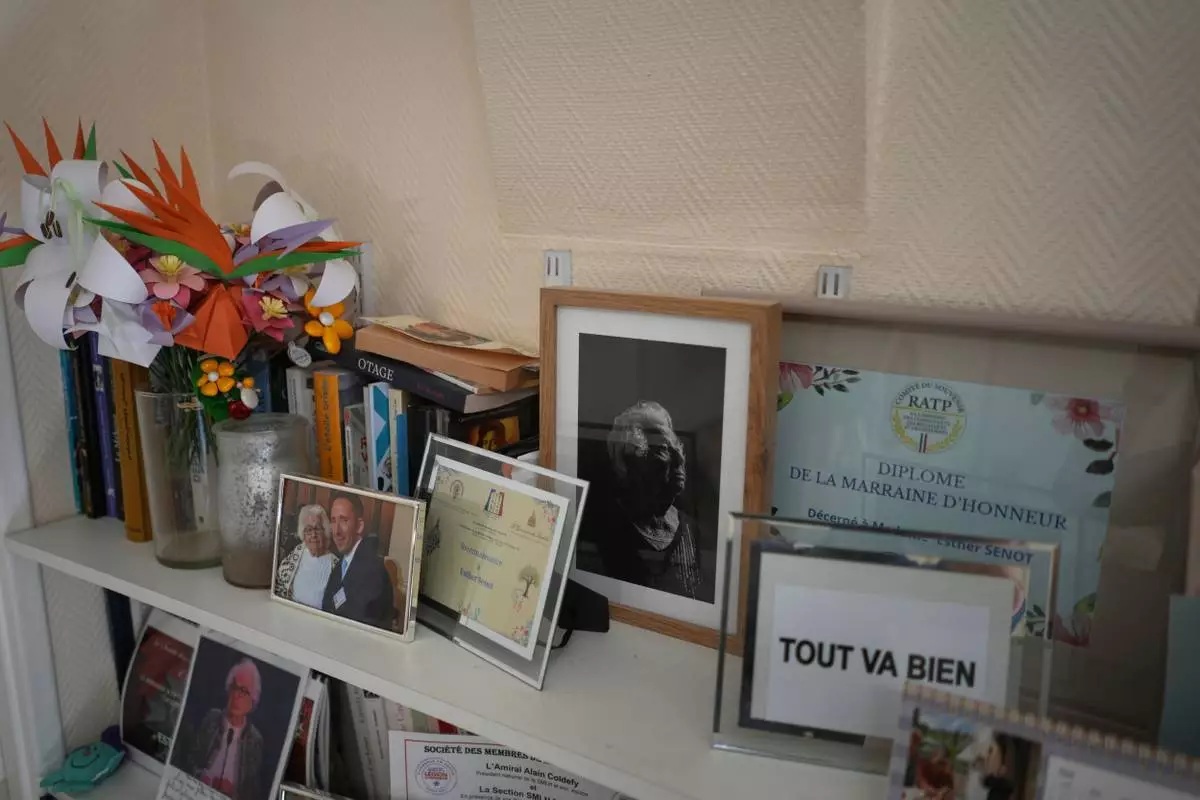
Books and photos in the room of Auschwitz concentration camp survivor Esther Senot at the National Institution of Invalides in Paris, on May 6, 2026.(AP Photo/Thibault Camus)
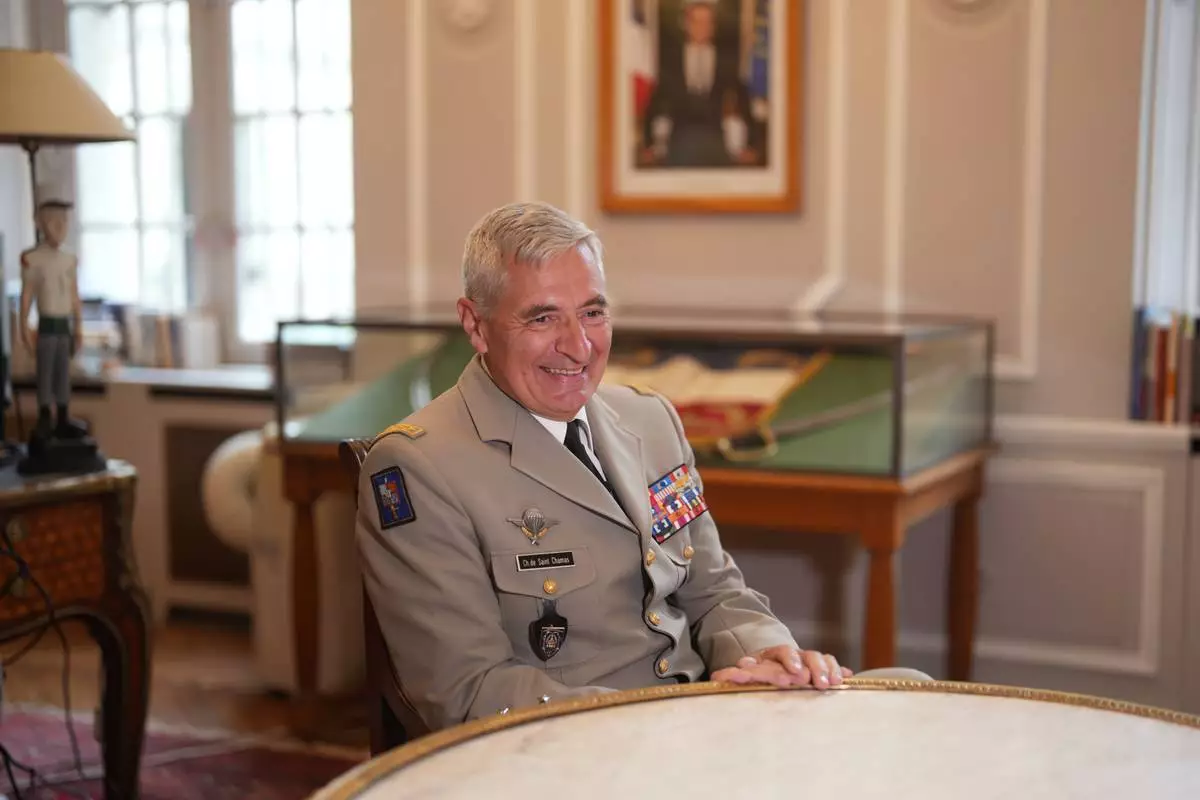
Invalides governor, Gen. Christophe de Saint Chamas, is interviewed at the National Institution of Invalides in Paris, on May 6, 2026.(AP Photo/Thibault Camus)
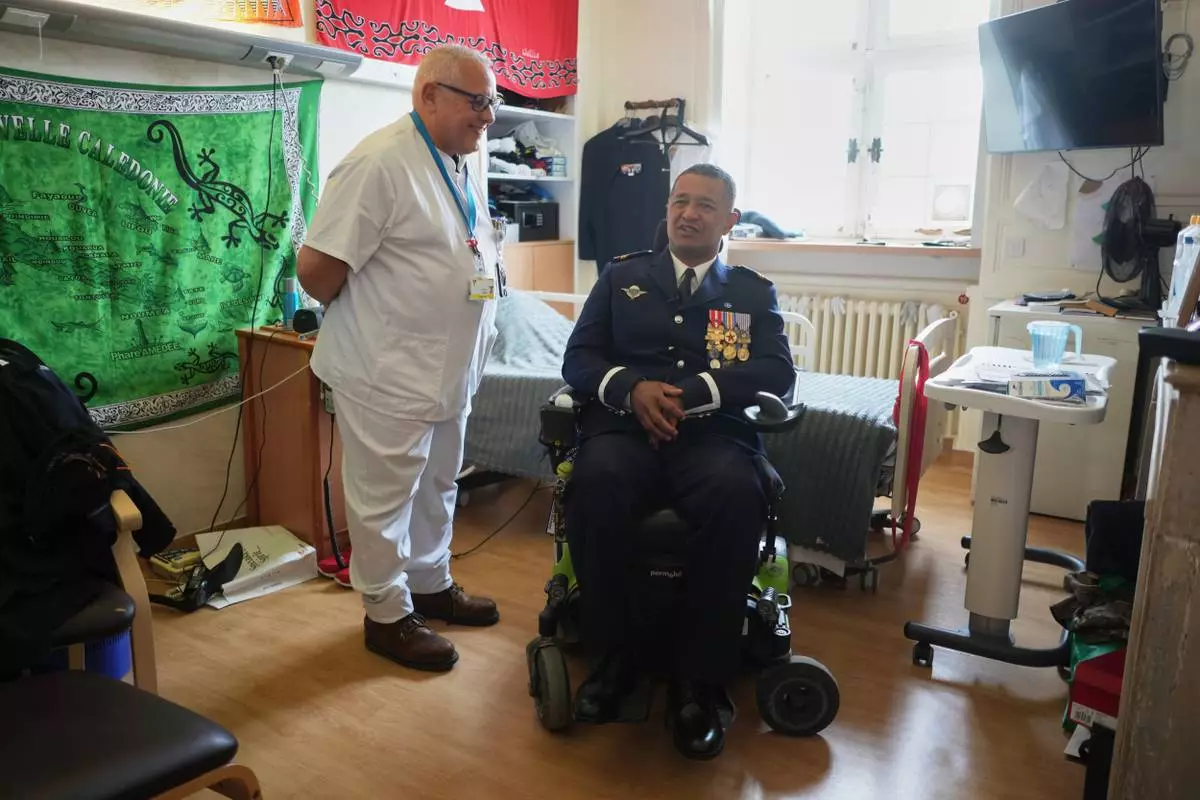
Master corporal Mikaele Iva and nurse coordinator, Mustapha Nachet, talk at the National Institution of Invalides in Paris, on May 6, 2026.(AP Photo/Thibault Camus)
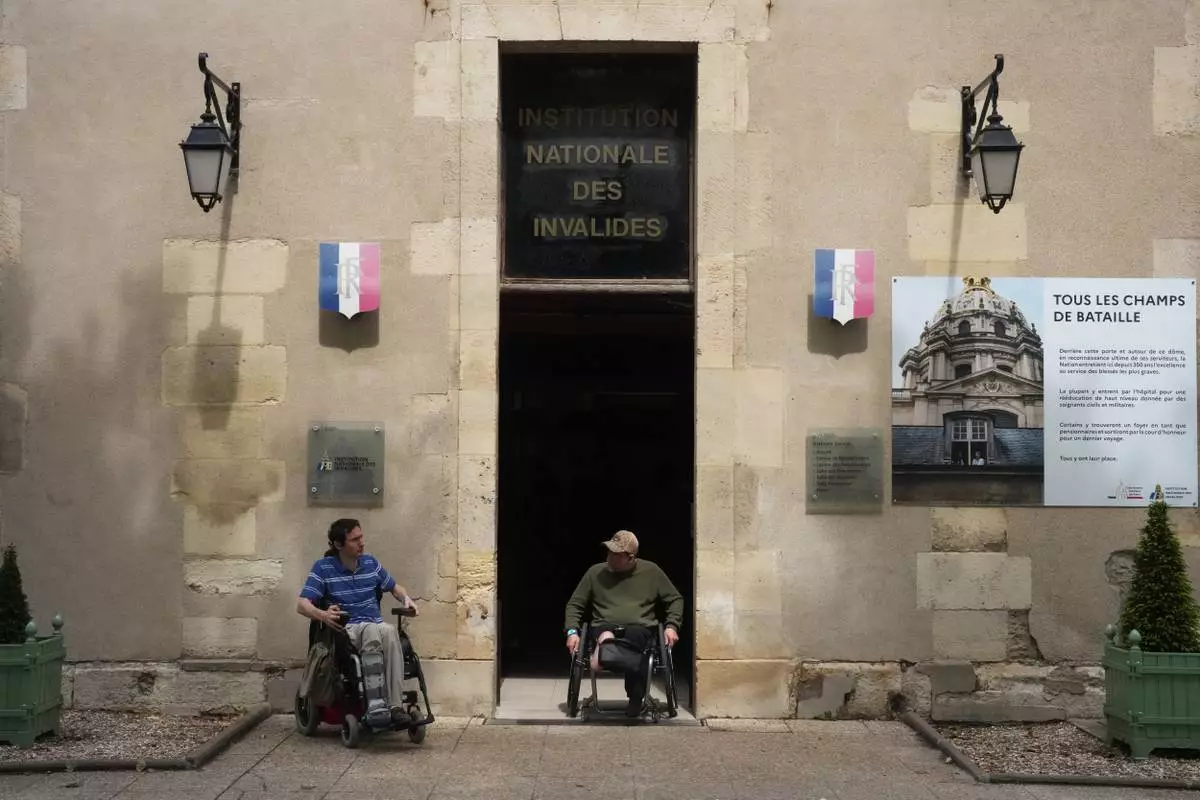
Patients are seen in front of the entrance of the National Institution of Invalides in Paris, May 6, 2026.(AP Photo/Thibault Camus)
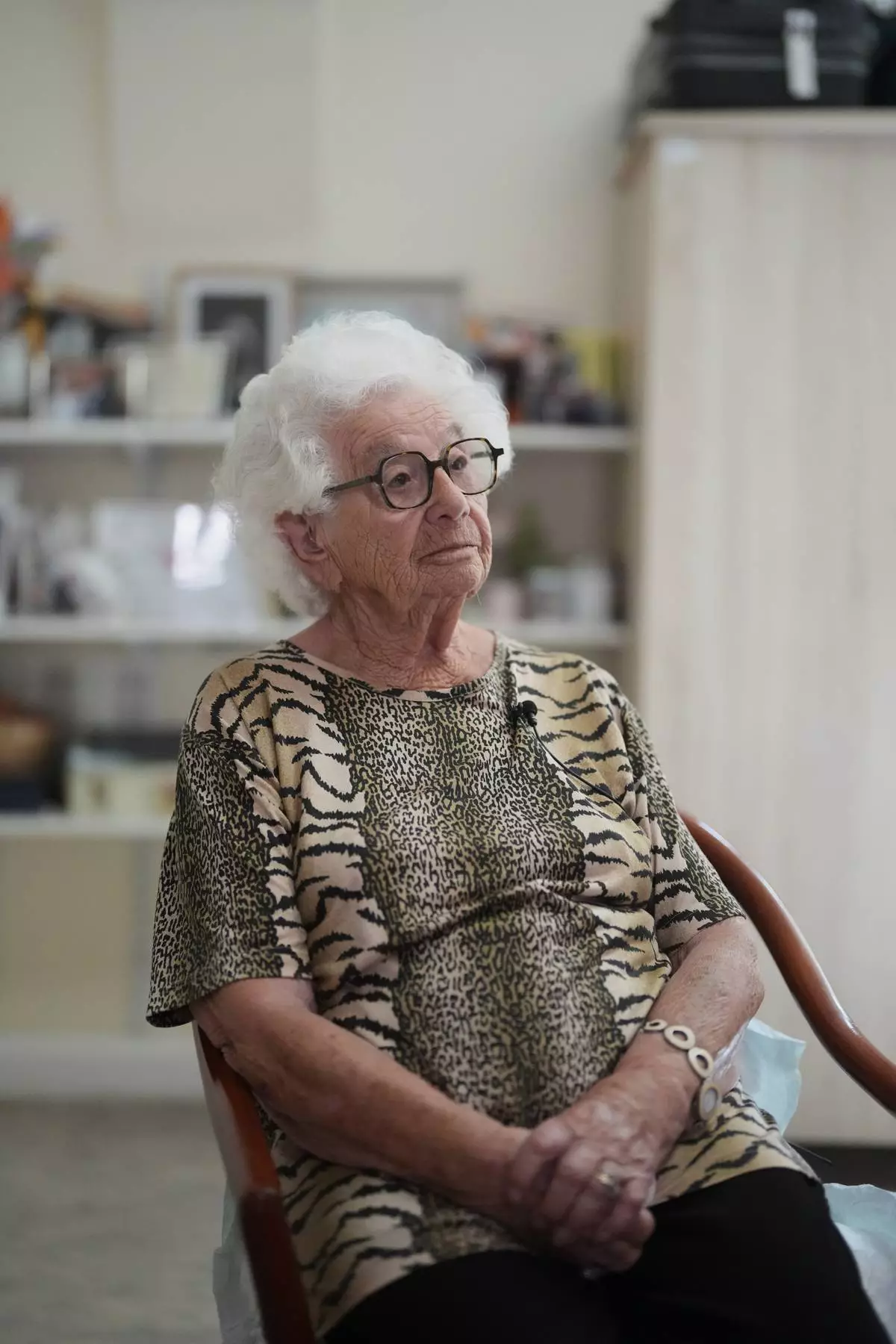
Auschwitz concentration camp survivor Esther Senot talks with Associated Press reporters at the National Institution of Invalides in Paris, on May 6, 2026.(AP Photo/Thibault Camus)