CARACAS, Venezuela (AP) — Twice this week, U.S. President Donald Trump has expressed interest in turning Venezuela into his country’s 51st state. The latest came via a Truth Social post Tuesday with a map showing the South American country filled with the U.S. flag.
Previous statements doubting Venezuela’s sovereignty over the past 25 years have been met with immediate derision from senior government officials, including the president. The ruling party even organized demonstrations in the capital, Caracas, as recently as Jan. 3, hours after then-President Nicolás Maduro was captured by the U.S., that included chants of “Gringo go home.” This time around, however, the government has mostly kept quiet, save for a brief statement to reporters Monday from acting President Delcy Rodríguez.
The approach demonstrates the balance Rodríguez must strike between external and internal politics following the January U.S. military attack in Caracas. The Trump administration has since implemented a phased plan to try to turn around the crisis-wrecked country and has forced Rodríguez’s political movement, Chavismo, to abandon the anti-U.S. sentiment that long accompanied its teachings.
“This is probably the most public and sharp manifestation of the government’s transactional, self-survival approach above everything else right now, above even that sort of basic tenet of Chavismo,” said Christopher Sabatini, senior fellow for Latin America at the London-based Chatham House think tank. “It’s better that they hold their tongue, not offend the U.S. right now. Why overreact to a ridiculous claim by Donald Trump?”
Rodríguez on Monday told journalists that Venezuela had no plans to become the 51st U.S. state, but her comments were much more reserved than past presidential addresses deriding these types of U.S remarks. They came after Trump said he was “seriously considering” the move. Trump has made similar comments about Canada.
“We will continue to defend our integrity, our sovereignty, our independence, our history,” Rodríguez said. Venezuela, she added, is “not a colony, but a free country.”
The Trump administration stunned Venezuelans by choosing to work with Rodríguez, instead of the country’s political opposition, following Maduro's ouster. She has since led cooperation with the administration’s phased plan, pitching her oil-rich nation to international investors and opening its energy sector to private capital and international arbitration. Rodríguez has also replaced senior officials, including Maduro’s faithful defense minister and attorney general.
Trump has praised her work, and his administration has lifted economic sanctions against her personally and eased sanctions against the country, though some still remain in place. The U.S. now also recognizes her as the “sole” head of state of Venezuela.
The U.S. stopped recognizing Maduro as Venezuela’s legitimate leader in 2019, the year after he claimed reelection victory in a contest widely considered a sham as opposition parties and candidates were barred from participating.
Maduro and his wife, Cilia Flores, were taken to New York to face drug trafficking charges after their Jan. 3 capture. Both have pleaded not guilty and remain jailed at a Brooklyn detention center.
In Caracas, some residents on Wednesday viewed the government’s response as submitting to Trump, but they also acknowledged that Rodríguez is not in a position to unleash Chavismo’s characteristic anti-U.S. propaganda.
“She knows that it’s wise not to engage in direct confrontation because she knows she’s bound to lose,” college student Adonai Osoria said. “Now, are there some who disagree, who don’t like it? Well, yes, of course. But I consider her reaction right now to be a common, understandable reaction.”
Government supporters last showed their inflammatory attitude against the U.S. in the days after Maduro was captured, burning U.S. flags and carrying signs that read “Gringo go home.”
Among the government’s strongest supporters across the country are the armed groups known as colectivos. The groups are a staple of pro-ruling party demonstrations. Local leader Jorge Navas characterized Trump’s comments as “irresponsible acts of provocation” and praised Rodríguez for her diplomatic response.
“We are bending, strategically, but we will not break,” Navas said of Chavismo’s current approach to U.S. pressure. “We continue to resist, that is, realistically, given the country’s economic situation.”
Garcia Cano reported from Mexico City.
Follow AP’s coverage of Latin America and the Caribbean at https://apnews.com/hub/latin-america
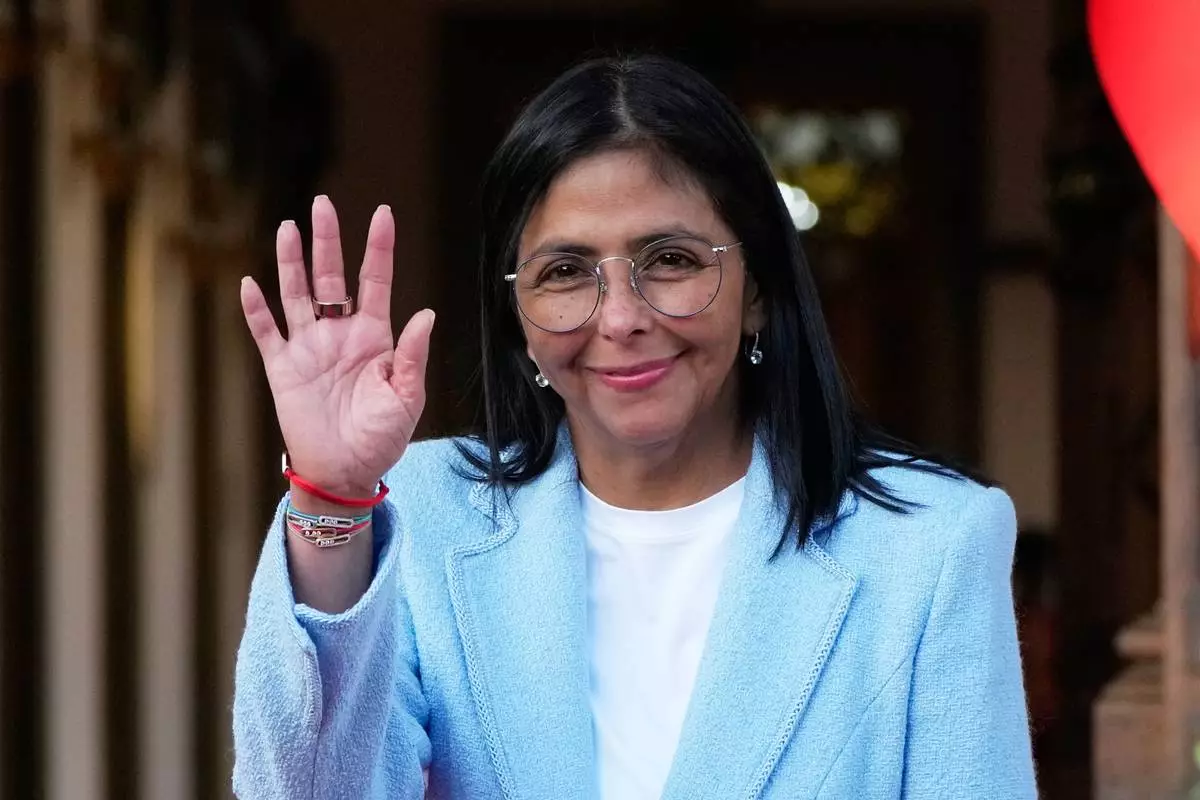
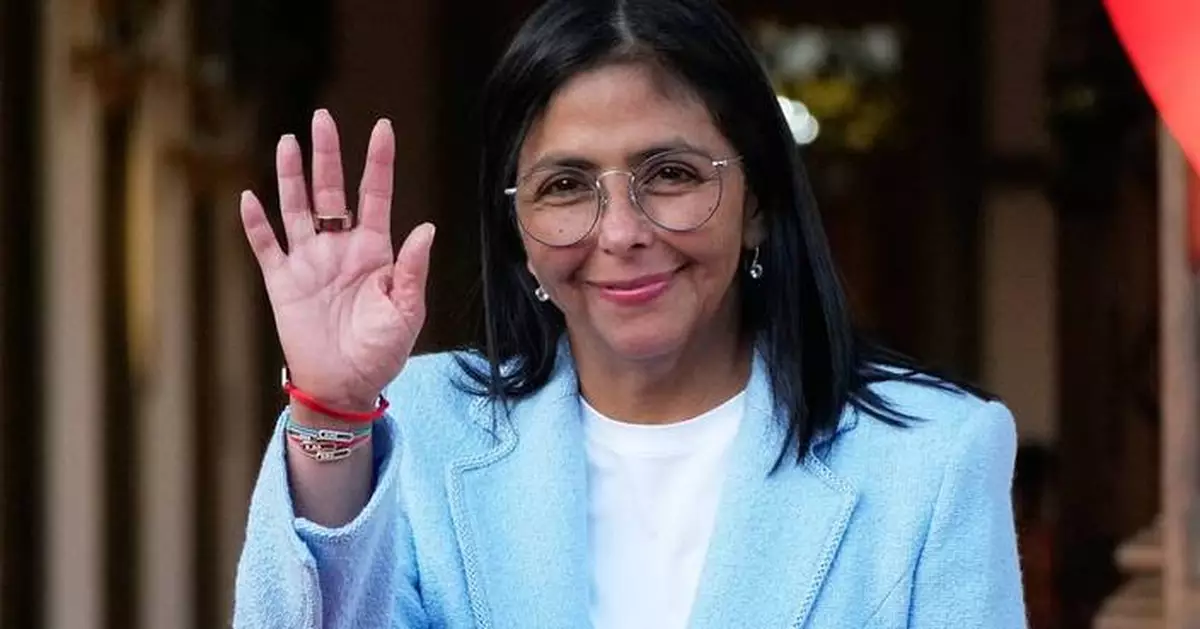
FILE - Venezuela's acting President Delcy Rodriguez waves after bidding farewell to U.S. Energy Secretary Chris Wright following their meeting at Miraflores Palace in Caracas, Venezuela, Feb. 11, 2026. (AP Photo/Ariana Cubillos, File)