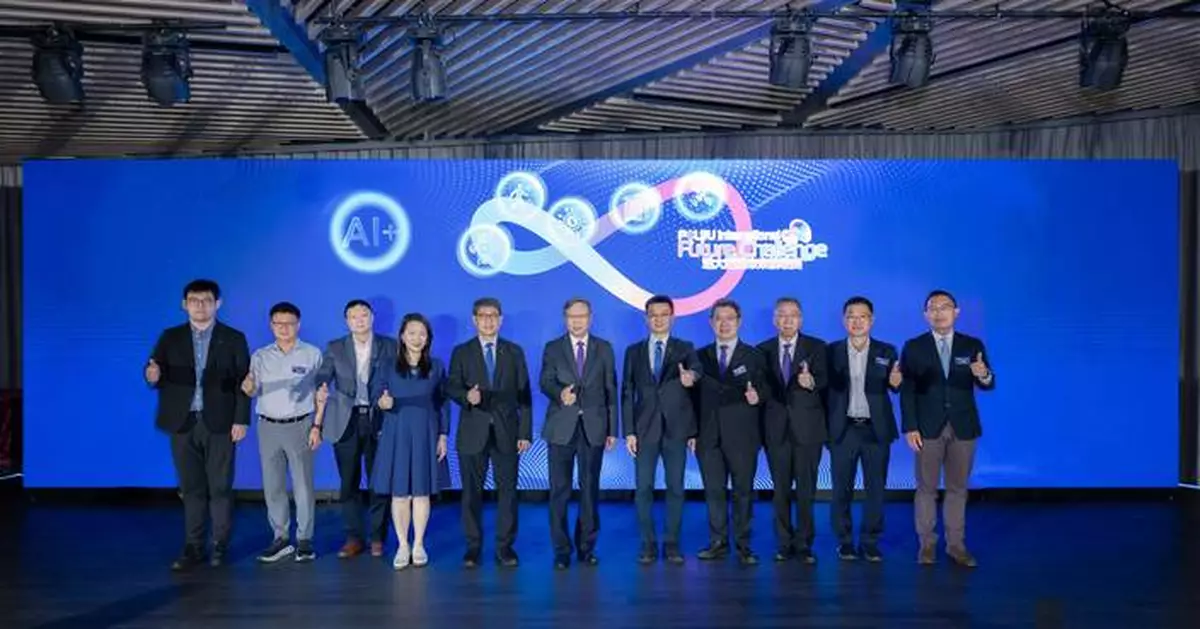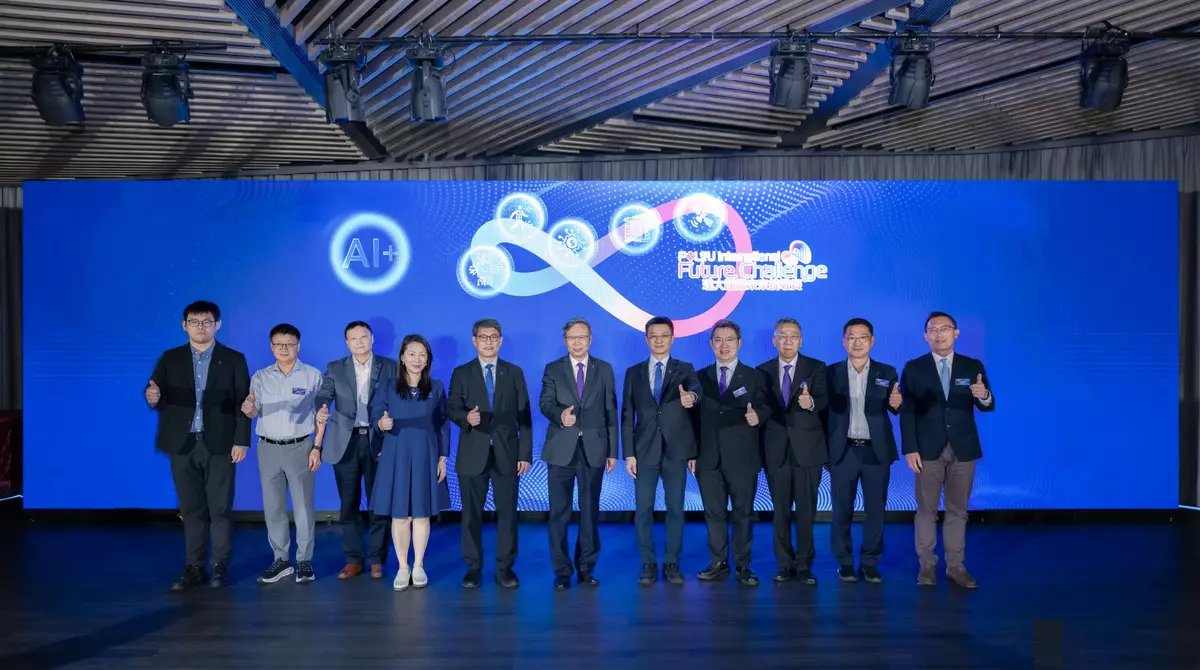
The Launch Ceremony of the PolyU International Future Challenge 2026 was officiated by Prof. Jin-Guang Teng, PolyU President (centre); Prof. Christopher Chao, Senior Vice President (Research and Innovation) (5th from left); Prof. Zijian Zheng, Vice President (Knowledge Transfer) (5th from right); Ms Amylia Chan, Interim Director of the Knowledge Transfer and Entrepreneurship Office (4th from left); Prof. Changyuan Yu, Director of PolyU-Jinjiang Technology and Innovation Research Institute (4th from right); Prof. Yi-Qing Ni, Director of PolyU-Hangzhou Technology and Innovation Research Institute (3rd from left); Prof. Wu Chen, Director of Hefei Technology and Innovation Research Institute (3rd from right); Prof. George Q. Huang, Director of PolyU-Wuxi Technology and Innovation Research Institute (2nd from left); Prof. Mingguang He, Director of PolyU-Wuhan Technology and Innovation Research Institute (2nd from right); Prof. Tommy Minchen Wei, Director of PolyU-Qianhai Disruptive Technology and Innovation Research Centre (1st from left); and Prof. Chi-wai Do, Associate Director of PolyU-Nanjing Technology and Innovation Research Institute (1st from right).
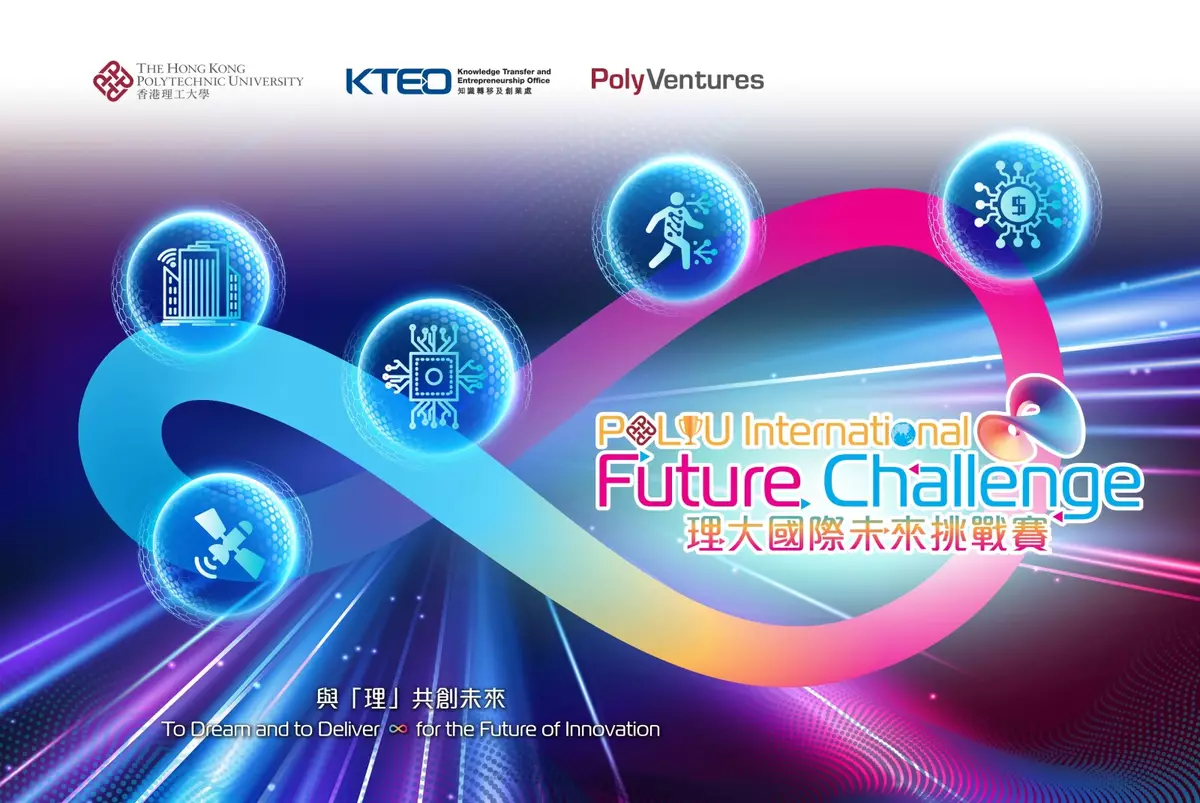
PolyU International Future Challenge 2026 launched to drive innovative ventures through cross-border network of Mainland Translational Research Institutes
Participants will earn the chance to win a wealth of rewards and opportunities, including up to HK$120,000 (Hong Kong Region) or RMB100,000 (each Chinese Mainland region) for regional champion teams, who can then compete for greater honours and awards at the Grand Final. In addition to monetary prizes, participants will also have the opportunity to connect with Chinese Mainland markets via the University's MTRI network, join local and overseas entrepreneurial visits, secure commercialisation support from the PolyVentures startup ecosystem, access PolyU's established network of investors and corporate leaders, receive mentorship from industry experts and obtain tuition sponsorship for the PolyU Master of Technology Entrepreneurship programme. Moreover, all participants will be entitled to join the "KT&E Skills Acceleration Hub" training series to enhance their innovation and entrepreneurship skillsets.
With AI+ at its core and the vision to bring positive impact to local industries and societal wellbeing, PolyU IFC 2026 strategically focuses on five industry domains: Life Sciences and Healthcare, Advanced Manufacturing and Microelectronics, Digital Economy and FinTech, Smart City and Green Living, as well as Aerospace and Aviation Technology. The focus domains of each competition region are outlined as follows:
| Competition Regions | Industry Domains |
| Life Sciences and Healthcare | Advanced Manufacturing and Microelectronics | Digital Economy and FinTech | Smart City and Green Living | Aerospace and Aviation Technology |
| Qianhai | X
| X
|
| X
| X
|
| Jinjiang | X
| X
|
| X
|
|
| Nanjing | X
| X
|
| X
| X
|
| Wuhan | X
| X
|
|
|
|
| Hong Kong | X
| X
| X
| X
| X
|
| Hefei | X
|
|
| X
| X
|
| Hangzhou | X
| X
| X
| X
|
|
| Wuxi | X
| X
|
| X
| X
|
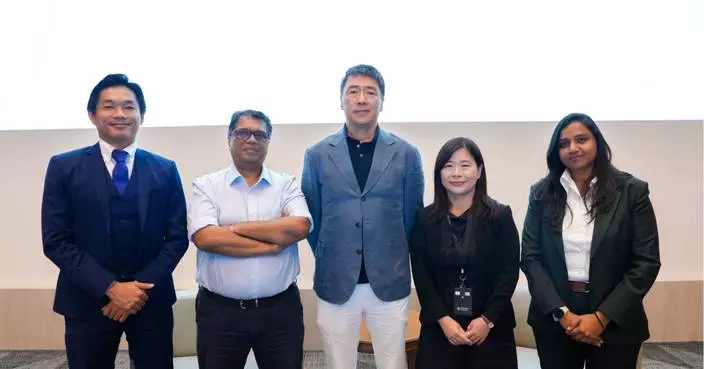
During the Launch Ceremony fireside chat, Mr Albert WONG, former CEO of the Hong Kong Science and Technology Parks Corporation, engaged in a thought-provoking dialogue with Prof. YANG Hongxia, Associate Dean (Global Engagement) of the PolyU Faculty of Computer and Mathematical Sciences; Executive Director of the PolyU Academy for Artificial Intelligence; and Chair Professor of Generative Artificial Intelligence. The speakers explored a range of topics that included the innovation ecosystem, tomorrow's ventures and talents, AI democratisation, and translational research, from both industry and academic perspectives. This exchange marked the start of the competition, inspiring everyone with an aspiration for innovation and entrepreneurship.
Local and global applications are now open for all IFC 2026 competition regions, with the official application deadline set for 14 June. Regional finals will run from August to November, while regional top teams will compete at the Grand Final in January next year. For details of the Challenge, please visit the official website.
Hashtag: #PolyU
The issuer is solely responsible for the content of this announcement.
** This press release is distributed by Media OutReach Newswire through automated distribution system, for which the client assumes full responsibility. **
The premier music festival will play host to 16 K-pop, regional and Malaysian stars including, in performance order: Day 1 - NexT1DE, Aina Abdul, Belle Sisoski, Win Metawin, NMIXX, WINNER, DAESUNG, KUN. Day 2 - Uriah See, Firdhaus, Butterbear, 82MAJOR, STAYC, CRAVITY, TWS, CxM
SINGAPORE - Media OutReach Newswire - 14 May 2026 - Your next major K-pop experience is just a savings goal away as HL Bank Singapore (“HLB Singapore”) bridges the gap between financial wellness and the front row. In an exclusive collaboration designed for the ultimate music enthusiast, the bank is offering fans the chance to secure a pair of sought-after AsiaTop Music Festival 2026 tickets, valued at up to RM1,098 (approx. S$355), simply by growing their wealth.
This unique initiative stems from the regional synergy between Hong Leong Bank (“HLB”) and Tencent Music Entertainment Group (JOOX and QQ Music). By aligning with Visit Malaysia Year and Visit Selangor Year 2026, HLB is transforming the traditional banking experience into a gateway for premium entertainment. Scheduled for 30 and 31 May 2026 at the iconic Sepang International Circuit, the festival promises a high-octane weekend featuring an elite lineup of Asian superstars, including the largest K-pop showcase in the ASEAN region.
Securing a spot at the heart of the action has been streamlined through the iSavings Reward Campaign, running from 9 May 2026 to 18 May 2026. To participate, fans first decide on their preferred festival experience, selecting either a pair of Standard Passes with a S$5,000 deposit or the high-energy, nearer-to-the-stars Rockzone Passes with a S$8,282 deposit for their chosen day.
Once a tier is selected, customers can register by depositing the qualifying funds into an iSavings account via FAST or Links transfer. To validate their entry, customers must include the specific Comment Code, such as PALLIR1 for Day 1 Rockzone, within the funds transfer description. The qualifying balance must be maintained within the account for a six-month (182 days) earmarked period.
With only 88 pairs of tickets available for this exclusive campaign, the stakes are high. Allocation is limited to 22 pairs per day for each ticket category and will be awarded strictly on a first-come, first-served basis. Fans are encouraged to act quickly to ensure their savings work as hard as they do while securing a premier seat at the musical event of the year.
For full terms & conditions, and further details, please visit: www.hlbank.com.sg/AsiaTop2026
Hashtag: #HLBankSingapore
The issuer is solely responsible for the content of this announcement.
HL Bank Singapore
HL Bank Singapore is the Singapore branch of Hong Leong Bank Berhad, a leading digital-centric Malaysia-based financial services institution with a rooted heritage in the country spanning over 120 years. Operating under a Full Bank Licence in Singapore, HL Bank offers a comprehensive range of financial services to our business, retail and high networth customers through our 4 core business segments - Business & Corporate Banking, Personal Financial Services, Private Wealth Management and Global Markets.
SINGAPORE - Media OutReach Newswire - 14 May 2026 - Your next major K-pop experience is just a savings goal away as HL Bank Singapore (“HLB Singapore”) bridges the gap between financial wellness and the front row. In an exclusive collaboration designed for the ultimate music enthusiast, the bank is offering fans the chance to secure a pair of sought-after AsiaTop Music Festival 2026 tickets, valued at up to RM1,098 (approx. S$355), simply by growing their wealth.
This unique initiative stems from the regional synergy between Hong Leong Bank (“HLB”) and Tencent Music Entertainment Group (JOOX and QQ Music). By aligning with Visit Malaysia Year and Visit Selangor Year 2026, HLB is transforming the traditional banking experience into a gateway for premium entertainment. Scheduled for 30 and 31 May 2026 at the iconic Sepang International Circuit, the festival promises a high-octane weekend featuring an elite lineup of Asian superstars, including the largest K-pop showcase in the ASEAN region.
Securing a spot at the heart of the action has been streamlined through the iSavings Reward Campaign, running from 9 May 2026 to 18 May 2026. To participate, fans first decide on their preferred festival experience, selecting either a pair of Standard Passes with a S$5,000 deposit or the high-energy, nearer-to-the-stars Rockzone Passes with a S$8,282 deposit for their chosen day.
Once a tier is selected, customers can register by depositing the qualifying funds into an iSavings account via FAST or Links transfer. To validate their entry, customers must include the specific Comment Code, such as PALLIR1 for Day 1 Rockzone, within the funds transfer description. The qualifying balance must be maintained within the account for a six-month (182 days) earmarked period.
With only 88 pairs of tickets available for this exclusive campaign, the stakes are high. Allocation is limited to 22 pairs per day for each ticket category and will be awarded strictly on a first-come, first-served basis. Fans are encouraged to act quickly to ensure their savings work as hard as they do while securing a premier seat at the musical event of the year.
For full terms & conditions, and further details, please visit: www.hlbank.com.sg/AsiaTop2026
Hashtag: #HLBankSingapore
The issuer is solely responsible for the content of this announcement.
HL Bank Singapore
HL Bank Singapore is the Singapore branch of Hong Leong Bank Berhad, a leading digital-centric Malaysia-based financial services institution with a rooted heritage in the country spanning over 120 years. Operating under a Full Bank Licence in Singapore, HL Bank offers a comprehensive range of financial services to our business, retail and high networth customers through our 4 core business segments - Business & Corporate Banking, Personal Financial Services, Private Wealth Management and Global Markets.
** This press release is distributed by Media OutReach Newswire through automated distribution system, for which the client assumes full responsibility. **
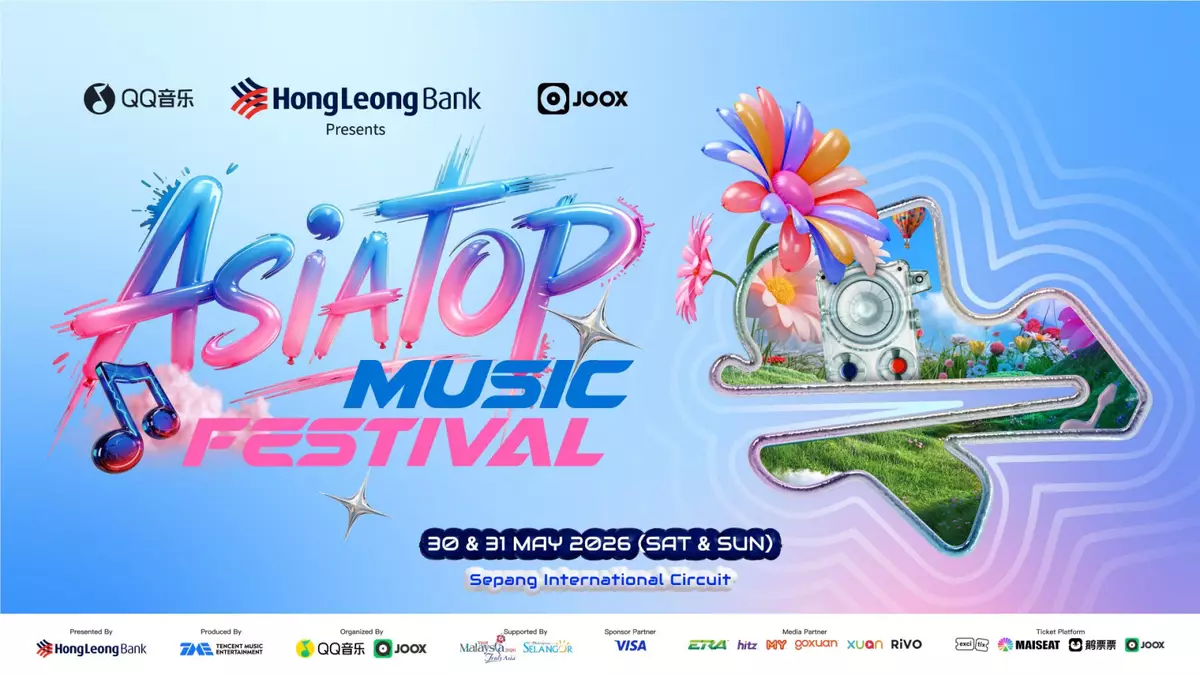
HL Bank Singapore is giving music fans the chance to redeem exclusive passes to the AsiaTop Music Festival 2026, featuring top Asian acts, through its iSavings Reward Campaign.