Skip to Content Facebook Feature Image

Glooko Announces FDA 510(k) Clearance for EndoTool IV Cloud

Business

Glooko Announces FDA 510(k) Clearance for EndoTool IV Cloud
Business

Business

Glooko Announces FDA 510(k) Clearance for EndoTool IV Cloud

2026-05-14 20:04 Last Updated At:20:10

PALO ALTO, Calif.--(BUSINESS WIRE)--May 14, 2026--

Glooko, Inc., a global digital health company focused on helping clinicians address the growing challenges of glycemic safety and diabetes management across the care continuum, today announced that the U.S. Food and Drug Administration (FDA) has granted 510(k) clearance for EndoTool IV Cloud, the first FDA-cleared, cloud-based patient-specific insulin dosing platform. EndoTool IV Cloud is the cloud-based version of EndoTool IV, Glooko’s clinical decision support solution for intravenous insulin dosing in the hospital setting.

This press release features multimedia. View the full release here: https://www.businesswire.com/news/home/20260514542969/en/

EndoTool IV is used by hospitals to support individualized insulin dosing for hospitalized patients requiring intravenous insulin therapy. Built on the same trusted clinical foundation as EndoTool IV, EndoTool IV Cloud brings the solution’s proven insulin dosing capabilities into a cloud-based environment, supporting more scalable implementation, streamlined maintenance, and future platform innovation.

The clearance marks an important milestone in Glooko’s strategy to advance connected diabetes care across the inpatient and outpatient settings.

“FDA 510(k) clearance for EndoTool IV Cloud is an important step forward for Glooko, our hospital customers, and the future of connected diabetes care,” said Mike Alvarez, Chief Executive Officer of Glooko. “EndoTool IV is already a trusted solution for inpatient insulin dosing. By bringing its patient-specific dosing capabilities to a cloud-based platform, we are not just moving to the cloud — we are helping set a new standard for how hospitals scale glycemic safety and individualized care.”

EndoTool IV Cloud uses the same core insulin dosing algorithm as the current EndoTool IV solution, while introducing cloud-based functionality that is expected to support more efficient deployment, centralized updates, and a more flexible platform architecture over time. The cloud-based model is designed to reduce the need for on-premise infrastructure and support a more scalable approach for hospitals adopting or expanding use of EndoTool IV.

“EndoTool has demonstrated strong clinical value in helping hospitals manage IV insulin therapy, including reduced hypoglycemia, faster time to target blood glucose, improved time in range, and fewer required blood glucose checks,” said Paul Chidester, M.D., Medical Director, EndoTool at Glooko. “With EndoTool IV Cloud, we are preserving the same trusted clinical foundation and insulin dosing algorithm while making the solution easier to deploy, maintain and scale for hospital teams.”

The availability of EndoTool IV Cloud reflects Glooko’s continued investment in the EndoTool platform following its acquisition of Monarch Medical Technologies in September 2025. As Glooko prepares for commercial launch, the company is working closely with its teams and customers to support a thoughtful transition strategy for those current EndoTool IV on-premise users. Existing EndoTool IV customers will continue to be supported, and Glooko will provide guidance, training, and transition resources as EndoTool IV Cloud becomes commercially available.

“EndoTool IV Cloud represents the next evolution of our inpatient insulin dosing platform,” said Rich Glenn, President, Connected Care at Glooko. “With this milestone, we are advancing EndoTool IV into a cloud-based environment designed to give hospitals a more scalable, flexible, and efficient way to deploy and manage the solution. As we prepare for commercial launch later this year, our focus is on delivering a thoughtful experience for customers while creating a stronger foundation for long-term innovation and value across health systems.”

EndoTool IV Cloud is expected to launch commercially in the U.S. before the end of the year.

About EndoTool IV

EndoTool IV is a clinical decision support solution designed to support individualized intravenous insulin dosing in the hospital setting. The solution uses patient-specific data to recommend insulin dosing adjustments and help clinicians manage glycemic control for patients requiring IV insulin therapy.

EndoTool IV Cloud brings this capability into a cloud-based environment using the same insulin dosing algorithm as the current EndoTool IV solution.

About Glooko

Glooko, Inc. is a global digital health company focused on helping clinicians address the growing challenges of glycemic safety and diabetes management across the care continuum. Glooko is uniquely positioned to be the enterprise partner of choice for healthcare providers seeking to reduce glycemic risk, improve safety, and support overburdened clinical teams with coordinated expertise across both outpatient and inpatient care settings.

EndoTool is developed and marketed by Monarch Medical Technologies, LLC, a Glooko Company, and is a separate solution from the Glooko diabetes management platform. EndoTool is an FDA-cleared Class II medical device indicated for inpatient use as described in its Instructions for Use. Recommendations are intended to assist, and not replace, clinical judgment.

Glooko Announces FDA 510(k) Clearance for EndoTool IV Cloud

Glooko Announces FDA 510(k) Clearance for EndoTool IV Cloud
Max Verstappen said he wants “a lesson learned” after Formula 1 drivers and fans were left waiting for software updates because the cars' algorithms weren’t able to handle a wet track.

The first attempt to start Sunday’s Bahrain Grand Prix in Malaysia ended in confusion as cars crawled around the Sepang track at slow speeds or stopped entirely as drivers and teams tried to restart their systems.

There was another delay of almost an hour while, Verstappen said, teams were trying to update the software to handle slippery conditions.

Seven-time champion Lewis Hamilton likened it to gimmicky pre-race exhibitions in Lego cars the drivers have done previously as part of a sponsorship tie-ins.

“It was like the Lego race,” Hamilton said. “Same speed.”

The on-board algorithms that decide how and when to deploy the car's electrical hybrid power were seemingly thwarted by the drivers using less acceleration than usual to deal with the slippery conditions.

“It’s not what you want in the sport,” said Verstappen, who eventually won. “I hope there is a lesson learned.”

F1 hadn't raced in the rain all year and fans were keen to see how the drivers and the 2026-specification cars — with a near 50-50 split between engine and battery power — handled the conditions.

The answer: not well.

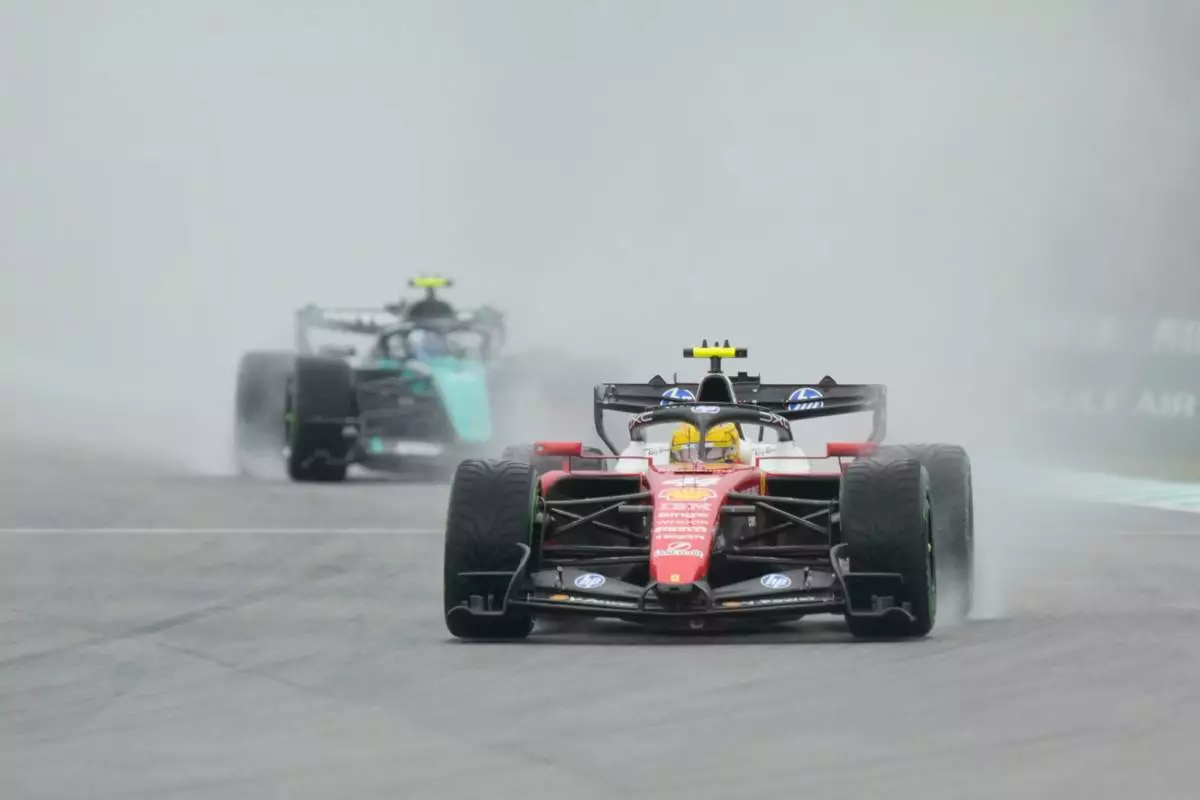
After an initial delay because of a storm, drivers were meant to do two formation laps behind the safety car to scout out the conditions before getting under way. However, several cars lacked power and some stopped entirely.

“When you go too low in speed... for whatever reason, then it just bogs down,” Verstappen said, recalling the car going at 35 kph (22 mph) and still losing speed on one uphill stretch.

With overtaking not normally allowed on a formation lap, third-place Kimi Antonelli waited behind Lewis Hamilton's slow-moving Ferrari as the Italian team scrambled to solve a software issue.

“I’m pressing the throttle and nothing’s happening," Hamilton told Ferrari. He then stopped on track to restart the systems.

With more problems elsewhere in the field, soon cars were scattered all around the Sepang track. The safety car and Verstappen even seemed to lap some of them.

Eventually, the start was suspended again. The mixed-up order meant teams resorted to pushing their cars into the correct sequence in the pit lane.

The delay “was because they had to update the software, and then you have to load it into the car. I guess some had some faster laptops than others,” Verstappen joked. By the time they were done, the track was much drier and there were only a few laps of wet-weather action before a largely dry race.

This was the first wet-weather race of the year but it's not the first time software has caused headaches this season.

George Russell blamed the code governing the cars' electrical systems for his lack of pace at the Belgian Grand Prix before crashing out.

F1’s embrace of electrical power for 2026 comes with complex software that governs how and when that power is used.

In most on-track situations, the electrical power isn’t directly related to the driver’s use of the gas pedal. So-called “deployment maps” set out how much energy to release based on where the car is on the track.

When that software becomes confused as to where it is on the circuit, it can waste electrical energy in the wrong place, as happened to Russell in Belgium, or give a jolt of power in a potentially dangerous situation instead.

Oscar Piastri was sent spinning into the wall on the formation lap in the year's first race in Australia when he got extra power unexpectedly. At last week's race in Azerbaijan, Cadillac's Valtteri Bottas crashed on the last lap and reportedly blamed it on the software becoming confused and affecting his braking.

See AP’s full auto racing coverage here

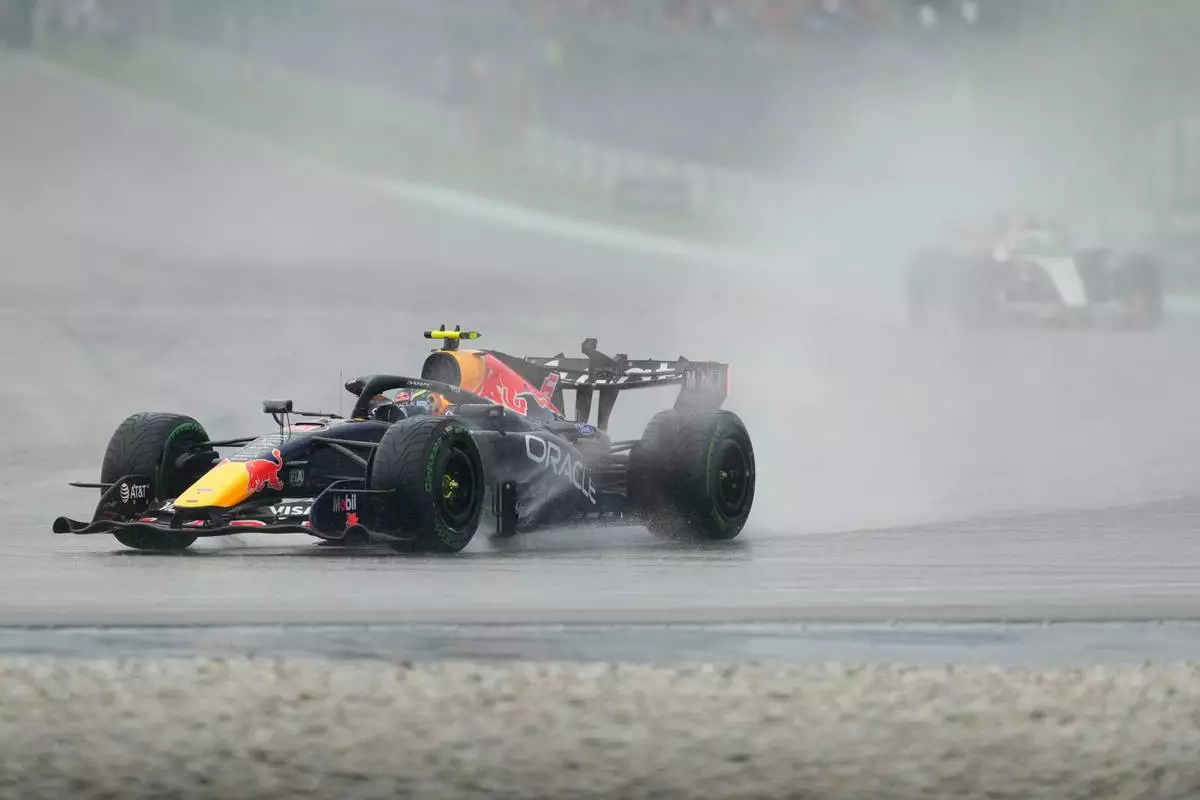
Red Bull driver Isack Hadjar of France steers his car during the formation lap prior to the start of the Bahrain Grand Prix in Sepang, Malaysia, Sunday, Oct. 4, 2026. (AP Photo/Aijaz Rahi)

Red Bull driver Isack Hadjar of France steers his car during the formation lap prior to the start of the Bahrain Grand Prix in Sepang, Malaysia, Sunday, Oct. 4, 2026. (AP Photo/Aijaz Rahi)

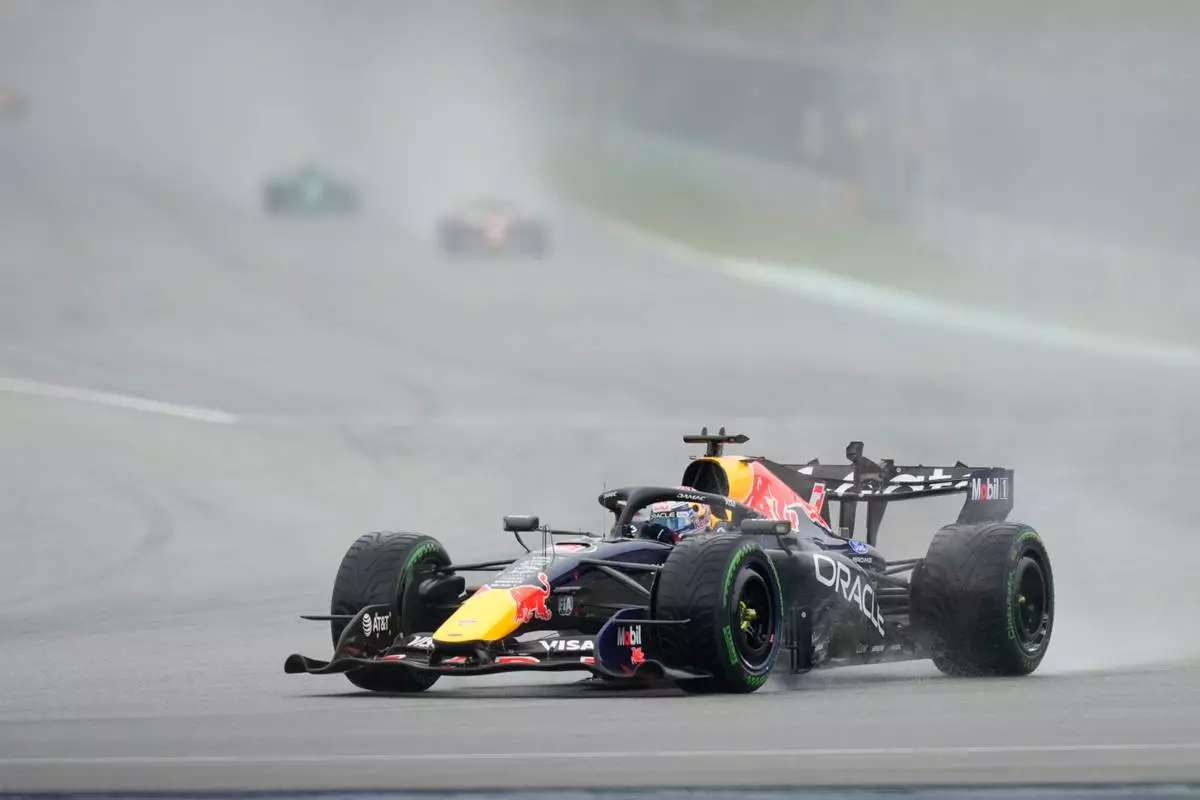
Red Bull driver Max Verstappen of the Netherlands steers his car during the formation lap prior to the delayed start of the Bahrain Grand Prix in Sepang, Malaysia, Sunday, Oct. 4, 2026. (AP Photo/Aijaz Rahi)

Red Bull driver Max Verstappen of the Netherlands steers his car during the formation lap prior to the delayed start of the Bahrain Grand Prix in Sepang, Malaysia, Sunday, Oct. 4, 2026. (AP Photo/Aijaz Rahi)

Ferrari driver Lewis Hamilton of Britain steers his car during the formation lap prior to the delayed start of the Bahrain Grand Prix in Sepang, Malaysia, Sunday, Oct. 4, 2026. (AP Photo/Aijaz Rahi)

Ferrari driver Lewis Hamilton of Britain steers his car during the formation lap prior to the delayed start of the Bahrain Grand Prix in Sepang, Malaysia, Sunday, Oct. 4, 2026. (AP Photo/Aijaz Rahi)

Recommended Articles