PROVIDENCE, R.I. (AP) — A federal judge has blocked the Trump administration's sweeping demands for confidential transgender patient information from Rhode Island's largest hospital that provides gender-affirming care to minors.
U.S. District Judge Mary McElroy's Wednesday ruling is the latest setback for the U.S. Department of Justice, where at least seven other federal courts have agreed to quash or limit the expansive civil subpoenas sent to more than 20 doctors and hospitals last summer.
McElroy's decision also echoed similar concerns raised by judges surrounding the expansive scope of the subpoenas, describing the Justice Department as having “immense prosecutorial authority and discretion” but no longer trustworthy it will enforce its power fairly and honestly.
“DOJ has proven unworthy of this trust at every point in this case,” McElroy wrote.
An email seeking comment was sent to DOJ on Thursday.
According to the subpoenas, the DOJ had demanded Rhode Island Hospital hand over the birth dates, Social Security numbers and addresses of every patient who received transgender care over the past five years. It also included instructions to provide all documents detailing adverse side effects in minor patients who received gender-related care, assessments that formed the basis for prescribing puberty blockers or hormone therapy, as well as patient intake forms and guardian authorization.
The Justice Department has repeatedly argued that the information sought in the subpoenas is needed to investigate possible fraud or unlawful off-label promotion of drugs. Most recently during a hearing in Rhode Island, the DOJ said that the investigation was taking place in the Northern District of Texas, where the court's chief judge ordered Rhode Island Hospital to comply with the subpoena before McElroy's decision voided the subpoena.
Assistant U.S. Attorney Brantley Mayers told McElroy during the hearing that the DOJ is investigating potential “misbranding” of drugs approved by the U.S. Food and Drug Administration, such as puberty blockers for young people. While off-label prescribing is legal, Mayers said that the DOJ is concerned that pharmaceutical companies are providing “financial incentives” to Rhode Island doctors to prescribe the drugs.
The subpoenas were crucial in getting the names of children and their families so the DOJ could interview them.
McElroy rejected that argument.
"The administration has publicly characterized gender-affirming care for minors as abuse, directed the DOJ to bring its practice to an end, and celebrated when hospitals curtailed such programs as a result of this subpoena campaign," McElroy wrote.
The Rhode Island decision is the latest development in the fight over transgender youth health records. Earlier this week, 11 families filed a class-action lawsuit seeking to block the DOJ from obtaining the documents. The lawsuit, filed in Maryland’s federal court, is backed by families with transgender children who have received care from hospitals across the U.S.
And separately, a New York hospital announced that it received a grand jury subpoena from federal prosecutors in Texas seeking information about children who received gender-affirming care and the medical providers who administered it.
NYU Langone is the first hospital system to publicly acknowledge receiving a subpoena for such records as part of a federal criminal investigation. But the institution said in its statement Tuesday it was one of several that received a subpoena out of the Northern District of Texas on May 7. It said it was deciding on how to respond.
Gender-affirming care includes a range of medical and mental health services to support a person’s gender identity, including when it’s different from the sex they were assigned at birth. It may include counseling, medications that block puberty, hormone therapy to produce physical changes or surgeries to transform chests and genitals, although those are rare for minors.
Most major medical groups say access to the treatment is important for those with gender dysphoria and see gender as existing along a spectrum.
At least 27 states have adopted laws restricting or banning the care for minors, while several others have adopted laws or policies protecting access to transgender health care.
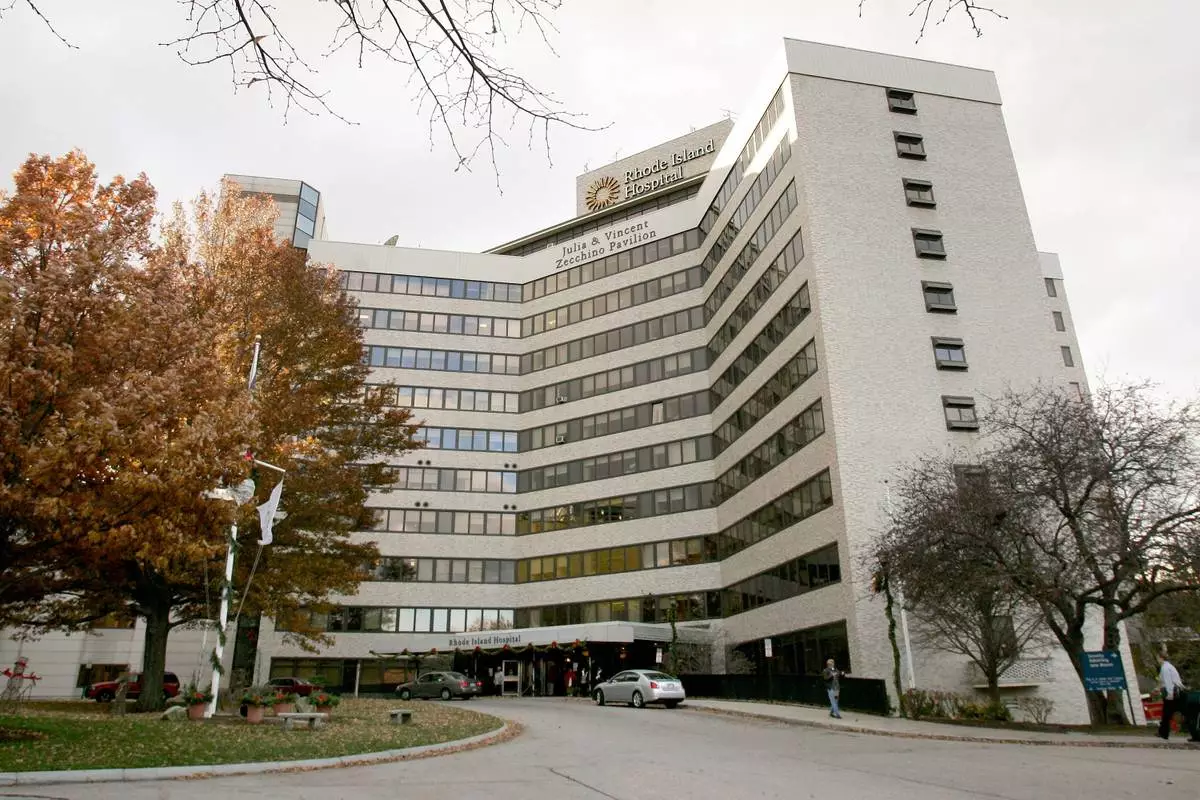
FILE - The main entrance to Rhode Island Hospital is seen in Providence, R.I., on Nov. 27, 2007. (AP Photo/Steven Senne, File)
NEW YORK (AP) — The U.S. stock market is rising toward more records Thursday after Cisco Systems and others joined the parade of U.S. companies reporting fatter profits for the start of 2026 than analysts expected.
The S&P 500 added 0.5% to its all-time high set the day before. The Dow Jones Industrial Average climbed 254 points, or 0.5%, and is close to finishing a day above the 50,000 level for the first time since the war with Iran began. The Nasdaq composite was 0.5% higher and adding to its own record, as of 10:30 a.m. Eastern time.
Cisco helped lead the market after jumping 14.6% in what could be its best day in nearly 15 years. The tech giant reported better profit and revenue for the latest quarter than analysts expected, and CEO Chuck Robbins said it saw “very strong, broad-based demand for our products.”
Big Tech behemoths in particular are pouring cash into artificial-intelligence technology, and Cisco gave a forecast for profit in the current quarter that easily topped analysts' expectations.
Such voracious demand for AI, and the big profits it's producing, have been major reasons the U.S. stock market has set records throughout this year. Cerebras Systems, an AI processor company, raised $5.55 billion after selling its stock in an initial public offering, and its shares are set to begin trading on the Nasdaq later in the day.
Corporate earnings reported so far this season have “reinforced that this is still an AI-led market, but one where the impact is broadening quickly,” according to Gargi Pal Chaudhuri, chief investment and portfolio strategist at BlackRock.
“What started with a handful of companies is now driving earnings growth across semiconductors, infrastructure, and even parts of the industrial economy,” she said.
Outside of AI, other stocks rallying after delivering better-than-expected profit reports included StubHub Holdings, up 19.3%, and Viking Holdings, up 10%.
Both companies sell products that aren’t day-to-day essentials, such as concert tickets and river cruises. Strong results from them could be an indicator that customers are still willing to spend even though U.S. consumers have been telling surveys they're feeling discouraged about the economy.
Whether U.S. households will keep spending and support the economy is a big question for Wall Street because pressure has been rising on them due to high oil prices and inflation created by the Iran war. A report released Thursday said that shoppers overall spent less at U.S. retailers last month than economists expected. But the deceleration after factoring out gasoline and automobile sales wasn’t quite as bad as economists thought it would be.
A separate report, meanwhile, said more U.S. workers filed for unemployment benefits last week, which could be an indication of more layoffs. The number, though, remains relatively low compared with history.
Treasury yields zigzagged in the bond market following the reports, but they largely remained steady. The yield on the 10-year Treasury edged down to 4.45% from 4.46% late Wednesday.
In stock markets abroad, indexes rose in Europe following a mixed finish in Asia. Japan's Nikkei 225 fell 1%, while South Korea's Kospi jumped 1.8% to another record thanks to AI-related stocks.
Stocks were nearly flat in Hong Kong and down 1.5% in Shanghai as Chinese leader Xi Jinping met with U.S. President Donald Trump in Beijing.
Some investors hope Trump could encourage Xi to use China’s close economic ties with Iran to get it to reopen the Strait of Hormuz. The strait’s closure because of the war has kept oil tankers pent up in the Persian Gulf instead of delivering crude to customers worldwide, which has driven up crude prices.
The price for a barrel of Brent crude oil, the international standard, fell 0.1% to $105.54 Thursday, but it remains well above its price of roughly $70 from before the war.
AP Business Writers Chan Ho-him and Matt Ott contributed to this report.
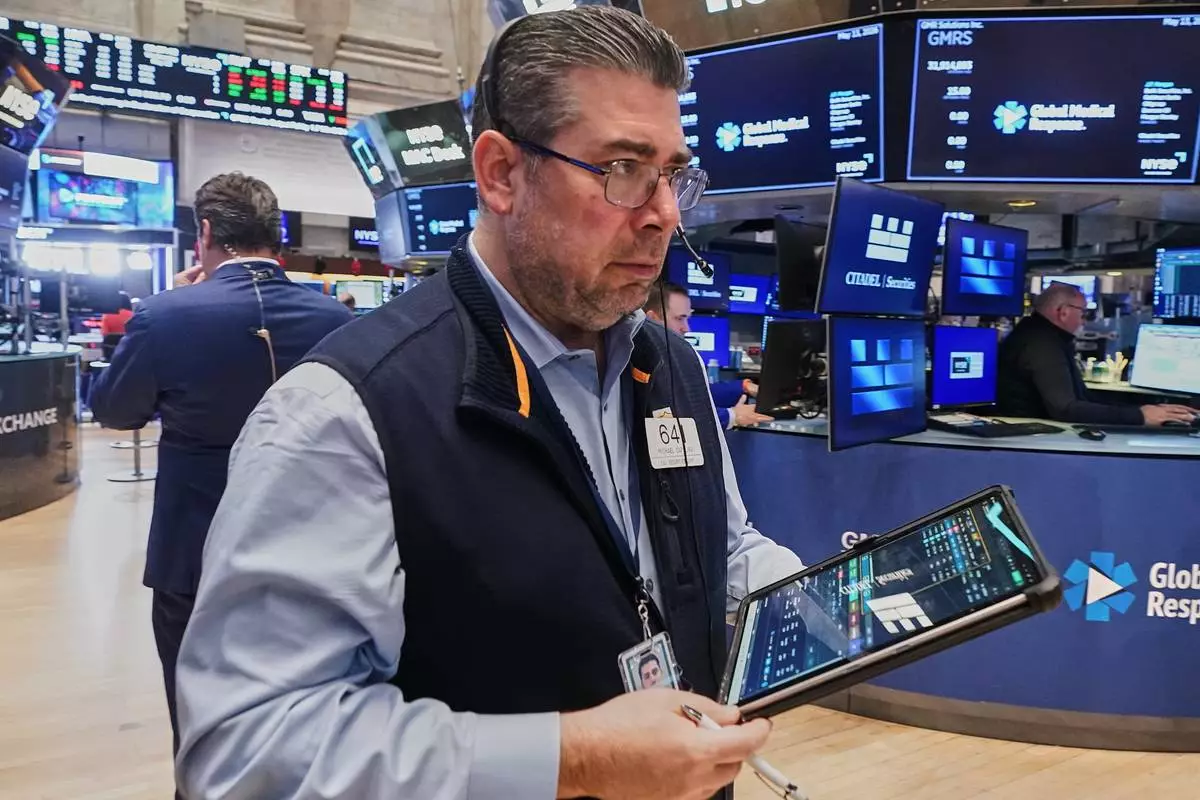
Trader Michael Capolino works on the floor of the New York Stock Exchange, Wednesday, May 13, 2026. (AP Photo/Richard Drew)
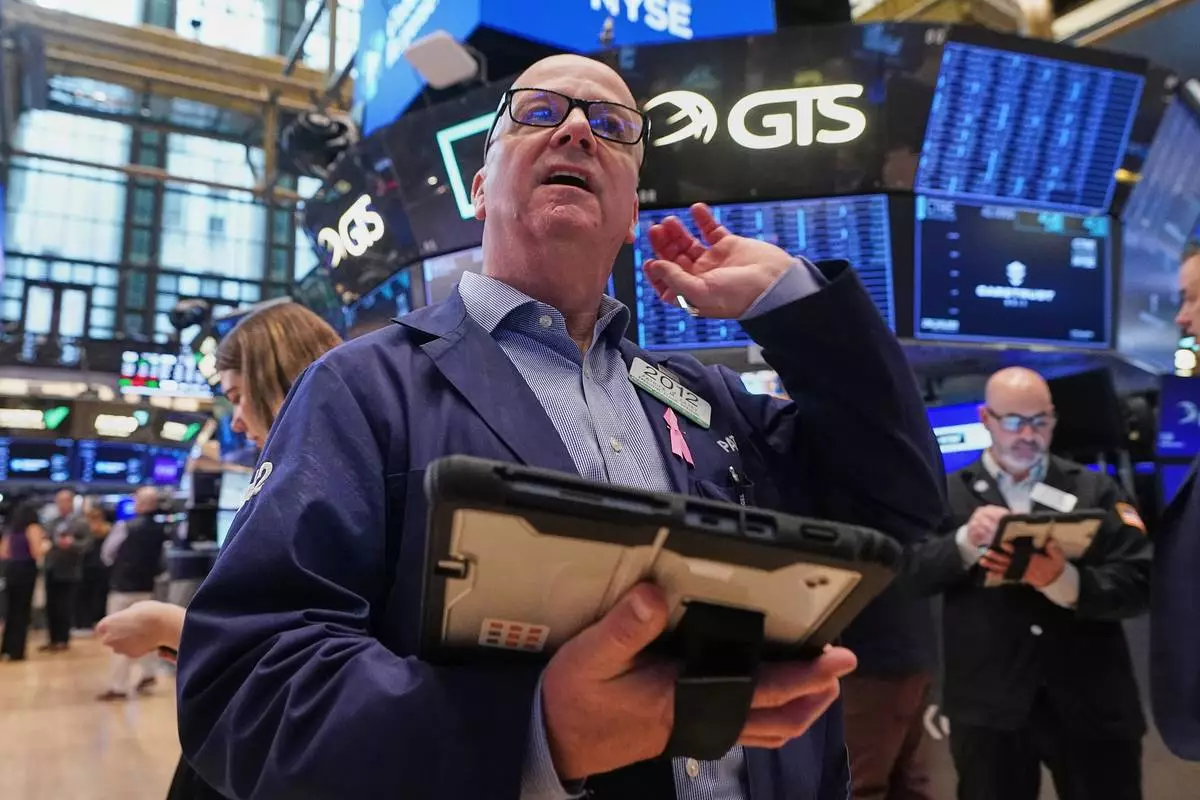
Trader Patrick Casey works on the floor of the New York Stock Exchange, Wednesday, May 13, 2026. (AP Photo/Richard Drew)
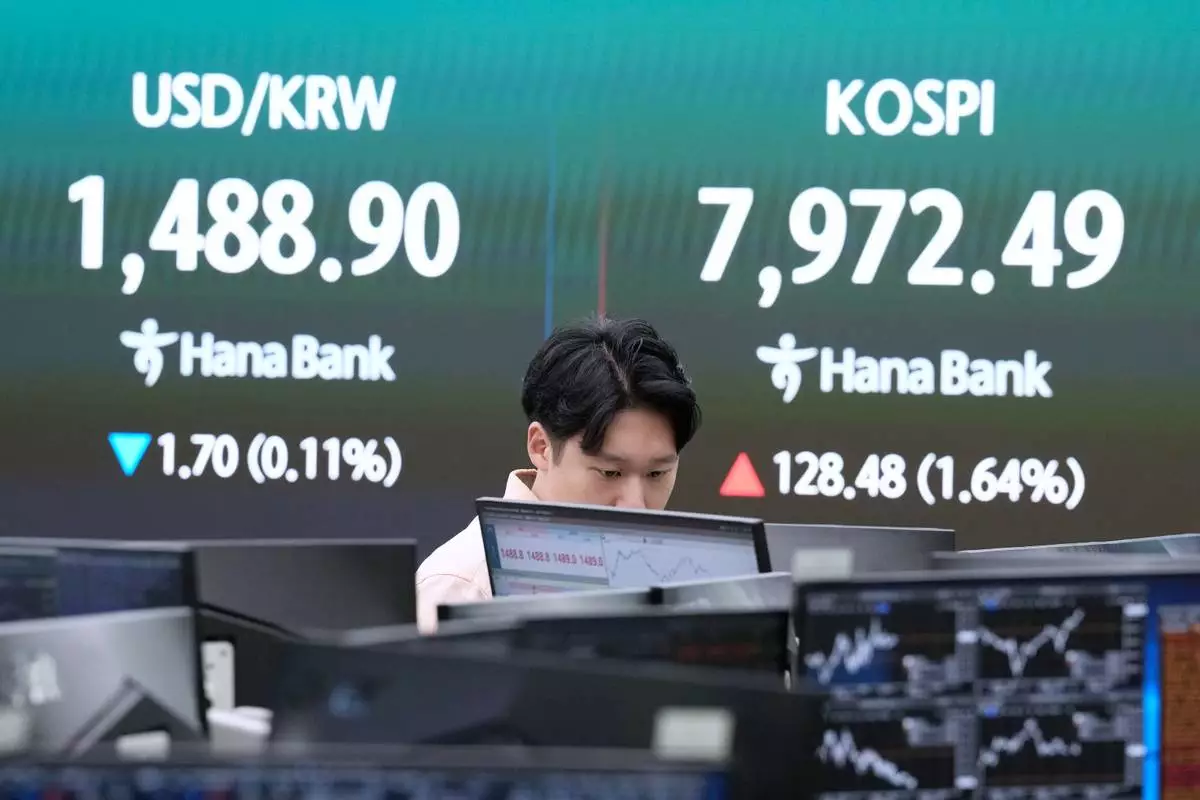
A currency trader watches monitors near a screen showing the Korea Composite Stock Price Index (KOSPI), right, and the foreign exchange rate between U.S. dollar and South Korean won at the foreign exchange dealing room of the Hana Bank headquarters in Seoul, South Korea, Thursday, May 14, 2026. (AP Photo/Ahn Young-joon)
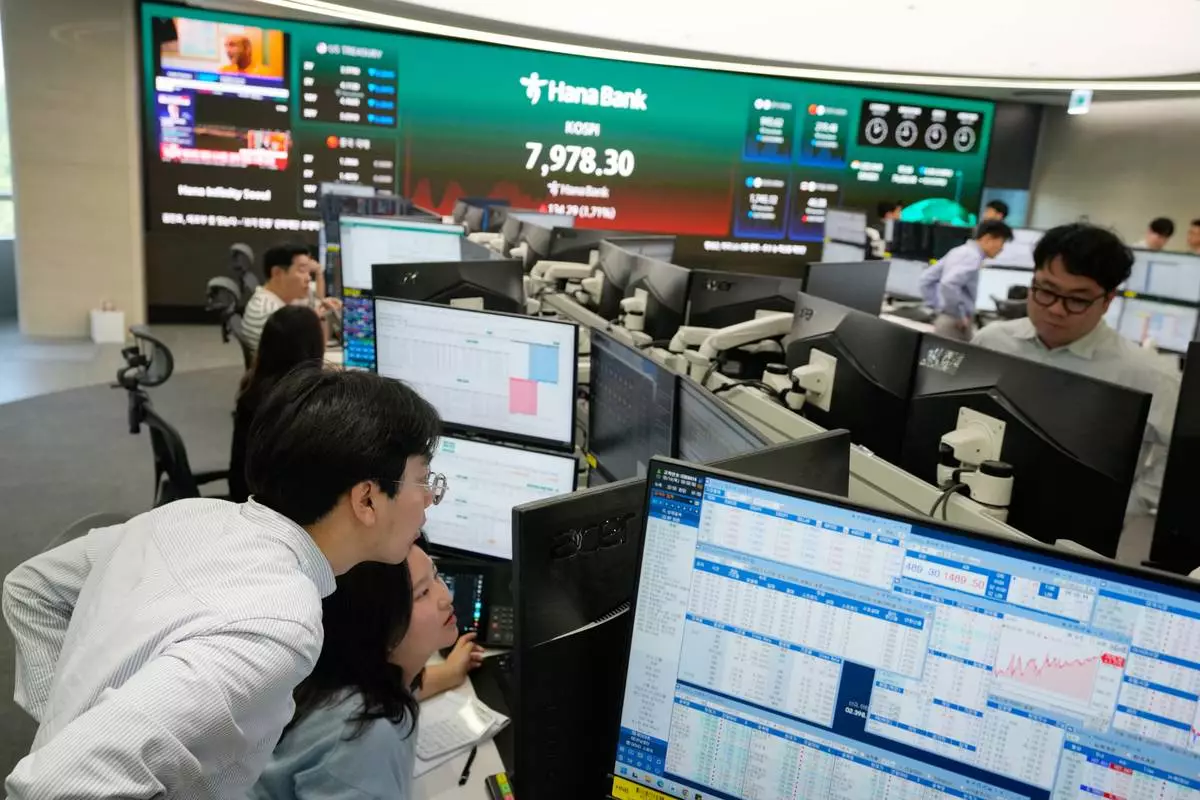
Currency traders work at the foreign exchange dealing room of the Hana Bank headquarters in Seoul, South Korea, Thursday, May 14, 2026. (AP Photo/Ahn Young-joon)
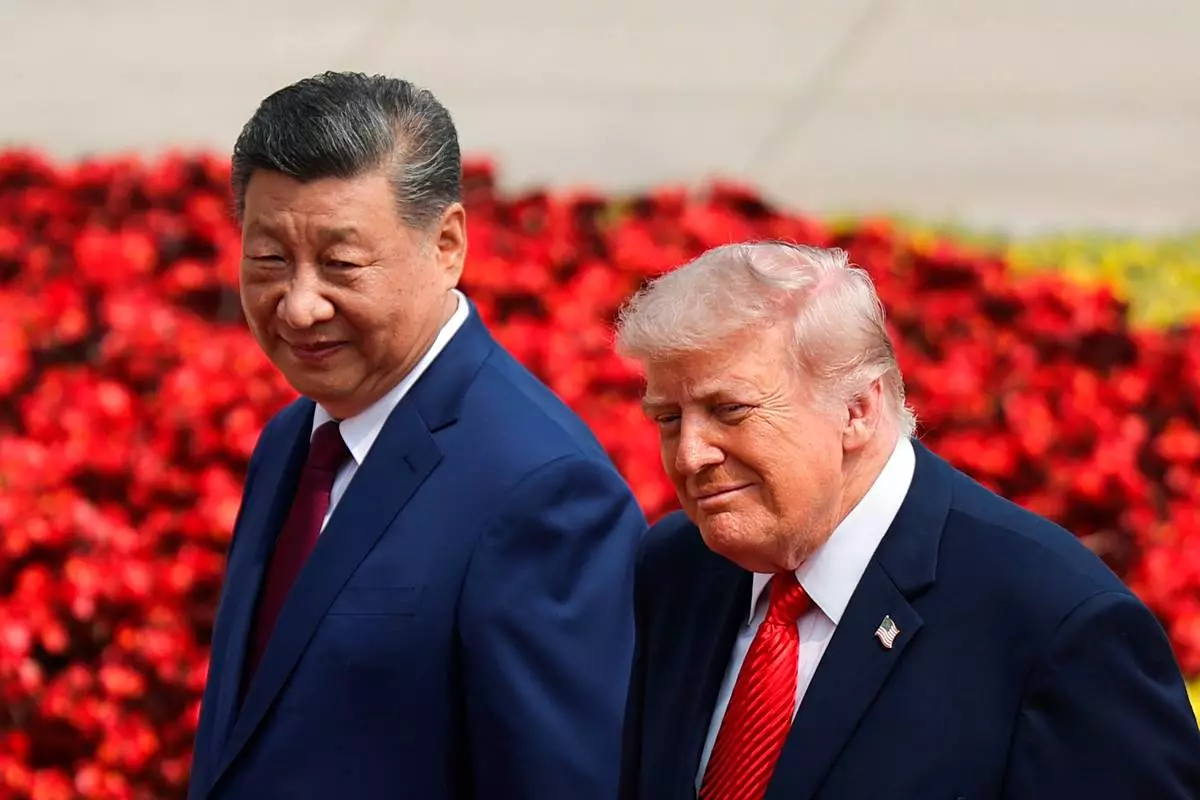
U.S. President Donald Trump, right, and Chinese President Xi Jinping attend a welcome ceremony at the Great Hall of the People in Beijing, Thursday, May 14, 2026. (Maxim Shemetov/Pool Photo via AP)
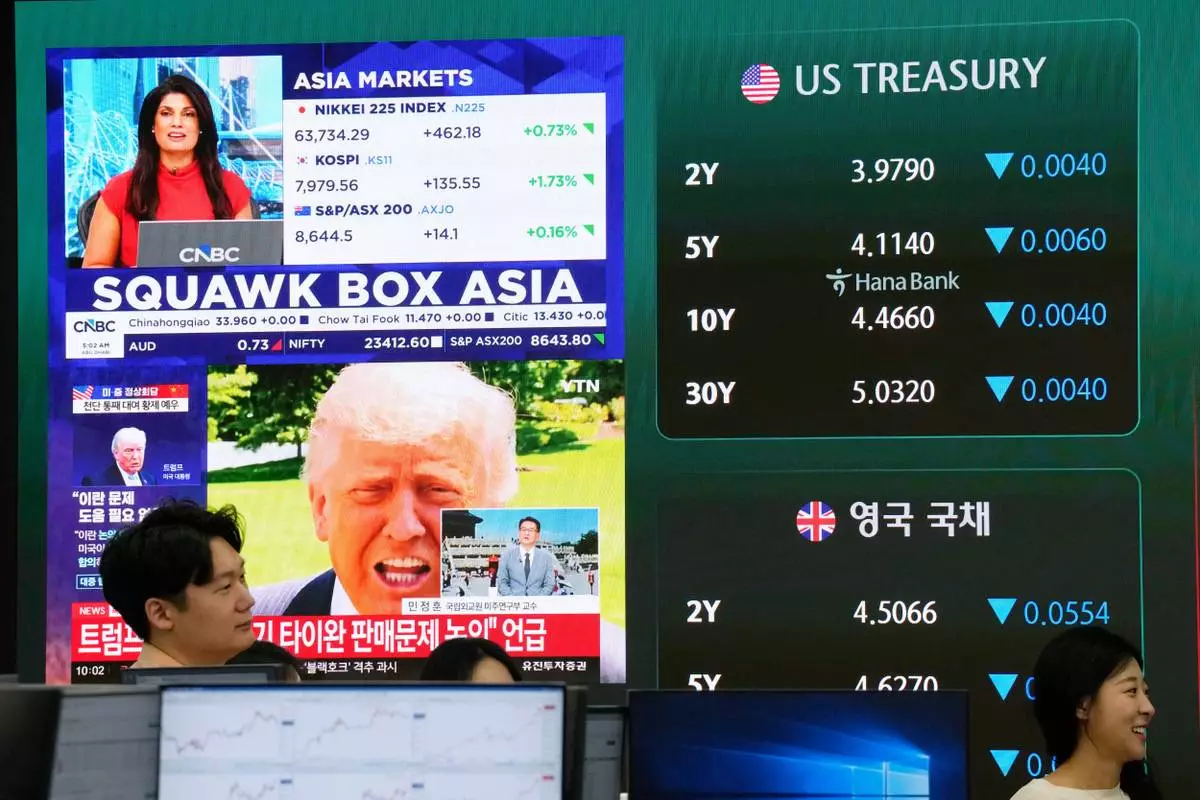
Asia markets index of Japan, South Korea and Australia is seen on a screen at the foreign exchange dealing room of the Hana Bank headquarters in Seoul, South Korea, Thursday, May 14, 2026. (AP Photo/Ahn Young-joon)