Two weeks after the U.S. Supreme Court struck down Louisiana's congressional map, state senators passed a plan Thursday that would eliminate a majority-Black district while giving Republicans a chance to win an additional seat in the midterm elections.
The new U.S. House districts, which still need House approval, would be used for primary elections poised to be postponed from Saturday until November.
Click to Gallery
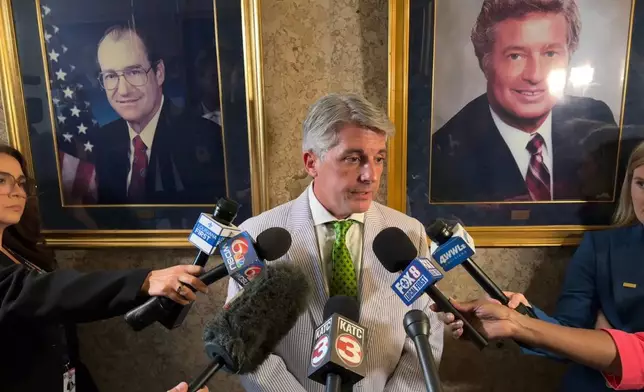
Louisiana Senate President Cameron Henry speaks to reporters in Baton Rouge, La., on Thursday, May 14, 2026, after the Senate approved a map eliminating one of the two majority Black congressional districts and giving Republicans a likely extra U.S. House seat. (AP Photo/Jack Brook)
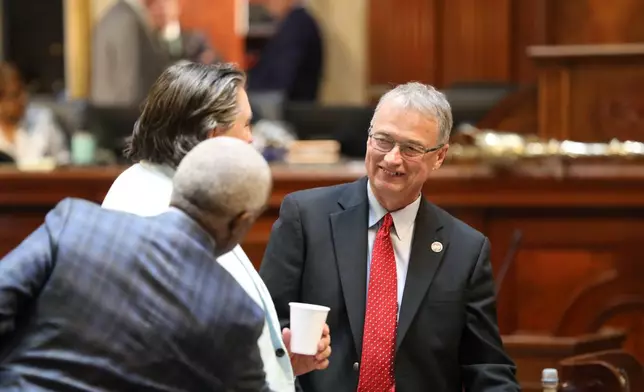
Republican South Carolina House Majority Leader Davey Hiott talks to colleagues on Thursday, May 14, 2026, in Columbia, S.C.. (AP Photo/Jeffrey Collins)
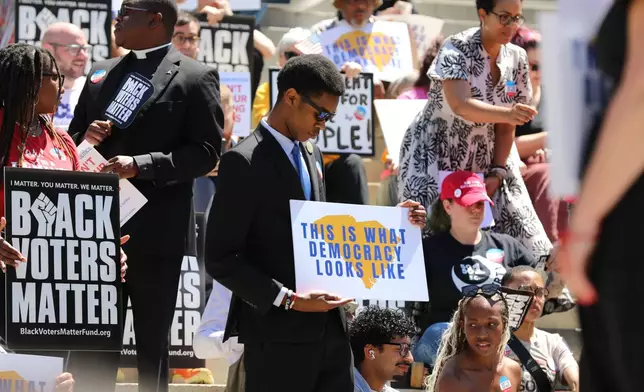
A protestor stands outside the South Carolina Statehouse on Thursday, May 14, 2026, in Columbia, S.C. (AP Photo/Jeffrey Collins)

Republican South Carolina Gov. Henry McMaster speaks to reporters on Tuesday, May 5, 2026, in Columbia, S.C. (AP Photo/Jeffrey Collins)
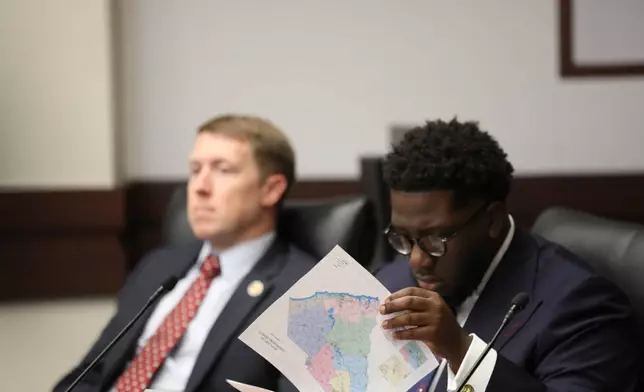
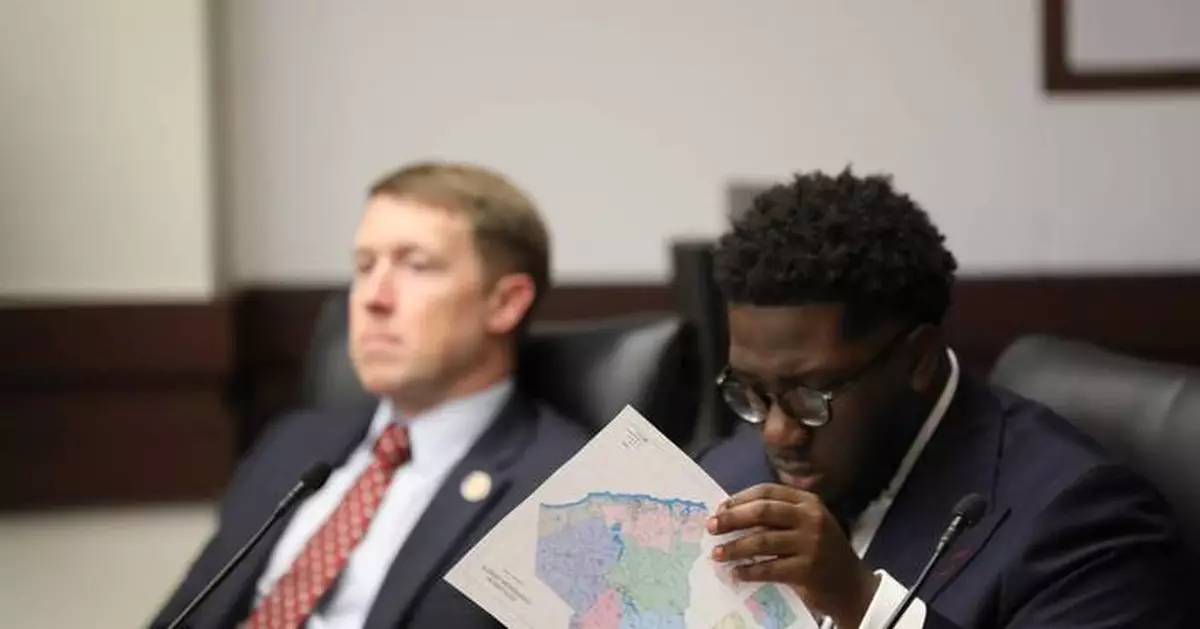
South Carolina Democratic Rep. Keishan Scott looks at a proposed U.S. House district map during a redistricting hearing in a state House Judiciary subcommittee on Tuesday, May, 12 2026, in Columbia, S.C. (AP Photo/Jeffrey Collins)
The high court's ruling has led to a flurry of redistricting efforts in Southern states as Republicans seek to capitalize on a weakened federal Voting Rights Act. While most of those efforts are voluntary, Louisiana must redraw its U.S. House map in response to the ruling that it had illegally used race to gerrymander a majority-Black district.
The debate over the shape of Louisiana's new districts is playing out as South Carolina's governor ramps up pressure on lawmakers to also redistrict ahead of the midterms. President Donald Trump has encouraged numerous Republican-led states to redraw House voting districts to their advantage in a bid to hold on to control of the closely divided chamber in November.
Republicans think they could win as many as 15 additional House seats in seven states that already have adopted new voting districts. Democrats think they could gain up to six seats from two other states because of new House districts. But there's no guarantee those seats will turn out as expected. Litigation is continuing in some states, and voters will have the ultimate say on who wins.
Legislation in Louisiana seeks to address the Supreme Court ruling by scrapping a district that snakes over 200 miles (321 kilometers) northwest from the capital, Baton Rouge, to Shreveport, creating a voting bloc with a majority of Black residents. Democratic U.S. Rep. Cleo Fields represents the current 6th District.
Under the new plan, that district would instead be clustered around predominantly white communities in the Baton Rouge area and southern Louisiana.
The new plan keeps a New Orleans-based, majority-Black district represented by Democratic U.S. Rep. Troy Carter while also adding a portion of Baton Rouge to it.
Fields, a Baton Rouge resident, said he won’t decide whether to seek reelection until the maps are finalized. But he said he won’t challenge Carter in a primary.
The newly proposed House map is similar to one used in 2022 that resulted in five Republicans and one Democrat winning election. Republican state Sen. Jay Morris said the new map packs Democrats into the 2nd District held by Carter to allow Republicans to prevail elsewhere.
“These maps are drawn to maximize Republican advantage for the incumbent Republicans that we have in Congress,” Morris said.
Democratic state Sen. Sam Jenkins suggested Republicans are “using partisanship as cover for discriminatory practices against a group of people, particularly Black voters and Democrats.”
“If it looks like a duck and it quacks like a duck, it’s probably a duck,” Jenkins said.
“It’s not quacking,” Morris said.
“It’s quacking pretty loud, it’s quacking all over the state,” Jenkins replied.
Republican senators defeated an alternative from Democrats that would have kept two Democratic-leaning districts. Republicans opted not to pursue a 6-0 Republican map because it was infeasible, said Louisiana Senate President Cameron Henry, a Republican.
A federal judge struck down Louisiana's 2022 map for violating the Voting Rights Act. Then in 2023, the U.S. Supreme Court ruled that Alabama had to create its own second largely Black congressional district. In light of the Alabama ruling, the Louisiana Legislature passed a revised map, creating a second majority-Black district that was used in the 2024 elections. That map also was challenged, leading to an April 29 Supreme Court ruling that Louisiana’s districts relied too heavily on race.
After the Supreme Court ruling, Republican Gov. Jeff Landry postponed Louisiana’s U.S. House primaries, which were scheduled for Saturday.
A bill given final approval Wednesday by the Legislature would shift the election to an open primary on Nov. 3. All U.S. House candidates, regardless of their party affiliation, would be on the ballot for voters in their district. If no one wins a majority outright, the top two vote-getters would enter a run-off on Dec. 12.
A new qualifying period for House candidates would run from Aug. 5-7.
The system is similar to how Louisiana's congressional elections previously occurred. Landry pushed the Legislature to end the state’s unique jungle primary system in 2024. Closed party primaries went into effect this year, and more than 250,000 votes already had been cast, according to the Louisiana secretary of state. The canceled congressional votes would be shielded from public records law.
Rep. Beau Beaullieu, the bill’s Republican sponsor, said that with congressional redistricting, there would not be sufficient time for closed primaries and a primary run-off before the Nov. 3 general election.
A closed primary remains in place for Louisiana's U.S. Senate race, which has not been suspended and pits incumbent Sen. Bill Cassidy against Trump-backed challenger U.S. Rep. Julia Letlow.
Leaders in the South Carolina House said they expect to take up a congressional redistricting bill Friday after Republican Gov. Henry McMaster calls them into special session. The regular legislative session is supposed to end Thursday, but McMaster's call would extend it.
It could be next week before the House can finish the redistricting bill, which would also move congressional primaries to August, Republican House Majority Leader Davey Hiott said. All primaries are currently scheduled for June 9. Early voting begins May 26, and that’s likely the deadline to finish redistricting, he said.
The redistricting work “will be long. It will be boring. It will be confrontational,” Hiott told reporters.
If the proposal passes the House, it then heads to a more skeptical Senate, where Republican Judiciary Committee Chairman Luke Rankin has said he will “demand the process” without elaborating. During the last regular redistricting at the start of the decade, Rankin’s committee held a month of meetings across the state and encouraged the public to submit its own maps.
Only one of South Carolina's seven U.S. House seats currently is held by a Democrat — longtime U.S. Rep. Jim Clyburn. Some Republicans worry it is impossible to guarantee seven GOP districts in a state where the Democratic presidential candidate has gotten more than 40% of the vote every election this century. There are also concerns about holding two statewide elections in a little over two months. South Carolina’s elections leader said it may require employees to work 24 hours a day.
Brook reported from Baton Rouge, Louisiana; Collins from Columbia, South Carolina; and Lieb from Jefferson City, Missouri.
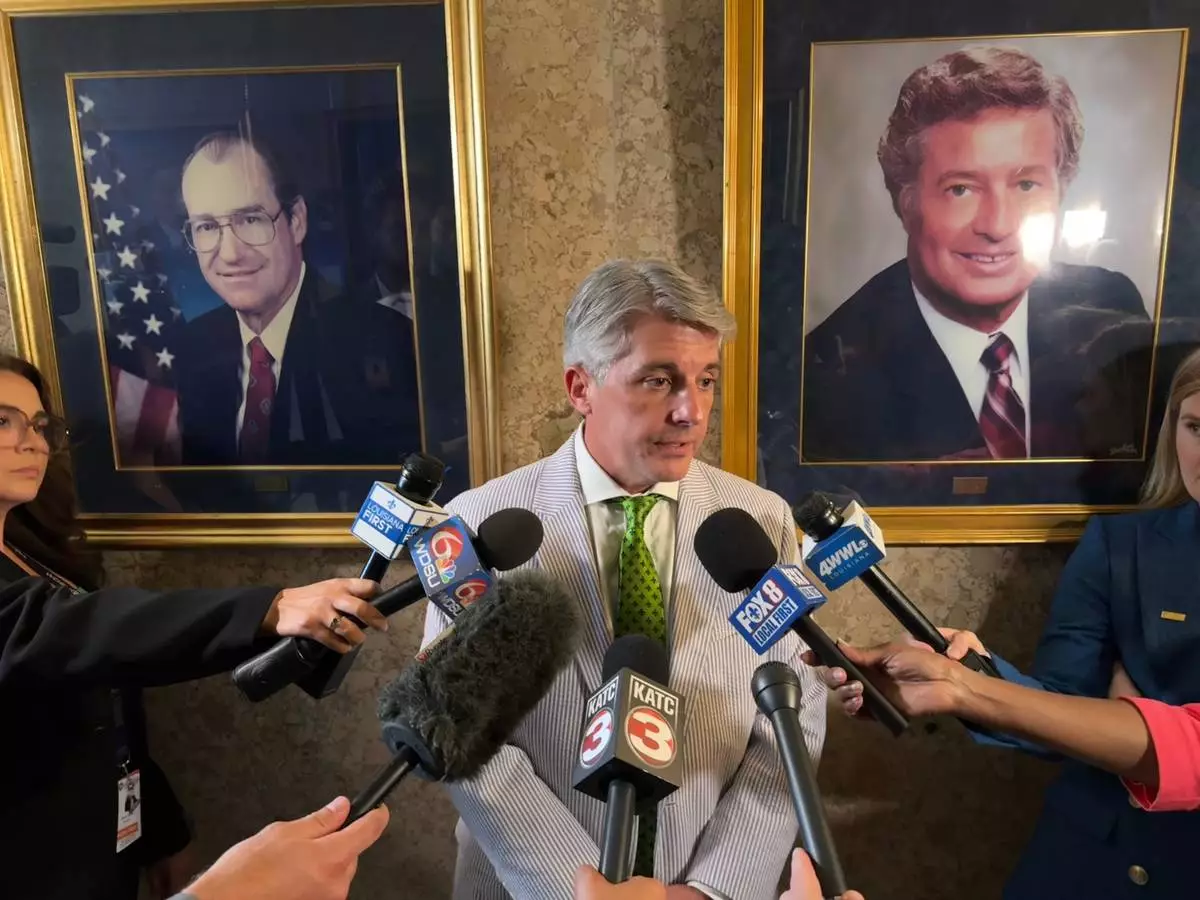
Louisiana Senate President Cameron Henry speaks to reporters in Baton Rouge, La., on Thursday, May 14, 2026, after the Senate approved a map eliminating one of the two majority Black congressional districts and giving Republicans a likely extra U.S. House seat. (AP Photo/Jack Brook)
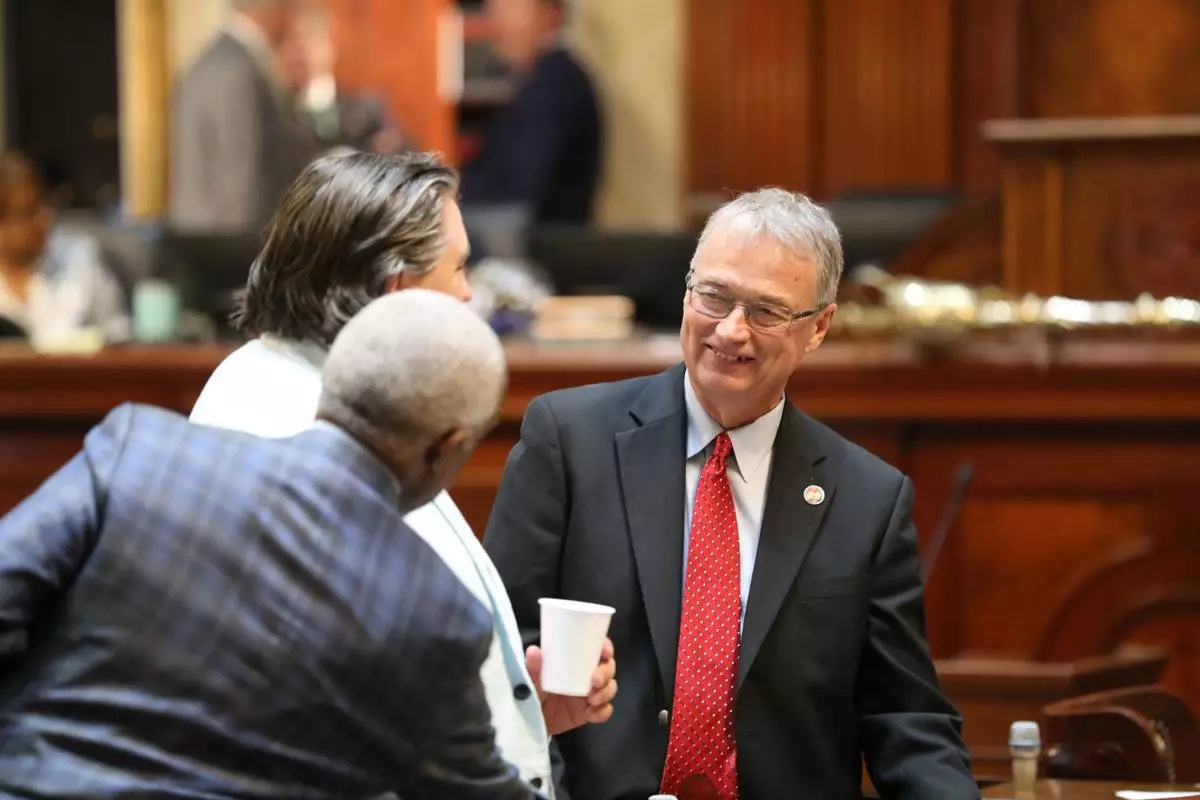
Republican South Carolina House Majority Leader Davey Hiott talks to colleagues on Thursday, May 14, 2026, in Columbia, S.C.. (AP Photo/Jeffrey Collins)
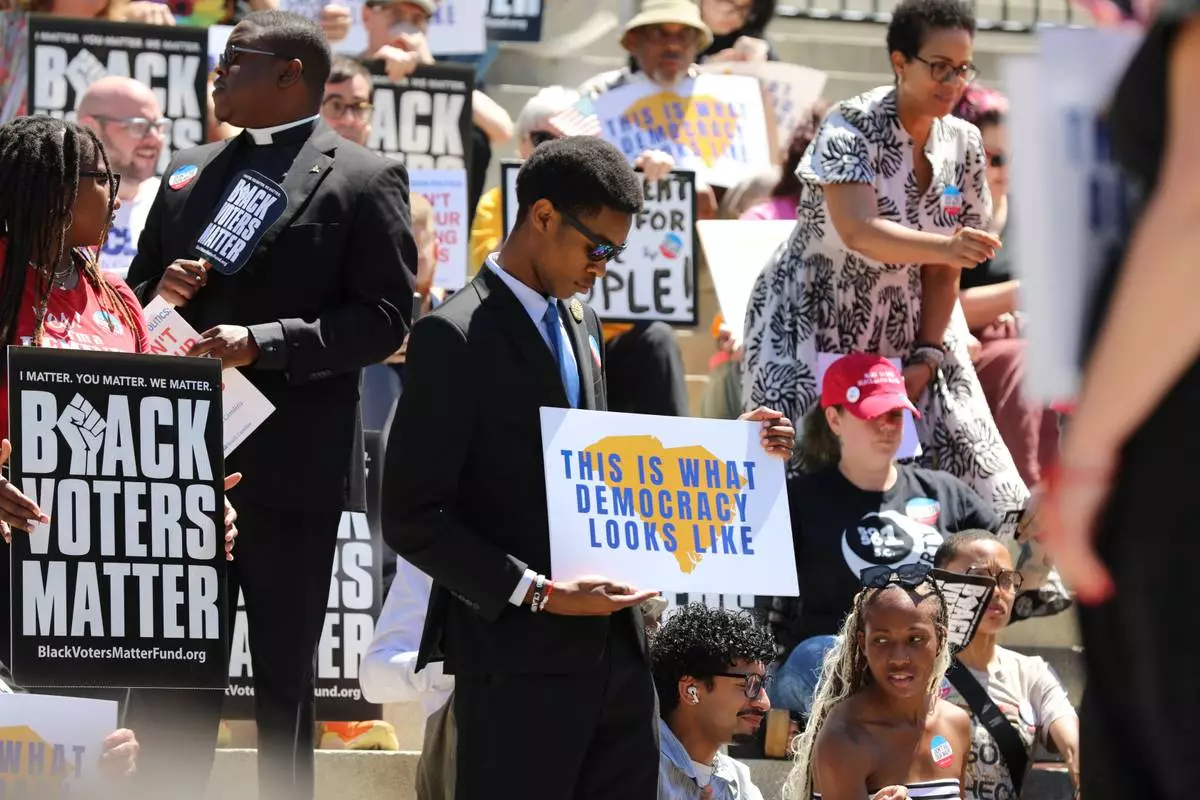
A protestor stands outside the South Carolina Statehouse on Thursday, May 14, 2026, in Columbia, S.C. (AP Photo/Jeffrey Collins)
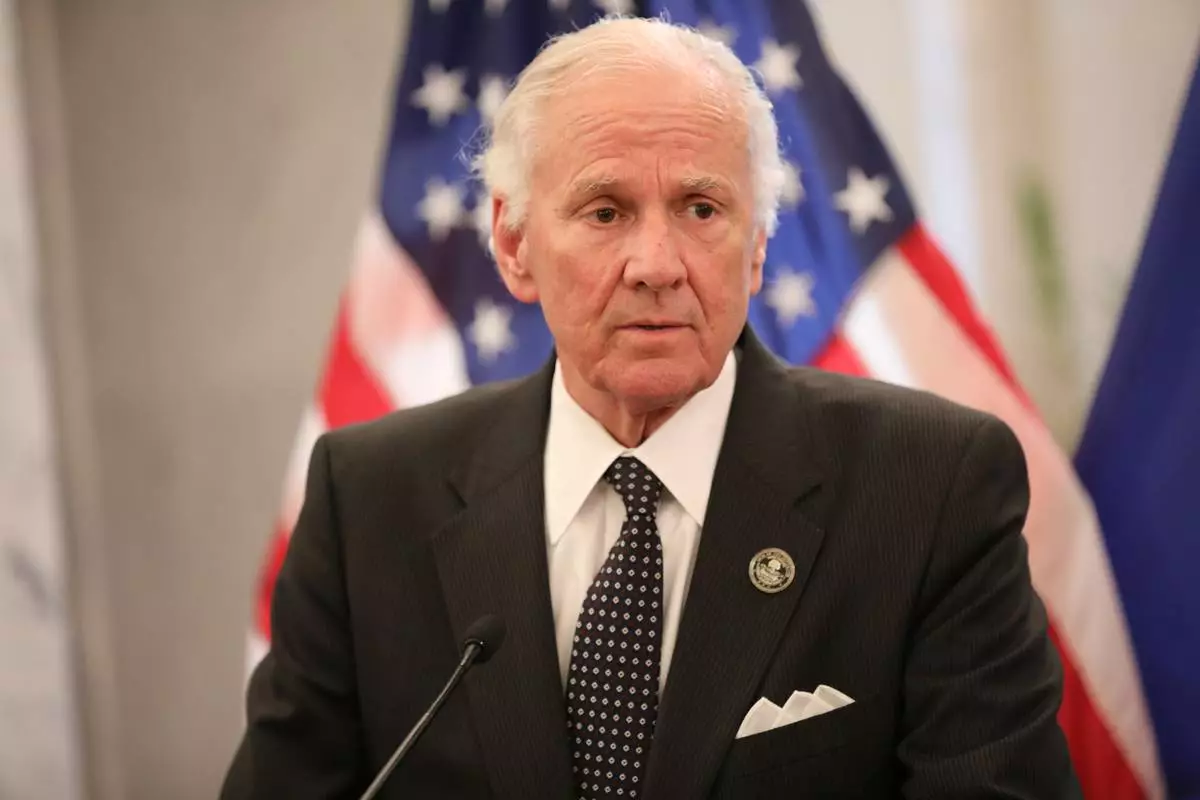
Republican South Carolina Gov. Henry McMaster speaks to reporters on Tuesday, May 5, 2026, in Columbia, S.C. (AP Photo/Jeffrey Collins)
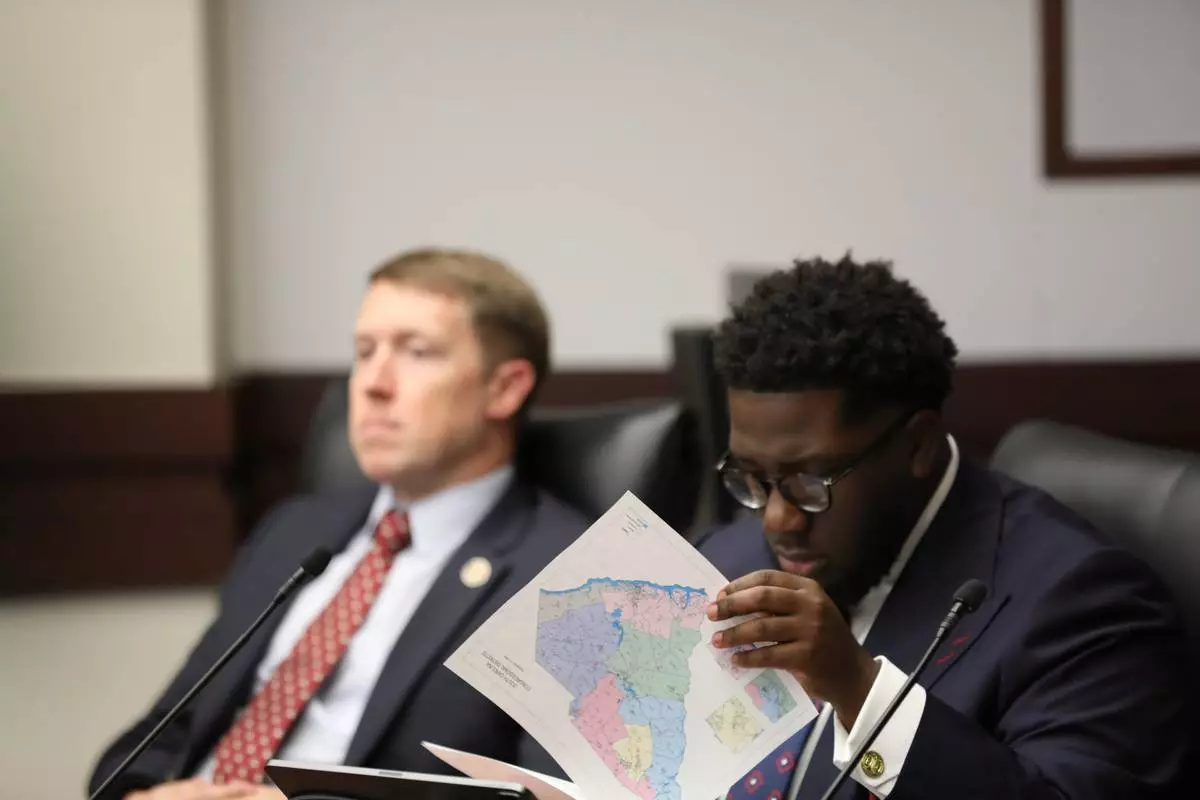
South Carolina Democratic Rep. Keishan Scott looks at a proposed U.S. House district map during a redistricting hearing in a state House Judiciary subcommittee on Tuesday, May, 12 2026, in Columbia, S.C. (AP Photo/Jeffrey Collins)