Skip to Content Facebook Feature Image

Families scour southern Mexico after 40 migrants vanished on a dangerous sea route

News

Families scour southern Mexico after 40 migrants vanished on a dangerous sea route
News

News

Families scour southern Mexico after 40 migrants vanished on a dangerous sea route

2026-05-15 08:26 Last Updated At:08:30

TAPACHULA, Mexico (AP) — On Christmas Eve 2024, Elianis Caridad Morejón Pérez, a young Cuban woman, told her mother by phone that she had put on a life jacket and was boarding a boat to travel from southern Mexico toward the United States. It was her final message from San José El Hueyate, a town in the state of Chiapas, before disappearing alongside 39 other migrants from Cuba, Honduras and Ecuador while traveling a maritime route known as one of the most dangerous paths used by smugglers.

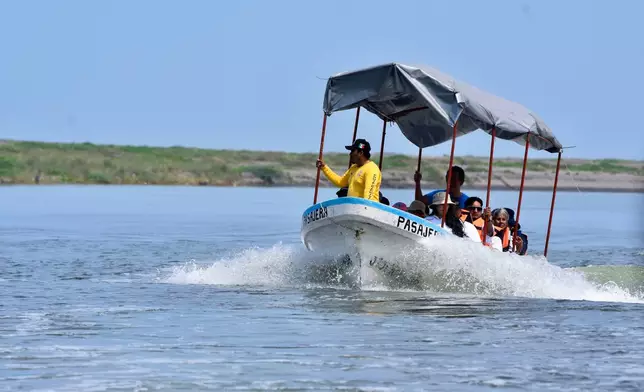
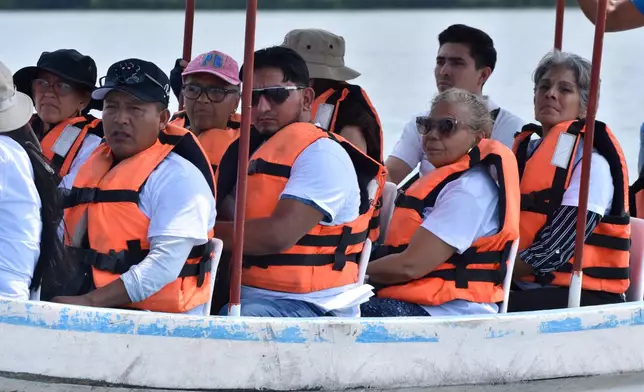
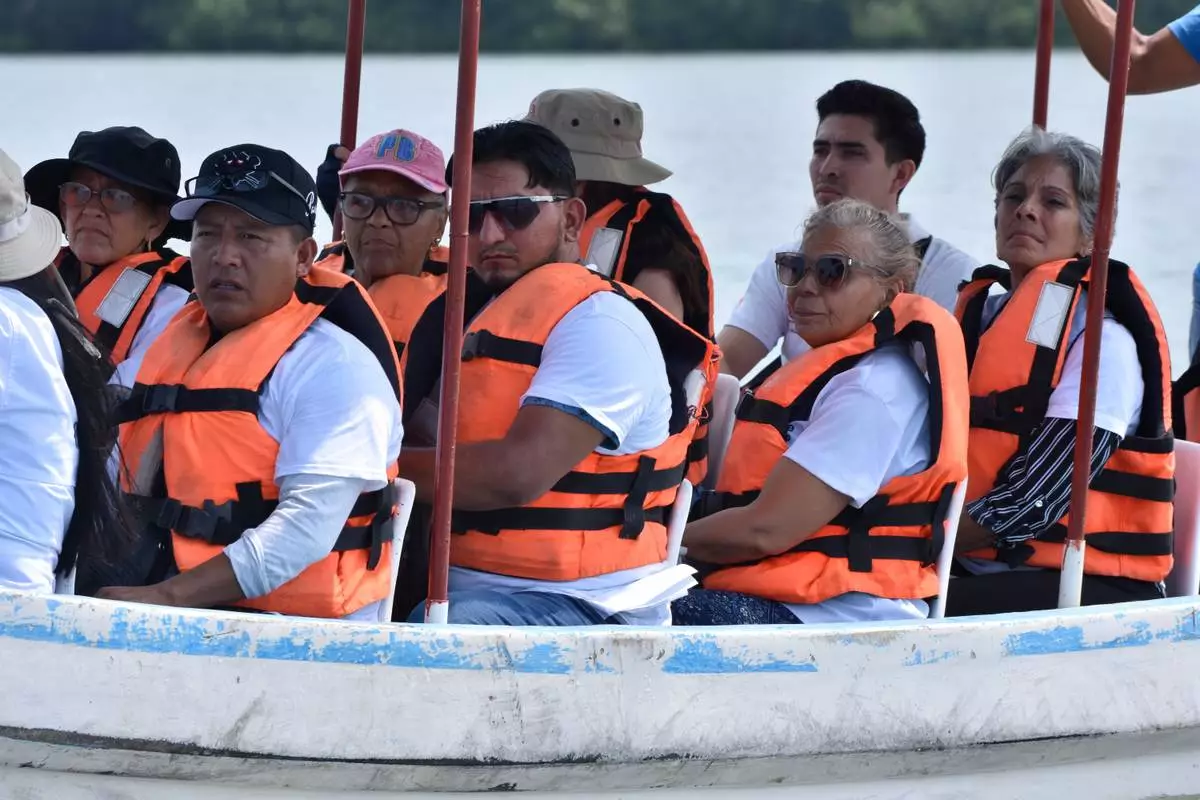
Earlier this month her mother, Isis Pérez, arrived in that same village near the Guatemalan border to search for her, alongside other relatives of the disappeared. Together, they scoured the San José El Hueyate pier, navigated the Pacific coast by boat, and canvassed local merchants and residents for any information.

More Images
People search for migrants who vanished in late 2024 along a maritime smuggling route to the U.S., in San Jose Hueyate, Chiapas state, Mexico, Saturday, May 9, 2026. (AP Photo/Edgar H. Clemente)
People search for migrants who vanished in late 2024 along a maritime smuggling route to the U.S., in San Jose Hueyate, Chiapas state, Mexico, Saturday, May 9, 2026. (AP Photo/Edgar H. Clemente)

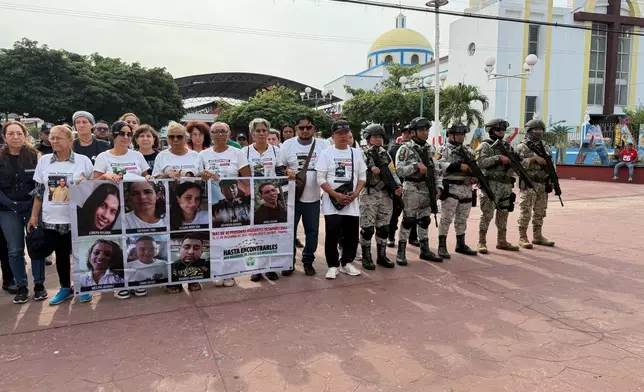
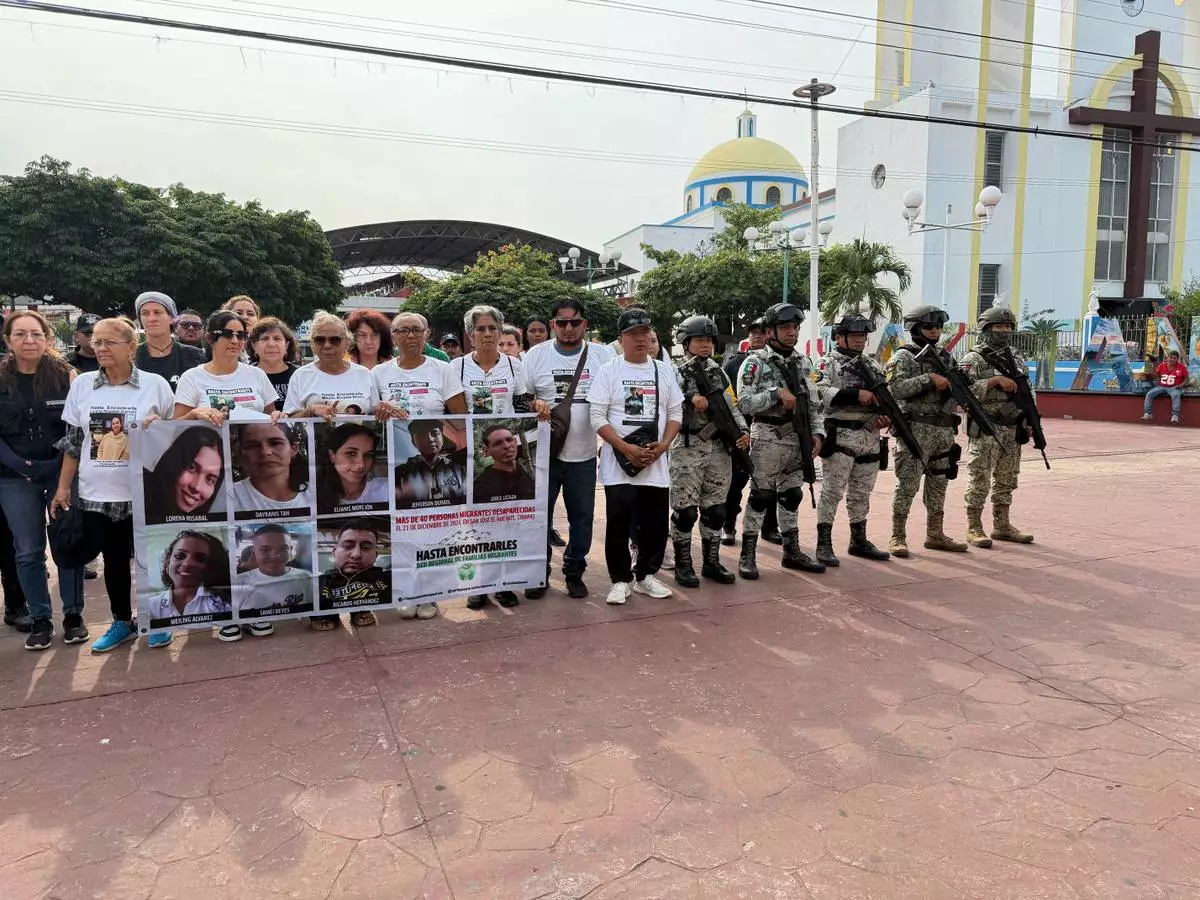
People searching for migrants who vanished in late 2024 along a maritime smuggling route to the U.S. pose with photos of their missing loved ones in Mazatan, Chiapas state, Mexico, Saturday, May 9, 2026. (AP Photo/Edgar H. Clemente)
People searching for migrants who vanished in late 2024 along a maritime smuggling route to the U.S. pose with photos of their missing loved ones in Mazatan, Chiapas state, Mexico, Saturday, May 9, 2026. (AP Photo/Edgar H. Clemente)

People search for migrants who vanished in late 2024 along a maritime smuggling route to the U.S., in San Jose Hueyate, Chiapas state, Mexico, Saturday, May 9, 2026. (AP Photo/Edgar H. Clemente)
People search for migrants who vanished in late 2024 along a maritime smuggling route to the U.S., in San Jose Hueyate, Chiapas state, Mexico, Saturday, May 9, 2026. (AP Photo/Edgar H. Clemente)

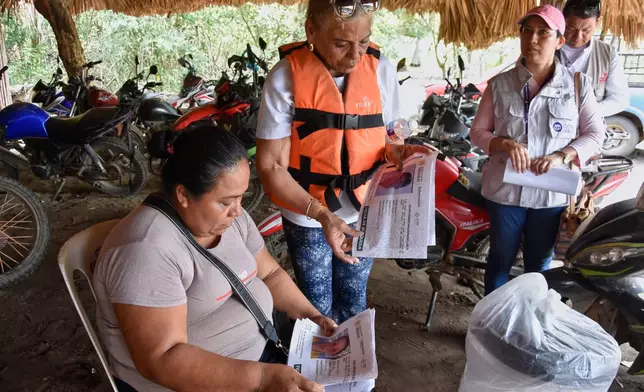
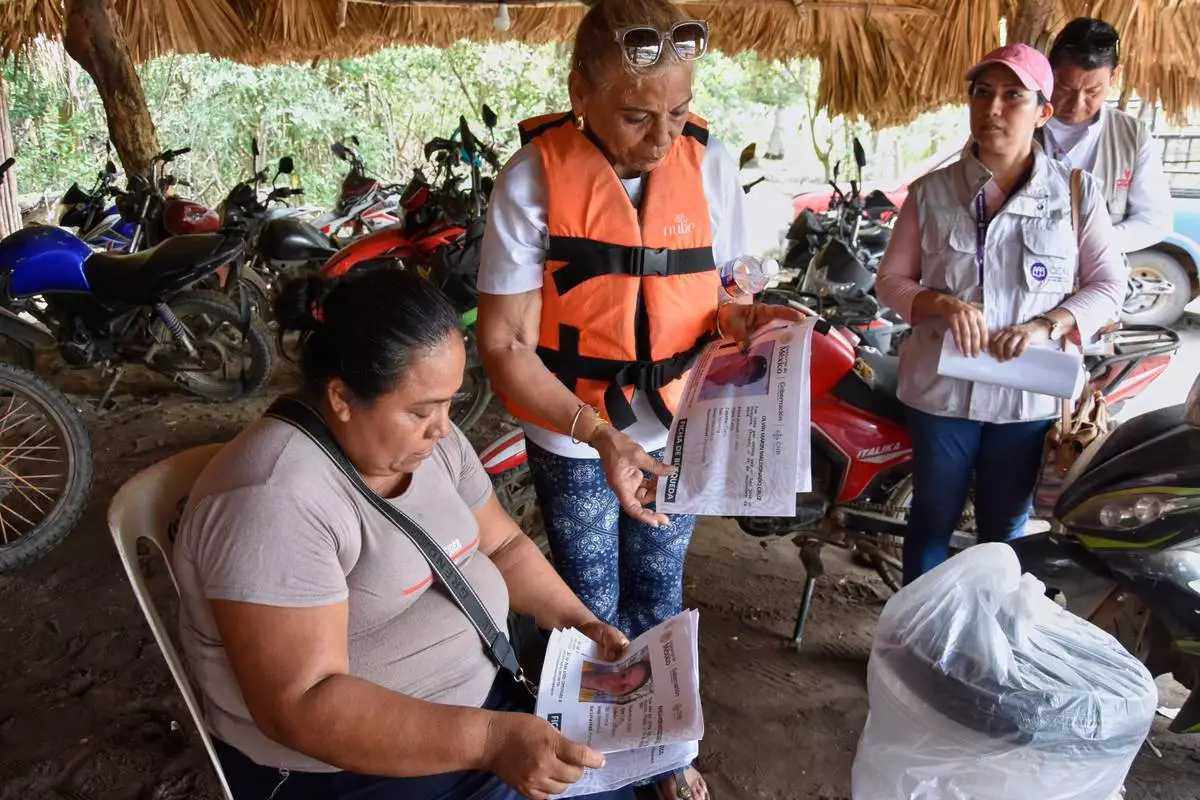
Julia Margarita Bravo Diaz, of Cuba, wearing life jacket, shows photos of missing people, including her daughter Meiling Álvarez Bravo and grandson Samei Armando Reyes Álvarez, to local residents in San Jose Hueyate, Chiapas state, Mexico, Saturday, May 9, 2026, during a search for migrants who vanished in late 2024 along a maritime smuggling route to the U.S. (AP Photo/Edgar H. Clemente)
Julia Margarita Bravo Diaz, of Cuba, wearing life jacket, shows photos of missing people, including her daughter Meiling Álvarez Bravo and grandson Samei Armando Reyes Álvarez, to local residents in San Jose Hueyate, Chiapas state, Mexico, Saturday, May 9, 2026, during a search for migrants who vanished in late 2024 along a maritime smuggling route to the U.S. (AP Photo/Edgar H. Clemente)

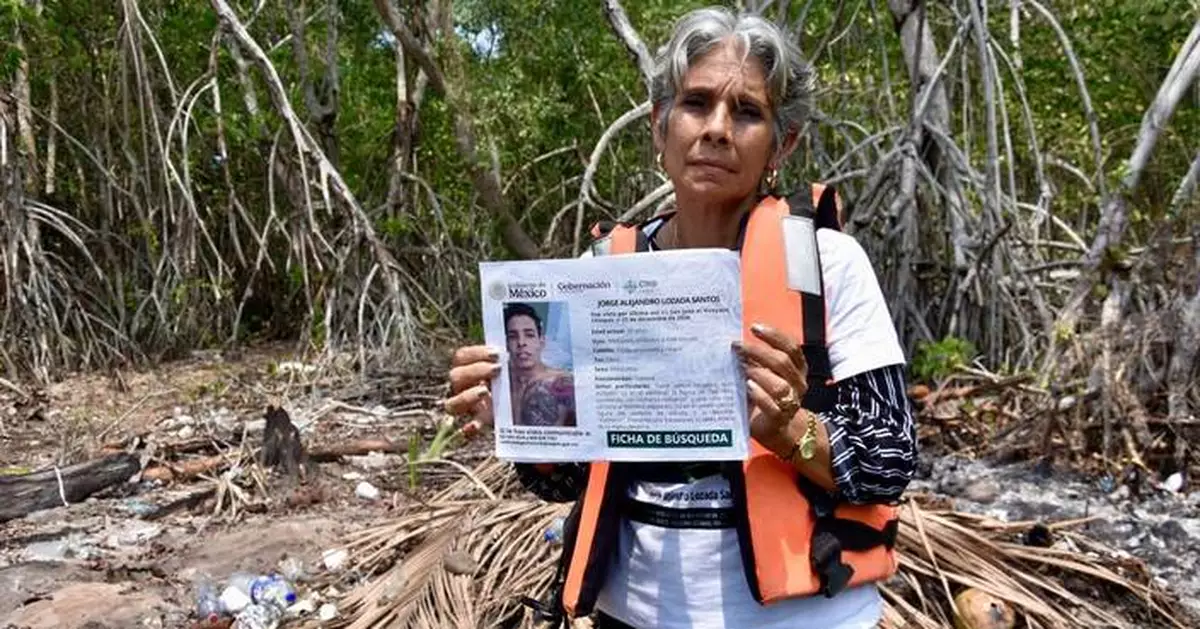
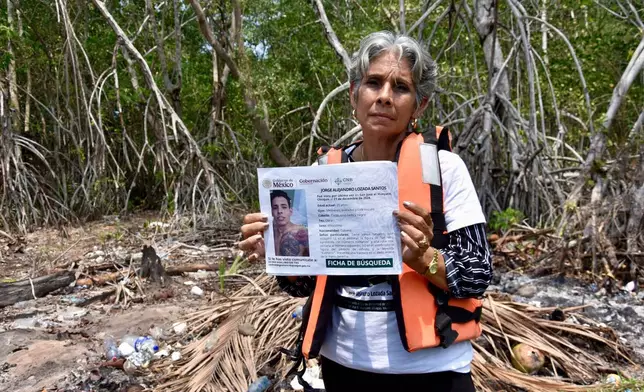
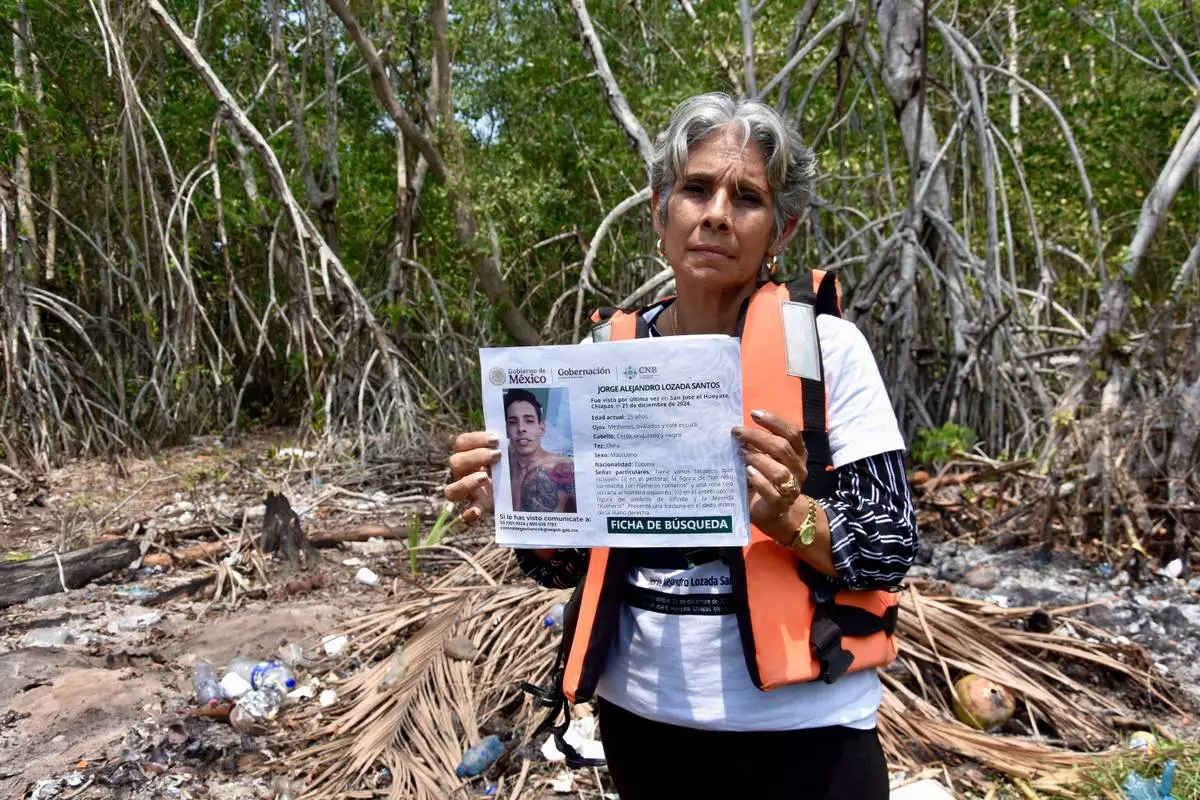
Alicia Santos Torres, from Cuba, shows a sign of her missing son Jorge Alejandro Lozada in San Jose Hueyate, Chiapas state, Mexico, Saturday, May 9, 2026, during a search for migrants who vanished in late 2024 along a maritime smuggling route to the U.S. (AP Photo/Edgar H. Clemente)

Alicia Santos Torres, from Cuba, shows a sign of her missing son Jorge Alejandro Lozada in San Jose Hueyate, Chiapas state, Mexico, Saturday, May 9, 2026, during a search for migrants who vanished in late 2024 along a maritime smuggling route to the U.S. (AP Photo/Edgar H. Clemente)

No one Pérez spoke with could provide concrete information, but many recalled that, before the start of the second Trump administration in January 2025, a steady flow of vehicles would arrive, carrying migrants who would then be transported by sea.

That migratory flow plummeted last year as the U.S. ramped up deportations, either sending migrants to their home countries or to third-party nations willing to accept them.

“As family members, we live in constant torment and anguish, longing to find them,” said Óscar Hernández, a Honduran man who traveled to Chiapas in hopes of locating his brother, who is among the disappeared.

The International Organization for Migration’s Missing Migrants Project has recorded the disappearance or death of 11,475 migrants on the route from South America to the United States since 2014. More than half of them were in Mexico.

According to a recent IOM report, several smuggling seaports have been identified since 2021. Migrants typically board small, twin-engine boats in Puerto de Ocós, Guatemala, before stopping to refuel and resupply in the Chiapas ports of Puerto Madero, San José, Barra de Zacapulco, and Paredón. They eventually disembark in Salina Cruz or Huatulco, Oaxaca, to continue their journey northward by land.

The 40 migrants who vanished in late 2024 were racing to reach the U.S. before U.S. President Donald Trump’s second term, fearing he would dismantle the more flexible immigration policies of his Democratic predecessor, Joe Biden, according to family members of some of the disappeared.

Cubans Meiling Álvarez Bravo, 41, and her 15-year-old son, Samei Armando Reyes Álvarez, were among those who vanished.

“On Dec. 21, 2024, at 8 a.m., she told me they were going to have breakfast because they were about to cross toward Mexico City by boat,” recounted Julia Margarita Bravo Díaz, Meiling’s mother and the boy’s grandmother.

Her daughter and grandson had flown from Cuba to Nicaragua before traveling overland through Honduras and Guatemala into Mexico. However, at the start of their journey, they were unaware that their path toward the U.S. border would eventually take them by sea, according to family members of four of those missing.

Searching for missing persons in Mexico is a grueling task on land, but it becomes exponentially more difficult at sea, said Ana Enamorado, coordinator of the nonprofit Regional Network of Migrant Families.

Between July and November 2025, the Mexican Navy rescued 22 migrants — six from high-seas shipwrecks and 16 from land as they prepared to embark from Chiapas. In response to these risks, Mexican authorities said in March that they had increased high-seas surveillance alongside Guatemalan authorities to disrupt both drug trafficking and the irregular movement of migrants toward North America.

The mothers and relatives of the 40 migrants who vanished in late December 2024 say that while they must return to their home countries, their search will not end. They remain committed to seeking answers from afar.

“We are leaving with heavy hearts but with the hope of finding them,” said Pérez. “We ask that you help us search, help us find them.”

Follow AP’s coverage of Latin America and the Caribbean at https://apnews.com/hub/latin-america
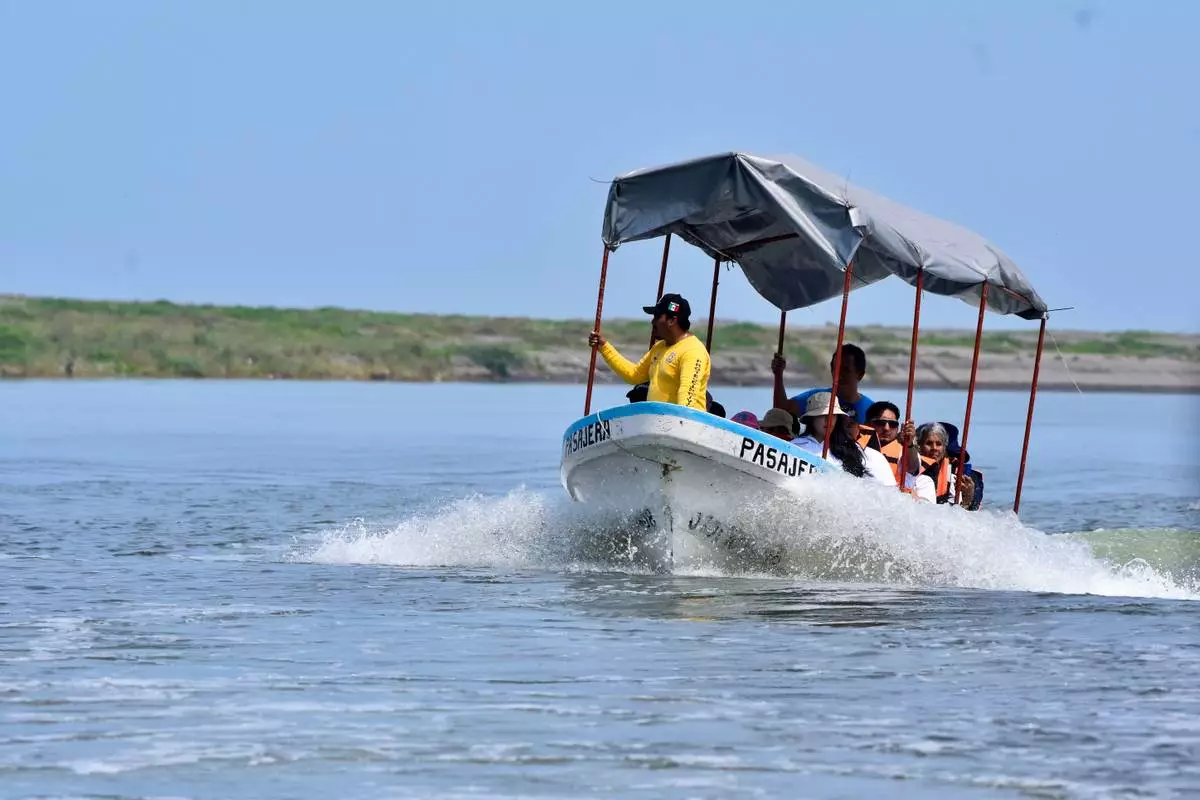
People search for migrants who vanished in late 2024 along a maritime smuggling route to the U.S., in San Jose Hueyate, Chiapas state, Mexico, Saturday, May 9, 2026. (AP Photo/Edgar H. Clemente)
People search for migrants who vanished in late 2024 along a maritime smuggling route to the U.S., in San Jose Hueyate, Chiapas state, Mexico, Saturday, May 9, 2026. (AP Photo/Edgar H. Clemente)

People searching for migrants who vanished in late 2024 along a maritime smuggling route to the U.S. pose with photos of their missing loved ones in Mazatan, Chiapas state, Mexico, Saturday, May 9, 2026. (AP Photo/Edgar H. Clemente)
People searching for migrants who vanished in late 2024 along a maritime smuggling route to the U.S. pose with photos of their missing loved ones in Mazatan, Chiapas state, Mexico, Saturday, May 9, 2026. (AP Photo/Edgar H. Clemente)

People search for migrants who vanished in late 2024 along a maritime smuggling route to the U.S., in San Jose Hueyate, Chiapas state, Mexico, Saturday, May 9, 2026. (AP Photo/Edgar H. Clemente)
People search for migrants who vanished in late 2024 along a maritime smuggling route to the U.S., in San Jose Hueyate, Chiapas state, Mexico, Saturday, May 9, 2026. (AP Photo/Edgar H. Clemente)

Julia Margarita Bravo Diaz, of Cuba, wearing life jacket, shows photos of missing people, including her daughter Meiling Álvarez Bravo and grandson Samei Armando Reyes Álvarez, to local residents in San Jose Hueyate, Chiapas state, Mexico, Saturday, May 9, 2026, during a search for migrants who vanished in late 2024 along a maritime smuggling route to the U.S. (AP Photo/Edgar H. Clemente)
Julia Margarita Bravo Diaz, of Cuba, wearing life jacket, shows photos of missing people, including her daughter Meiling Álvarez Bravo and grandson Samei Armando Reyes Álvarez, to local residents in San Jose Hueyate, Chiapas state, Mexico, Saturday, May 9, 2026, during a search for migrants who vanished in late 2024 along a maritime smuggling route to the U.S. (AP Photo/Edgar H. Clemente)

Alicia Santos Torres, from Cuba, shows a sign of her missing son Jorge Alejandro Lozada in San Jose Hueyate, Chiapas state, Mexico, Saturday, May 9, 2026, during a search for migrants who vanished in late 2024 along a maritime smuggling route to the U.S. (AP Photo/Edgar H. Clemente)

Alicia Santos Torres, from Cuba, shows a sign of her missing son Jorge Alejandro Lozada in San Jose Hueyate, Chiapas state, Mexico, Saturday, May 9, 2026, during a search for migrants who vanished in late 2024 along a maritime smuggling route to the U.S. (AP Photo/Edgar H. Clemente)

DES MOINES, Iowa (AP) — Two Democrats vying to be Iowa's next U.S. senator opened their final debate Thursday with a pitch to voters on how they would flip the Republican-held seat in a contest that has seen heavy outside spending and high-profile endorsements.

State lawmakers Zach Wahls and Josh Turek are competing in a June 2 primary. It is one of the few remaining competitive Democratic Senate primaries this year, as the party seeks the best approach to reclaim the U.S. Senate this fall.

Iowa’s Republican Sen. Joni Ernst opted out of a reelection bid, leaving the seat open for the first time since she replaced retiring Democratic Sen. Tom Harkin in 2014. Republican Senate leaders have backed Ashley Hinson, a congresswoman representing northeast Iowa, and the campaign arm has committed $29 million to help her keep their thin majority.

Democrats see an opportunity to flip seats in the once-competitive state, despite President Donald Trump’s double-digit win in the last presidential election and an all-Republican federal delegation. The political committee aligned with Senate Democrats said Thursday they were investing $13 million in the state. But Iowa Democrats first need to settle on which federal candidate will be at the top of the ticket. Early voting began on Wednesday.

While Wahls and Turek have raised and spent similar amounts, a Democratic political organization, VoteVets, has spent about $7 million to support Turek in the final stretch of the campaign. That's more than the two candidates have spent combined.

Turek, who is not a veteran, was born with spina bifida after his father’s exposure to chemicals while serving in the Vietnam War. The group has said Turek is uniquely positioned to advocate for veterans’ services, especially health care and military families.

Wahls has criticized the influx of cash as insiders in Washington trying to exert outsized influence, and it's likely to come up again Thursday, as it did at an Iowa Press debate last week.

Another group purchased more than $40,000 in airtime to support Wahls this week, according to filings. Iowa Action was funded by a lawyer with a California address who has also donated directly to Wahls' campaign.

Wahls has been vocal about who should — or should not — lead Senate Democrats, saying he would not vote for Sen. Chuck Schumer of New York to be the caucus leader.

“The leadership of Chuck Schumer has failed the Democratic Party, it has failed the state and it has failed this country,” Wahls said during last week's debate. “Dark money has an agenda, and that agenda is to protect the broken status quo and the failed leadership of Sen. Schumer.”

Schumer has tried to keep the focus on Republicans.

Turek responded to Wahls' criticism, saying he's not a “D.C. insider.”

“I don't know these folks,” he said. Turek explained his criteria for leader candidates, but stopped short of saying he wouldn’t support Schumer.

“I will go up and ask whoever is deciding to run for leadership ... ‘What are you going to do for Iowa? What are you going to do for Iowans? What are you going to do for the middle class?’” Turek said.

The two have also drawn distinct endorsements from well-known Democrats.

In the last week, Turek unveiled a rare endorsement from Harkin, who represented Iowa in the Senate for three decades, as well as former Transportation Secretary Pete Buttigieg. Turek also has collected endorsements from sitting U.S. senators, including Illinois' Tammy Duckworth, New Hampshire's Maggie Hassan and Nevada's Catherine Cortez Masto.

Wahls is endorsed by U.S. Sen. Elizabeth Warren of Massachusetts, who joined him in Iowa for campaign events over the weekend. The progressive senator told voters the Senate needs Democrats who are willing to “get in there and stand up and fight.”

In the first debate last week, Turek and Wahls were aligned on many issues. Both said that they would not support the Republican president’s tariffs or the war in Iran and that they do support raising the minimum wage and restoring health care access with a public insurance option. They criticized corruption in Washington and proposed higher taxes on corporations and wealthy Americans.

But they also started to draw some contrasts. More of that is likely Thursday in the debate hosted by local broadcast stations in Des Moines, Cedar Rapids, Sioux City and the Quad Cities.

Wahls referenced a law Turek supported in the Iowa legislature that makes it a state crime to be in the U.S. illegally. Turek defended his vote, saying it was Biden-era legislation, and stressed the importance of a secure U.S.-Mexico border. Turek said he also supports an easier path to citizenship and reforms to immigration enforcement under the Trump administration.

Turek highlighted his working-class background and contrasted his work for a nonprofit with Wahls’ work for a political organization focused on electing young Democrats.

Follow the AP’s coverage of the 2026 election at https://apnews.com/projects/elections-2026/.

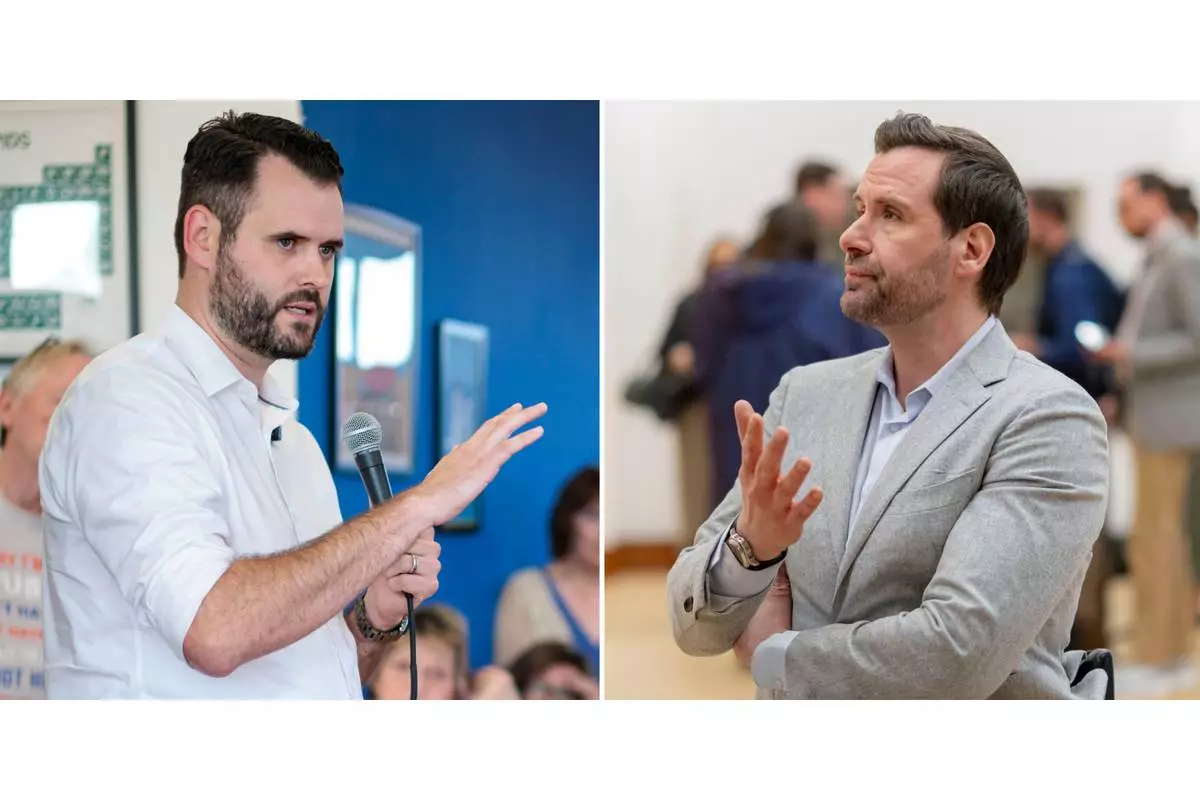
This combination of file photos shows Iowa State Sen. and candidate for the Democratic nomination for U.S. Senate Zach Wahls speaking in Cedar Rapids, Iowa, Sept, 11, 2025, left, and Iowa state Rep. Josh Turek speaking in Des Moines, Iowa, April 8, 2026, right. (Nick Rohlman/The Gazette via AP, File)

This combination of file photos shows Iowa State Sen. and candidate for the Democratic nomination for U.S. Senate Zach Wahls speaking in Cedar Rapids, Iowa, Sept, 11, 2025, left, and Iowa state Rep. Josh Turek speaking in Des Moines, Iowa, April 8, 2026, right. (Nick Rohlman/The Gazette via AP, File)

Recommended Articles