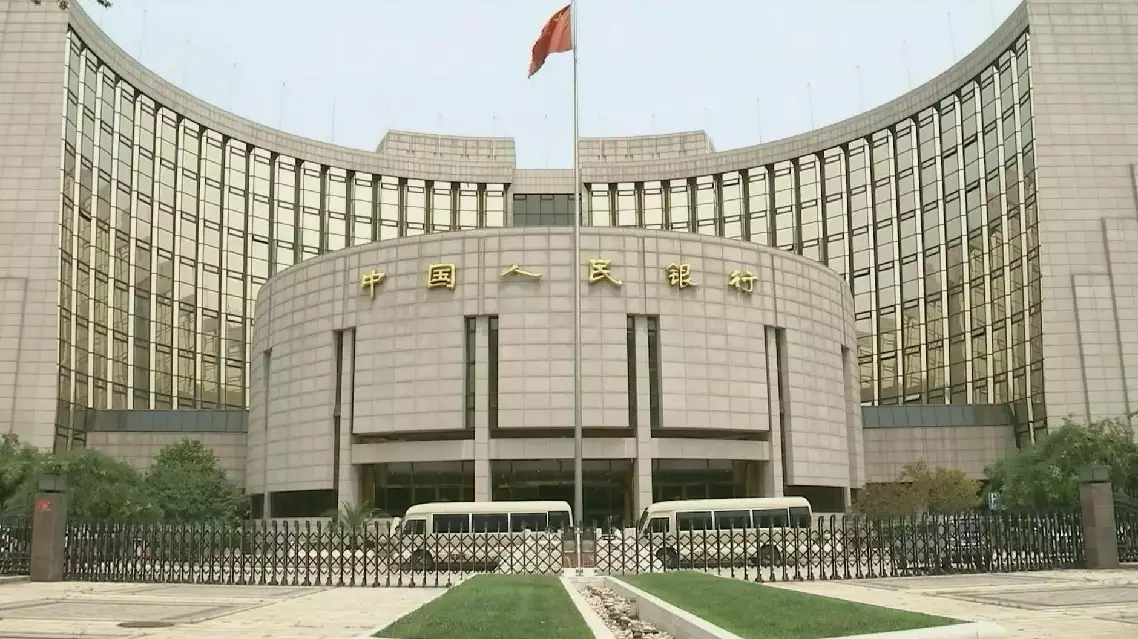
China's financial system continued to provide robust support for the real economy in April, with steady credit expansion and declining borrowing costs, according to the data released Thursday by the People's Bank of China (PBOC), the country's central bank.
At the end of April, China's total outstanding social financing reached 456.89 trillion yuan (about 67.16 trillion U.S. dollars), up 7.8 percent year on year.
The M2, a broad measure of money supply that covers cash in circulation and all deposits, had increased by 8.6 percent year on year to 353.04 trillion yuan by the end of last month.
The M1, which covers cash in circulation, demand deposits and client reserves of non-bank payment institutions, reached 114.58 trillion yuan at the end of April, up 5 percent from the same period of last year.
In the first four months of 2026, China's yuan-denominated loans rose 8.59 trillion yuan, reflecting sustained credit provision to the real economy.
Loans to enterprises and institutions increased by 8.99 trillion yuan during the period, with medium- and long-term loans rising 5.01 trillion yuan, a sign of stable funding support for business investment and production activities.
The balance of inclusive loans for micro and small enterprises reached 37.92 trillion yuan at the end of April, up 10.5 percent year on year. Meanwhile, the balance of medium- and long-term loans to the service sector, excluding real estate, totaled 61.34 trillion yuan, growing 9.7 percent, both outpacing the overall loan growth rate.
Analysts noted that amid ongoing economic transformation, loan demand is gradually shifting from traditional heavy-asset sectors such as real estate toward technology-intensive and service-oriented industries with lighter asset structures.
"Since the beginning of this year, a series of policies, such as strengthening fiscal-financial coordination to boost domestic demand and intensifying support for sci-tech finance, green finance, inclusive finance, pension finance and digital finance, have been successively implemented, yielding tangible results. Monetary and credit policies have worked in synergy with fiscal measures, including interest subsidies and risk compensation mechanisms, to channel greater flows of financial resources toward major projects, key sectors and areas requiring strengthened support," said Dong Ximiao, chief economist at the Merchants Union Consumer Finance Co., Ltd.
The PBOC data also show that borrowing costs remained at historically low levels, further easing debt burdens for businesses and households.
In April, the weighted average interest rate on newly issued corporate loans stood at about 3.1 percent, down about 20 basis points from a year earlier. Similarly, the weighted average interest rate for newly issued personal housing loans was also around 3.1 percent, roughly down 6 basis points year over year.
China maintains steady credit expansion in April: PBOC data