After two decades helping a local manufacturer grow into a global equipment giant, American engineer David Beatenbough says the speed of China's transformation is something outsiders must witness firsthand to truly understand.
Now enjoying a peaceful retirement in Liuzhou City of Guangxi Zhuang Autonomous Region, south China, Beatenbough was rewarded the Chinese Government Friendship Award, a top honor for foreign experts in China, for his over 20 years' dedication for the development of Liugong Machinery, a local equipment manufacturing pillar.
Surrounded by model machines kept as mementos of his career, Beatenbough traced the arc of Liugong's journey from a local manufacturer to an international player.
"This one is for Liugong. I started that in 2007. It's sold worldwide, the market... These are called skid steer loaders. We sell a lot of skid steer loaders in the Middle East and in places like Africa. We sell a lot," he recalled.
Looking back on two decades in China, Beatenbough said he was struck by the pace of change, and still marvels at the nation's relentless industrial transformation.
"Everyone really has to be amazed at how fast China has advanced in recent years, with the battery electric vehicles being one of the clear places, where everybody sees that China is a clear leader in adopting battery technology. We've watched the user profile in China change over the years. China is now a mature market because customers are looking for more advanced features. We've seen a complete adaptation of the Chinese customer over twenty-year period and that has of course forced manufacturers to be offering better offerings to the China market," he said.
Through sustained effort and innovation, China has widened its competitive edge from heavy equipment into advanced electric products and AI, moving faster than many stereotypes abroad would suggest. The best way to understand China, Beatenbough concluded, is to see it with one's own eyes.
"There's no question that the number one and number two economies in the world have to be able to get along and have to have a good, strong trading relationship, and I think cultural exchanges is one of the best ways to accelerate that growth. I think especially many people just do not understand where China stands in the world today anymore. It's changing so fast. And I think that one of the biggest things that people from outside China need to do is they need to be able to come to China see what it's really like and understand that not everything they read is true. You'll see things you've never seen before. Things will go at a speed that you would never believe possible in the business world anyway. I think in my life, I have never regretted taking a step and taking a risk," he said.
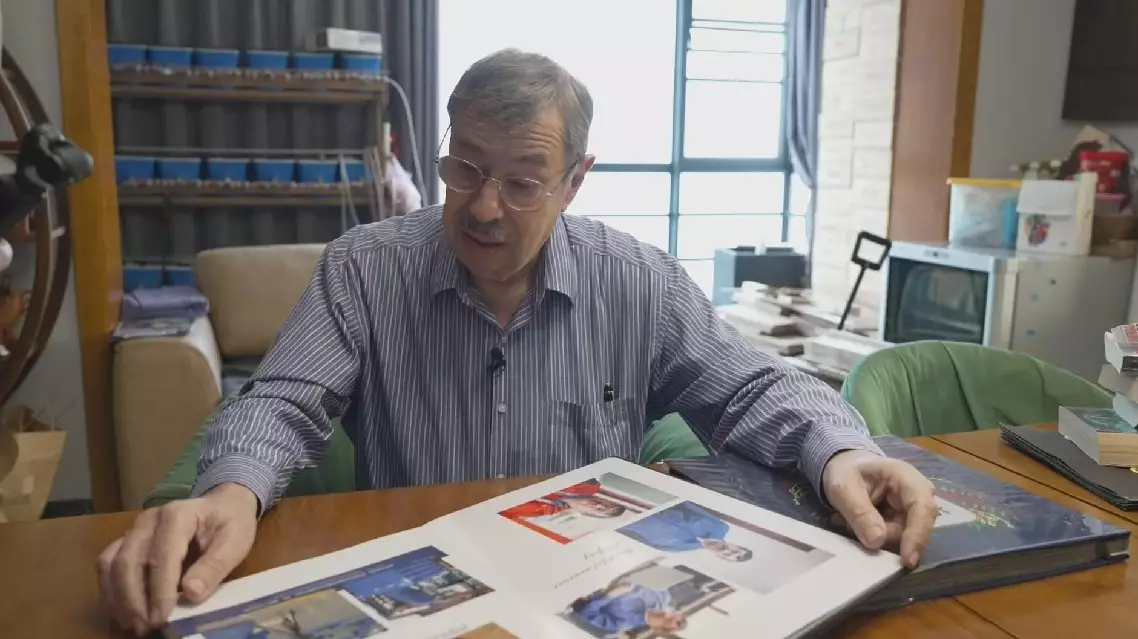
China's rapid development demands fresh look: awarded American engineer
More than 20 students from Ivy League universities in the United States visited China's Southwest Jiaotong University in on Tuesday, where they got a first-hand look at a fast-moving technological innovation that could power future transportation.
The students paid a visit to a special demonstration lab in Chengdu, the capital of southwest China's Sichuan Province, where they explored the world’s first high-temperature superconducting magnetic levitation prototype and test line, taking part in some fun hands-on experiments and even enjoying a brief trial ride.
Experts say the system could exceed speeds of 600 kilometers per hour, helping to further narrow the gap between high-speed rail and air travel.
The students' visit came as part of a week-long language and cultural exchange program, giving the young participants the chance to experience daily life in Chengdu while learning more about China.
The exchange event comes at a momentous time for China-U.S. relations, with U.S. President Donald Trump on Friday wrapping up a three-day state visit to China at the invitation of Chinese President Xi Jinping, which marked the first such trip by a U.S. president in nine years.
The students taking part in the Chengdu activity said exchanges like the one they have embarked on can help deepen trust and expand cooperation between the U.S. and China.
"The positive signals I am hoping to see is that right now I see China and the United States as two powerful and very important countries in this world. But they also both have a lot of potential, and I think that if they work together, they can make some tremendous change across the world," said Alex Davenport, a student from Mount Holyoke College.
"America and China are two of the largest superpowers in the world right now, and I think politically and culturally it’s really great to communicate with one another," said Caroline Ewald, a student at the University of Pittsburgh.
Others are hoping that Trump's landmark visit will also help improve ties.
"That's probably the biggest thing I am look for is try to cool down the trade stuff that's going on in the U.S.," said McKenna Lundy, a student from the University of Michigan.
China is seen as a world leader in maglev technology. Last December, the country's Hubei East Lake Laboratory announced a groundbreaking achievement, with its test line accelerating a 1.1-tonne model train to an astonishing 800 kilometers per hour in just 5.3 seconds -- a milestone in electromagnetic propulsion research.
The technology is also proving its worth at more manageable speeds, with a restaurant in the southern Chinese tech hub of Shenzhen going viral earlier this year after it used magnetic levitation to serve food, with plates seen floating along tracks to arrive smoothly in front of each diner.
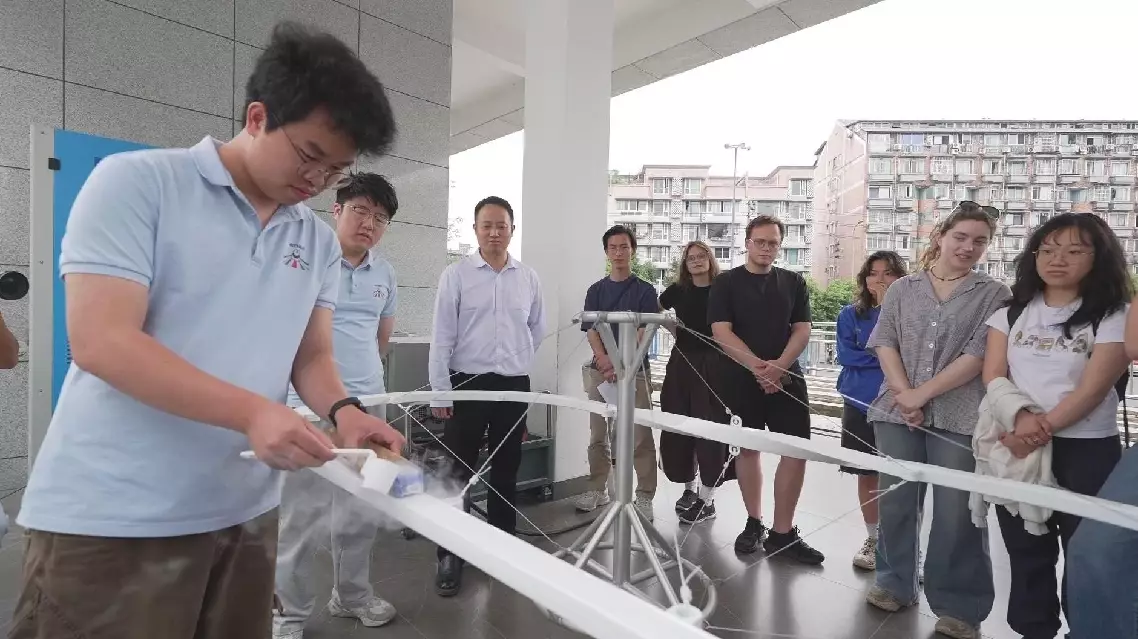
US students get taste of high-speed technology with visit to top maglev lab in Sichuan