U.S. President Donald Trump's "tremendously successful" China visit will strengthen bilateral communication at all levels, create a stable environment for businesses, and boost their confidence, laying a solid foundation for stronger economic cooperation, said Jeffrey Lehman, chair of the American Chamber of Commerce in Shanghai (AmCham Shanghai).
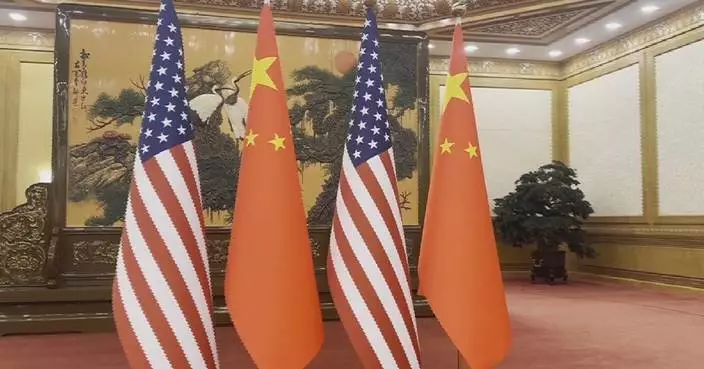
Trump on Friday concluded a three-day state visit to China at the invitation of Chinese President Xi Jinping, which marked the first such U.S. presidential visit in nine years.
In a meeting closely watched by the world, Xi and Trump held talks on Thursday in which they agreed on a new vision of building a constructive bilateral relationship of strategic stability.
Prior to departing the Chinese capital on Friday, Trump said his state visit has captured the world's attention and described it as very successful and unforgettable. He also said he looks forward to hosting President Xi in Washington, D.C.
In an interview with the China Global Television Network (CGTN), Lehman highlighted the importance of maintaining communication to ensure the steady development of bilateral relations and the significance of "strategic stability" for businesses on both sides.
Despite past tensions over trade, Lehman also stressed the fact that the world's largest two economies largely rely on each other, meaning cooperation is necessary.
"Trump's visit so far has been just tremendously successful. I think in order to make long-term plans, a business needs an environment of stability. And I think one of the clear lessons of last summer is that these two countries are interdependent. Decoupling is not an option. And one of the obvious lessons from this visit is that the two leaders have a relationship that values clear communication, and they are prepared to use that relationship now to strengthen communication between the two countries and provide the environment of strategic stability that will promote the well-being of citizens of both countries," Lehman said.
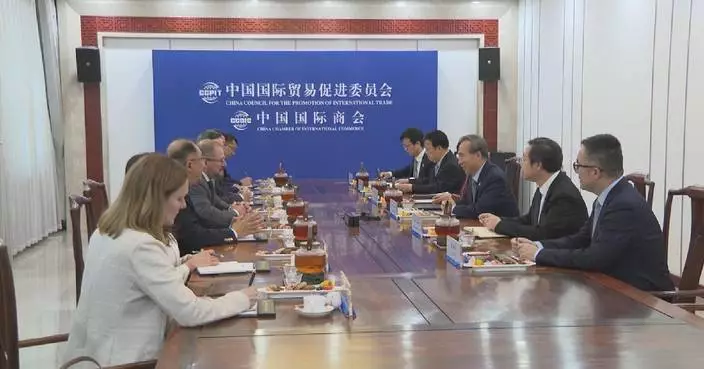
Trump was accompanied by a high-level delegation of more than a dozen American business leaders from key sectors including technology, finance, aviation and agriculture, who met with Xi on Thursday.
During this meeting, the U.S. entrepreneurs said that they attach great importance to the Chinese market, and hope to deepen their business operations in China and strengthen cooperation with China.
Echoing their remarks, Lehman noted the growing interest of American companies in investing and expanding in China.
"The 1,000 members of the American Chamber of Commerce in Shanghai know that being in China is of great benefit to their stakeholders. They have built strong relationships with customers here, with vendors here, suppliers here. I think it's clear that now they are prepared to continue to develop those relationships even more in the future," he said.
According to a report released by AmCham China in April, half of the surveyed U.S. companies still rank China among their top three global investment destinations, while 79 percent of respondents hold a positive or neutral outlook on the future of China-U.S. relations in 2026, up 30 percentage points from last year.
Lehman said that optimism will continue to grow following Trump's visit.
"It is perfectly normal in healthy relationships between countries for there to be areas of competition and areas of cooperation. I think that with the passage of time, if there's not in-person meetings, people start to become nervous. When the in-person meetings resume, I think people breathe a sigh of relief and they know that this environment is going to continue to be strong, and so the positive mood is going to strengthen," he said.
Regarding the outcomes of the visit, Lehman underscored the restoration of bilateral communication, which was broken after Trump announced the so-called "Liberation Day" tariffs in April last year and showed signs of recovery during last October's summit between Xi and Trump in Busan of the Republic of Korea.
"I think the most important outcome of this meeting is going to be the strengthening of new channels of communication between the two countries, not only at the leader-to-leader level but across the board. I think [after the tariffs imposed by the U.S.] last summer, there were challenges, clear challenges. I think communication was broken. I think since Busan, we had a signal that there was going to be a floor under the relationship, there was going to become a more stable relationship and I think people were hoping that this meeting would be a clear message that the spirit of Busan continues and I think we've received that message," Lehman said.
Trump's 'tremendously successful' China visit brings businesses confidence: AmCham Shanghai chair