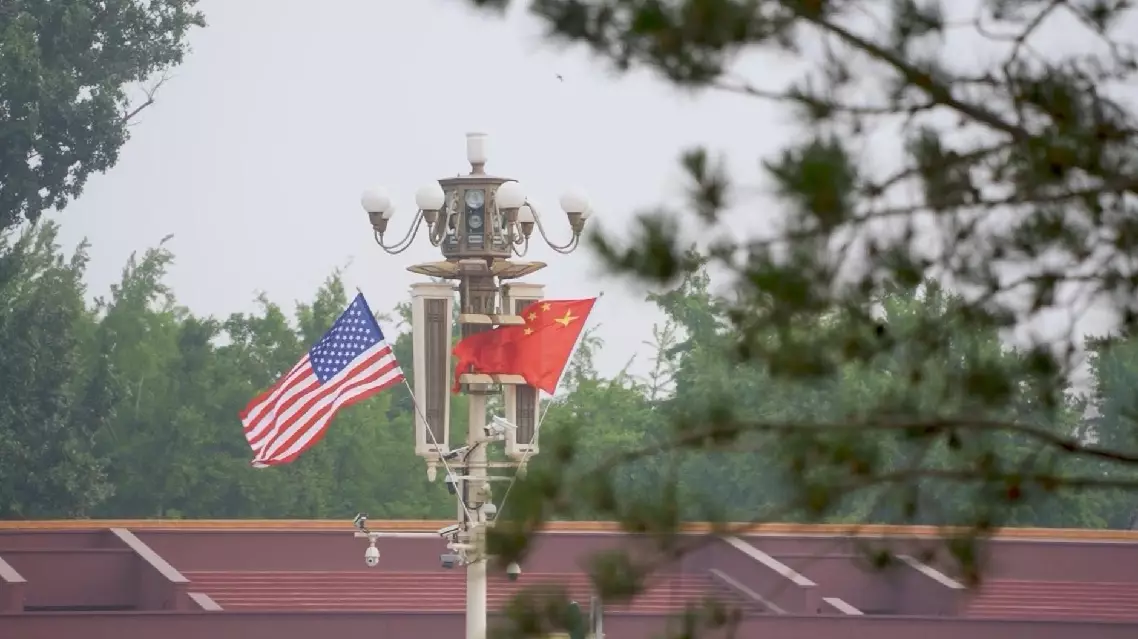
While China-U.S. relations have gone through considerable turbulence, the two countries have always found their way back to talks whenever a crisis has broken out, an international relations analyst said on Thursday.
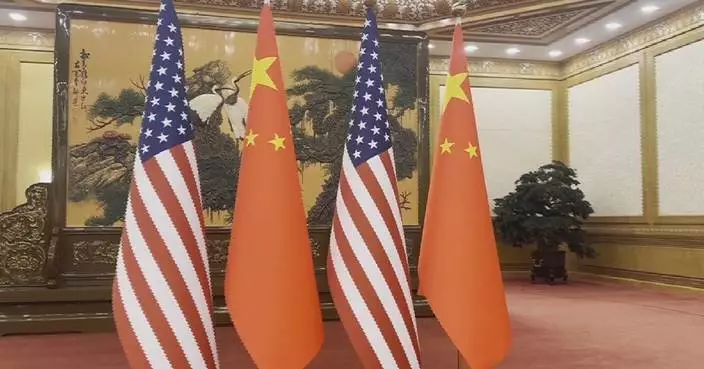
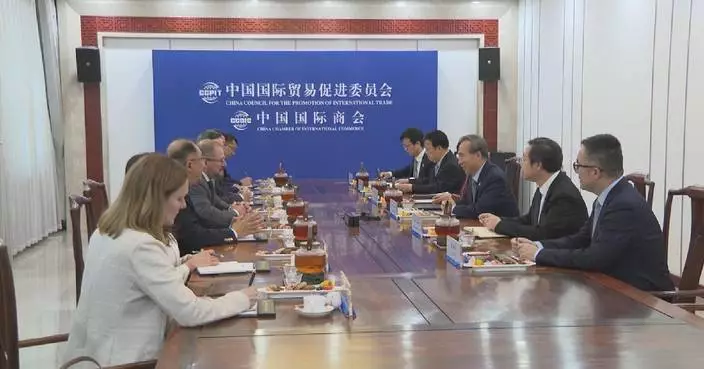
Following a meeting on Thursday between the Chinese President Xi Jinping and U.S. President Donald Trump in Beijing, the two sides agreed to work toward building a constructive bilateral relationship of strategic stability.
As the red carpet rolled out for the American leader, the world's most important bilateral relationship has once again been thrust into the global spotlight. Trump's visit to Beijing, the first by a U.S. president in nearly nine years, has drawn huge international attention.
In an interview with China Global Television Network (CGTN), Da Wei, director of the Center for International Security and Strategy at Tsinghua University, offered his insights on how the bilateral ties will evolve.
"China and the U.S. cooperate a lot when we were in hyper-globalization time. But now we are in the more confronted or more difficult time of this nationalist world order, and China and the U.S. need to learn how to coexist," he said.
He noted that while China-U.S. relations have gone through considerable turbulence, particularly over the past year, the two countries have always found their way back to talks whenever a crisis has broken out.
"So we are getting to a situation that neither side are perfectly satisfied with, but both sides feel acceptable. I think this situation is something new. And if we can learn to live in such a condition, I mean, neither side satisfied, but both sides are acceptable. I think that's a more mature bilateral relations," Da stressed.
The year 2025 saw a significant escalation of trade tensions, as the Trump administration imposed sweeping tariffs on Chinese goods. According to Da, those tariffs are unlikely to ever return to their previous levels. However, he added that policymakers need to assure the market with predictable rules to keep business exchanges flowing.
"Now, I think it is in reality that the tariff will never return to the old level. But we still want the business relations to continue. The predictability and certainty of the level, I think that's important," said the expert.
Da stressed that China and the U.S. remain bound by many shared global responsibilities, and that addressing them both separately and together as needed would benefit all parties.
"It is true that China and the U.S. share many responsibilities. Let's take our responsibility separately and together, collectively. I think that will be good for China, U.S. and the world," he said.
China, U.S. always return to talks after crises: expert
More than 20 students from Ivy League universities in the United States visited China's Southwest Jiaotong University in on Tuesday, where they got a first-hand look at a fast-moving technological innovation that could power future transportation.
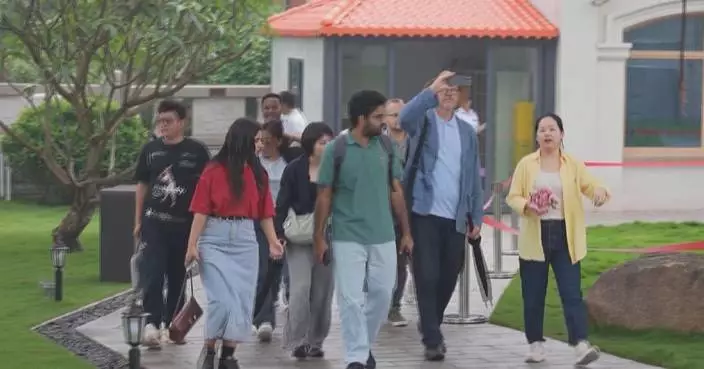
The students paid a visit to a special demonstration lab in Chengdu, the capital of southwest China's Sichuan Province, where they explored the world’s first high-temperature superconducting magnetic levitation prototype and test line, taking part in some fun hands-on experiments and even enjoying a brief trial ride.
Experts say the system could exceed speeds of 600 kilometers per hour, helping to further narrow the gap between high-speed rail and air travel.
The students' visit came as part of a week-long language and cultural exchange program, giving the young participants the chance to experience daily life in Chengdu while learning more about China.
The exchange event comes at a momentous time for China-U.S. relations, with U.S. President Donald Trump on Friday wrapping up a three-day state visit to China at the invitation of Chinese President Xi Jinping, which marked the first such trip by a U.S. president in nine years.
The students taking part in the Chengdu activity said exchanges like the one they have embarked on can help deepen trust and expand cooperation between the U.S. and China.
"The positive signals I am hoping to see is that right now I see China and the United States as two powerful and very important countries in this world. But they also both have a lot of potential, and I think that if they work together, they can make some tremendous change across the world," said Alex Davenport, a student from Mount Holyoke College.
"America and China are two of the largest superpowers in the world right now, and I think politically and culturally it’s really great to communicate with one another," said Caroline Ewald, a student at the University of Pittsburgh.
Others are hoping that Trump's landmark visit will also help improve ties.
"That's probably the biggest thing I am look for is try to cool down the trade stuff that's going on in the U.S.," said McKenna Lundy, a student from the University of Michigan.
China is seen as a world leader in maglev technology. Last December, the country's Hubei East Lake Laboratory announced a groundbreaking achievement, with its test line accelerating a 1.1-tonne model train to an astonishing 800 kilometers per hour in just 5.3 seconds -- a milestone in electromagnetic propulsion research.
The technology is also proving its worth at more manageable speeds, with a restaurant in the southern Chinese tech hub of Shenzhen going viral earlier this year after it used magnetic levitation to serve food, with plates seen floating along tracks to arrive smoothly in front of each diner.
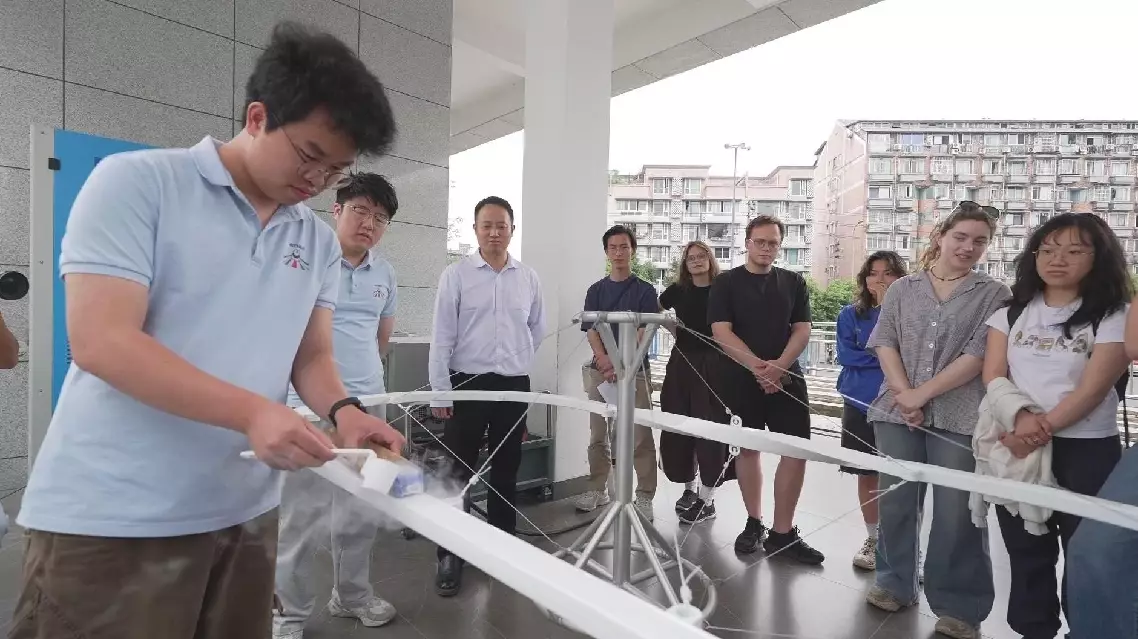
US students get taste of high-speed technology with visit to top maglev lab in Sichuan