WASHINGTON (AP) — Democratic Rep. Steve Cohen of Tennessee on Friday announced that he is ending his bid for reelection, his career upended by the redistricting battles that are sweeping the country after last month's Supreme Court decision.
Republicans in Tennessee this month enacted a new U.S. House map that carves up a Cohen's majority-Black district, reshaping it to the GOP’s advantage as part of President Donald Trump’s strategy to hold on to a slim majority in the November midterm elections.
“I don’t want to quit. I’m not a quitter. But these districts were drawn to beat me,” Cohen told reporters in his Washington, D.C. office.
Cohen is challenging the state’s redistricting effort in court and said that he would reenter the race if that lawsuit succeeded in restoring his old congressional district.
He lamented that Tennessee would likely shift to an entirely Republican congressional delegation after the next election, warning that it could also leave the state out of the loop once Democrats are able to regain the White House.
Tennessee was the first state to pass new congressional districts after a U.S. Supreme Court ruling that significantly weakened federal Voting Rights Act protections for minorities. But more Southern states could follow. Republicans in Louisiana, Alabama and South Carolina also have taken steps toward redistricting.
Cohen has represented his Memphis-based district for about two decades, among the last of the white Democrats representing the South. He has been a longtime member of the House Judiciary Committee and has focused on strengthening voting access and civil rights.
“It’s unique in America that an African-American majority district has elected a white guy, and that we’ve got a great relationship, great amount of support,” said Cohen, who is also the first Jewish person to represent Tennessee in Congress.
He was facing a primary challenge from state lawmaker Justin Pearson, a Black Democrat who represents Memphis in the state's General Assembly. Pearson has said he will continue his campaign in the state's newly redrawn 9th Congressional District.
But Cohen predicted that it would be nearly impossible for Tennessee Democrats to win a seat in Congress with the new districts. He added there was a chance the redistricting effort could “backfire on the Republicans” but that would require an “unbelievable registration effort among Democrats” and a massive vote turnout effort.
Sitting in his congressional office with staff looking on, Cohen pointed to photos of Memphis and local projects that he had championed during his career and expressed worry that Memphis voters would no longer have a voice in Washington. He also recounted how he had worked with the state's Republican leaders to win funding during the Biden administration for a larger bridge to cross the Mississippi River into Memphis.
House Democratic leader Hakeem Jeffries said in a statement that Cohen was “a powerful champion for civil rights” and that “the City of Memphis, the Congress and the nation are better because of Steve’s commitment to making a difference.”
Cohen said that the Republican's redistricting effort was being done “for Donald Trump to get one more vote, he thinks, to stop them from being impeached.”
Still, he vowed to use his remaining time in Congress to try to mount opposition to Trump, calling the president “the greatest threat to democracy and to decorum and grace that we’ve ever seen.”
Like many lawmakers, Cohen has often attracted attention with colorful outbursts during congressional debates and hearings. During Trump’s first term, in 2019, Cohen brought a bucket of fried chicken to a House Judiciary Committee hearing at which then-Attorney General William P. Barr was a no-show.
“The message is Attorney General Bill Barr is not brave enough to answer questions from a staff attorney and members of the Judiciary Committee,” he said in a statement at the time.
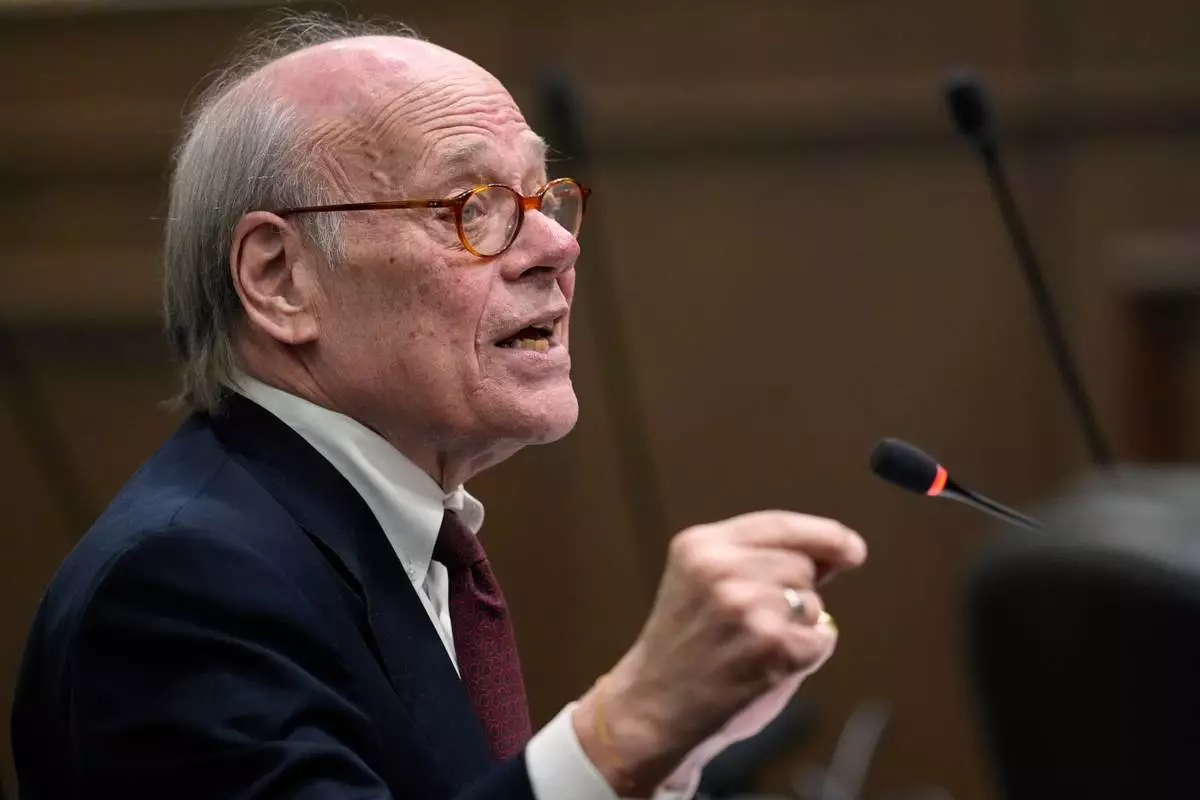
Rep. Steve Cohen, D-Tenn., of Memphis, testifies before a Senate Judiciary committee during a special session of the state legislature to redraw U.S. Congressional voting maps Wednesday, May 6, 2026, in Nashville, Tenn. (AP Photo/George Walker IV)
AUSTIN, Texas (AP) — The Texas Supreme Court on Friday refused to declare that Democratic lawmakers who briefly fled the state in 2025 to block a vote on new congressional maps pushed by President Donald Trump had vacated their office.
The all-Republican court dealt a blow to Gov. Greg Abbott and state Republicans in their efforts to severely punish the more than 50 Democrats who bolted for New York, Illinois and Massachusetts in a bid to stop a vote on the maps during a special session.
The Texas redistricting effort kick-started cascading efforts by both parties across the country to redraw voting maps ahead of this year's midterm elections: Republicans, pushed by Trump, seek to hold their slim majority in Congress as Democrats try to counter them.
Those efforts have gained new intensity after the U.S. Supreme Court further weakened the Voting Rights Act by no longer allowing race to be considered in how congressional and other districts are drawn.
In Texas, Abbott had argued in a lawsuit filed directly to the state’s highest civil court that state Rep. Gene Wu, the leader of the House Democratic caucus, and others had effectively abandoned their office.
If successful, they hoped to wield a new hammer to threaten lawmakers considering any future quorum breaks.
Wu had argued that he was not abandoning his office, but was exercising a right to dissent.
In denying Abbott’s request, the court opinion written by Justice James Blacklock noted that the Republican-majority Legislature had adequately resolved the problem itself through measures such as fines against the missing lawmakers, and it noted they eventually returned on their own within a few weeks.
“In the end, a quorum was restored in two weeks’ time, without judicial intervention, by the interplay of political and practical forces,” Blacklock wrote.
“Courts have uniformly recognized that it is not their role to resolve disputes between the other two branches that those branches can resolve for themselves,” the opinion said.
If the issue rises again and the Legislature cannot effectively compel lawmakers to return, the court may someday consider whether the courts should step in, the opinion said.
“When Greg Abbott threatened to arrest and expel us for denying him a quorum, we told him he should ‘come and take it.’ He tried!” Wu said in a statement Friday. “Abbott was wrong, weak, and after all his bluster, he couldn’t come and take a damn thing.”
Wu and the other lawmakers eventually returned to Texas, and the new map was passed and signed into law by Abbott.
Wu had argued that because he had returned to the Capitol and the map was eventually signed into law, there was no longer any reason for the court to weigh in.
If lawmakers leave again, the governor will bring the same issue back to the court, Abbott spokesman Andrew Mahaleris said Friday.
“No elected official has the right to abandon their duties, flee the state and shut down the people’s business,” Mahaleris said. “Governor Abbott’s legal action is what brought derelict Democrats back to Texas to do their jobs and pass the Big Beautiful Map.”
The state constitution requires that at least 100 of the 150 House members be present to conduct business, and the quorum break effectively shut down a special legislative session Abbott had called to address redistricting and other issues.
And Texas has a history of walkouts.
In 2021, the court ruled that the Texas Constitution enables the possibility of a quorum break but also allows for consequences to bring members back.
Last year's Democratic walkout was the third since 2003, when lawmakers bolted to stop a vote on a redistricting bill. They did it again in 2021 over an elections bill. In both cases, they were temporary victories as Democrats eventually returned and the Republican majority in the Legislature ultimately passed both measures into law.

FILE - Texas state Rep. Gene Wu speaks to the crowd before California Gov. Gavin Newsom during a rally with Harris County Democrats at the IBEW local 716 union hall on Nov. 8, 2025, in Houston. (AP Photo/Karen Warren, File)
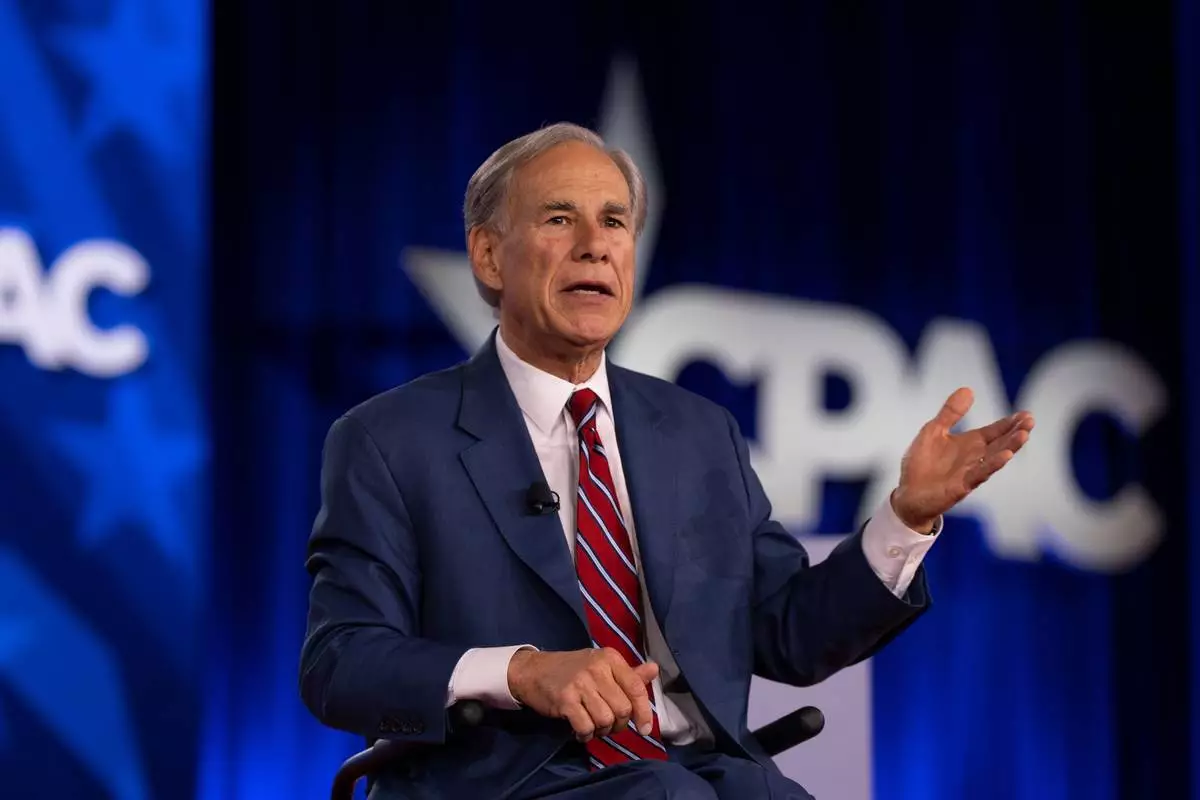
FILE - Texas Gov. Greg Abbott speaks at the Conservative Political Action Conference (CPAC) in Dallas, March 27, 2026. (AP Photo/Gabriela Passos, File)