Skip to Content Facebook Feature Image

'Shopping in China' booms amid service upgrades for int'l visitors

China

China

China

'Shopping in China' booms amid service upgrades for int'l visitors

2026-05-15 20:30 Last Updated At:05-16 01:17

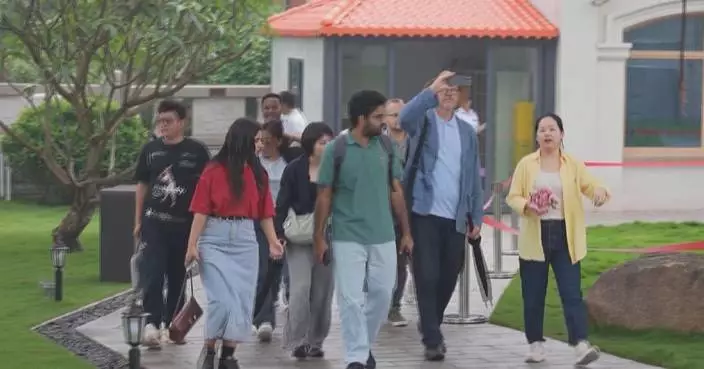
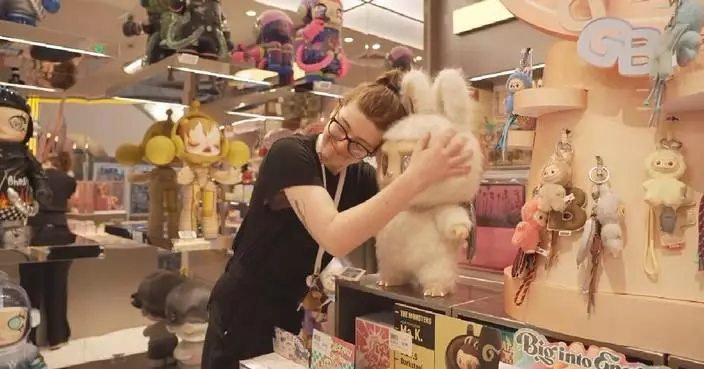
By enhancing multilingual support, streamlining consumer protection, and expanding premium retail offerings, China has witnessed a surge in cross-border spending, as "shopping in China" becomes an increasingly popular choice for foreign visitors.

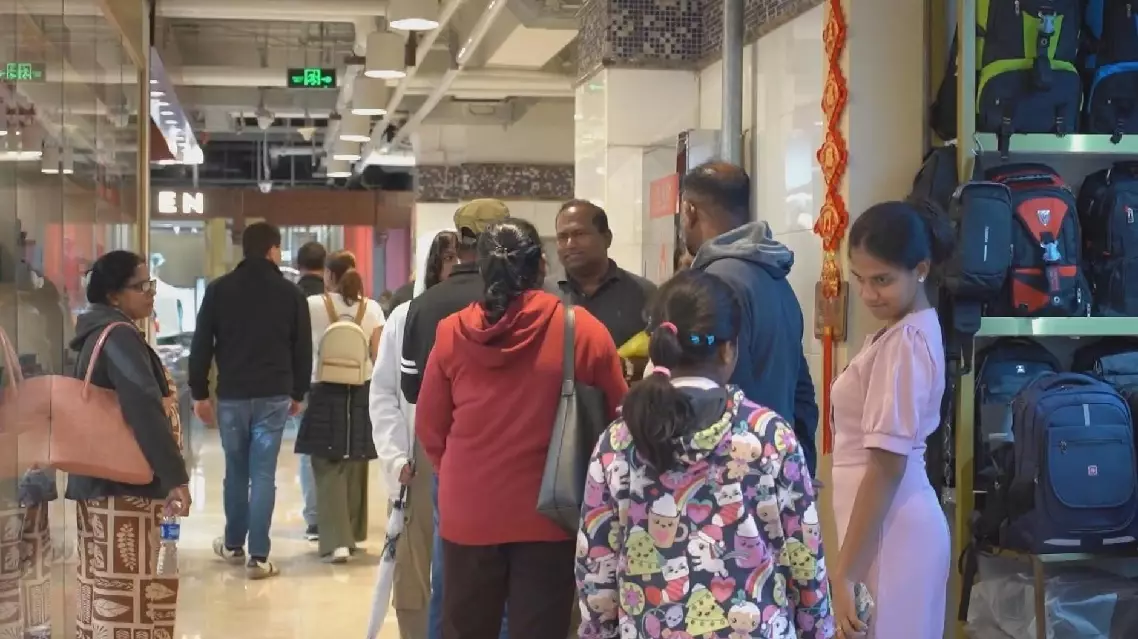
In the bustling Silk Street in Beijing's Chaoyang District, a commercial area boasting over 1,000 vendors, a newly launched multilingual service station is setting a new standard for visitor support. Staffed by polyglot personnel and equipped with AI-powered translation devices covering more than 20 languages, the station provides one-stop assistance for foreign consumers and international merchants, ranging from shopping guidance to complaint mediation.

"I was studying here (Beijing) in 2017, and there is a really big change that happened to the Silk Market (Street). And I think it was more organized, and there were more choices," said Salmi, a foreign visitor.

Since its launch, the service station has contributed to a steady rise in inbound foot traffic. Since March, Silk Street has welcomed over 50 international tour groups every day, with the multilingual service station handling more than 100 consultations per day.

Thanks to a rapid-response protocol, consumer disputes are now resolved efficiently on-site, minimizing friction and enhancing visitor satisfaction.

"With our multilingual services spanning more than 20 languages, we can ensure that consumers are able to clearly express their concerns and after-sales requests in their native tongue, all within 10 minutes," said Dong Qing, head of commercial management of Silk Street.

Multiple key commercial areas across Beijing are now preparing to launch similar multilingual service stations, aiming to build a citywide network for enhancing international consumer rights protection.

"So far, we've built six 'worry-free consumption' zones, brought nearly 300 stores into the program, and worked with over 400 merchants to implement the seven-day unconditional return policy. Our goal is to give consumers reliable, round-the-clock support whenever a dispute arises," said Hao Yuan, an official with the market regulation bureau of Chaoyang District.

In Yiwu City of east China's Zhejiang Province, dubbed the "world's supermarket", cutting-edge Chinese tech products are drawing crowds of international visitors eager to experience the innovation behind "intelligent manufacturing in China".

"It's my first time here. I'm very surprised because I heard before that Yiwu is a famous city because of all the products it has," said Victor, a Spanish visitor.

These efforts align with China's broader strategy to optimize entry policies, enhance payment convenience, and improve overall travel infrastructure for foreign visitors.

The result is a more seamless, welcoming experience that not only boosts short-term spending during their stay in China, but also strengthens long-term connections between the Chinese market and global consumers.
'Shopping in China' booms amid service upgrades for int'l visitors

'Shopping in China' booms amid service upgrades for int'l visitors
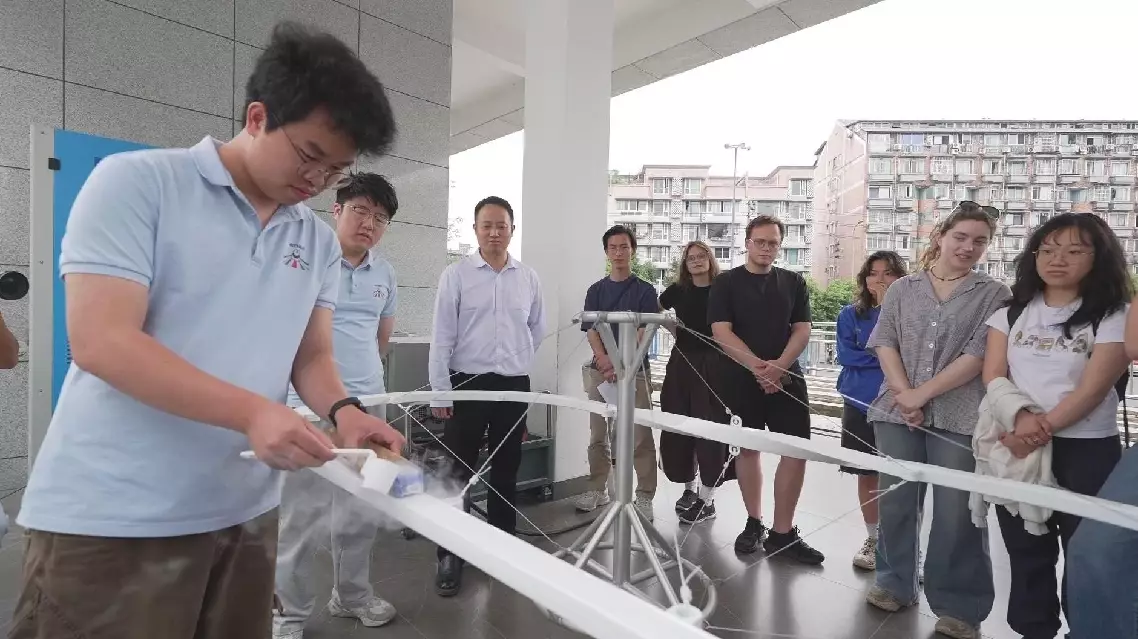
More than 20 students from Ivy League universities in the United States visited China's Southwest Jiaotong University in on Tuesday, where they got a first-hand look at a fast-moving technological innovation that could power future transportation.

The students paid a visit to a special demonstration lab in Chengdu, the capital of southwest China's Sichuan Province, where they explored the world’s first high-temperature superconducting magnetic levitation prototype and test line, taking part in some fun hands-on experiments and even enjoying a brief trial ride.

Experts say the system could exceed speeds of 600 kilometers per hour, helping to further narrow the gap between high-speed rail and air travel.

The students' visit came as part of a week-long language and cultural exchange program, giving the young participants the chance to experience daily life in Chengdu while learning more about China.

The exchange event comes at a momentous time for China-U.S. relations, with U.S. President Donald Trump on Friday wrapping up a three-day state visit to China at the invitation of Chinese President Xi Jinping, which marked the first such trip by a U.S. president in nine years.

The students taking part in the Chengdu activity said exchanges like the one they have embarked on can help deepen trust and expand cooperation between the U.S. and China.

"The positive signals I am hoping to see is that right now I see China and the United States as two powerful and very important countries in this world. But they also both have a lot of potential, and I think that if they work together, they can make some tremendous change across the world," said Alex Davenport, a student from Mount Holyoke College.

"America and China are two of the largest superpowers in the world right now, and I think politically and culturally it’s really great to communicate with one another," said Caroline Ewald, a student at the University of Pittsburgh.

Others are hoping that Trump's landmark visit will also help improve ties.

"That's probably the biggest thing I am look for is try to cool down the trade stuff that's going on in the U.S.," said McKenna Lundy, a student from the University of Michigan.

China is seen as a world leader in maglev technology. Last December, the country's Hubei East Lake Laboratory announced a groundbreaking achievement, with its test line accelerating a 1.1-tonne model train to an astonishing 800 kilometers per hour in just 5.3 seconds -- a milestone in electromagnetic propulsion research.

The technology is also proving its worth at more manageable speeds, with a restaurant in the southern Chinese tech hub of Shenzhen going viral earlier this year after it used magnetic levitation to serve food, with plates seen floating along tracks to arrive smoothly in front of each diner.

US students get taste of high-speed technology with visit to top maglev lab in Sichuan

US students get taste of high-speed technology with visit to top maglev lab in Sichuan

Recommended Articles