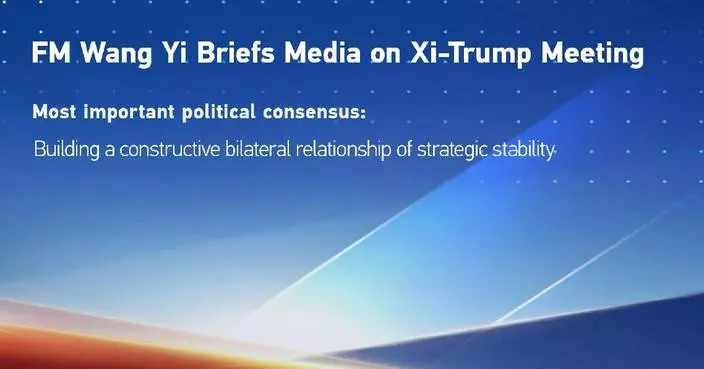
The new vision of building "a constructive China-U.S. relationship of strategic stability" agreed upon by Chinese President Xi Jinping and U.S. President Donald Trump during their meeting in Beijing represents a meaningful development in bilateral relations and reflects growing consensus on the need for stability, a former Chinese ambassador to the United States said on Friday.
Cui Tiankai, now a counselor of the China Public Diplomacy Association's council, made the remarks in an interview after Trump concluded his three-day state visit to China on Friday.
The two leaders reached a new understanding on positioning the bilateral relationship, sending positive signals to both nations and the world, Cui said.
"For many years, China and the United States had discussed the issue of defining our bilateral relationship, but we never reached a conclusion. So to be able to clarify this new positioning this time is indeed a new development, and a very meaningful one," Cui said.
"The word 'stability' here is very important. I remember that several years ago, the Chinese side consistently emphasized and worked to promote the overall stability in China-U.S. relations. Through years of interactions, confrontations and necessary struggles, there is a growing consensus that stability is needed. Over the recent years, the American people I have met -- whether government officials, business leaders or academics -- all stress that China-U.S. relations must be stable. This shows that the two sides are converging on this consensus, and it already has a social foundation. So this new positioning has emerged as the times require and reflects the aspirations of both peoples," Cui said.
Cui stressed that stability does not mean a static or frozen relationship, which is impossible.
"The stability we speak of is not a stagnant stability or a static stability.It does not mean that China-U.S. relations will remain frozen in place. That is impossible. What we pursue is dynamic stability: making progress while maintaining stability, and maintaining stability while moving forward. We need to advance bilateral relations through expanding cooperation, resolving issues and removing obstacles. But the direction must remain stable, and the goal of the relationship must be firmly and steadily kept in hand," he noted.
On the term "constructive," Cui noted that both sides need to do some positive and proactive things together.
"I recall two lines from Chinese classics 'Dao De Jing' that 'A nine-story tower rises from a heap of earth; a thousand-mile journey begins with a single step.' If this relationship is compared to a nine-story tower, both sides must build it together, brick by brick. If China and the United States are to find the right path for major countries to get along, then both sides must walk forward together, step by step. So 'constructive' requires joint efforts from both sides, meeting each other halfway," Cui said.
Cui stressed the irreplaceable role of head-of-state interaction in steering the bilateral relationship.
"History has proven that interactions and exchanges between the Chinese and U.S. presidents have an irreplaceable strategic guiding role. We must have firm confidence and strategic resolve, keeping our sights on our goal. Now the two presidents have proposed the new positioning, which should serve as the goal for our joint efforts," Cui said.
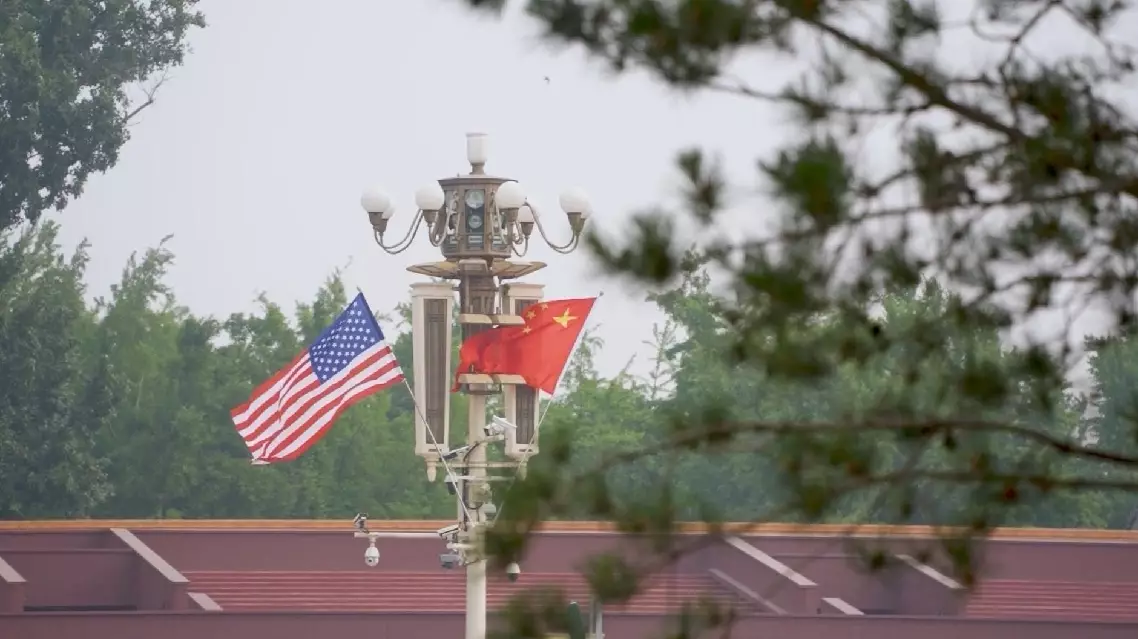
"Constructive strategic stability" points way forward for China-US relations: former Chinese ambassador to US