BUNIA, Congo (AP) — At least 80 deaths have been reported in Congo's new Ebola disease outbreak in the eastern Ituri province, authorities said, as health workers raced Saturday to intensify screening and contact tracing to contain the disease. Officials first announced the outbreak on Friday, with 65 deaths and 246 suspected cases.
Meanwhile, Associated Press journalists in Ituri’s capital, Bunia, interviewed locals who recounted their fears and constant burials.
Click to Gallery
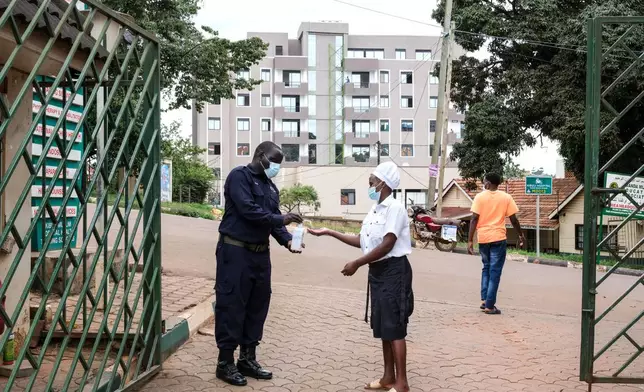
A woman sanitises her hands in front of Kibuli Muslim Hospital in Kampala, Uganda, Saturday, May 16, 2026. (AP Photo/ Hajarah Nalwadda)
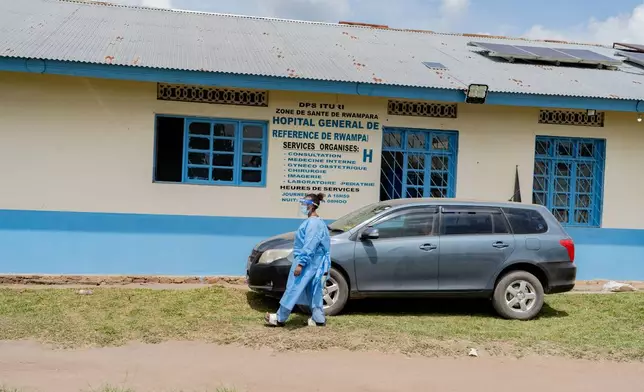
A health worker wearing protective gear walks outside the a hospital in Bunia, Congo, Saturday, May 16, 2026. (AP Photo/Jorkim Jotham Pituwa)
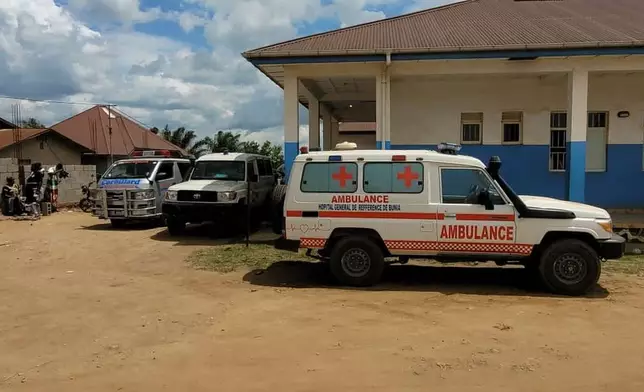
Ambulances are parked outside a hospital in Bunia, Congo, Saturday, May 16, 2026. (AP Photo/Constant Same Bagalwa)
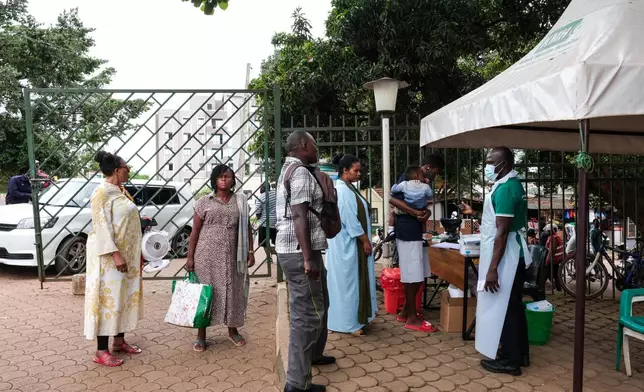
People wait to have their temperature taken in front of Kibuli Muslim Hospital in Kampala, Uganda, Saturday, May 16, 2026. (AP Photo/ Hajarah Nalwadda)
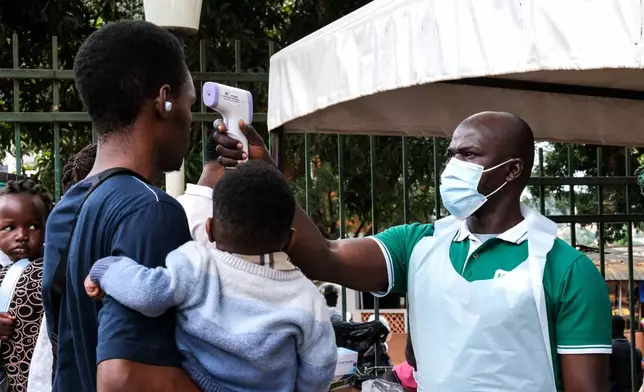
A health official uses a thermometer to screen people in front of Kibuli Muslim Hospital in Kampala, Uganda, Saturday, May 16, 2026. (AP Photo/ Hajarah Nalwadda)
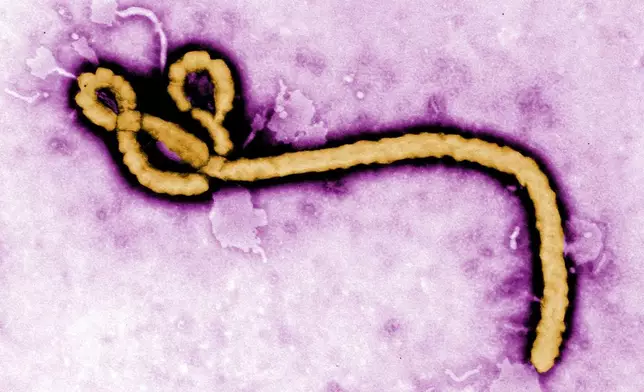
FILE - This undated colorized transmission electron micrograph file image made available by the Centers for Disease Control and Prevention (CDC) shows an Ebola virus virion. (Frederick Murphy/CDC via AP, File)
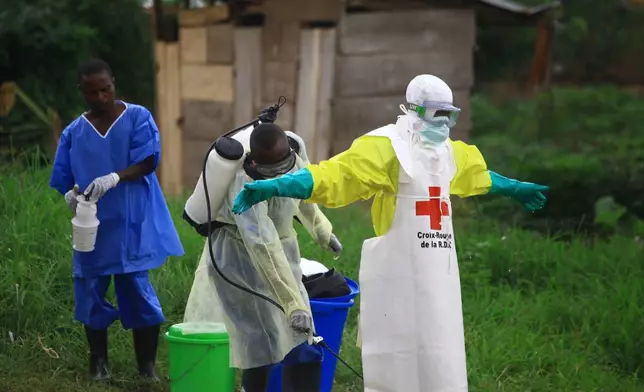
FILE - A health worker sprays disinfectant on his colleague after working at an Ebola treatment center in Beni, eastern Congo, Sept 9, 2018. (AP Photo/Al-hadji Kudra Maliro, File)
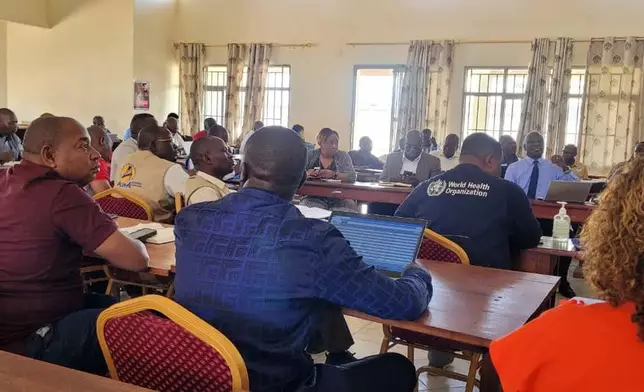
People meet at the Ituri Provincial Health Directorate for the first Ebola response meeting in Bunia, Congo, Friday, May 15, 2026. (AP Photo/Jorkim Jotham Pituwa)
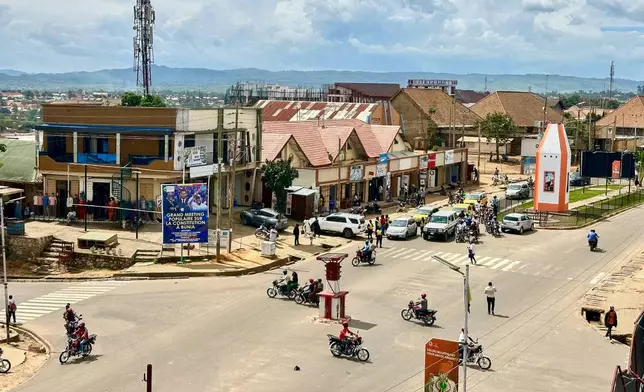
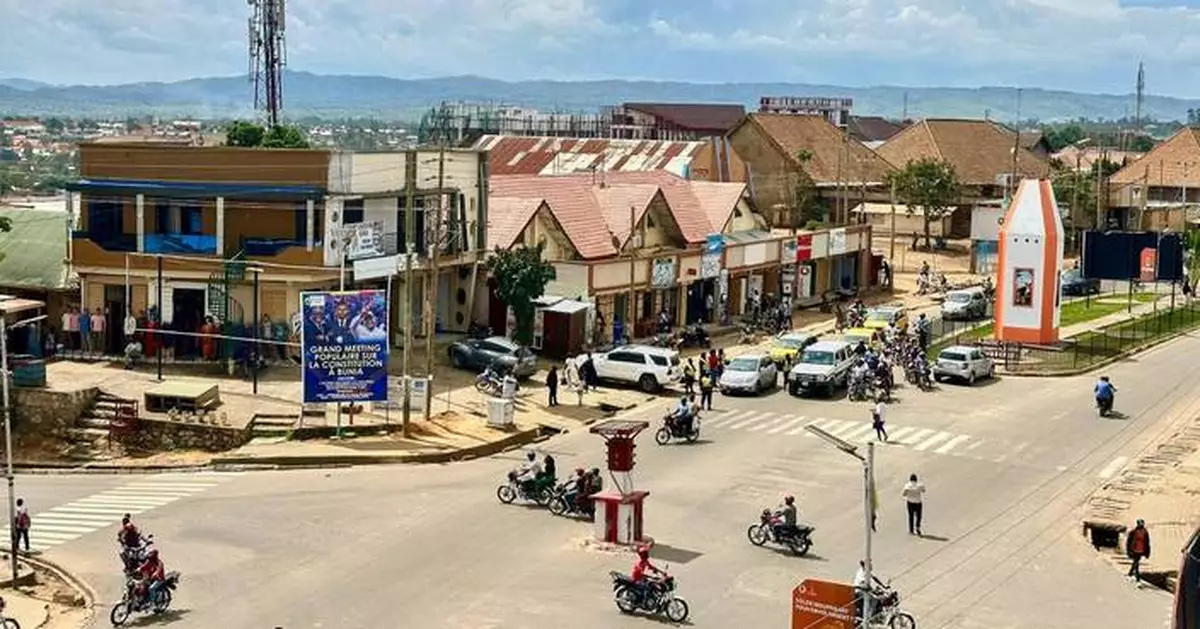
A general view of Bunia, where Ebola outbreaks have been confirmed in Ituri province, Congo, Friday, May 15, 2026. (AP Photo)
“Every day, people are dying ... and this has been going on for about a week. In a single day, we bury two, three, or even more people,” said Jean Marc Asimwe, a resident of Bunia. “At this point, we don’t really know what kind of disease it is,” said Asimwe.
Congolese Health Minister Samuel-Roger Kamba said late Friday that there have been eight laboratory-confirmed cases, among them four deaths.
Test results confirmed the Bundibugyo virus, a variant of the disease that has been less prominent in Congo’s past outbreaks. This is Congo’s 17th outbreak since Ebola first emerged in the country in 1976.
Ebola is highly contagious and can be contracted through bodily fluids such as vomit, blood, or semen. The disease it causes is rare, but severe and often fatal.
The suspected index case in the latest outbreak is a nurse who died at a hospital in Bunia, Kamba said. He said the case dates back three weeks to April 24.
He did not say whether samples from the nurse were tested, but said the person presented symptoms suggestive of Ebola.
Uganda confirmed Friday an Ebola case that authorities said was “imported” from Congo. The person died at the Kibuli Muslim Hospital in Uganda’s capital, Kampala, on May 14.
The Africa Centres for Disease Control and Prevention had said it is concerned about the risk of further spread due to the proximity of affected areas to Uganda and South Sudan.
The body of the patient who died in Kampala was later taken back to Congo and no other local case has been confirmed, Uganda’s Health Ministry said.
On Saturday, people were being screened at the entrance of the Kibuli Muslim Hospital.
Ismail Kigongo, who resides in Kampala, said the new outbreak reminded him of his father, whom he lost during the COVID-19 pandemic. “I really get scared because I remember burying my father without looking at his body,” he said.
Kenya, Uganda's neighbor, said Saturday that there is only a “moderate risk of importation” of the Ebola virus due to regional travel. Kenya’s government said it has formed an Ebola preparedness team and has strengthened surveillance at all points of entry.
Congo has experience managing Ebola outbreaks but often faces logistical challenges in delivering expertise and supplies to affected regions.
As Africa’s second-largest country by land area, Congo’s provinces are far from one another and mostly battling conflict. Ituri, for instance, is around 1,000 kilometers (620 miles) from the nation’s capital, Kinshasa, and is ravaged by violence from Islamic State-backed militants.
The disease has so far been confirmed in three health zones in Ituri province, including the capital city, Bunia, and the areas of Rwampara and Mongwalu, where the outbreak is concentrated.
Only 13 blood samples have been tested at the National Institute of Biomedical Research; 8 tested positive for the Bundibugyo strain. The remaining five could not be analyzed due to insufficient sample volume, the health minister said.
In Bunia, Ituri's main city, businesses and regular activities in public places appeared normal on Friday.
Resident Adeline Awekonimungu said she hopes the outbreak is quickly contained. "My recommendation is that the government take this matter seriously and that it takes charge of the hospitals so that this matter can be brought under control,” she said.
—
Associated Press writers Chinedu Asadu in Abuja, Nigeria; Patrick Onen in Kampala, Uganda; and Evelyne Musambi in Nairobi, Kenya contributed.
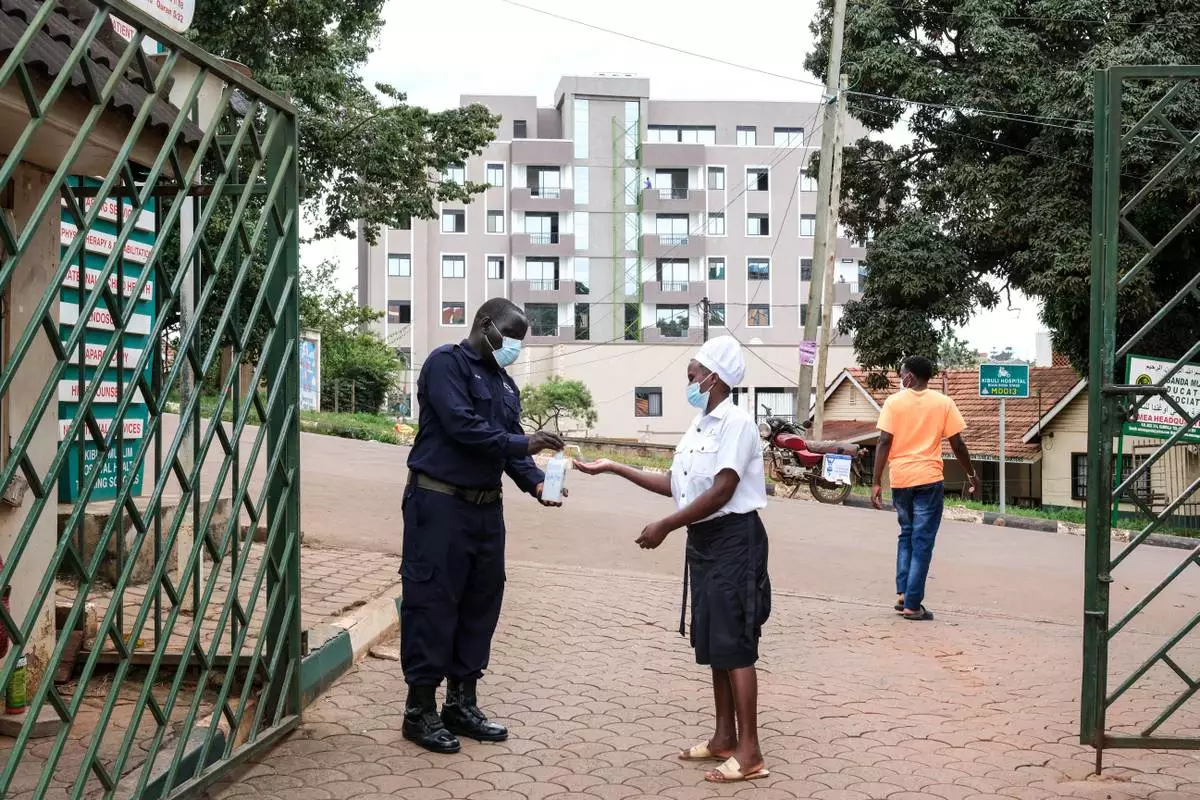
A woman sanitises her hands in front of Kibuli Muslim Hospital in Kampala, Uganda, Saturday, May 16, 2026. (AP Photo/ Hajarah Nalwadda)
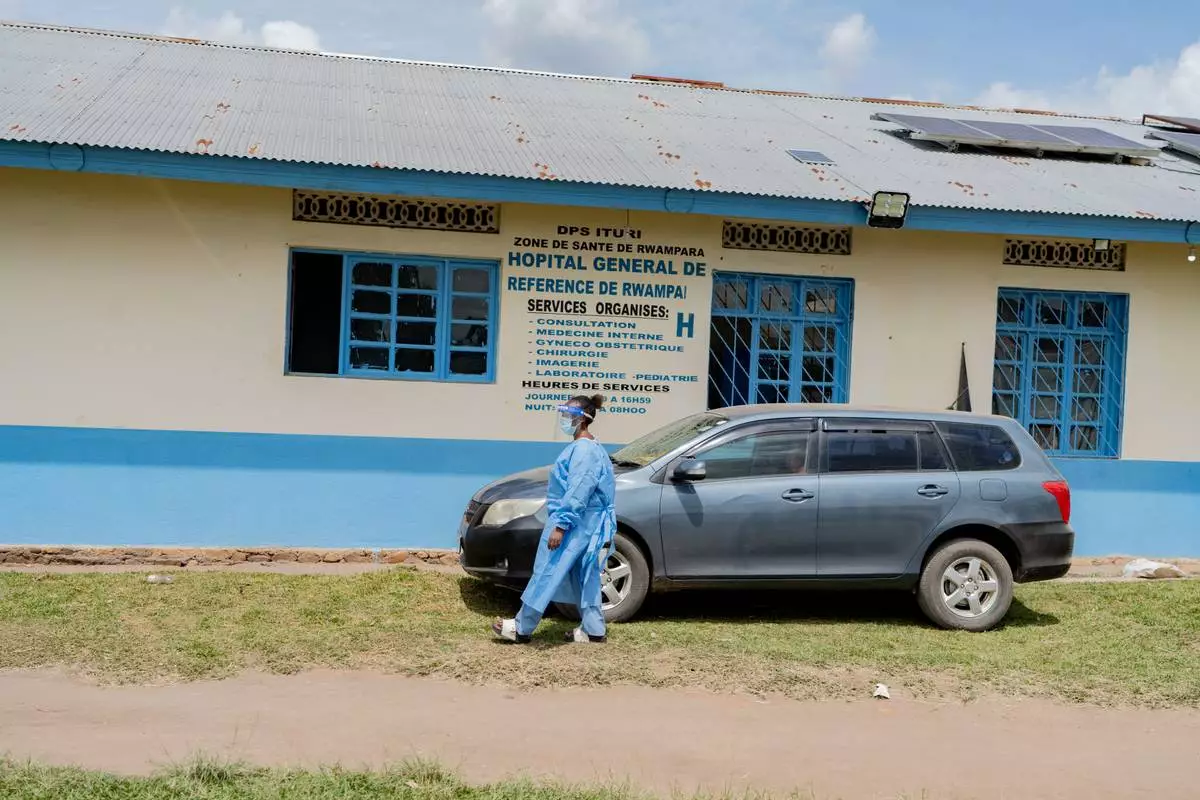
A health worker wearing protective gear walks outside the a hospital in Bunia, Congo, Saturday, May 16, 2026. (AP Photo/Jorkim Jotham Pituwa)
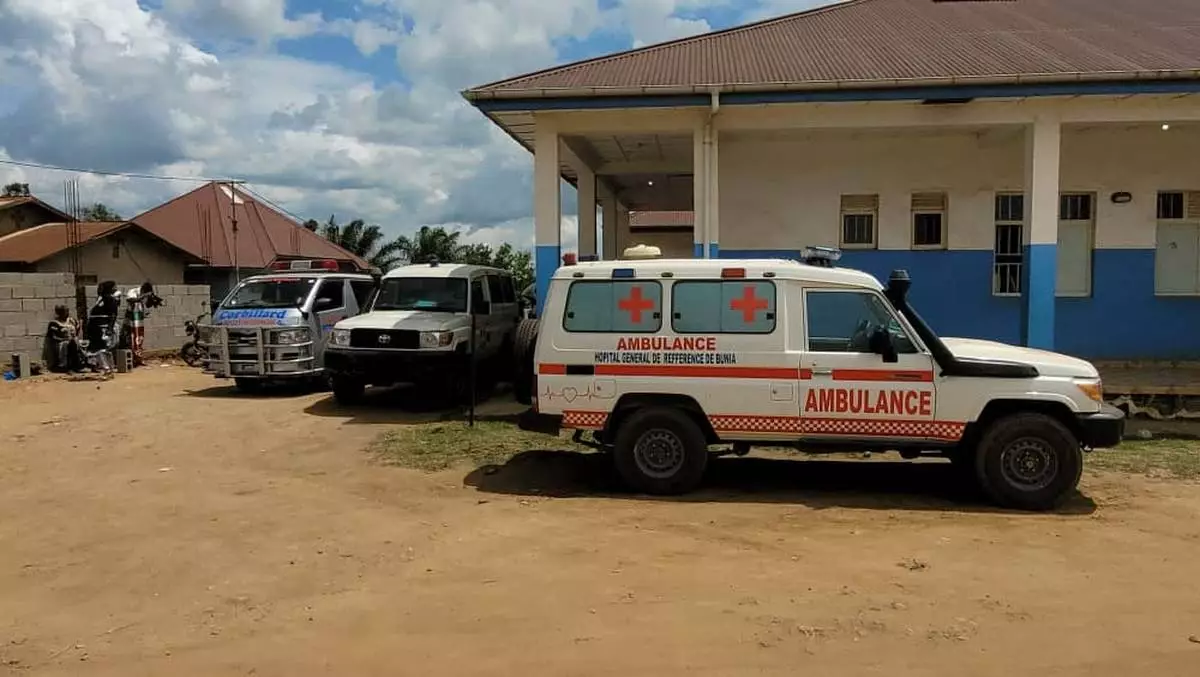
Ambulances are parked outside a hospital in Bunia, Congo, Saturday, May 16, 2026. (AP Photo/Constant Same Bagalwa)
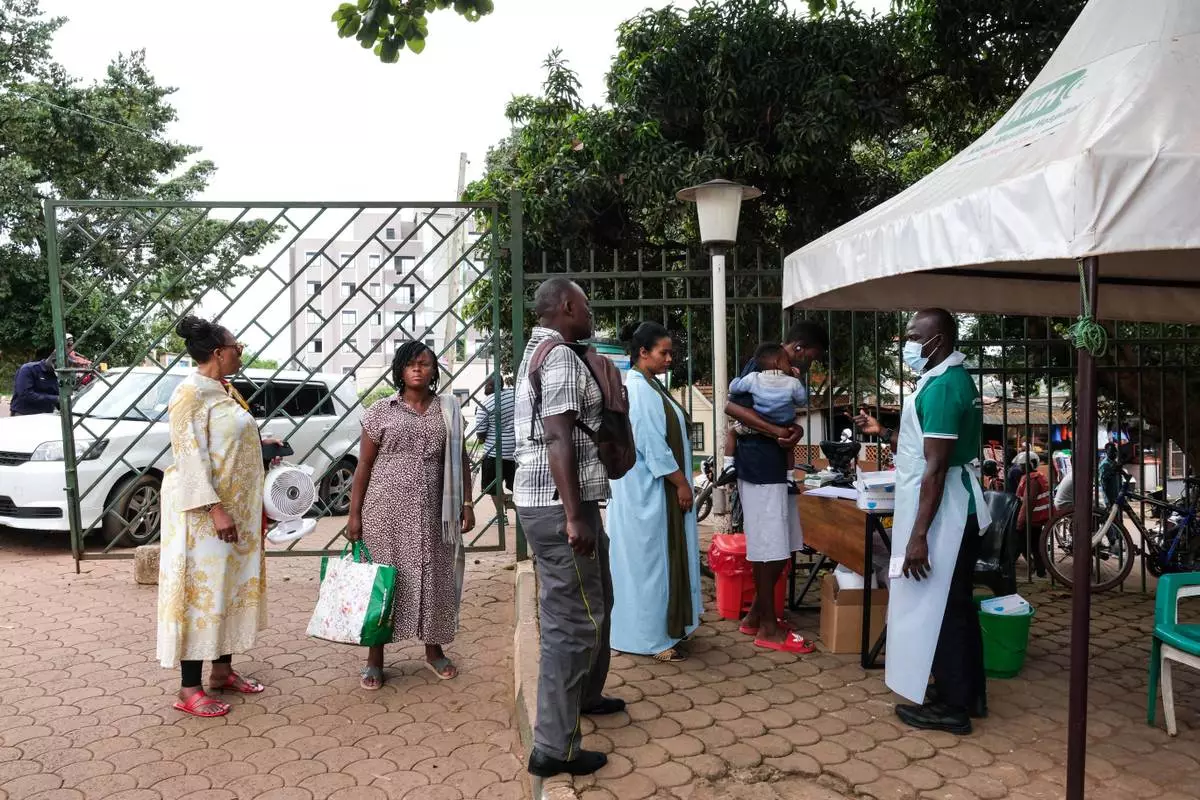
People wait to have their temperature taken in front of Kibuli Muslim Hospital in Kampala, Uganda, Saturday, May 16, 2026. (AP Photo/ Hajarah Nalwadda)
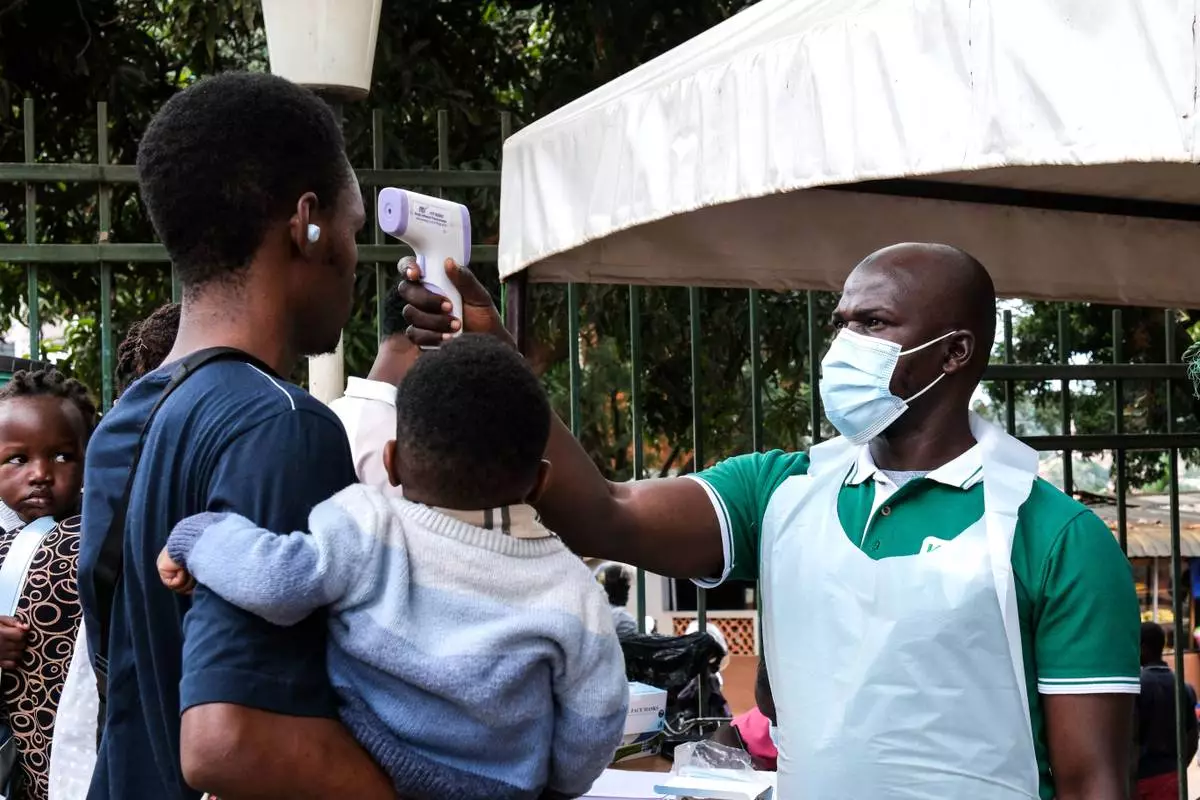
A health official uses a thermometer to screen people in front of Kibuli Muslim Hospital in Kampala, Uganda, Saturday, May 16, 2026. (AP Photo/ Hajarah Nalwadda)
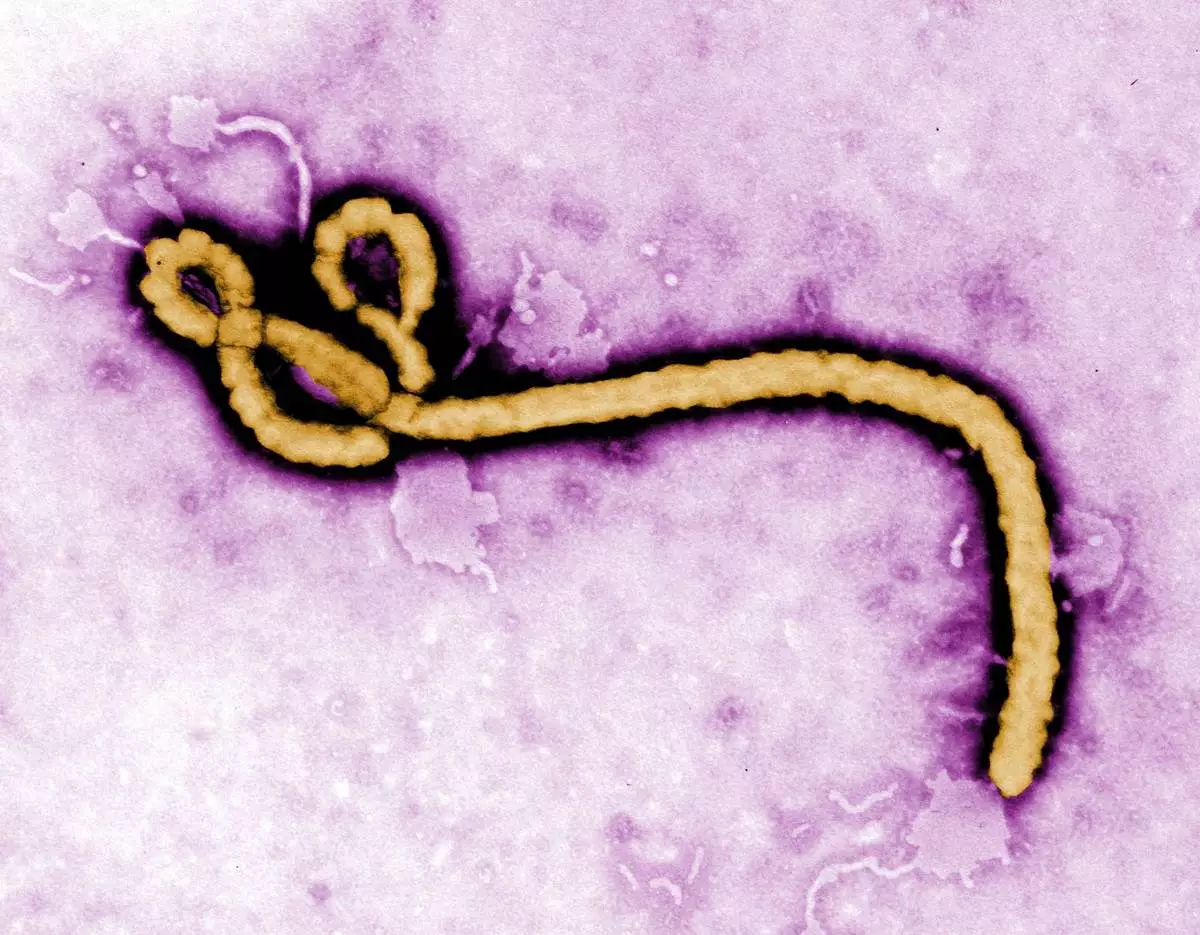
FILE - This undated colorized transmission electron micrograph file image made available by the Centers for Disease Control and Prevention (CDC) shows an Ebola virus virion. (Frederick Murphy/CDC via AP, File)
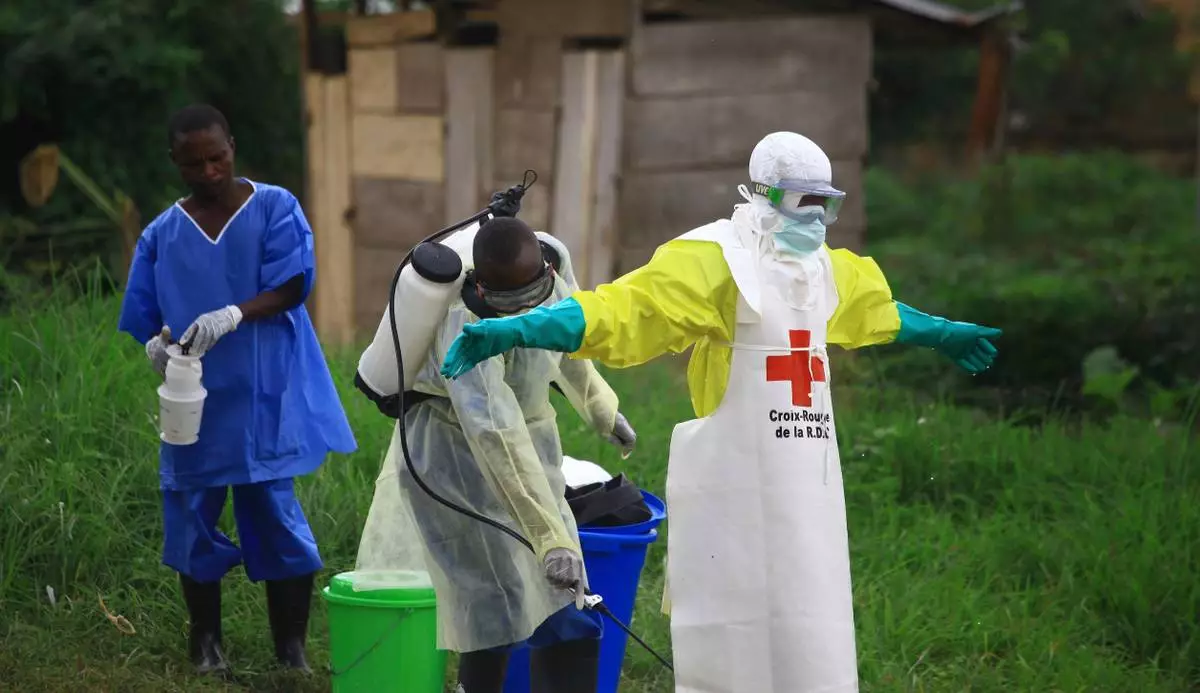
FILE - A health worker sprays disinfectant on his colleague after working at an Ebola treatment center in Beni, eastern Congo, Sept 9, 2018. (AP Photo/Al-hadji Kudra Maliro, File)
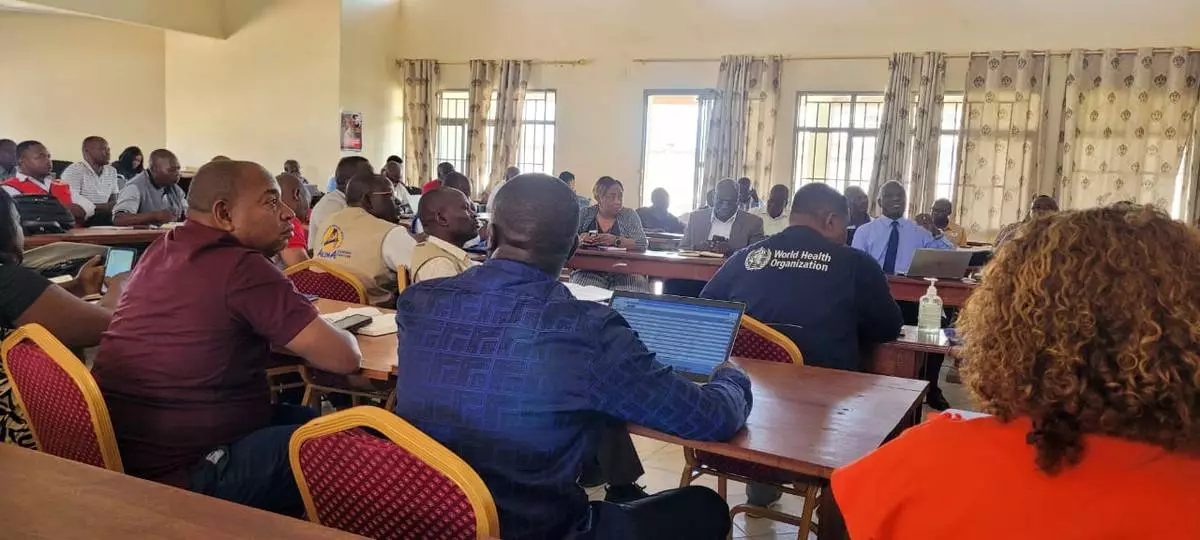
People meet at the Ituri Provincial Health Directorate for the first Ebola response meeting in Bunia, Congo, Friday, May 15, 2026. (AP Photo/Jorkim Jotham Pituwa)
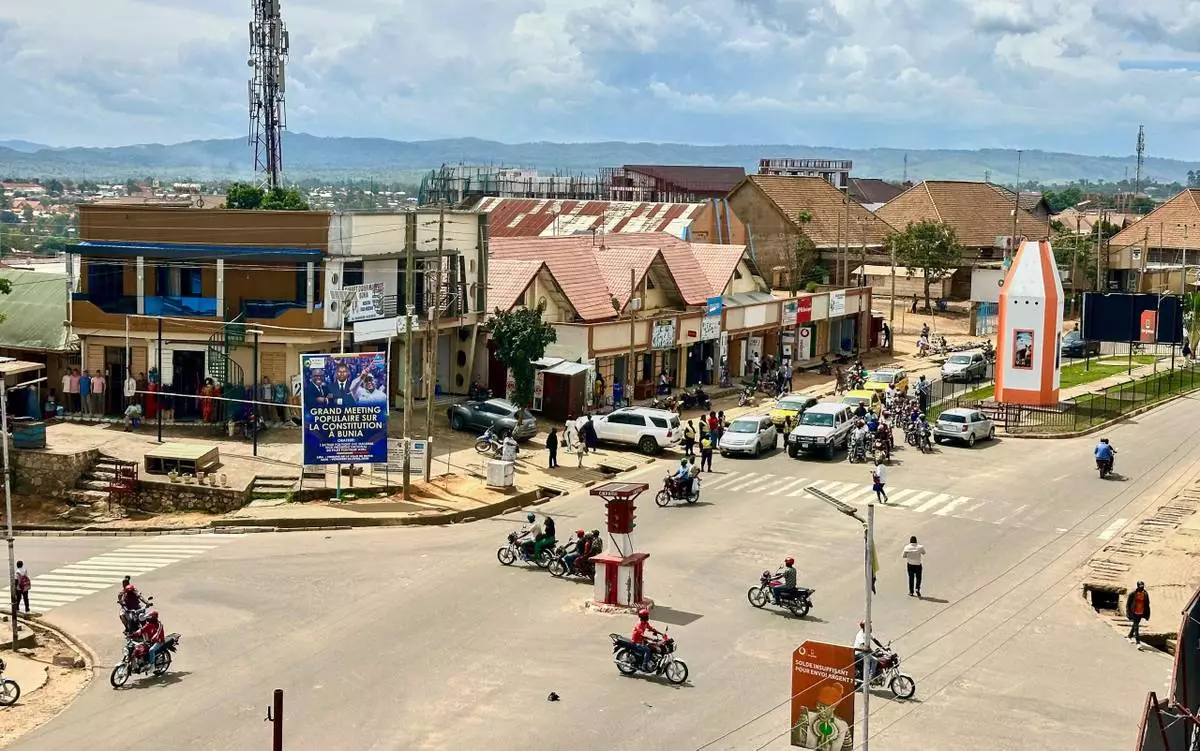
A general view of Bunia, where Ebola outbreaks have been confirmed in Ituri province, Congo, Friday, May 15, 2026. (AP Photo)