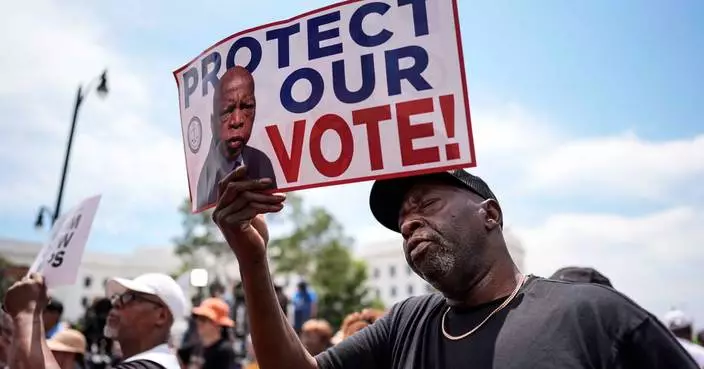
INDIANAPOLIS (AP) — The first day of Indianapolis 500 qualifying was rained out, race organizers announced Saturday.
It's the first time since 2008 a full day of qualifying was lost because of weather. The decision prompted some significant schedule changes for Sunday.
A short practice, held in two groups, will begin at 9:30 a.m. local time for each driver trying to make the traditional 33-car starting grid. The four-lap qualifying runs will begin at noon.
But the plan to hold a series of elimination rounds between the 15 fastest cars has been scrapped and organizers will now revert back to the 12-car format used in recent years, starting at 4 p.m. The top six cars advance to the final round, which determines the pole winner for the May 24 race.
That will likely force teams to continue holding strategy sessions overnight, something that almost undoubtedly began during a nearly six-hour wait to see if they could get cars onto the Brickyard's 2.5-mile oval.
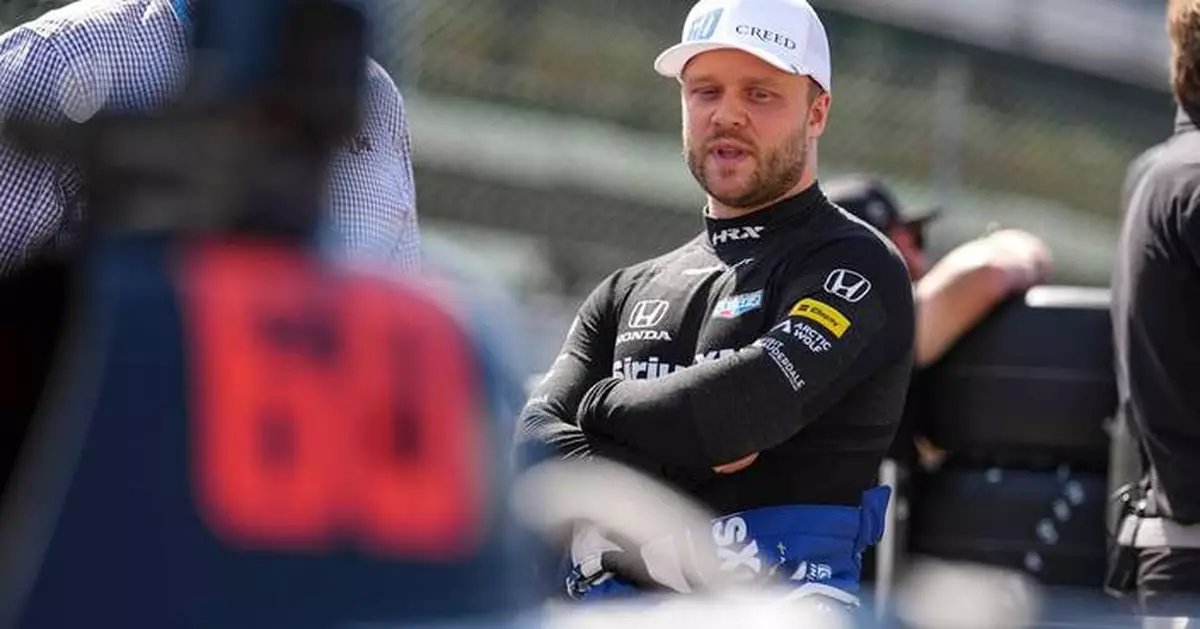
The fastest drivers in this week's practices have been 2024 Indy pole winner Scott McLaughlin and his Team Penske teammates — two-time Indy winner Josef Newgarden and last year’s 500 runner-up David Malukas; defending race winner Alex Palou of Chip Ganassi Racing; Felix Rosenqvist of Meyer Shank Racing, who hopes to join Palou as a two-time pole winner this season; 2016 Indianapolis 500 winner Alexander Rossi, who drives for owner-driver Ed Carpenter, a three-time Indy pole winner; and Conor Daly, the stepson of speedway president Doug Boles who is making his IndyCar season debut with Dreyer & Reinbold Racing.
Rosenqvist posted the fastest lap, 233.372 mph, and the fastest four-lap average, 232.828 mph, in practice Friday when series officials gave each car a power boost of about 100 horsepower. McLaughlin turned the fastest no-tow lap, 232.674 mph, and had the second-fastest four-lap average, 232.572 mph.
But with no clear favorite to win the pole, Sunday's weather could change the equation dramatically.
Temperatures are expected to climb into the mid-80s, potentially increasing the track temperature to 120 degrees or more in the afternoon, vastly different from this week's more ideal cooler conditions.
Plus, the heavy rain that moved in Saturday morning and again in the afternoon has washed much of the built-up rubber on the track away, creating less grip. The short practice session should help add some grip to the track.
Palou, the Spaniard who has won four series titles and is the points leader again this season, is the defending Indianapolis 500 champion and is trying to become the seventh back-to-back winner in race history. Helio Castroneves, the Brazilian with Meyer Shank, is one of four four-time race winners and is again attempting to become the first five-time winner.
AP auto racing: https://apnews.com/hub/auto-racing
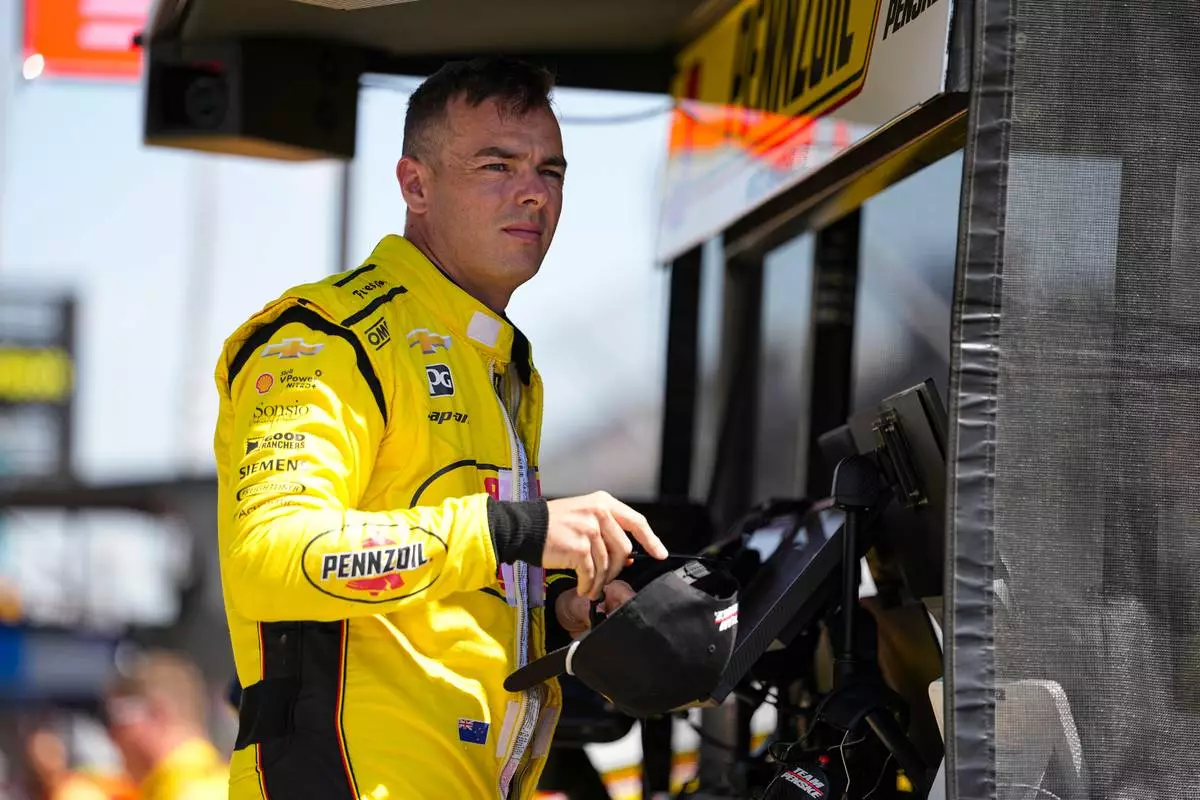
FILE - Scott McLaughlin, of New Zealand, prepares to practice for the Indianapolis 500 auto race in Indianapolis, May 16, 2025. (AP Photo/Michael Conroy, File)
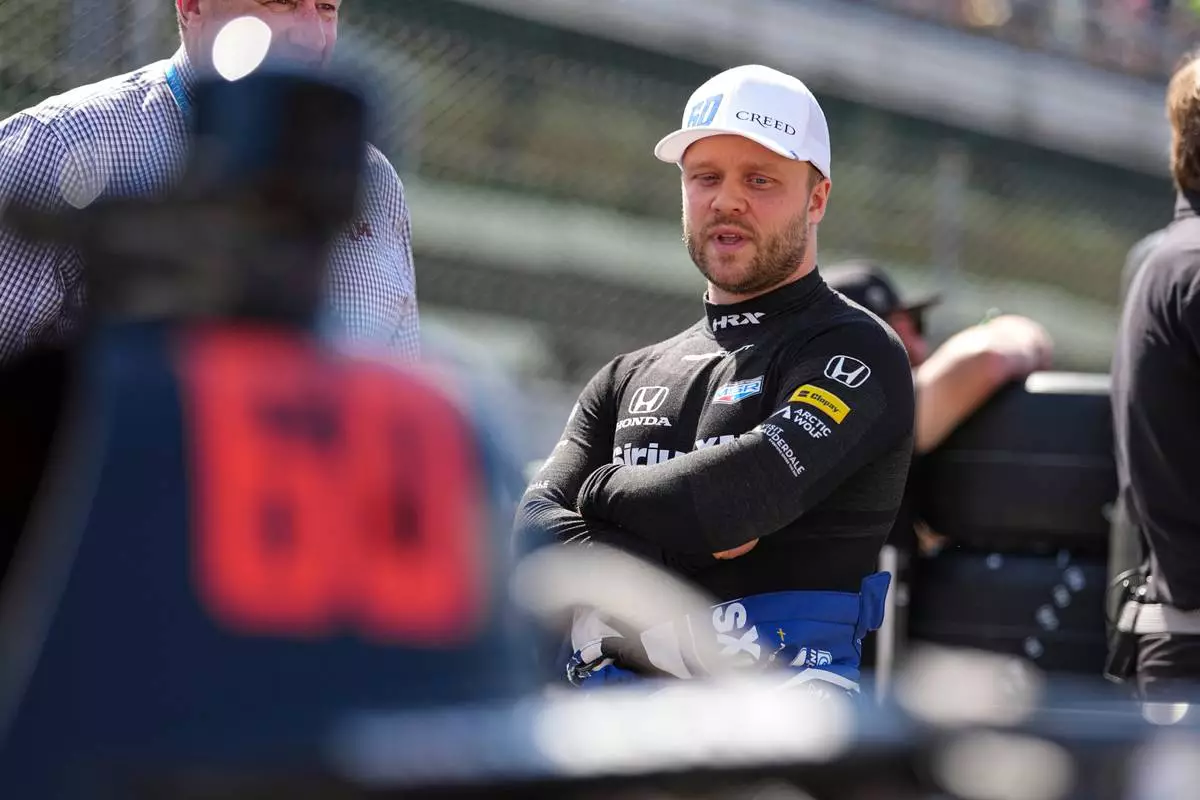
FILE - Felix Rosenqvist, of Sweden, waits for his turn during qualification for the Indianapolis 500 auto race in Indianapolis, May 17, 2025. (AP Photo/Michael Conroy, File)
The final of the Eurovision Song Contest got underway Saturday with tight security and rainy weather failing to dent the enthusiasm of the fans — or that of the critics who think Israel shouldn’t have been invited to the party.
After a week’s buildup, acts from 25 countries took the stage at the Wiener Stadthalle arena in Vienna to battle for the continent’s pop crown. Millions of viewers around the world will cast judgment on a fiery Finnish violinist, a Moldovan folk rapper, a Serbian metal band and many more at Eurovision’s 70th anniversary event.
The contest has been clouded for a third year by calls for Israel to be excluded over its conflicts in Gaza and elsewhere, with five longtime participants — Spain, the Netherlands, Ireland, Iceland and Slovenia — boycotting in protest.
Here is the latest:
Croatia’s Lelek channeled something ancient and powerful with their goth-y folk “Andromeda.” Their stacked harmonies were only emboldened by their physical appearance: The women wore marks on their face and body meant to look like the same used to repel the Ottoman Empire.
The U.K.’s Look Mum No Computer with its “Eins, Zwei, Drei” was a thoughtful critique of the mundanity of labor but also catchy, synth-pop and goofy. Their stage design was also one of the most fun: soulless rectangular desks became imaginative platforms, like an alternative universe nightclub in space.
From France, Monroe’s “Regarde!” was strong on classism over all and judging by the cheers in the room – an effective one.
After the halfway mark, with just 10 performances remaining, Moldova’s rapper Satoshi performed the cheekily patriotic “Viva, Moldova!” with his full heart, in several languages, in a chorus so addictive it almost recalls the anthemic work of anthemic Irish hip-hop trio Kneecap.
Ukrainian singer Leléka offered the ethereal, beautiful “Ridnym,” and Australian star Delta Goodrem showed what a diva should be like with her slick midtempo ballad “Eclipse” — and a bravura performance that saw her raised into the air above a glittery piano. Id she wins, a European country would likely host for Australia next year.
Serbian metal band Lavina provided a dramatic change of pace with the angst “Kraj Mene.”
Aidan’s big-feelings “Bella,” Malta’s Eurovision entry, was all about romance: strings, big belts, swooning instrumentation. It was also one of few Eurovision entries from Malta to feature the Maltese language.
The Czech Republic put their hopes in Daniel Žižka’s “Crossroads,” a restrained pop ballad that builds to a triumphant chorus. Bulgaria’s Dara, a veteran pop performer at this stage, delivered an up-tempo pop banger “Bangaranga,” easily one of the most animated tracks of the bunch this year. And on stage, it was a mood elevator.
Even before the show’s halfway mark, there was already fire, smoke, animal prints and lots of sunglasses worn inside. Lavina, a metal band from Serbia, performed in a digital rainfall as well as burst of flames in studded leather, “Mad Max”-looking costumes.
Albania’s Alis used a smoke-filled stage with digital wings and a clock, inviting a woman depicting a mother onto the stage in a traditional folk dress for his driving, gloomy track, “Nân.” Sarah Engels of Germany added pyrotechnics to her “Fire,” naturally, and Delta Goodrem of Australia added a shimmering golden piano, fire and enough wind machines to power a small town.
Greece’s Akylas was playful with his pounding house track “Ferto,” dressed in tiger-striped shorts and a knit hat and using a scooter to glide along the stage, adding human statues. Ukraine needed only beams of light, a blowing curtain effect and Leleka’s powerhouse vocals as she delivered “Ridnym.”
Denmark’s all-Danish-language Eurovision entry was first with Søren Torpegaard’s “Før Vi Går Hjem,” which he delivered with the specific skillset of someone who has starred as Tony in “West Side Story,” Angel in “Kinky Boots” and Romeo in “Romeo & Juliet.”
Sarah Engels followed, representing her home country of Germany with “Fire.” As the second performer of the night, she took the opportunity to bring pyrotechnics to the stage.
Then came Noam Bettan’s “Michelle” — Israel’s inclusion in Eurovision, which has drawn criticisms. Spain, Ireland, the Netherlands, Slovenia and Iceland withdrew from the competition this year, choosing not to participate to protest Israel’s inclusion.
Most recently, Bettan’s performance was disrupted by protesters during the first semifinal on Tuesday; chants of “Stop the genocide!” were heard in the crowd. At the final, it wasn’t immediately clear if that continued.
Belgium’s Essyla took the stage with “Dancing on the Ice” — a cool ride with its chilly vocal performance and Billie Eilish-informed production, followed by Albania’s Alis.
Protesters called for Israel to be excluded from Eurovision demonstrated near the contest arena ahead of the final. Several hundred marched, with chants of “all of Vienna hates the ESC,” a reference to the Eurovision Song Contest.
They were kept well away from the venue which lies behind a police security cordon.
Demonstrator Echo Vinasha Lex said it was “important to protest against that idea that the song contest is not political. The song contest is a very political event.”
At the start, a filmed opening montage showcased Austria’s majestic scenery as a paper boat made its way to Vienna — a reference to 2025 Eurovision winner JJ’s storm-tossed performance of “Wasted Love.”
The show opened with a performance by last year’s winner, the operatically trained Austrian singer JJ, and an Olympic-style flag parade of the 25 finalists. Then it was on to performances by the musicians, who have just 3 minutes to win over millions of viewers who, along with national juries of music professionals, pick the winner.
The hosts for the extravaganza on Saturday are Michael Ostrowski, an Austrian actor best known for German-language comedy films, and Victoria Swarovski, a model, singer, TV presenter and heir to the Swarovski crystal and luxury goods business.
The head of the Eurovision Song Contest has urged viewers to put politics aside and enjoy the “brilliant, wonderful, heartfelt show” that is the competition’s grand final.
As the contest turns 70 with calls for Israel to be kicked out over the conduct of its war in Gaza and a five-country boycott, Eurovision director Martin Green said the contest is a chance for a few hours to “close the curtains to the outside world and dream that something else is possible.”
He told a news conference that for 70 years Eurovision has given “voice to the voiceless” and celebrated marginalized communities.
“Here’s to the next 70 years,” he said.

Demonstrators protest against Israel ahead of the Grand Final of the 70th Eurovision Song Contest in Vienna, Austria, Saturday, May 16, 2026. (AP Photo/Martin Meissner)
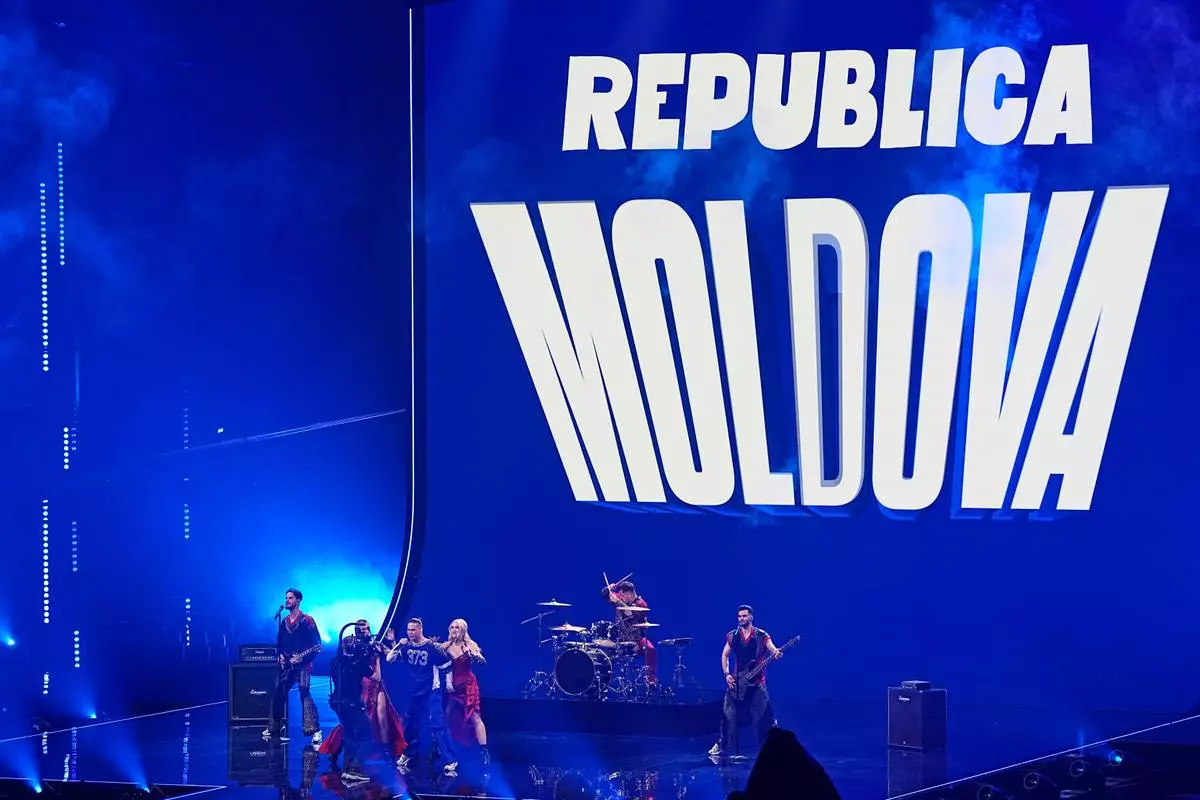
Satoshi from Moldova performs the song "Viva, Moldova!" during the dress rehearsal for the Grand Final of the 70th Eurovision Song Contest in Vienna, Austria, Friday, May 15, 2026. (AP Photo/Martin Meissner)
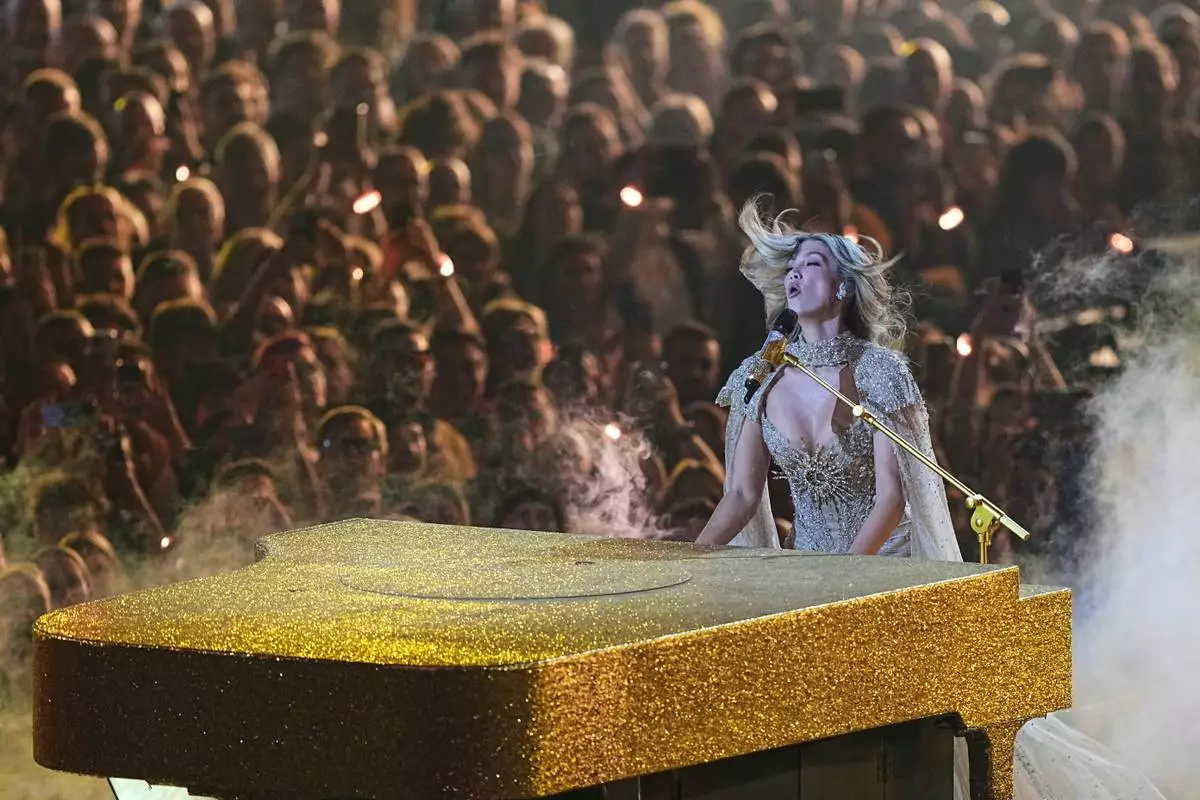
Delta Goodrem from Australia performs the song "Eclipse" during the dress rehearsal for the Grand Final of the 70th Eurovision Song Contest in Vienna, Austria, Friday, May 15, 2026. (AP Photo/Martin Meissner)
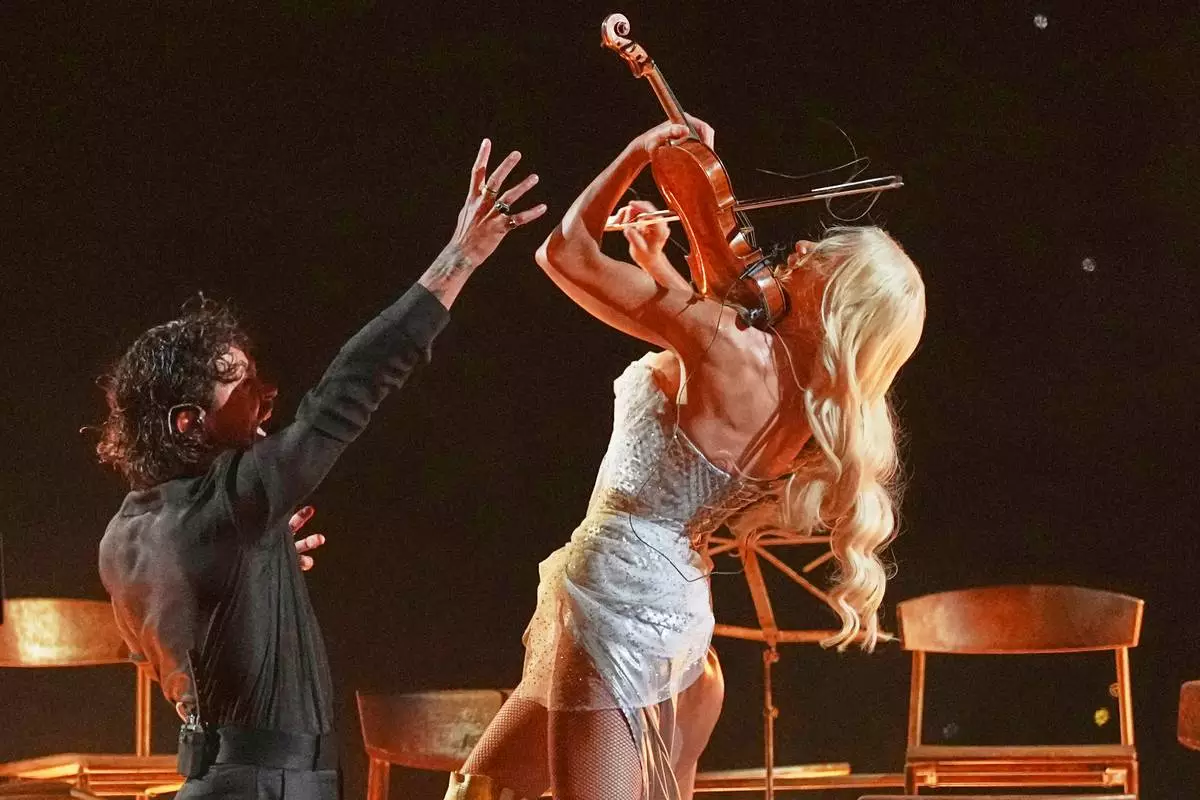
Linda Lampenius and Pete Parkkonen from Finland perform the song "Liekinheitin" during the first semifinal of the 70th Eurovision Song Contest in Vienna, Austria, Tuesday, May 12, 2026. (AP Photo/Martin Meissner)

Demonstrators protest against Israel ahead of the Grand Final of the 70th Eurovision Song Contest in Vienna, Austria, Saturday, May 16, 2026. (AP Photo/Martin Meissner)