China's "film plus" model has fueled consumption boom and economic vitality in many cities across the country.
In Fuzhou City of east China's Fujian Province, growing flow of customers are entering shopping malls for films, dining, shopping, and leisure activities.
With movie ticket stubs from the cinema, customers can enjoy exclusive discounts on meals, retail items, and more within the commercial area.
Conversely, consumers can present their shopping receipts from the mall to enjoy discounts on movie tickets.
"Film plus entertainment" and "film plus dining" have already emerged as new trends in consumption, creating a "two-way traffic" between cinemas and other businesses, a mall manager said.
"The 'film-plus' campaign has fueled the film ticket stub economy, linking catering, entertainment, and other sectors to drive customer traffic and create a virtuous cycle of customer traffic and sales," said Qiao Jie, manager of a shopping mall in Fuzhou.
Since the beginning of this year, the China Film Administration and the China Media Group have jointly spearheaded the "China Film Consumption Year" campaign, featuring a wide range of cinema-related promotional events and discount programs across the country.
It elevates what was once a singular movie-watching expense into a "one-stop" consumption experience that integrates film, dining, shopping, leisure and even tourism, fostering new business models and boosting spending.
"In the past, watching a film simply meant stepping into a cinema. Now, the concept has expanded into broader spaces and diverse fields. Thus, 'film-plus' has upgraded the film consumption into a more diverse and novel lifestyle consumption experience," said Chen Tao, assistant dean of the School of Liberal Arts of Renmin University of China.
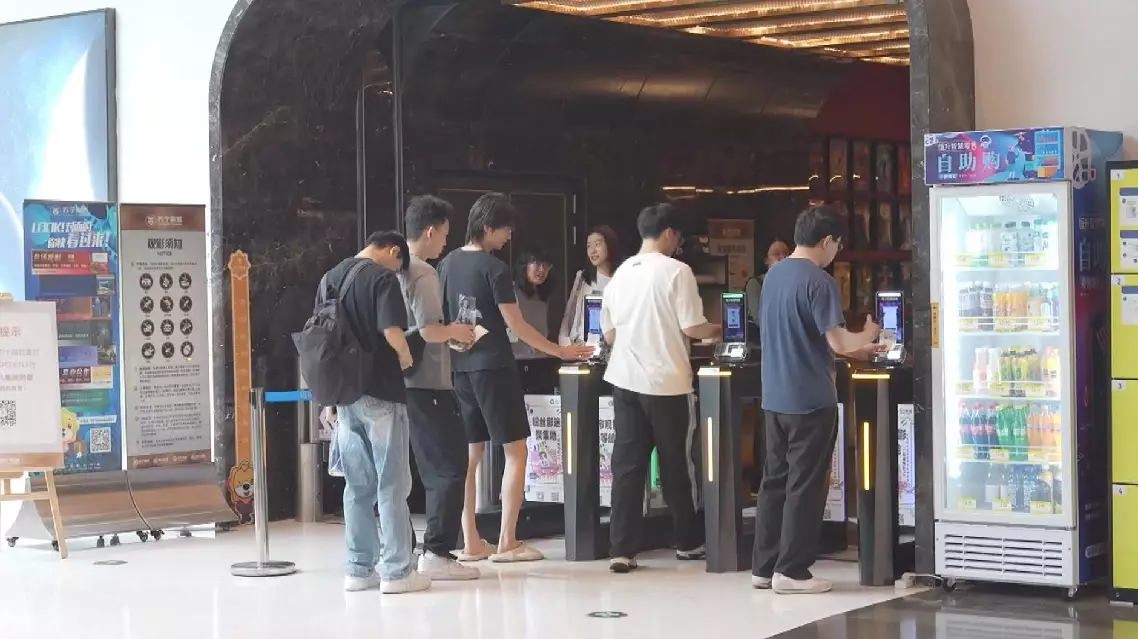
China's "film plus" model fuels consumption boom, economic vitality