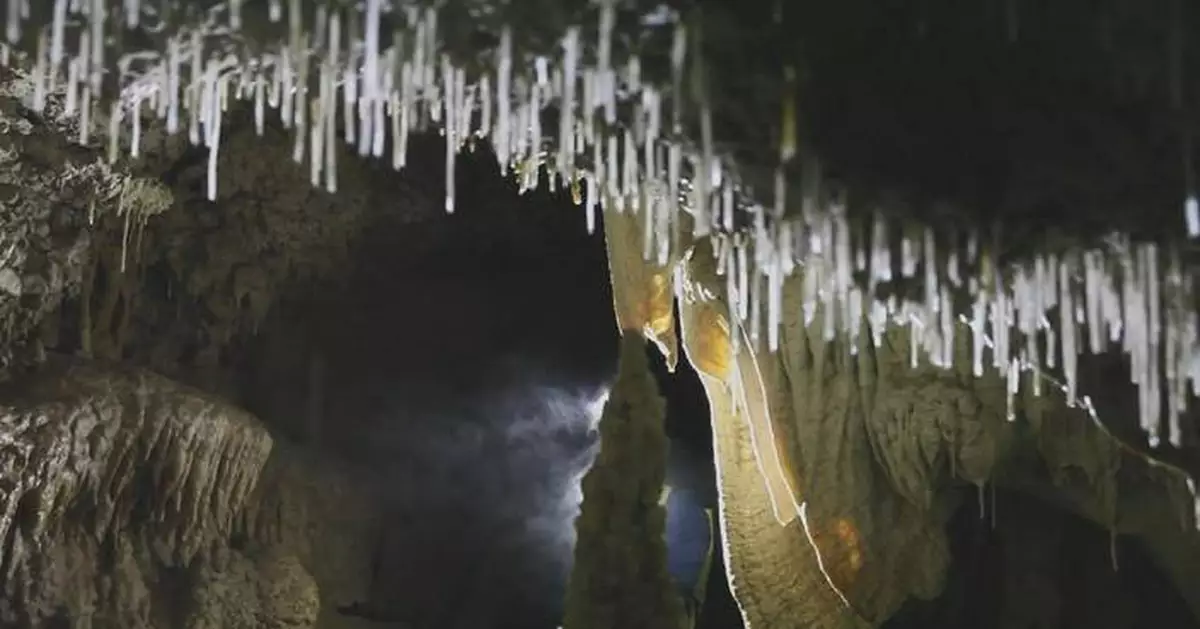
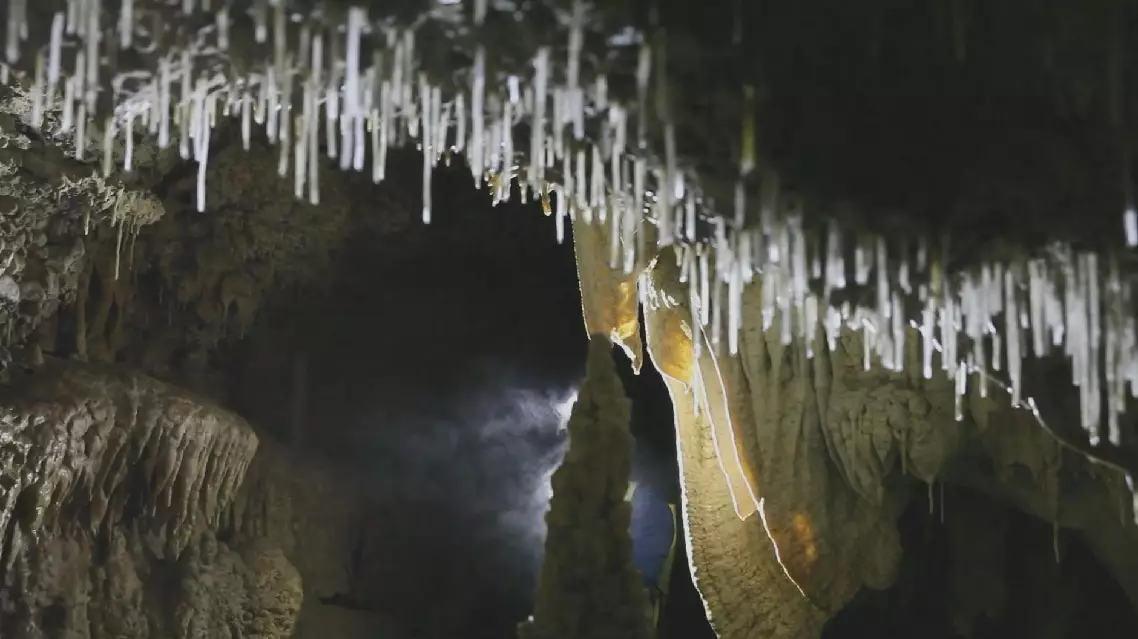
The world's first international standard on karst monitoring, recently published by the international Organization for Standardization (ISO), has provided standardized protocols in managing the delicate landscape.
The standard, titled Specification of Monitoring Technology for Karst Critical Zones, is led by scientists from China, where karst accounts for nearly one-third of the land area.
The newly released standard sets specific requirements for high-precision real-time monitoring with a focus on carbon-water-calcium cycling.
"From the surface to deep into the caves, we conduct real-time monitoring of carbon dioxide in the atmosphere, soil, and inside the caves, recording a set of data every 5 to 15 minutes. At the same time, we monitor carbon changes in rainfall, surface water, soil water, and groundwater," said Xiao Qiong, a researcher of the Institute of Karst Geology under the Chinese Academy of Geological Sciences.
Karst terrain is widely distributed worldwide, spanning 22 million square kilometers and supplying domestic and industrial water to roughly a quarter of the world's population.
"The release of the new standard can guide the monitoring of soil moisture, organic carbon, calcium, and various other nutrient elements, facilitating a better understanding of their cycling mechanisms. This, in turn, provides a scientific basis for offering recommendations on soil and water conservation," said Zhang Cheng, another researcher from the Institute of Karst Geology.
The standard also unifies the construction criteria for karst critical zone monitoring stations, forming standardized protocols covering monitoring procedures, data collection and processing, and information sharing services, making karst carbon cycle monitoring more accurate.
New int'l monitoring standard paves way for better karst management