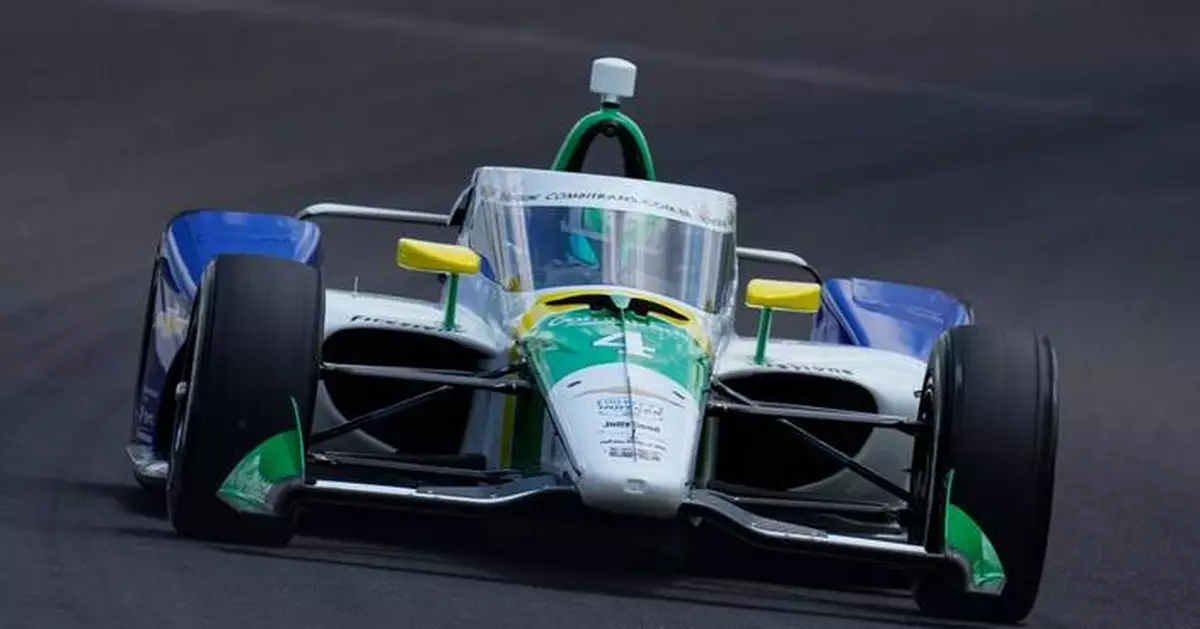
INDIANAPOLIS (AP) — IndyCar penalized drivers Caio Collet and Jack Harvey for making unapproved changes to their cars for Sunday's Indianapolis 500 qualifying, sending them to the final two starting spots on the 33-car grid in next weekend's race.
Post-qualifying technical inspection revealed the rules violations, IndyCar said in a statement. The teams can appeal.
Collet, a rookie with A.J. Foyt Enterprises, and Harvey, who is running his only race of the season with Dreyer & Reinbold Racing, also will forfeit their pit positions. In addition, Collet will lose three points he accumulated by making the 12-car pole shootout, won by defending Indy winner and four-time series champion Alex Palou.
Scott Dixon, the 2008 race winner, and Rinus Veekay of the Netherlands also add the disputed points to their totals and they will gain one starting spot. Dixon will now start 10th with Veekay 11th.
IndyCar said both the cars driven by Collett and Harvey both made unapproved changes to their Dallara-supplied energy management systems and used unapproved hardware to mount the EMS covers. Series rules require all teams to use equipment precisely as it is supplied.
As a result, the four-lap qualifying attempts by Collet and Harvey will disallowed and both teams will be unable to select their pit boxes until everyone else has a chance to adjust to the penalties.
Harvey, a longtime driver, normally works on Fox Sports' race telecasts.
AP auto racing: https://apnews.com/hub/auto-racing
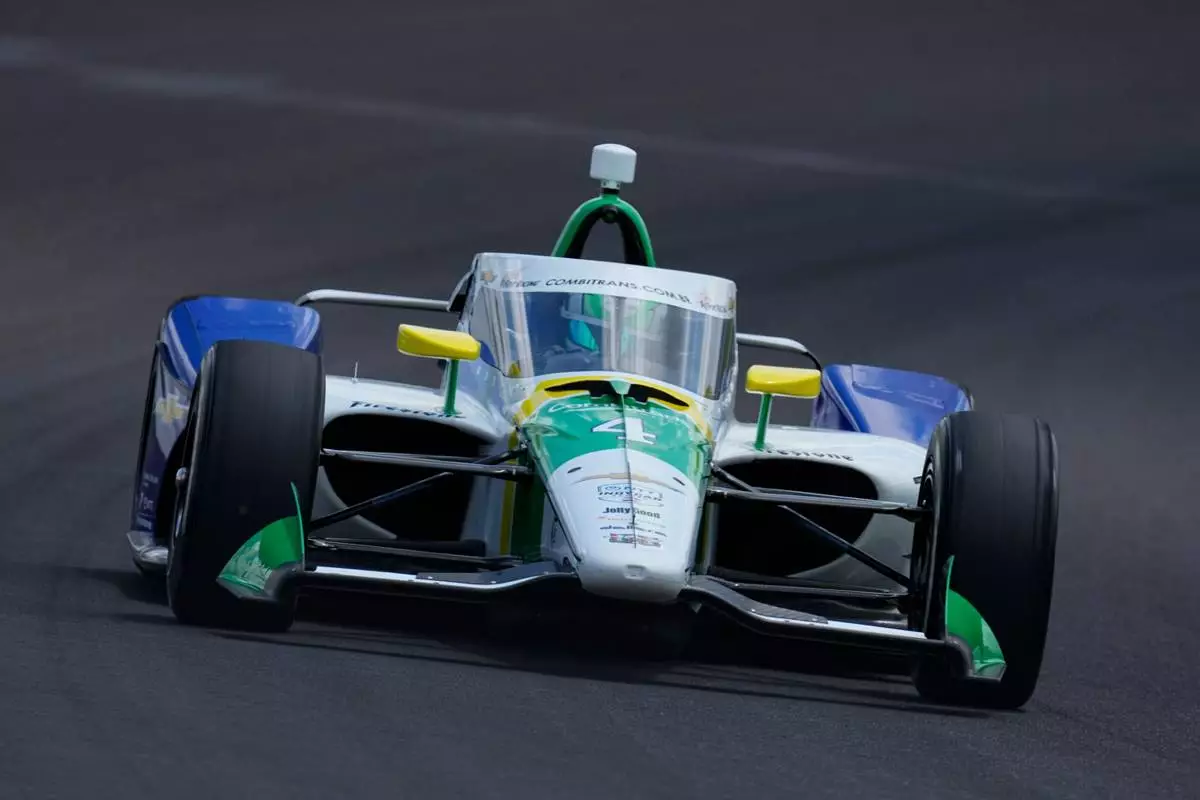
Caio Collet drives through the third turn during qualifications for the Indianapolis 500 auto race at the Indianapolis Motor Speedway in Indianapolis, Sunday, May 17, 2026. (AP Photo/Michael Conroy)
NEW YORK (AP) — President Donald Trump scored another win Tuesday against a Republican rival, dislodging Rep. Thomas Massie in Kentucky’s primary and knocking out one of his most outspoken critics on Capitol Hill.
Massie has been a particularly difficult thorn in Trump’s side. He pushed for the release of the Jeffrey Epstein files, opposed the war with Iran and voted against Trump’s signature tax legislation last year. He lost to Trump-backed challenger Ed Gallrein following the most expensive U.S. House primary in history.
While Trump has racked up several wins this primary season, this one perhaps sends an even more forceful message to the president's Republican critics. Massie was entrenched in his deep-red Kentucky district before his feud with Trump exploded, cutting short a congressional career that began in 2012.
Still, Massie will remain in Congress until his term ends in January, and without a Republican primary on the horizon, he now has a freer hand than ever to antagonize Trump.
Massie’s defeat is another sign that Republicans give their politicians vanishingly little leeway to cross Trump, who is bent on retribution and has persuaded his voters to defeat his adversaries again and again.
Here are some things to continue watching as votes roll in across Alabama, Georgia, Idaho, Kentucky, Oregon and Pennsylvania.
Trump has repeatedly shown that Republican primary voters will follow his lead, even as his popularity wanes with the broader electorate.
Before Massie's loss Tuesday, Republican Sen. Bill Cassidy of Louisiana failed to even make the runoff Saturday, unable to repair his relationship with Trump five years after voting to convict him during his second impeachment trial. And earlier this month, Trump successfully dislodged five of seven Indiana Republicans he targeted for voting against his redistricting plan.
Trump is flexing his influence in other places Tuesday.
In the race for Georgia governor, Trump backed Lt. Gov. Burt Jones in an unexpectedly ugly battle for the Republican nomination. Jones, who comes from a wealthy Georgia family, has given his campaign $19 million. But billionaire Rick Jackson, a health care tycoon, has put more than $83 million of his fortune into the race. Trump’s endorsement power has rarely been tested against that level of lopsided spending, and Jones and Jackson are heading for a June 16 runoff.
Trump stayed on the sidelines of Georgia’s Senate race, leaving a crowded field of hopefuls seeking to take on Democratic Sen. Jon Ossoff, who’s running unopposed for his party’s nomination. But in Alabama, Trump endorsed Rep. Barry Moore for Senate to replace Tommy Tuberville, who is running for governor.
After staying on the sidelines of a Senate runoff in Texas that's taking place next week, Trump on Tuesday endorsed Attorney General Ken Paxton over incumbent Sen. John Cornyn.
While Trump had a big night on the Republican side, Democratic Pennsylvania Gov. Josh Shapiro showed some political strength of his own.
Shapiro, who may look to succeed Trump in the White House, endorsed four Democrats running for Congress, three of them in contested primaries. And all four won their primaries.
Shapiro’s endorsed candidates included Paige Cognetti, mayor of Scranton; Bob Brooks, president of the state firefighters’ union; Bob Harvie, a Bucks County commissioner; and Janelle Stelson, a former television news personality who narrowly lost two years ago.
It was a relatively low bar in some cases — Cognetti ran unopposed — but Shapiro did not show any weakness as he plows toward a November reelection in swing-state Pennsylvania that is expected to launch him into the 2028 presidential contest.
Shapiro may have an even stronger case if the four Democrats he picked on Tuesday succeed in flipping Republican seats in the fall.
Pennsylvania’s Democratic Party chairman Eugene DePasquale told an election night crowd that “no one” is more invested in flipping seats and “taking back the country” than Shapiro.
Georgia offered a case study in just how bad it can get for Republicans who defy Trump — especially those who push back on his false claims of election fraud.
Secretary of State Brad Raffensperger and former Lt. Gov. Geoff Duncan were among the few Republicans to speak out against Trump’s attempt to overturn his 2020 loss. They were on the ballot for governor on Tuesday — Raffensperger as a Republican and Duncan as a Democrat.
Both lost decisively.
Raffensperger spent millions of his own money trying to reintroduce himself to Republicans by reminding them of his long career in conservative politics before defying Trump. Duncan, meanwhile, tried to convince Democratic voters that they can trust him after renouncing his prior opposition to abortion rights, gun control and the expansion of Georgia’s Medicaid program.
It didn't work.
The president has continued to falsely insist that he only lost the 2020 election because of fraud, and he's spread baseless fears about the upcoming November midterm elections as well.
But the results for Raffensperger and Duncan may remind Republicans of the risks of pushing back.
The leading Republican candidates in the governor’s race, Jackson and Jones, have both questioned or denied the 2020 election outcome. Jackson actually ran a political ad in the weeks leading up to the primary attacking Raffensperger for defying Trump’s effort to overturn 2020.
Confusion spread across Alabama on Tuesday as votes cast in four of the state’s seven congressional districts may not be counted.
That’s because Republican Gov. Kay Ivey moved just last week to postpone the primaries until Aug. 11, emboldened by the recent U.S. Supreme Court decision that hollowed out the Voting Rights Act. Republicans across Alabama, Louisiana and Tennessee are now scrambling to redraw congressional boundaries to eliminate some majority-Black U.S. House districts to maximize their political advantage.
Over the weekend, thousands of civil rights activists rallied in Alabama against the changes, but the redistricting plan is moving forward.
That means that ballots cast Tuesday in primaries for Alabama’s 1st, 2nd, 6th and 7th congressional districts will be voided, the secretary of state says, while state officials restore a previous set of Republican-drawn district boundaries.
You’d be excused for being confused. Alabama voters will still choose nominees Tuesday as planned for the 3rd, 4th and 5th congressional districts, as well as for U.S. Senate and a full slate of state and local offices.
The late Rep. David Scott, D-Ga., was the fourth Democrat to die in office this term, fueling a growing restlessness on the left over the party's aging leadership. Scott, who was 80 when he died, was seeking a 13th term.
Scott's name appeared on the ballot alongside five other candidates running in the Democratic primary, but votes for him will not be counted.
State Rep. Jasmine Clark won the nomination on Tuesday night, and she is almost certain to win the general election in a district that tilts overwhelmingly toward the Democrats.
Young Democrats have been challenging their elders in primaries around the country. Although some have fallen short, the races have channeled angst that an aging generation of lawmakers is unable or unwilling to mount a bare-knuckles opposition to Trump.
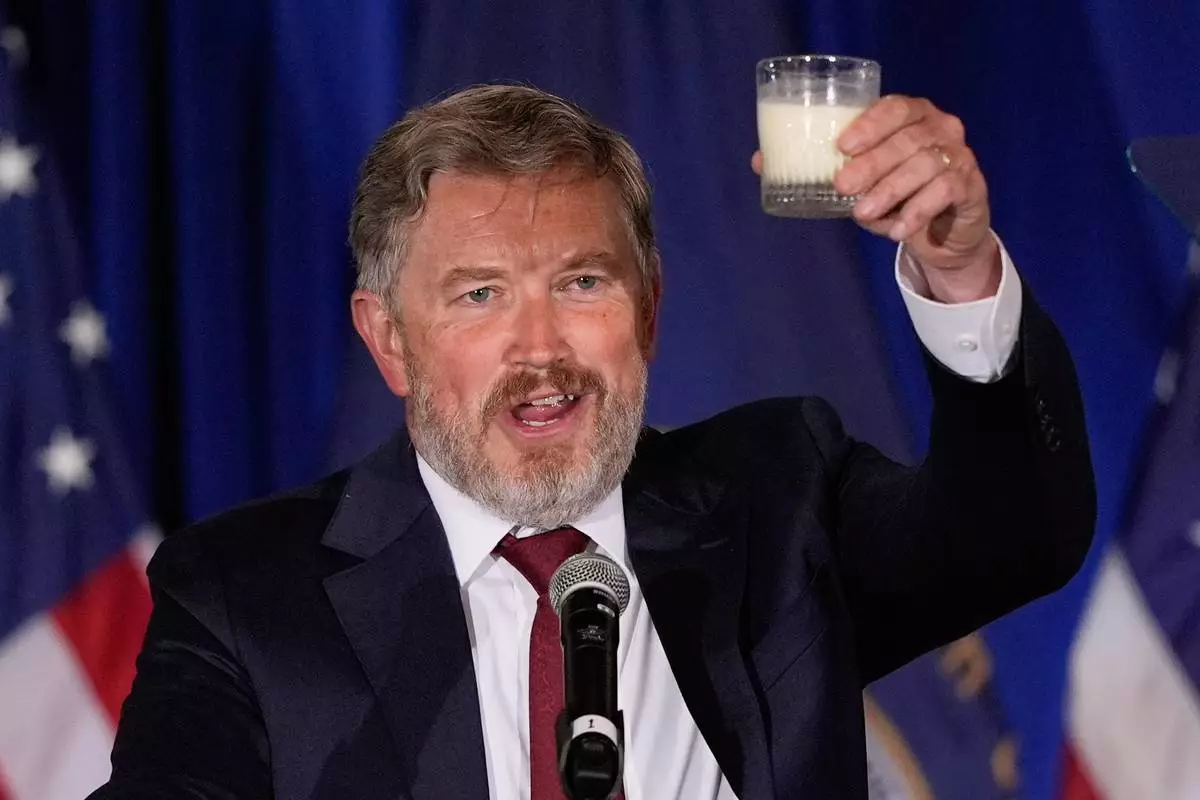
Rep. Thomas Massie, R-Ky., holds a drink as he speaks during an election night watch party after losing the Republican party's nomination at the Marriott Cincinnati Airport, Tuesday, May 19, 2026, in Hebron, Ky. (AP Photo/Carolyn Kaster)
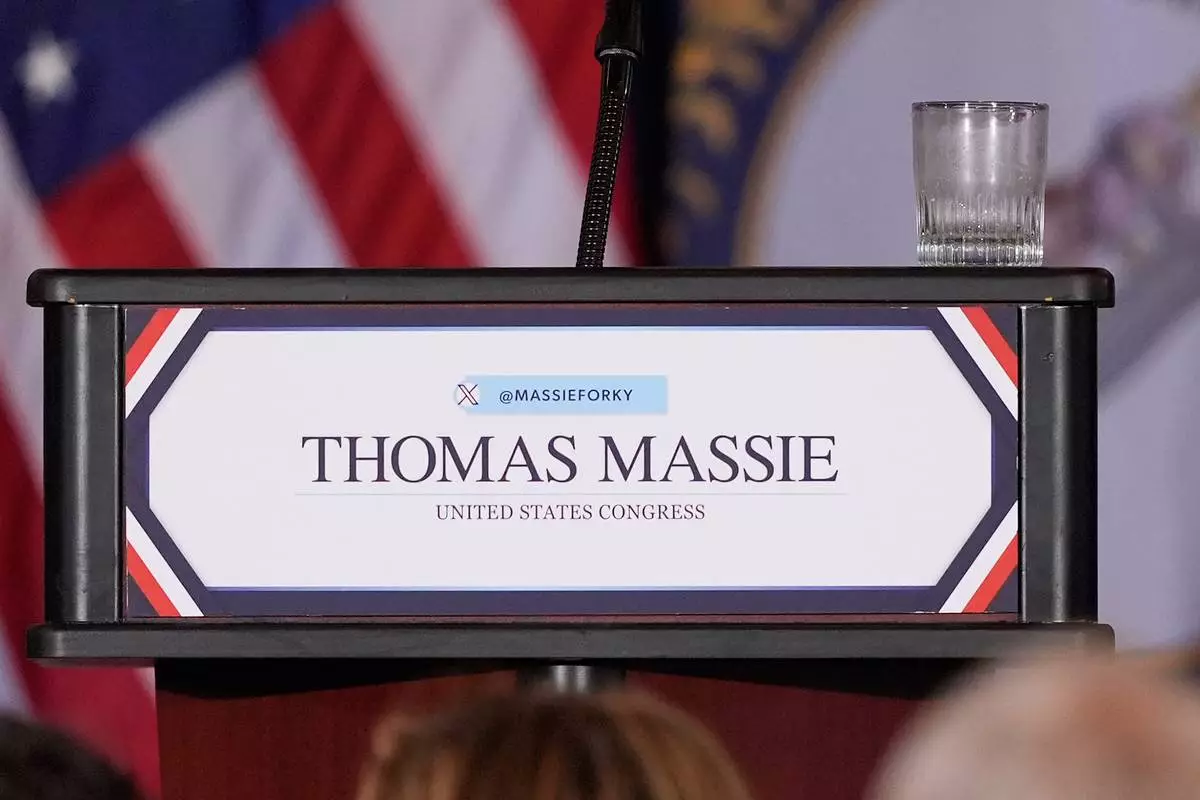
An empty glass is seen after Rep. Thomas Massie, R-Ky., spoke during an election night watch party after losing the Republican party's nomination at the Marriott Cincinnati Airport, Tuesday, May 19, 2026, in Hebron, Ky. (AP Photo/Carolyn Kaster)

Georgia gubernatorial candidate Rick Jackson speaks to the Atlanta Young Republicans in Atlanta Thursday, May 7, 2026 (AP Photo/Jeff Amy)
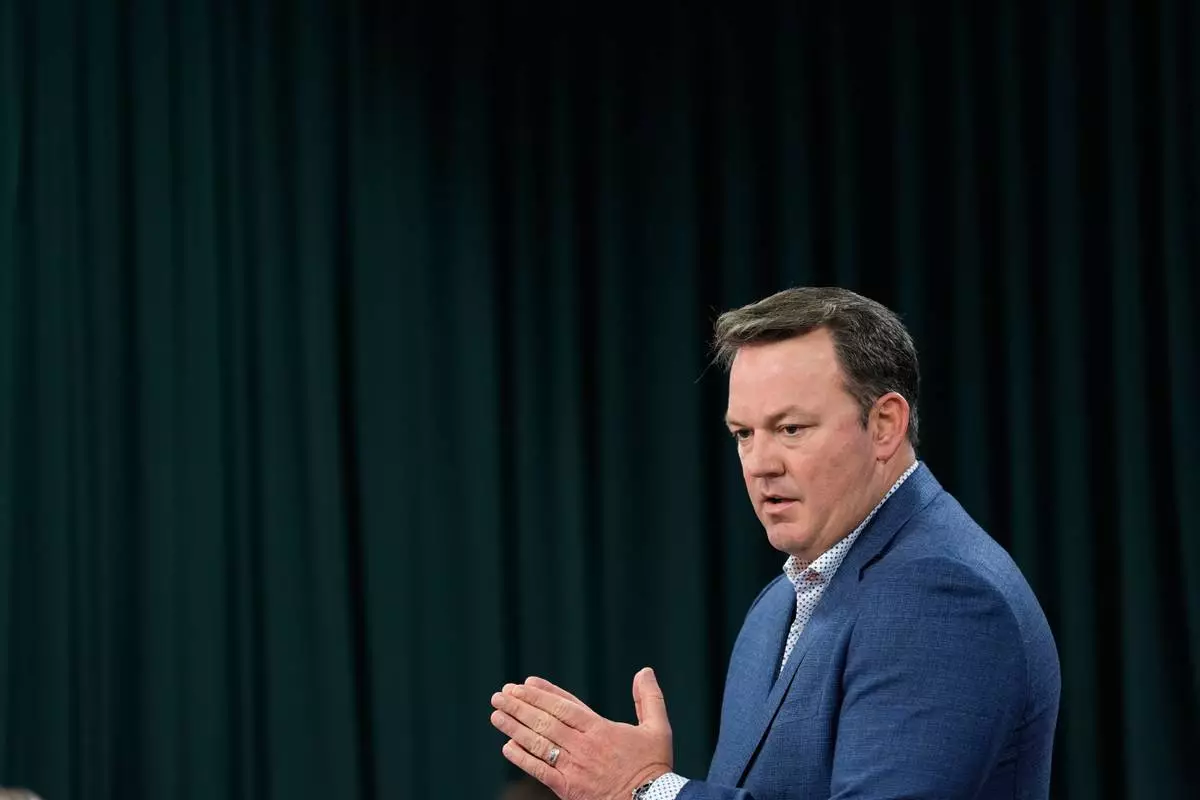
Georgia Republican candidate for governor Burt Jones speaks to supporters Tuesday, May 12, 2026, in Smyrna, Ga. (AP Photo/Brynn Anderson)

Republican congressional candidate for Kentucky, Ed Gallrein, stands for a portrait during the Kenton County Republican Party Lincoln Day Dinner, Thursday, April 30, 2026, in Covington, Ky. (AP Photo/Jon Cherry)

Rep. Thomas Massie, R-KY, sits at a table alone in the studio ahead of a Kentucky Educational Television (KET) debate, Monday, May 4, 2026, in Lexington, Ky. (AP Photo/Jon Cherry)

President Donald Trump gestures to reporters as he walks across the South Lawn of the White House, Friday, May 15, 2026, in Washington, on return from Beijing where he met with China's President Xi Jinping. (AP Photo/Jacquelyn Martin)