LA PAZ, Bolivia (AP) — Bolivia’s President Rodrigo Paz faces a deepening crisis as widespread protests and blockades leave the political capital under siege less than six month after he took office.
Two weeks of road closures — spearheaded by the Bolivian Workers’ Central, COB, peasant unions and miners — have emptied markets in La Paz and depleted vital hospital oxygen reserves. The government reported that at least three people died after emergency vehicles were blocked from reaching medical centers.
Click to Gallery
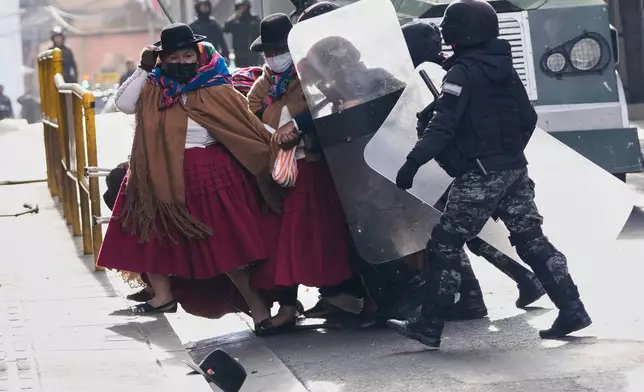
Police approach anti-government protesters in La Paz, Bolivia, Monday, May 18, 2026. (AP Photo/Juan Karita)
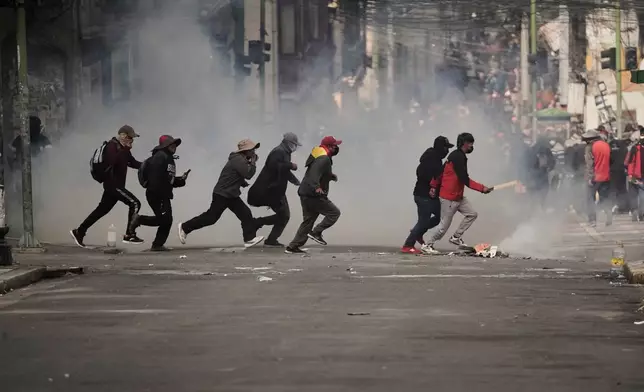
Demonstrators run across a street during an anti-government protest in La Paz, Bolivia, Monday, May 18, 2026. (AP Photo/Freddy Barragan)
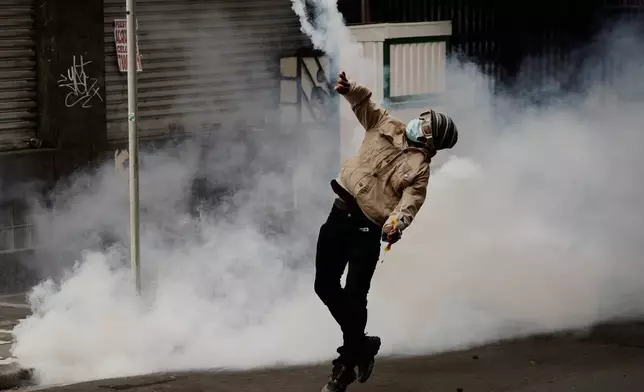
A protester returns a tear gas canister to police during an anti-government protest in La Paz, Bolivia, Monday, May 18, 2026. (AP Photo/Freddy Barragan)
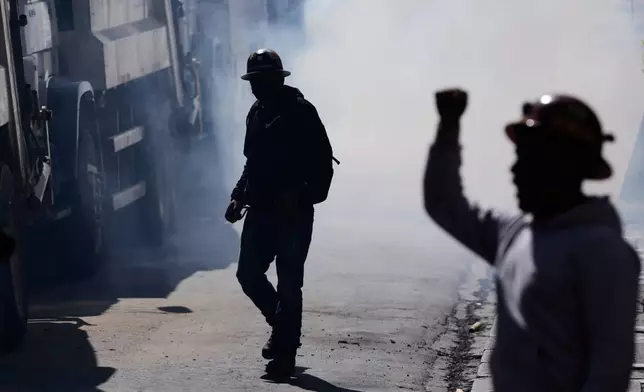
Miners stand amid smoke from tear gas and firecrackers during clashes with police at an anti-government protest in La Paz, Bolivia, Monday, May 18, 2026. (AP Photo/Juan Karita)
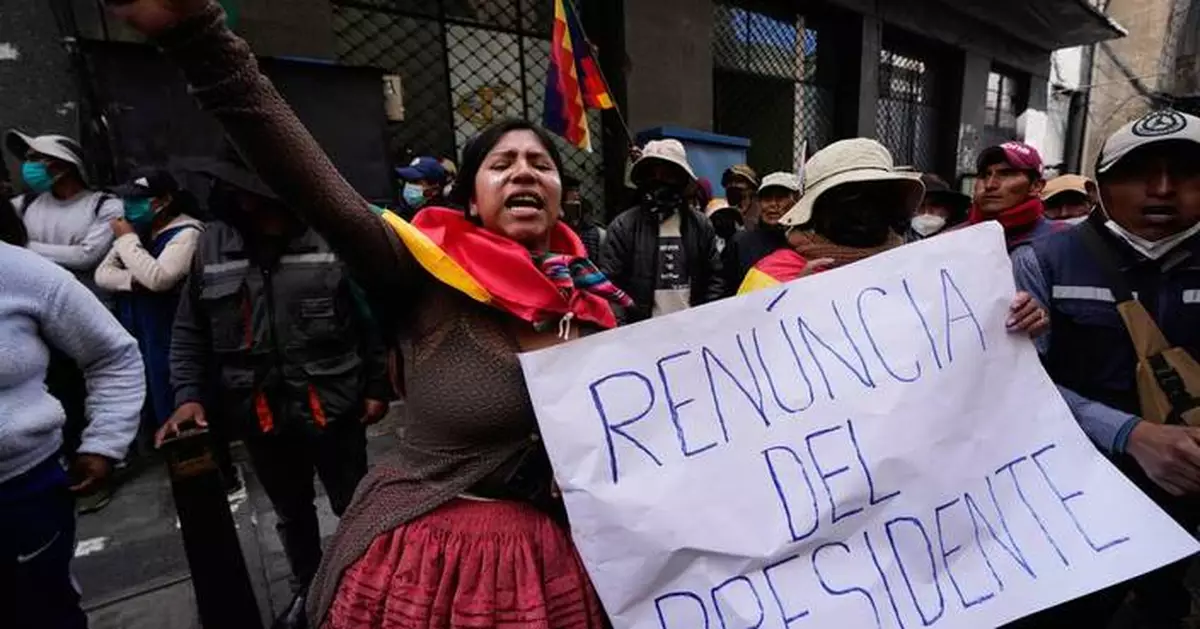
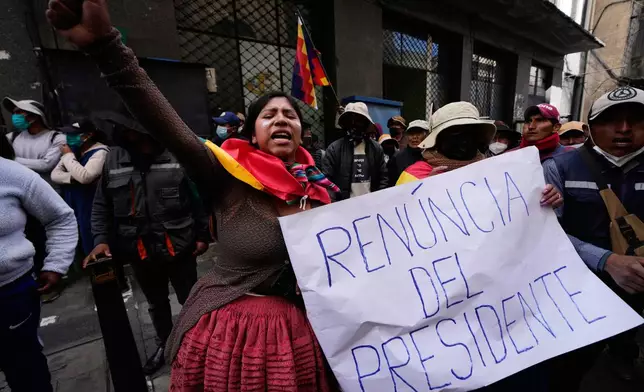
An anti-government protester holds a sign that reads in Spanish "Resignation of the president" in La Paz, Bolivia, Monday, May 18, 2026. (AP Photo/Juan Karita)
On Monday, supporters of Bolivia’s influential ex-President Evo Morales clashed with police in the capital city as they joined multiple sectors demanding the resignation of the president, who lacks both a legislative majority and a robust political party to anchor his administration.
The unrest presents the biggest challenge yet for Paz, a business-friendly centrist who came to power six months ago as a wave of conservative electoral wins swept the region.
“Those seeking to destroy democracy will go to jail,” Paz warned on Friday, even as the blockades expanded to engulf nearly the entire country.
The COB began by demanding wage increases, while peasant unions demanded a steady supply of gasoline. The miners, meanwhile, are negotiating separately for access to additional mining areas. Public schoolteachers are also holding separate talks regarding salary improvements.
"These demands have been largely addressed in a manner consistent with current realities; however, there are dark forces seeking to destabilize our democracy,” said presidential spokesperson José Luis Gálvez, in an allusion to influential former President Evo Morales.
Paz reiterates that he inherited a “bankrupt state,” yet his adversaries reproach him for his sluggish response to the worst crisis in 40 years — marked by fuel shortages and an inflation rate that hovered near 20% last year.
According to business organizations, ongoing protests and road blockades are draining more than $50 million per day from Bolivia's economy and have left roughly 5,000 vehicles stranded on the highways.
Morales marshaled the latest march from his hideout in Bolivia’s remote tropics. He has been holed up in the highlands for the past year and a half, evading an arrest warrant on charges relating to his alleged sexual abuse of a 15-year-old girl. He says the allegations are politically motivated.
The Movement Toward Socialism, MAS, which had governed Bolivia for the past two decades under Morales and later Luis Arce, suffered a historic defeat in last year’s elections following a bitter feud between the two former leaders.
“The government and the right wing claim that I am a political corpse and that I lack the ability to mobilize anyone, yet they continue to blame me,” Morales said recently on the social media platform X. “As long as structural demands — such as those concerning fuel, food and inflation — remain unaddressed, the uprising will not be quelled.”
Despite his fiery rhetoric, analysts believe Morales no longer has the power to rally mass support, suggesting instead that he is fueling the protests purely to evade justice.
The collapse of the MAS era left the Bolivian political landscape deeply fractured, with no single party emerging as a dominant force.
Paz secured a surprise electoral victory, but the Christian Democratic Party — the vehicle for his rise to power — quickly fractured within the legislature. Meanwhile, the president remains locked in an open feud with his vice president, former police officer Edman Lara.
Paz began his term with vigor, reaching out to the international community to break the isolation that had characterized the MAS era. While his efforts secured various pledges of investments and loans, many of these funds have yet to materialize.
As a first measure, he put an end to fuel subsidies, which drove up the prices of gasoline and diesel — yet without triggering protests among a population weary of previous shortages. However, the government imported low-quality gasoline, which sparked protests among transport workers over damage to their vehicles.
The “junk gasoline” scandal triggered a wave of strikes and protests among transportation workers and the resignations of two high-ranking officials at the state-owned oil company.
The ongoing protests and blockades in Bolivia worry the wider region. Eight allied Latin American governments, from Chile to Costa Rica, recently released a joint statement rejecting “any action aimed at destabilizing the democratic order.” Neighboring Argentina said it would start a weeklong humanitarian airlift to alleviate shortages in the country.
The United States, now rebuilding relations with Bolivia after years in which Morales defined the country in opposition to Washington, said it supported Paz’s efforts “to restore order for the peace, security and stability of the Bolivian people.” The U.S. State Department issued an alert this week urging U.S. citizens traveling to Bolivia to be vigilant.
Associated Press writer Isabel DeBre reported from Ushuaia, Argentina.
Follow AP’s coverage of Latin America and the Caribbean at https://apnews.com/hub/latin-america
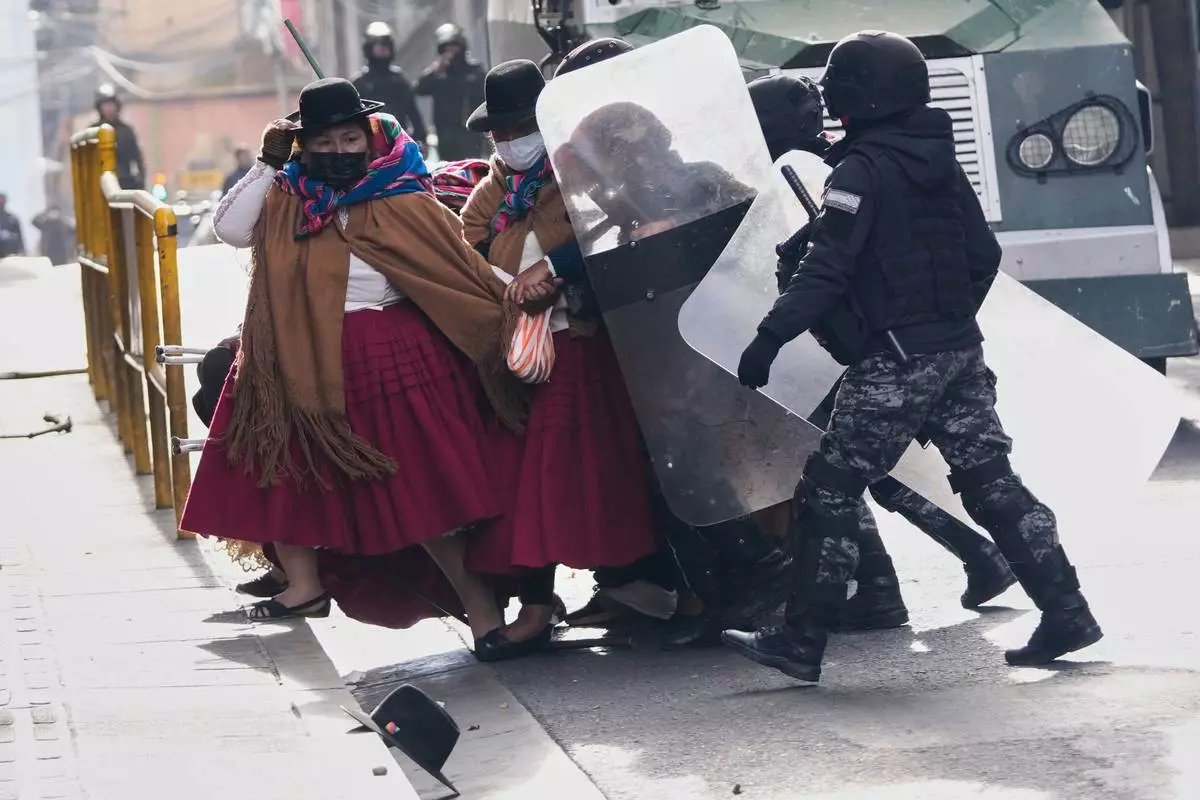
Police approach anti-government protesters in La Paz, Bolivia, Monday, May 18, 2026. (AP Photo/Juan Karita)
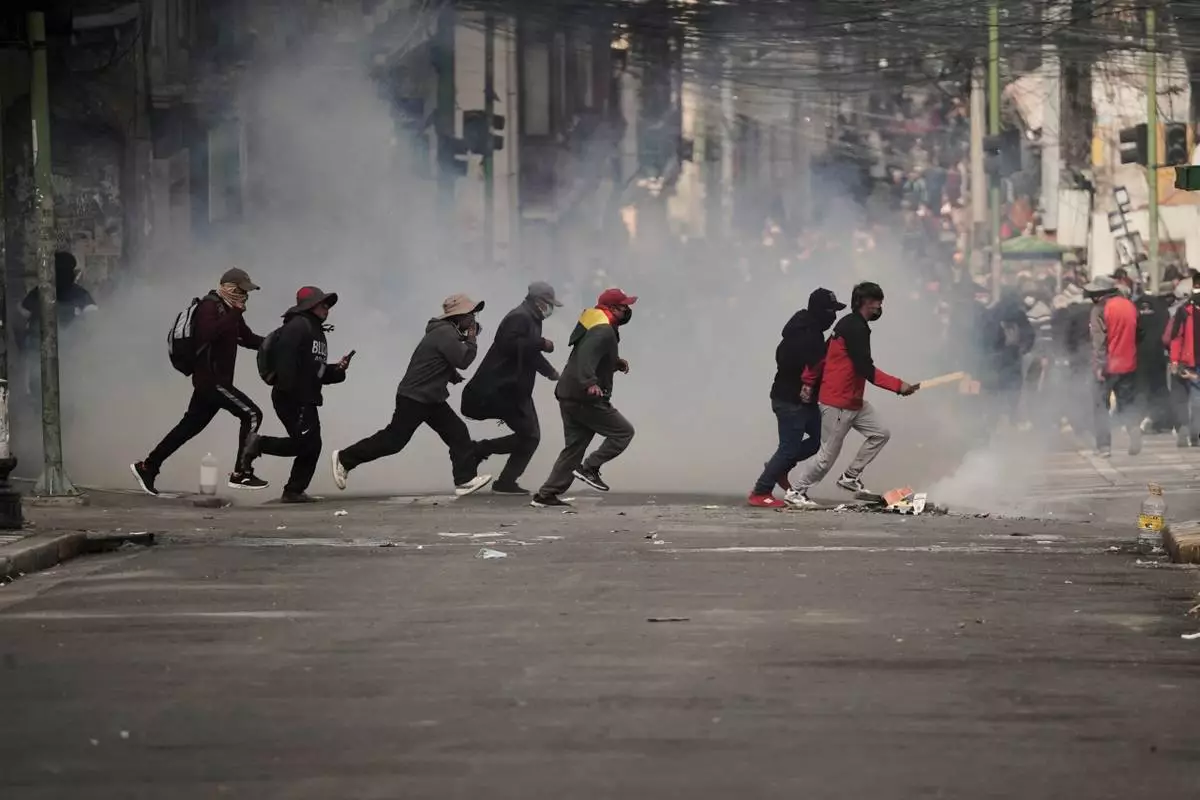
Demonstrators run across a street during an anti-government protest in La Paz, Bolivia, Monday, May 18, 2026. (AP Photo/Freddy Barragan)
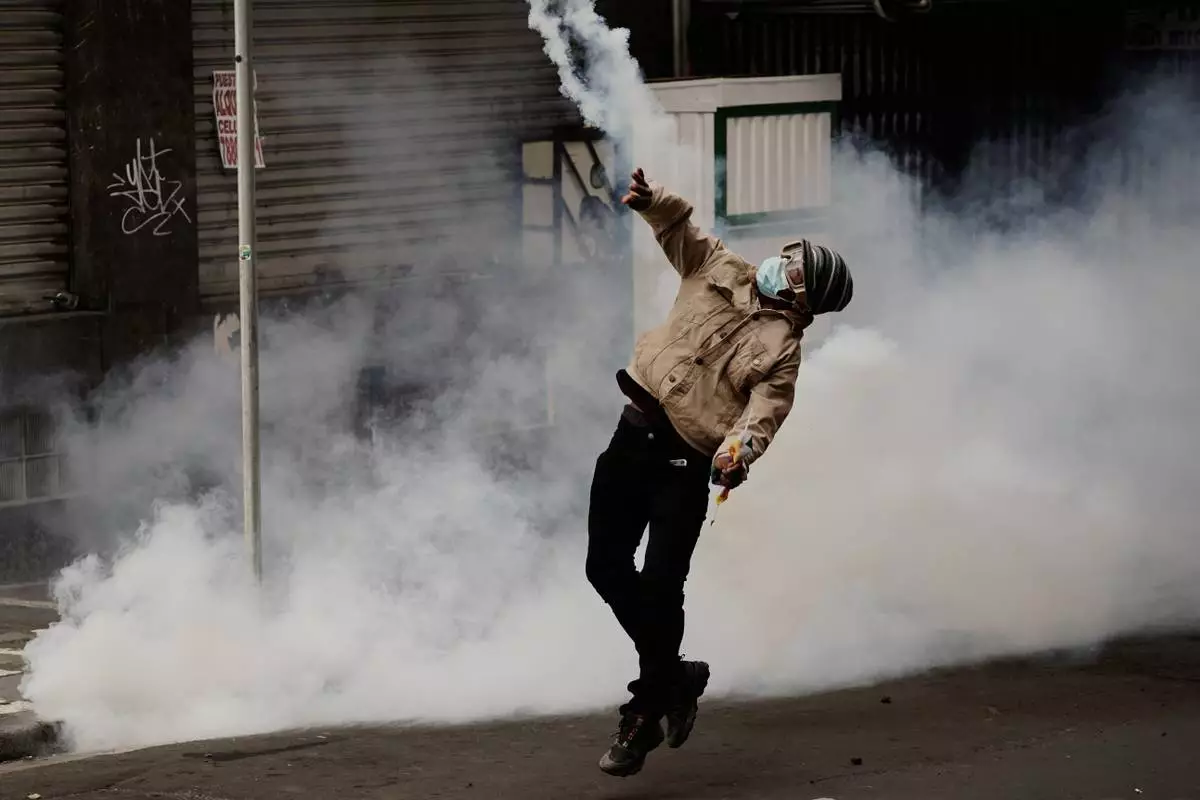
A protester returns a tear gas canister to police during an anti-government protest in La Paz, Bolivia, Monday, May 18, 2026. (AP Photo/Freddy Barragan)
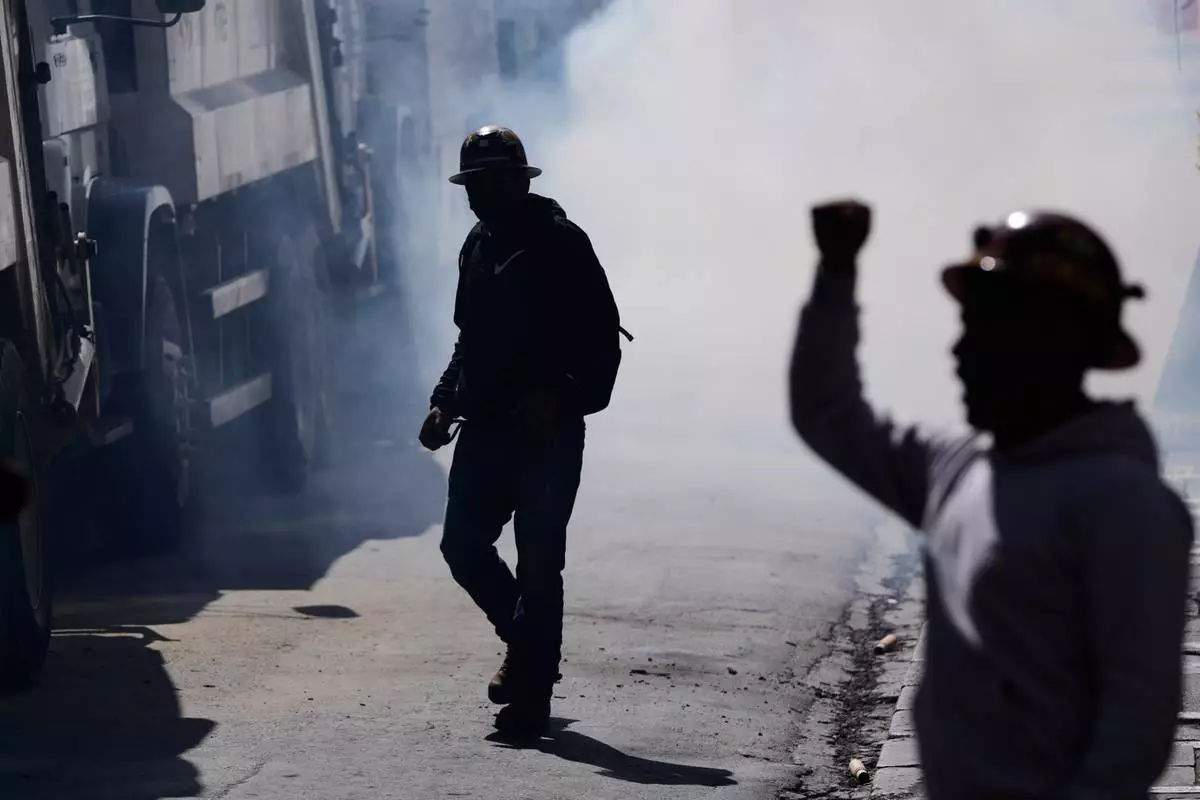
Miners stand amid smoke from tear gas and firecrackers during clashes with police at an anti-government protest in La Paz, Bolivia, Monday, May 18, 2026. (AP Photo/Juan Karita)
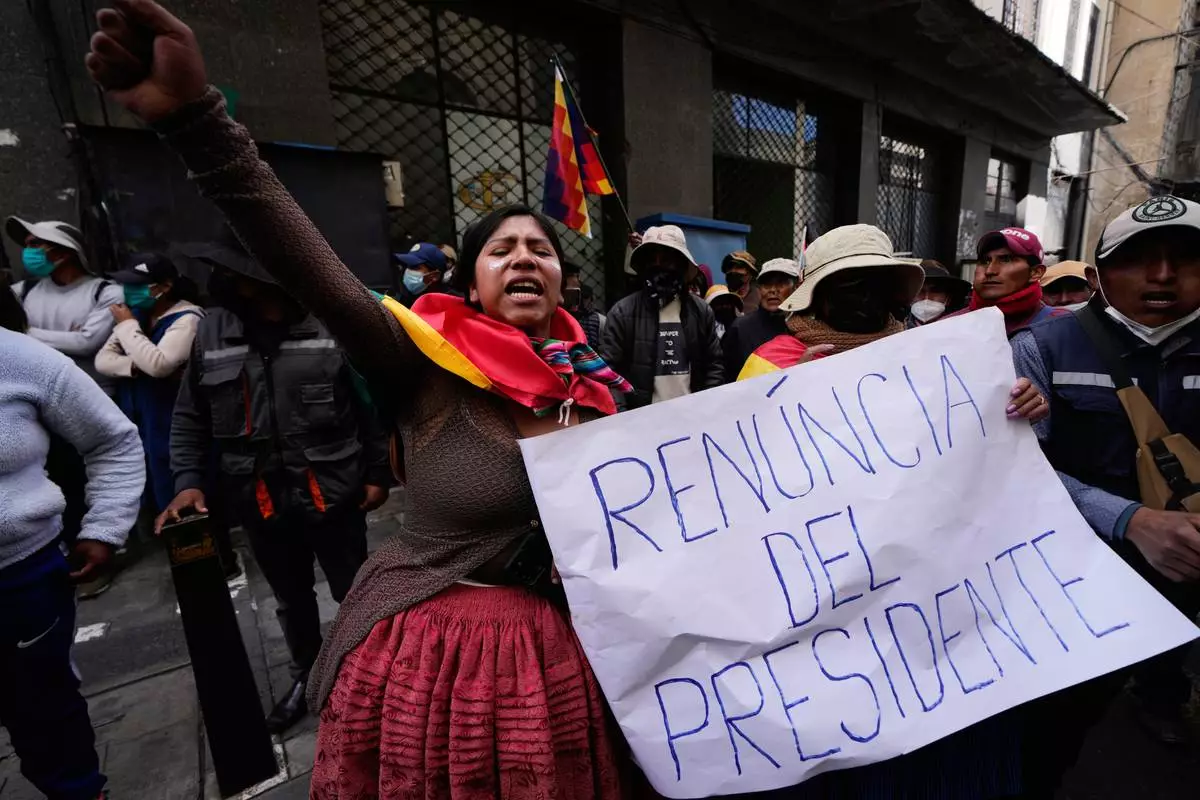
An anti-government protester holds a sign that reads in Spanish "Resignation of the president" in La Paz, Bolivia, Monday, May 18, 2026. (AP Photo/Juan Karita)
SAN DIEGO (AP) — The teenagers who killed three people at a San Diego mosque met online and shared a “broad hatred” toward different religions and races, authorities said Tuesday.
Mark Remily of the FBI said during a news conference that authorities have uncovered writings by the suspects. Authorities declined to specify what ideologies or views were expressed by the shooters.
Authorities have also recovered 30 firearms and a crossbow from two residences searched in connection to the investigation.
Remily said authorities are still trying to uncover whether the shooters had broader plans.
Hours before Monday's attack police were racing to find the two teenagers who would ultimately be deemed responsible.
The search began after the mother of one teen reported that her son was suicidal and had run away, according to Police Chief Scott Wahl, who said weapons and her vehicle were missing from the family's home. Two hours after her call, the shooting started at the Islamic Center of San Diego, which also houses a school.
The suspects, ages 17 and 18, were found nearby in a vehicle after killing themselves.
The shooting was the latest in a string of attacks on houses of worship and comes amid rising threats and hate crimes targeting the Muslim and Jewish communities since the beginning of war in the Middle East, forcing increases in security.
Authorities have not yet publicly identified the teens Tuesday morning, but after the shooting investigators were seen searching the San Diego home of Cain Clark, a high school senior. Clark's parents, who are listed in public records as living at the home, did not respond to messages seeking comment, nor did other family members.
James Canning, a spokesman for San Diego Unified School District, said school police were cooperating with San Diego authorities investigating the mosque attack. Clark had been attending school online since 2021 and was on track to graduate next month, he said.
While he did not attend school in person, he did participate in 2024 as a member of the wrestling team at Madison High School in San Diego. Canning said Clark had no record of disciplinary issues in high school.
Neighbors Marne and Ted Celaya said they last saw Clark a few hours before the shooting and that he waved as he got into a car alone and drove away. They described the Clark family as good neighbors of more than 20 years and remembered when Cain was born, watching him and his older brother grow up.
“It's unbelievable,” Marne Celaya said of the shooting. “He's helped me bring in my groceries.”
Authorities executed search warrants as they piece together how and why the attack happened. There was no specific threat against the Islamic center, which is the largest mosque in San Diego, but authorities found that the suspects engaged in “generalized hate rhetoric,” Wahl said.
Muslim American organizations were quick to point out that anti-Muslim rhetoric has been on the rise across the U.S. “Words have consequences,” said Mohamed Gula, interim CEO of advocacy group Emgage Action.
Among those killed was a security guard who police believe “played a pivotal role” in keeping the attack from being “much worse,” Wahl said.
The guard's actions stopped the attack from moving beyond the mosque's front section, the police chief said.
The mosque hasn’t released the victims' names. But a family friend identified the guard as Amin Abdullah, who had worked at the mosque for more than a decade.
“He wanted to defend the innocent so he decided to become a security guard,” said Shaykh Uthman Ibn Farooq, who spoke with Abdullah’s son.
In a Facebook post, the mosque called him “a courageous man who put himself on the line of the safety of others, who even in his last moments did not stop protecting our community.”
It described one of the other victims as a foundation of the center who was dedicated to building the community from the beginning. It said the other was a man whose “kindness, sincerity and wavering spirit touched everyone around him.”
Those who died were “men of courage, sacrifice, and faith,” the center wrote. “Their absence leaves a void that can never truly be filled.”
Just before the attack, the search for the missing teen intensified Monday morning as law enforcement gathered more details. Police found he had dressed in camouflage — raising their alarms — and was with a friend. Officers used automated license plate readers to track the car to a mall and went there.
The police chief said that while other officers were talking with the suspect's mother who had called police, the first reports of the shooting came from blocks away at the mosque, which sits in a neighborhood with Middle Eastern restaurants and markets. The center includes the Al Rashid School, which offers courses in Arabic language, Islamic studies and the Quran for students ages 5 and up, according to its website.
TV footage showed more than a dozen children holding hands and being walked out of the center's parking lot as it was surrounded by police vehicles.
As officers searched the mosque for the shooters, there were reports of people in a fleeing vehicle shooting at a landscaper who was not seriously hurt, Wahl said. Police then found the suspects dead.
Daniel McDonald said he was inside his house when he heard gunshots. He went outside to find the streets shut down, shattered glass on the pavement and a gardener who was shaken up. He said he saw police trying to revive one of the suspects.
Johnson reported from Seattle and Biesecker from Washington. Jaimie Ding and Christopher Weber in Los Angeles, Hannah Schoenbaum in Salt Lake City, Javier Arciga and Gregory Bull in San Diego, John Seewer in Toledo, Ohio, and Hallie Golden in Seattle contributed to this report.
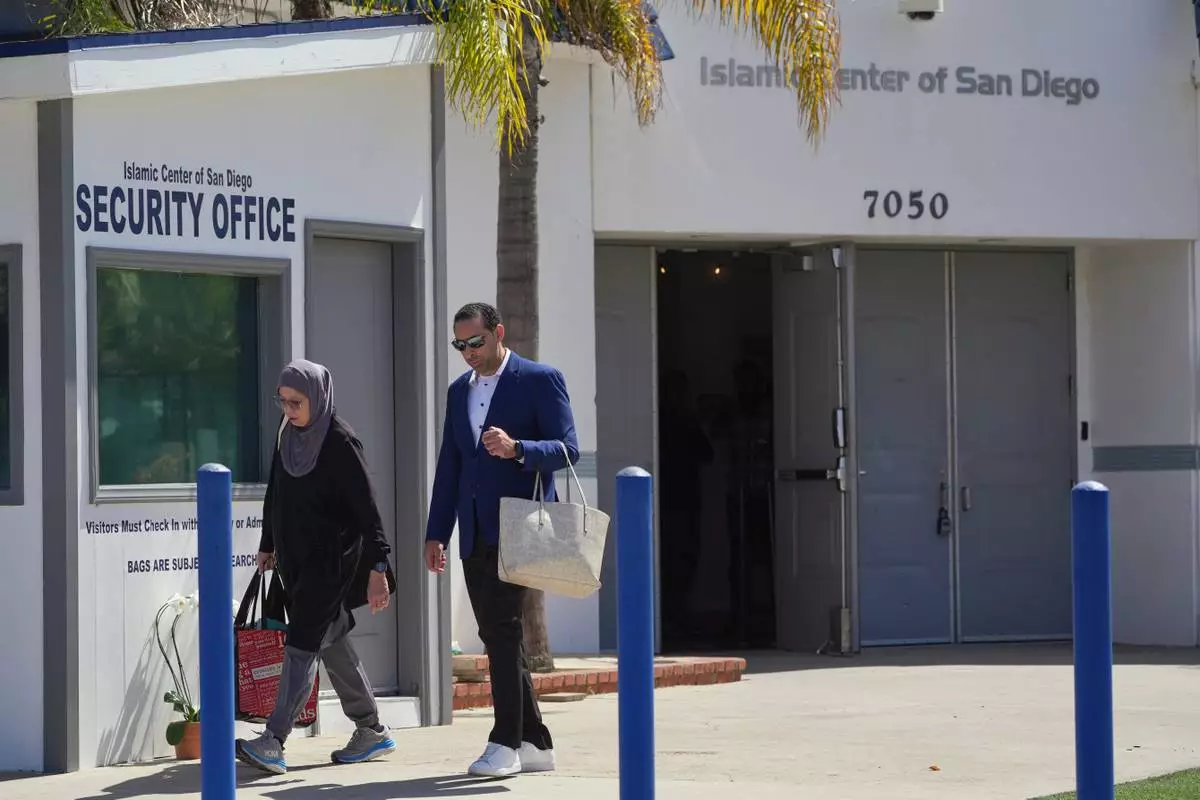
People walk outside of the Islamic Center of San Diego, the day after a shooting, Tuesday, May 19, 2026, in San Diego. (AP Photo/Jae C. Hong)
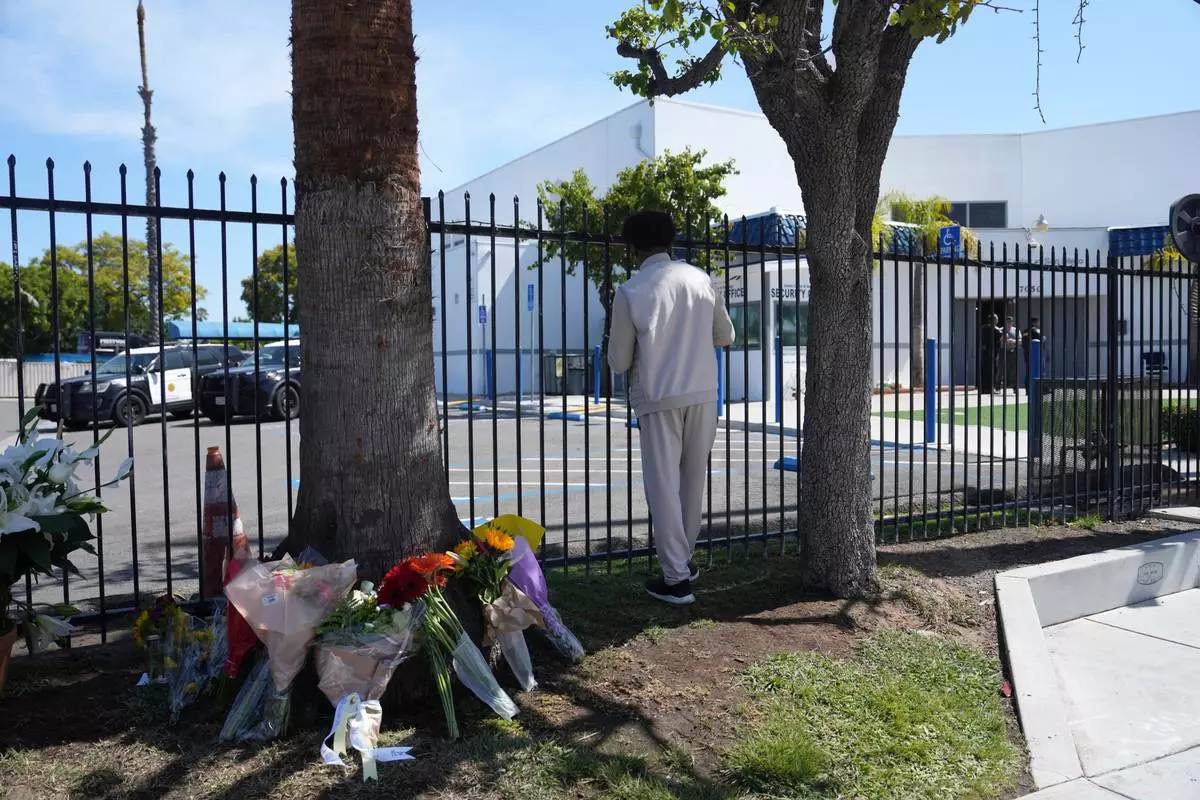
A man who did not want to be identified stands outside of the Islamic Center of San Diego, the day after a shooting, Tuesday, May 19, 2026, in San Diego. (AP Photo/Jae C. Hong)
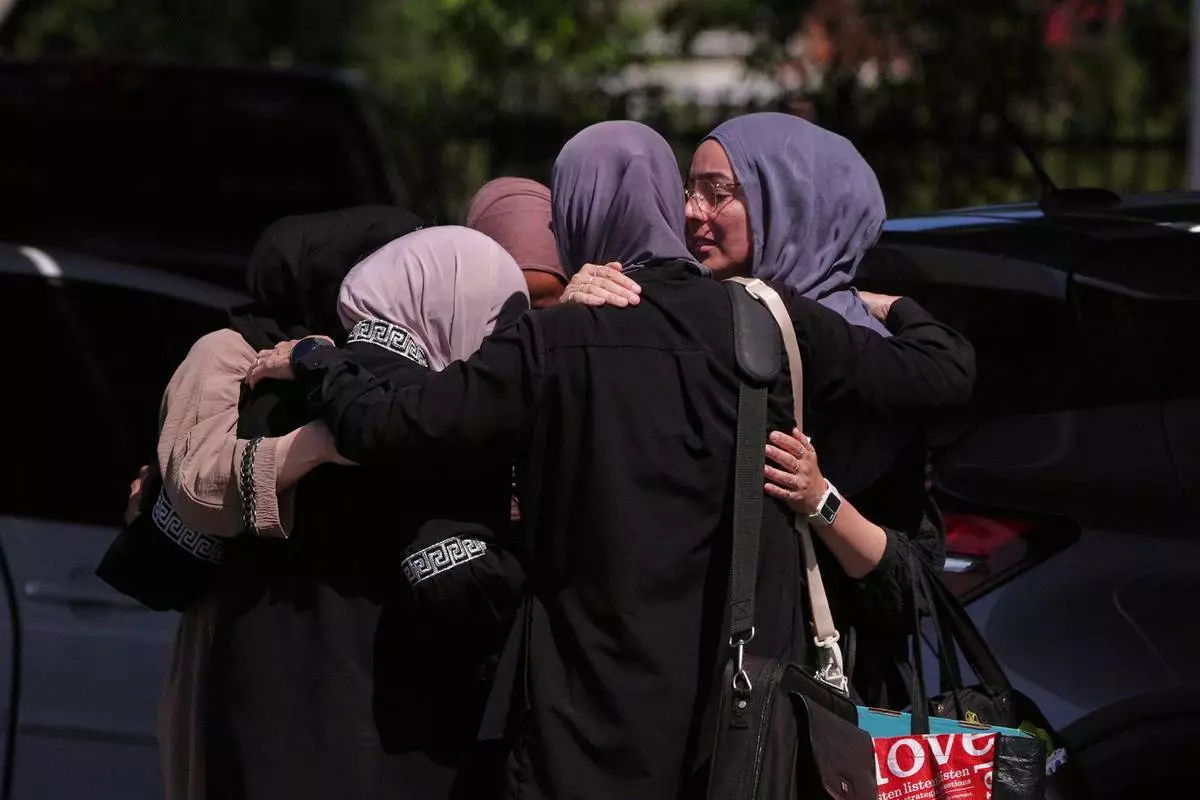
People embrace outside of the Islamic Center of San Diego, the day after a shooting, Tuesday, May 19, 2026, in San Diego. (AP Photo/Jae C. Hong)
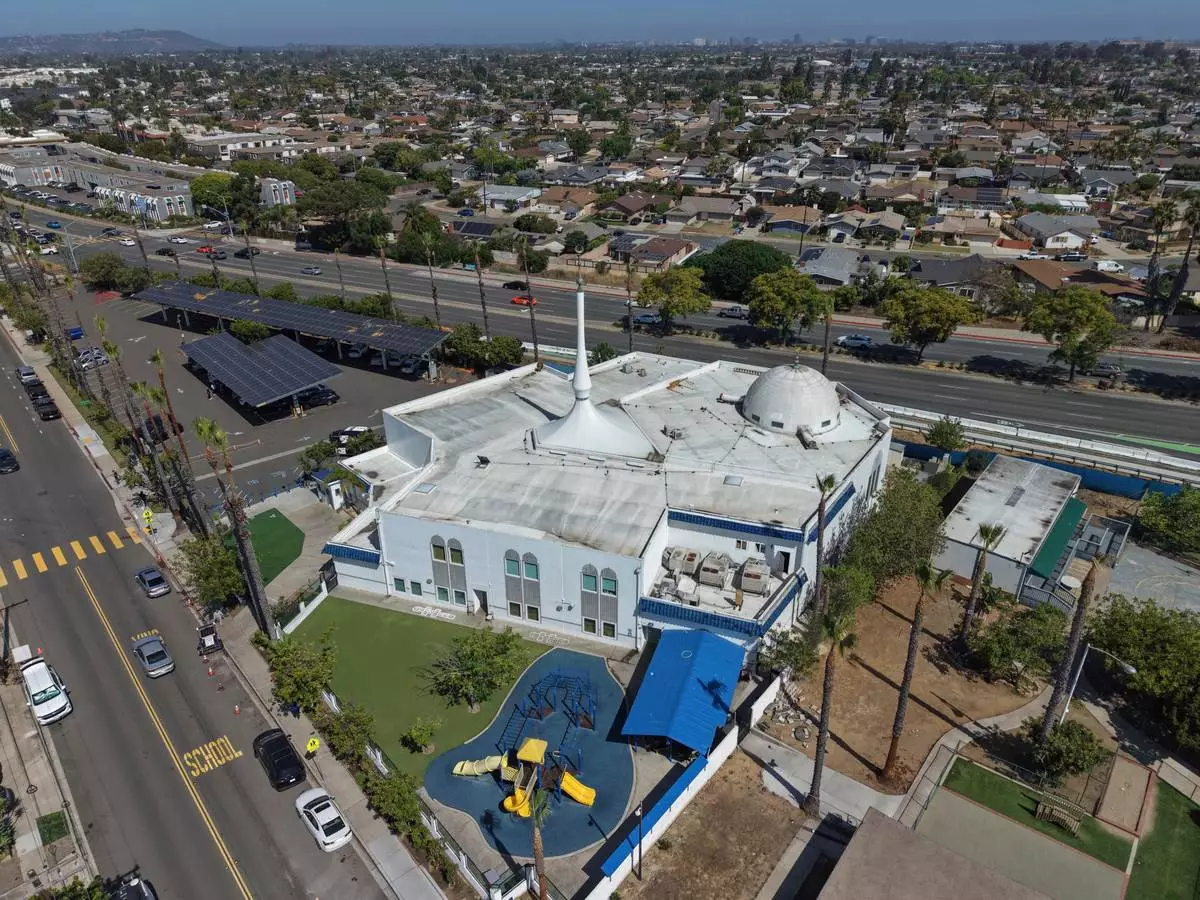
This aerial image shows the Islamic Center of San Diego, Tuesday, May 19, 2026, in San Diego. (AP Photo/Jae C. Hong)
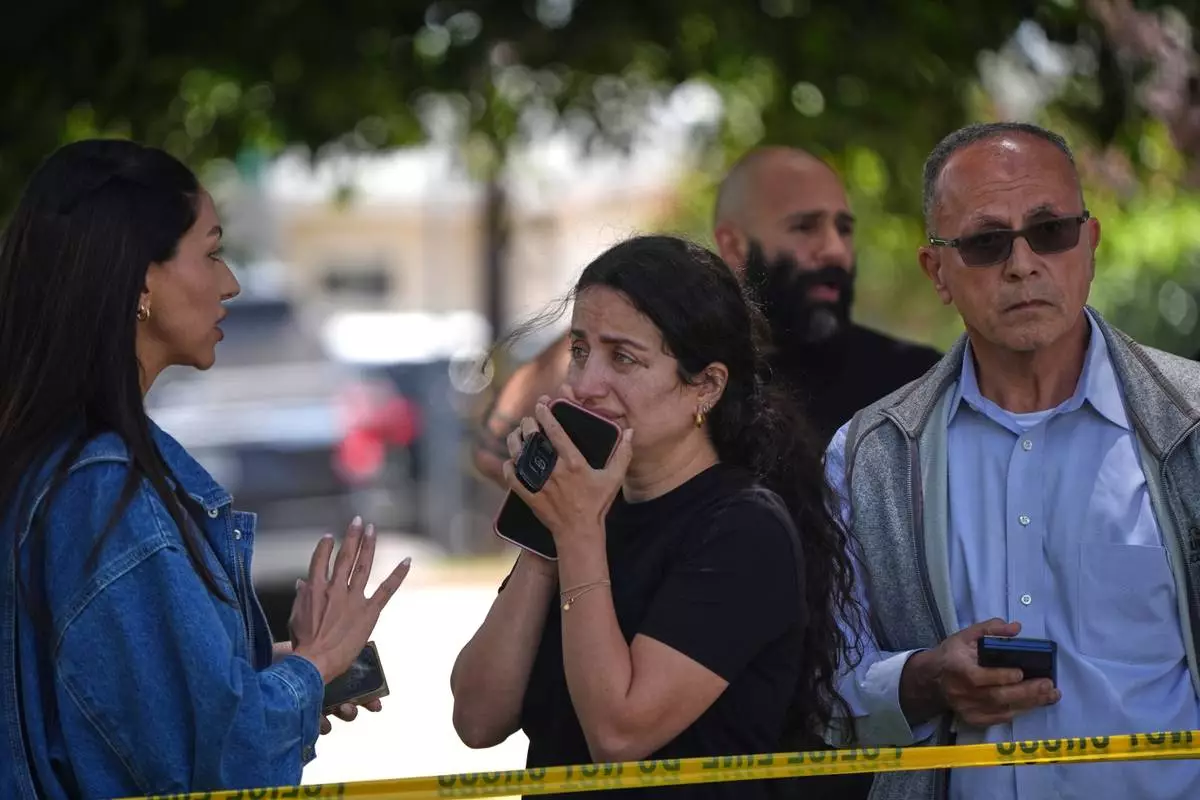
People stand behind police tape at the scene of a shooting outside the Islamic Center of San Diego Monday, May 18, 2026, in San Diego. (AP Photo/Gregory Bull)
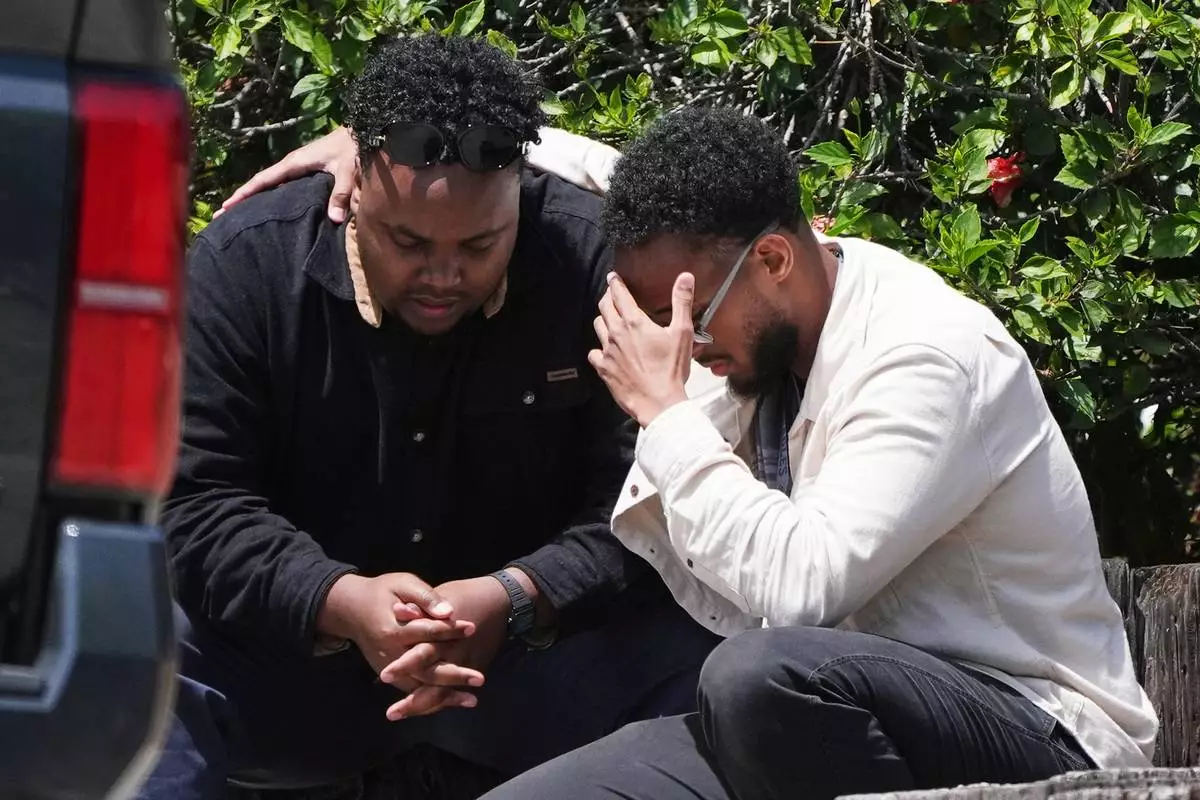
Two men embrace at the scene of a shooting outside the Islamic Center of San Diego Monday, May 18, 2026, in San Diego. (AP Photo/Gregory Bull)
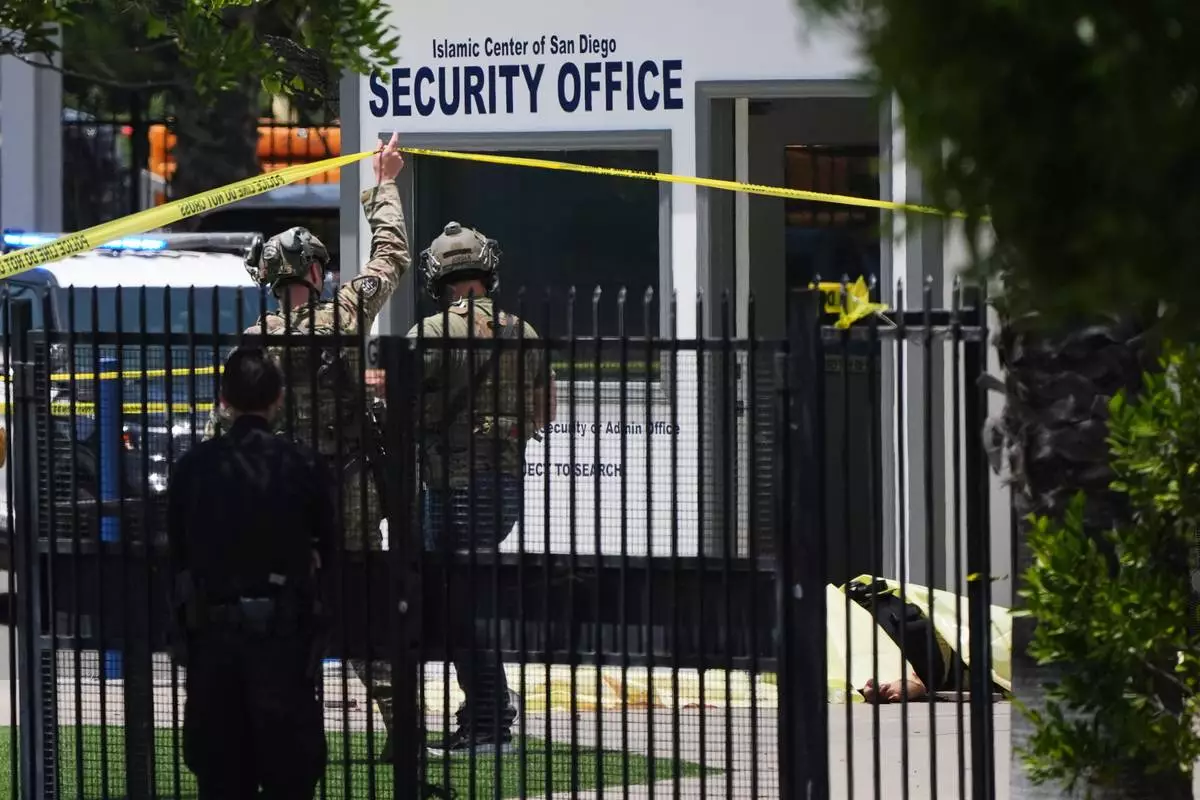
A body is covered with a tarp at the scene of a shooting outside the Islamic Center of San Diego Monday, May 18, 2026, in San Diego. (AP Photo/Gregory Bull)
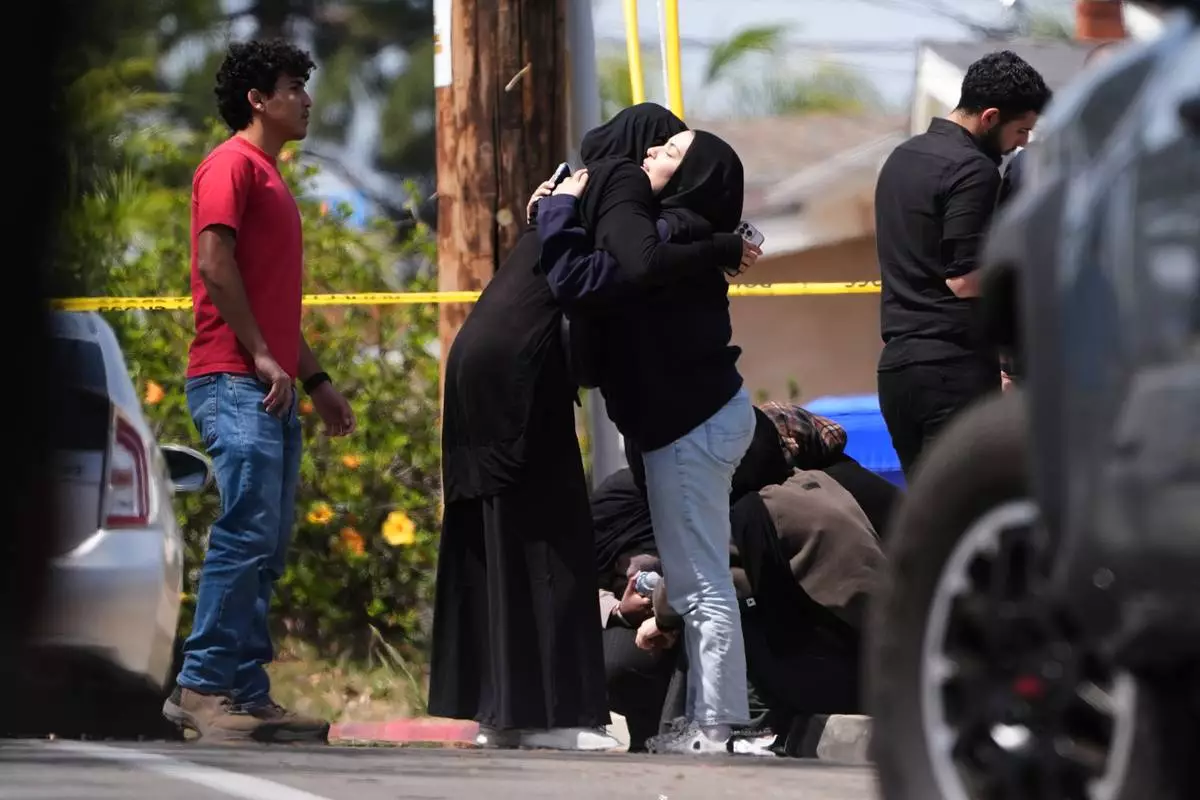
People embrace near the scene of a shooting outside the Islamic Center of San Diego Monday, May 18, 2026, in San Diego. (AP Photo/Gregory Bull)