Skip to Content Facebook Feature Image

Congo reports more Ebola cases as WHO expresses concern over scale and speed of the outbreak

News

Congo reports more Ebola cases as WHO expresses concern over scale and speed of the outbreak
News

News

Congo reports more Ebola cases as WHO expresses concern over scale and speed of the outbreak

2026-05-19 17:57 Last Updated At:18:00

KINSHASA, Congo (AP) — At least 131 deaths and over 500 suspected cases have been reported in the latest Ebola outbreak in eastern Congo, the Congolese health ministry said Tuesday as the World Health Organization's head expressed concern over the “scale and speed of the epidemic.”

The virus spread undetected for at least a few weeks since the first person died of the virus, health experts and aid workers said, and the delayed response is now complicating efforts to curb the outbreak.

Congo’s health minister, Samuel Roger Kamba, said 513 suspected cases and 131 deaths have been recorded, though he added “these are suspected deaths, and investigations are underway to determine which ones are actually linked to the disease.” The numbers mark a sharp increase from Monday, when officials said there were 300 suspected cases, and highlight the largely unknown scale of the outbreak.

The World Health Organization’s director-general, Tedros Adhanom Ghebreyesus, said he is “deeply concerned about the scale and speed of the epidemic” and the U.N. health agency will convene its emergency committee later Tuesday.

He said the emergence of cases in urban areas, the deaths of healthcare workers, significant population movement in the area and a lack of vaccines and therapeutics are the main reasons for concern “for further spread and further deaths.”

Health authorities say the outbreak, first confirmed Friday, is caused by the Bundibugyo virus, a rare variant of the Ebola disease that has no approved therapeutics or vaccines. The WHO declared the Ebola outbreak a public health emergency of international concern on Sunday.

Cases have been confirmed in Bunia, North Kivu’s rebel-held capital of Goma, Mongbwalu, Butembo, and Nyakunde. There has also been one case and one death reported in Uganda in people who traveled from Congo.

An American doctor is among the cases in Bunia, the capital of Ituri province, said Dr. Jean-Jacques Muyembe, medical director of the country’s National Institute of Bio-Medical Research. Dr. Peter Stafford had been treating patients at a hospital there when he developed symptoms, Serge, the organization he works for, said in a statement.

Three others employees of Serge were working at the same hospital — including Stafford’s wife — but are not showing symptoms.

Congo has said the first person died from the virus on April 24 in Bunia, and the body was repatriated to the Mongbwalu health zone, a mining area with a large population.

“That caused the Ebola outbreak to escalate,” said Kamba, the health minister.

When another person fell ill on April 26, samples were sent to Kinshasa for testing, according to the Africa Centers for Disease Control.

Samples from Bunia were initially tested for the more common type of Ebola, Zaire, Congolese officials said. They came back negative, said Dr. Richard Kitenge, the Health Ministry Incident Manager for Ebola, and local authorities assumed it was not Ebola.

On May 5, the WHO was alerted of about 50 deaths in Mongbwalu, including four health workers, which prompted further tests. The first confirmation of Ebola came on May 14.

Matthew M. Kavanagh, director of the Georgetown University Center for Global Health Policy and Politics said that because of the false negative tests, “we are playing catch-up against a very dangerous pathogen.”

He criticized the Trump administration’s earlier decision to withdraw from the WHO and make deep cuts in foreign aid — “the exact surveillance system meant to catch these viruses early,” he said.

The U.S. State Department pushed aside criticism on Monday, saying that it sprang into action immediately and has already provided $13 million in assistance for the response.

Esther Sterk with the Medecins Sans Frontieres aid group told the AP: “The situation is quite worrying and is evolving pretty quickly. It was detected quite late.” But she said that was often the case with outbreaks of Ebola, which has similar symptoms to other tropical diseases.

Ebola is highly contagious and can be contracted via bodily fluids such as vomit, blood or semen. The disease it causes is rare but severe and often fatal.

During a big Ebola outbreak over a decade ago, which killed over 11,000, many got infected while washing bodies during community funerals.

“Ebola is very much a disease of compassion in that it impacts the people who are more likely to be taking care of sick folks,” said Dr. Craig Spencer, an associate professor at the Brown University School of Public Health who survived Ebola more than a decade ago after contracting the disease in Guinea.

The U.S. CDC says it causes fever, headache, muscle pain, weakness, diarrhea, vomiting, stomach pain and unexplained bleeding or bruising.

The severity of the symptoms and the rising caseload are fueling a growing sense of panic in the neighborhoods of Bunia.

“I know the consequences of Ebola, I know what it’s like,” said Noëla Lumo, a resident of Bunia. She previously lived in Beni, a region hit by former outbreaks. When she heard about the latest outbreak, Lumo began making protective masks by hand.

Ituri’s Mongbwalu is in remote eastern Congo with poor road networks more than 1,000 kilometers (620 miles) from the capital, Kinshasa.

Eastern Congo long has grappled with a humanitarian crisis and the threat of armed groups that have killed dozens and displaced thousands in Ituri in the past year.

U.N. staff have been asked to work from home and avoid physical contact and crowded areas, said a Bunia-based U.N. official, who spoke on condition of anonymity because they were not authorized to speak publicly on the subject.

Ituri has over 273,000 displaced people out of a population of 1.9 million, according to the U.N.
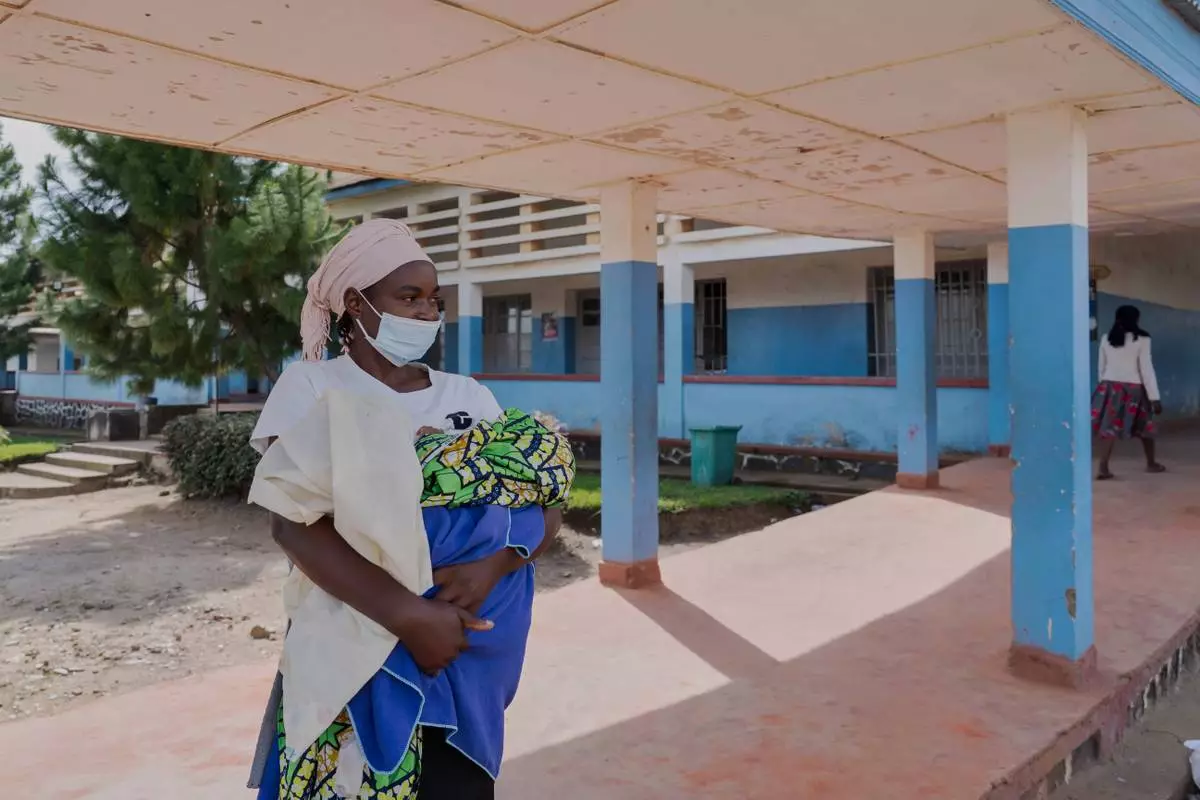
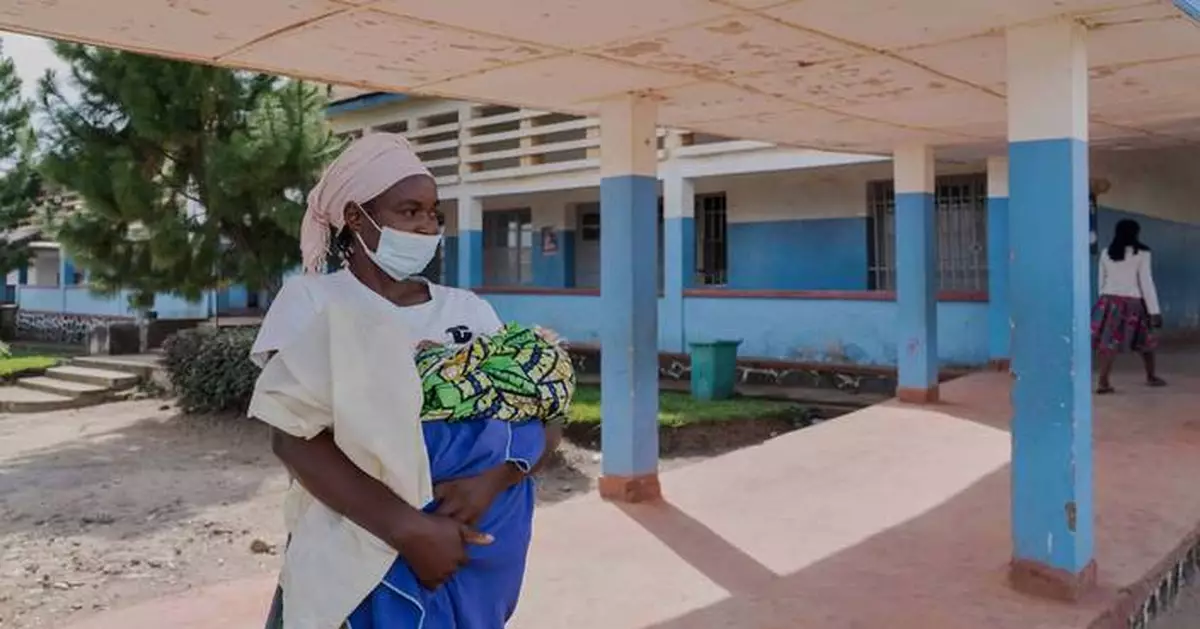
A woman wearing a protective mask stands in the corridor of a hospital in Bunia, Congo, Sunday, May 17, 2026. (AP Photo/ Dirole Lotsima Dieudonne)

A woman wearing a protective mask stands in the corridor of a hospital in Bunia, Congo, Sunday, May 17, 2026. (AP Photo/ Dirole Lotsima Dieudonne)
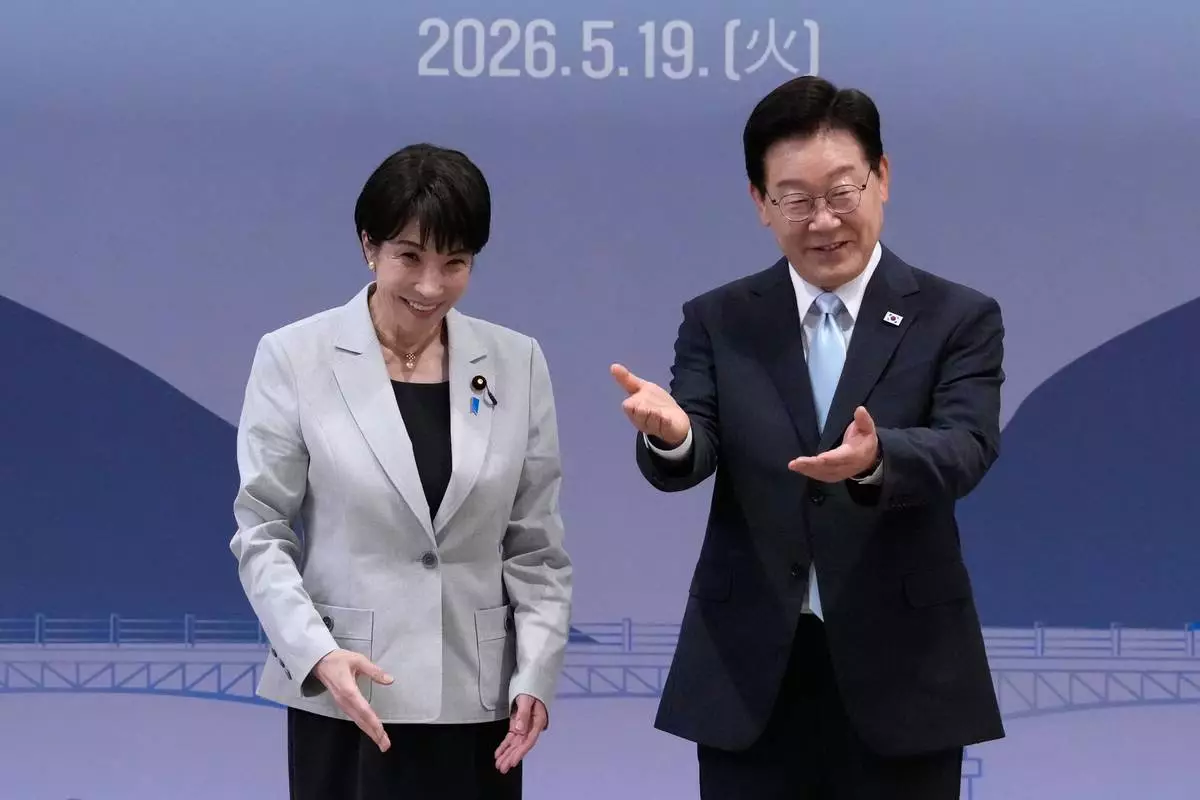
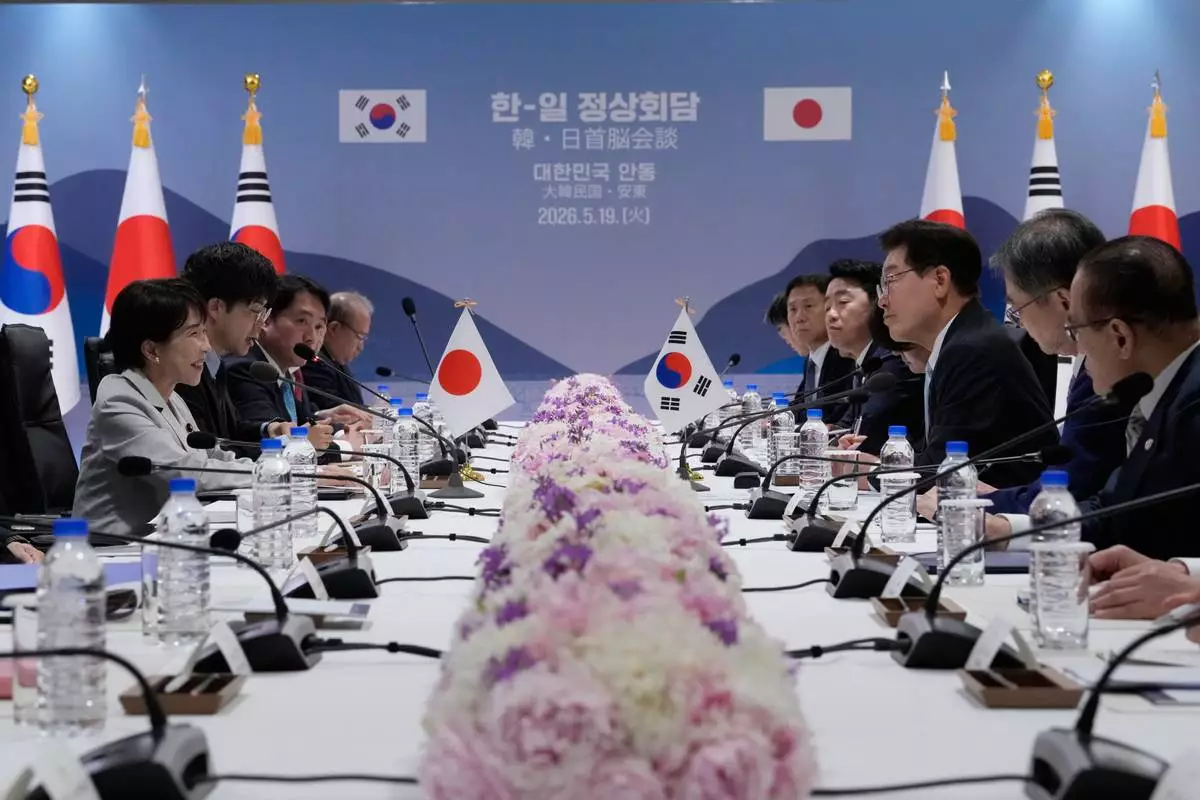
SEOUL, South Korea (AP) — South Korean President Lee Jae Myung and Japanese Prime Minister Sanae Takaichi held their fourth meeting in about six months on Tuesday, underscoring the need for greater cooperation between the historical Asian rivals amid global challenges, including the Iran war.

Lee hosted Takaichi in his hometown of Andong, a southeastern South Korean city famous for its centuries-old traditional folk village, a UNESCO World Heritage site. In January, the two met in Takaichi’s hometown of Nara, an ancient Japanese capital.

The meetings marked the first time sitting leaders of the two countries have visited each other’s hometowns.

“The fact that such meaningful and historic exchanges took place in the span of just four months speaks to the depth and strength of the friendship and bonds that Korea and Japan now share,” Lee told a joint news conference with Takaichi after the summit.

Lee said bilateral cooperation was needed more than ever due to instability in supply chains and energy markets caused by the war in the Middle East. Takaichi made similar comments, saying the two discussed stabilizing energy and critical mineral supplies and pursuing swap arrangements of crude oil, petroleum products and natural gas.

The two leaders said they also discussed the importance of trilateral cooperation among Seoul, Tokyo, and Washington.

Experts say current ties between Seoul and Tokyo have no sticking points and that their relationship will subsequently remain on a positive trajectory for now.

“The two countries focus more on cooperation than contentious issues,” said Choi Eunmi, a Japan expert at the Seoul-based Asan Institute for Policy Studies. “They would now think negative bilateral relations won’t be helpful to anyone.”

South Korea and Japan are both key U.S. allies with vibrant democracies. But their relationship has long experienced severe ups and downs over grievances stemming from Japan’s 35-year colonization of the Korean Peninsula before the end of World War II.

Relations began improving in 2023 when Lee and Takaichi’s predecessors took steps to move beyond history disputes to strengthen bilateral cooperation, saying they faced common challenges like the U.S.-China strategic competition, supply chain vulnerabilities and North Korea’s advancing nuclear arsenal.

When Lee and Takaichi each took office as new leaders last year, observers worried about Takaichi’s reputation as a right-wing security hawk and the anticipation that Lee, a political liberal, would tilt toward North Korea and China and away from the U.S. and Japan. But they have maintained cooperation, even in some unprecedented ways.

In August, two months before Takaichi’s inauguration, Lee became the first South Korean leader to choose Japan as his first destination for a bilateral summit. At the end of their meeting in January, Lee and Takaichi drummed to K-pop hits such as BTS’ “Dynamite” in a jam session arranged by the Japanese leader, a heavy metal fan who was a drummer in her college days.

Lee has said he and Takaichi share a view that national leaders must act differently from ordinary politicians. But many observers say the two leaders also likely feel the need to tighten cooperation because they have more grave geopolitical difficulties than their predecessors, such as U.S. President Donald Trump’s America-first policy and global economic damage caused by the Iran war.

South Korea and Japan both have pledged hundreds of billions of dollars in U.S. business investments. Trump’s tariff war and his transactional approach to security threaten the trust in the U.S. held by many South Koreans and Japanese.

Ties between Seoul and Tokyo are so delicate that they could suffer unexpected setbacks if they fail to formulate coping measures for explosive issues such as Japan’s colonial-era mobilization of Koreans as forced laborers and sex slaves, according to experts, who say wrangling over those issues has eased as the two governments try to avoid public discussions.

“Both are not talking about how to settle these disputes or prevent them from recurring and we don’t know when such conflicts may arise,” Choi said.

Associated Press writers Kim Tong-hyung in Seoul and Mari Yamaguchi in Tokyo contributed to this report.

Japan's Prime Minister Sanae Takaichi, left, and South Kore's President Lee Jae Myung, third from right, hold their meeting in Andong, South Korea, Tuesday, May 19, 2026. (AP Photo/Ahn Young-joon, Pool)

Japan's Prime Minister Sanae Takaichi, left, and South Kore's President Lee Jae Myung, third from right, hold their meeting in Andong, South Korea, Tuesday, May 19, 2026. (AP Photo/Ahn Young-joon, Pool)

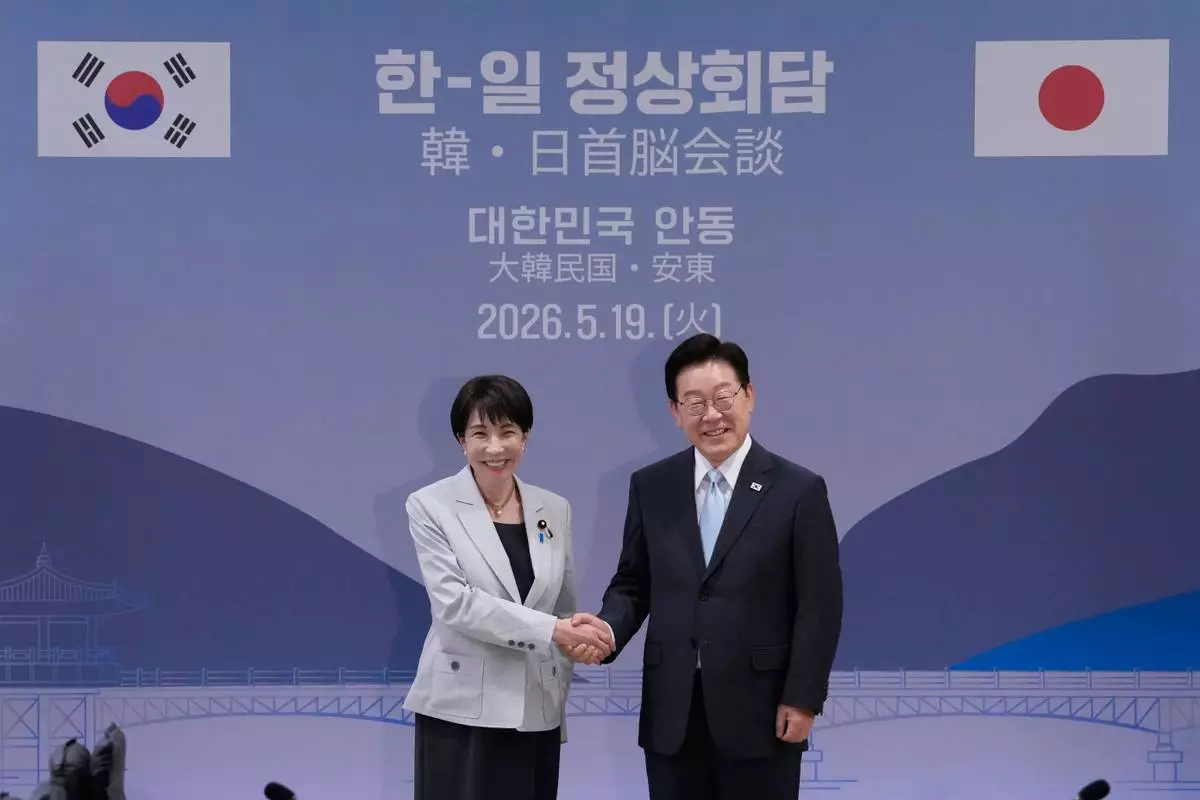
Japan's Prime Minister Sanae Takaichi, left, and South Kore's President Lee Jae Myung pose for a photo during their meeting in Andong, South Korea, Tuesday, May 19, 2026. (AP Photo/Ahn Young-joon, Pool)

Japan's Prime Minister Sanae Takaichi, left, and South Kore's President Lee Jae Myung pose for a photo during their meeting in Andong, South Korea, Tuesday, May 19, 2026. (AP Photo/Ahn Young-joon, Pool)

Japan's Prime Minister Sanae Takaichi, left, and South Kore's President Lee Jae Myung react during their meeting in Andong, South Korea, Tuesday, May 19, 2026. (AP Photo/Ahn Young-joon, Pool)

Japan's Prime Minister Sanae Takaichi, left, and South Kore's President Lee Jae Myung react during their meeting in Andong, South Korea, Tuesday, May 19, 2026. (AP Photo/Ahn Young-joon, Pool)

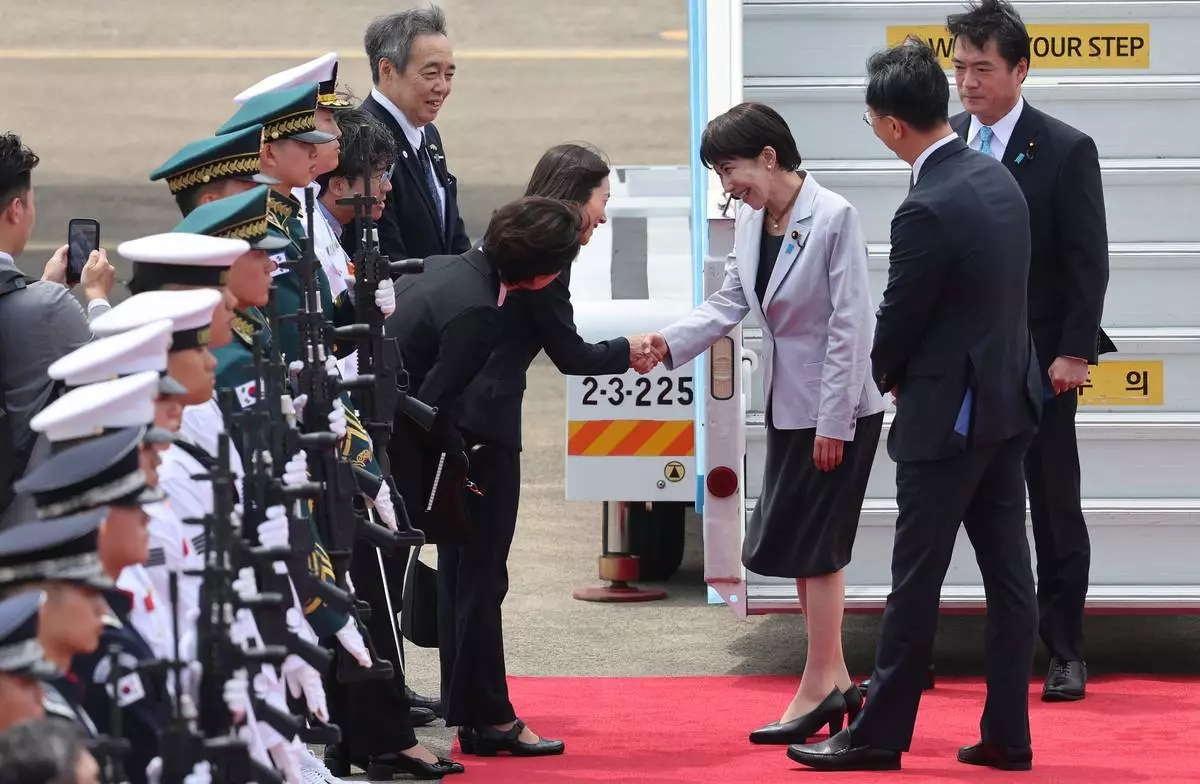
Japan's Prime Minister Sanae Takaichi, third from right, is greeted upon arrival at the Daegu International Airport in Daegu, South Korea, Tuesday, May 19, 2026. (Yoon Kwan-shick/Yonhap via AP)

Japan's Prime Minister Sanae Takaichi, third from right, is greeted upon arrival at the Daegu International Airport in Daegu, South Korea, Tuesday, May 19, 2026. (Yoon Kwan-shick/Yonhap via AP)

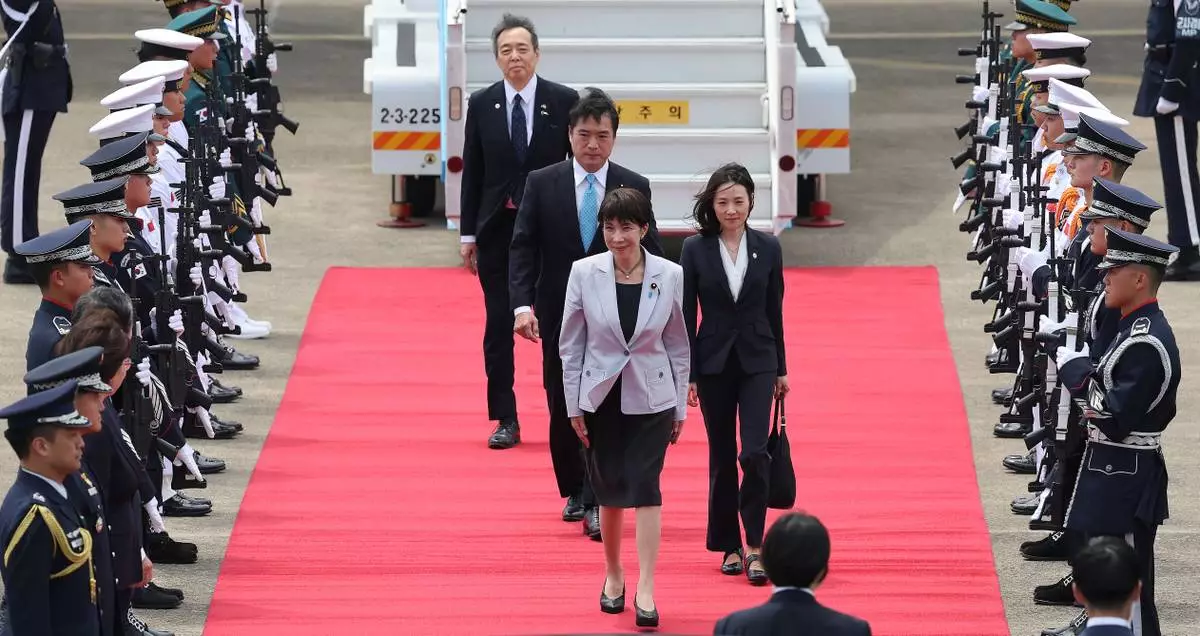
Japan's Prime Minister Sanae Takaichi, center, inspects an honor guard upon arrival at the Daegu International Airport in Daegu, South Korea, Tuesday, May 19, 2026. (Yoon Kwan-shick/Yonhap via AP)

Japan's Prime Minister Sanae Takaichi, center, inspects an honor guard upon arrival at the Daegu International Airport in Daegu, South Korea, Tuesday, May 19, 2026. (Yoon Kwan-shick/Yonhap via AP)

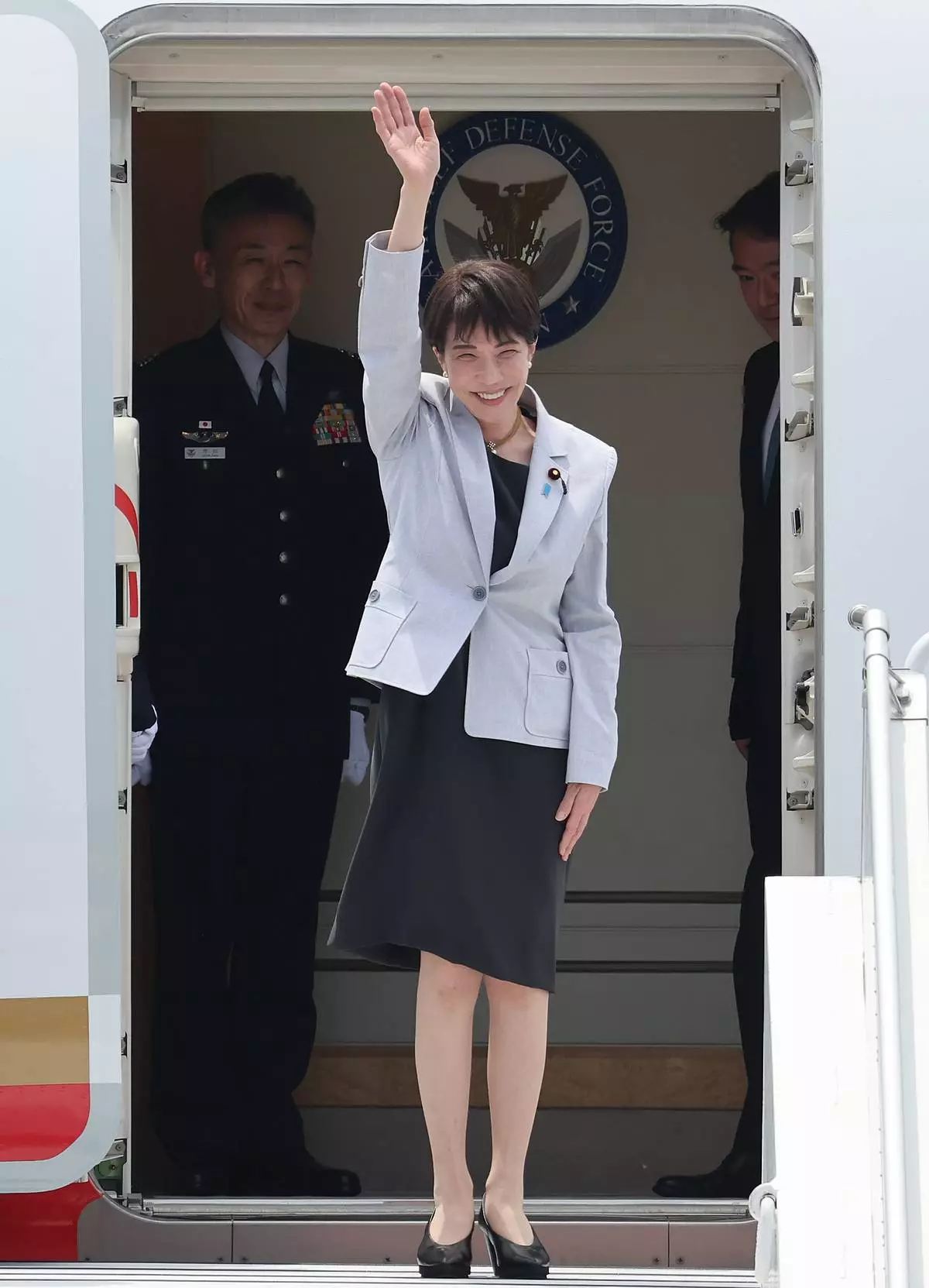
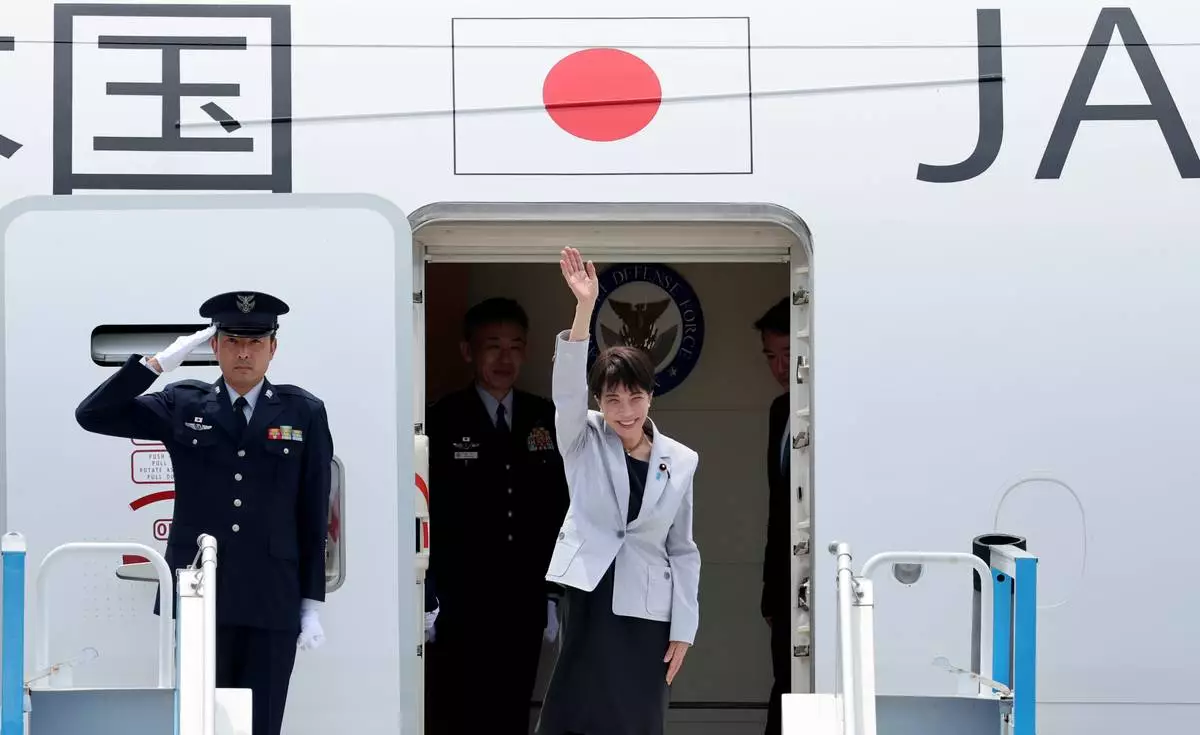
Japan's Prime Minister Sanae Takaichi waves upon arrival at the Daegu International Airport in Daegu, South Korea, Tuesday, May 19, 2026. (Yoon Kwan-shick/Yonhap via AP)

Japan's Prime Minister Sanae Takaichi waves upon arrival at the Daegu International Airport in Daegu, South Korea, Tuesday, May 19, 2026. (Yoon Kwan-shick/Yonhap via AP)

Japan's Prime Minister Sanae Takaichi waves upon arrival at the Daegu International Airport in Daegu, South Korea, Tuesday, May 19, 2026. (Yoon Kwan-shick/Yonhap via AP)

Japan's Prime Minister Sanae Takaichi waves upon arrival at the Daegu International Airport in Daegu, South Korea, Tuesday, May 19, 2026. (Yoon Kwan-shick/Yonhap via AP)

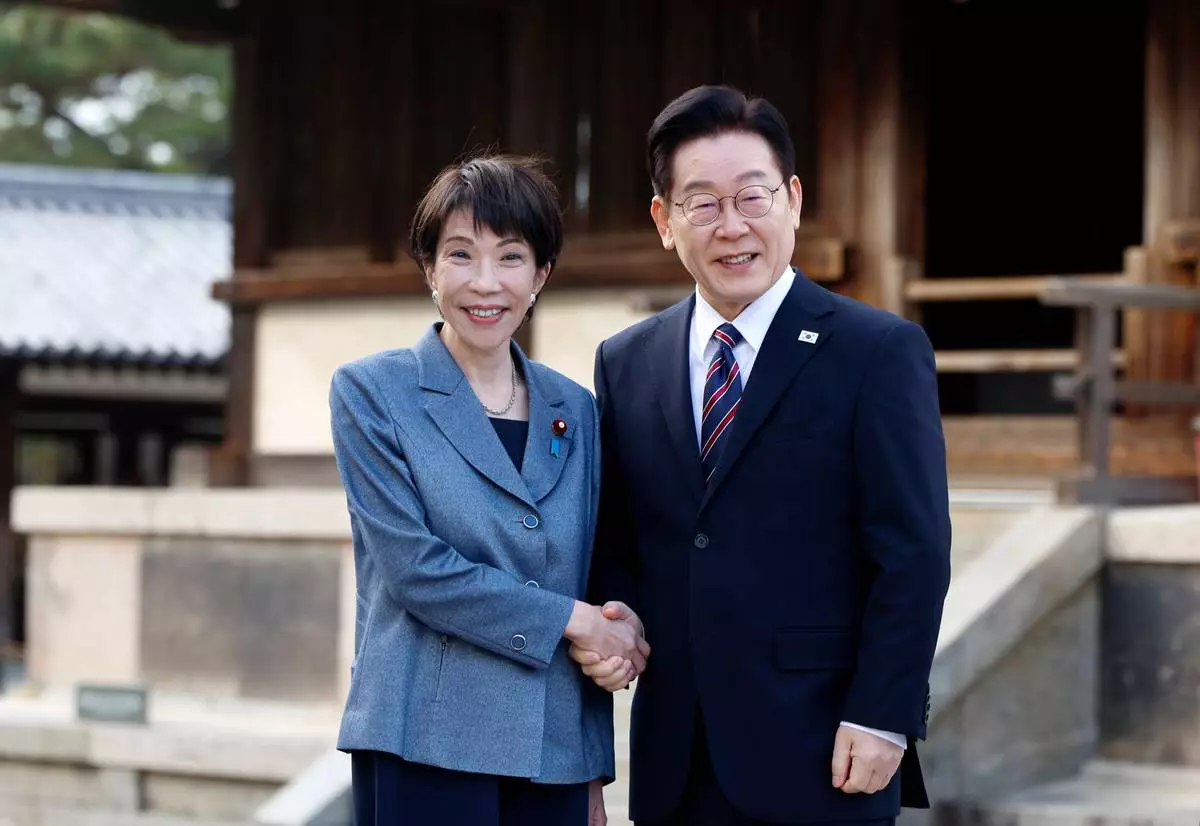
File - Japanese Prime Minister Sanae Takaichi, left, and South Korean President Lee Jae Myung pose as they visit the Western Precinct or Saiin Garan, at the Horyuji Temple in Ikaruga, Nara prefecture, western Japan, Jan. 14, 2026. (Franck Robichon/Pool Photo via AP, File)

File - Japanese Prime Minister Sanae Takaichi, left, and South Korean President Lee Jae Myung pose as they visit the Western Precinct or Saiin Garan, at the Horyuji Temple in Ikaruga, Nara prefecture, western Japan, Jan. 14, 2026. (Franck Robichon/Pool Photo via AP, File)

Recommended Articles