Days after Spirit Airlines shut down in the middle of the night, a lawyer for the defunct budget carrier stood before a bankruptcy judge and apologized to the price-conscious customers who might struggle to find affordable flights in its absence.
“We apologize most specifically for those Americans who may now be priced entirely out,” Spirit lawyer Marshall Huebner said in court, thanking all the passengers who relied on the airline during its 34-year run, many of whom, he said, "could not otherwise have afforded air travel.”
Spirit's May 3 demise is not the only curveball confronting people planning trips a week before the summer travel season has its traditional U.S. launch on Memorial Day. Rising jet fuel costs tied to the Iran war have pushed up airfares and associated fees across the commercial aviation industry. Two of the remaining U.S. budget carriers just finalized a merger.
The uncertain outlook for economical air travel reflects how difficult it has become for low-cost, no-frills airlines to operate while squeezed by volatile fuel prices, inflation and increasingly fierce competition. While budget airlines appeal to customers motivated by fare prices alone, traditional carriers can more easily generate revenue to offset fuel costs through premium cabins, membership rewards, corporate travel programs, add-on charges and pricing algorithms.
“Dynamic pricing has taken away one of the last structural advantages that low-cost carriers had,” said Shye Gilad, a former airline captain who now teaches at Georgetown University.
For decades, low-cost carriers thrived by offering fares that traditional airlines often couldn’t match without losing money. But that edge has weakened as the “big three” — American, Delta and United — got better at tailoring prices to different travelers, and as JetBlue, Southwest and other airlines that long positioned themselves as less expensive alternatives began chasing higher-paying customers.
Today, big airlines can sell a handful of bare-bones seats at Spirit-level prices while still charging more for standard and premium tickets elsewhere on their planes. That has made it harder for budget airlines to compete solely on price.
“They can’t just be the cheapest airline anymore,” Gilad said. “They have to be the smartest low-cost airline.”
Like gasoline and diesel prices, the price of jet fuel has jumped since the Iran war put a chokehold on Middle East oil shipments 11 weeks ago. The strain prompted the Association of Value Airlines, a U.S. trade group representing Allegiant Air, Avelo Air, Frontier Airlines, Spirit Airlines and Sun Country Airlines, to ask the Trump administration in late April for $2.5 billion in temporary financial aid.
Airlines for America, the trade group for Alaska Airlines, American, Delta, JetBlue and Southwest, opposed the idea, saying that federal help would give the budget airlines an unfair advantage.
“Government intervention on behalf of those airlines would punish other airlines that have engaged in self-help in order to deal with increased costs and reward airlines who haven’t made those tough decisions,” Airliens for America said in a statement. “And, in the long-term, sustaining businesses that cannot earn their cost of capital harms competition and consumers by making it more difficult for other airlines to compete.”
Transporation Secretary Sean Duffy rejected the request the day Spirit stopped flying.
Even before the latest run-up in fuel costs, consolidation was already underway in the budget airline sector. Alaska Airlines completed its $1 billion purchase of Hawaiian Airlines in September 2024 after the two carriers agreed to maintain the level of service on key routes within Hawaii and between Hawaii and the U.S. mainland where they didn't face much competition.
Spirit was an unsuccessful merger target of both Frontier and JetBlue as its losses mounted after the coronavirus pandemic.
Allegiant said last week it had finalized its roughly $1.5 billion acquisition of Sun Country, a deal first announced in January. The combined airline brings together passenger service with Sun Country's cargo operations and charter business serving sports teams, casinos and the U.S. Department of Defense.
“Consolidation is a signal” of weakness in the industry, Gilad said. “If you can remove a competitor and improve your product offering, you might be able to eke out more profit.”
Other experts note the diversity within the budget airline sector, a factor that could make some carriers more resilient to spiking fuel costs and market disruptions than others.
“Budget airlines are a pretty peculiar creature,” Vikrant Vaze, an aviation systems expert at Dartmouth College’s engineering school, said, describing a category that has encompassed struggling carriers like Spirit to giants like Southwest Airlines, which grew from a low-cost pioneer into one of the largest U.S. airlines.
“Even though they can be clubbed together as budget airlines, if you want a big umbrella term, they’re very different from each other,” Vaze said. “They have very different levels of budget-ness.”
Allegiant's focus on leisure travel centers on smaller airports with less direct competition. JetBlue, a hybrid low-cost carrier, leans more heavily on premium seating and loyalty perks than Spirit ever did.
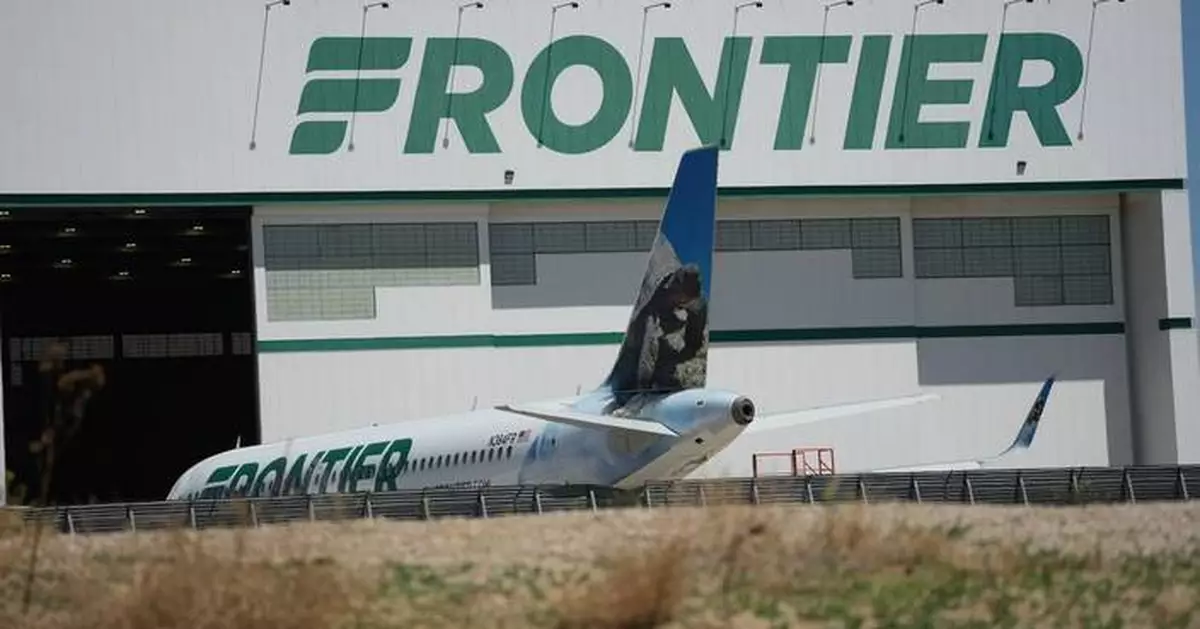
Frontier comes closest to Spirit’s model as an ultra low-cost carrier, though analysts say it entered this period of volatility with stronger liquidity and could benefit from Spirit’s exit. It has already begun expanding in former Spirit-heavy markets that include Las Vegas, Detroit and the Florida cities of Orlando and Fort Lauderdale.
Gilad sees echoes of his own experience working as a pilot and flight-training instructor at Independence Air, a short-lived low-cost airline that previously served as a regional carrier for United and Delta. The airline, which launched in mid-2004 as fighting between U.S.-led forces and insurgents in Iraq sent fuel prices soaring, shut down during bankruptcy proceedings in January 2006.
“They burned through almost $200 million in 18 months,” Gilad said. “It was just that quick that they were gone.”
He said the same structural pressures remain in place today, but there are fewer remaining budget airlines to share them.
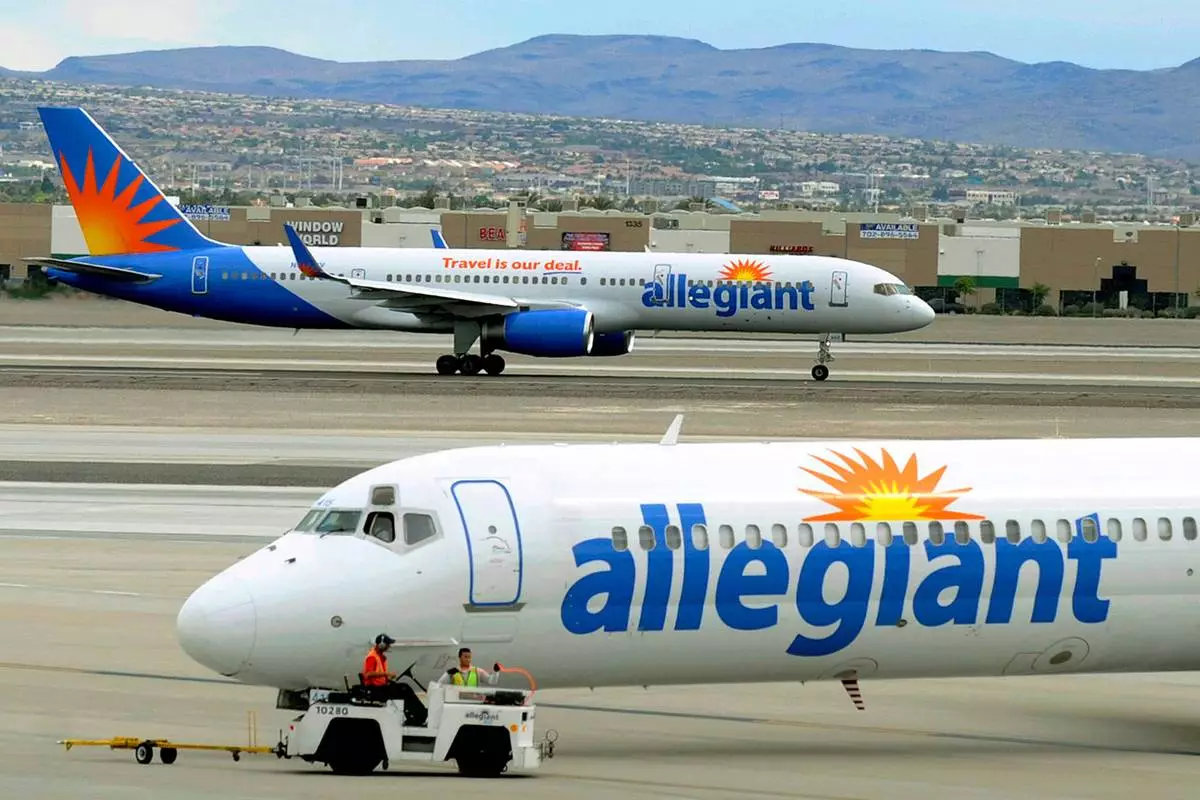
File - In this May 9, 2013, file photo, two Allegiant Air jets taxi at McCarran International Airport in Las Vegas. (AP Photo/David Becker, File)
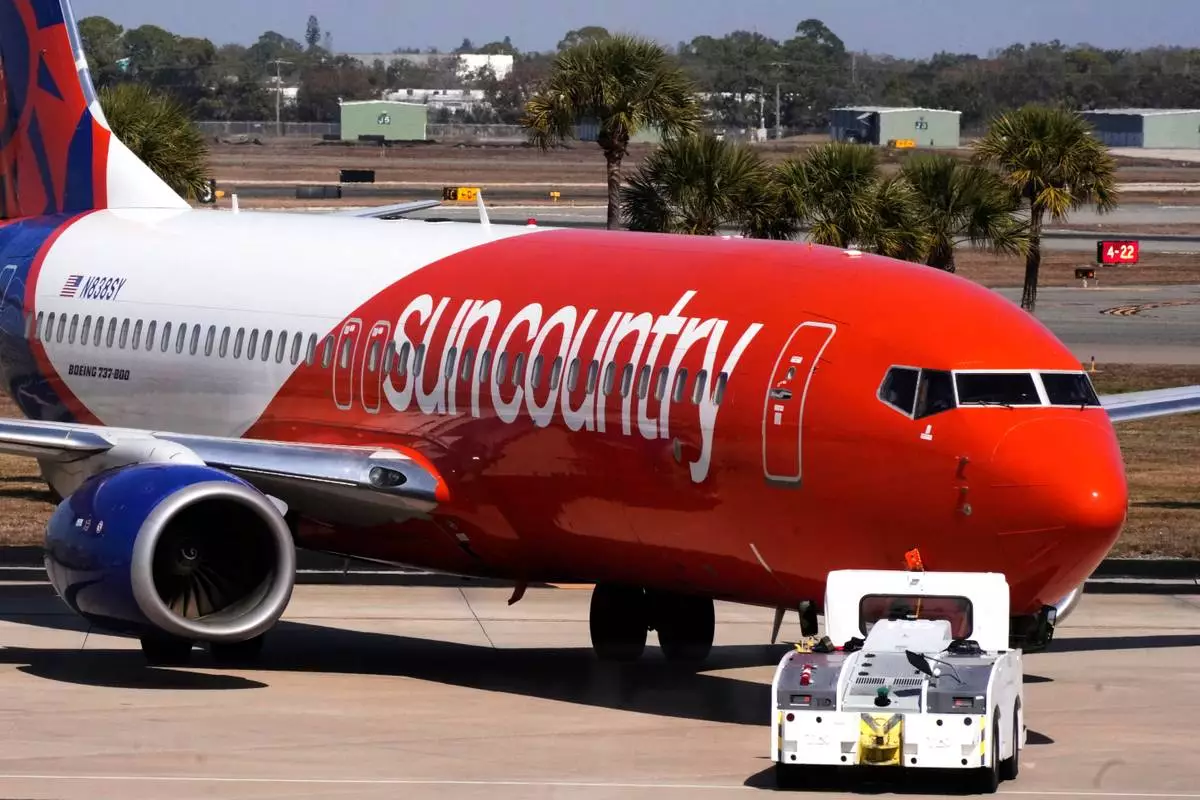
FILE - A Sun Country Airlines jet is pushed back from a gate at Sarasota-Bradenton International Airport in Sarasota, Fla., Friday, Feb. 13, 2026. (AP Photo/Gene J. Puskar,File)
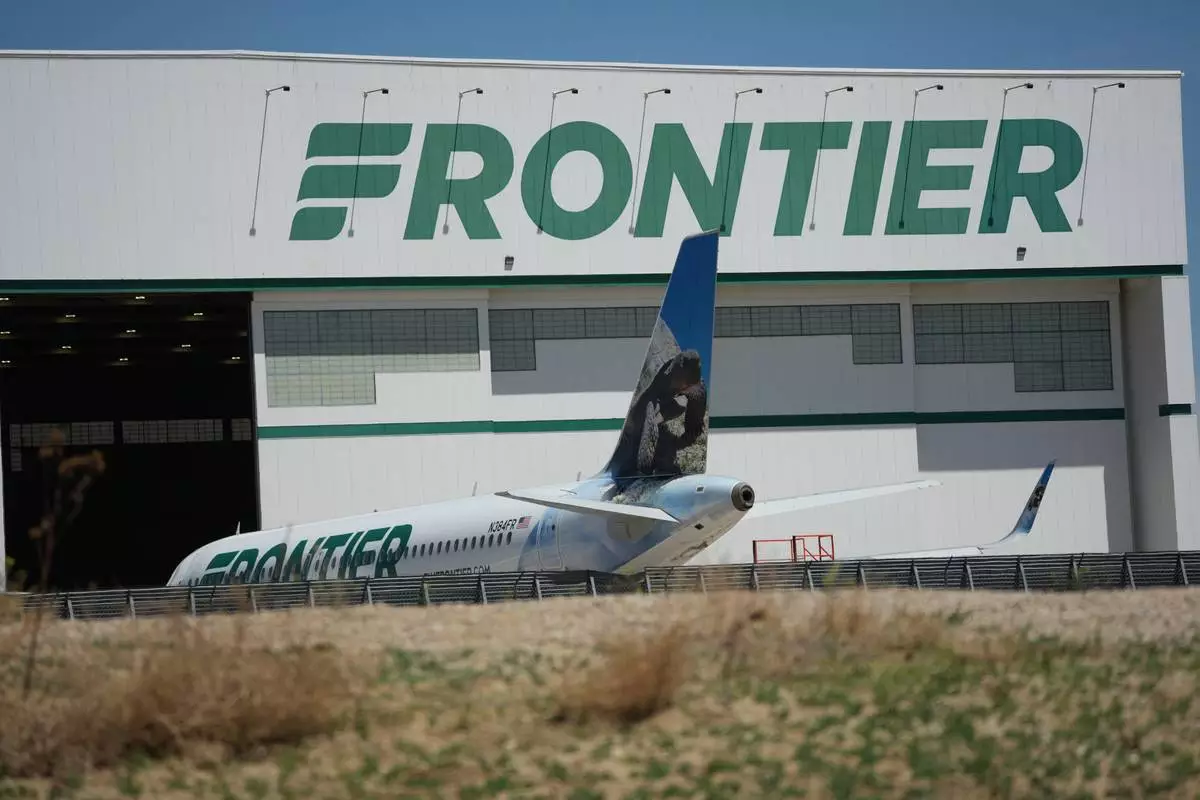
A Frontier Airlines jetliner sits outside a repair hangar at Denver International Airport, Monday, May 11, 2026. (AP Photo/David Zalubowski)

MEXICO CITY (AP) — Mexico has spent 40 years chasing a return to the World Cup quarterfinals. On Sunday, its best chance in a generation arrives. Playing on home soil in a venue that has become an almost impregnable fortress, El Tri will face England in the Round of 16 — in what is arguably the most important match in Mexican soccer history.
Mexico boasts an incredible record in official matches at Estadio Azteca. Since the venue opened in 1966, the national team has suffered just two defeats there, the latter of which was over a decade ago against Honduras in September 2013.
“The stadium is a monster; that explains the high number of wins and draws, and the few losses — which were just accidents,” said Hugo Sánchez, the striker who played in the 1986 World Cup and now works as an ESPN analyst. “We approach this with optimism because we know it’s England, but if we play the way we did against Ecuador, we can beat them.”
The numbers back up the myth. Across the 1970, 1986, and current World Cups on home soil, Mexico has played 10 matches at Azteca, winning eight and drawing two. In this tournament alone, El Tri has secured three home wins without conceding a goal: 2-0 against South Africa and 3-0 against Czech Republic in the group stage, and 2-0 against Ecuador in the Round of 32. Mexico also defeated South Korea 1-0 in Guadalajara in the group stage.
It's the first time Mexico has started a World Cup by winning four consecutive matches.
“We have played three World Cups in Mexico; it is hard for me to say if it is (the biggest match). In 1970 we played Italy for the semifinals, in '86 we played Germany also for the semifinals,” Mexico coach Javier Aguirre said Saturday. “There have been several important matches in history and tomorrow is certainly one of them.”
These results have ignited the hopes of millions of Mexicans, many of whom weren’t even born the last time the nation reached the quarterfinals. After achieving that feat in 1986, Mexico’s World Cup history became a psychological hurdle: It missed the 1990 tournament, followed by seven consecutive, agonizing Round of 16 exits before failing to escape the group stage four years ago in Qatar.
“I’m one of those who couldn’t make it through; it happened to me in South Africa and Korea,” said Aguirre, who coached El Tri during those campaigns. “It’s deeply painful because you play a great group stage, only to be knocked out for a variety of reasons.”
Mexico's eliminations comprise a catalog of heartbreaks, including a penalty shootout loss to Bulgaria in 1994 when Aguirre was an assistant coach under Miguel Mejía Barón and defeats in 1998 and 2014 to Germany and the Netherlands when El Tri squandered late leads in the final minutes.
“We will be facing a top-four team in the world according to FIFA, a world champion in '66 and one country with a great league,” Aguirre said. “In order to beat them, we need to do a nearly perfect match and to be better than what we’ve been so far.”
Now, the script could flip. At Azteca — which sits 7,300 feet (2,200 meters) above sea level — Mexico will rely heavily on the altitude and the backing of a ferocious home crowd, as it did in the group stage.
“England is one of the great national teams in the history of football, with outstanding players. We all agreed that we wanted a match like this,” midfielder Alvaro Fidalgo said Saturday. “We are in great form, the Azteca is an intimidating venue, and ultimately, it’s a World Cup Round of 16 match. That’s never easy for anyone.”
England enters the knockout stage fresh off a 2-1 victory over Congo, powered by a pair of goals from star striker Harry Kane. Kane headlines an elite English squad that reached the quarterfinals at the last World Cup before falling to eventual finalist France.
A victory for the Three Lions would send them to the quarterfinals for the sixth time in their history — and the third consecutive time — keeping alive the dream of a title that has eluded them since 1966.
On paper, England holds the clear advantage in talent, led by Premier League standouts, whereas Mexico’s spearhead is Julián Quiñones, the top scorer in the Saudi League.
“We have very experienced players who play in the toughest leagues and the biggest clubs in the world. We all know these games from Champions League matches where you play up against, against the energy of a stadium and that we are prepared for that,” England coach Thomas Tuchel said Saturday. “We are prepared for strong start of the Mexican team. I guess they will they will try to give us a taste of intensity.”
However, the playing conditions could serve as the ultimate equalizer.
England arrived in the northern part of Mexico City on Friday night, a mere two days before kickoff. Sports scientists and altitude experts generally recommend two options for high-altitude competition: Arrive weeks in advance for full acclimatization or fly in as close as possible to kickoff. By choosing a 48-hour window, England has entered the dead zone experts warn against.
“We feel it. Even if we don’t train, we feel it. I felt a slight headache. And in the hotel room through the day, didn’t sleep as well as the days before, but nothing that you cannot handle,” Tuchel said. “It’s just what it is. We cannot physically adapt. It’s just impossible. But we are here one day before to experience it, at least to not have all the first time experience in the warm-up.”
To compound the strain, passionate Mexican fans are already plotting psychological warfare. Hundreds are expected to converge on England’s hotel to disrupt players' sleep — a tactic deployed against Ecuador, when fans used loudspeakers, drums and revving motorcycles into the early-morning hours.
England is attempting to remain unfazed.
“We had no issues last night. I think FIFA took care of the situation. And we have security around the hotel, so we expect a good night of sleep,” Tuchel said. “I don’t want to talk about problems that don’t exist yet.”
AP Soccer Writer James Robson in Atlanta contributed to this report.
See more of AP’s World Cup coverage here
Mexico head coach Javier Aguirre, left, talks with his assistant Toni Amor during a training session ahead of their World Cup round of 16 soccer match against England in Mexico City, Saturday, July 4, 2026. (AP Photo/Eduardo Verdugo)
Mexico's Gilberto Mora, front, warms up during a training session ahead of the World Cup round of 16 soccer match against England in Mexico City, Saturday, July 4, 2026. (AP Photo/Eduardo Verdugo)
Fans celebrate on Reforma Ave., near the Angel of Independence monument in Mexico City, after Mexico's Julian Quinones scored against Ecuador during the World Cup round of 32 soccer match, Tuesday, June 30, 2026. (AP Photo/Marco Ugarte)
Mexican fans wave flags as they watch the World Cup round of 32 soccer match between Mexico and Ecuador near the Angel of Independence monument in Mexico City, Tuesday, June 30, 2026. (AP Photo/Marco Ugarte)
Mexico players celebrate after the World Cup round of 32 soccer match between Mexico and Ecuador in Mexico City, Tuesday, June 30, 2026. (AP Photo/Fernando Llano)