Skip to Content Facebook Feature Image

Florida's Jellyfish Museum is dedicated solely to the mesmerizing floating predators

ENT

Florida's Jellyfish Museum is dedicated solely to the mesmerizing floating predators
ENT

ENT

Florida's Jellyfish Museum is dedicated solely to the mesmerizing floating predators

2026-08-19 23:07 Last Updated At:08-20 00:36

POMPANO BEACH, Fla. (AP) — The floating tentacled predators pulse and swirl in hypnotic patterns in the dark museum space, lit primarily by images projected on the walls and the glowing light from the saltwater tanks.

The private Jellyfish Museum in Pompano Beach, Florida, just north of Fort Lauderdale, is believed to be the first museum in the United States dedicated solely to the translucent invertebrates, and one of the few such spaces in the world, according to the city and the museum’s founders.

More Images
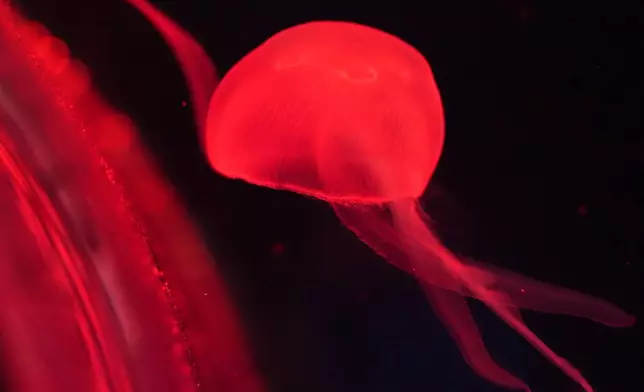
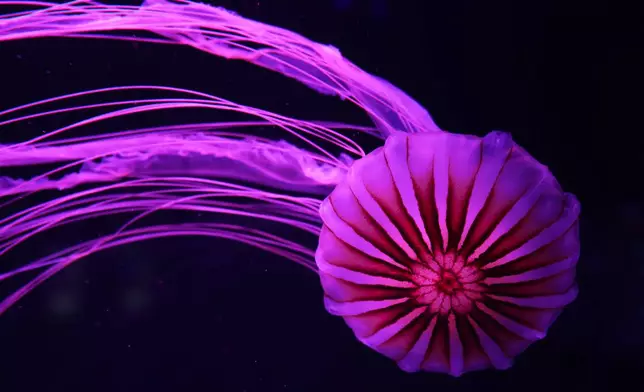
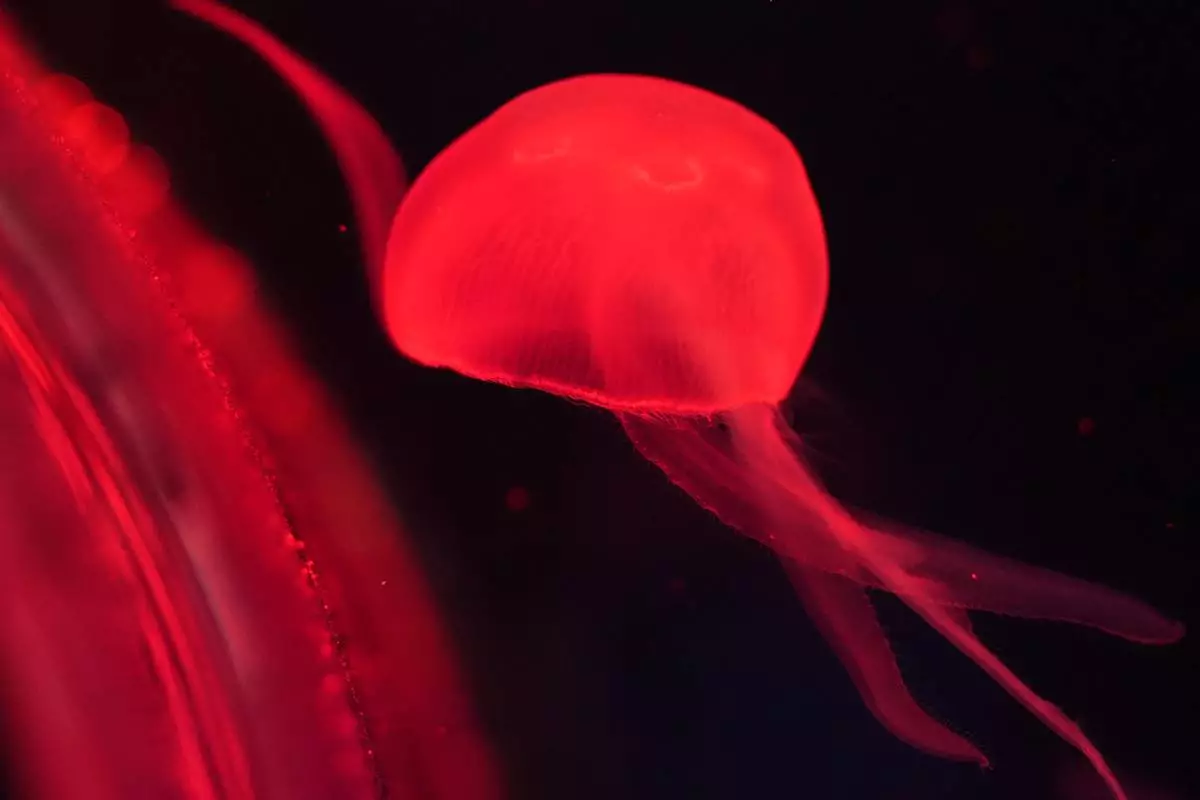
A Japanese sea nettle is displayed at the Jellyfish Museum, a facility that is home to about 20 unique species of jellyfish found in Florida and other parts of the world, Friday, Aug. 14, 2026, in Pompano Beach, Fla. (AP Photo/Lynne Sladky)

A Japanese sea nettle is displayed at the Jellyfish Museum, a facility that is home to about 20 unique species of jellyfish found in Florida and other parts of the world, Friday, Aug. 14, 2026, in Pompano Beach, Fla. (AP Photo/Lynne Sladky)

A moon jellyfish is displayed at the Jellyfish Museum, a facility that is home to about 20 unique species of jellyfish found in Florida and other parts of the world, Friday, Aug. 14, 2026, in Pompano Beach, Fla. (AP Photo/Lynne Sladky)

A moon jellyfish is displayed at the Jellyfish Museum, a facility that is home to about 20 unique species of jellyfish found in Florida and other parts of the world, Friday, Aug. 14, 2026, in Pompano Beach, Fla. (AP Photo/Lynne Sladky)

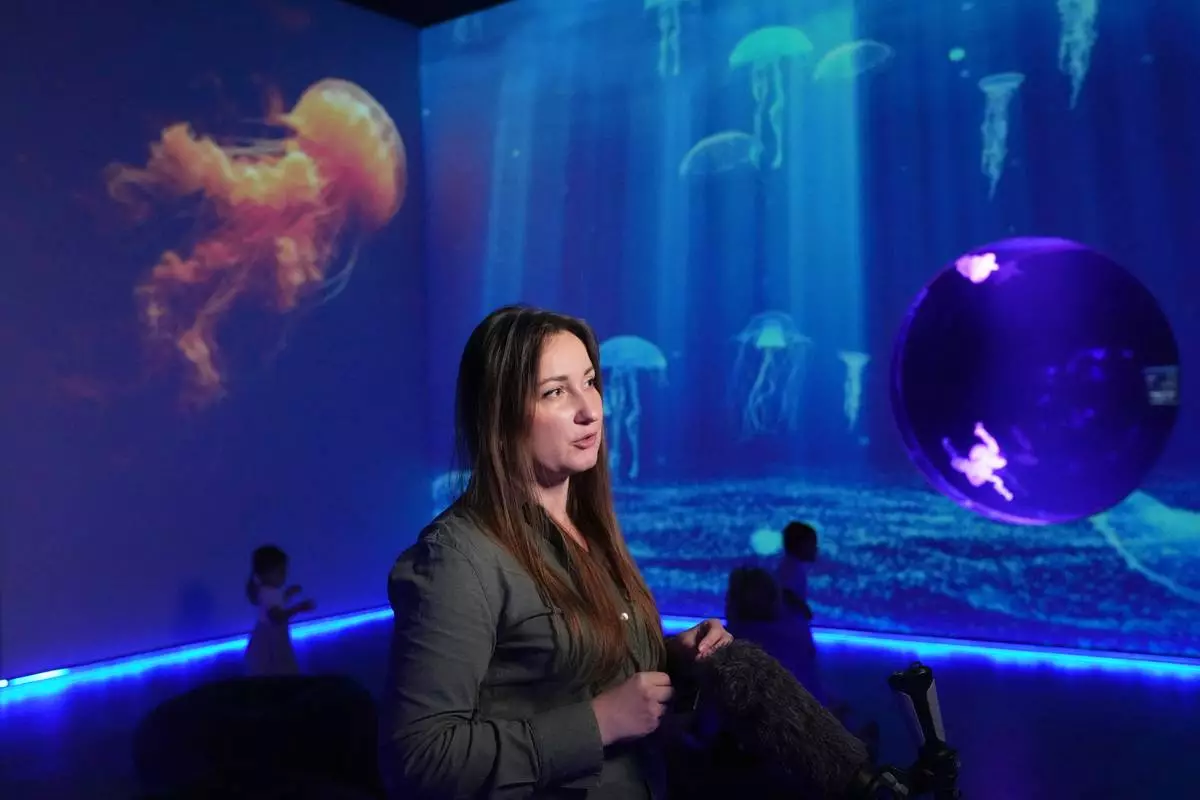
Iryna Pelypkanych, general manger of the Jellyfish Museum, its interviewed at the facility Friday, Aug. 14, 2026, in Pompano Beach, Fla. (AP Photo/Lynne Sladky)
Iryna Pelypkanych, general manger of the Jellyfish Museum, its interviewed at the facility Friday, Aug. 14, 2026, in Pompano Beach, Fla. (AP Photo/Lynne Sladky)

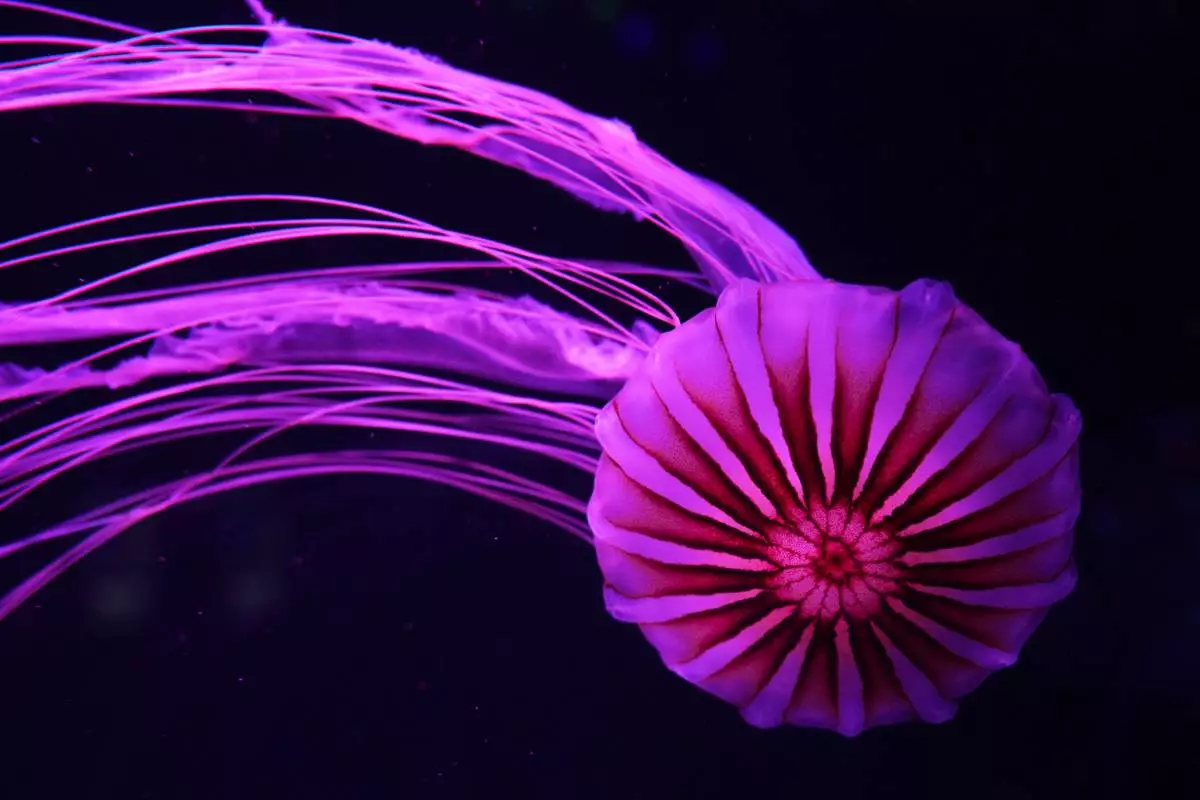
A Japanese sea nettle is displayed at the Jellyfish Museum, a facility that is home to about 20 unique species of jellyfish found in Florida and other parts of the world, Friday, Aug. 14, 2026, in Pompano Beach, Fla. (AP Photo/Lynne Sladky)

A Japanese sea nettle is displayed at the Jellyfish Museum, a facility that is home to about 20 unique species of jellyfish found in Florida and other parts of the world, Friday, Aug. 14, 2026, in Pompano Beach, Fla. (AP Photo/Lynne Sladky)
Moon jellyfish are displayed at the Jellyfish Museum, a facility that is home to about 20 unique species of jellyfish found in Florida and other parts of the world, Friday, Aug. 14, 2026, in Pompano Beach, Fla. (AP Photo/Lynne Sladky)

Moon jellyfish are displayed at the Jellyfish Museum, a facility that is home to about 20 unique species of jellyfish found in Florida and other parts of the world, Friday, Aug. 14, 2026, in Pompano Beach, Fla. (AP Photo/Lynne Sladky)

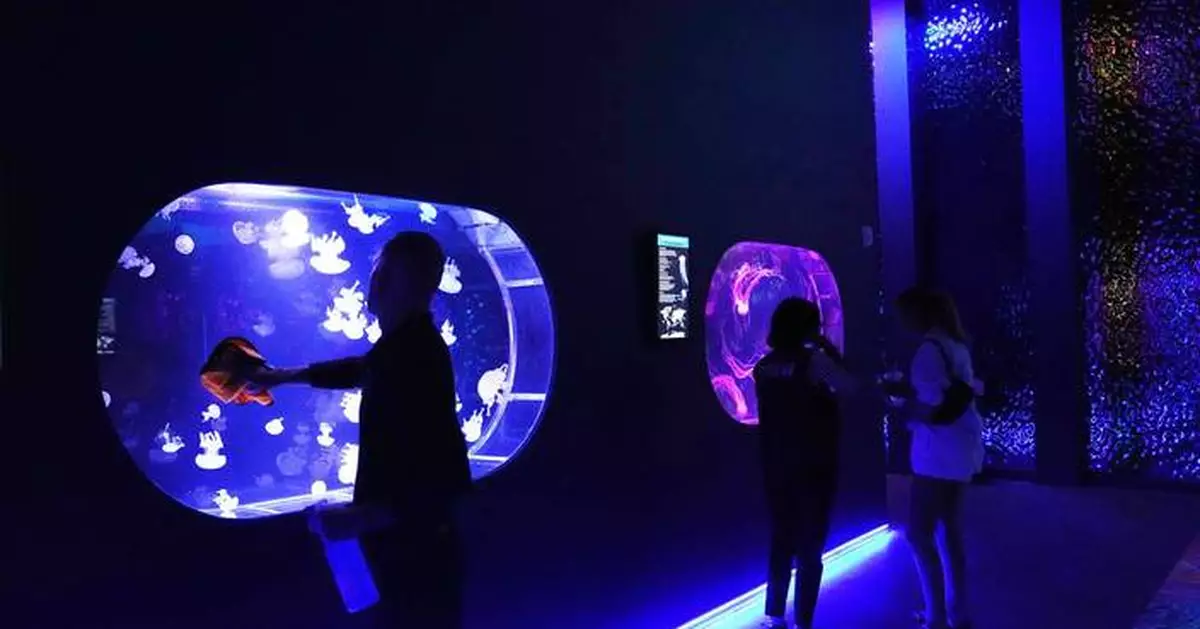
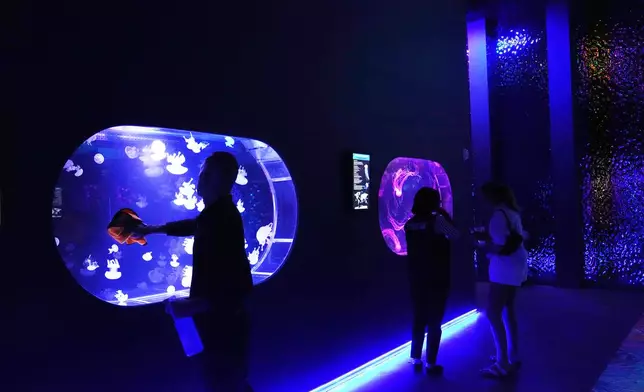
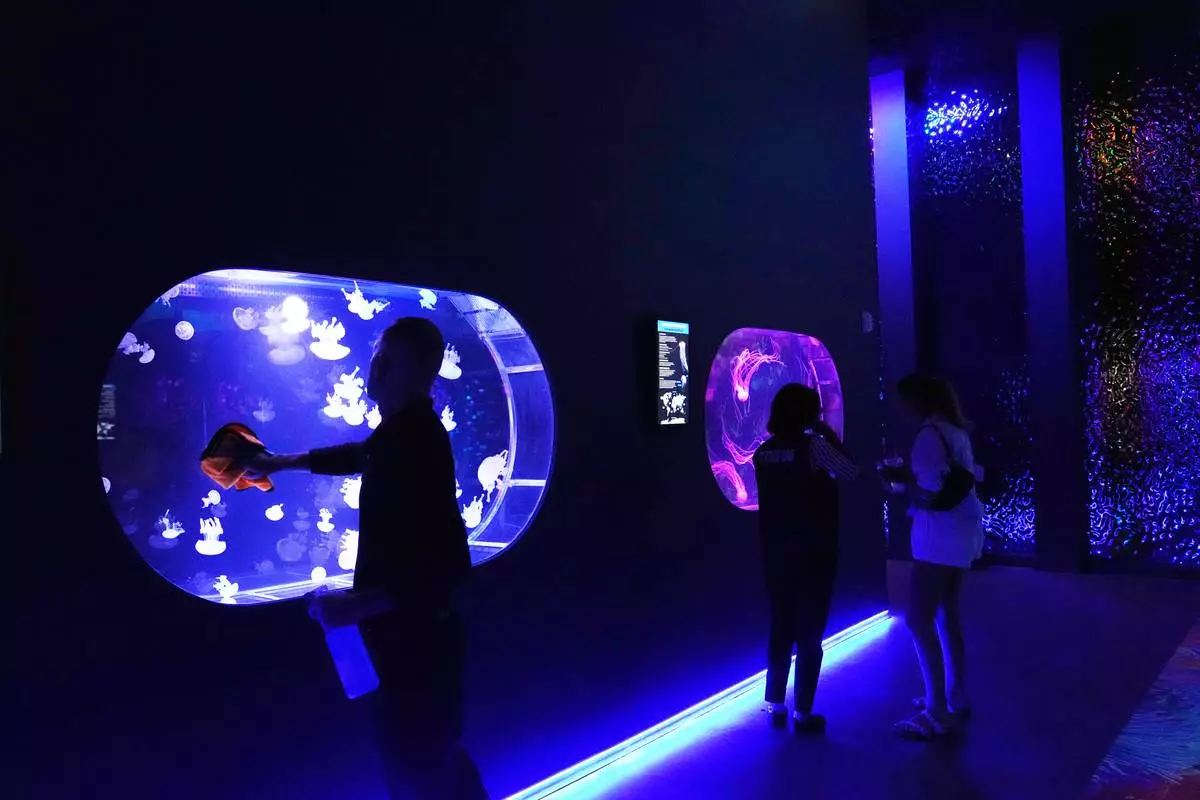
An employee cleans a display at the Jellyfish Museum, a facility that is home to about 20 unique species of jellyfish found in Florida and other parts of the world, Friday, Aug. 14, 2026, in Pompano Beach, Fla. (AP Photo/Lynne Sladky)

An employee cleans a display at the Jellyfish Museum, a facility that is home to about 20 unique species of jellyfish found in Florida and other parts of the world, Friday, Aug. 14, 2026, in Pompano Beach, Fla. (AP Photo/Lynne Sladky)

It was created by Alex and Yana Yanovsky, who previously developed successful aquariums in Ukraine, including their first jellyfish museum in Kyiv. The couple left those facilities behind when they fled Ukraine following the 2022 Russian invasion, operations manager Jessica Eisenbarth said.

The space, which opened this past spring, is the couple's first aquatic attraction since immigrating to the U.S., but they'd like to expand.

“When they left Ukraine, they moved to Florida, and then they immediately wanted to share their passion here,” Eisenbarth said.

Jellyfish have survived for over 500 million years, making them older than dinosaurs and even trees. Their ancient origins are part of their allure, along with their hypnotic, pulsing movements. They have no heart or brain, and are made up primarily of water, giving them a translucent look.

Yana Yanovsky came up with the idea for the jellyfish museum after noticing how popular the jellyfish were at their other aquariums.

“Jellyfish are some of the most resilient creatures on Earth. While they lack a brain, they maintain a simple nerve net that allows them to respond to their environment,” Yana said in a statement provided by the city. “Their movement is mesmerizing, almost meditative, and they play an important role in marine ecosystems.”

Monty Graham, director of the Smithsonian Environmental Research Center, said he’s not surprised someone made a space dedicated specifically to jellyfish. He credits the Monterey Bay Aquarium in California with kicking off the popularity of jellyfish exhibits at aquariums all over the world. Monterey Bay Aquarium began displaying jellyfish in temporary exhibits in 1985 and opened a permanent gallery in 1996.

“Jellyfish are cool, they’re things that people don’t get to see up close unless they’re scuba diving,” Graham said. “So here was this opportunity, in a controlled environment, very beautiful settings. It clicked all the buttons and checked all the boxes, and it was a very good, positive thing.”

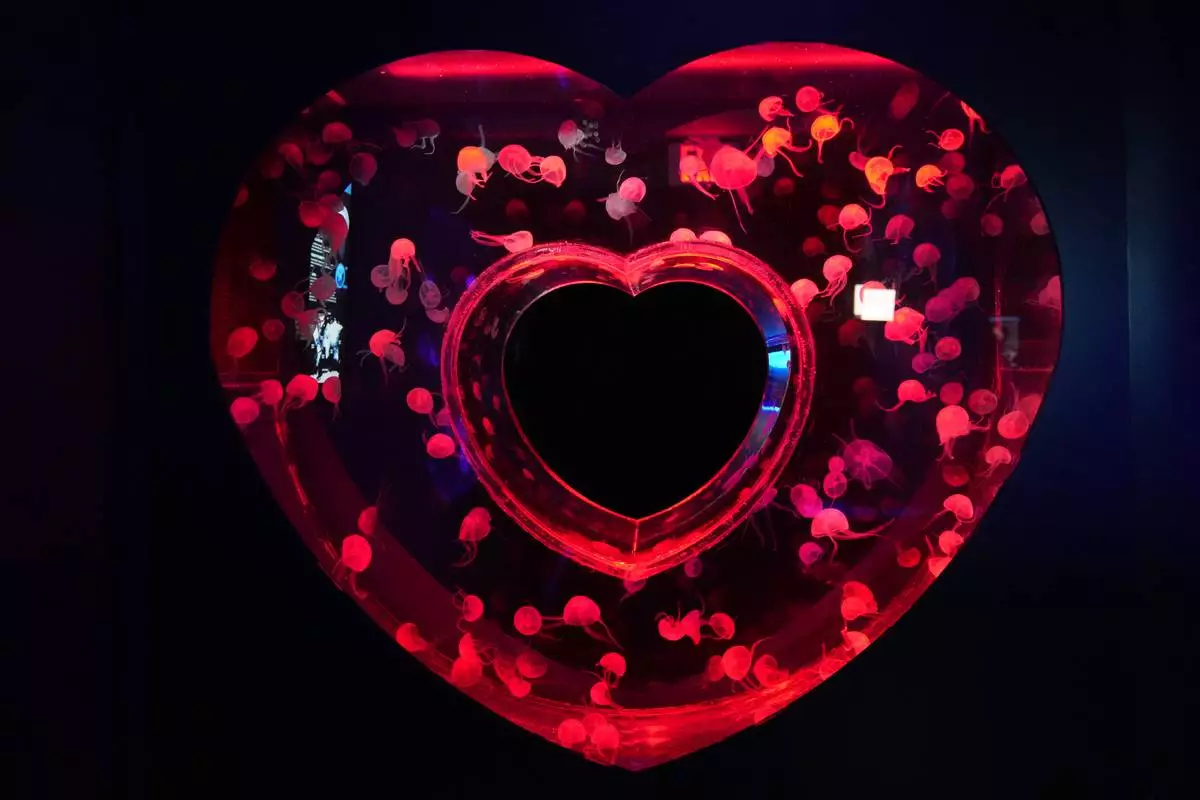
The nearly 10,000-square-foot (900 square meters) Jellyfish Museum houses roughly 20 unique species of jellyfish found in Florida waters and other parts of the world. Different species can be rotated through the museum's 21 tanks. Some current occupants include Japanese sea nettles, moon jellyfish, spotted jellies and upside-down jellyfish, the last of which can be found among Florida's mangrove swamps.

The jellyfish are acquired through licensed aquaculture partners, according to the city.

The space is designed to exude calm and tranquility, general manager Iryna Pelypkanych said. It was converted from a former Wells Fargo bank branch with about $100,000 in community redevelopment grants from the city of Pompano Beach. Guides teach people about the role jellyfish play in marine ecosystems and the importance of protecting them.

“The biggest idea here is to leave people with the feeling that they know something more about the population of jellyfish,” Pelypkanych said. “Because so far, we know around 4,000 different species that can be called jellyfish.”
A Japanese sea nettle is displayed at the Jellyfish Museum, a facility that is home to about 20 unique species of jellyfish found in Florida and other parts of the world, Friday, Aug. 14, 2026, in Pompano Beach, Fla. (AP Photo/Lynne Sladky)
A Japanese sea nettle is displayed at the Jellyfish Museum, a facility that is home to about 20 unique species of jellyfish found in Florida and other parts of the world, Friday, Aug. 14, 2026, in Pompano Beach, Fla. (AP Photo/Lynne Sladky)

A moon jellyfish is displayed at the Jellyfish Museum, a facility that is home to about 20 unique species of jellyfish found in Florida and other parts of the world, Friday, Aug. 14, 2026, in Pompano Beach, Fla. (AP Photo/Lynne Sladky)

A moon jellyfish is displayed at the Jellyfish Museum, a facility that is home to about 20 unique species of jellyfish found in Florida and other parts of the world, Friday, Aug. 14, 2026, in Pompano Beach, Fla. (AP Photo/Lynne Sladky)

Iryna Pelypkanych, general manger of the Jellyfish Museum, its interviewed at the facility Friday, Aug. 14, 2026, in Pompano Beach, Fla. (AP Photo/Lynne Sladky)
Iryna Pelypkanych, general manger of the Jellyfish Museum, its interviewed at the facility Friday, Aug. 14, 2026, in Pompano Beach, Fla. (AP Photo/Lynne Sladky)

A Japanese sea nettle is displayed at the Jellyfish Museum, a facility that is home to about 20 unique species of jellyfish found in Florida and other parts of the world, Friday, Aug. 14, 2026, in Pompano Beach, Fla. (AP Photo/Lynne Sladky)
A Japanese sea nettle is displayed at the Jellyfish Museum, a facility that is home to about 20 unique species of jellyfish found in Florida and other parts of the world, Friday, Aug. 14, 2026, in Pompano Beach, Fla. (AP Photo/Lynne Sladky)
Moon jellyfish are displayed at the Jellyfish Museum, a facility that is home to about 20 unique species of jellyfish found in Florida and other parts of the world, Friday, Aug. 14, 2026, in Pompano Beach, Fla. (AP Photo/Lynne Sladky)


Moon jellyfish are displayed at the Jellyfish Museum, a facility that is home to about 20 unique species of jellyfish found in Florida and other parts of the world, Friday, Aug. 14, 2026, in Pompano Beach, Fla. (AP Photo/Lynne Sladky)

An employee cleans a display at the Jellyfish Museum, a facility that is home to about 20 unique species of jellyfish found in Florida and other parts of the world, Friday, Aug. 14, 2026, in Pompano Beach, Fla. (AP Photo/Lynne Sladky)

An employee cleans a display at the Jellyfish Museum, a facility that is home to about 20 unique species of jellyfish found in Florida and other parts of the world, Friday, Aug. 14, 2026, in Pompano Beach, Fla. (AP Photo/Lynne Sladky)

BIRMINGHAM, England (AP) — Pakistan fielded a new-look team but the same old problems resurfaced as it plunged to 100-7 at lunch after being put into bat by England in the third and final cricket test at Edgbaston on Wednesday.

The touring team, which caused a major surprise by sending seven players home after its second-test defeat at Lord's, plus the head coach and the bowling coach, made four changes to the side but the batters were all at sea yet again.

England claimed a first breakthrough when the recalled Saim Ayub was trapped lbw for a duck to give quick bowler Ollie Robinson his 100th test wicket.

Jofra Archer then forced Azan Awais into offering mid-on fielder Josh Tongue a low, diving catch off a leading edge.

Abdullah Shafique was next to go, caught low down by Dan Lawrence at third slip off Robinson.

Shan Masood became the fourth wicket to fall when he lobbed the ball to mid-wicket off fast bowler Archer following a poor cross-bat stroke.

Fellow paceman Tongue then removed Pakistan captain Babar Azam before dismissing debutants Ghazi Ghori and Imran Randhawa, lbw and clean bowled respectively.

Saud Shakeel, who made a fighting 97 in a losing cause at Lord's, was the one shining light for Pakistan as he reached lunch on 37 not out. Razaullah Khan, another debutant, was unbeaten on 11.

England took an unassailable 2-0 lead in the series after beating Pakistan by 194 runs at Lord's.

See AP’s full cricket coverage here

England's Josh Tongue appeals unsuccessfully, during day one of the third cricket test match between England and Pakistan, at Edgbaston, in Birmingham, England, Wednesday, Sept. 9, 2026. (Mike Egerton/PA via AP)

England's Josh Tongue appeals unsuccessfully, during day one of the third cricket test match between England and Pakistan, at Edgbaston, in Birmingham, England, Wednesday, Sept. 9, 2026. (Mike Egerton/PA via AP)

England's Jofra Archer, left, celebrates the wicket of Pakistan's Azan Awais, during day one of the third cricket test match between England and Pakistan, at Edgbaston, in Birmingham, England, Wednesday, Sept. 9, 2026. (Mike Egerton/PA via AP)

England's Jofra Archer, left, celebrates the wicket of Pakistan's Azan Awais, during day one of the third cricket test match between England and Pakistan, at Edgbaston, in Birmingham, England, Wednesday, Sept. 9, 2026. (Mike Egerton/PA via AP)

Pakistan's Azan Awais walks off the pitch, after being dismissed by England's Jofra Archer, during day one of the third cricket test match between England and Pakistan, at Edgbaston, in Birmingham, England, Wednesday, Sept. 9, 2026. (Mike Egerton/PA via AP)

Pakistan's Azan Awais walks off the pitch, after being dismissed by England's Jofra Archer, during day one of the third cricket test match between England and Pakistan, at Edgbaston, in Birmingham, England, Wednesday, Sept. 9, 2026. (Mike Egerton/PA via AP)

England's Ollie Robinson celebrates the wicket of Pakistan's Abdullah Shafique, caught out by Dan Lawrence, during day one of the third cricket test match between England and Pakistan, at Edgbaston, in Birmingham, England, Wednesday, Sept. 9, 2026. (Mike Egerton/PA via AP)

England's Ollie Robinson celebrates the wicket of Pakistan's Abdullah Shafique, caught out by Dan Lawrence, during day one of the third cricket test match between England and Pakistan, at Edgbaston, in Birmingham, England, Wednesday, Sept. 9, 2026. (Mike Egerton/PA via AP)

England's Josh Tongue, right, celebrates the wicket of Pakistan's Ghazi Ghori, during day one of the third cricket test match between England and Pakistan, at Edgbaston, in Birmingham, England, Wednesday, Sept. 9, 2026. (Mike Egerton/PA via AP)

England's Josh Tongue, right, celebrates the wicket of Pakistan's Ghazi Ghori, during day one of the third cricket test match between England and Pakistan, at Edgbaston, in Birmingham, England, Wednesday, Sept. 9, 2026. (Mike Egerton/PA via AP)

England's Ollie Robinson appeals, during day one of the third cricket test match between England and Pakistan, at Edgbaston, in Birmingham, England, Wednesday, Sept. 9, 2026. (Mike Egerton/PA via AP)

England's Ollie Robinson appeals, during day one of the third cricket test match between England and Pakistan, at Edgbaston, in Birmingham, England, Wednesday, Sept. 9, 2026. (Mike Egerton/PA via AP)

Recommended Articles