Skip to Content Facebook Feature Image

Sen. Sullivan, former congresswoman Peltola will face off for Alaska US Senate seat in November

News

Sen. Sullivan, former congresswoman Peltola will face off for Alaska US Senate seat in November
News

News

Sen. Sullivan, former congresswoman Peltola will face off for Alaska US Senate seat in November

2026-08-19 14:34 Last Updated At:08-20 13:41

JUNEAU, Alaska (AP) — Republican Sen. Dan Sullivan and Democratic former congresswoman Mary Peltola advanced to November’s general election on Tuesday, setting the stage for what is expected to be a costly fight for a seat that could determine the balance of power in the U.S. Senate.

Sullivan went on the attack against Peltola in the days leading to the primary, providing a possible preview of their coming matchup. He attempted to tie her to a progressive movement within the Democratic Party that has been ascendant throughout the primary season, claiming Peltola was aligned with Lower 48 “liberals.”

More Images
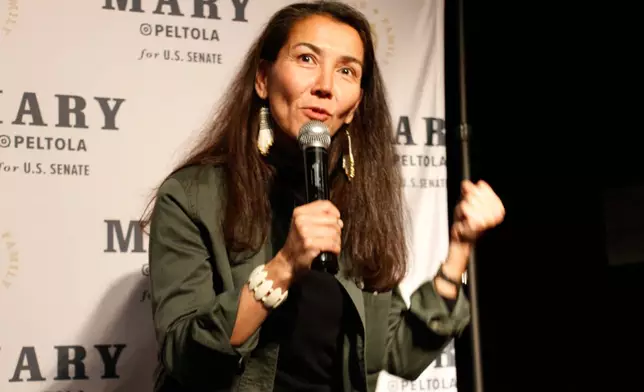
Mary Peltola, a Democrat running for the U.S. Senate seat in Alaska, addresses supporters at an election watch party Tuesday, Aug. 18, 2026, in Anchorage, Alaska. (AP Photo/Mark Thiessen)
Mary Peltola, a Democrat running for the U.S. Senate seat in Alaska, addresses supporters at an election watch party Tuesday, Aug. 18, 2026, in Anchorage, Alaska. (AP Photo/Mark Thiessen)

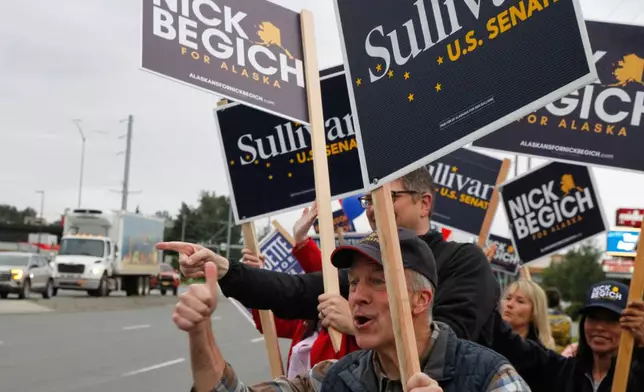
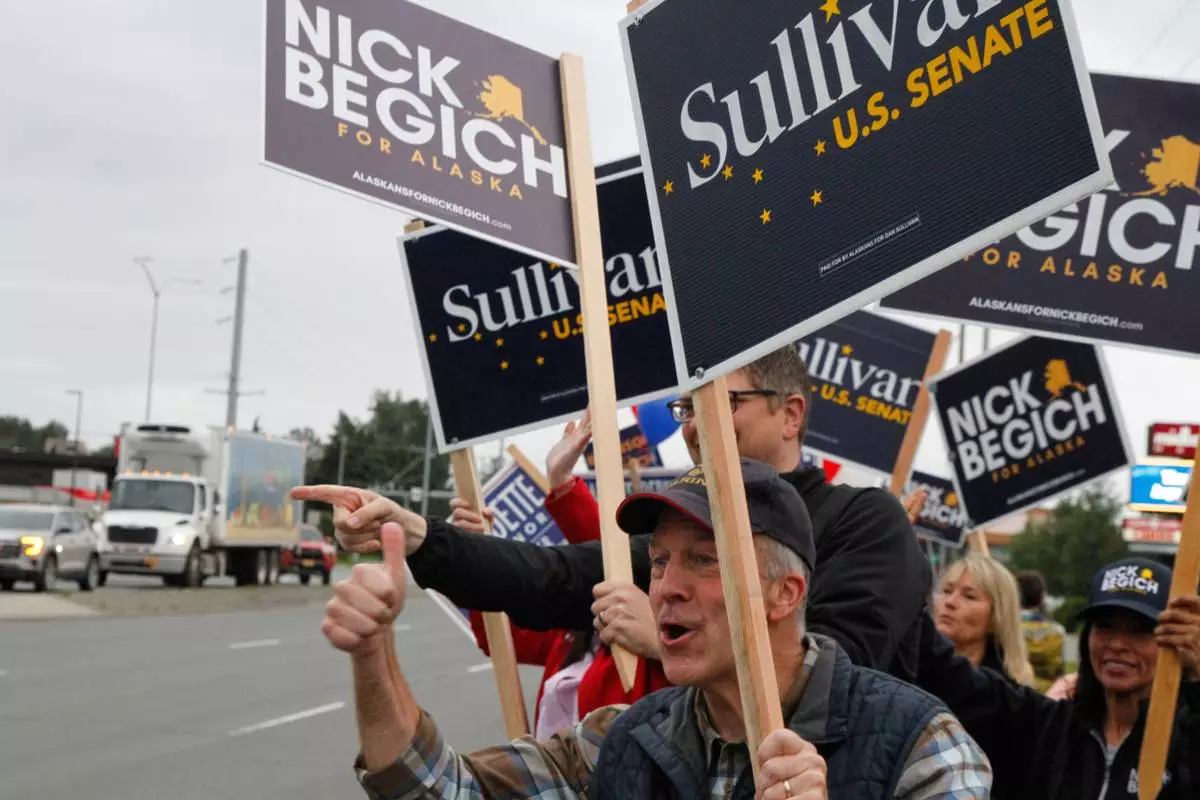
Sen. Dan Sullivan, R-Alaska, who is seeking a third term, flashes a thumbs up after a passing motorist honked during a sign waving event at an intersection on primary election day in Anchorage, Alaska, Tuesday, Aug. 18, 2026. (AP Photo/Mark Thiessen)
Sen. Dan Sullivan, R-Alaska, who is seeking a third term, flashes a thumbs up after a passing motorist honked during a sign waving event at an intersection on primary election day in Anchorage, Alaska, Tuesday, Aug. 18, 2026. (AP Photo/Mark Thiessen)

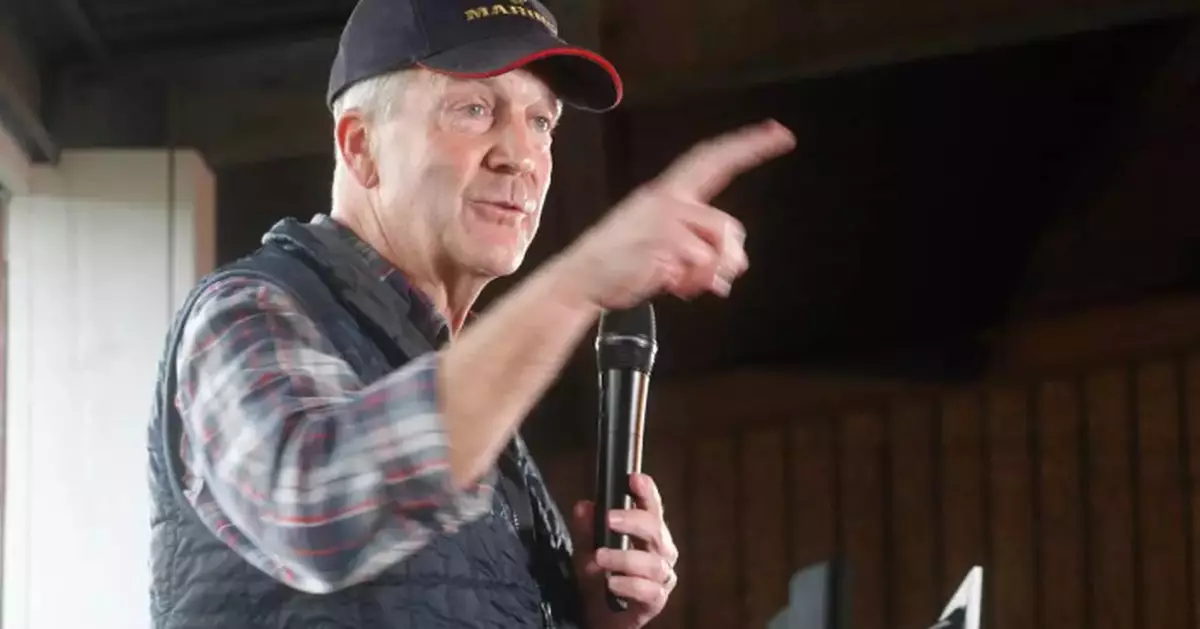
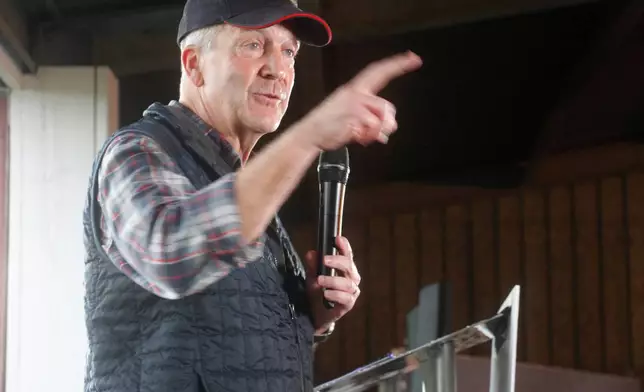
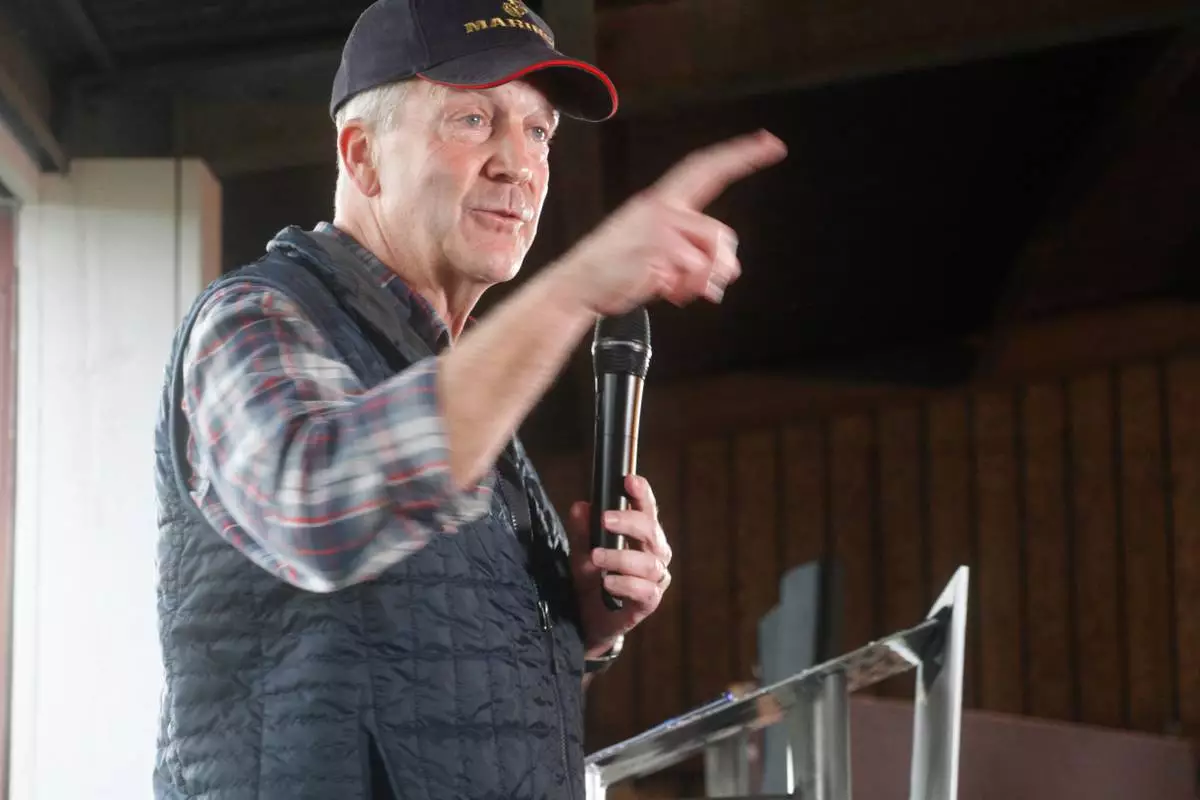
U.S. Sen. Dan Sullivan, R-Alaska, speaks at a get out the vote event held at farm in Palmer, Alaska, on Monday, Aug. 17, 2026. (AP Photo/Mark Thiessen)
U.S. Sen. Dan Sullivan, R-Alaska, speaks at a get out the vote event held at farm in Palmer, Alaska, on Monday, Aug. 17, 2026. (AP Photo/Mark Thiessen)

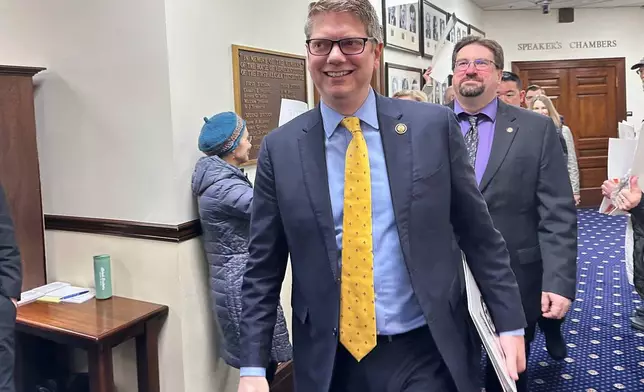
FILE - Alaska Republican U.S. Rep. Nick Begich walks down a corridor in the state Capitol before giving a speech to Alaska lawmakers, March 10, 2026, in Juneau, Alaska. (AP Photo/Becky Bohrer, File)
FILE - Alaska Republican U.S. Rep. Nick Begich walks down a corridor in the state Capitol before giving a speech to Alaska lawmakers, March 10, 2026, in Juneau, Alaska. (AP Photo/Becky Bohrer, File)

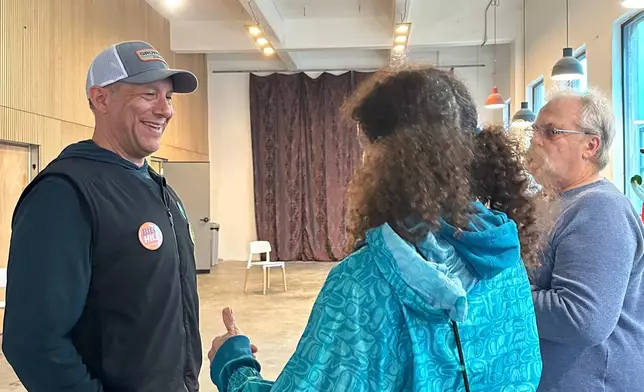
FILE - Alaska U.S. House candidate Bill Hill, an independent, speaks with people at a campaign fundraising event in Juneau, Alaska, June 4, 2026. (AP Photo/Becky Bohrer, File)
FILE - Alaska U.S. House candidate Bill Hill, an independent, speaks with people at a campaign fundraising event in Juneau, Alaska, June 4, 2026. (AP Photo/Becky Bohrer, File)

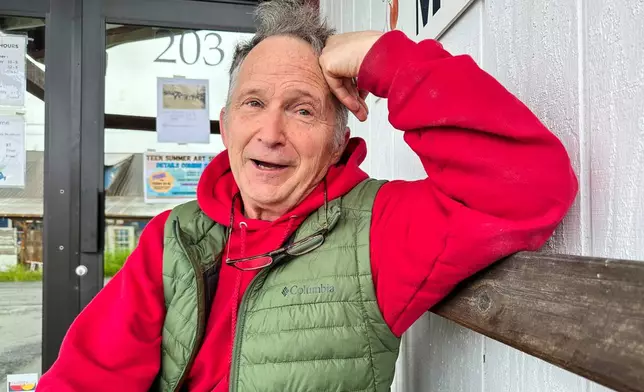
FILE - Dan Sullivan, a candidate in Alaska's U.S. Senate race who shares his name with the incumbent seeking reelection, talks with a reporter, July 3, 2026, in Petersburg, Alaska. (AP Photo/Becky Bohrer, File)
FILE - Dan Sullivan, a candidate in Alaska's U.S. Senate race who shares his name with the incumbent seeking reelection, talks with a reporter, July 3, 2026, in Petersburg, Alaska. (AP Photo/Becky Bohrer, File)

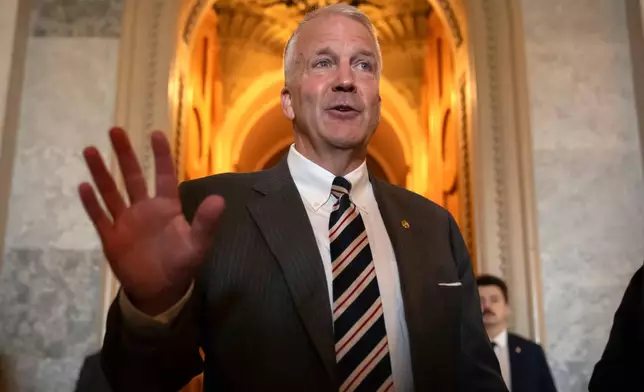
FILE - Sen. Dan Sullivan, R-Alaska, speaks to reporters at the Capitol in Washington, June 30, 2025. (AP Photo/Mark Schiefelbein)
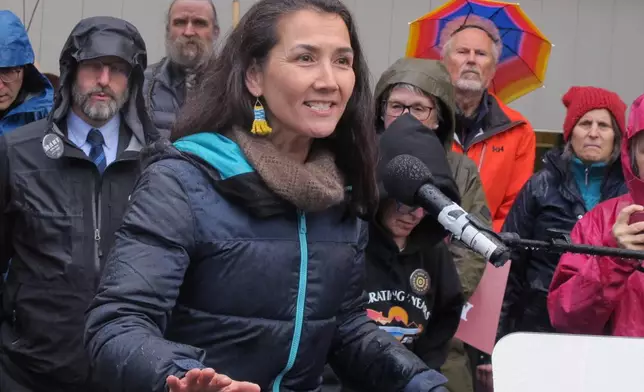
FILE - Sen. Dan Sullivan, R-Alaska, speaks to reporters at the Capitol in Washington, June 30, 2025. (AP Photo/Mark Schiefelbein)

FILE - Alaska U.S. Senate candidate Mary Peltola, a Democrat, speaks during a campaign rally on May 14, 2026, in Juneau, Alaska. (AP Photo/Becky Bohrer, file)

FILE - Alaska U.S. Senate candidate Mary Peltola, a Democrat, speaks during a campaign rally on May 14, 2026, in Juneau, Alaska. (AP Photo/Becky Bohrer, file)

Peltola, who in 2022 became the first Alaska Native to serve in Congress, tried to steer a centrist path but shook up her campaign hierarchy just days before the primary, ousting her campaign manager.

Sullivan and Peltola have raised by far the most money to date in the race and have the greatest name recognition across Alaska, making them the leading contenders in November.

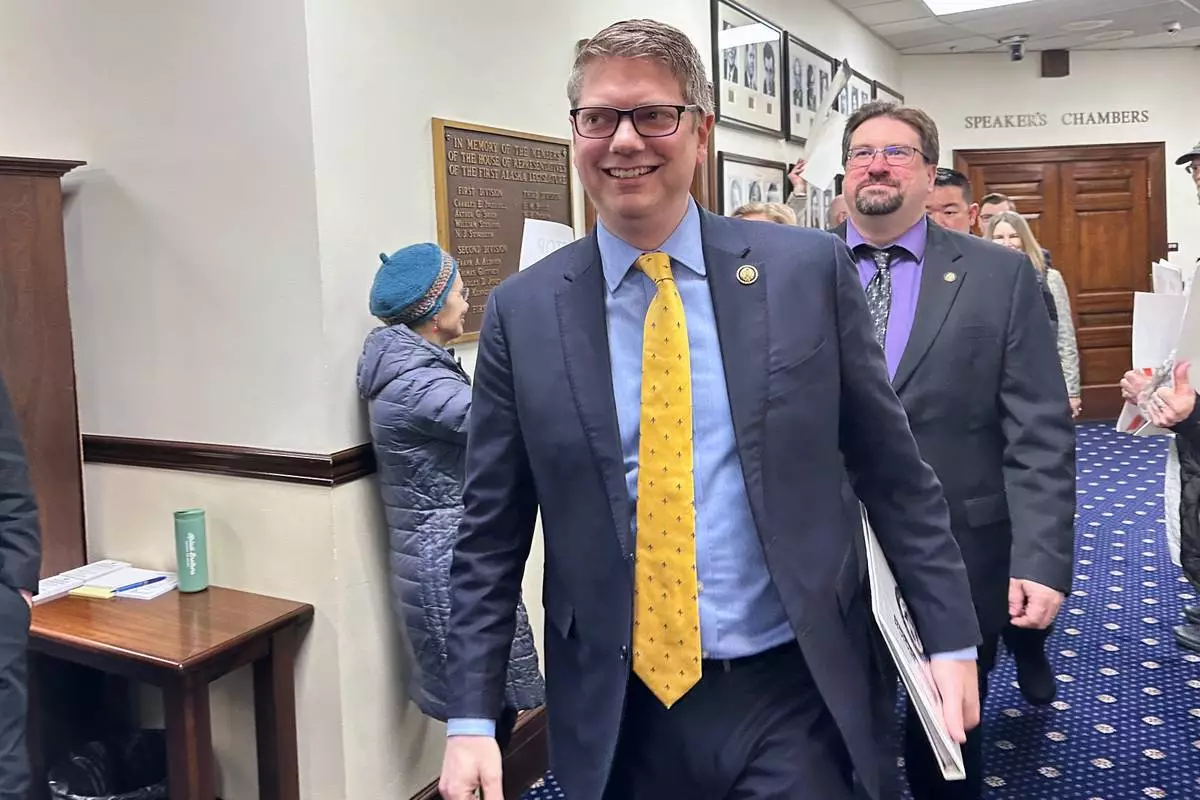
In the race for the state’s lone U.S. House seat, Republican Rep. Nick Begich advanced to the general election along with independent Bill Hill.

The campaign featured over a dozen contenders in each of the top races — for Senate, U.S. House and governor. Under Alaska’s open primary system, all candidates appeared on the same ballot, and the four who receive the most votes qualify for the ranked vote general election. It was too early to call all candidates advancing in the top races under the top-four format.

Tuesday's ballot also included state legislative candidates and a ballot initiative that would reimpose campaign contribution limits in state and local elections.

The highest-profile candidates in a field of 16 were Sen. Sullivan, a two-term Republican, and Peltola.

The race, which is among a handful that could help determine control of the Senate, drew significant attention from outside groups, with Republican and Democratic campaign organizations identifying it as a top target.

Peltola shook up her campaign leadership days before the primary, letting her campaign manager go and elevating a deputy to that role. In a statement, the campaign described the changes as “staffing updates as we transition into the general election.”

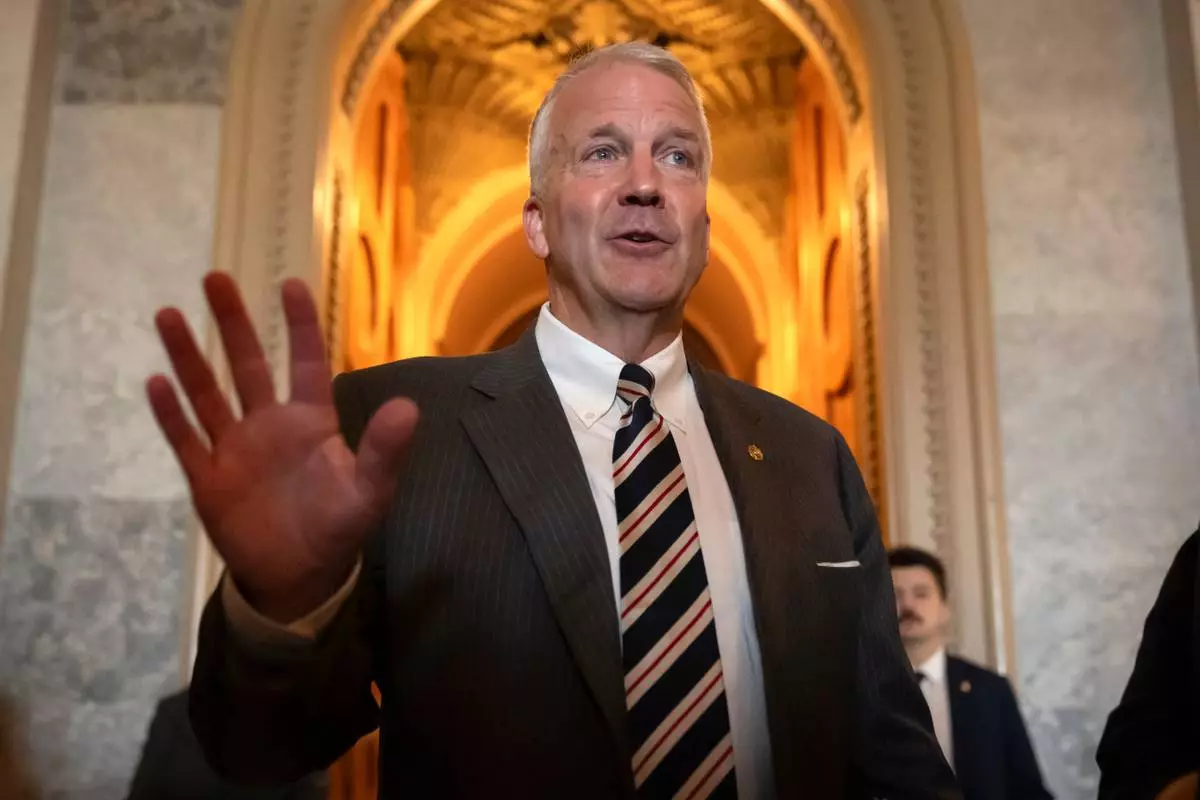
Sullivan, a veteran and ally of President Donald Trump, campaigned on supporting the military, opening more land for oil and gas extraction, and voting for Trump's signature tax and spending law. He told supporters Tuesday that his office is “getting big things done.”

He criticized Peltola as ineffective during her time in Congress, which spanned just over one term.

Peltola, who was elected in 2022, criticized a political system she said is rigged by special interests and allows politicians to enrich themselves. She said the Trump administration has brought challenges to Alaska including cuts to the federal workforce, and she blasted Sullivan for his support of Trump's tax and spending bill.

“We really need a champion for us in Washington, D.C., who gets us and will work hard for us,” Peltola told supporters Tuesday.

It was a third candidate, a Republican also named Dan Sullivan, who garnered much of the attention during the campaign.

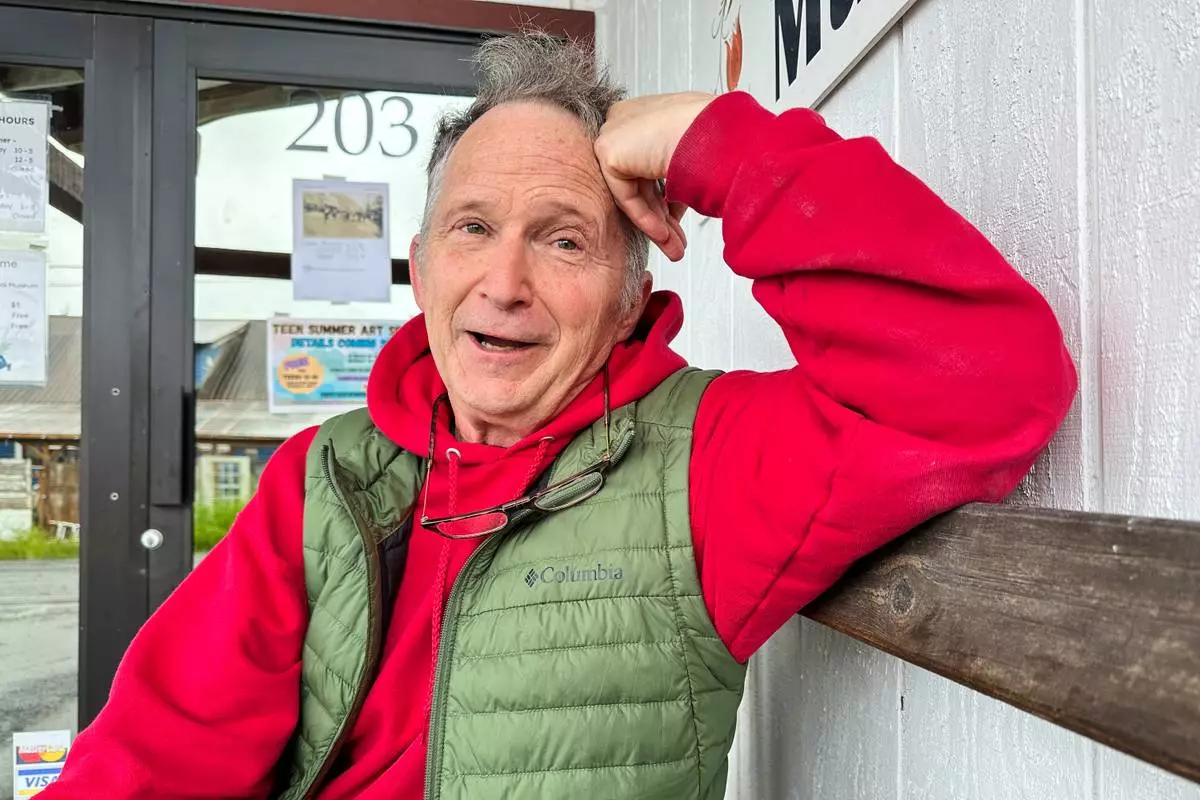
Dan J. Sullivan won a legal fight to appear on the ballot despite claims by the senator and GOP allies that he was a sham candidate running at the behest of Democrats with the intent of causing confusion. Dan J. Sullivan, a retired teacher from the island community of Petersburg, denied that and said frustration with the incumbent prompted him to run.

He appeared on the ballot as Daniel J. Sullivan Jr., with no party affiliation — a decision that a state elections official said was intended to minimize possible confusion. Meanwhile the senator was listed as Dan S. Sullivan, Republican and incumbent. No other candidate seeking reelection had the “incumbent” label.

The drama involving the dueling Dan Sullivans caught the attention of Trump. In a social media post reiterating his support for the senator days before the primary, Trump called the other's candidacy an attempt to trick voters and urged his followers to vote for “SULLIVAN, DAN S.”

Dan J. Sullivan criticized the senator for embracing Trump's endorsement, calling the president “more interested in raising tariffs on our allies than in lowering the cost of groceries, housing and energy” and “more interested in punishing his enemies than bringing Americans together.”

The Senate race was a focal point for a number of voters.

Jeri Kissner said Congress must do more to push back against Trump.

“I’m so disappointed in our Congress to acquiesce to the president and his minions,” Kissner said. She favored Peltola because she did not like the other options.

Tom Dienst, who voted early and described himself as an “extremely staunch Reagan Republican,” said Trump needs allies to help carry out his agenda.

“When you look at all of the good Trump policies that will help the state, there’s just no doubt. We have to continue with Sullivan,” he said.

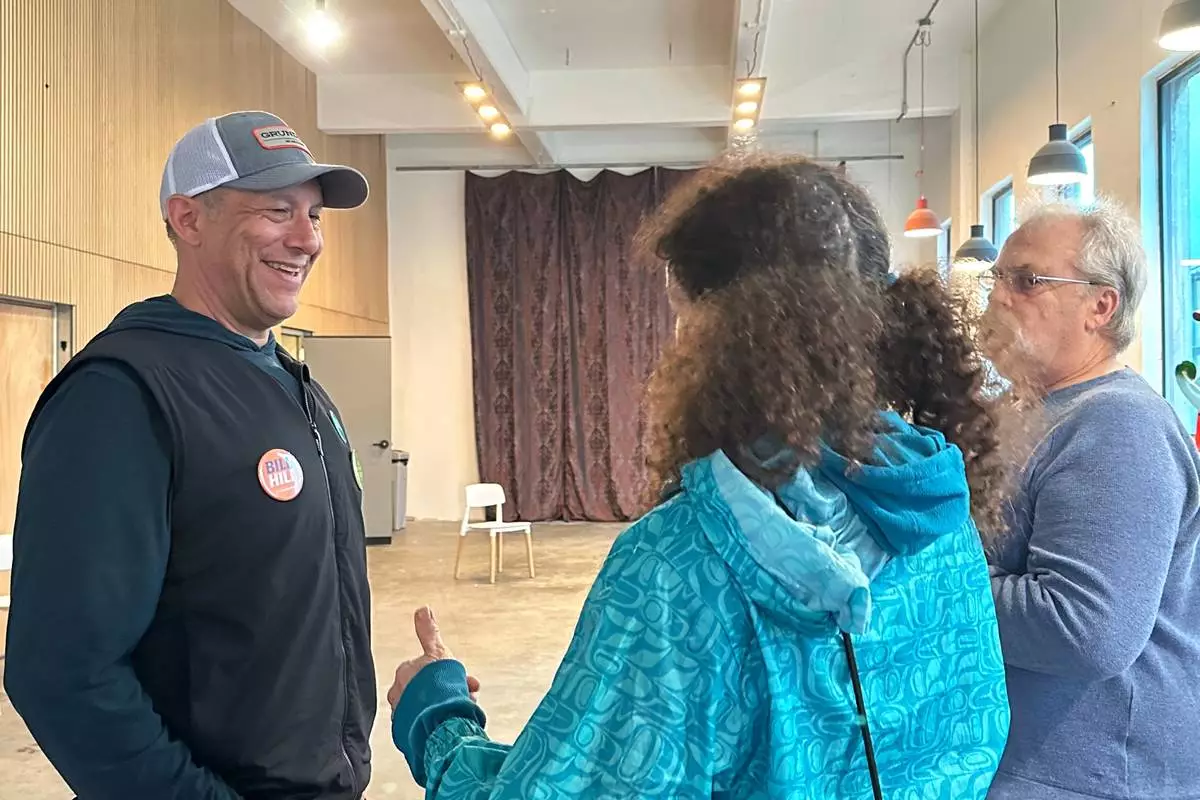
In the House race, the most prominent candidates were Begich, seeking a second term, and Hill, a fisherman and former educator from a small southwestern village.

Hill made affordability a key issue in his campaign. He said Alaskans are sick of paying high costs for healthcare, gas and groceries.

“Begich and his buddies think they can play by a different set of rules than we do,” he said after advancing Tuesday. “The Alaskans I know don’t think that’s right.”

Begich, who was endorsed by Trump, cast himself as hardworking and effective in his role. He said results from the primary show that Alaskans are ready to return him to Congress.

Progressive Democrat Matt Schultz suspended his campaign last month but remained on the ballot. His campaign said Schultz would withdraw as a general election candidate if he makes the primary’s top four. Schultz urged support for Hill.

The campaign for the state’s top executive office was an open race this year because Republican Gov. Mike Dunleavy was barred by term limits from seeking a third consecutive stint.

Two Democrats advanced to the general election from a crowded, largely Republican field: former state lawmakers Jonathan Kreiss-Tomkins and Tom Begich, who is Nick Begich's uncle. If either wins in November, he would become Alaska's first Democratic governor since Tony Knowles left office in 2002.

Republicans in the race included Bernadette Wilson, a businessperson and conservative activist; Click Bishop, a former state labor commissioner and lawmaker; Dave Bronson, former mayor of Anchorage; and Adam Crum and Treg Taylor, two former members of Dunleavy's Cabinet.

Former Gov. Bill Walker, an independent, also was on the ballot.

Voters overwhelming approved the lone ballot measure at stake, which asked them to reimpose campaign contribution limits, five years after a divided federal appeals court struck down a number of caps.

The measure imposes a $2,000 limit on how much individuals can give to candidates in state and local elections and a $5,000 cap on what they can give to political parties. It also limits spending by groups other than political parties and limits what individuals and groups can give to joint campaigns for governor and lieutenant governor.

Associated Press writer Mark Thiessen in Anchorage contributed.
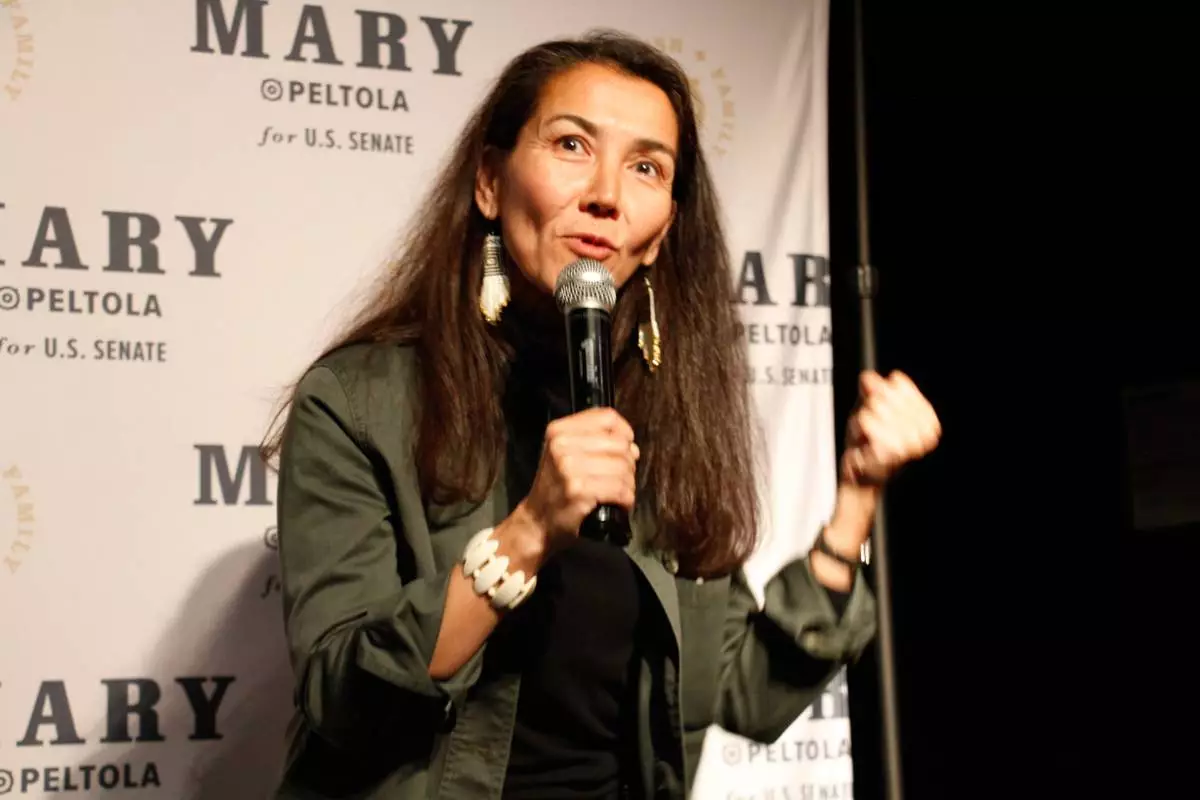
Mary Peltola, a Democrat running for the U.S. Senate seat in Alaska, addresses supporters at an election watch party Tuesday, Aug. 18, 2026, in Anchorage, Alaska. (AP Photo/Mark Thiessen)
Mary Peltola, a Democrat running for the U.S. Senate seat in Alaska, addresses supporters at an election watch party Tuesday, Aug. 18, 2026, in Anchorage, Alaska. (AP Photo/Mark Thiessen)

Sen. Dan Sullivan, R-Alaska, who is seeking a third term, flashes a thumbs up after a passing motorist honked during a sign waving event at an intersection on primary election day in Anchorage, Alaska, Tuesday, Aug. 18, 2026. (AP Photo/Mark Thiessen)
Sen. Dan Sullivan, R-Alaska, who is seeking a third term, flashes a thumbs up after a passing motorist honked during a sign waving event at an intersection on primary election day in Anchorage, Alaska, Tuesday, Aug. 18, 2026. (AP Photo/Mark Thiessen)

U.S. Sen. Dan Sullivan, R-Alaska, speaks at a get out the vote event held at farm in Palmer, Alaska, on Monday, Aug. 17, 2026. (AP Photo/Mark Thiessen)
U.S. Sen. Dan Sullivan, R-Alaska, speaks at a get out the vote event held at farm in Palmer, Alaska, on Monday, Aug. 17, 2026. (AP Photo/Mark Thiessen)

FILE - Alaska Republican U.S. Rep. Nick Begich walks down a corridor in the state Capitol before giving a speech to Alaska lawmakers, March 10, 2026, in Juneau, Alaska. (AP Photo/Becky Bohrer, File)
FILE - Alaska Republican U.S. Rep. Nick Begich walks down a corridor in the state Capitol before giving a speech to Alaska lawmakers, March 10, 2026, in Juneau, Alaska. (AP Photo/Becky Bohrer, File)

FILE - Alaska U.S. House candidate Bill Hill, an independent, speaks with people at a campaign fundraising event in Juneau, Alaska, June 4, 2026. (AP Photo/Becky Bohrer, File)
FILE - Alaska U.S. House candidate Bill Hill, an independent, speaks with people at a campaign fundraising event in Juneau, Alaska, June 4, 2026. (AP Photo/Becky Bohrer, File)

FILE - Dan Sullivan, a candidate in Alaska's U.S. Senate race who shares his name with the incumbent seeking reelection, talks with a reporter, July 3, 2026, in Petersburg, Alaska. (AP Photo/Becky Bohrer, File)
FILE - Dan Sullivan, a candidate in Alaska's U.S. Senate race who shares his name with the incumbent seeking reelection, talks with a reporter, July 3, 2026, in Petersburg, Alaska. (AP Photo/Becky Bohrer, File)

FILE - Sen. Dan Sullivan, R-Alaska, speaks to reporters at the Capitol in Washington, June 30, 2025. (AP Photo/Mark Schiefelbein)
FILE - Sen. Dan Sullivan, R-Alaska, speaks to reporters at the Capitol in Washington, June 30, 2025. (AP Photo/Mark Schiefelbein)

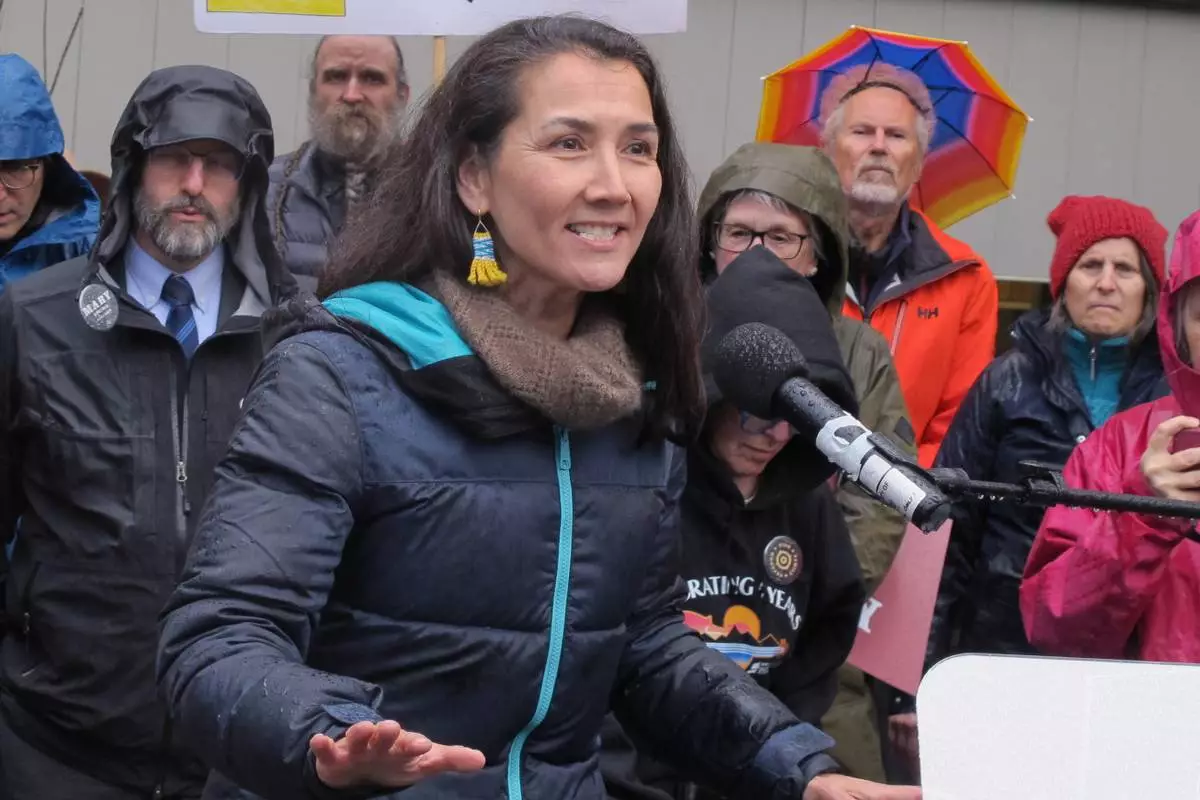
FILE - Alaska U.S. Senate candidate Mary Peltola, a Democrat, speaks during a campaign rally on May 14, 2026, in Juneau, Alaska. (AP Photo/Becky Bohrer, file)

FILE - Alaska U.S. Senate candidate Mary Peltola, a Democrat, speaks during a campaign rally on May 14, 2026, in Juneau, Alaska. (AP Photo/Becky Bohrer, file)
RIO DE JANEIRO (AP) — Brazilians began voting in Sunday’s polarizing presidential runoff between incumbent President Luiz Inácio Lula da Silva and Flávio Bolsonaro, a contest that will determine whether the U.S. will significantly expand its growing influence in Latin America.

Polls ahead of the vote showed the two candidates, who need more than 50% of the vote to become Brazil’s next leader in January, in a neck-and-neck race. The election pits the left-of-center veteran politician Lula against Bolsonaro, an ally of U.S. President Donald Trump and the son of imprisoned former President Jair Bolsonaro.

Flávio Bolsonaro bested Lula by more than 2.2 million votes in the first round of the election earlier this month. More than 33 million voters out of nearly 160 million did not turn out.

The difference between the two candidates is stark. Bolsonaro and Lula have opposing ideological views on issues ranging from U.S.-Brazil relations and climate change to social welfare.

A win for Bolsonaro would signify a pivot to the right by Latin America's most populous country and its largest economy in a year when Trump allies have notched victories in Chile, Peru and Colombia.

A victory for Lula would leave Brazil and Mexico, which is the region’s second most populous country and led by President Claudia Sheinbaum, with left-of-center leaders.

In many ways, Brazil’s runoff vote resembles a rematch between the country’s two polarized political forces that trigger passion as much as loathing. Four years ago, Lula beat Bolsonaro’s father by the narrowest margin since the country’s return to democracy in 1985. Polls suggest that this election will be even closer.

Lula, who first governed the country between 2003 and 2010, has faced a tough reelection battle because of concerns about the cost of living and security. Bolsonaro made a tough-on-crime approach the cornerstone of his campaign and pledged to bring down food costs.

Both have been hit by corruption suspicions involving family members and allies, with Bolsonaro implicated in a sprawling scandal rocking Brazil. Lula spent more than a year in prison on corruption convictions that were eventually annulled.

Bolsonaro’s admission that he accepted about $12 million from disgraced former banker Daniel Vorcaro to produce a film on his father’s life has cast a shadow over his campaign. He is under investigation for corruption, money laundering and tax evasion in connection with the case.

As Bolsonaro voted at a school in Rio de Janeiro around 8 a.m., Bolsonaro's supporters shouted “Lula, thief, your place is in prison” while Lula’s supporters chanted in his support.

“The time of real change has arrived,” Bolsonaro told journalists. “Brazil can’t go on another four years on its current trajectory.”

In the lead-up to the vote, Lula frequently portrayed Bolsonaro, whose father is under house arrest for attempting a coup, as a threat to democracy. Bolsonaro has promised to seek an amnesty for his father if elected.

The next president will name at least three Supreme Court justices out of 11 in his next term due to upcoming retirements. Bolsonaro has long taken aim at the country's top court — which has been rocked by a corruption scandal — and promised to push for judiciary reform.

Lula, trying to lure undecided voters, has invested in costly incentives since he lost the first round of voting. His government’s most recent moves have been endorsing a debt relief program for small businesses and promising free public transportation on weekends. A win for the incumbent came with the Senate's approval of the six-day working week — a popular proposal backed by the government.

Lula has criticized the U.S. president before Brazil's election, speaking about the risks of U.S. intervention in Brazilian elections after the Trump administration imposed high tariffs against Brazilian exports, sanctioned a Supreme Court justice who chaired the investigation that ended up resulting in the sentencing of Jair Bolsonaro and classified drug-trafficking groups as foreign terrorist organizations, which experts say may have been intended to make Lula look soft on crime.

Flávio Bolsonaro has touted his proximity to the White House and insisted that Brazil needs to strike better deals with the Trump administration, including the rare minerals economy. Brazil estimates that its deposits hold up to 21 million tons, second only to China. He denies he's being helped by the U.S. government.

Voting in Brazil is conducted electronically and the result is usually available within hours after polling stations close at 5 p.m. in Brasilia.

Savarese reported from Sao Paulo.

Follow AP’s coverage of Latin America and the Caribbean at https://apnews.com/hub/latin-america

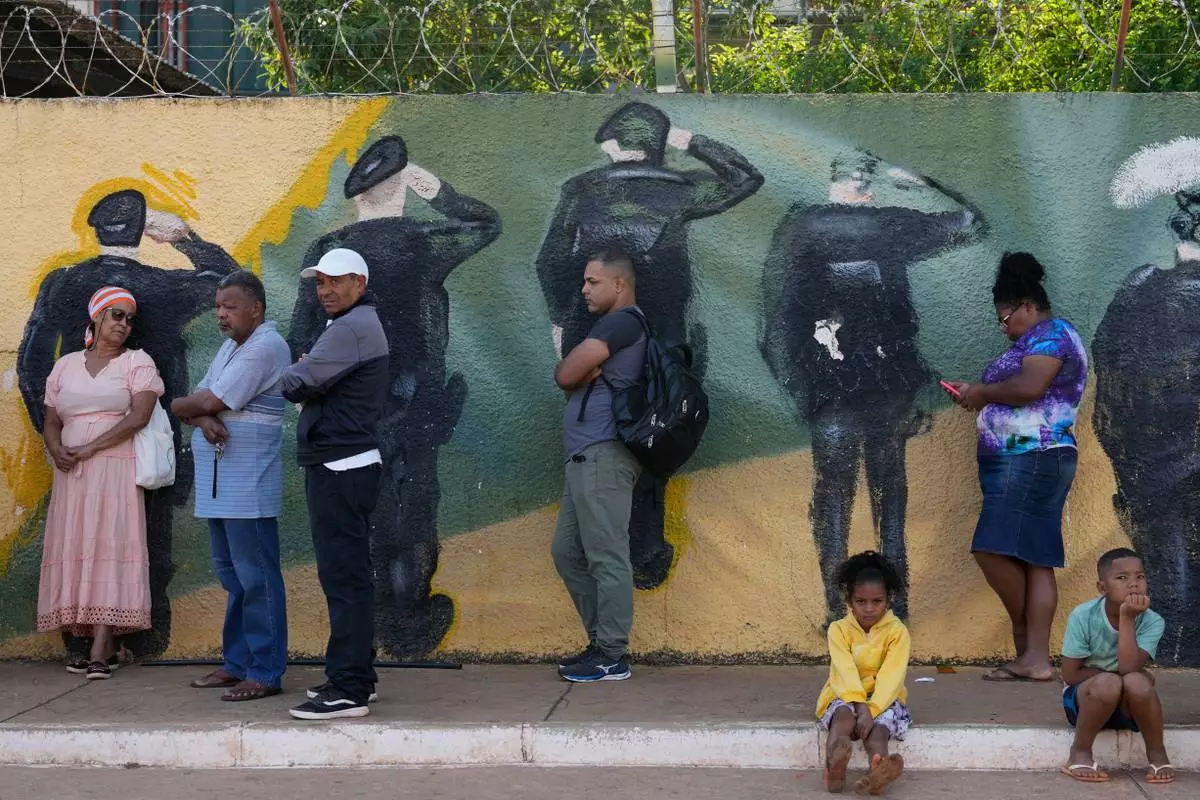
Voters line up at a polling station during the presidential runoff in Brasilia, Brazil, Sunday, Oct. 25, 2026. (AP Photo/Eraldo Peres)

Voters line up at a polling station during the presidential runoff in Brasilia, Brazil, Sunday, Oct. 25, 2026. (AP Photo/Eraldo Peres)

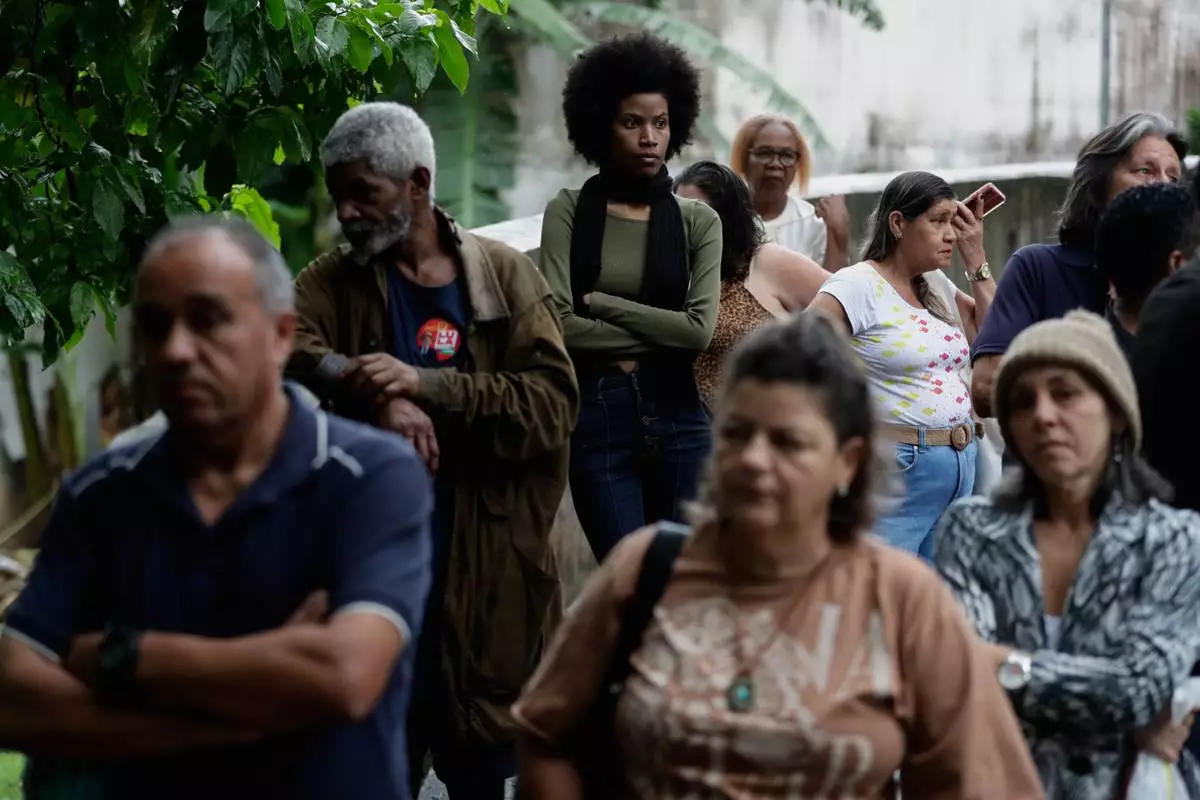
Voters line outside a polling station up during the presidential runoff in Rio de Janeiro, Sunday, Oct. 25, 2026. (AP Photo/Bruna Prado)

Voters line outside a polling station up during the presidential runoff in Rio de Janeiro, Sunday, Oct. 25, 2026. (AP Photo/Bruna Prado)

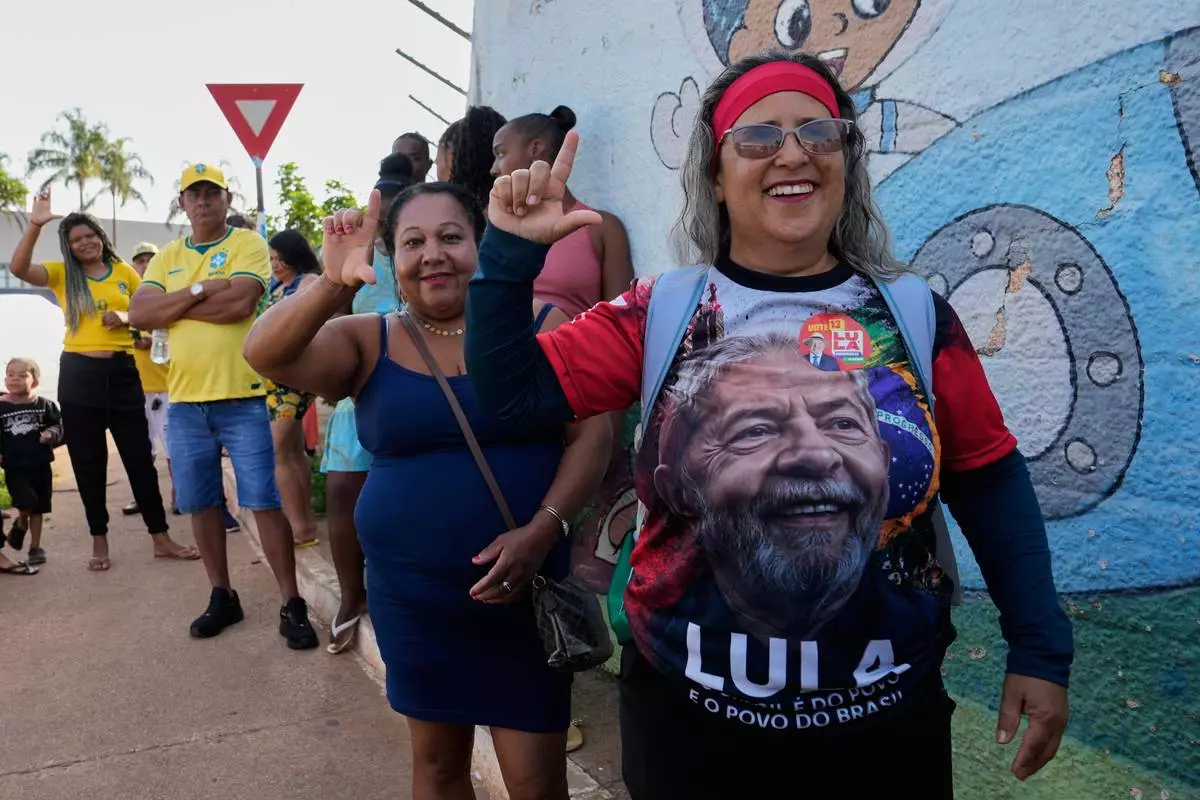
A supporter of President Luiz Inacio Lula da Silva, who is seeking reelection, lines up at a polling station during a presidential runoff in Brasilia, Brazil, Sunday, Oct. 25, 2026. (AP Photo/Eraldo Peres)

A supporter of President Luiz Inacio Lula da Silva, who is seeking reelection, lines up at a polling station during a presidential runoff in Brasilia, Brazil, Sunday, Oct. 25, 2026. (AP Photo/Eraldo Peres)

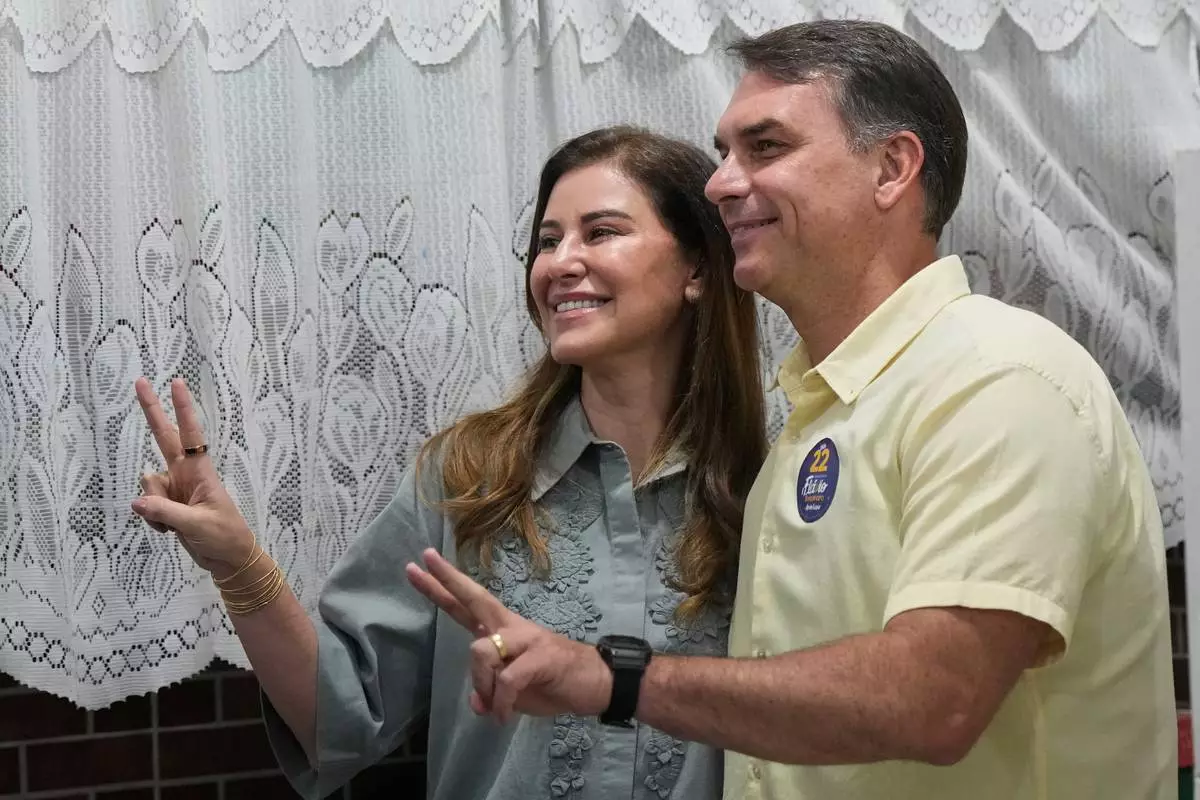
Opposition presidential candidate Sen. Flavio Bolsonaro and his wife Fernanda Bolsonaro give a thumbs during the runoff presidential election in Rio de Janeiro, Sunday, Oct. 25, 2026. (AP Photo/Silvia Izquierdo)

Opposition presidential candidate Sen. Flavio Bolsonaro and his wife Fernanda Bolsonaro give a thumbs during the runoff presidential election in Rio de Janeiro, Sunday, Oct. 25, 2026. (AP Photo/Silvia Izquierdo)

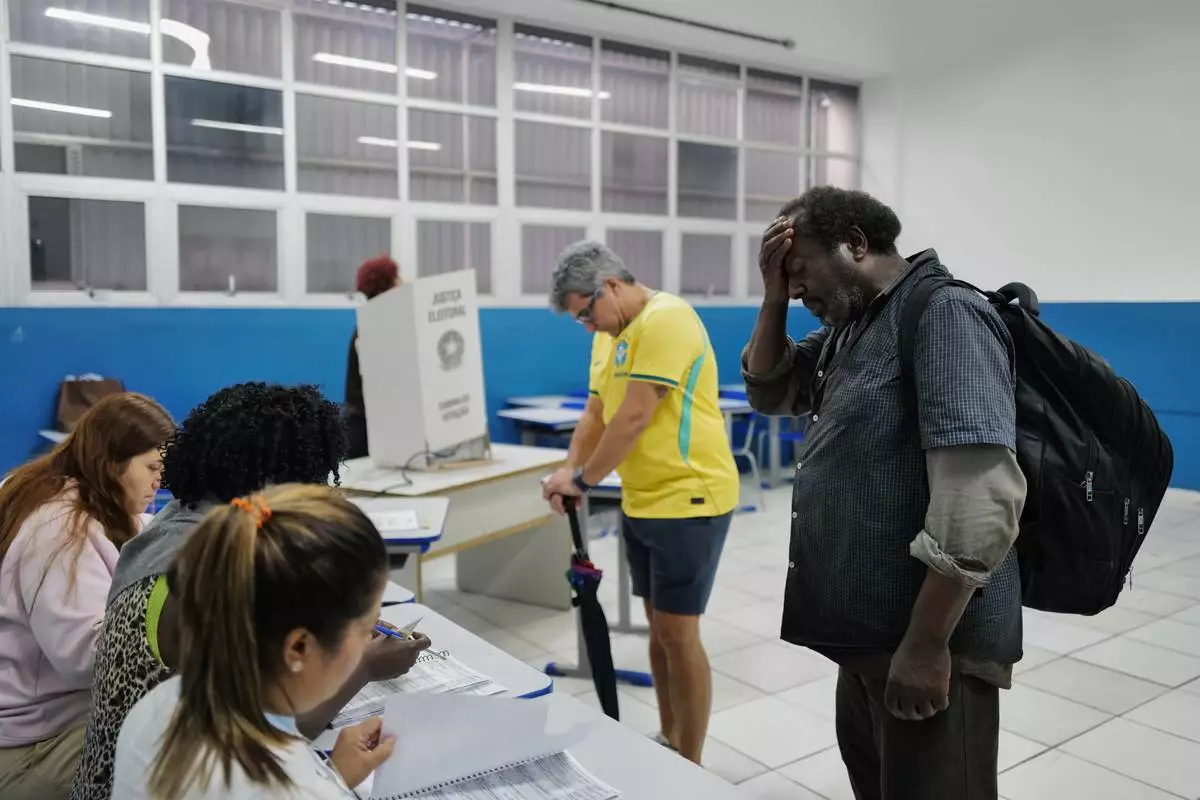
Voters wait to cast their ballots during a presidential runoff in Rio de Janeiro, Sunday, Oct. 25, 2026. (AP Photo/Lucas Landau)

Voters wait to cast their ballots during a presidential runoff in Rio de Janeiro, Sunday, Oct. 25, 2026. (AP Photo/Lucas Landau)

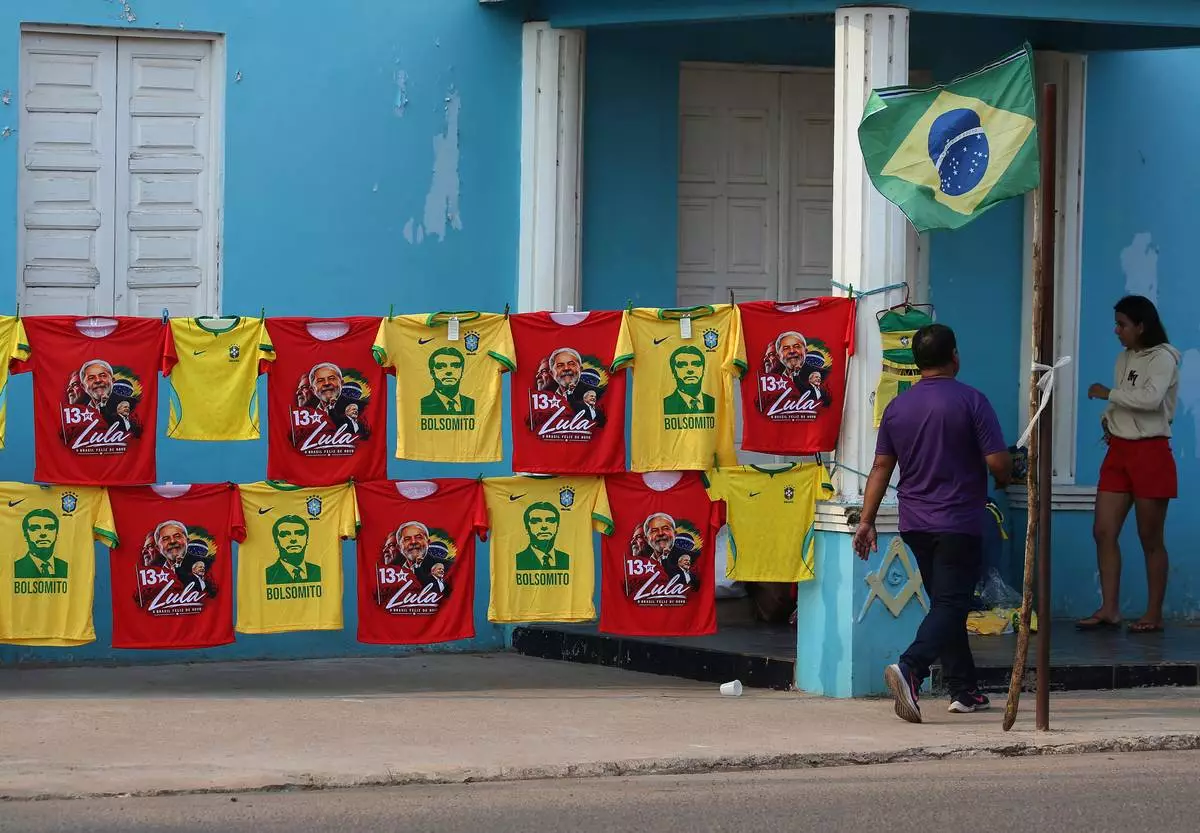
Red T-shirts depicting Brazilian President Luiz Inacio Lula da Silva, who is running for reelection, and yellow T-shirts depicting opposition presidential candidate Sen. Flavio Bolsonaro hang for sale outside a building ahead of Brazil's presidential runoff election in Autazes, Amazonas state, Brazil, Saturday, Oct. 24, 2026. (AP Photo/Edmar Barros)

Red T-shirts depicting Brazilian President Luiz Inacio Lula da Silva, who is running for reelection, and yellow T-shirts depicting opposition presidential candidate Sen. Flavio Bolsonaro hang for sale outside a building ahead of Brazil's presidential runoff election in Autazes, Amazonas state, Brazil, Saturday, Oct. 24, 2026. (AP Photo/Edmar Barros)

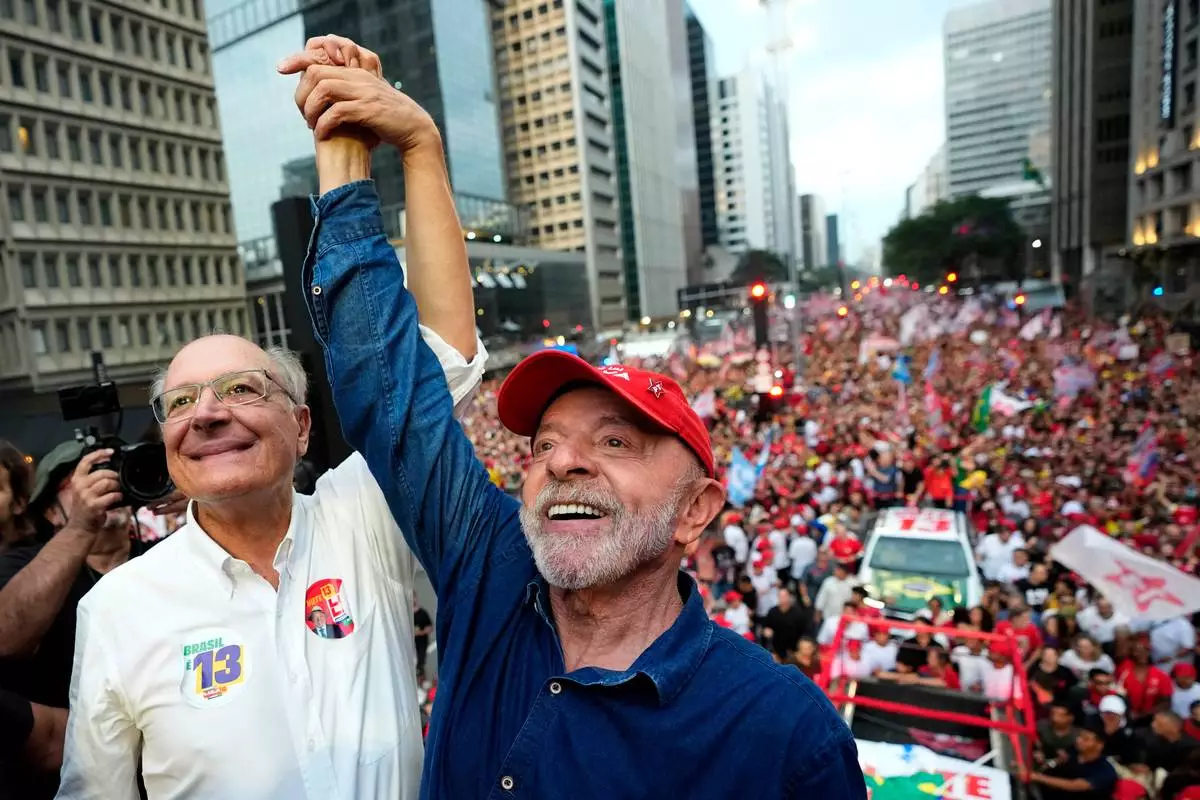
Brazilian President Luiz Inacio Lula da Silva, right, who is running for reelection, and his running mate Geraldo Alckmin raise their arms in unison at the end of their final campaign rally, a day ahead of the presidential runoff election in Sao Paulo, Brazil, Saturday, Oct. 24, 2026. (AP Photo/Natacha Pisarenko)

Brazilian President Luiz Inacio Lula da Silva, right, who is running for reelection, and his running mate Geraldo Alckmin raise their arms in unison at the end of their final campaign rally, a day ahead of the presidential runoff election in Sao Paulo, Brazil, Saturday, Oct. 24, 2026. (AP Photo/Natacha Pisarenko)

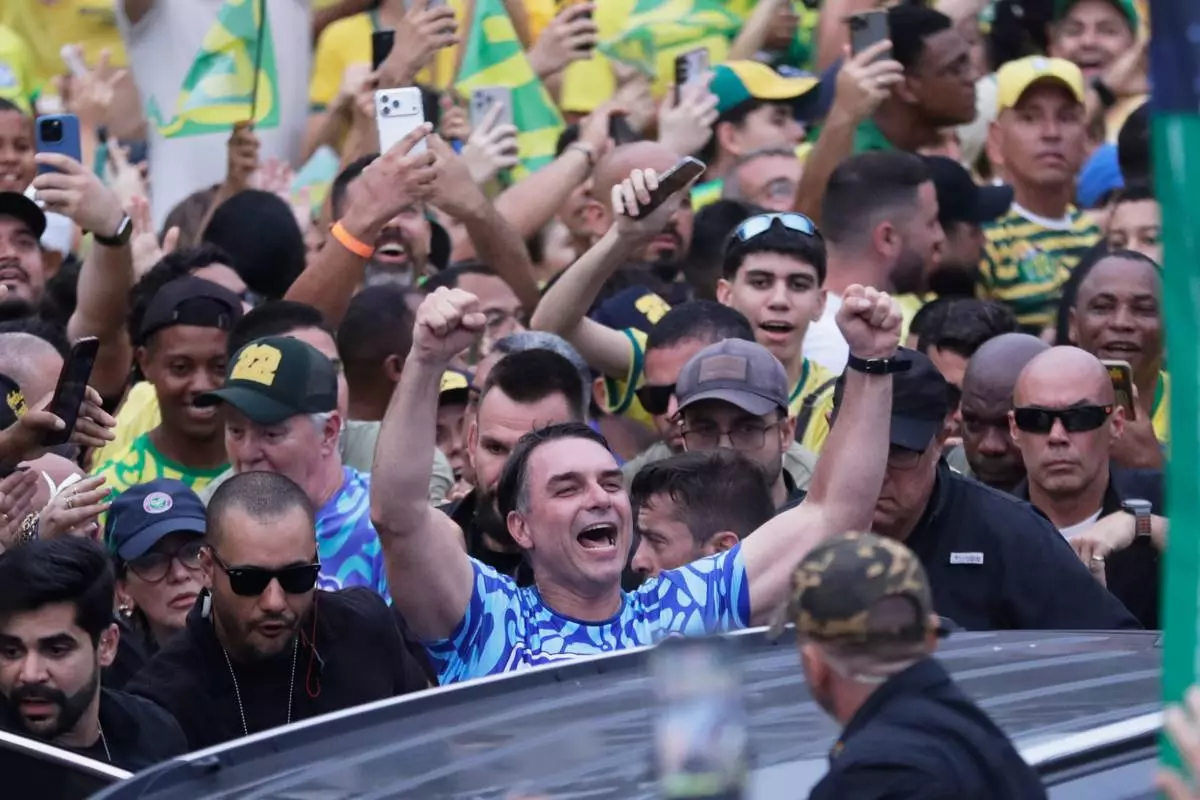
Opposition presidential candidate Sen. Flavio Bolsonaro, center, leaves after his final campaign rally a day ahead of the presidential runoff election in Rio de Janeiro, Saturday, Oct. 24, 2026. (AP Photo/Bruna Prado)

Opposition presidential candidate Sen. Flavio Bolsonaro, center, leaves after his final campaign rally a day ahead of the presidential runoff election in Rio de Janeiro, Saturday, Oct. 24, 2026. (AP Photo/Bruna Prado)

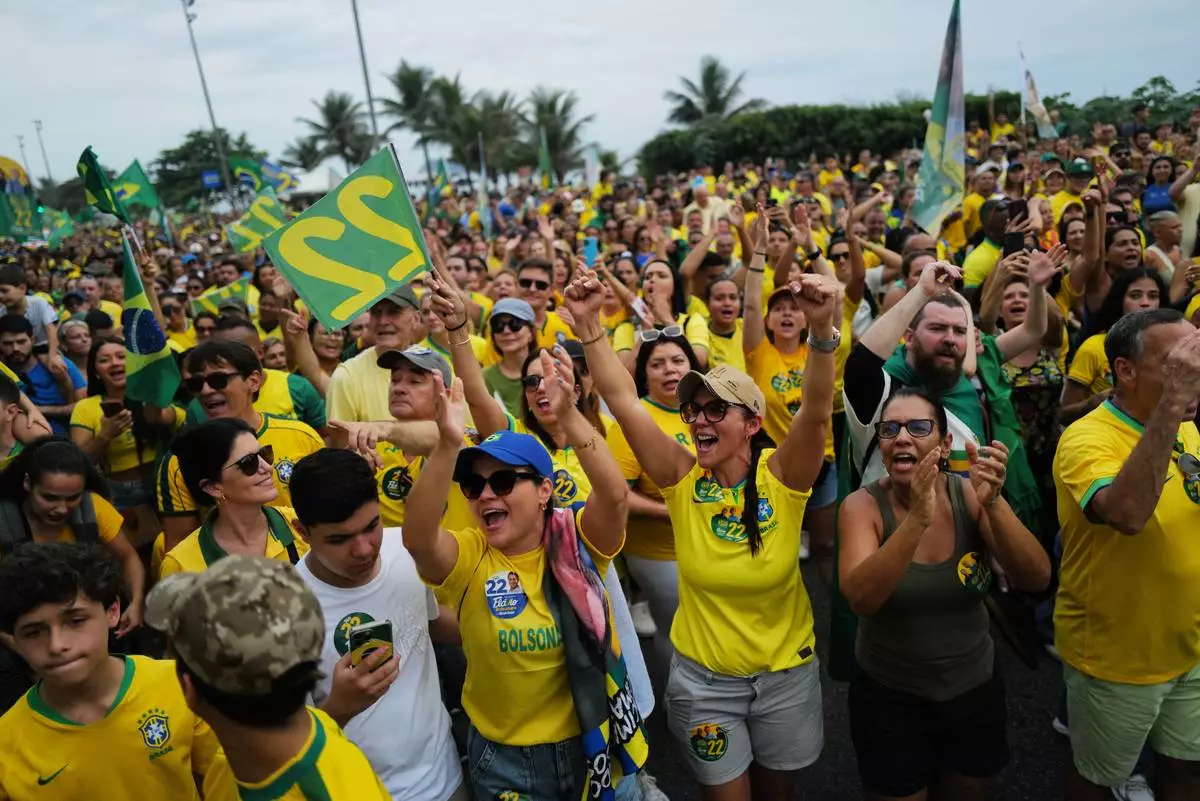
Supporters of opposition presidential candidate Sen. Flavio Bolsonaro cheer during his final campaign rally a day ahead of the presidential runoff election in Rio de Janeiro, Saturday, Oct. 24, 2026. (AP Photo/Lucas Landau)

Supporters of opposition presidential candidate Sen. Flavio Bolsonaro cheer during his final campaign rally a day ahead of the presidential runoff election in Rio de Janeiro, Saturday, Oct. 24, 2026. (AP Photo/Lucas Landau)

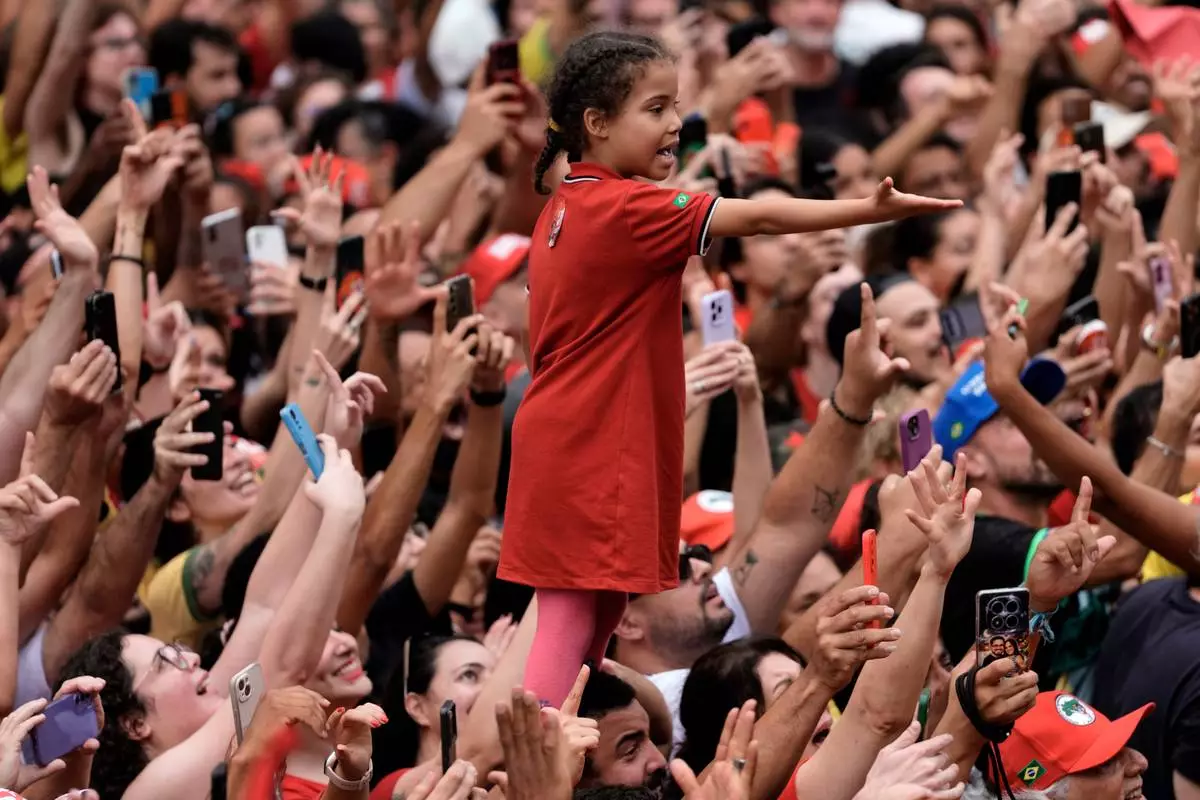
A girl standing on a man's shoulders reaches out amid a crowd of supporters of Brazilian President Luiz Inacio Lula da Silva, who is running for reelection, during his final campaign rally, a day ahead of the presidential runoff election in Sao Paulo, Brazil, Saturday, Oct. 24, 2026. (AP Photo/Natacha Pisarenko)

A girl standing on a man's shoulders reaches out amid a crowd of supporters of Brazilian President Luiz Inacio Lula da Silva, who is running for reelection, during his final campaign rally, a day ahead of the presidential runoff election in Sao Paulo, Brazil, Saturday, Oct. 24, 2026. (AP Photo/Natacha Pisarenko)

Recommended Articles