Skip to Content Facebook Feature Image

She voted for Trump every time. Then came cancer and the bills

News

She voted for Trump every time. Then came cancer and the bills
News

News

She voted for Trump every time. Then came cancer and the bills

2026-10-25 21:10 Last Updated At:21:21

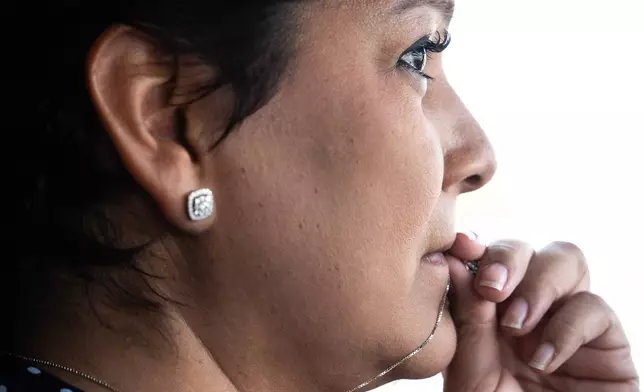
McALLEN, Texas (AP) — The Ford Expedition rumbled to a stop and Cindy Banda’s bedazzled flip-flops landed on the asphalt of the Houston cancer center’s vast parking lot. She threaded through the rows of cars, a tally of patients who gather here to sit with chemotherapy needles or lie on radiation machines.

The elevator dinged open. A year ago in this building, surgeons removed Banda’s right breast, and she still didn't know whether treatment had expunged the cancer from her body. Doctors had told her it would be tough to beat.

More Images
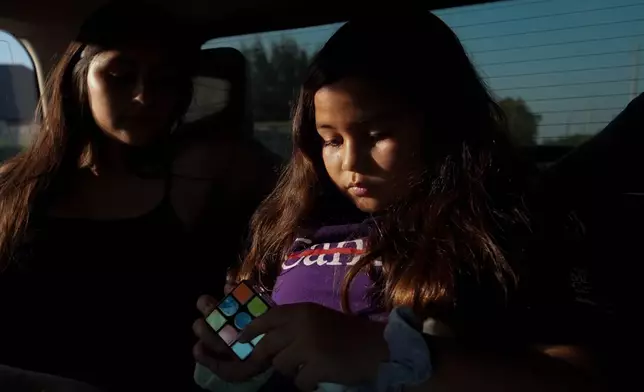
Kathryn Shergold, right, solves a Rubik's Cube in the car as her cousin Kimberly Ford, left, looks on, Sept. 14, 2026, in McAllen, Texas. (AP Photo/Julia Demaree Nikhinson)
Kathryn Shergold, right, solves a Rubik's Cube in the car as her cousin Kimberly Ford, left, looks on, Sept. 14, 2026, in McAllen, Texas. (AP Photo/Julia Demaree Nikhinson)

Cindy Banda, who is battling cancer while caring for her sister's kids in addition to her own, holds her necklace as she drives past the house from where her sister, Melissa Banda, was abducted by her ex-husband before he killed her, in McAllen, Texas, Sept. 15, 2026. (AP Photo/Julia Demaree Nikhinson)

Cindy Banda, who is battling cancer while caring for her sister's kids in addition to her own, holds her necklace as she drives past the house from where her sister, Melissa Banda, was abducted by her ex-husband before he killed her, in McAllen, Texas, Sept. 15, 2026. (AP Photo/Julia Demaree Nikhinson)

EDS NOTE: NUDITY - Cindy Banda shows her mastectomy scar, Sept. 16, 2026, at her home in McAllen, Texas. (AP Photo/Julia Demaree Nikhinson)
EDS NOTE: NUDITY - Cindy Banda shows her mastectomy scar, Sept. 16, 2026, at her home in McAllen, Texas. (AP Photo/Julia Demaree Nikhinson)

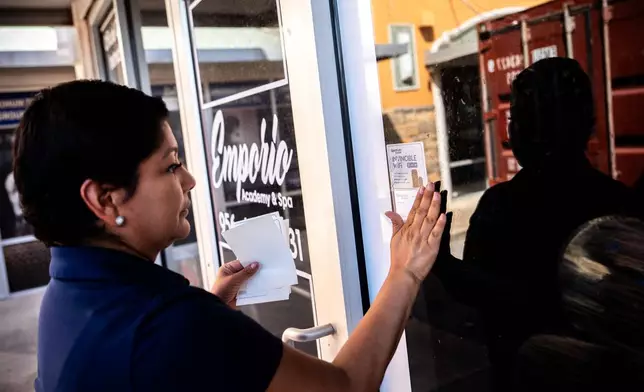
Cindy Banda leaves a flyer advertising Spectrum services near the door of Emporia Academy and Spa, Sept. 14, 2026, in McAllen, Texas. (AP Photo/Julia Demaree Nikhinson)

Cindy Banda leaves a flyer advertising Spectrum services near the door of Emporia Academy and Spa, Sept. 14, 2026, in McAllen, Texas. (AP Photo/Julia Demaree Nikhinson)

Cindy Banda drinks a home remedy after experiencing side effects from the targeted therapy pill Kisqali, Sept. 16, 2026, at her house in McAllen, Texas. (AP Photo/Julia Demaree Nikhinson)

Cindy Banda drinks a home remedy after experiencing side effects from the targeted therapy pill Kisqali, Sept. 16, 2026, at her house in McAllen, Texas. (AP Photo/Julia Demaree Nikhinson)

“I’m more of a positive person myself,” Banda said, now sitting with a white wristband in a dim waiting room. But the bills are harder to dismiss, and the single mother with six children in her care repeated something like a mantra. “Keep the house. Keep the cars. And just keep the kids stable.”

That’s true for many Americans, as rising healthcare costs leave more families with a sinking feeling after seeing the bill for surgery or medication. Heading into the Nov. 3 midterm elections, about half of registered voters said healthcare costs are a major problem for them and their families, up from a little more than one-third four years ago, according to a Fox News poll from September.

With party control of Congress at stake, registered voters are nearly twice as likely to say they trust Democrats over Republicans to handle healthcare, according to an Associated Press-NORC Center for Public Affairs Research poll from the same month. Those frustrations, combined with broader concerns over rising prices, have sapped support for President Donald Trump and his Republican Party.

Banda knows how that feels. She backed Trump in each of his three campaigns, motivated by her opposition to abortion. But when cancer came, the ensuing scramble to make ends meet was painful enough to rearrange her priorities, and she started to think about voting Democratic for the first time.

The 46-year-old was ushered into a sterile room for her appointment, her phone lit up with a text. “Please contact TD Auto Finance.”

“This one’s $1,300,” she said of the car payment bill. “I have to go back to work.”

She had been on sick leave from her job selling internet service for one year, and she needed the income to support her three kids and three more she had taken in after her sister's death.

The doctor said her reconstruction surgery could be scheduled early next year. “I was hoping for maybe December,” Banda said, “only because I've met my deductibles.” Come January, she would have to pay down the $7,500 again. Earlier may be possible, the doctor replied, if the skin around her surgical scar loosens.

The evening had cooled slightly by the time she walked back through the rows of parked cars, their ebb and flow marking the tide of sickness, survival and death in a small corner of a colossal healthcare industry that saves lives while taking in over $5 trillion every year.

Banda paid $8 for parking as she left.

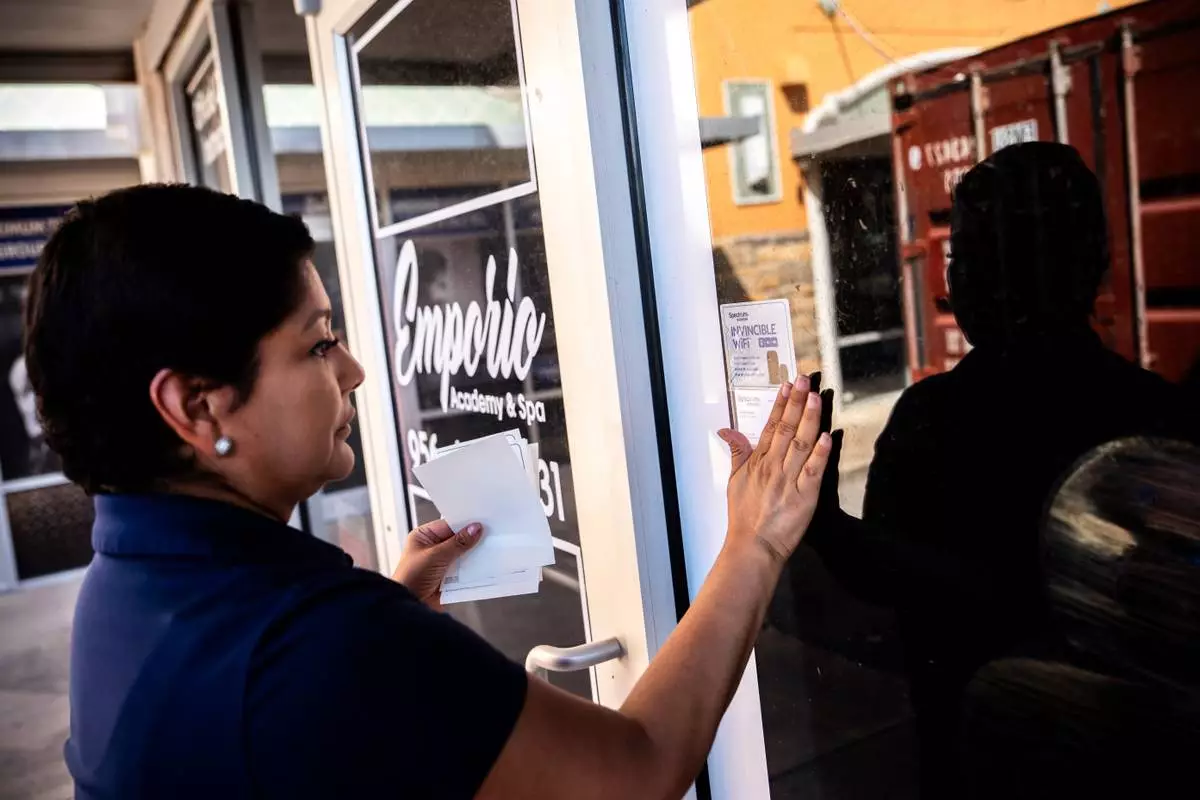
Two weeks later, Banda was back at work, making door-to-door rounds to sell Spectrum's Wi-Fi in McAllen, her city along the U.S.-Mexico border in the Rio Grande Valley. Banda, holding blue flyers, walked along a row of storefronts, some that shuttered since she last was in the area.

She hadn't had a sale and commission since October of last year, after the biopsy and diagnosis.

The doctor who gave her the news had hugged Banda, and she sobbed even though she never really sobs in front of other people. During chemo, her children took turns buzzing off her wispy hair. When her 9-year-old daughter's hand quivered, a teenage cousin helped guide the clipper over her mother’s scalp.

Banda’s first impulse was to maintain normalcy, stability, for the children.

But that requires roughly $7,000 a month for utilities, mortgage, car payments and groceries, along with the two water leaks. Then, even with insurance through her job, the surgeries, chemo and radiation added up to over $25,000 that she's been paying off, making Banda one of tens of millions of other people in the United States in medical debt.

Banda tries not to dwell on death and debt.

“It’ll consume you,” she says. She smothers those thoughts beneath her bubbly demeanor and avoids being alone. But that truce, between her insistence on positivity and the fears that it covers, is brittle.

Certain thoughts still arrive uninvited. Banda’s late sister, Melissa, didn’t have life insurance. Banda makes sure it's a payment she never misses.

“Sometimes I think, and I shouldn’t think like this, but I’m worth more gone than here,” she said one day. “Obviously, the goal is not that, the goal is to beat it,” she continued, “to keep the house and keep the cars.”

So far she has, with the help of others.

On top of child support, the father of Banda's 9-year-old often pays $400 a week for a nanny to help with the kids. Banda’s own father sent her $700 before for her recent Houston appointment, one of his many cash infusions. Her high school classmates, who she hadn’t been in close touch with in decades, fundraised by selling grilled chicken, rice and beans from a roadside tent. Two GoFundMe fundraisers raised nearly $30,000 and Banda rented her late sister’s house while putting her own in forbearance.

But months of insecurity takes its own, sleepless toll. She needed to sell some internet services to catch up.

After sticking the Spectrum Wi-Fi flyers onto empty storefronts, she drove to pick up her kids from school. The following day she had a morning meeting at a barbershop for what would be her first sale back at work.

A lifelong Christian, Banda had voted her anti-abortion stance in past elections. When her sister was kidnapped and murdered by her ex-husband in 2020, Banda retreated from religion. The cancer brought her back to church with an apology to God, but it also made her rethink her politics.

She voted for Trump in 2016, and his first four years seemed steady, so she voted for him again in 2020. Democratic President Joe Biden's tenure, including the tail end of a global pandemic and rising inflation, felt like bedlam, so she voted for Trump to return to the White House in 2024.

But two years later and fighting an expensive disease, she had found no respite from high prices.

So when James Talarico, a Presbyterian seminary student running for U.S. Senate as a Democrat, visited one of Banda’s fundraisers — speaking about his diabetes and his work in the Texas Statehouse to lower the price of insulin — it moved her. “Imagine if he can do that for the cancer,” she said.

Talarico and his Republican opponent, state Attorney General Ken Paxton, have different approaches to healthcare. Talarico wants all Americans to be able to join Medicare; Paxton proposed a $25,000 tax deduction for out-of-pocket medical expenses.

Talarico also supports a law guaranteeing abortion access nationwide, which Banda has voted against for years. But after she slid into debt to stay alive, after her grocery bills mounted and the high school had to comp the kids' soccer gear she couldn't afford, Banda’s anti-abortion concerns have been superseded by costs.

“Because it’s what I’m living,” she said. “I'm living it."

Banda cast an early ballot for Talarico. “Never voted Democrat before today!!” she wrote in a text with blue heart emoji.

Banda had just started a new cancer-targeting medication that cost $16,000 a month, reduced to $500 by insurance. By the afternoon, she was nauseous and fatigued, unable to eat. The malaise would keep her home the next day. She would miss the meeting with the barbershop to close her first deal since getting sick, though she felt confident it was in the bag.

But Banda pushed through the discomfort one evening to join her family as they replaced the flowers at her sister's tomb.

She drove past the headstones and oak trees in the evening’s slanting light, and the family gathered around Melissa Banda's tomb in an open-air mausoleum. There was no speech. Their eulogy was her father, Fidel Banda, methodically clipping and arranging the flowers for his daughter.

Banda walked along the wall of tombs. She will find out on Election Day whether the cancer is in remission or whether it's spread to her organs.

“This one’s for me,” she said, pointing to a blank tomb next to her sister's.

“Mom!” said her daughter with the huffiness of a 9-year-old. “Why would you say that?”

Banda smiled and added, “in a hundred years."

Kathryn Shergold, right, solves a Rubik's Cube in the car as her cousin Kimberly Ford, left, looks on, Sept. 14, 2026, in McAllen, Texas. (AP Photo/Julia Demaree Nikhinson)

Kathryn Shergold, right, solves a Rubik's Cube in the car as her cousin Kimberly Ford, left, looks on, Sept. 14, 2026, in McAllen, Texas. (AP Photo/Julia Demaree Nikhinson)

Cindy Banda, who is battling cancer while caring for her sister's kids in addition to her own, holds her necklace as she drives past the house from where her sister, Melissa Banda, was abducted by her ex-husband before he killed her, in McAllen, Texas, Sept. 15, 2026. (AP Photo/Julia Demaree Nikhinson)

Cindy Banda, who is battling cancer while caring for her sister's kids in addition to her own, holds her necklace as she drives past the house from where her sister, Melissa Banda, was abducted by her ex-husband before he killed her, in McAllen, Texas, Sept. 15, 2026. (AP Photo/Julia Demaree Nikhinson)

EDS NOTE: NUDITY - Cindy Banda shows her mastectomy scar, Sept. 16, 2026, at her home in McAllen, Texas. (AP Photo/Julia Demaree Nikhinson)
EDS NOTE: NUDITY - Cindy Banda shows her mastectomy scar, Sept. 16, 2026, at her home in McAllen, Texas. (AP Photo/Julia Demaree Nikhinson)

Cindy Banda leaves a flyer advertising Spectrum services near the door of Emporia Academy and Spa, Sept. 14, 2026, in McAllen, Texas. (AP Photo/Julia Demaree Nikhinson)

Cindy Banda leaves a flyer advertising Spectrum services near the door of Emporia Academy and Spa, Sept. 14, 2026, in McAllen, Texas. (AP Photo/Julia Demaree Nikhinson)

Cindy Banda drinks a home remedy after experiencing side effects from the targeted therapy pill Kisqali, Sept. 16, 2026, at her house in McAllen, Texas. (AP Photo/Julia Demaree Nikhinson)

Cindy Banda drinks a home remedy after experiencing side effects from the targeted therapy pill Kisqali, Sept. 16, 2026, at her house in McAllen, Texas. (AP Photo/Julia Demaree Nikhinson)
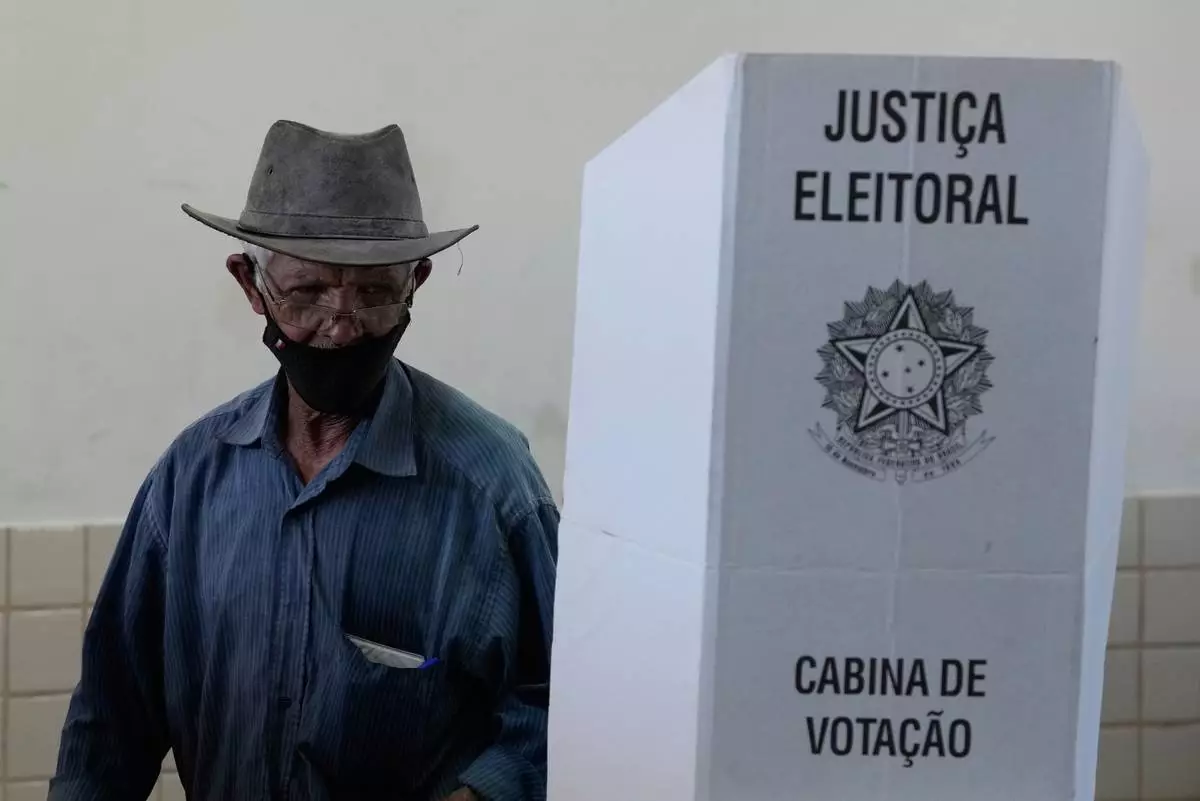
Brazilians are voting Sunday in a presidential runoff that pits leftist incumbent Luiz Inácio Lula da Silva against Sen. Flávio Bolsonaro, a far-right ally of U.S. President Donald Trump.

Bolsonaro, the son of imprisoned former President Jair Bolsonaro, bested Lula by more than 2.2 million votes in the first round of the election earlier this month. More than 33 million of the nearly 160 million registered voters did not turn out.

The difference between the two candidates is stark. Bolsonaro and Lula have opposing ideological views on issues ranging from U.S.-Brazil relations and climate change to social welfare. A win for Bolsonaro would signify a pivot to the right by Latin America’s most populous country and its largest economy in a year when Trump allies have notched victories in Chile, Peru and Colombia.

Here's the latest:

Lula voted in the city of Sao Bernardo do Campo, where he began his political career as a union leader in the 1960s.

“I am thankful to the Brazilian people. What people did to me in recent days is something I cannot repay,” he said before casting his vote and holding Brazil’s flag in front of the cameras.

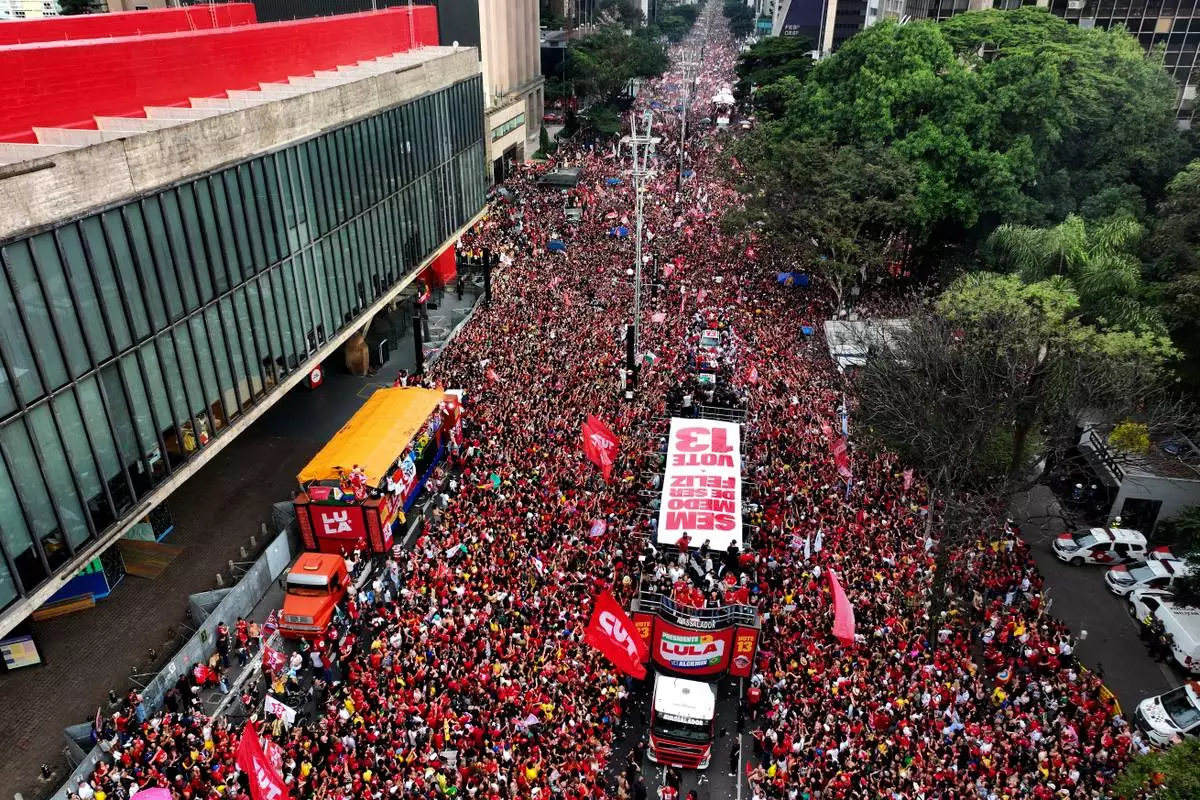
He said he was still emotional about Saturday’s demonstration of support from voters in São Paulo. “I don’t think Paulista Avenue had so many people in any political event.”

“It is a lot of generosity, a lot of care, a lot of love. I will be forever grateful,” Lula said.

First lady Rosângela da Silva, Vice President Geraldo Alckmin and other allies accompanied Lula to the polling station.

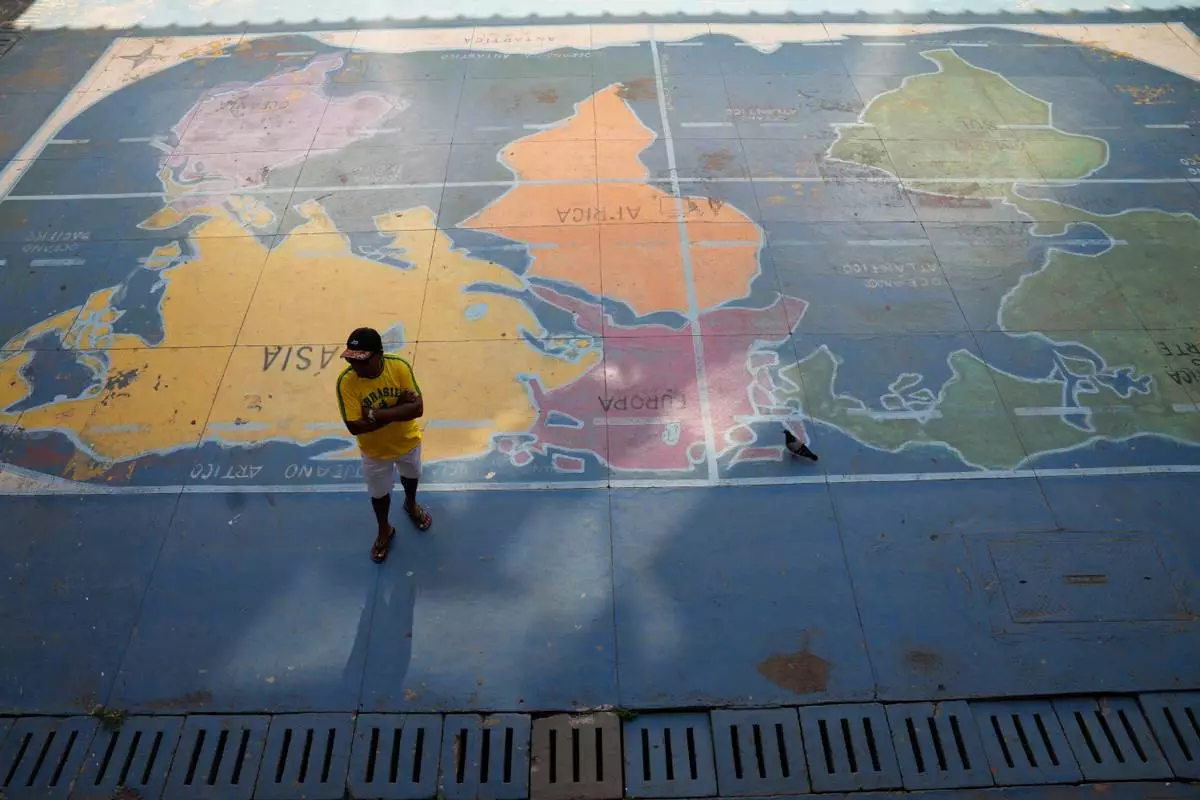
Voting is mandatory for literate Brazilians aged 18 to 70. But that has never been a real consideration for nonvoters, who must either submit a formal justification online or at a polling station, or pay a small fine of less than $1.

More than 33 million people did not vote in the first round of the elections on Oct. 4. Some of those were hospitalized, living overseas or working outside their voting areas. And others just chose not to.

Unexcused absences in three consecutive elections freeze tax IDs, block nonvoters from applying to state jobs, hinders loans from state banks, and delays the issuance of passports. For those who don’t want to choose a candidate even when they show up, they can cast blank or null votes.

Fabianne Borges Santoro, a 45-year-old physiotherapist who lives in the neighborhood where Bolsonaro voted, said she voted for change.

“The Workers’ Party has been in power for a long time and the voice of the people is saying that we need change to see improvements in security and the cost of living,” she said, wearing a top featuring Brazil’s national colors, yellow and green. “Things are really expensive and taxes are too high.”

Santoro said she once voted for Lula’s party but now associates it with corruption, particularly after the so-called Operation Car Wash that started in 2014, when the Workers’ Party was in power and entangled dozens of politicians.

Roulen Azeredo, a 76-year-old army reservist, said he has always voted right. He also echoed the desire for a shift in the country’s direction.

“The current government did nothing,” said Azeredo, who hopes Jair Bolsonaro, who is currently serving a 27-year sentence for attempting a coup, will be freed if the former president’s eldest son wins. “His imprisonment is a disgrace.”

Sunday’s runoff is a battle of politics as much as personalities. Brazil’s next president — Lula or Bolsonaro, a Trump ally — will determine whether U.S. influence further expands in Latin America, where Trump-allied candidates have won elections in countries that include Colombia, Argentina and Peru.

Brazil is the region’s most populous country and its largest economy. A Lula win would leave Brazil and Mexico, the region’s second most populous country, with left-of-center leaders; a Bolsonaro win would likely bring Brazil closer to Washington.

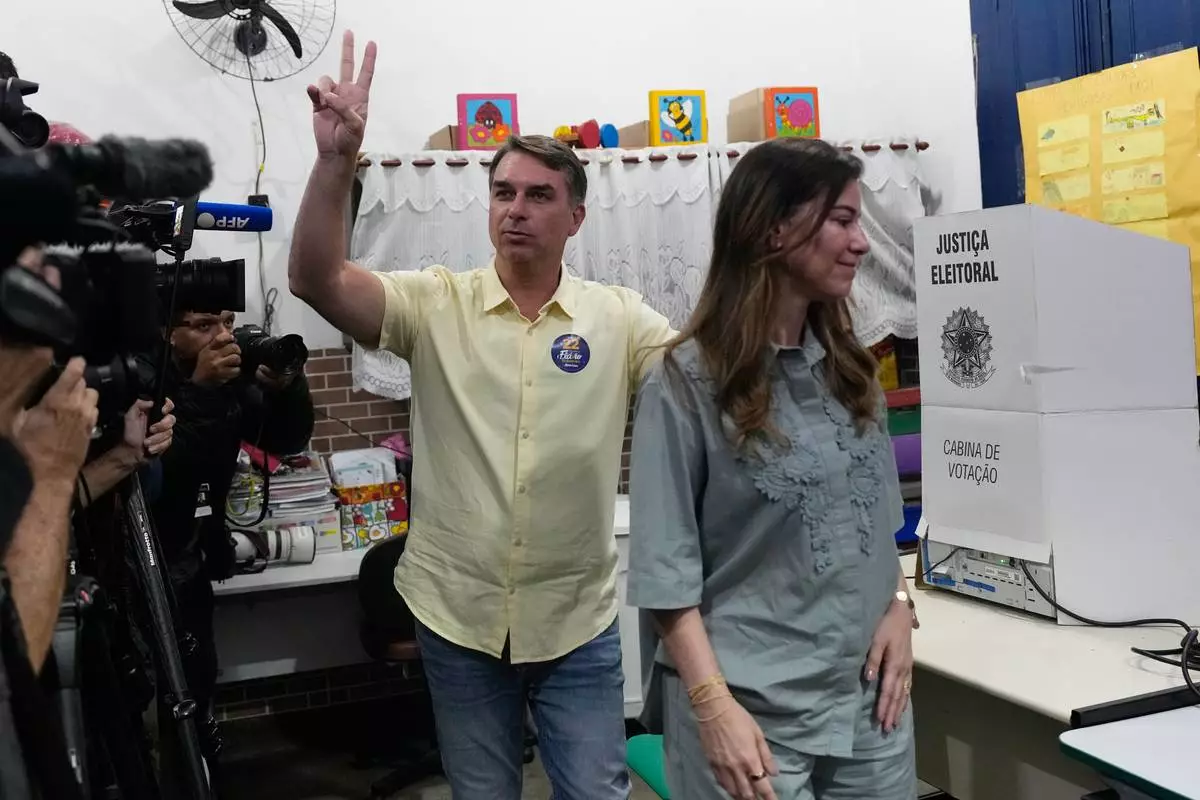
Presidential candidate Flávio Bolsonaro voted at a local school in Rio de Janeiro just after 8 a.m., accompanied by his wife, Fernanda Bolsonaro. Wearing a light yellow shirt, he smiled and waved to supporters waiting to see him in the rain.

“The time of real change has arrived,” Bolsonaro told journalists. “Brazil can’t go on another four years on its current trajectory.”

As Bolsonaro voted, supporters of the opposition candidate shouted “Lula, thief, your place is in prison,” while fans of the incumbent responded with clapping and the chant “Olé olé olé ola, Lula!” The two anthems are common in demonstrations.

In Brazil, voting is fully electronic — meaning votes are counted much more quickly than in some other countries.

Polls opened at 8 a.m. and will close at 5 p.m. Brasilia time (2000 GMT) in most of the country.

On the ballot: the presidential face-off between Lula and Bolsonaro and six gubernatorial races. Votes are tallied quickly because each ballot box calculates results locally and prints a paper summary. The encrypted data is transmitted via secure networks to the nation’s top electoral court in capital Brasilia, which aggregates and publishes the counts within hours.

The system has been in place since the 1990s with few questioning its efficiency. One of its critics is former President Bolsonaro.

A voter stands at a polling station during a presidential runoff in Brasilia, Brazil, Sunday, Oct. 25, 2026. (AP Photo/Eraldo Peres)

A voter stands at a polling station during a presidential runoff in Brasilia, Brazil, Sunday, Oct. 25, 2026. (AP Photo/Eraldo Peres)

A man votes in the presidential runoff in Brasilia, Brazil, Sunday, Oct. 25, 2026. (AP Photo/Eraldo Peres)

A man votes in the presidential runoff in Brasilia, Brazil, Sunday, Oct. 25, 2026. (AP Photo/Eraldo Peres)

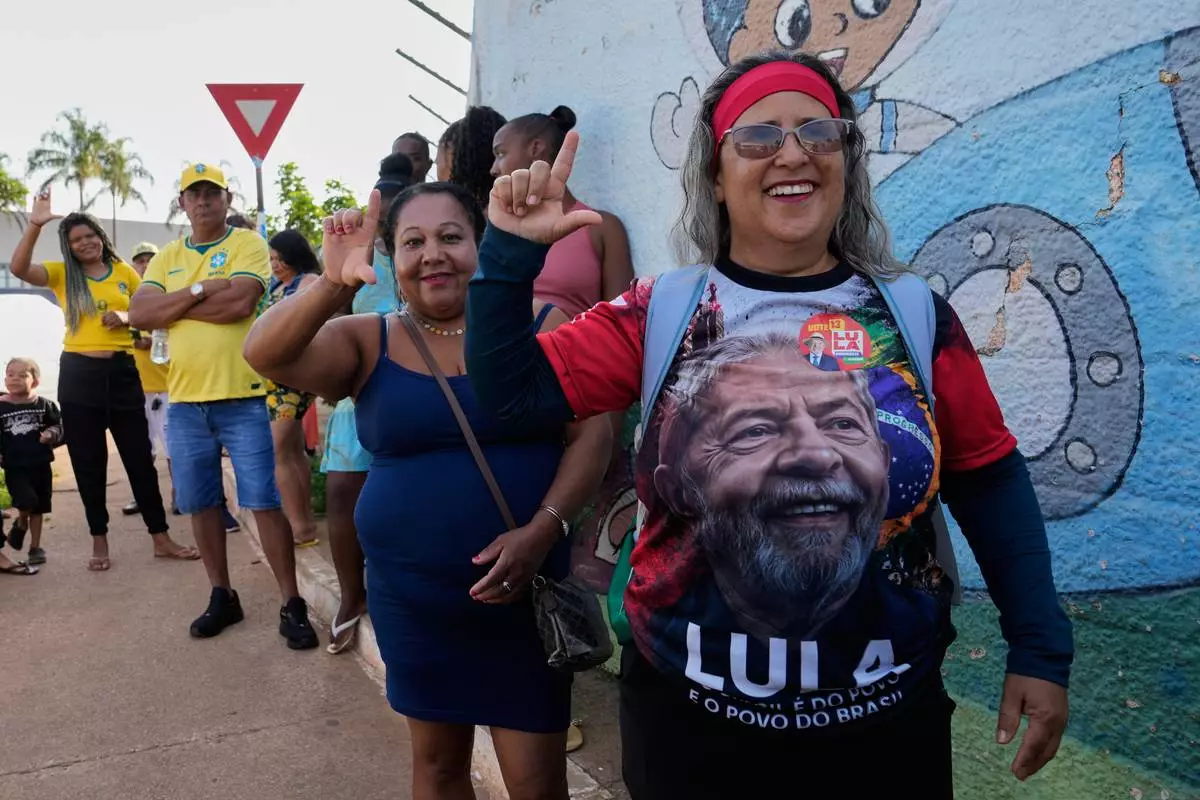
A supporter of President Luiz Inacio Lula da Silva, who is seeking reelection, lines up at a polling station during a presidential runoff in Brasilia, Brazil, Sunday, Oct. 25, 2026. (AP Photo/Eraldo Peres)

A supporter of President Luiz Inacio Lula da Silva, who is seeking reelection, lines up at a polling station during a presidential runoff in Brasilia, Brazil, Sunday, Oct. 25, 2026. (AP Photo/Eraldo Peres)

Opposition presidential candidate Sen. Flavio Bolsonaro makes the victory sign after voting in the presidential runoff in Rio de Janeiro, Sunday, Oct. 25, 2026. (AP Photo/Silvia Izquierdo)

Opposition presidential candidate Sen. Flavio Bolsonaro makes the victory sign after voting in the presidential runoff in Rio de Janeiro, Sunday, Oct. 25, 2026. (AP Photo/Silvia Izquierdo)

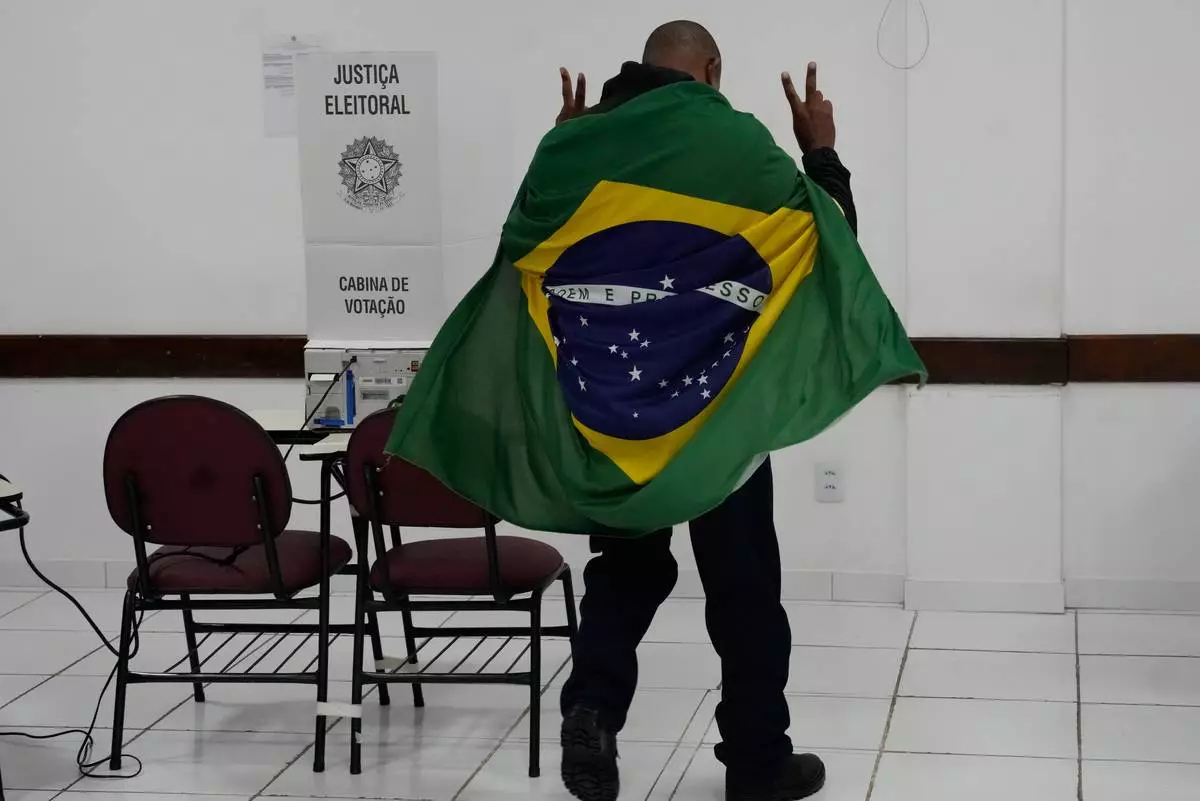
A man wrapped in a Brazilian flag arrives to vote in the presidential runoff in Brasilia, Brazil, Sunday, Oct. 25, 2026. (AP Photo/Eraldo Peres)

A man wrapped in a Brazilian flag arrives to vote in the presidential runoff in Brasilia, Brazil, Sunday, Oct. 25, 2026. (AP Photo/Eraldo Peres)

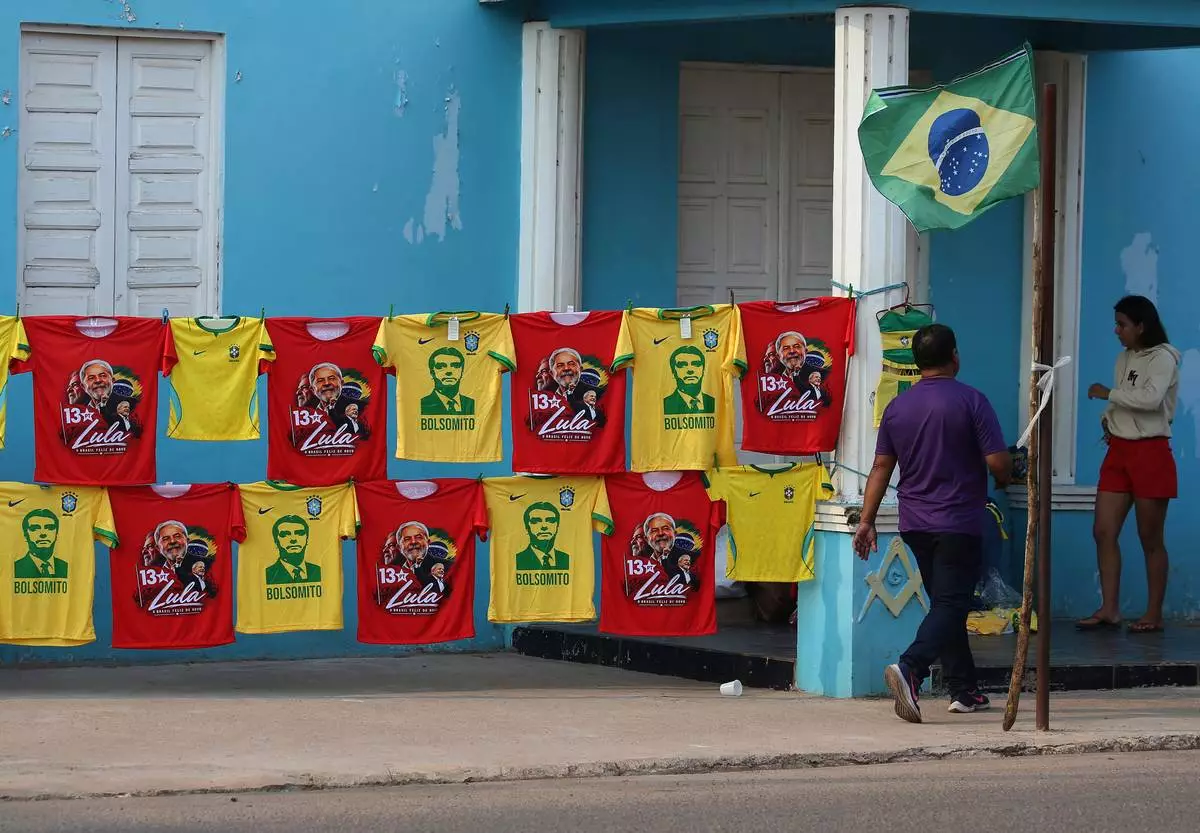
Red T-shirts depicting Brazilian President Luiz Inacio Lula da Silva, who is running for reelection, and yellow T-shirts depicting opposition presidential candidate Sen. Flavio Bolsonaro hang for sale outside a building ahead of Brazil's presidential runoff election in Autazes, Amazonas state, Brazil, Saturday, Oct. 24, 2026. (AP Photo/Edmar Barros)

Red T-shirts depicting Brazilian President Luiz Inacio Lula da Silva, who is running for reelection, and yellow T-shirts depicting opposition presidential candidate Sen. Flavio Bolsonaro hang for sale outside a building ahead of Brazil's presidential runoff election in Autazes, Amazonas state, Brazil, Saturday, Oct. 24, 2026. (AP Photo/Edmar Barros)

Supporters of Brazilian President Luiz Inacio Lula da Silva, who is running for reelection, crowd Paulista Avenue as his campaign vehicle passes during his final campaign rally ahead of Brazil's presidential runoff election in Sao Paulo, Brazil, Saturday, Oct. 24, 2026. (AP Photo/Andre Penner)

Supporters of Brazilian President Luiz Inacio Lula da Silva, who is running for reelection, crowd Paulista Avenue as his campaign vehicle passes during his final campaign rally ahead of Brazil's presidential runoff election in Sao Paulo, Brazil, Saturday, Oct. 24, 2026. (AP Photo/Andre Penner)

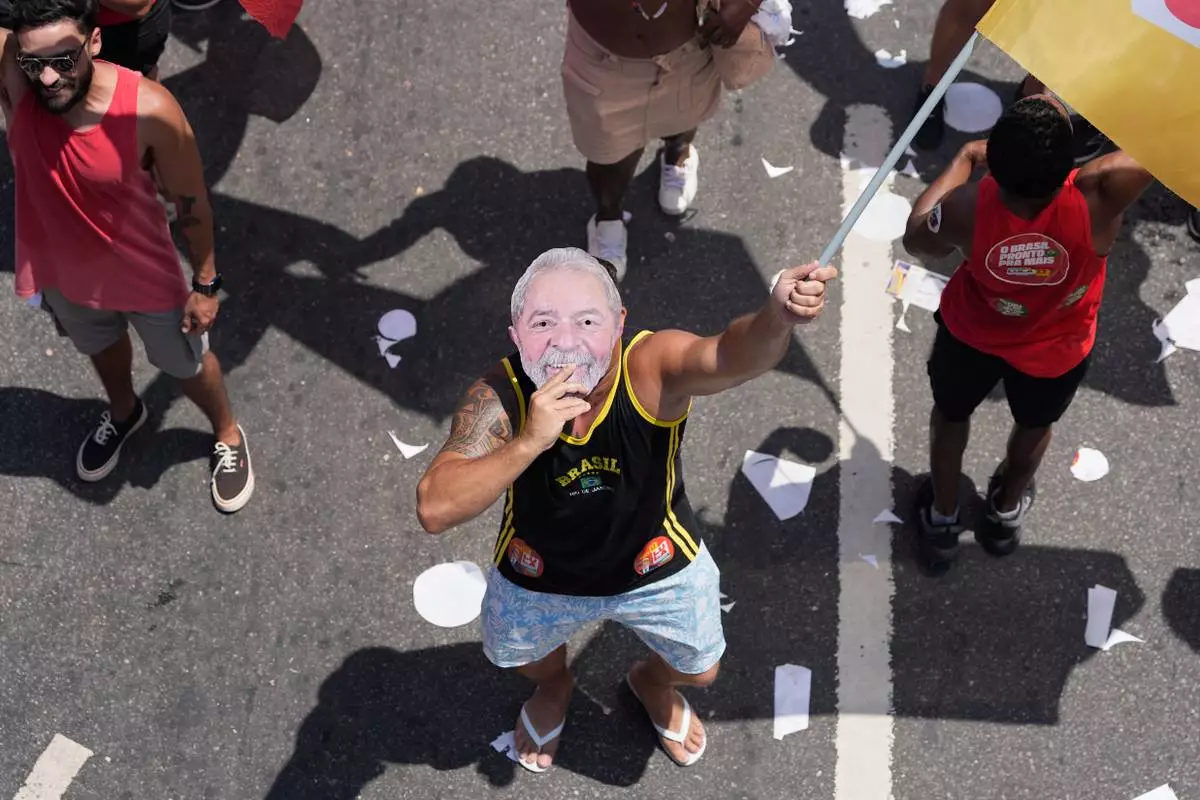
A supporter wears a mask of Brazilian President Luiz Inacio Lula da Silva, who is running for reelection, during his final campaign rally on Copacabana beach a day ahead of the presidential runoff election in Rio de Janeiro, Saturday, Oct. 24, 2026. (AP Photo/Silvia Izquierdo)

A supporter wears a mask of Brazilian President Luiz Inacio Lula da Silva, who is running for reelection, during his final campaign rally on Copacabana beach a day ahead of the presidential runoff election in Rio de Janeiro, Saturday, Oct. 24, 2026. (AP Photo/Silvia Izquierdo)

FILE - Brazil President Luiz Inacio Lula da Silva, right, who is running for reelection, gestures as opposition presidential candidate Sen. Flavio Bolsonaro stands beside him during a televised presidential debate one week before the runoff election in Sao Paulo, Brazil, Oct. 18, 2026. (AP Photo/Andre Penner, File)

FILE - Brazil President Luiz Inacio Lula da Silva, right, who is running for reelection, gestures as opposition presidential candidate Sen. Flavio Bolsonaro stands beside him during a televised presidential debate one week before the runoff election in Sao Paulo, Brazil, Oct. 18, 2026. (AP Photo/Andre Penner, File)

Recommended Articles