JuJu Watkins is back as women's college basketball has one of its brightest stars returning from an ACL injury that sidelined the USC guard all of last season.
Watkins headlines a talented group of stars, including AP Player of the Year Sarah Strong of UConn, Hannah Hidalgo of Notre Dame and South Carolina's Joyce Edwards.
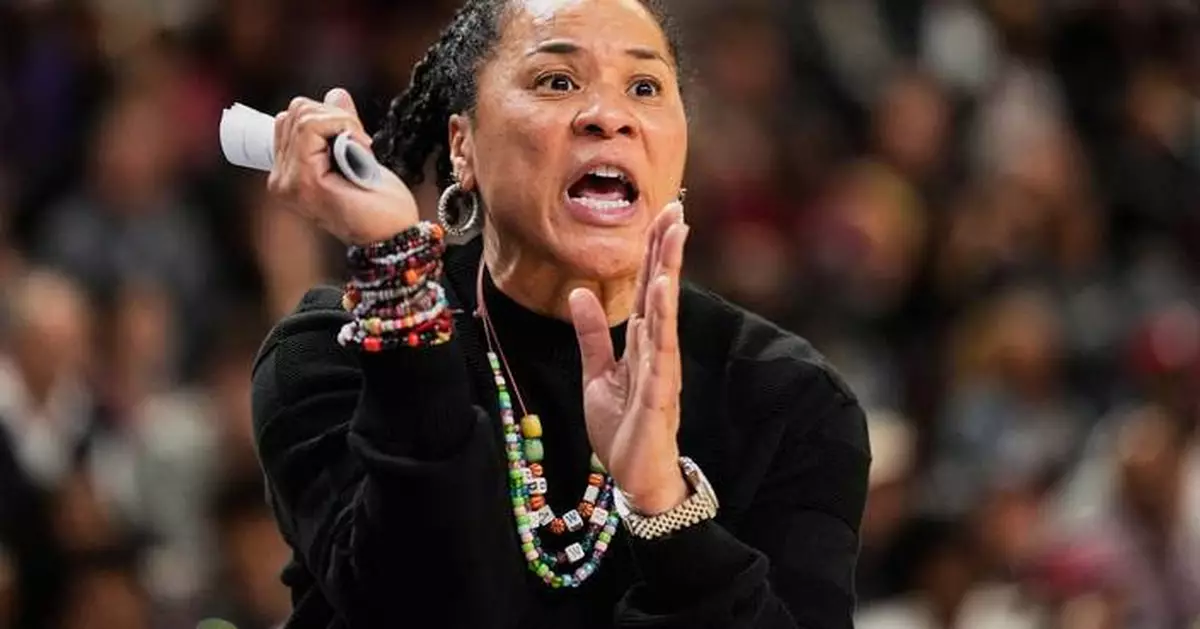
Dawn Staley's top-ranked Gamecocks are looking to rebound from last season's national championship game loss to UCLA. The Bruins took a huge hit with their top six players all getting drafted by WNBA teams. Still, coach Cori Close used the transfer portal well to bring in a new group to try and defend the Bruins first NCAA title.
The season begins overseas once again with Hidalgo's 13th-ranked Irish team facing Villanova in the Eternal City Tip-Off in Rome on Nov. 1. A day later, the Gamecocks will face No. 20 Maryland and No. 12 North Carolina plays No. 21 Oklahoma in Paris.
The national championship game will take place on April 4 in Columbus, Ohio. The champion will come from an expanded NCAA Tournament field that will have 76 teams for the first time.
As has been the case over the past few years, some of the top players changed schools this past offseason. There was a mass exodus from Iowa State including star center Audi Crooks going to Oklahoma State and Addy Brown heading to UCLA. Talaysia Cooper left Tennessee as part of another mass leaving to head to Ole Miss. Other key moves in the offseason included Jordan Lee going from Texas to South Carolina, Nunu Agara heading from Stanford to Maryland, Liv McGill leaving Florida for Oklahoma State and Aaliyah Crump going to Duke from Texas.
Even with the NCAA allowing players to stay five years now, there's a huge crop of promising freshmen who can make an impact immediately for their college teams. North Carolina's Kate Harpring, USC's Saniyah Hall and Iowa's McKenna Woliczko all could produce quickly.
Northwestern brought in Princeton coach Carla Berube to take over for Joe McKeown , who retired at the end of last season. Berube has gone 531-125 in stops at Division III Tufts and then Princeton. She led the Tigers five consecutive NCAA Tournament appearances and won 84% of her games at the school.
Other major coaching changes included Tanisha Wright taking over at her alma mater Penn State; Ayla Guzzardo becoming the head of Georgia and Aaron Roussell leading Virginia after leaving Bucknell.
Sign up for Top 25 poll alerts here, visit the Top 25 here and see AP’s full college basketball coverage here
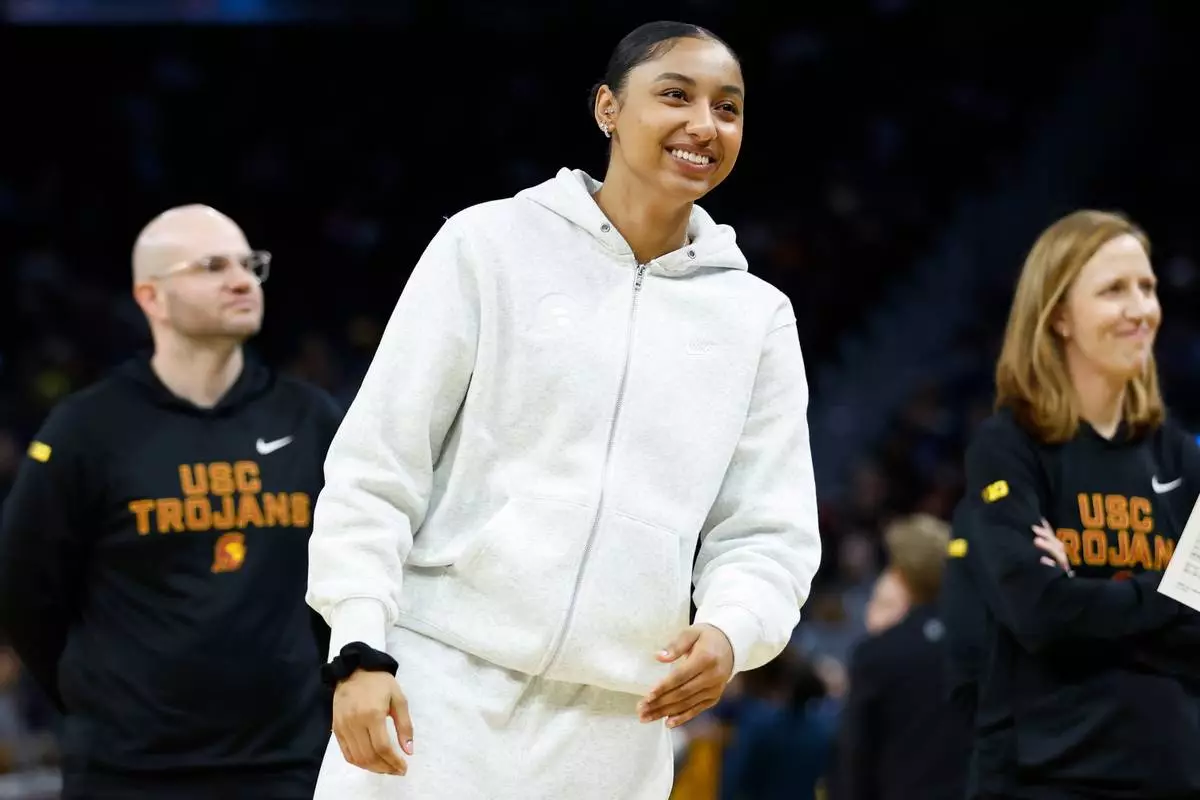
FILE - USC guard Juju Watkins (12) looks on from the sideline before the game against California during an NCAA basketball game on Dec. 21, 2025, in San Francisco. (AP Photo/Lachlan Cunningham, File)
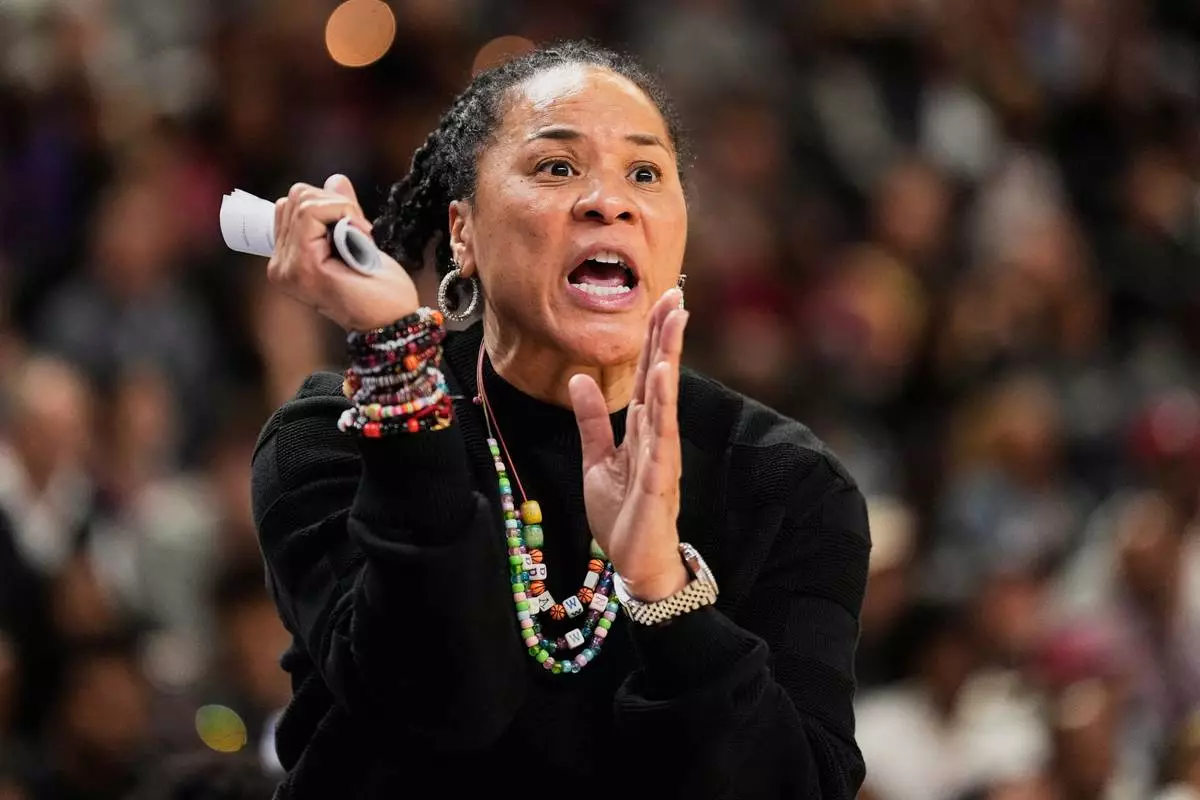
FILE - South Carolina head coach Dawn Staley reacts during the second half of an NCAA college basketball game against Texas in the final of the Southeastern Conference tournament, March 8, 2026, in Greenville, S.C. (AP Photo/Chris Carlson, File)
RIO DE JANEIRO (AP) — Brazilians began voting in Sunday’s polarizing presidential runoff between incumbent President Luiz Inácio Lula da Silva and Flávio Bolsonaro, a contest that will determine whether the U.S. will significantly expand its growing influence in Latin America.
Polls ahead of the vote showed the two candidates, who need more than 50% of the vote to become Brazil’s next leader in January, in a neck-and-neck race. The election pits the left-of-center veteran politician Lula against Bolsonaro, an ally of U.S. President Donald Trump and the son of imprisoned former President Jair Bolsonaro.
Flávio Bolsonaro bested Lula by more than 2.2 million votes in the first round of the election earlier this month. More than 33 million voters out of nearly 160 million did not turn out.
The difference between the two candidates is stark. Bolsonaro and Lula have opposing ideological views on issues ranging from U.S.-Brazil relations and climate change to social welfare.
A win for Bolsonaro would signify a pivot to the right by Latin America's most populous country and its largest economy in a year when Trump allies have notched victories in Chile, Peru and Colombia.
A victory for Lula would leave Brazil and Mexico, which is the region’s second most populous country and led by President Claudia Sheinbaum, with left-of-center leaders.
In many ways, Brazil’s runoff vote resembles a rematch between the country’s two polarized political forces that trigger passion as much as loathing. Four years ago, Lula beat Bolsonaro’s father by the narrowest margin since the country’s return to democracy in 1985. Polls suggest that this election will be even closer.
Lula, who first governed the country between 2003 and 2010, has faced a tough reelection battle because of concerns about the cost of living and security. Bolsonaro made a tough-on-crime approach the cornerstone of his campaign and pledged to bring down food costs.
Both have been hit by corruption suspicions involving family members and allies, with Bolsonaro implicated in a sprawling scandal rocking Brazil. Lula spent more than a year in prison on corruption convictions that were eventually annulled.
Bolsonaro’s admission that he accepted about $12 million from disgraced former banker Daniel Vorcaro to produce a film on his father’s life has cast a shadow over his campaign. He is under investigation for corruption, money laundering and tax evasion in connection with the case.
As Bolsonaro voted at a school in Rio de Janeiro around 8 a.m., Bolsonaro's supporters shouted “Lula, thief, your place is in prison” while Lula’s supporters chanted in his support.
“The time of real change has arrived,” Bolsonaro told journalists. “Brazil can’t go on another four years on its current trajectory.”
In the lead-up to the vote, Lula frequently portrayed Bolsonaro, whose father is under house arrest for attempting a coup, as a threat to democracy. Bolsonaro has promised to seek an amnesty for his father if elected.
The next president will name at least three Supreme Court justices out of 11 in his next term due to upcoming retirements. Bolsonaro has long taken aim at the country's top court — which has been rocked by a corruption scandal — and promised to push for judiciary reform.
Lula, trying to lure undecided voters, has invested in costly incentives since he lost the first round of voting. His government’s most recent moves have been endorsing a debt relief program for small businesses and promising free public transportation on weekends. A win for the incumbent came with the Senate's approval of the six-day working week — a popular proposal backed by the government.
Lula has criticized the U.S. president before Brazil's election, speaking about the risks of U.S. intervention in Brazilian elections after the Trump administration imposed high tariffs against Brazilian exports, sanctioned a Supreme Court justice who chaired the investigation that ended up resulting in the sentencing of Jair Bolsonaro and classified drug-trafficking groups as foreign terrorist organizations, which experts say may have been intended to make Lula look soft on crime.
Flávio Bolsonaro has touted his proximity to the White House and insisted that Brazil needs to strike better deals with the Trump administration, including the rare minerals economy. Brazil estimates that its deposits hold up to 21 million tons, second only to China. He denies he's being helped by the U.S. government.
Voting in Brazil is conducted electronically and the result is usually available within hours after polling stations close at 5 p.m. in Brasilia.
Savarese reported from Sao Paulo.
Follow AP’s coverage of Latin America and the Caribbean at https://apnews.com/hub/latin-america
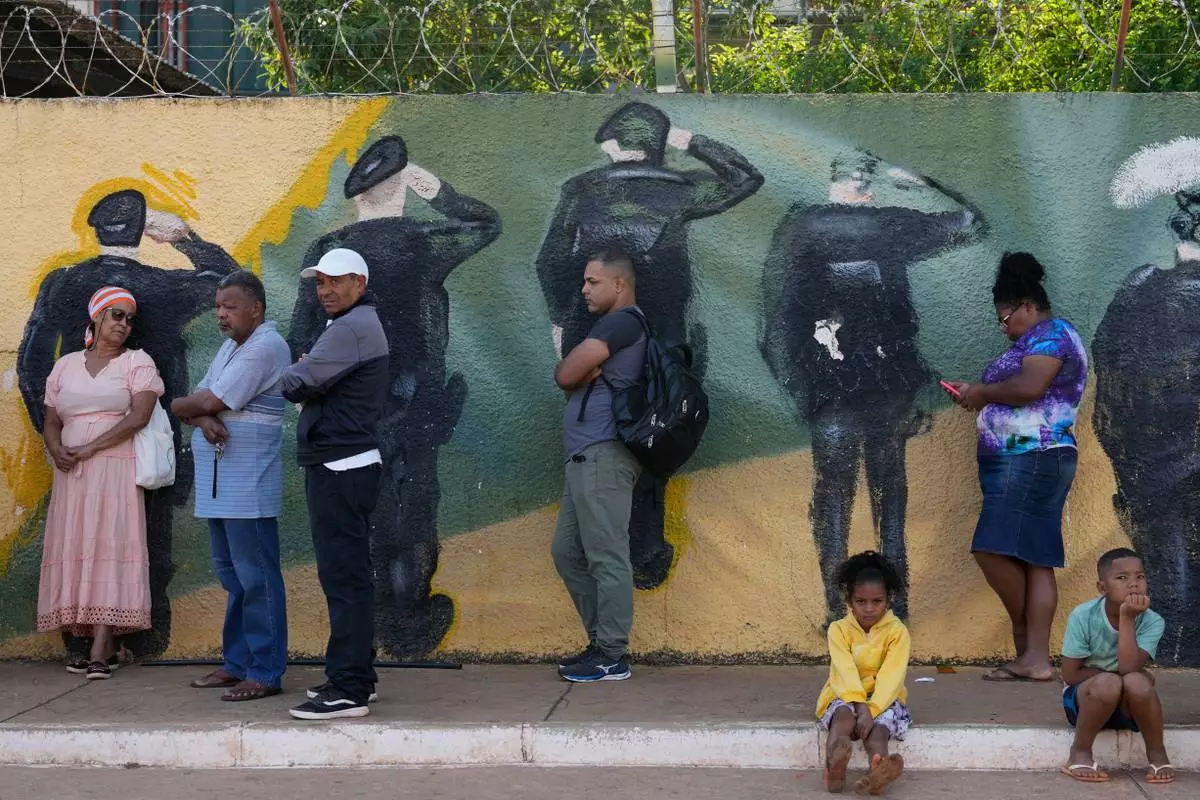
Voters line up at a polling station during the presidential runoff in Brasilia, Brazil, Sunday, Oct. 25, 2026. (AP Photo/Eraldo Peres)
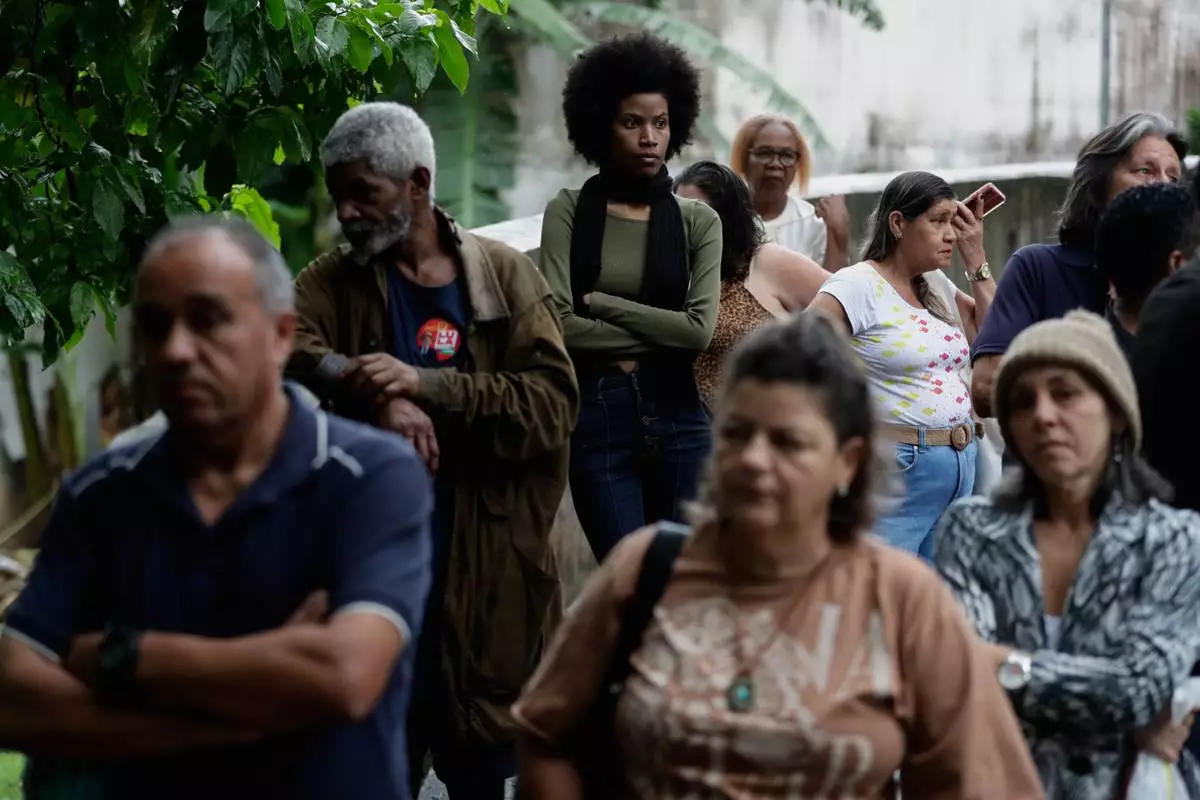
Voters line outside a polling station up during the presidential runoff in Rio de Janeiro, Sunday, Oct. 25, 2026. (AP Photo/Bruna Prado)
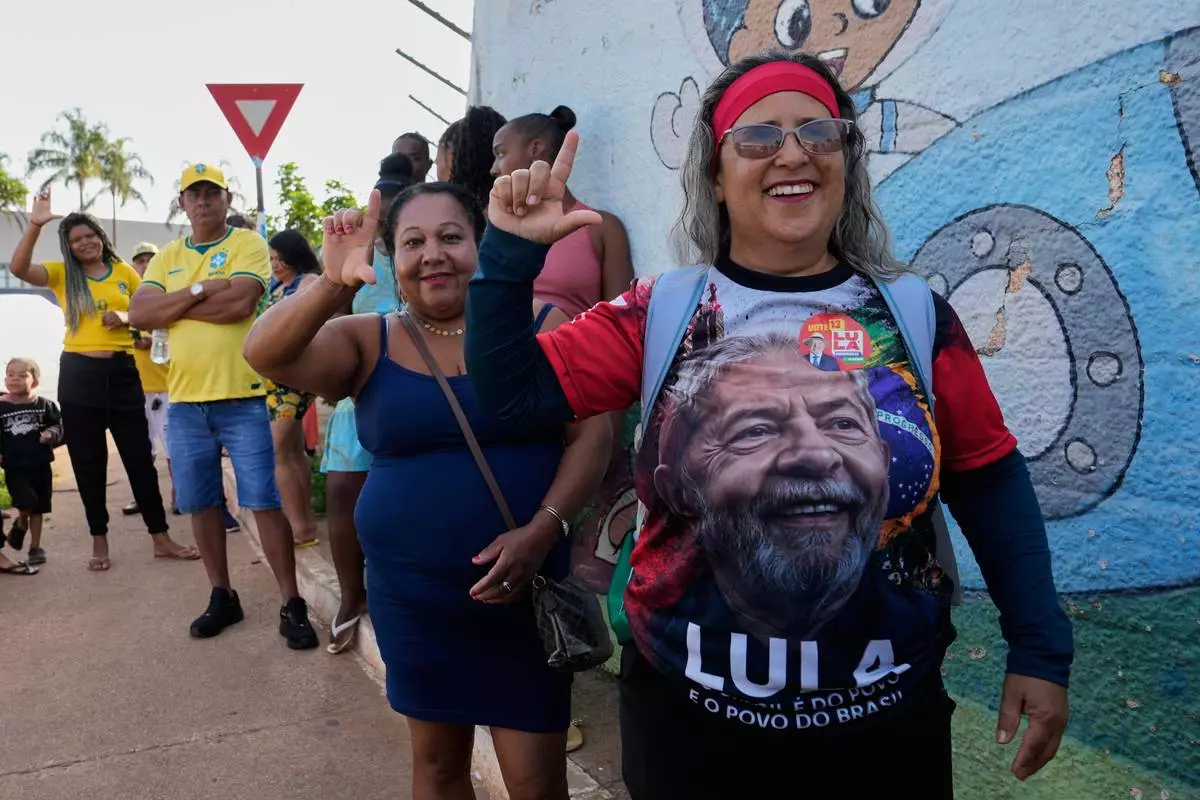
A supporter of President Luiz Inacio Lula da Silva, who is seeking reelection, lines up at a polling station during a presidential runoff in Brasilia, Brazil, Sunday, Oct. 25, 2026. (AP Photo/Eraldo Peres)
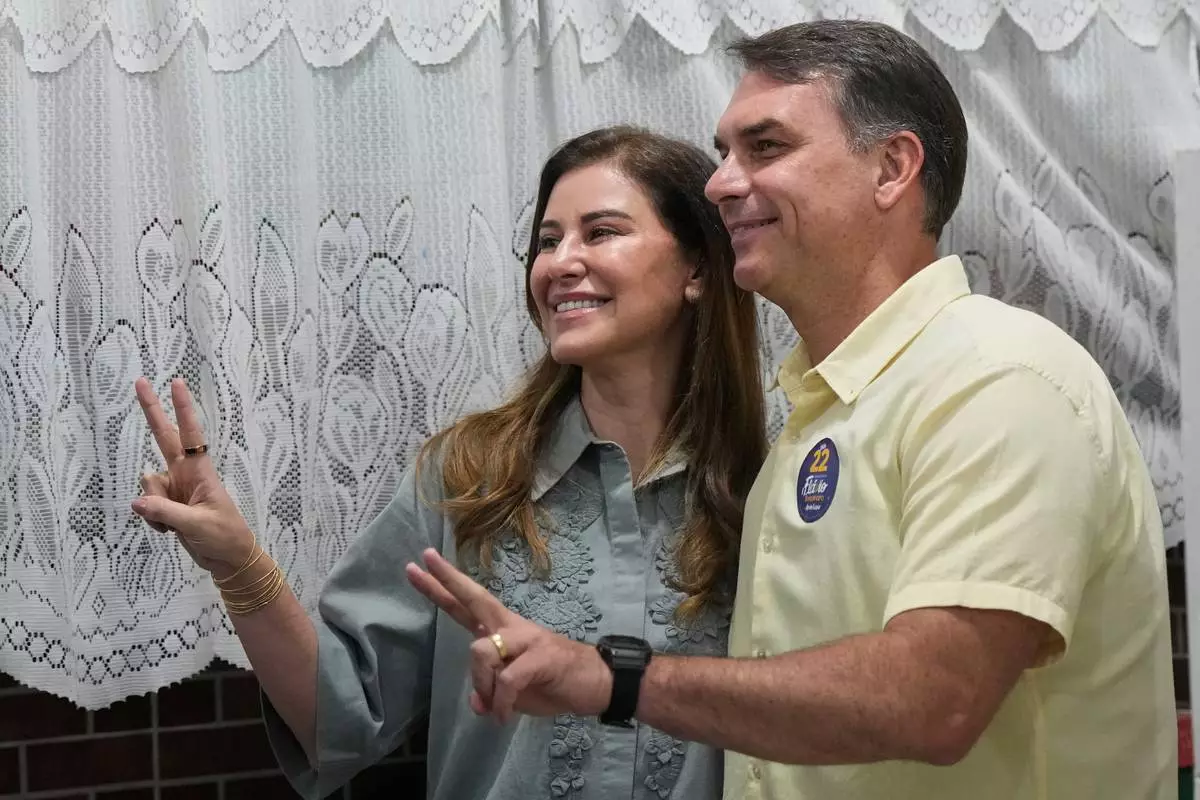
Opposition presidential candidate Sen. Flavio Bolsonaro and his wife Fernanda Bolsonaro give a thumbs during the runoff presidential election in Rio de Janeiro, Sunday, Oct. 25, 2026. (AP Photo/Silvia Izquierdo)
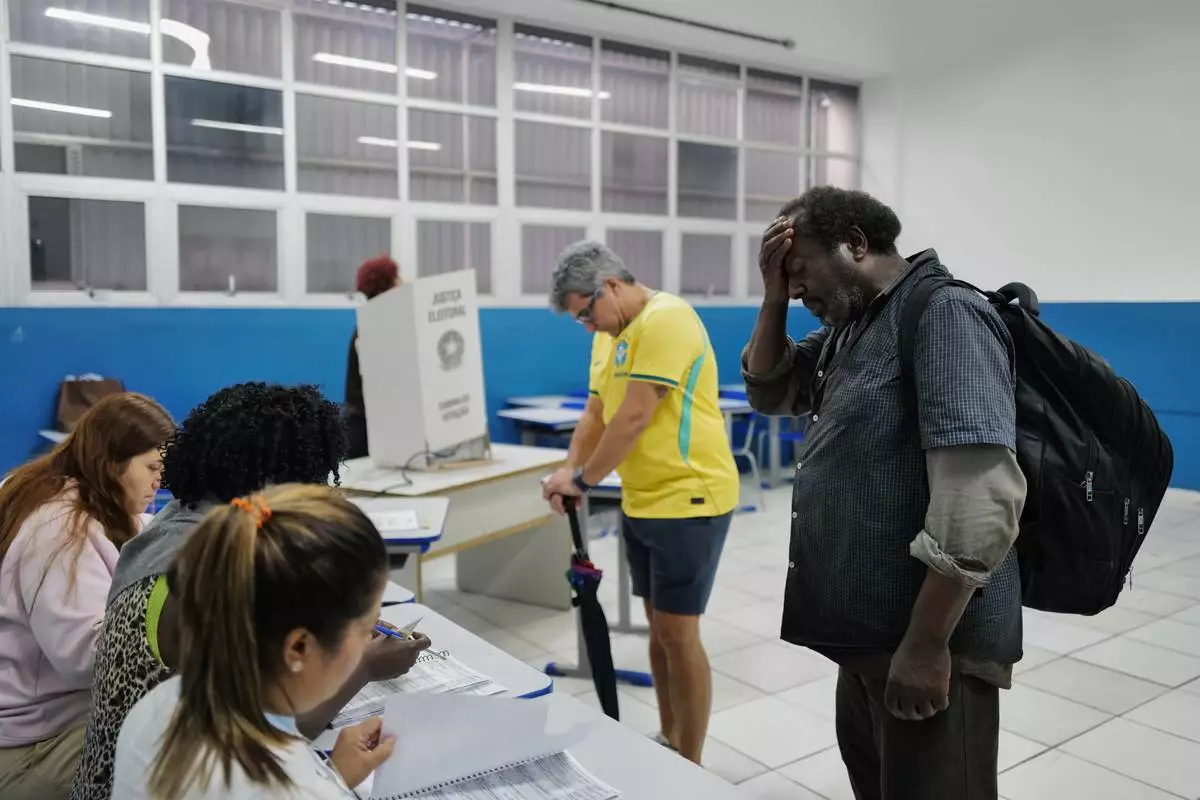
Voters wait to cast their ballots during a presidential runoff in Rio de Janeiro, Sunday, Oct. 25, 2026. (AP Photo/Lucas Landau)
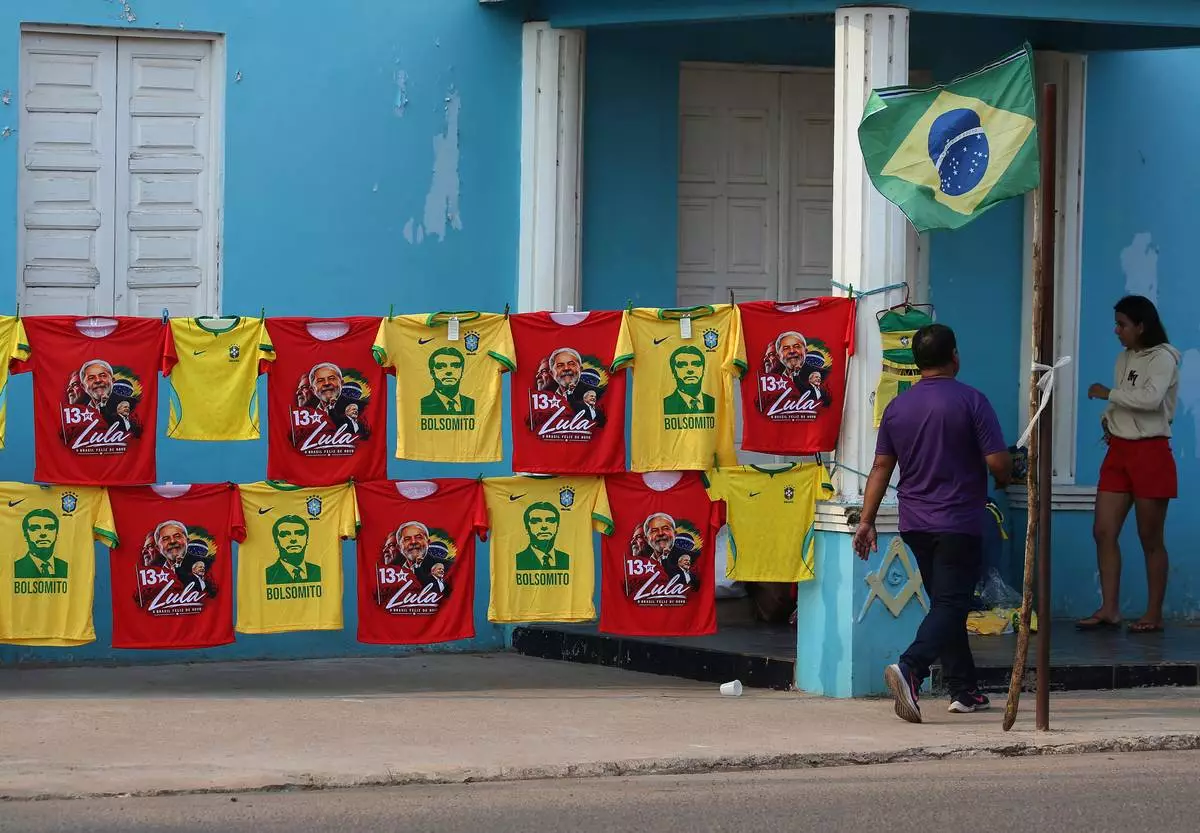
Red T-shirts depicting Brazilian President Luiz Inacio Lula da Silva, who is running for reelection, and yellow T-shirts depicting opposition presidential candidate Sen. Flavio Bolsonaro hang for sale outside a building ahead of Brazil's presidential runoff election in Autazes, Amazonas state, Brazil, Saturday, Oct. 24, 2026. (AP Photo/Edmar Barros)
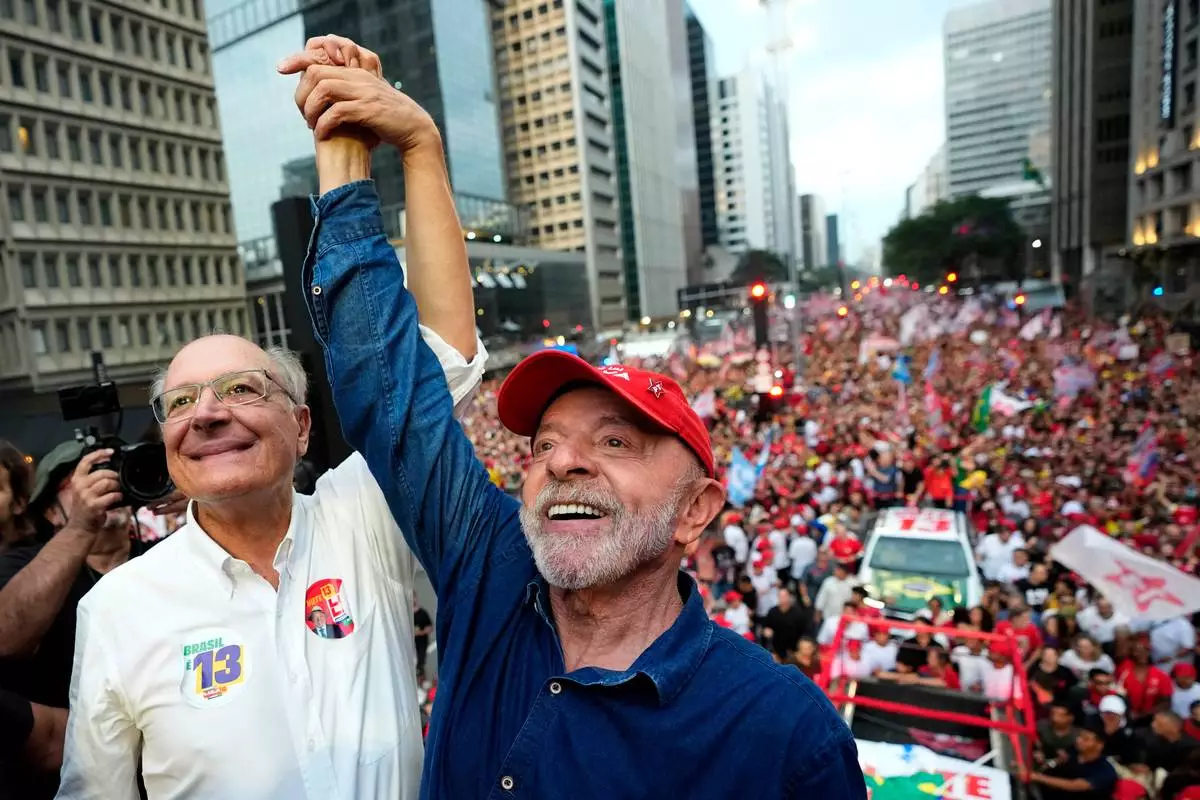
Brazilian President Luiz Inacio Lula da Silva, right, who is running for reelection, and his running mate Geraldo Alckmin raise their arms in unison at the end of their final campaign rally, a day ahead of the presidential runoff election in Sao Paulo, Brazil, Saturday, Oct. 24, 2026. (AP Photo/Natacha Pisarenko)
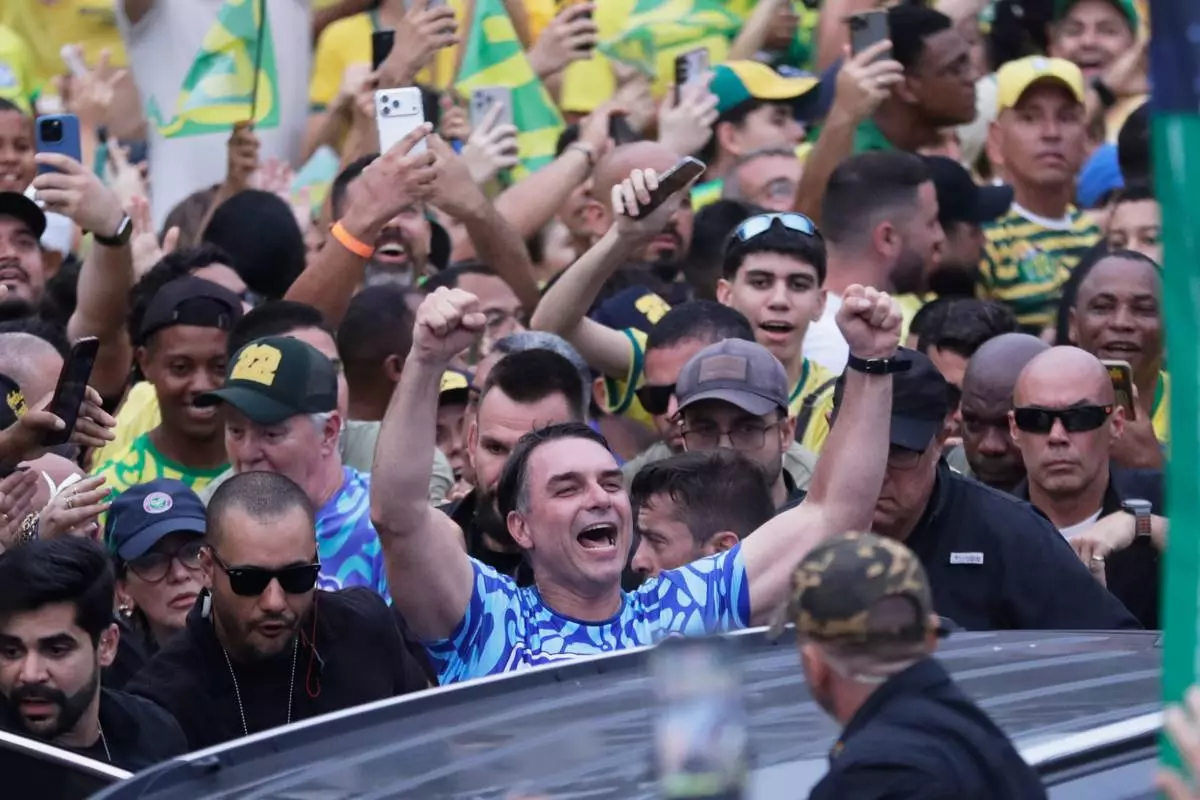
Opposition presidential candidate Sen. Flavio Bolsonaro, center, leaves after his final campaign rally a day ahead of the presidential runoff election in Rio de Janeiro, Saturday, Oct. 24, 2026. (AP Photo/Bruna Prado)
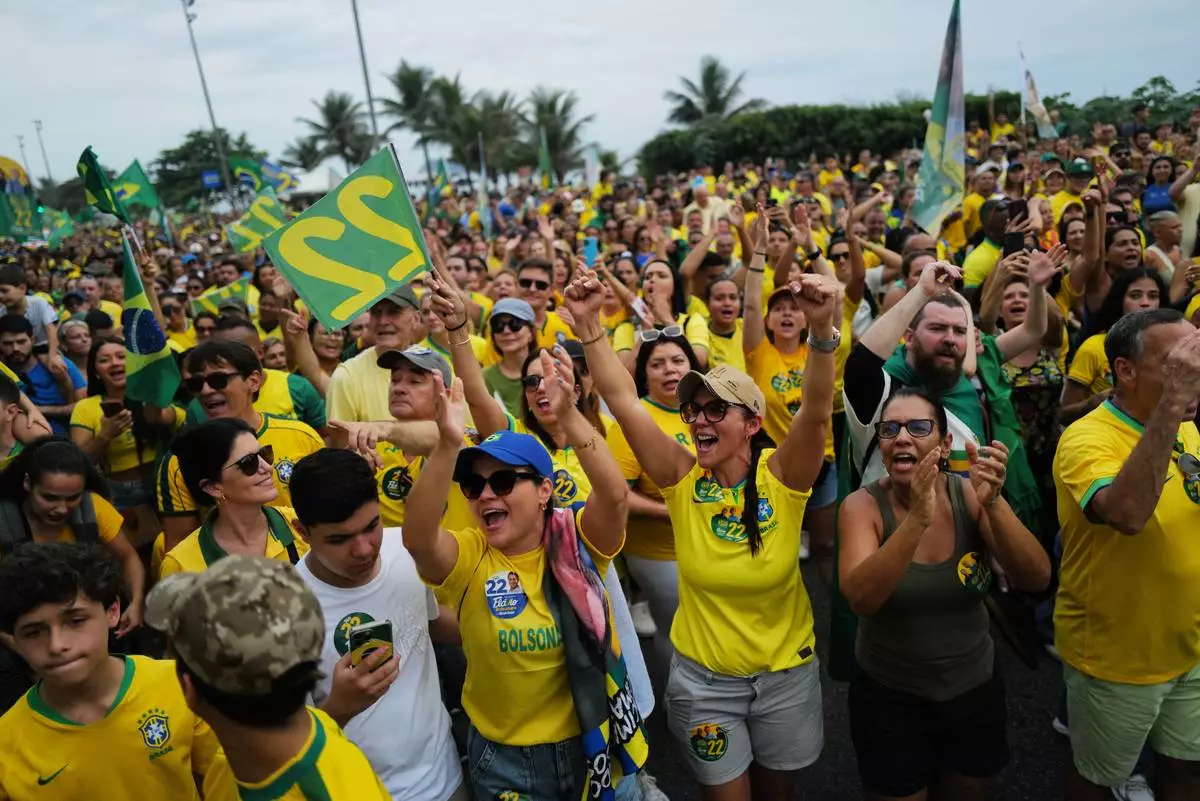
Supporters of opposition presidential candidate Sen. Flavio Bolsonaro cheer during his final campaign rally a day ahead of the presidential runoff election in Rio de Janeiro, Saturday, Oct. 24, 2026. (AP Photo/Lucas Landau)
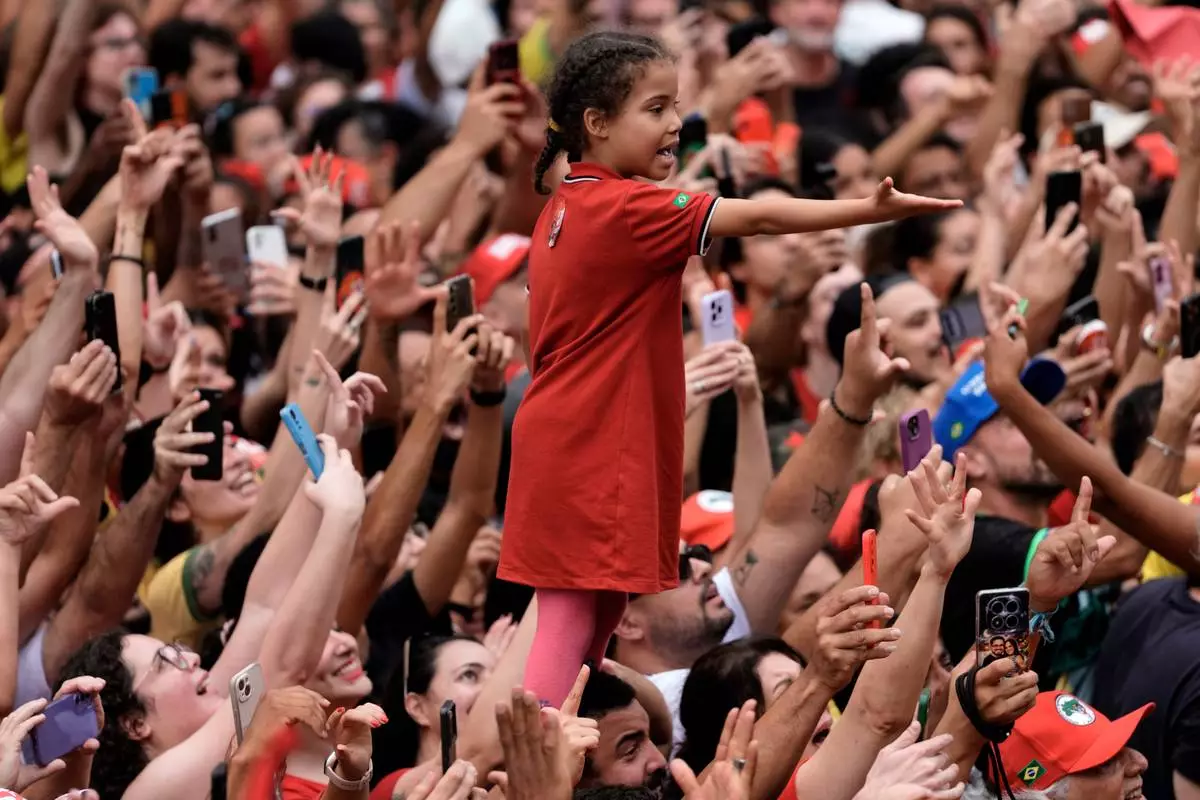
A girl standing on a man's shoulders reaches out amid a crowd of supporters of Brazilian President Luiz Inacio Lula da Silva, who is running for reelection, during his final campaign rally, a day ahead of the presidential runoff election in Sao Paulo, Brazil, Saturday, Oct. 24, 2026. (AP Photo/Natacha Pisarenko)