Japan's domestic bond market witnessed a historic surge on Monday, as the yield on newly issued 30-year government bonds climbed to 4.2 percent, marking an all-time high.
On the same day, the yield on newly issued 10-year government bonds, a key benchmark for long-term interest rates, rose to 2.8 percent, reaching its highest level in approximately 29 years.
According to Japanese media reports, the recent upward trend in long-term interest rates in Japan's bond market has been driven by market concerns over persistently high crude oil futures prices, which are expected to fuel inflationary pressures. Additionally, weakening expectations for interest rate cuts by the U.S. Federal Reserve have further contributed to the rise in yields.

Japan's long-term gov't bond yields reach new high
China is forging ahead on a modernization path that integrates harmony between humanity and nature, with its ecological conservation and green development efforts intensified and generating fruitful results this year.
Pursuing high-quality development underpinned by a good environment, the Chinese society is making concerted efforts to cut carbon emissions, reduce pollution, pursue green development, and boost economic growth.
As a result, air pollution levels have plummeted. In Beijing, the annual average levels of particulate matter under 2.5 milligrams have dropped from 89.5 micrograms per cubic meter to just 27 micrograms over the past 13 years.
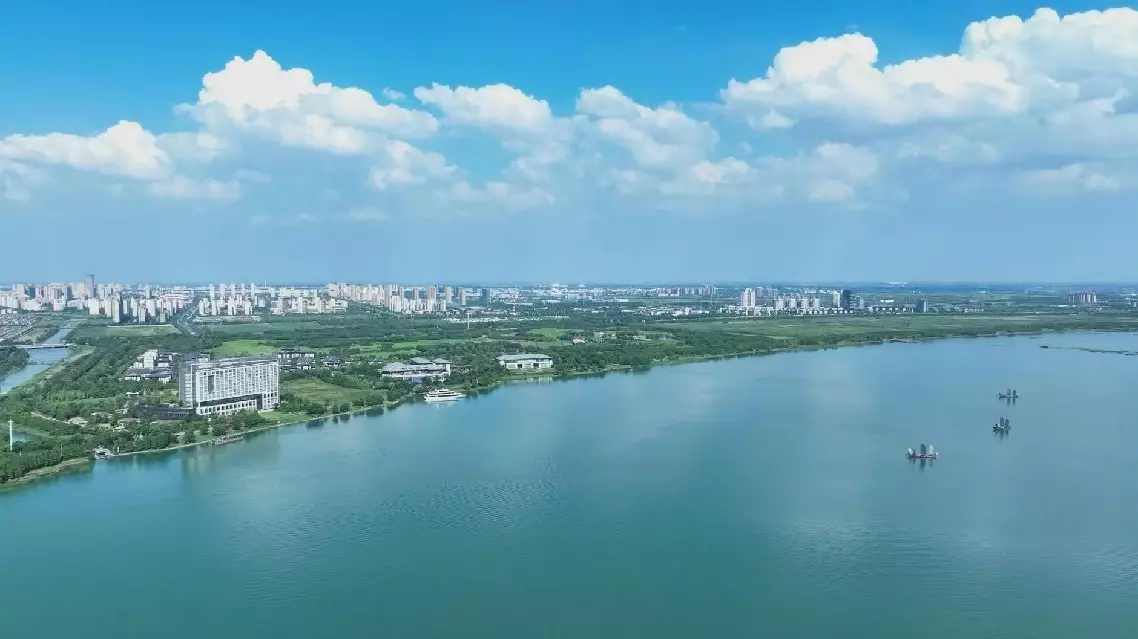
Meanwhile, the Taihu Lake in east China's Jiangsu Province, once plagued by blue-green algae blooms, now boasts crystal-clear water.
In the past decade, the lake's phosphorus concentration has fallen by nearly 30 percent, and its water quality has been improved from Grade IV to Grade III, which means it is now classed as "fairly good."
"I grew up by Taihu Lake. In recent years, the lake has become so beautiful thanks to the restoration efforts. I often take walks along its shores, and I'm truly delighted," said Fan Suming, a local resident.
To upgrade its legal system for ecological protection, China this year adopted its first Ecological and Environmental Code.
Earlier this month, seven central ecological and environmental protection inspection teams have all completed their deployment for the sixth batch of the third round of inspections.
The inspection teams will conduct one-month inspections in Liaoning, Jilin, Heilongjiang, Guangdong, Guangxi, Xizang and Xinjiang, as well as the Xinjiang Production and Construction Corps, aiming to promote coordinated regional development and high-quality growth, accelerate the country's green transformation, substantially improve environmental quality, and achieve major progress in building a Beautiful China.
Also in May, China unveiled assessment measures for the building of a Beautiful China to ensure the fulfillment of responsibilities at all levels.
The country has also started implementing its stricter ambient air quality standards since March and is taking measures in key counties to tackle pollution and stagnant water in small water bodies.
Gao Qiusheng, a photographer in Taiyuan City, north China's Shanxi Province, recently presented a reporter with photographs he has taken of the thriving wildlife that local water bodies have nurtured.
"This is a picture of a scaly-sided merganser that I took near the Fenhe Park and the northern middle ring road bridge. This is a white-tailed eagle. I can feel that my camera is capturing rare species more frequently," said Gao.
China is also optimizing the development and protection of territorial space, focusing on key ecosystem service zones. The Three-North Shelter Forest Program, the ecological conservation on the Qinghai-Xizang Plateau, mangrove conservation and restoration, and other national-level projects are all in steady progress.
By the end of March, China's total installed renewable energy capacity reached approximately 2.4 billion kilowatts, accounting for nearly 40 percent of the country's total power capacity.
In addition, green development funds are being channeled into energy saving, carbon emissions reduction, recycling, and environmental infrastructure.
Today, green commuting, green consumption, and low-carbon lifestyles have gained great popularity across China, and living a greener life has emerged as a shared pursuit in society.
"The 15th Five-Year Plan period is a critical stage in building on past successes to break new ground for building a Beautiful China and achieving fundamental improvement in the environment. We will continue to regard green and low-carbon development as the fundamental solution, consolidate and expand the outcomes of our ecological and environmental efforts to lay a decisive foundation for basically accomplishing the goal of building a Beautiful China by 2035," said Zhang Huaping, deputy director general of the Department of General Affairs of the Ministry of Ecology and Environment.
China forges ahead with ecological conservation, green development