Chinese Vice President Han Zheng on Monday called for joint efforts to uphold multilateralism and open cooperation, foster innovation-driven development, strengthen the resilience of industrial and supply chains, and advance reforms in global economic governance.
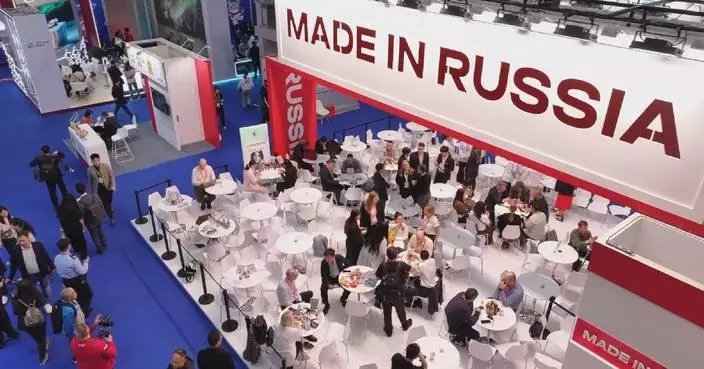
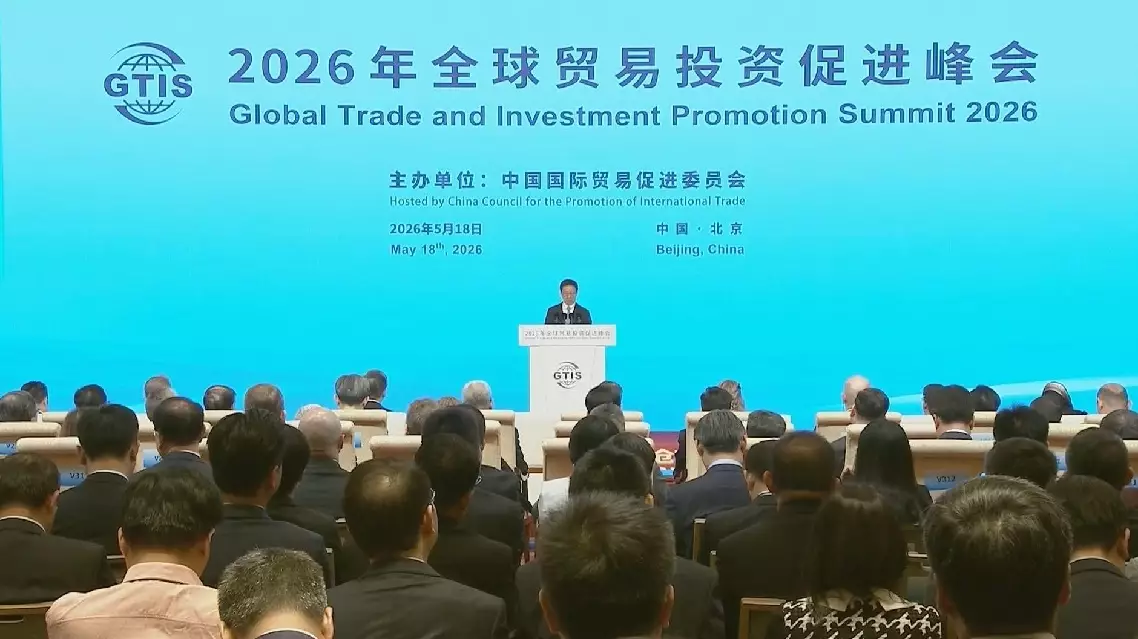
Han made the remarks while addressing the opening ceremony of the Global Trade and Investment Promotion Summit 2026 in Beijing.
In his address, Han urged joint efforts to foster an open and cooperative international economic environment and ensure that advances in science and technology better benefit people of all countries. He also called for better industrial coordination, deeper technical exchanges, tighter standard alignment, and the earnest implementation of the Global Governance Initiative.
Noting that this year marks the start of China's 15th Five-Year Plan period (2026-2030), Han said China will continue to pursue high-quality development, expand high-standard opening-up, and foster a world-class business environment that is market-oriented, law-based and internationalized. He welcomed enterprises of all countries to further expand their presence in the Chinese market.
Launched in 2022, the summit has been held annually for five years, becoming a key platform for businesses at home and abroad to enhance communication, deepen cooperation and seek common development. More than 800 people attended the event, including representatives from foreign government departments, international organizations, economic institutions, foreign business associations, global trade promotion agencies, as well as Chinese and foreign enterprises.
Before the opening ceremony, Han met with Yolanda Diaz, Spain's second deputy prime minister and minister of labor, who was present at the summit.
Chinese vice president stresses multilateralism, open cooperation
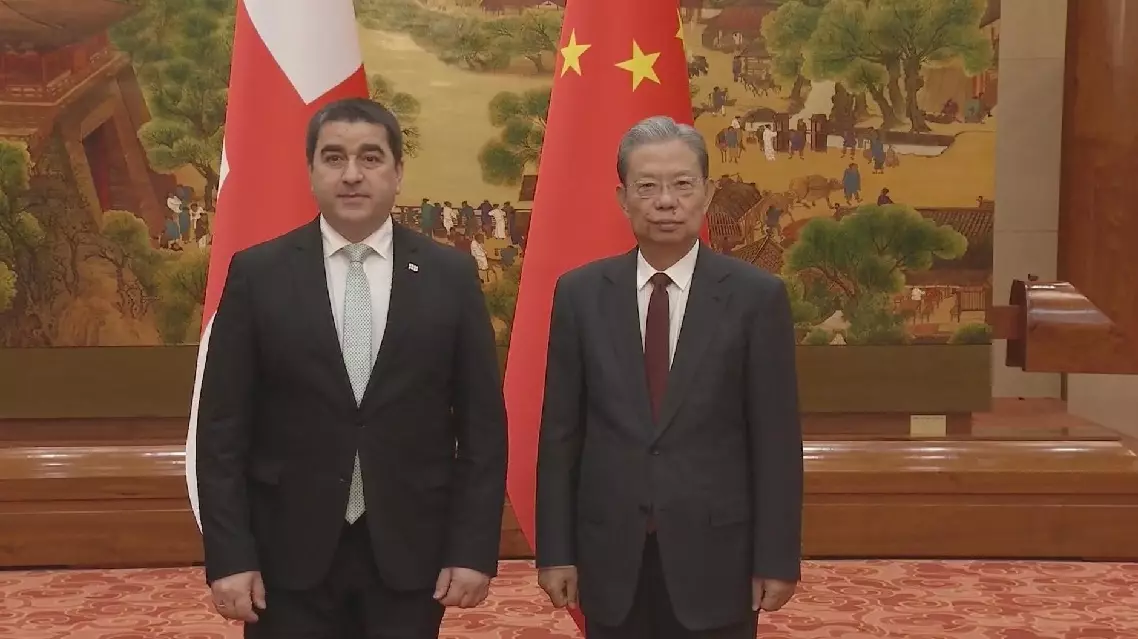
China's top legislator Zhao Leji held talks with vising Georgian Parliament Speaker Shalva Papuashvili in Beijing on Monday to discuss relations between their two countries.
During the talks, Zhao, chairman of the National People's Congress (NPC) Standing Committee, said that under the strategic guidance of President Xi Jinping and Georgia's leaders, the two countries have established a strategic partnership, and bilateral relations have entered a fast lane of high-quality and all-round development.
China is willing to work with Georgia to implement the important consensus reached by the leaders of the two countries, and to keep enriching the connotation of the China-Georgia strategic partnership, Zhao said.
Expressing his thanks to Georgia for its long-term support of China's position on issues related to Taiwan, Xinjiang, Xizang, Hong Kong and human rights, Zhao said China will, as always, support Georgia in following a development path that is independently chosen by its people and that suits its national conditions.
Georgia is one of the first countries to respond to and participate in the joint construction of the Belt and Road Initiative. China is willing to work with Georgia to adhere to mutual benefit and win-win results, expand cooperation in emerging fields such as artificial intelligence, the digital economy and green energy, deepen people-to-people and cultural exchanges and strengthen cooperation in areas such as education, culture, tourism and youth, so as to enhance multilateral collaboration and practice true multilateralism, Zhao said.
China's NPC is willing to deepen exchanges and cooperation with the Parliament of Georgia, enhance friendly exchanges among special committees, bilateral friendship groups, NPC deputies and lawmakers, and carry out exchanges and mutual learning on issues such as legislation, supervision work, sustainable development and ecological civilization construction, so as to create a favorable legal environment for bilateral practical cooperation, Zhao said.
He also briefed on the outline of China's 15th Five-Year Plan (2026-2030) for national socioeconomic development and the National Development Planning Law.
Papuashvili said the Georgian side firmly adheres to the one-China principle, and is willing to work with China to promote continuous development of the strategic partnership between the two countries and jointly safeguard international law and the international order.
Georgia is willing to actively participate in joint construction of the Belt and Road Initiative and strengthen cooperation in various fields such as the economy, trade and culture, he said.
The Parliament of Georgia is willing to deepen friendly exchanges with China's NPC, enhance the public opinion foundation for friendship between the two countries, and make contributions of the legislative body to promoting the development of relations between Georgia and China.
China's top legislator holds talks with Georgian parliament speaker on relations