SEOUL, South Korea--(BUSINESS WIRE)--May 18, 2026--
Galux, a South Korean biotechnology company pioneering AI-driven protein therapeutics design, announced comparative research results showing that its AI protein design platform, GaluxDesign, achieved the broadest target coverage across nine publicly comparable targets selected from recent de novo antibody design preprints.
This press release features multimedia. View the full release here: https://www.businesswire.com/news/home/20260518633348/en/
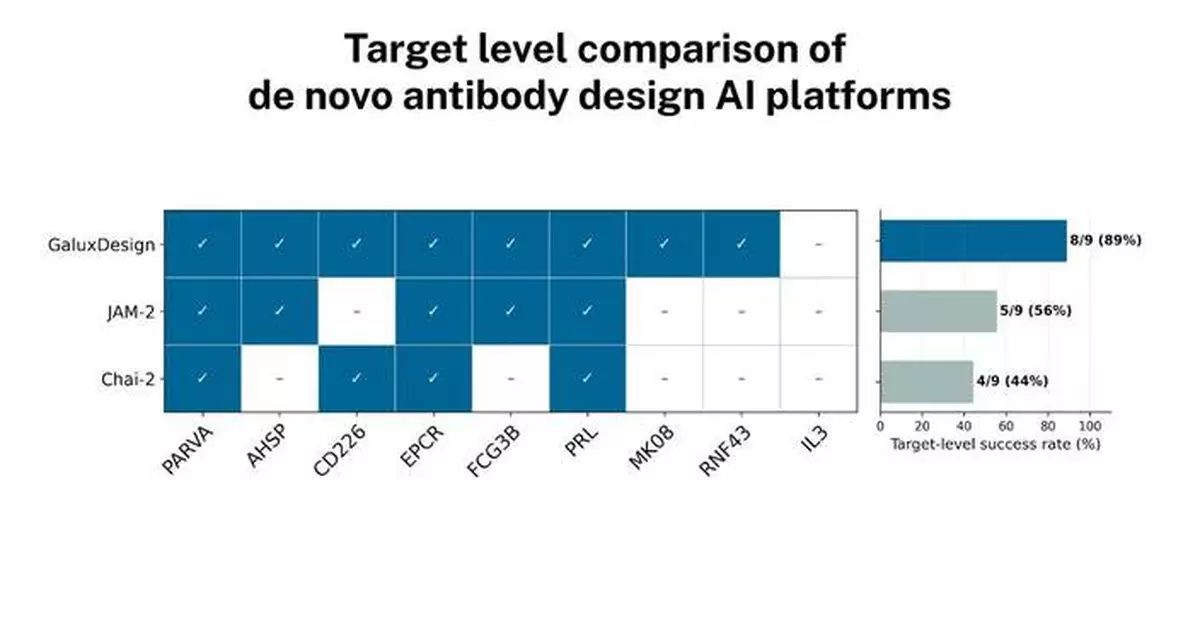
In the study, GaluxDesign generated 50 antibody designs for each of nine targets previously explored in publicly available AI antibody design studies and experimentally evaluated the resulting candidates in full-length IgG format. The platform identified experimentally validated binders for eight of the nine targets, with BLI-based kinetic analysis confirming low-to-mid nanomolar binding affinities for seven targets.
To compare performance with publicly reported de novo antibody design results, including JAM-2 by Nabla Bio and Chai-2 by Chai Discovery, the study summarized whether at least one experimentally validated binder was reported for each shared target. Based on publicly available preprint results, JAM-2 and Chai-2 reported validated binders for five and four of the nine shared targets, respectively, while GaluxDesign extended this coverage to eight, including targets for which validated binders had not been reported in the corresponding preprint studies.
Taeyong Park, co-founder of Galux, said, “Direct comparison between de novo antibody design platforms remains challenging because the technical details underlying each platform are often not fully disclosed.” He added, “By using the same set of publicly reported targets as a common reference point, we aimed to provide a practical view of how different platforms perform across diverse antibody design problems. Within this framework, GaluxDesign showed strong and consistent binder generation across the shared target set.”
This comparative study builds on Galux’s previously reported streamlined design-and-testing workflow, which was conducted on a separate set of therapeutically relevant target epitopes. In that earlier study, the platform achieved a 31.5% binder hit rate, with picomolar-to-nanomolar affinity binders identified for seven out of eight target epitopes. The latest study extends this performance to an independent shared target set derived from publicly reported de novo antibody design studies.
“De novo antibody design is now moving beyond early proof-of-concept demonstrations toward assessing the ability of AI platforms to generate antibodies with desired binding properties across diverse targets reliably,” added Park. “While experimentally validated binders do not directly translate into therapeutics, the ability to rapidly and consistently generate binders may substantially accelerate downstream therapeutic optimization and drug development. As AI-driven antibody design becomes increasingly reliable, it has the potential to fundamentally reduce one of the major bottlenecks in early-stage biologics discovery.”
About Galux
Galux is a biotechnology company advancing AI-driven protein design technology for drug discovery. Its proprietary platform, GaluxDesign, integrates atomic-level physical insights to enable precise and generalizable protein design across a broad range of targets.
Galux applies this technology across internal programs and external collaborations to address challenging problems in drug discovery. For more information, visit galux.co.kr.
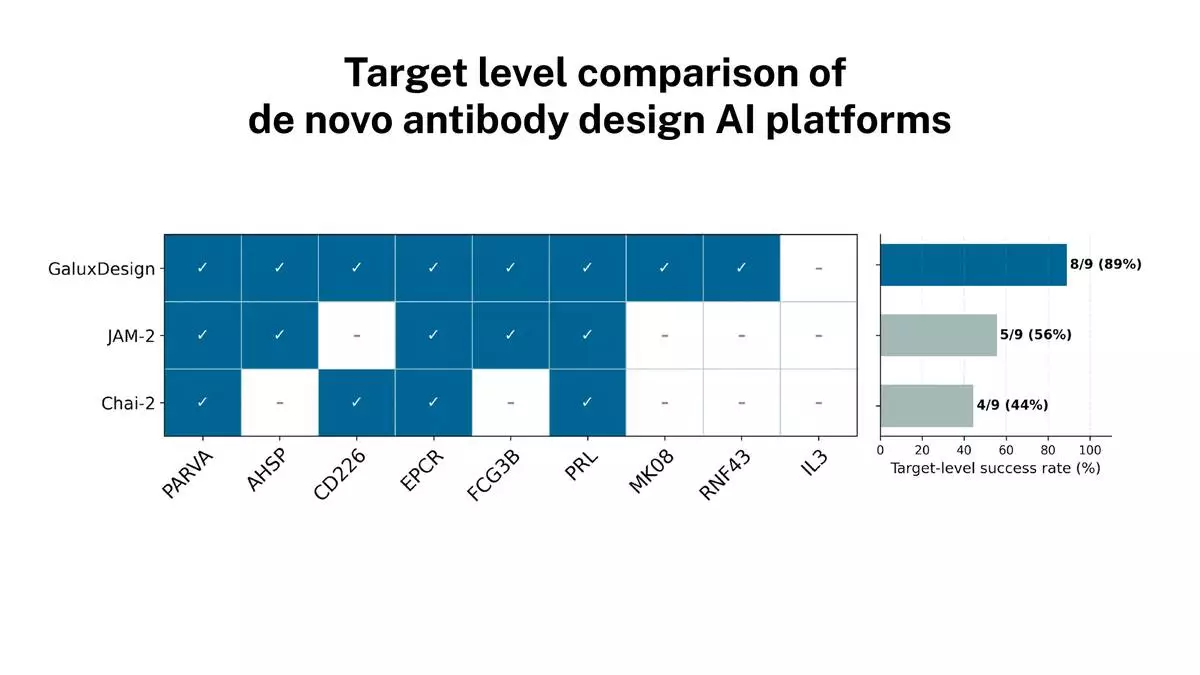
GaluxDesign achieved the broadest target coverage among publicly comparable de novo antibody design studies, identifying experimentally validated binders for 8 of 9 shared targets, including targets for which validated binders had not previously been publicly reported (Image: Galux)
World shares mostly retreated and oil prices jumped Monday after U.S. President Donald Trump warned Tehran that the “clock is ticking” as U.S.-Iran negotiations over a permanent end to the war stall. U.S. futures fell and markets in Japan and South Korea pulled back from their records.
Also, a drone strike sparked a fire on the edge of the United Arab Emirates’ sole nuclear power plant Sunday in what authorities called an “unprovoked terrorist attack.” No one was blamed, but it highlighted the risk of renewed war as the United States and Iran signaled they were ready to fight again.
Here's the latest:
President Trump on Monday moved to withdraw his $10 billion lawsuit against the Internal Revenue Service over the leak of his tax returns after reports that a resolution of the case was close at hand.
The disclosure was made in a filing in federal court in Florida, where the lawsuit was filed.
ABC News first reported last week that Trump was prepared to drop his lawsuit as part of a deal that would create a $1.7 billion fund to pay allies of the president who believe they were wrongly investigated and prosecuted.
The court filing did not mention terms of any potential deal.
▶ Read more
More than three weeks after the White House Correspondents’ Association dinner was thrown into chaos and panic when a man stormed the Washington Hilton lobby and opened fire in what prosecutors say was an attempt to kill President Donald Trump, the event has yet to be rescheduled.
The association “continues to weigh options for rescheduling the event,” its president, Weijia Jiang of CBS News, said from China last week where she was covering Trump — alongside whom she hit the floor that night as shots rang out.
“We will do this again,” Jiang had said then. Trump, for his part, said on social media the dinner would be rescheduled within 30 days (though it’s not up to him), which would bring it to late this month.
That seems hardly likely, at least not an event that would accommodate close to 3,000 people. WHCA board members are scoping out smaller venues, a person familiar with the situation said, with the understanding that, if rescheduled, it would necessarily be a pared-down event — a nod to financial as well as security concerns.
▶ Read more
An effort to reshape South Carolina’s congressional districts will get its first full airing Monday in the state House, as lawmakers launch a lengthy and potentially testy discussion on whether to accede to Trump’s desires for a U.S. House map that could yield a clean sweep for Republicans.
Tense debates already have played out in Tennessee, Alabama and Louisiana as Republicans push aggressively to leverage a recent U.S. Supreme Court ruling that weakened Voting Rights Act protections for minority districts. The ruling has opened the way for Republicans to redraw districts with large Black populations that have elected Democrats.
In South Carolina, that means targeting a seat long held by U.S. Rep. Jim Clyburn, the only Democrat among the state’s seven representatives in the House.
Early voting is scheduled to begin May 26 for South Carolina’s statewide primaries on June 9. In addition to redrawing congressional districts, legislation pending in the state House would move the U.S. House primaries to August. If it clears the House, the legislation then must go to the Senate.
▶ Read more
China has agreed to ramp up trade for U.S. agricultural products such as beef and poultry, buying at an annualized rate of $17 billion per year for 2026 and at that level for 2027 and 2028, the White House announced Sunday.
China would restore market access for U.S. beef and resume imports of poultry from U.S. states determined by the U.S. Department of Agriculture to be free of the bird flu, the White House said. The deals are on top of China’s soybean purchase commitments last year.
The agreements offer some hope to American farmers harmed by the trade war as they saw a major export market for soybeans and other products dry up. Farmers also are feeling new pressure from Trump administration policies — the war that the U.S. and Israel launched against Iran has curtailed shipping through the Strait of Hormuz, a vital trade corridor that has restricted global fertilizer supplies and sent those prices soaring.
▶ Read more
A drone strike sparked a fire on the edge of the United Arab Emirates’ sole nuclear power plant on Sunday in what authorities called an “unprovoked terrorist attack.” No one was blamed, but it highlighted the risk of renewed war as the United States and Iran signaled they were ready to fight again.
There were no reported injuries or radiological release. The UAE, which has hosted air defenses and personnel from Israel, recently accused Iran of launching drone and missile attacks. Tensions have risen over the Strait of Hormuz, a vital energy waterway gripped by Iran, which is under a U.S. naval blockade.
The ceasefire remains tenuous, with diplomatic efforts for a more durable peace having faltered. And fighting has heated up between Israel and the Iran-backed Hezbollah militant group in Lebanon despite a nominal ceasefire there.
▶ Read more
World shares mostly retreated and oil prices jumped on Monday after Trump warned Tehran that the “clock is ticking” as U.S.-Iran negotiations over a permanent end to the war stall.
U.S. futures fell and markets in Japan and South Korea pulled back from their records. In early European trading, Britain’s FTSE 100 edged up 0.1% to 10,205.31. France’s CAC 40 lost 0.9% to 7,883.42, and Germany’s DAX dropped 0.1% to 23,925.82.
During Asian trading, Tokyo’s Nikkei 225 fell 1% to 60,815.95, a decline led by technology-related stocks. It reached all-time intraday high levels last week above 63,000.
The yield on the 10-year Japanese government bond surged to as high as 2.8%, its highest level since the late 1990s. That’s part of a broader shift toward higher yields as the Bank of Japan gradually raises interest rates and higher energy costs raise expectations of rising inflation. The yield was around 2.55% just one week ago.
▶ Read more
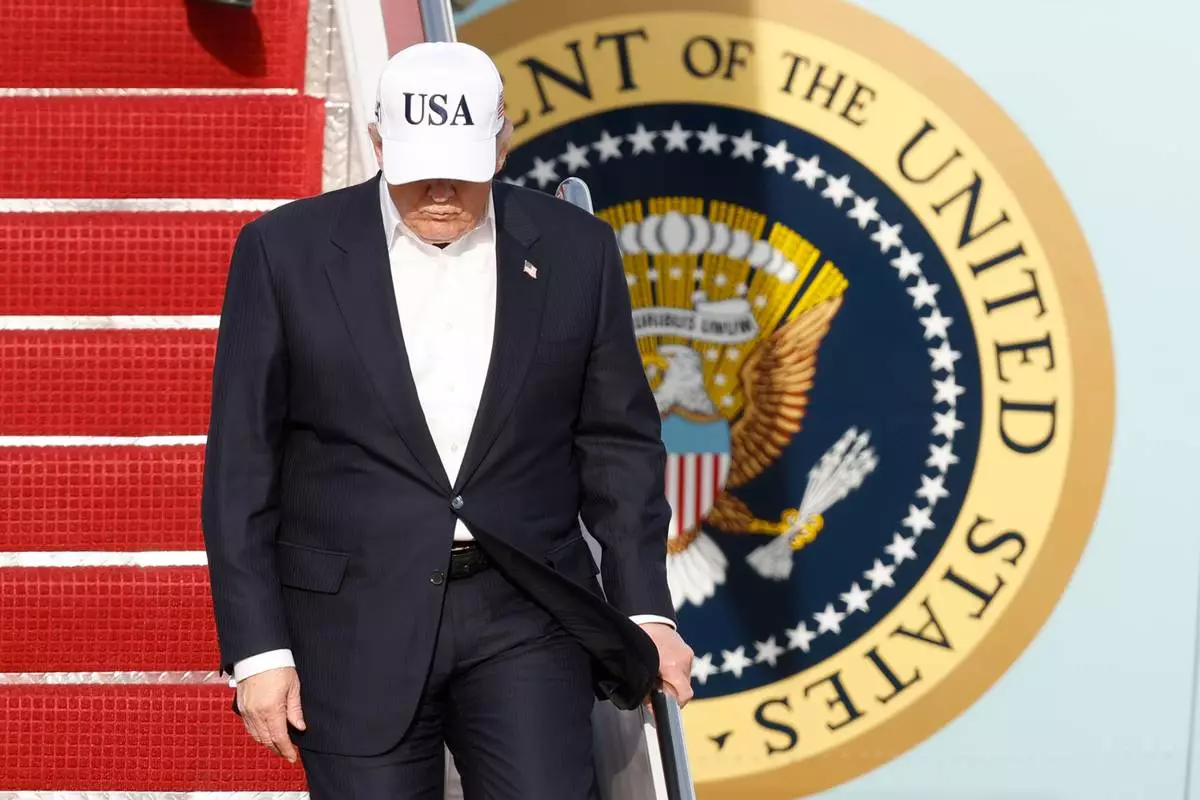
President Donald Trump walks down the stairs of Air Force One upon his arrival at Joint Base Andrews, Md., Friday, May 15, 2026. (AP Photo/Luis M. Alvarez)
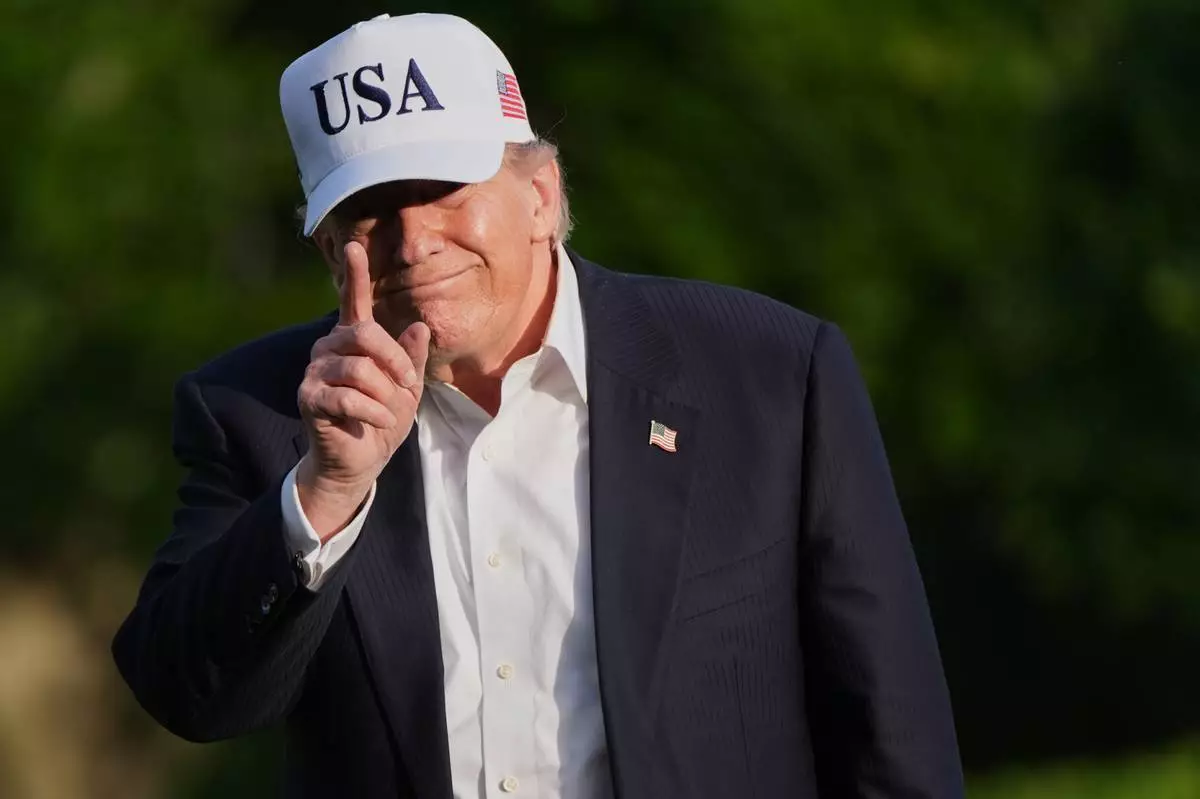
President Donald Trump gestures to reporters as he walks across the South Lawn of the White House, Friday, May 15, 2026, in Washington, on return from Beijing where he met with China's President Xi Jinping. (AP Photo/Jacquelyn Martin)