The Hong Kong stock market closed sharply lower on Monday, while Tokyo's Nikkei benchmark also extended last week's losses as continuing tensions in the Middle East weighed on investor sentiment across the region and fueled concerns over inflation and energy prices.
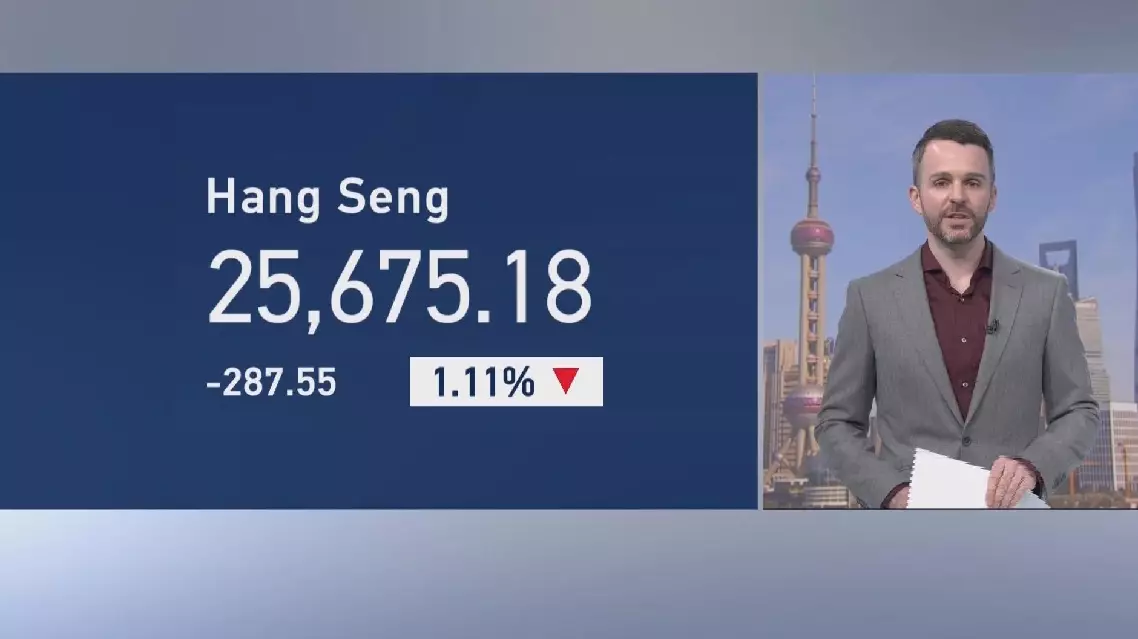
Hong Kong's benchmark Hang Seng Index fell 1.11 percent to close at 25,675.18 points. The Hang Seng China Enterprises Index dropped 1.07 percent to 8,597.97 points, while the Hang Seng Tech Index declined 1.95 percent to 4,844.94 points.
Recapping the day's developments, Timothy Pope, a market analyst for China Global Television Network (CGTN), said investors remained cautious about the situation in the Middle East, with energy shares rising but most other sectors suffering losses.
"The latest reported drone incursions into Saudi Arabia and the UAE had investors all around the region on edge. The Hang Seng was one of the worst-performing indexes on Monday. It shed 1.1 percent. Energy shares were rising, with gains for CNOOC and PetroChina -- obviously, there are fuel implications as long as the region remains unstable -- but most other sectors were down," he said.
Chinese electric vehicle makers were among the biggest losers in Hong Kong trading, with Li Auto leading declines after unveiling an updated version of one of its premium SUV models, Pope said.
"It was a particularly hard session for Chinese EV makers. Li Auto led the market lower with more than a 14 percent slump. Today it launched an updated version of its high-end Li L9 Livis SUV, and the market wasn't all that impressed, I have to say. Citi dismissed the launch as 'not a game changer', and the price of the new model is actually significantly lower than pre-sale pricing had indicated. The EV SUV market is highly competitive in China, particularly right now, and Li Auto really would've needed to do something really impressive to get the market enthusiastic about this launch, I think, especially against the current backdrop of declining auto sales in China. But it's not like Li Auto's competitors had a better day on the stock front -- Geely, Leapmotor, BYD and Xpeng, all of them were down, just not nearly as much as Li Auto," said Pope.
Japanese equities also came under pressure, with the Nikkei Stock Average slipping 593.34 points, or 0.97 percent, to close at 60,815.95 on Monday, marking its third consecutive session of losses.
Pope said investor sentiment in Japan was also weighed down by expectations of further interest rate hikes, and surging government bond yields indicating a large-scale sell-off of government debt.
"Japanese stocks also closed lower today. It was the Nikkei 225's third consecutive session of losses. Today, it shed 1 percent. There's not a lot of investor confidence around in Tokyo either, as bets of more rate hikes abound. Today we saw the Japanese government bond yields really surging -- which means there was a massive sell-off, because the higher the yield, of course, the lower the bond price. The 10-year yield was its highest since 1996. This is Japan mirroring a global trend in fixed-asset prices at the moment, as this Middle East conflict inflation shock really does continue to put pressure on the markets worldwide," said the analyst.
Asia stocks slide as Middle East tensions weigh on sentiment