Chinese mainland shares closed mixed to lower on Monday, as escalating tensions in the Middle East and softer domestic economic data weighed on investor sentiment.
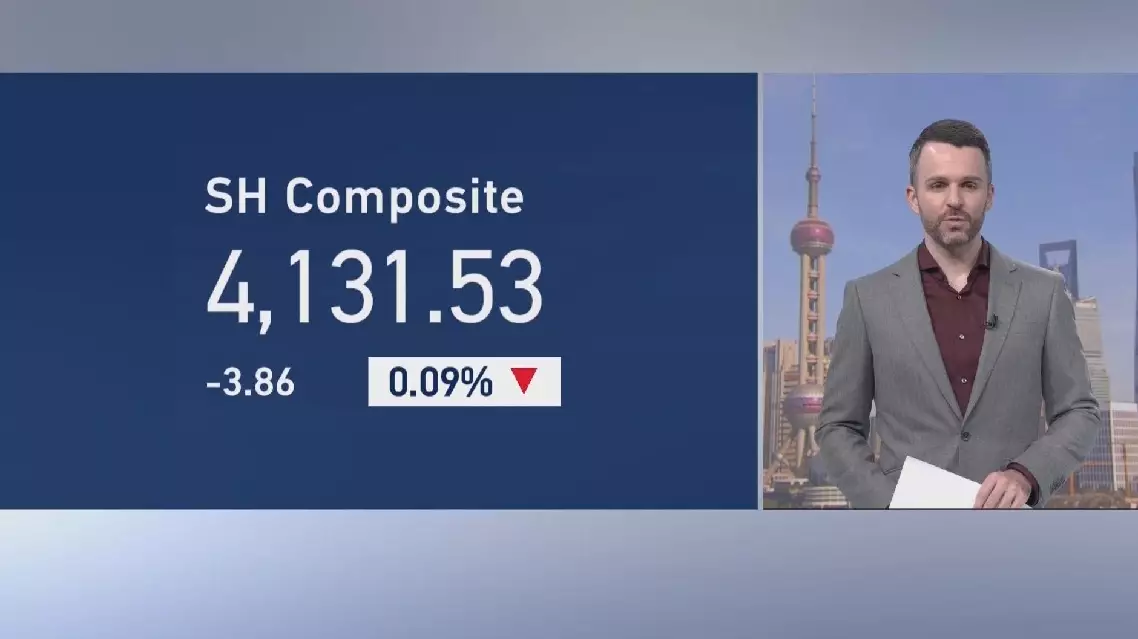
The benchmark Shanghai Composite Index slipped 0.09 percent to 4,131.53 points, while the Shenzhen Component Index closed 0.20 percent lower at 15,530.23 points.
The combined turnover of the two indices totaled 2.89 trillion yuan (about 422.3 billion U.S. dollars), down 450.5 billion yuan from the previous trading day.
Oil and gas, memory chip and robot-related shares led gains, while sports-related stocks posted the biggest losses.
The ChiNext Index, tracking China's Nasdaq-style board of growth enterprises, lost 0.36 percent to close at 3,914.88 points.
The STAR Composite Index, which tracks the performance of stocks on China's sci-tech innovation board, closed 0.95 percent higher at 2,094.47 points.
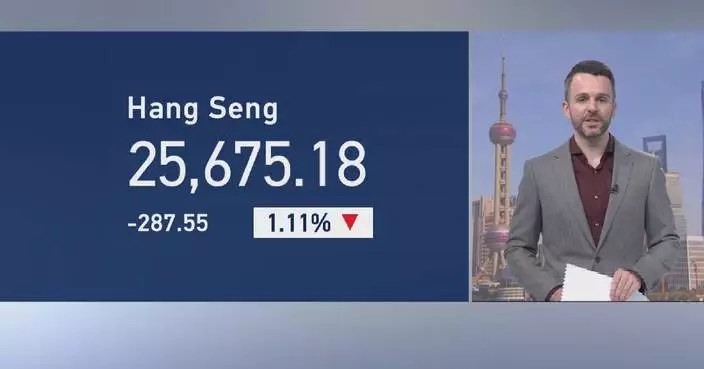
Recapping the day's market developments from Shanghai, Timothy Pope, an analyst for China Global Television Network (CGTN), said investors adopted a risk-off mood amid growing concerns over geopolitical tensions and mixed economic signals from China.
"Chinese mainland stock markets were trading pretty risk-off today. The Shanghai Composite Index was flat at the close, and the Shenzhen Component was down 0.2 percent. Investors were looking at more tensions in the Middle East as evidence that an end to that current conflict remains elusive. And they were also focused on the latest economic data for April in China, which was showing weakening industrial output and negligible improvement in retail sales, especially when compared to March numbers. On the flip side, exports were better than expected, and there was some clear evidence that government fuel price controls have muted the impact of the Middle East conflict for Chinese households so far," he said.
Industrial, real estate and consumer-related stocks were among the sectors that came under pressure during the session, while agricultural shares also declined following comments from the White House on future Chinese purchases of U.S. farm goods.
"We saw some falls for industrial, real estate and consumer stocks off the back of all that. Chinese agricultural stocks were also trading lower today after the White House said that China had pledged to buy at least 17 billion U.S. dollars worth of U.S. agricultural goods per year from 2026 this year through to 2028. A sub-index that was tracking those stocks fell 2.5 percent. Although this does seem to be investors treating agriculture a bit like a zero-sum game, there is a little bit of potential for this to see a dip in prices for Chinese farmers, what they can charge, but it does seem to be a bit of a market knee-jerk reaction," Pope said.
Chipmakers, however, outperformed the broader market after investors interpreted the lack of new U.S. export restrictions following last week's meeting between Chinese President Xi Jinping and U.S. President Donald Trump as a positive signal for China's semiconductor sector.
"In the same vein, though, Chinese chip stocks also rose after there was no substantive change to chip export restrictions set by the U.S. following the meeting between Presidents Xi and Trump last week. In investors' eyes, that reaffirms China's commitment to its own chip supply chain and its intention to be self-reliant. So we saw Cambricon shares adding more than half of one percent, about 0.7 percent, while GigaDevice Semiconductor rose 6.5 percent," the analyst said.
China shares slip as investors weigh economic data, Middle East risks