LONDON--(BUSINESS WIRE)--May 19, 2026--
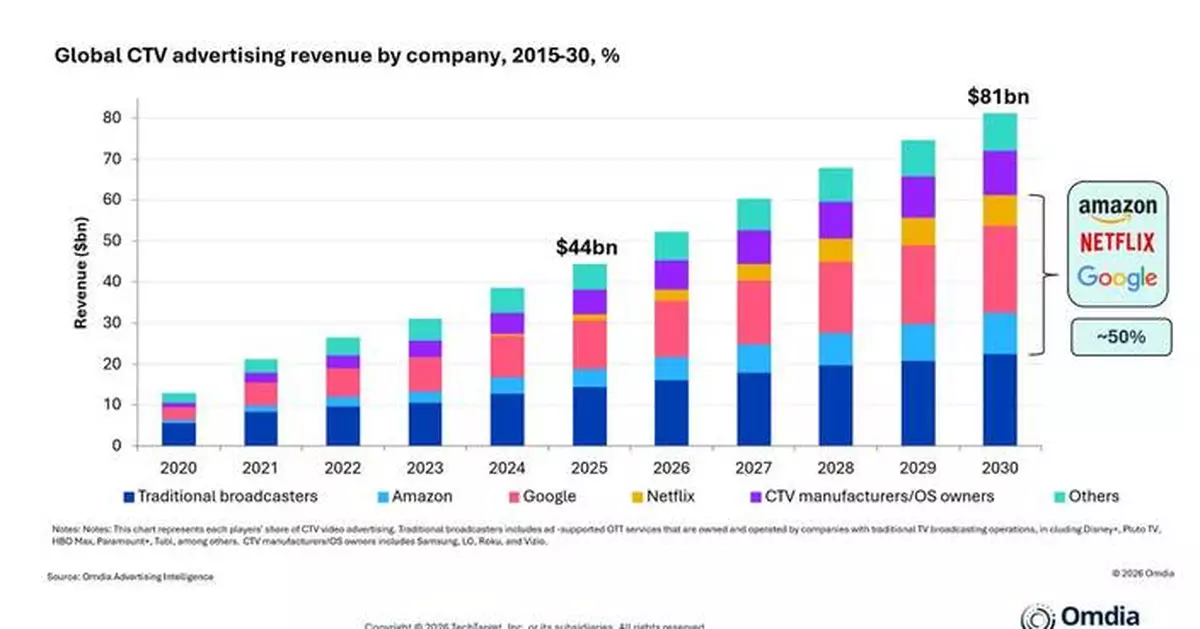
Global connected TV (CTV) advertising revenue will surge from $44 billion in 2025 to $81 billion by 2030, with CTV ad revenues expected to surpass traditional linear TV advertising during the 2030s, according to new research by Omdia.
This press release features multimedia. View the full release here: https://www.businesswire.com/news/home/20260518833831/en/
Google, Amazon and Netflix Dominate the Evolving TV Landscape
The global fight to “own the living room” is entering a new phase as Google, Amazon and Netflix are projected to capture 50% of the global connected TV advertising market by 2030. The findings highlight how the center of power in television is rapidly shifting away from traditional broadcasting toward streaming platforms, TV operating systems and advertising ecosystems. By the end of the decade:
Combined, Google, Amazon, and Netflix will account for half of the entire global CTV advertising market by 2030.
CTV Advertising Growth Accelerates as Platforms Compete for Connected Households
The shift comes as media companies, streamers, retailers and technology giants race to secure premium positioning in connected households. Amazon is leveraging Prime Video and retail media integration to expand its TV advertising footprint, while Netflix continues to scale its advertising business globally through its ad-supported tier. Google remains dominant through YouTube’s massive connected TV reach and broader advertising infrastructure.
Omdia expects several trends to accelerate the transformation of television advertising over the next five years:
Omdia also revealed that the European TV operating system landscape is shifting rapidly. According to the research firm, VIDAA is becoming Europe’s third-largest TV operating system this year after Android TV and Tizen, overtaking several established competitors as manufacturers seek greater ownership of the smart TV experience.
TV Operating Systems Evolve into Strategic Commerce Gateways
“The battle for the living room is no longer only about streaming content,” said Maria Rua Aguete, Head of Media & Entertainment at Omdia. “It is increasingly about controlling the platform, the advertising layer, the operating system, the data and ultimately the consumer relationship.”
Rua Aguete noted that television is becoming one of the most strategic gateways for digital advertising, retail media and commerce integration, with tech companies increasingly competing to control the TV interface itself.
“CTV companies are at risk of losing incredibly valued ground to these tech giants and many cannot afford to do so as the hardware business becomes increasingly unprofitable,” added David Tett, Principal Analyst at Omdia. “Strategies are needed to fight for their own advertising revenues in the new-look landscape and avoid ceding too much ground to players such as Google and Amazon.”
The findings reinforce how television, commerce and digital advertising are converging into a single ecosystem and why the connected TV environment is becoming one of the most strategically valuable positions in media.
ABOUT OMDIA
Omdia, part of TechTarget, Inc. d/b/a Informa TechTarget (Nasdaq: TTGT), is a technology research and advisory group. Our deep knowledge of tech markets grounded in real conversations with industry leaders and hundreds of thousands of data points, makes our market intelligence our clients’ strategic advantage. From R&D to ROI, we identify the greatest opportunities and move the industry forward.
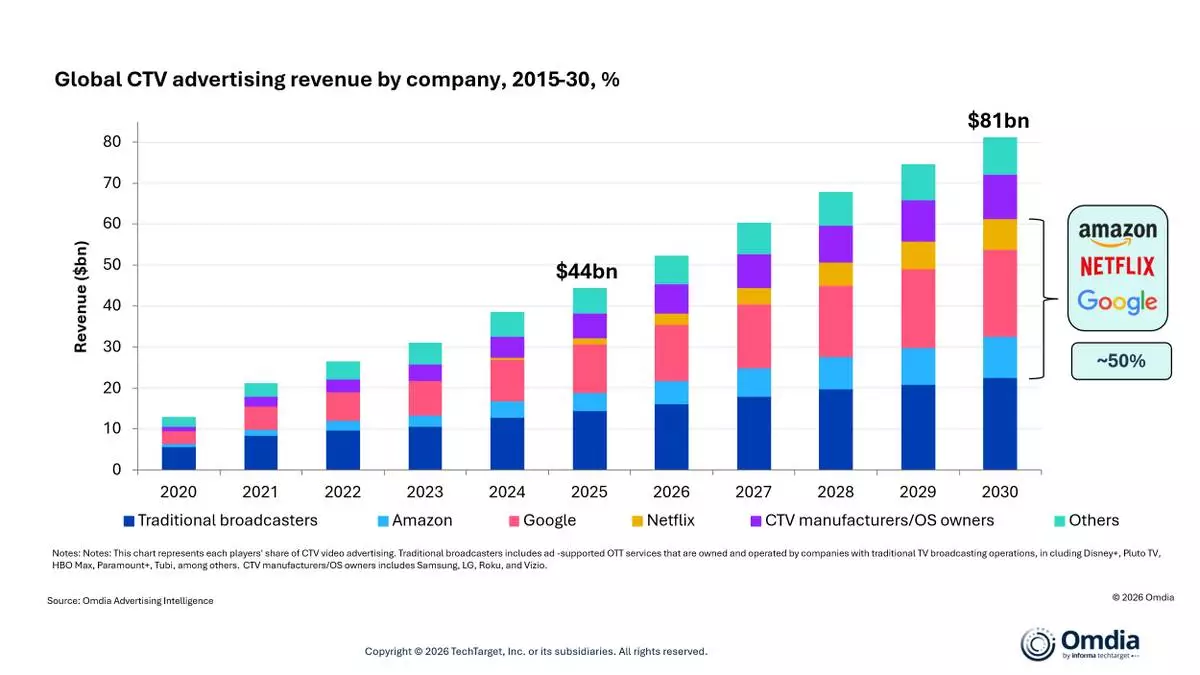
Global CTV advertising revenue by company, 2015-2030
SEOUL, South Korea (AP) — South Korean President Lee Jae Myung and Japanese Prime Minister Sanae Takaichi held their fourth meeting in about six months on Tuesday, underscoring their push to deepen ties between the historical Asian rivals in the face of geopolitical challenges.
Lee hosted Takaichi in his hometown of Andong, a southeastern South Korean city famous for a centuries-old traditional folk village that is a UNESCO World Heritage site. In January, the two met in Takaichi’s hometown of Nara, an ancient Japanese capital.
The meetings marked the first time sitting leaders of the two countries have visited each other’s hometowns.
South Korea’s presidential office expressed hope that Tuesday’s summit would strengthen mutual trust between Lee and Takaichi. Takaichi told reporters earlier Tuesday she hopes the talks will deepen cooperation “under the severe geopolitical conditions such as situations in the Middle East and the Indo-Pacific.”
The summit's official agenda includes economic and energy cooperation, the Iran war and development of their bilateral ties, which have no current sticking points. Experts say the meeting likely will proceed smoothly and the relationship will remain on a positive trajectory for now.
“The two countries put more emphasis on agenda for cooperation than contentious issues,” said Choi Eunmi, a Japan expert at the Seoul-based Asan Institute for Policy Studies. “They would now think scenes of constantly fluctuating relationship or eventually negative bilateral ties won’t be helpful to anyone now.”
South Korea and Japan are both key U.S. allies with vibrant democracies. But their relationship has long experienced severe ups and downs over grievances stemming from Japan’s 35-year colonization of the Korean Peninsula before the end of World War II.
Relations began improving in 2023 when Lee and Takaichi’s predecessors took steps to move beyond history disputes and strengthen cooperation, saying they faced common challenges like the U.S.-China strategic competition, supply chain vulnerabilities and North Korea’s advancing nuclear arsenal.
When Lee and Takaichi each took office as new leaders last year, observers worried about Takaichi’s reputation as a right-wing security hawk and anticipation that Lee, a political liberal, would tilt toward North Korea and China and away from the U.S. and Japan. But they have maintained cooperation, even in some unprecedented ways.
In August, two months before Takaichi’s inauguration, Lee became the first South Korean leader to choose Japan as his first destination for a bilateral summit. At the end of their meeting in January, Lee and Takaichi drummed to K-pop hits such as BTS’ “Dynamite” in a jam session arranged by the Japanese leader, a heavy metal fan who was a drummer in her college days.
Lee has said he and Takaichi share a view that national leaders must act differently than ordinary politicians. But many observers say the two leaders also likely feel the need to tighten cooperation because they have more grave geopolitical difficulties than their predecessors such as U.S. President Donald Trump’s America-first policy and global economic damage caused by the Iran war.
South Korea and Japan both have pledged hundreds of billions of dollars in U.S. business investments. Trump’s tariff war and his transactional approach to security threaten the trust in the U.S. held by many South Korean and Japanese.
Ties between Seoul and Tokyo are so delicate they could suffer unexpected setbacks if they fail to formulate coping measures for explosive issues such as Japan’s colonial-era mobilization of Koreans as forced laborers and sex slaves, according to experts, who say wrangling over those issues has eased as the two governments try to avoid public discussions.
“Both countries aren’t talking about how to resolve and prevent recurrences of conflicts over those issues and we don’t know when they could occur again,” Choi said.
Associated Press writer Mari Yamaguchi in Tokyo contributed to this report.
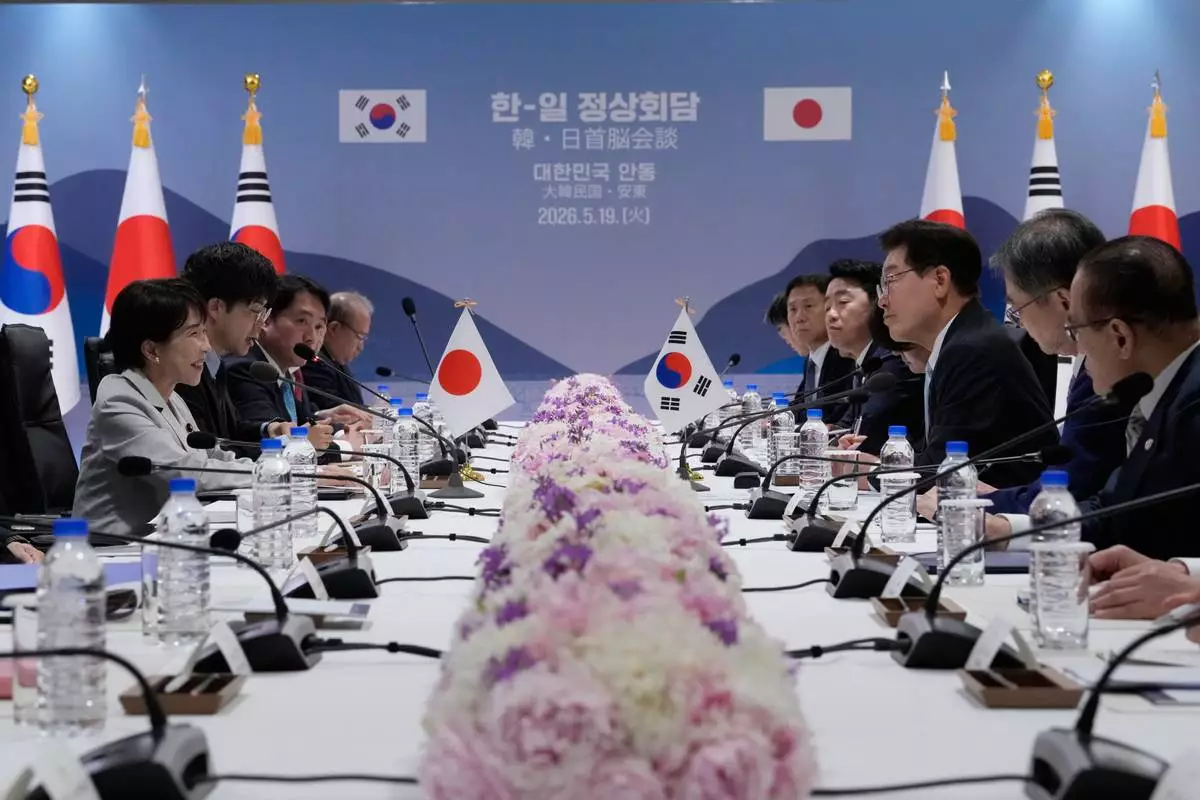
Japan's Prime Minister Sanae Takaichi, left, and South Kore's President Lee Jae Myung, third from right, hold their meeting in Andong, South Korea, Tuesday, May 19, 2026. (AP Photo/Ahn Young-joon, Pool)
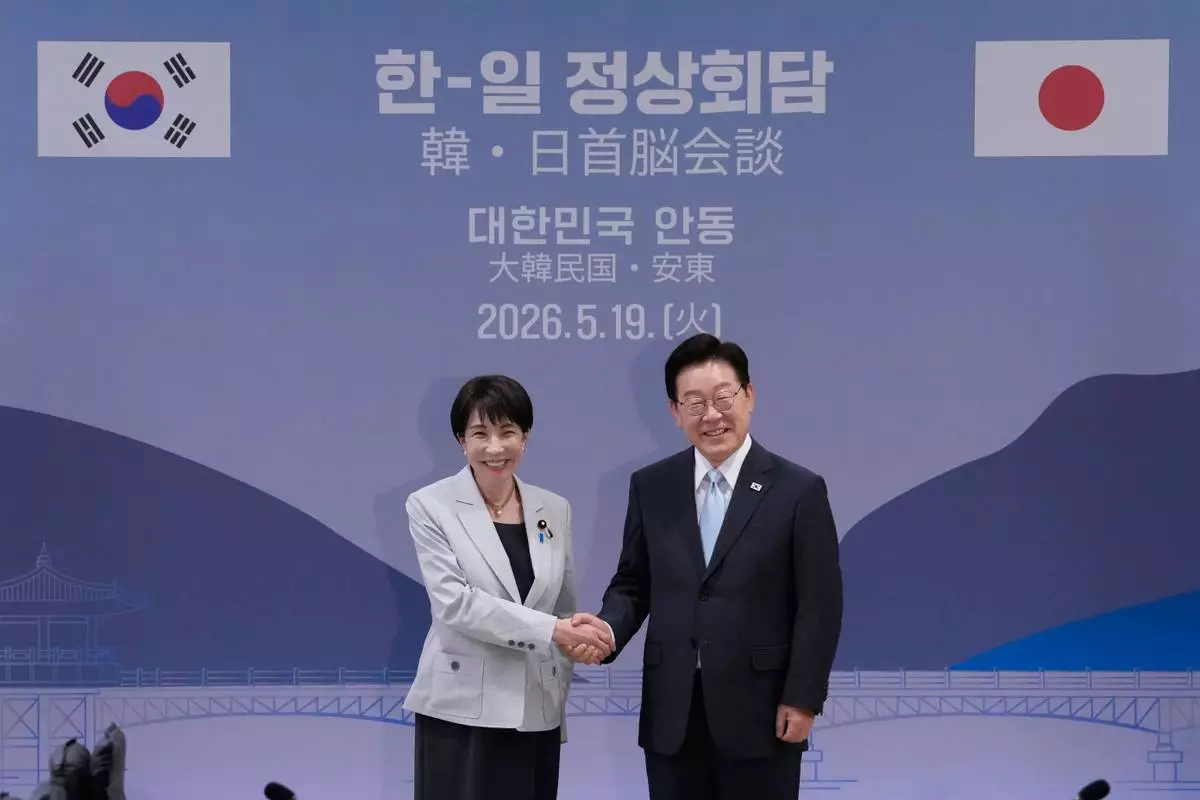
Japan's Prime Minister Sanae Takaichi, left, and South Kore's President Lee Jae Myung pose for a photo during their meeting in Andong, South Korea, Tuesday, May 19, 2026. (AP Photo/Ahn Young-joon, Pool)
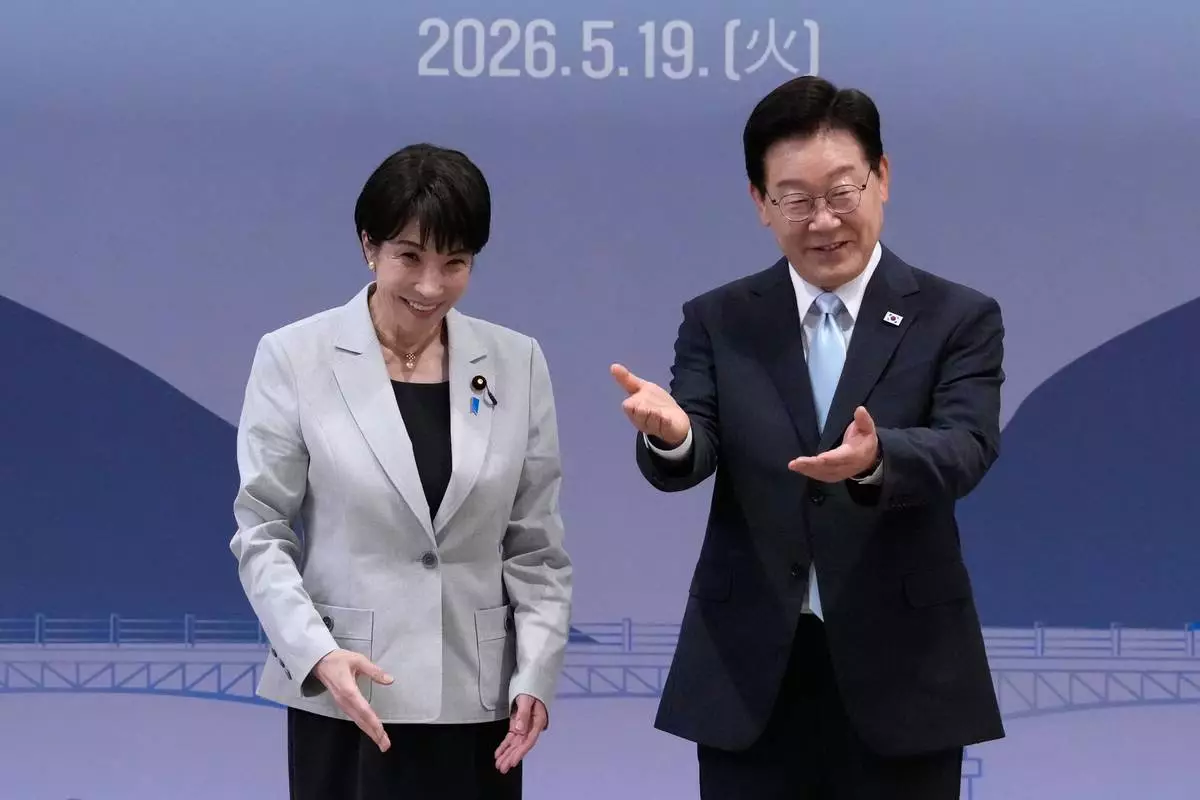
Japan's Prime Minister Sanae Takaichi, left, and South Kore's President Lee Jae Myung react during their meeting in Andong, South Korea, Tuesday, May 19, 2026. (AP Photo/Ahn Young-joon, Pool)
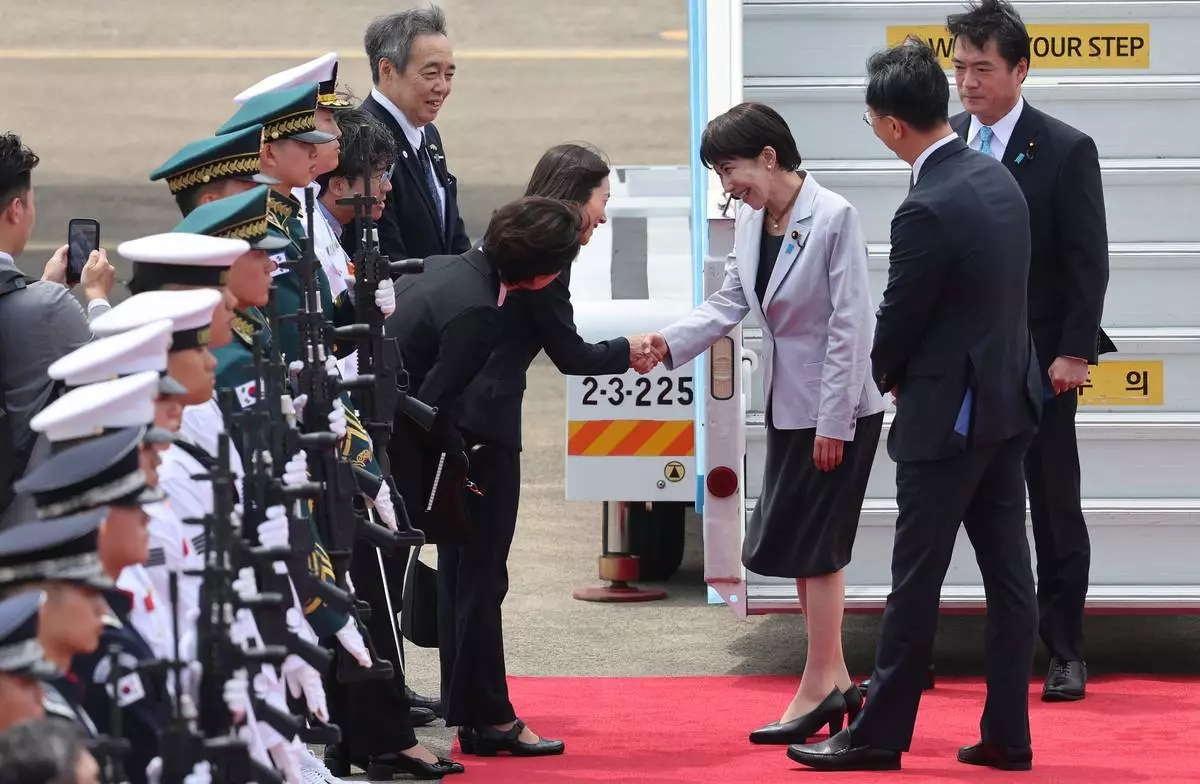
Japan's Prime Minister Sanae Takaichi, third from right, is greeted upon arrival at the Daegu International Airport in Daegu, South Korea, Tuesday, May 19, 2026. (Yoon Kwan-shick/Yonhap via AP)
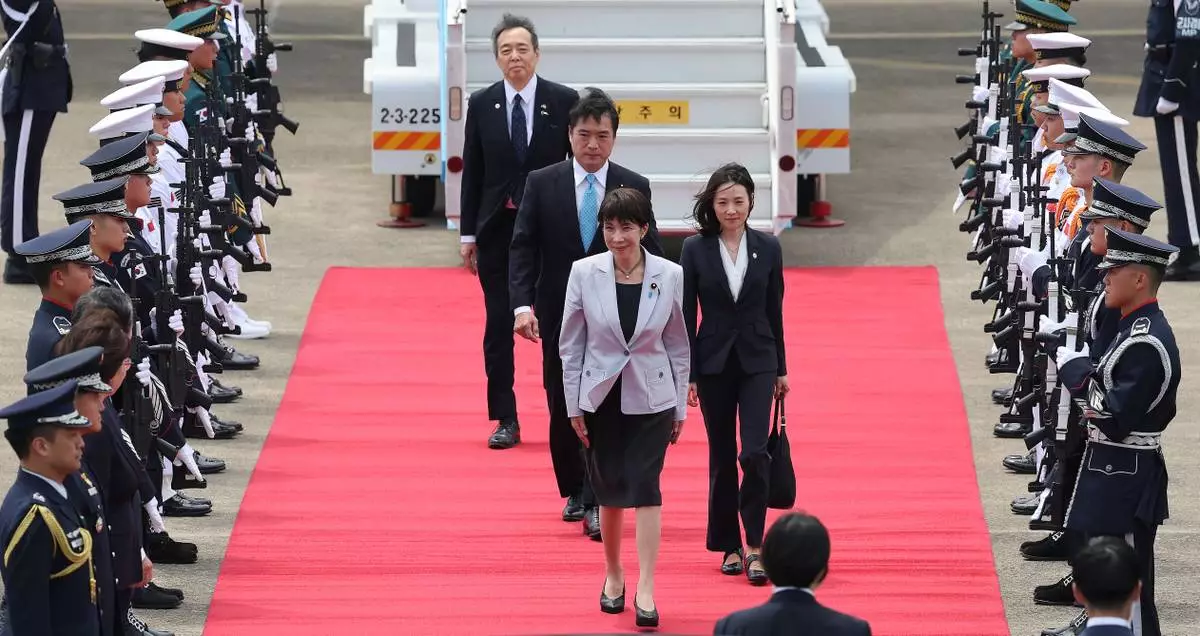
Japan's Prime Minister Sanae Takaichi, center, inspects an honor guard upon arrival at the Daegu International Airport in Daegu, South Korea, Tuesday, May 19, 2026. (Yoon Kwan-shick/Yonhap via AP)
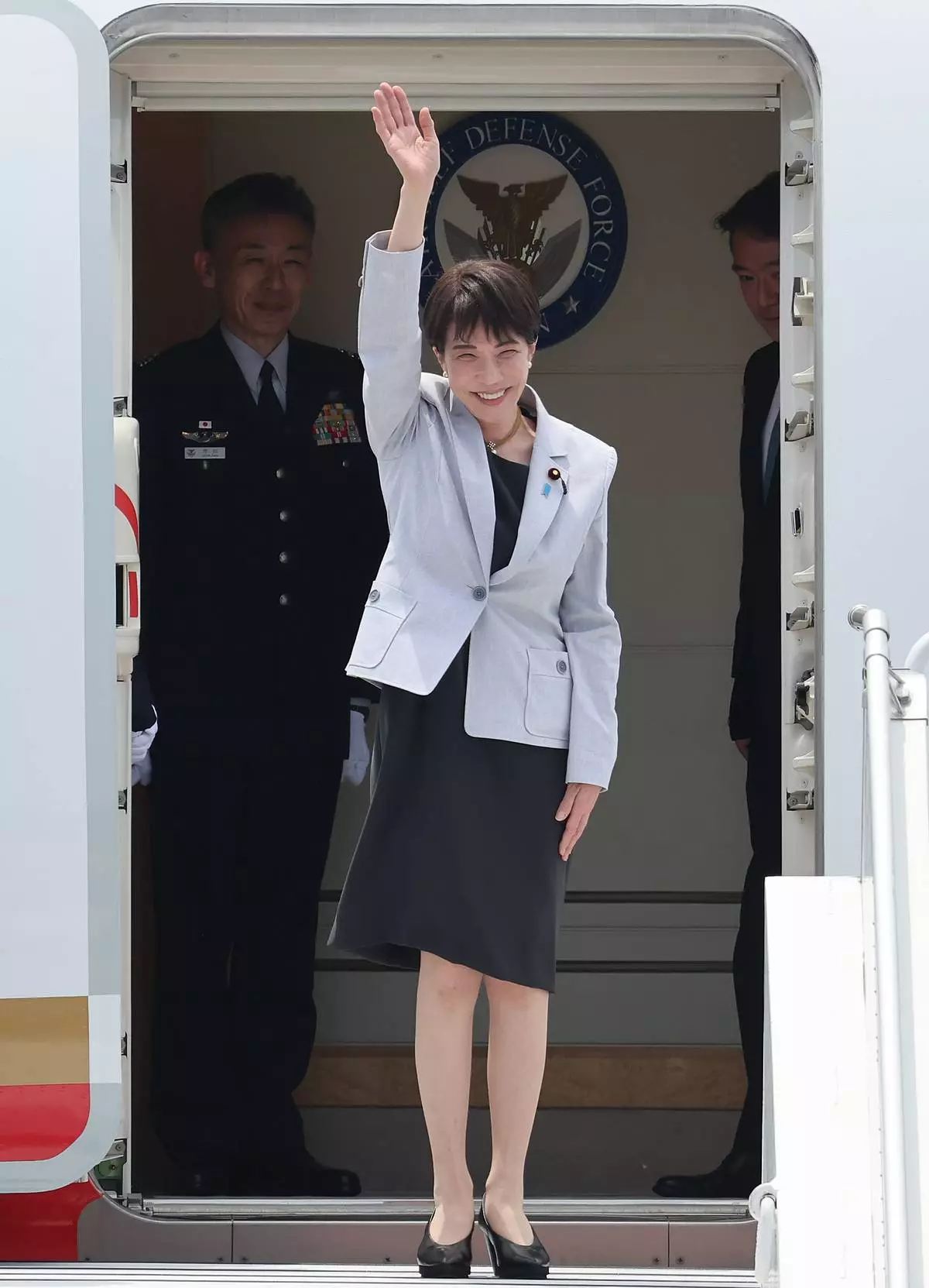
Japan's Prime Minister Sanae Takaichi waves upon arrival at the Daegu International Airport in Daegu, South Korea, Tuesday, May 19, 2026. (Yoon Kwan-shick/Yonhap via AP)
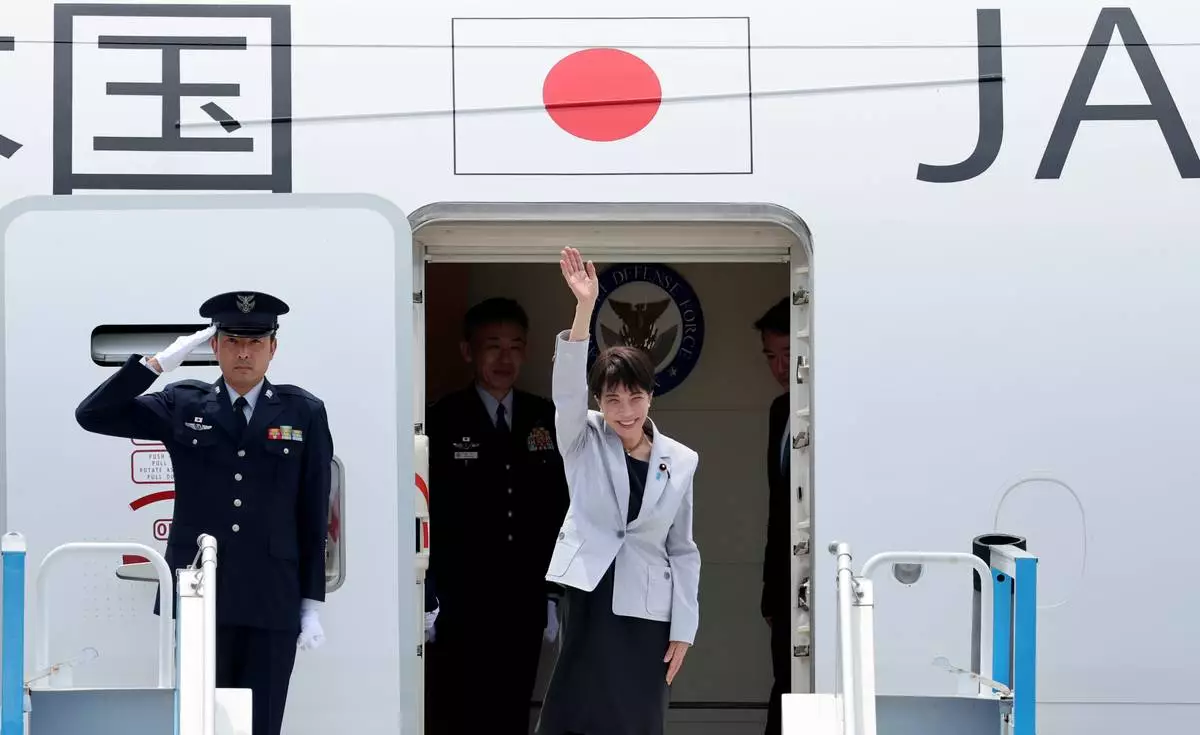
Japan's Prime Minister Sanae Takaichi waves upon arrival at the Daegu International Airport in Daegu, South Korea, Tuesday, May 19, 2026. (Yoon Kwan-shick/Yonhap via AP)
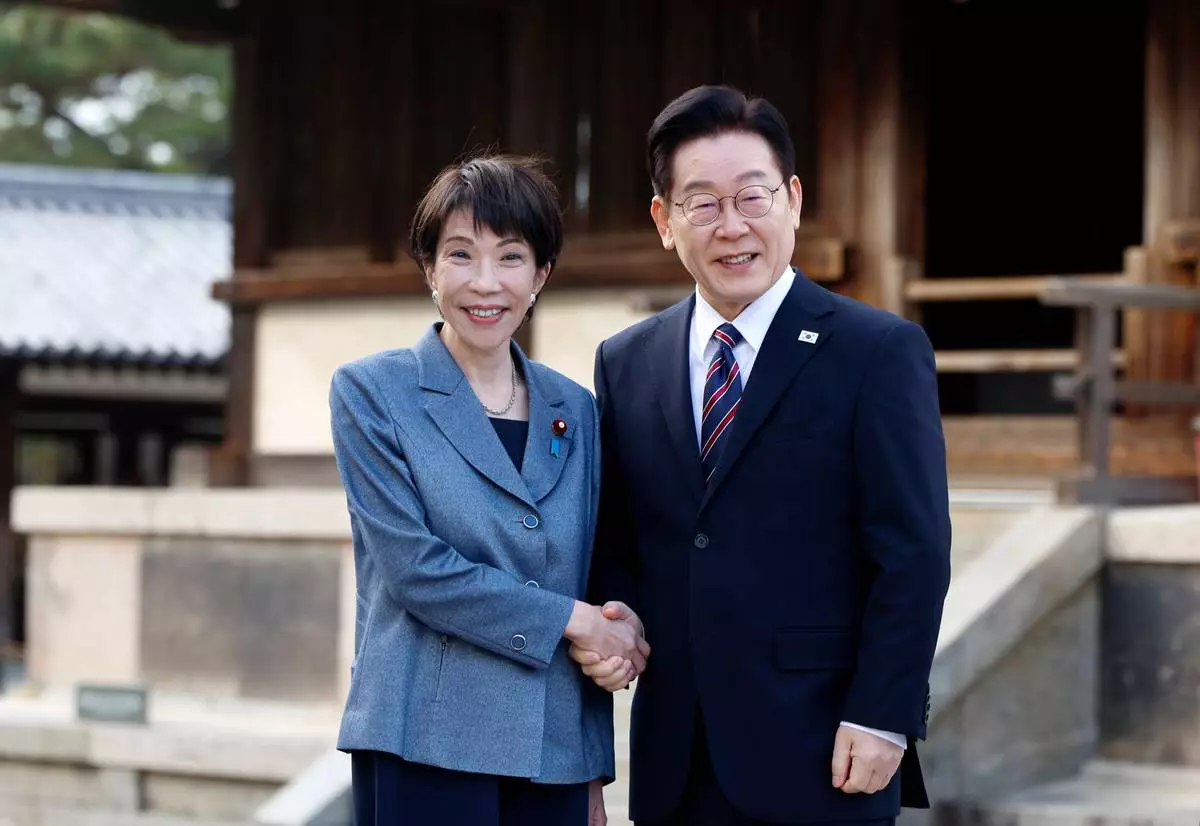
File - Japanese Prime Minister Sanae Takaichi, left, and South Korean President Lee Jae Myung pose as they visit the Western Precinct or Saiin Garan, at the Horyuji Temple in Ikaruga, Nara prefecture, western Japan, Jan. 14, 2026. (Franck Robichon/Pool Photo via AP, File)