Trade unions of Italy on Monday organized strikes and demonstrations in more than 20 cities, as protesters condemned Israel's navy for once again intercepting humanitarian aid bound for Gaza.
Israeli naval forces began intercepting ships from the humanitarian Gaza-bound Global Sumud Flotilla on Monday morning, Israel's state-owned Kan TV reported.
More than 50 vessels set sail from Türkiye's Marmaris coast on May 14 in a third attempt to break Israel's naval blockade of Gaza and deliver aid to Palestinians.
A previous flotilla, comprising about 20 boats and 175 activists, was intercepted by Israeli forces on April 30 near the southern Greek island of Crete. Two activists were detained for days before being released. Dozens of activists said they were mistreated, abused and beaten by the Israeli forces.
In Rome, hundreds gathered at a square outside Termini railway station, the busiest in Italy and one of busiest in Europe. The square was renamed "Plaza Gaza" since last October to show solidarity with Palestinians.
Demonstrators chanted slogans demanding the government halt arms exports to Israel, end military cooperation, recognize the State of Palestine, and redirect public spending toward wages, pensions and public services.
"We learned that the aid flotilla to Gaza was attacked again by Israeli forces. We must stand with these brave people and oppose Israel’s crimes against the Palestinians," said Angelis, a representative of Italy's grassroots union federation.
"Today we made it clear that the Italian people want to cut all ties with Israel and terminate every agreement with it," said protester Giulia.
Organizers said strikes and rallies also took place in Milan, Turin and other cities, affecting transport, education, healthcare and other sectors.
At least 72,763 people have been killed and 172,664 injured by Israeli fire since October 2023, according to Gaza health authorities.

Protests sweep Italy as Gaza-bound aid flotilla intercepted

Protests sweep Italy as Gaza-bound aid flotilla intercepted
Nobel laureate in economics Michael Spence said he views U.S. President Donald Trump's high-profile visit to China last week as beneficial, stressing that a mix of cooperation and competition is the most pragmatic path forward amid ongoing global geopolitical uncertainties.
The 2001 Nobel prize winner shed his light on China-U.S. relations on the sidelines of this year's Tsinghua PBCSF Global Finance Forum held in Chengdu City of southwest China's Sichuan Province with the theme "Global Financial Governance in a Changing World."
Although Spence, an American, has been critical of the U.S. president and the economic uncertainty surrounding his policy decisions, he emphasized that efforts to carry out high-level diplomacy should always be welcome.
"People are starting to say that the Trump administration does things that are either unconventional or on slightly less polite terms. It seems to understand that with China, a big powerful country and economy, you have to deal with that pragmatically. China can't be pushed around," he said.
Trump concluded a three-day state visit to China on Friday. This is the first U.S. presidential visit to China in almost nine years, after President Xi previously hosted Trump in Beijing in November 2017.
During the visit, Trump and Chinese President Xi Jinping held talks on Thursday, agreeing on a new vision for building constructive China-U.S. relations with strategic stability.
The two leaders also engaged in candid, in-depth, constructive and strategic communication on major issues concerning world peace and development, exploring a proper way for the two major countries to coexist and reach a series of consensuses.
For Spence, the historic meeting is positive for the world's largest economies to find out how to get along with each other.
"So less confrontation, more kind of a realistic combination of respect, competition, some element of cooperation and so on. So in that sense, I think the mature view of the meeting is that it was a good thing," he said.
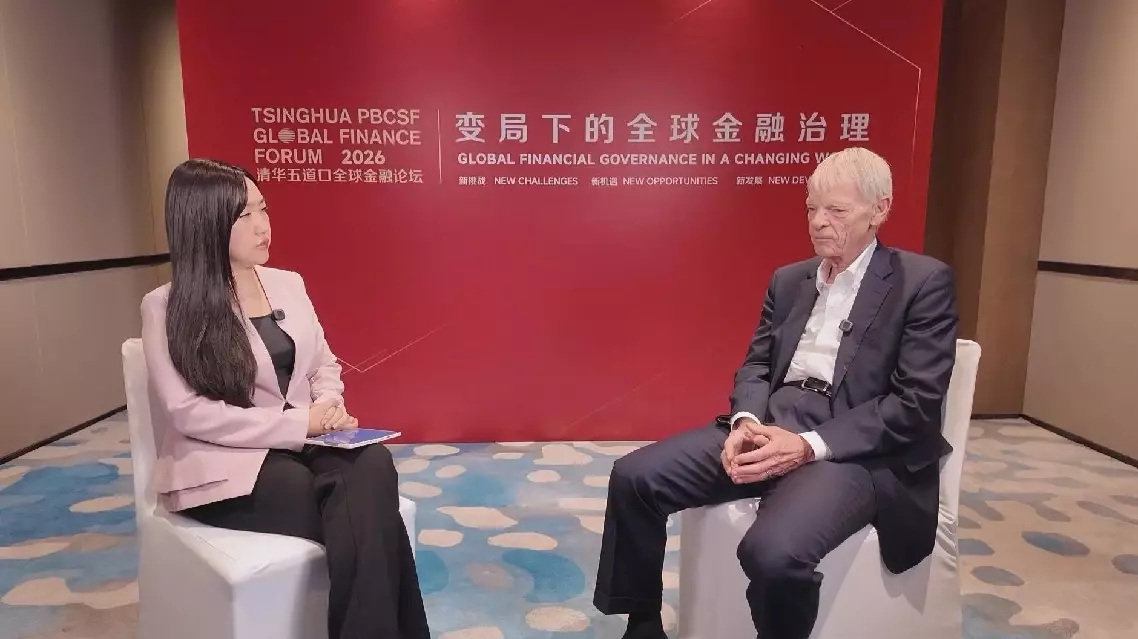
Nobel laureate in economics sees positive movement in Trump's China visit