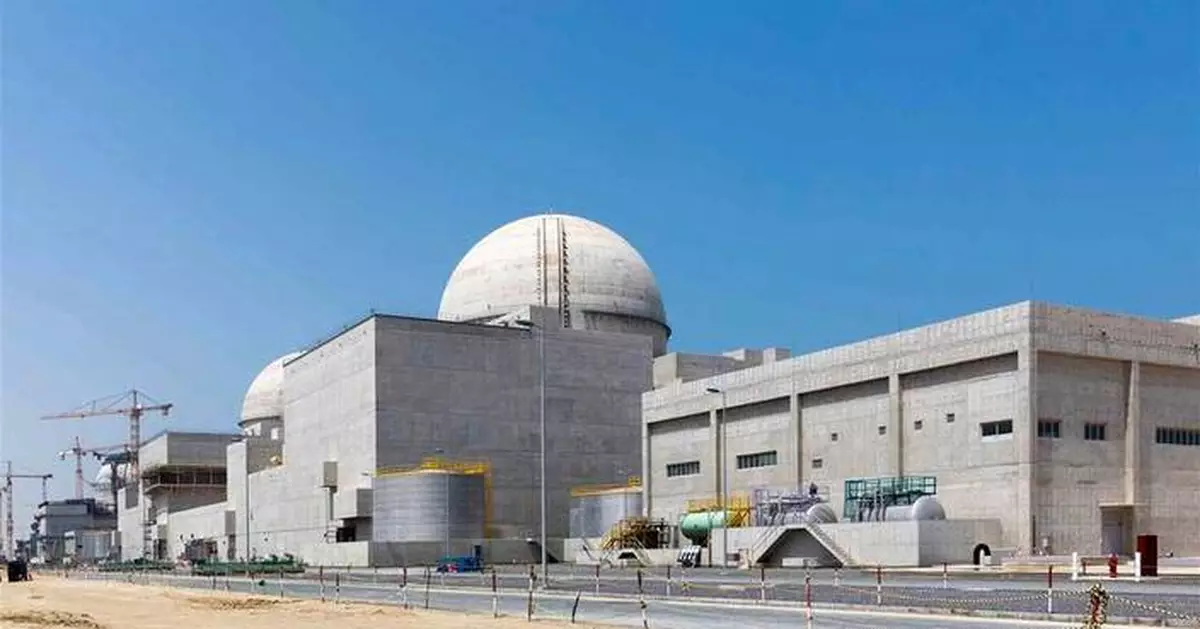
DUBAI, United Arab Emirates (AP) — The drones that targeted the United Arab Emirates’ Barakah nuclear power plant all came from Iraq, the country’s Defense Ministry said Tuesday, likely signaling that Iranian-backed Shiite militias launched the assault.
Such militias launched repeated drone attacks targeting Gulf Arab states after Israel and the United States began their war against Iran back on Feb. 28. Militias in the past have provided Iran a means by which to deflect blame over such attacks.
There were no reported injuries or radiological release at Barakah after the attack, which Emirati officials said hit a generator on the facility's perimeter.
The UAE, which has hosted air defenses and personnel from Israel, recently accused Iran of launching drone and missile attacks even after its ceasefire with the U.S. began April 8.
U.S. President Donald Trump said Tuesday he's willing to give Iran a few days to make progress in peace negotiations before the United States resumes military strikes. Trump said Monday he was pulling back from plans to launch strikes Tuesday. He has repeatedly set deadlines for Tehran and then backed off.
Tensions have risen over the Strait of Hormuz, a vital energy waterway gripped by Iran while its ports remain under a U.S. naval blockade. A maritime data firm reported Tuesday that ship traffic through the strait more than doubled last week, but still remains a fraction of its pre-war levels.
Trump told reporters at the White House he “was an hour away from making the decision” to launch a new round of strikes and end the fragile ceasefire before he called off the attack Monday.
Trump didn’t set a firm deadline for Iran on Tuesday, at first saying he was giving Tehran “two or three days.” He then said Iran could have until “maybe early next week.”
Trump on Monday announced he was holding off on military strikes planned for Tuesday because “serious negotiations” were underway to end the war.
Key sticking points include the United States' insistence that Iran reopen the Strait of Hormuz to commercial shipping.
There's also broad disagreement over Iran's nuclear program. Trump has said he wants to remove highly enriched uranium from the Iran and prevent it from developing nuclear weapons. Iran says its nuclear program is for peaceful purposes.
No group has claimed responsibility for the attack on the UAE nuclear plant, though Iran and its proxies had been suspected.
Iraqi government spokesman Bassem al-Awadi, without addressing the Emirati Defense Ministry's report, issued a statement saying that Baghdad "expresses its strong condemnation of the recent drone attacks targeting the UAE."
“We also emphasize the importance of effective regional and international cooperation to prevent any escalation or harm to the stability of the region, or any targeting of the security and sovereignty of sisterly and friendly nations,” al-Awadi added.
There were three other drones that targeted the country over the last two days, the Emirati Defense Ministry added, without elaborating on their targets. Saudi Arabia, which had also condemned the nuclear plant attack, later said it had intercepted three drones that entered from Iraqi airspace.
The $20 billion Barakah nuclear power plant was built by the UAE with the help of South Korea and went online in 2020. It is the only nuclear power plant in the Arab world and can provide a quarter of the energy needs in the UAE, a federation of seven sheikhdoms that is home to Dubai.
Earlier Tuesday, a prominent Emirati diplomat elliptically criticized regional countries over the attacks the country has faced.
“The confusion of roles during this treacherous Iranian aggression is baffling, encompassing the Gulf Arab region’s surrounding states,” Anwer Gargash wrote on X. “The victim’s role has merged with that of the mediator, and vice versa, while the friend has turned into a mediator instead of being a steadfast ally and supporter.”
According to the Lloyd’s List Intelligence maritime data firm, a total of 54 ships transited the strait the week of May 11, more than double the 25 vessels counted the week before.
Traffic through the strait remains a trickle compared to before the war, when 130 or more vessels passed it each day.
Last week's traffic included 10 China-owned ships after Tehran said it would permit some Chinese vessels to transit, Lloyd’s said Tuesday on X. Two were carrying cooking gas headed for India.
Iran has imposed a murky vetting scheme for vessels trying to leave the Persian Gulf, which in some cases has included demanding payment and excludes US and Israeli vessels.
Iran depends on China as the sole remaining major customer for its heavily sanctioned oil. India is suffering a politically sensitive shortage of cooking gas supplies and has secured passage for some of its ships through diplomatic intervention with Iran.
Price reported from Washington. AP journalists David McHugh in Frankfurt, Germany, and Russ Bynum in Savannah, Georgia, contributed.
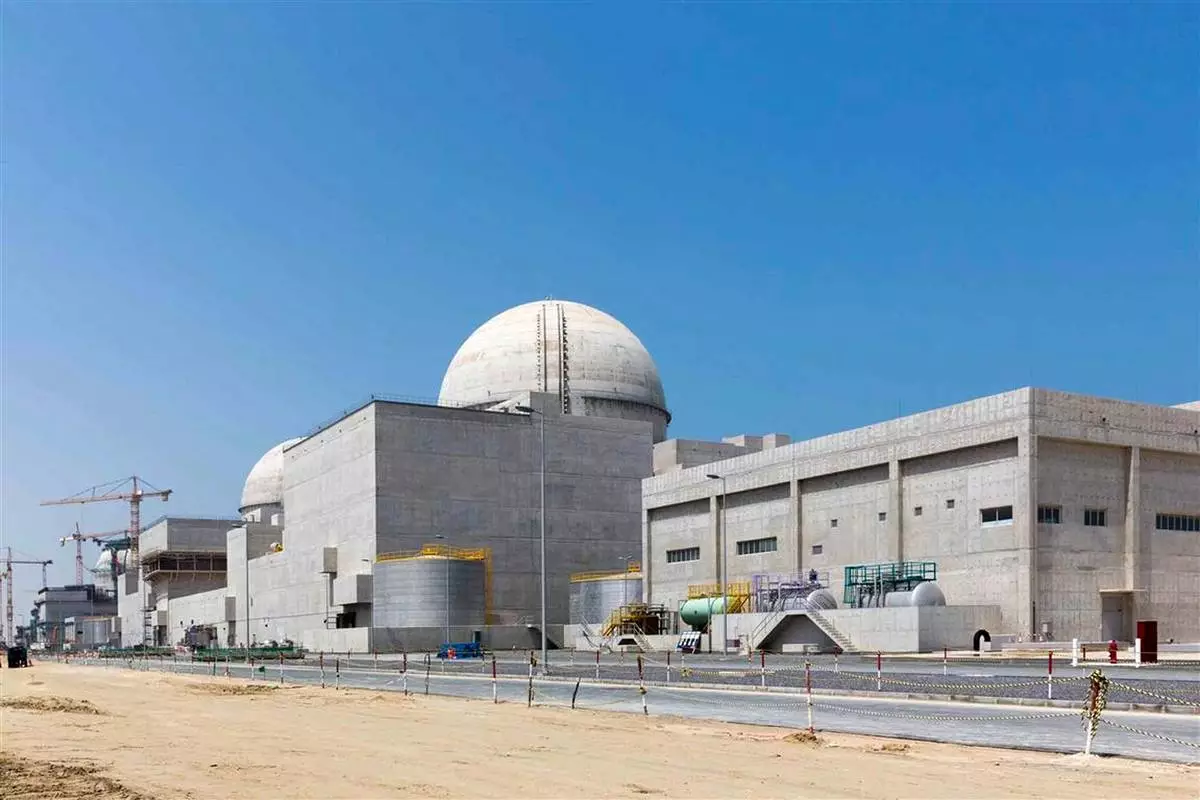
FILE - This undated photograph released by the United Arab Emirates' state-run WAM news agency shows the under-construction Barakah nuclear power plant in Abu Dhabi's Western desert. (Arun Girija/Emirates Nuclear Energy Corporation/WAM via AP, File)
BUNIA, Congo (AP) — The World Health Organization director-general openly worried Tuesday over the “scale and speed” of an outbreak of a rare type of Ebola in eastern Congo, where authorities reported a sharp increase in suspected deaths — to at least 134 — and more than 500 suspected cases.
The virus spread undetected for weeks after the first known death as authorities tested for a more common type of Ebola and came up negative, health experts and aid workers said. The Bundibugyo virus has no approved medicines or vaccines.
Congo’s health minister, Samuel Roger Kamba, said at a press conference on Tuesday that 69 cases had been treated and 134 people have died since the outbreak began.
WHO Director-General Tedros Adhanom Ghebreyesus, said he is “deeply concerned about the scale and speed of the epidemic,” adding that the U.N. health agency will convene its emergency committee later Tuesday. He pointed to the emergence of cases in urban areas, the deaths of healthcare workers and significant population movement.
WHO has declared the Ebola outbreak a public health emergency of international concern, requiring a coordinated response. Resources were being rushed to the two affected provinces near the border with Uganda, which has reported one death in a person who traveled from Congo.
The head of the WHO team in Congo said that authorities haven’t identified “patient zero” in the outbreak.
Dr. Anne Ancia also said the Erbevo vaccine, used against a different type of Ebola, was among those being considered for possible use. But even if that or another is approved, it would take two months to become available.
For now, Ancia said, neither the U.S. Centers for Disease Control and Prevention nor the Africa Centers for Disease Control were on the ground, but others were, including Doctors Without Borders and the Red Cross.
She said that she expected a long road ahead: “I don’t see that in two months we will be done with this outbreak.”
Inside Congo, cases have been confirmed in the capital of Ituri province, Bunia; North Kivu’s rebel-held capital, Goma; and the localities of Mongbwalu, Nyakunde and Butembo — home to well over a million people in all.
Dr. Peter Stafford, an American doctor, is among the Bunia cases, said Serge, the Christian organization that he works for. He had been treating patients at a hospital. Three other Serge employees were working there, including Stafford’s wife, but weren't showing symptoms.
Congo has said the first person died from the virus on April 24 in Bunia, and the body was repatriated to the Mongbwalu health zone, a mining area with a large population.
“That caused the Ebola outbreak to escalate,” said Kamba, the health minister.
When another person fell ill on April 26, samples were sent to Congo's capital, Kinshasa, for testing, according to the Africa CDC. Bunia is more than 1,000 kilometers (620 miles) away in a country with some of the world's worst infrastructure.
Samples from Bunia were initially tested for the more common type of Ebola, Zaire, Congolese officials said. They came back negative, said Dr. Richard Kitenge, the health ministry incident manager for Ebola, and local authorities assumed that it wasn't the virus.
Only laboratories in Kinshasa and Goma, which is now controlled by the Rwanda-backed M23 rebel group, have the capacity to test for the Bundibugyo virus.
Benjamin Mbonimpa, M23's permanent secretary, told reporters on Sunday that the rebel government had established entry and exit points in the city and would take responsibility for funeral services in the event of continued spread.
“Our priority is to protect the population within our jurisdiction, and we urge people to resume their daily activities,” he said.
On May 5, WHO was alerted of about 50 deaths in Mongbwalu, including four health workers. The first confirmation of Ebola came on May 14.
“Our surveillance system didn't work,” said Jean-Jaques Muyembe, a virologist at the National Institute of Bio-Medical Research.
“The Bunia laboratory ... should have continued searching and sent the samples to the national laboratory. Something went wrong there. That’s why we ended up in this catastrophic situation,” he said, adding that members of parliament and senators were aware “there were deaths and nothing was being said.”
Matthew M. Kavanagh, director of the Georgetown University Center for Global Health Policy and Politics, criticized the Trump administration’s earlier decision to withdraw from WHO and make deep cuts in foreign aid — “the exact surveillance system meant to catch these viruses early,” he said.
The U.S. State Department pushed aside criticism on Monday, saying it sprang into action immediately and has provided $13 million in assistance for the response.
Ebola is highly contagious and can be contracted via bodily fluids such as vomit, blood or semen. The disease it causes is rare but severe and often fatal. During an outbreak more than a decade ago that killed more than 11,000 people, many were infected while washing bodies during community funerals.
“Ebola is very much a disease of compassion in that it impacts the people who are more likely to be taking care of sick folks,” said Dr. Craig Spencer, an associate professor at the Brown University School of Public Health who survived Ebola more than a decade ago after contracting it in Guinea.
Ebola causes fever, headache, muscle pain, weakness, diarrhea, vomiting, stomach pain and unexplained bleeding or bruising.
The severity of the symptoms and the rising caseload were fueling growing panic in Bunia neighborhoods.
“I know the consequences of Ebola, I know what it’s like,” resident Noëla Lumo said. She previously lived in Beni, a region hit by former outbreaks. When she heard about the latest one, she began making protective masks by hand.
Eastern Congo long has grappled with a humanitarian crisis and the threat of armed groups that have killed dozens and displaced thousands in Ituri in the past year. Ituri already had more than 273,000 displaced people out of a population of 1.9 million, according to the U.N.
U.N. staff have been asked to work from home and avoid physical contact and crowded areas, said a Bunia-based U.N. official, who spoke on condition of anonymity because they weren't authorized to speak publicly on the subject.
The most important challenge is breaking the virus transmission chain, Muyembe said.
“Of the 17 epidemics we have experienced in (Congo), 15 were brought under control simply by applying public health measures,” he said. “The disease is transmitted through contact with bodily fluids. If you avoid this contact, you break the chain of transmission and the epidemic stops.”
Monika Pronczuk reported from Dakar, Senegal. AP writers Jamey Keaten in Geneva, Constant Same Bagalwa in Bunia, Congo and Wilson McMakin in Dakar contributed.
For more on Africa and development: https://apnews.com/hub/africa-pulse
The Associated Press receives financial support for global health and development coverage in Africa from the Gates Foundation. The AP is solely responsible for all content. Find AP’s standards for working with philanthropies, a list of supporters and funded coverage areas at AP.org.
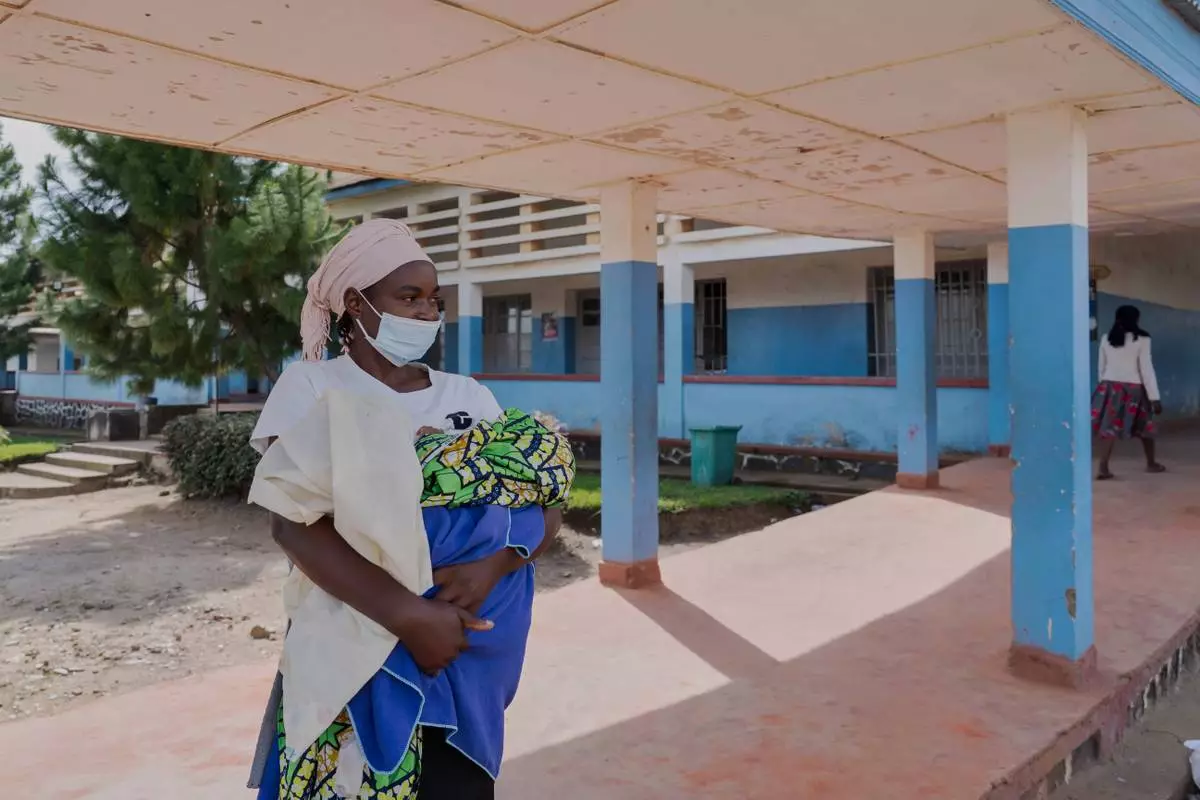
A woman wearing a protective mask stands in the corridor of a hospital in Bunia, Congo, Sunday, May 17, 2026. (AP Photo/ Dirole Lotsima Dieudonne)