LOS ANGELES (AP) — Single Gen Z women are outpacing their male counterparts when it comes to buying a home.
They accounted for 35% of all homebuyers in their generation, while single Gen Z men represented 18%, according to survey data from the National Association of Realtors.
NAR surveyed people who bought a home between July 2024 and June 2025. The survey included homebuyers from several generations, from Gen Z, ages 18-26, to the Silent Generation, ages 80 to 100. No other generation had a bigger share of single women homebuyers than Gen Z.
The survey data are the latest sign that single women overall are becoming homeowners at greater rates than single men. Single women across the generations made up a quarter of all homebuyers in the July 2024-June 2025 period, according to NAR. Single men, meanwhile, accounted for 11% of all home purchases.
This has been a longstanding trend going back at least to 1981. In 2006, at the height of the mid-2000s housing boom, the share of homes bought by single women peaked at 22%, according to NAR. For single men, their share of homeownership peaked at 12% in 2010.
Experts say there is no one-size-fits-all answer to why across the generations single women outnumber single men as homeowners.
Women now are outpacing men in college attendance, which can lead to higher incomes, said Jessica Lautz, NAR’s deputy chief economist.
They tend to have a strong desire for homeownership as a way to secure their independence, something they historically could not easily do alone.
“It wasn’t until the 1970s where women were legally protected to have a mortgage on their own,” Lautz said. “And they have embraced this and been very strongly embracing this.”
Overall Gen Zers, which the survey defines as those born between 1999 and 2011, still only made up 4% of all homebuyers during the survey period. And at the time of the survey, the share of U.S. homes bought by first-time buyers of all ages sank to the lowest level on record going back to 1981.
First-time buyers often don’t have equity from a previous home to put toward a down payment. That was the situation for Bri LaFluer. After years of socking away half her pay, working two jobs and aided by a slowing housing market, she bought her own home in 2023 at the age of 24.
“I’ve always been a really independent person and I just wanted my own place to have peace and quiet by myself," said LaFluer, now 27.
Her home search began in 2021, but historically low mortgage rates made the market ultra competitive, which turbocharged prices. Two years later she finally landed a house in Baldwinsville, N.Y., about 15 miles from Syracuse, that was built in 1900 and has three bedrooms and 1.5-baths and a big yard. She got it for $175,000.
“I feel like it was meant to be and this just ended up being the perfect house for me and my dogs,” she said.
A content creator for a video game company, LaFluer lived with her mom and paid a modest rent, which helped her save up faster for the $20,000 down payment.
Aspiring Gen Z homeowners face a number of challenges to affording a home: They’re typically just getting started in their careers, with their best income-earning years ahead. They are unlikely to be married and may have student loans to pay off.
Their median annual income of $76,000, as of 2024, also was the lowest compared to homebuyers from all other generations, according to NAR.
Years of soaring home prices have further stretched the limits of affordability. While home price growth has slowed and prices have fallen in many metro areas, prices are mostly still rising. The median U.S. home sales price stood at $417,700 last month, up 0.9% from a year earlier, according to NAR.
Still, Gen Z homebuyers are also more likely to receive financial help from family, and many are savvy about looking into community grants or other payment assistance programs for first-time homebuyers. And 1 in 10 tapped their 401(k) retirement savings plan to put toward their down payment, according to NAR.
Other home shoppers have no recourse but to save up on their own.
That's what Mariah Berry focused on when many of her fellow college grads were going out and living it up.
“I did not go out and was driving an old beat-up car,” said Berry, a social media content creator. “It was not fun.”
The penny-pinching paid off in 2023, when Berry bought her two-bedroom, one-bath home in Charleston, Tennessee, a small town about 45 miles outside of Chattanooga. She was just 23.
Berry had always wanted to be a homeowner, but the goal took on more urgency after a period when she and her boyfriend were bouncing between living in short-term rentals or couch surfing with friends.
Berry got her home, one of two units in a ranch-style duplex, for $218,000. She financed the balance after making a $7,000 down payment with a 30-year mortgage at 6% interest.
“I do think it’s pretty frickin’ awesome that I’m a homeowner and that I became a homeowner at 23,” she said. “I will say that after I put in the offer, I wanted to puke. I was like, ’Oh my God, did I do the right thing?'”
Berry's now looking at the possibility of buying the other half of the duplex some day.
“That could be a good opportunity for us to have and like rent out half of it," she said.
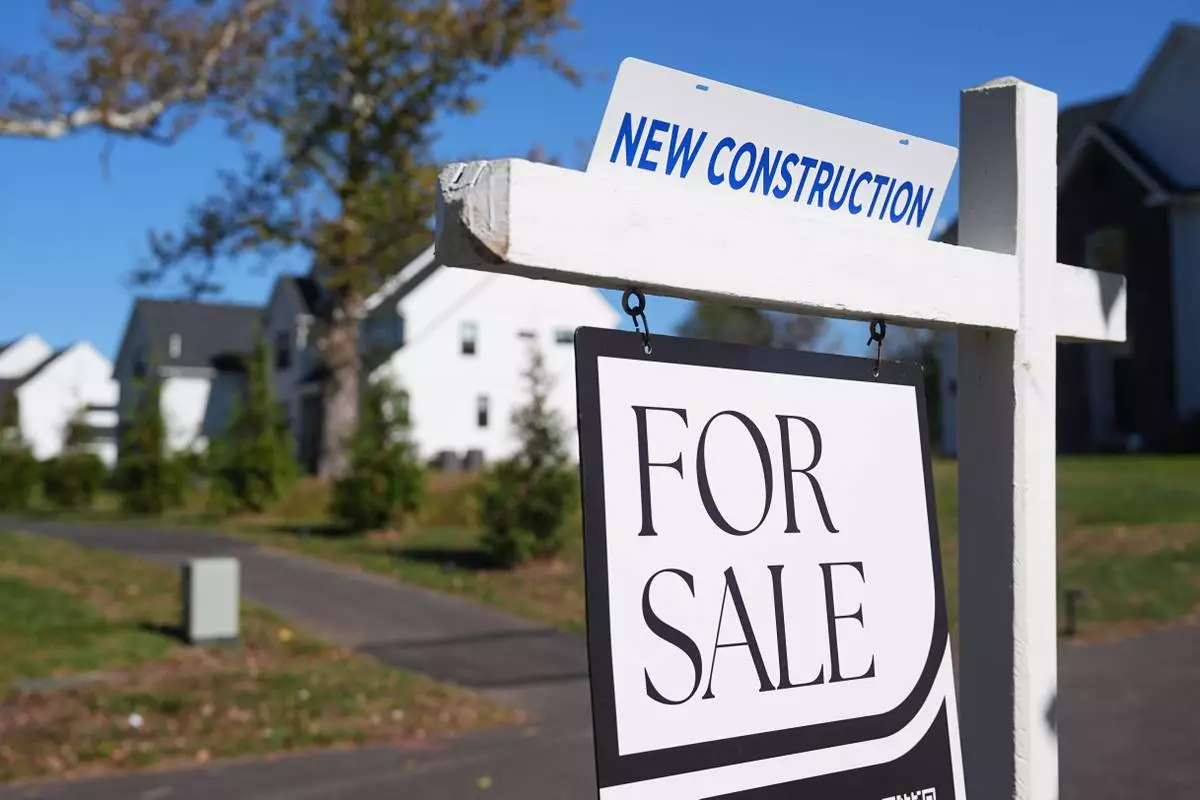
FILE - A sign is posted for a new home for sale in Ambler, Pa., Oct. 16, 2025. (AP Photo/Matt Rourke, File)