Skip to Content Facebook Feature Image

Six tax tips you should start thinking about now

ENT

Six tax tips you should start thinking about now
ENT

ENT

Six tax tips you should start thinking about now

2026-05-20 20:17 Last Updated At:20:30

Now that tax season is over, you’re probably tempted to not think about taxes again until next year. That could be a costly mistake. Asking the right questions throughout the year could help you financially come next tax season. In the long run, this could have a substantial impact on your wealth.

Here are six common ways taxpayers get off track and the questions they should ask themselves during the tax year.

Taxpayers often default to “same as last year” thinking. But tax outcomes depend on variables that shift constantly, like income, markets, tax laws, interest rates, and personal circumstances.

Consider these examples:

The question to ask is: “Given my situation this year, what approach produces the best tax outcome for me?”

By the time a return is prepared, most tax outcomes are already decided. Tax efficiency is not a once-a-year exercise; it’s an ongoing discipline.

Key areas where year-round planning matters:

The question to ask is: “What decisions throughout the year will improve my after-tax outcome?”

Many taxpayers still equate a tax refund with success. In reality, a refund simply means you paid more than you should have, and that you gave an interest-free loan to the government. That capital could have been invested or deployed elsewhere during the year.

The question to ask is: “Am I aligning my tax payments with my actual liability?”

Efficient cash flow is part of overall good tax planning.

Tax considerations should inform decisions, not drive them. A deduction reduces the cost of an expense, but it doesn’t eliminate it. Spending $1,000 to save $300 in taxes still results in a net outflow of $700.

This is particularly relevant for charitable contributions and investment decisions made for tax reasons rather than economic merit.

The question to ask is: “Does this decision make sense on its own, before considering taxes?”

Tax software has improved accessibility, but it hasn’t replaced expertise.

For taxpayers, complexity often includes:

Errors or missed opportunities can be subtle but costly over time.

The question to ask is: “What is the long-term cost of suboptimal tax decisions?”

Some of the most valuable tax strategies begin with simple questions, many of which initially seem unlikely.

For example, can I deduct my pet expenses? Usually no. But in specific cases, such as a legitimate service animal, these expenses may qualify as medical deductions.

The key is not whether a question leads to a “yes,” but whether it uncovers possibilities or clarifies boundaries.

The question to ask is: “Is there any situation where this could apply to me?”

For taxpayers, tax planning is not about chasing deductions or minimizing a single year’s bill. It’s about maximizing after-tax wealth over time.

The most valuable questions:

A simple shift from “What can I write off?” to “How should I plan?” can materially improve long-term outcomes. And that’s where thoughtful tax planning delivers its greatest value.

This article was provided to The Associated Press by Morningstar. For more personal finance content, go to https://www.morningstar.com/personal-finance.

Sheryl Rowling, CPA, is an editorial director, financial adviser for Morningstar.

Related Links:

5 Smart Ways to Use Your Tax Refund: https://www.morningstar.com/personal-finance/5-smart-ways-use-your-tax-refund

3 Big Questions to Ask Your Aging Parents: https://www.morningstar.com/personal-finance/3-big-questions-ask-your-aging-parents

5 Money Questions Every Couple Should Ask: https://www.morningstar.com/personal-finance/5-money-questions-every-couple-should-askespecially-before-valentines-day
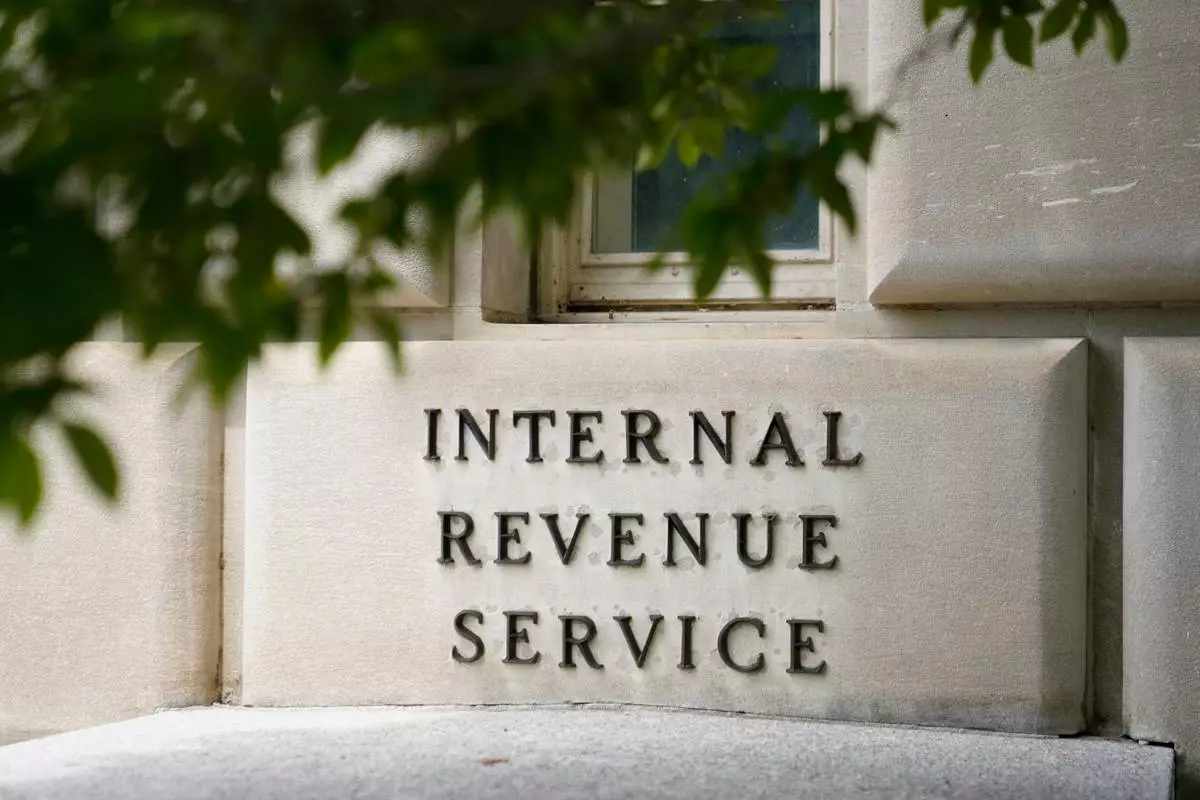
FILE - A sign outside the Internal Revenue Service building is photographed May 4, 2021, in Washington. (AP Photo/Patrick Semansky, File)


FILE - A sign outside the Internal Revenue Service building is photographed May 4, 2021, in Washington. (AP Photo/Patrick Semansky, File)

WARSAW, Poland (AP) — Polish officials on Wednesday welcomed U.S. statements clarifying that the decision not to deploy 4,000 U.S. troops to the central European country was a temporary measure.

The Polish government last week reacted with disbelief at news that 4,000 troops from the Army’s 2nd Armored Brigade Combat Team, 1st Cavalry Division were no longer en route as planned to the country that borders Ukraine.

The Trump administration previously said it was cutting U.S. forces in Germany, a decision sparking unease and criticism in both Europe and Washington.

On Tuesday night, the chief Pentagon spokesperson Sean Parnell called it a “temporary delay” of the deployment of U.S. forces to Poland, which he described as a “model U.S. ally.”

Poland spends the most in the NATO military alliance on defense as a proportion of its economy, around 4.7% in 2025.

Parnell called the delay a result of the U.S. reducing the number of brigade combat teams assigned to Europe from four to three, and indicated the Pentagon needed to decide which troops to station where.

Also speaking on Tuesday night, Vice President JD Vance disputed that the U.S. was reducing troop levels in Poland: “That’s not a reduction. That’s just a standard delay in rotation that sometimes happens in these situations.”

Polish Prime Minister Donald Tusk on Wednesday said he was happy to hear “Washington’s declaration that Poland will be treated as it deserves.”

Polish Defense Minister Władysław Kosiniak-Kamysz, who spoke with Defense Secretary Pete Hegseth on Tuesday night, said the new U.S. statements mean that the "U.S. presence is maintained.”

He added: “Sometimes a rotating model can change into a permanent model and this is always much better." Around 10,000 U.S. troops are typically stationed in Poland, the majority of them present on a rotational basis.

Polish officials said they were told they would be involved in discussions about the reorganization of U.S. troops in Europe.

The U.S. did not say how long the delay would last. The Polish defense minister said he was hoping for clarification on troop presence in the following weeks.

But Tusk said Europeans should be under no illusion about Washington’s determination to reduce its military presence on the continent and the need for Europeans to fill the gap.

On Wednesday, NATO Secretary-General Mark Rutte said U.S. allies have known for a year that the Trump administration would be withdrawing some troops from Europe and it expects, "rightly, for Europe and Canada to take a bigger responsibility for the conventional defense of NATO and particularly, of course, the European part of NATO.”

Rutte said the U.S. “will stay involved” but over time could pivot resources elsewhere in the world.

The Trump administration has warned that Europe would have to look after its own security, including Ukraine’s, in the future.

Trump and the Pentagon have said they were drawing down at least 5,000 troops in Germany after Chancellor Friedrich Merz said the U.S. was being “humiliated” by Iran's leadership and criticized what he called a lack of strategy in the war.

Associated Press writer Lorne Cook in Brussels contributed.

FILE - Poland's Prime Minister Donald Tusk, right, and Defense Minister Wladyslaw Kosiniak-Kamysz, visit troops who patrol Poland's border with Belarus, in Dubicze Cerkiewna, eastern Poland on May 29, 2024. (AP Photo/Czarek Sokolowski, File)

FILE - Poland's Prime Minister Donald Tusk, right, and Defense Minister Wladyslaw Kosiniak-Kamysz, visit troops who patrol Poland's border with Belarus, in Dubicze Cerkiewna, eastern Poland on May 29, 2024. (AP Photo/Czarek Sokolowski, File)

Recommended Articles