NEW YORK (AP) — On his very first time hosting “The Late Show” back in 2015, Stephen Colbert ripped into Donald Trump while gorging on Oreos, likening his inability to resist the cookies to his inability to resist going after the then-presidential candidate.
“Look, you don't own me. I don't need to play tape of you to have a successful TV show,” he warned an image of Trump. “Someone on television should have a modicum of dignity and it could be me.”
Over the next 11 years, Colbert couldn't curb his appetite for making Trump barbs, often turning his show into a full-throated rebuke of MAGA policies. Trump would call him a “dead man walking.”
The on-air feud between the two men seemingly ends Thursday as Colbert's top-rated late-night TV program goes off the air for the final time, effectively silencing a high-profile White House critic.
“The legacy of this show needs to be that we remember it as the show that was canceled because a presidential administration wanted it off the air,” says Heather Hendershot, a professor of communication studies and journalism at Northwestern University. “We haven’t connected every single dot on that, but it’s very clear that this was a political decision. And I think 20, 30, 40 years later, that is going to be strongly remembered about this show — that this was a moment of authoritarian triumph.”
When CBS announced last summer that Colbert’s show would end in May, the network said it was for economic reasons but others — including Colbert — have expressed skepticism that Trump’s repeated criticism of the show had nothing to do with it.
The cancellation came after CBS parent company Paramount agreed to pay $16 million to settle Trump’s lawsuit over a “60 Minutes” interview, as Paramount's sale to Skydance Media awaited the Trump administration’s approval. Colbert had called the settlement a “big fat bribe.”
Trump rejoiced over the cancellation in a Truth Social post, writing “I absolutely love” that the host “got fired.” He followed it with: “I hear Jimmy Kimmel is next.” Just two months later, ABC, buckling to pressure from Trump’s Federal Communications Commission chair and affiliate networks, temporarily suspended Kimmel — the host of its own late-night show — following his remarks about the assassination of conservative activist Charlie Kirk.
TV experts said there are not many other examples of a hit show being shuttered due to political pressure. In 1969, CBS abruptly canceled “The Smothers Brothers Comedy Hour,” which had aired comedy bits in opposition of the Vietnam War and in support of civil rights.
Colbert, a “Daily Show” alum, spent nine years playing a buffoonish, conservative commentator on Comedy Central's “The Colbert Report.” He was not universally welcomed to “The Late Show” by those he had lampooned, with Rush Limbaugh saying “CBS has just declared war on the heartland of America.”
Through Democratic and Republican administrations, Colbert and other late-night comedians have offered their take on the day's events that offered something different from traditional news media.
“In given moments, like when something big happened, you really do want that perspective that says, ‘Here’s another way to look at it,’” says Dustin Kidd, a professor of sociology at Temple University. “Or when it feels really overwhelming, you want that reminder that there’s still some way to laugh at it. And so the more you lose those ways to laugh at it, the more we all decline.”
“The Late Show” had celebrities, musical guests and jokes about Arby’s and Spirit Airlines, like other late-night shows. But Colbert put his own spin on things, like wearing his Catholic faith and his adoration of his wife and frequent guest, Evie McGee Colbert, on his sleeve.
After the monologue, he had oddball segments like “Meanwhile,” a look at global affairs in “What’s Going On Over There?,” technology with “Cyborgasm” and youth slang in “Stephen Colbert Presents: That’s Yeet. Dabbing on Fleek, Fam!”
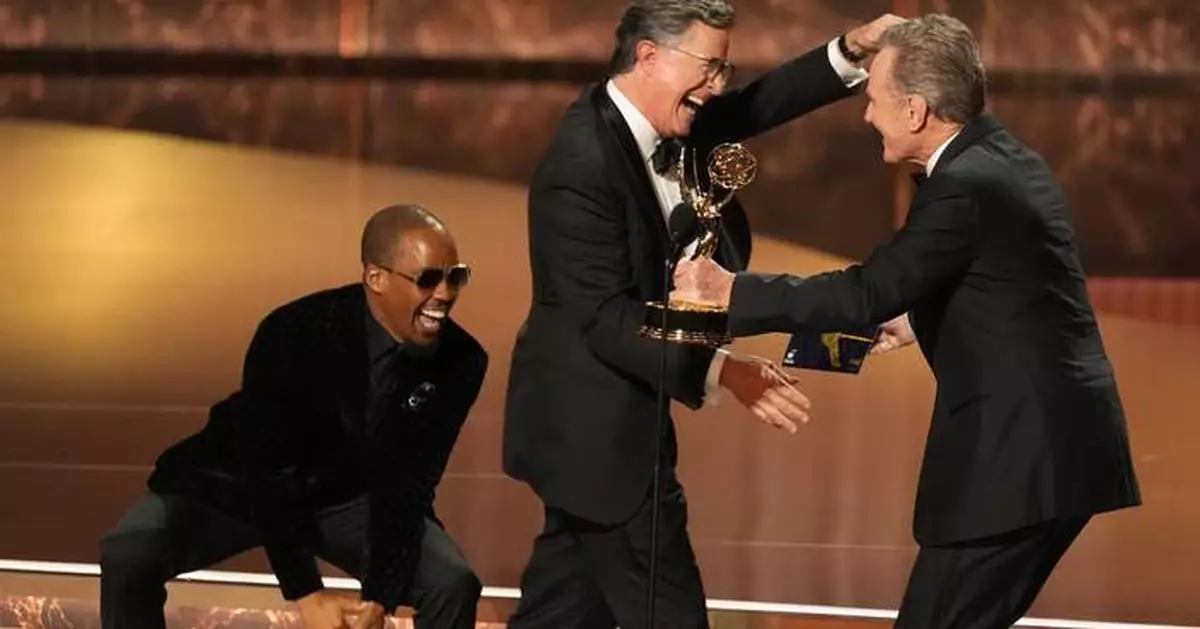
“The Late Show,” which began in 1993 with host David Letterman, won two Emmys under Colbert, as well as a Peabody Award. Come Friday, the 11:35 p.m. time slot goes to “Comics Unleashed,” a talk show that host Byron Allen has vowed will eschew politics.
“There’s just going to be a huge void,” says Lisa Rogak, the author of the 2011 biography “And Nothing But the Truthiness: The Rise (and Further Rise) of Stephen Colbert.” “And I don’t think anybody’s going to really want to step up and fill it.”
Among those sorry to see Colbert go is astrophysicist Neil deGrasse Tyson, a frequent guest. Johnny Carson used to book scientists, but Tyson notes wryly that not many TV hosts do these days. Colbert even had a segment highlighting new discoveries called “The Sound of Science.”
“Science doesn’t have many opportunities to access centerline pop culture,” says Tyson.
In a departure from the infighting of decades ago, other late-night hosts have rallied around Colbert. Kimmel, Jimmy Fallon, John Oliver and Seth Meyers — who hosted the “Strike Force Five” podcast with Colbert during the Hollywood strikes — visited “The Late Show” recently.
NBC's “The Tonight Show Starring Jimmy Fallon” and ABC's “Jimmy Kimmel Live!,” which typically air against “The Late Show,” will instead broadcast reruns on Thursday.
Catholics will also mourn the loss of a late-night host who could quote Psalms by heart and who brought up issues of faith with guests and even what happens when we die with “The Colbert Questionert.”
“We’re losing a very well-known Catholic and someone who shares his religious ideas freely and intellectually, too,” says Stephanie Brehm, author of “America’s Most Famous Catholic (According to Himself): Stephen Colbert and American Religion in the Twenty-First Century.”
She pointed to poignant moments like Colbert's chat with then-Vice President Joe Biden about the death of his son, his discussion of grief with Anderson Cooper and his exploration of the relationship between faith and comedy with Dua Lipa.
Brehm saw Colbert make himself into a sort of moral authority and lean into the social justice camp of progressive Catholics: “He is playing up that moral quality by standing up for American moral values like freedom of speech, freedom of expression, and he’s doing it with a Catholic jargon, with Catholic language.”
Then there are devotees of author J.R.R. Tolkien. Colbert is a superfan of “The Hobbit” and “Lord of the Rings” and championed Tolkien in skits, references and competitions, memorably smoking James Franco in a few throwdowns.
“I think if you step back and reflect on his career, everything he’s done is for the betterment of the community,” says Duane Cronkite, head of live programming for the Fellowship of Fans forum and news site.
Timothy Lenz, part of the leadership committee of The Mythopoeic Society, a group dedicated to the study and appreciation of Tolkien, says Colbert inspired new readers.
“Stephen Colbert is easily the most enthusiastic celebrity fan of Tolkien’s works,” he says. “That sort of public, unapologetic enthusiasm for stories that in Colbert’s youth would have been considered like nerdy and uncool, that really helps to encourage fans of all ages to let their geek flag fly.”
Tolkien, fittingly, offers a next step for Colbert after his show goes dark. He's co-writing a new “Lord of the Rings” movie.
“He’s living the fan dream right now,” says Lenz.
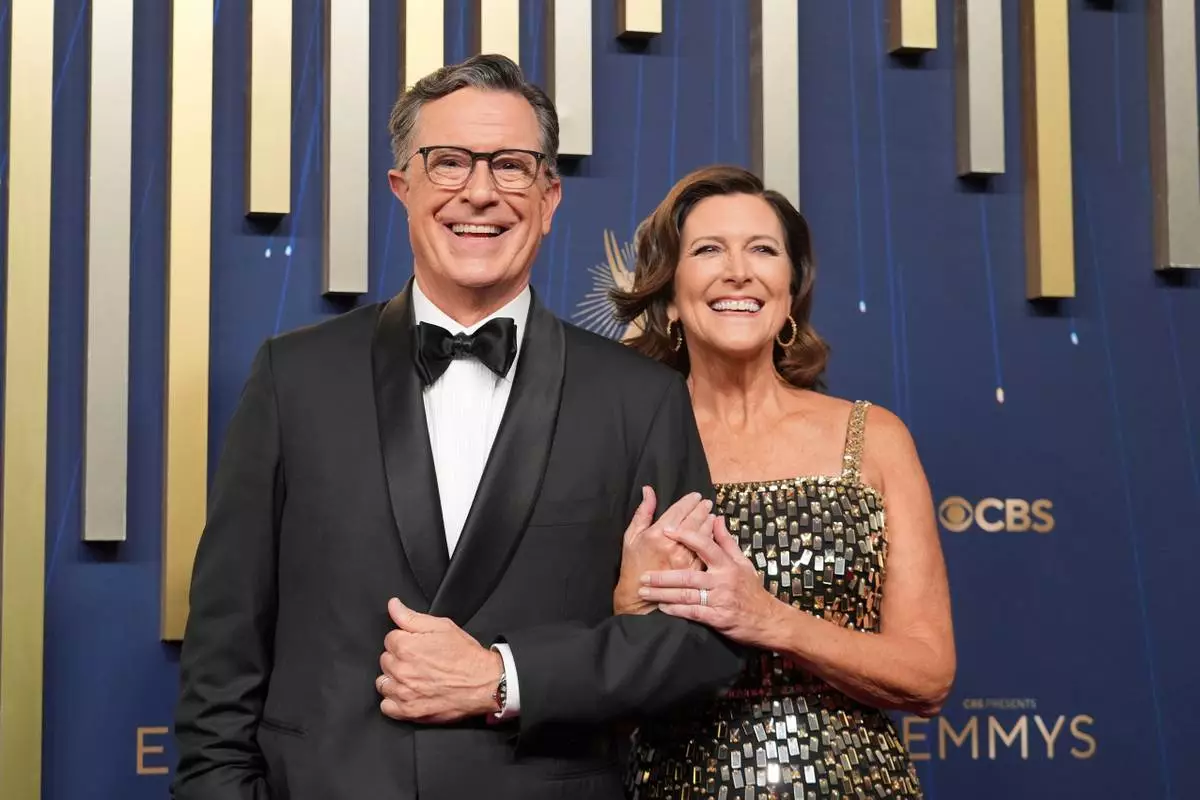
FILE - Stephen Colbert, left, and Evelyn McGee-Colbert appear at the 77th Primetime Emmy Awards in Los Angeles on Sept. 14, 2025. (AP Photo/Jae C. Hong, File)
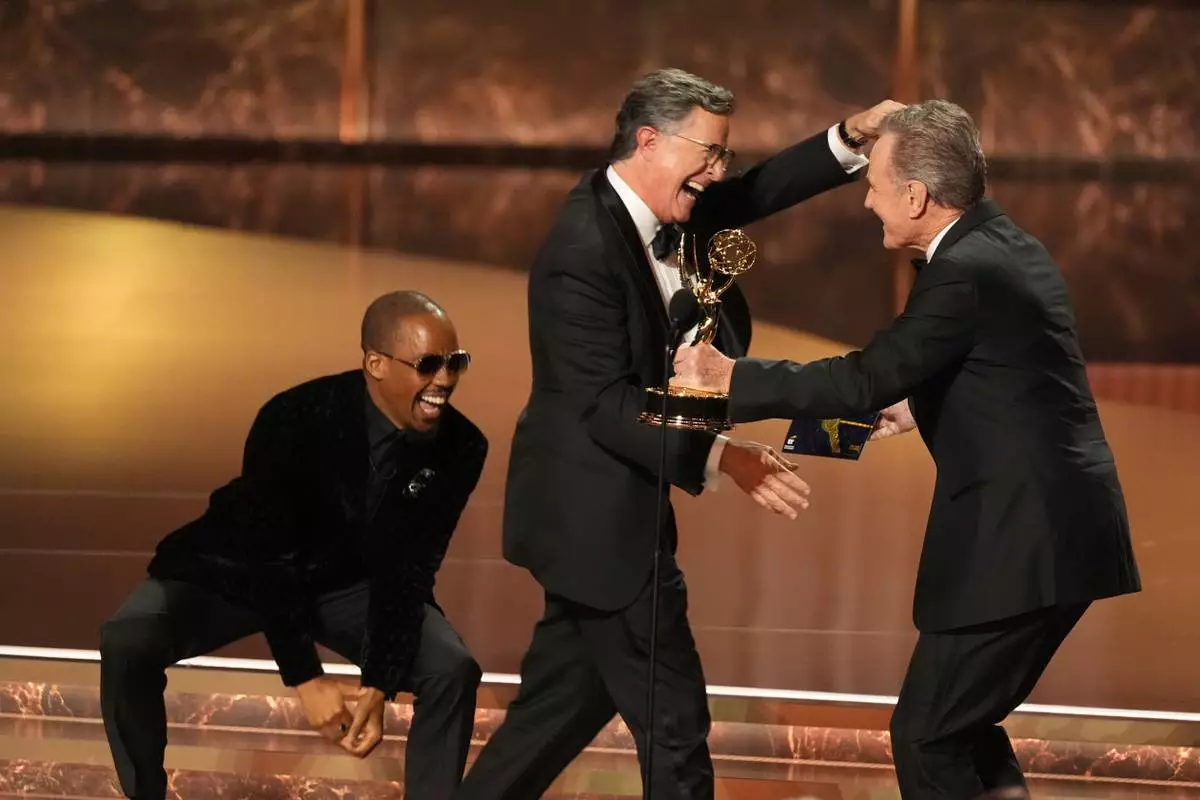
FILE - Bryan Cranston, right, presents the award for outstanding talk series to Stephen Colbert, left, for "The Late Show with Stephen Colbert" during the 77th Primetime Emmy Awards in Los Angeles on Sept. 14, 2025. (AP Photo/Chris Pizzello, File)