There aren’t many lawmakers like Thomas Massie left in Congress.
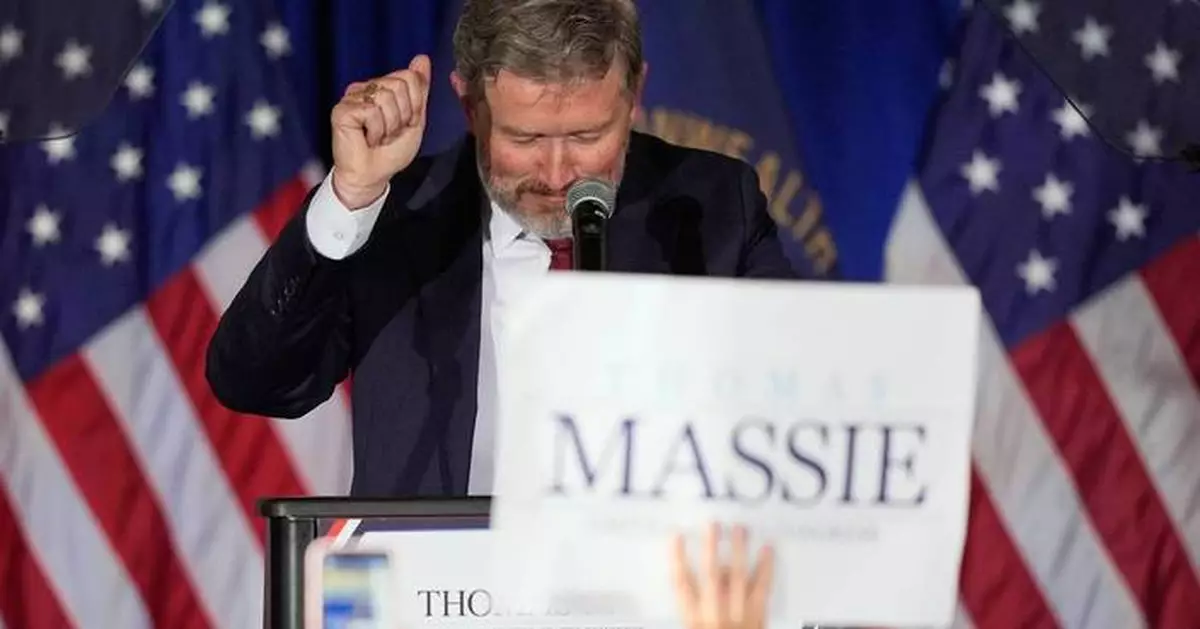
The renegade Republican who rose to prominence as an idiosyncratic and stubborn outlier in his party, popular in the Kentucky district that repeatedly sent him to the House, lost his primary bid for reelection Tuesday after a vicious and costly attack by President Donald Trump.
The stunning outcome caps a career like few others and shows the extent of the president’s ability to badger, badmouth and eventually boot out his political adversaries — and that no lawmaker is apparently safe. Massie's defeat comes after the Trump-led ouster of Sen. Bill Cassidy in Louisiana over the weekend and the president's endorsement Tuesday of Texas Attorney General Ken Paxton in his challenge to Sen. John Cornyn, which sent chills through the Senate.
Trump had reserved his fiercest attacks for Massie, a quirky conservative who had become among the most powerful rank-and-file Republicans in the House because of his willingness to vote as he pleased, rather than as the party demanded. And now he's been toppled like so many other Republicans who crossed the president.
Massie was undaunted after losing to Ed Gallrein, a former Navy SEAL handpicked by Trump.
“If the legislative branch always votes with the president, we do have a king,” Massie told cheering supporters Tuesday night. But if lawmakers follow the Constitution, he said, “we have a republic.”
Massie also teased that his political career may not be over quite yet during the closing moments of his concession speech, as a raucous crowd broke into chants of “2028!” and “President!”
“You’ve made a compelling argument,” he replied. “We’ll talk about it later.”
Trump said of Massie’s defeat: “He deserves to lose.”
Massie rose from the House Republican backbench, charting his own path and showing again and again he was willing to buck his party and the president.
He voted against Trump’s big tax cuts bill last year, worried the several trillion-dollar costs would add to the nation’s deficits.
He rejected Trump’s military forays against Iran and Venezuela, opposed to U.S. intervention overseas, and he routinely voted against U.S. foreign aid, including to Israel, drawing millions of dollars against him from pro-Israel interest groups.
And perhaps most remarkably, Massie, in partnership with Democratic Rep. Ro Khanna of California, persisted in a long-shot effort to force the Justice Department’s release of the Jeffrey Epstein files.
It was his work on the Epstein files, perhaps more than any of his repeated votes against spending bills and other party priorities, that elevated Massie's profile.
Khanna said on X Tuesday that Massie “lost because he had the guts to stand up to the Epstein class and against the war.”
Trump lashed out at the “lowlife” Massie as the congressman pushed the issue last year, prolonging a political headache for the White House.
First elected in 2012, at the tail end of the GOP tea party wave before Trump’s Make America Great Again movement burst onto the scene, Massie stood out from the start.
An engineer by training, Massie designed several patents — some on display in his office — as well as a debt calculator that blinks in flashing red numerals as the nation’s deficits pile up. He often wears a miniature version of the debt calculator as a lapel pin.
He married his high school sweetheart, Rhonda, and joined her at the Massachusetts Institute of Technology. They raised their four children living largely off the grid in a solar-power home he designed himself, making him something of a legend among a generation of do-it-yourselfers. He raised cattle, drove an early Tesla and drank raw milk.
Inspired by fellow Kentuckian Rand Paul after having put up lawn signs for the senator’s election, the libertarian-leaning Massie ran for office himself.
Once he won his own House seat, Massie declined to join the newly forming Freedom Caucus, his own far-right views not fully aligning with the conservative coalition.
Trump set his sights on Massie in 2020 during his first presidential term, when the congressman dared to object to a $2.2 trillion aid package to combat the coronavirus pandemic.
At the time, Massie refused to allow the COVID-19 package to be approved without a formal roll call, forcing hundreds of lawmakers back to the Capitol. Trump called him a “third rate Grandstander.”
Trump did not let up his criticisms, even after Massie's wife died in 2024. Massie announced in 2025 that he had remarried, after proposing to Carolyn Grace Moffa, a former Paul staffer, on the steps of the Library of Congress. He said they planned to live on the farm.
The president suggested that Massie got remarried too quickly, writing on social media that “his wife will soon find out that she’s stuck with a LOSER!”
Associated Press reporter Thomas Beaumont contributed from Des Moines, Iowa.
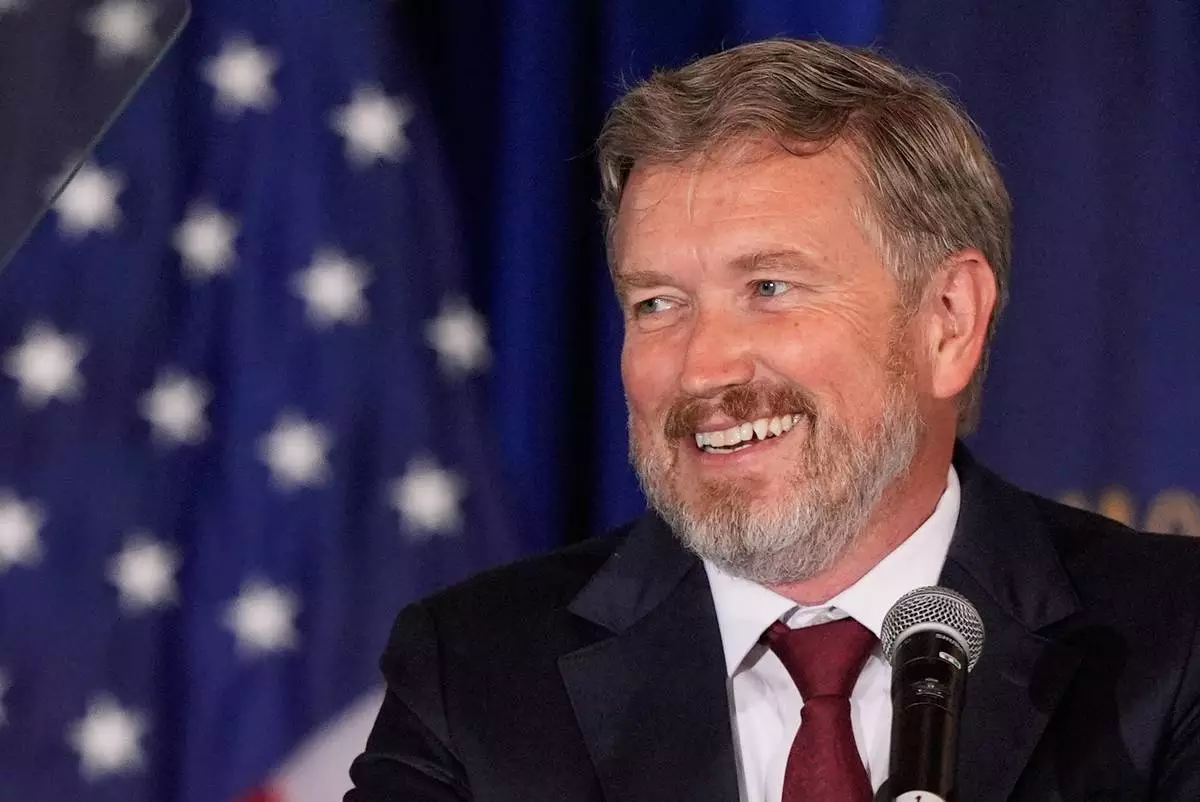
Rep. Thomas Massie, R-Ky., smiles as he speaks during an election night watch party after losing the Republican party's nomination at the Marriott Cincinnati Airport, Tuesday, May 19, 2026, in Hebron, Ky. (AP Photo/Carolyn Kaster)

Rep. Thomas Massie, R-Ky., kisses his wife, Carolyn Moffa, during an election night watch party after losing the Republican party's nomination at the Marriott Cincinnati Airport, Tuesday, May 19, 2026, in Hebron, Ky. (AP Photo/Carolyn Kaster)

Rep. Thomas Massie, R-Ky., reacts as he speaks during an election night watch party after losing the Republican party's nomination at the Marriott Cincinnati Airport, Tuesday, May 19, 2026, in Hebron, Ky. (AP Photo/Carolyn Kaster)
VILNIUS, Lithuania (AP) — Residents of Vilnius were told to take shelter and Lithuania's president and prime minister were taken to safe locations Wednesday because of an alarm over drone activity near the border with Belarus, underlining jitters on NATO's eastern flank over incursions related to Russia's war with Ukraine.
An emergency announcement from the military told people in the Vilnius region to “immediately head to a shelter or a safe place.”
The alert, which lasted for about an hour, also led to the closure of the airspace over Vilnius Airport. President Gitanas Nauseda and Prime Minister Inga Ruginiene were taken to shelters, and there was also an evacuation order at Lithuania's parliament, the Seimas, the BNS news agency reported.
It was the first major alert that sent residents and political leaders in a European Union and NATO capital rushing to shelters since Russia’s full-scale invasion of Ukraine in February 2022.
“Based on the parameters we saw, it’s most likely either a combat drone or a drone designed to deceive systems and lure targets,” Vilmantas Vitkauskas, head of Lithuania’s National Crisis Management Center, said in a news briefing. “The electronic countermeasures here can’t tell us whether an explosive device detonated or not. It’s very, very difficult."
Based on the altitude and speed, it was probably a drone, he said, "though we can’t say at this stage exactly what kind of drone it was or where it was launched from.”
Lithuania borders Russia-allied Belarus to the east and Russia's Kaliningrad exclave to the west. Wednesday's alert came after the military said it detected drone activity in Belarus, but no drones were sighted over Lithuania.
Belarus reported the potential drone to Lithuania, according to Brig. Gen. Nerijus Stankevicius, commander of the Lithuanian Army’s Land Forces.
Officials "received a report from the Belarusian armed forces regarding drones potentially moving toward Lithuanian territory. Our neighbors in Latvia received similar information,” Stankevicius told reporters.
On Wednesday, NATO Secretary-General Mark Rutte commended the alliance’s reaction to several drone incidents in recent days, saying that they had been met with “a calm, decisive and proportionate response.”
“This is exactly what we planned and prepared for,” he said, blaming Russia’s war on Ukraine for the problem.
In recent months, Ukrainian drones aimed at Russia have crossed or come down in NATO territory on numerous occasions. Western officials have blamed what they say is likely Russian electronic jamming of the drones. Russia, meanwhile, has renewed threats that it would retaliate if Ukrainian drones are launched from Baltic countries or if those countries are complicit in their use against Russia.
On Tuesday evening, Lithuanian Foreign Minister Kestutis Budrys wrote on social media that “Russia is deliberately redirecting Ukrainian drones into Baltic airspace while waging smear campaigns” against Lithuania, Latvia and Estonia. “It’s a transparent act of desperation — an attempt to sow chaos and distract from a simple reality: (Ukraine) is hitting Russian military machine hard.”
Budrys' comment came hours after a NATO jet shot down a Ukrainian drone over southern Estonia. Ukraine apologized for that “unintended incident,” without specifying what had happened.
Last week, Latvia’s government collapsed following an argument over the handling of multiple incidents involving stray drones suspected to be from Ukraine. The defense minister was forced to quit after his party withdrew its support for him, and the prime minister then resigned. The governing coalition had been under strain for months over several other issues.
In a recent escalation of aerial attacks, Russia and Ukraine have sometimes fired hundreds of drones a day at each other.
Ukraine’s air force said Wednesday that it shot down 131 out of 154 drones that Russia launched overnight. The ones that got past air defenses killed three civilians and wounded 18 others, including two children, officials said.
Ukraine, meanwhile, continued its aerial campaign against Russia’s vital oil industry, with the General Staff reporting its drones struck a major Russian oil refinery and a pipeline pumping station overnight.
Russian media reports also indicated that a chemical plant in the southern Stavropol region was hit and caught fire, although local officials didn’t confirm any direct hit.
The U.K. government, a strong supporter of Ukraine's war effort, has loosened strict sanctions on Russian oil refined into diesel and jet fuel in third countries as prices rise due to the Iran war.
The waiver begins Wednesday and reflects growing supply concerns over certain fuels due to the effective blockade of the key Strait of Hormuz waterway.
That step comes two days after U.S. Treasury Secretary Scott Bessent announced that Washington was granting a 30-day extension for countries to import Russian oil that is already in tankers at sea, a move that is meant to reduce the oil supply shortages.
The announcement marked a continued policy reversal by the Trump administration, which had previously said the sanctions on Russian oil would resume. Originally announced in early March, the temporary waiver on the sanctions was first renewed in April.
Geir Moulson in Berlin, Lorne Cook in Brussels, Hanna Arhirova in Kyiv, Ukraine, Kostya Manenkov in Tallinn, Estonia, and Barry Hatton in Lisbon, Portugal contributed to this report.
Follow the AP’s coverage of the war in Ukraine at https://apnews.com/hub/russia-ukraine
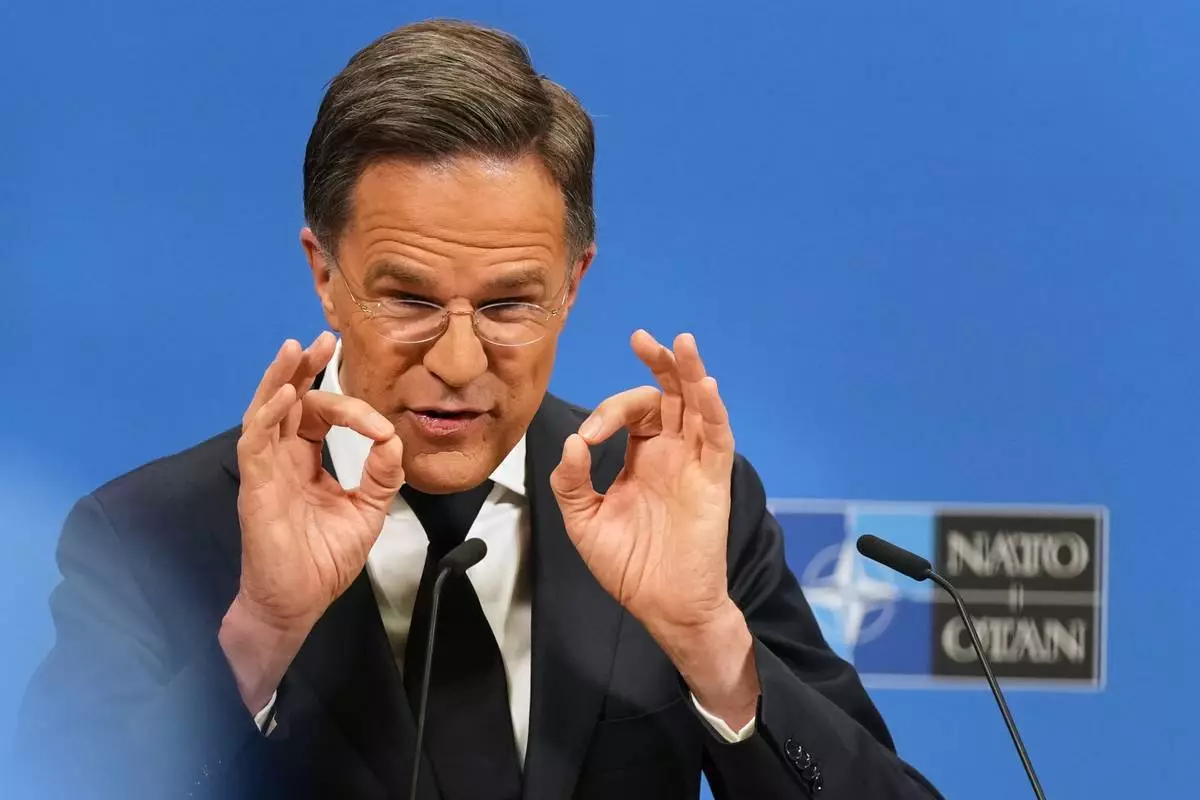
NATO Secretary General Mark Rutte speaks during a media conference at NATO headquarters in Brussels, Wednesday, May 20, 2026. (AP Photo/Virginia Mayo)

People take shelter in an underground car park during an air raid alert in Vilnius, Lithuania, Wednesday, May 20, 2026. (Vygintas Skaraitis/Lrytas via AP)

People take shelter in an underground car park during an air raid alert in Vilnius, Lithuania, Wednesday, May 20, 2026. (Vygintas Skaraitis/Lrytas via AP)
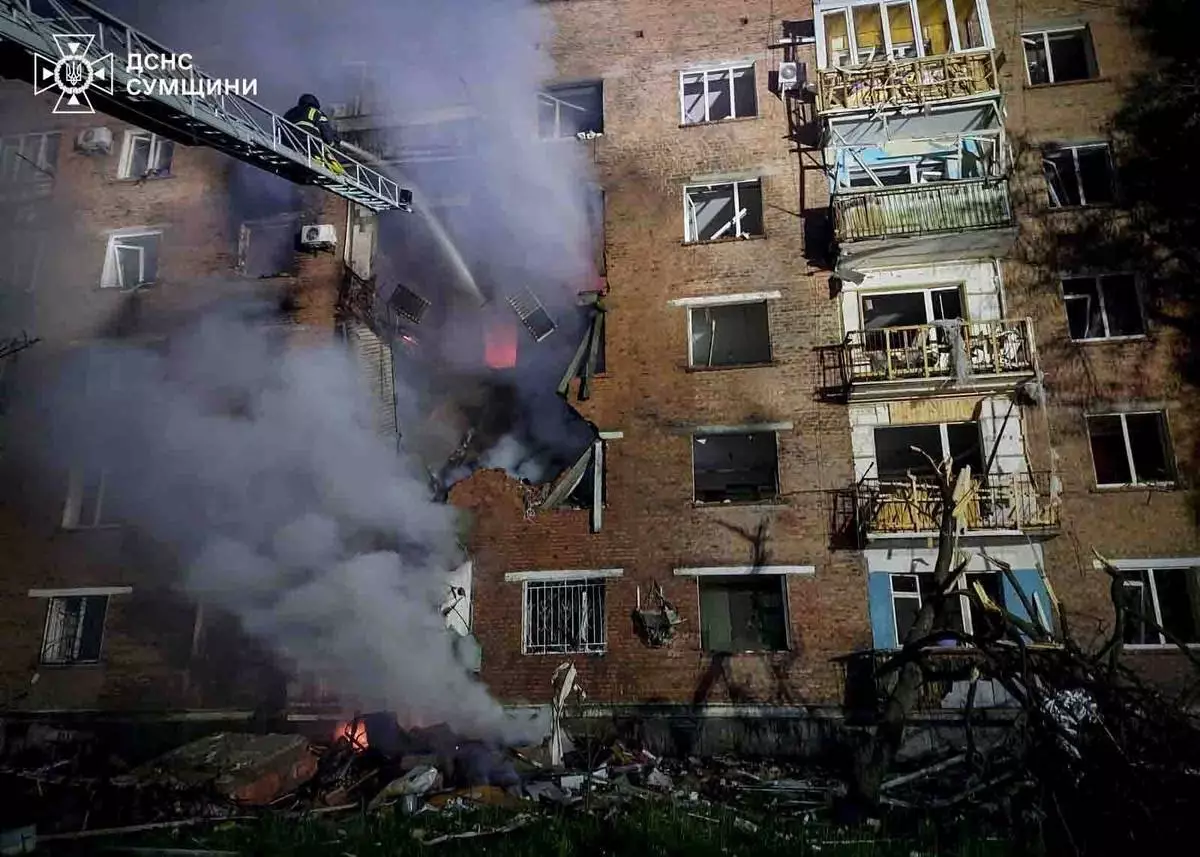
In this photo provided by the Ukrainian Emergency Services on Wednesday, May 20, 2026, rescue workers put out a fire of a residential building damaged after a Russian strike on Konotop, Ukraine. (Ukrainian Emergency Service via AP)

The phone shows the received message "The Lithuanian military reports: "AIR DANGER. Hurry to cover or a safe place without delay, take care of your loved ones, wait for further recommendations. We will inform you about the end of the danger in a separate message", in Vilnius, Lithuania, Wednesday, May 20, 2026. (AP Photo/Mindaugas Kulbis)

The phone shows the received message "The Lithuanian military reports: "AIR DANGER. Hurry to cover or a safe place without delay, take care of your loved ones, wait for further recommendations. We will inform you about the end of the danger in a separate message", in Vilnius, Lithuania, Wednesday, May 20, 2026. (AP Photo/Mindaugas Kulbis)