Skip to Content Facebook Feature Image

Kansas farmers hit hard by weather extremes and growing costs, wheat crop could be worst since 1972

News

Kansas farmers hit hard by weather extremes and growing costs, wheat crop could be worst since 1972
News

News

Kansas farmers hit hard by weather extremes and growing costs, wheat crop could be worst since 1972

2026-05-20 21:57 Last Updated At:22:01

MONTEZUMA, Kan. (AP) — Orville Williams has had a healthy wheat crop on his 2,600-acre farm in Montezuma, Kansas, every year since he was a teenager.

It hasn't always been easy. For instance, there were challenging economic times through the 1980s and various degrees of drought affecting his yield through the years. But this season feels different.

More Images
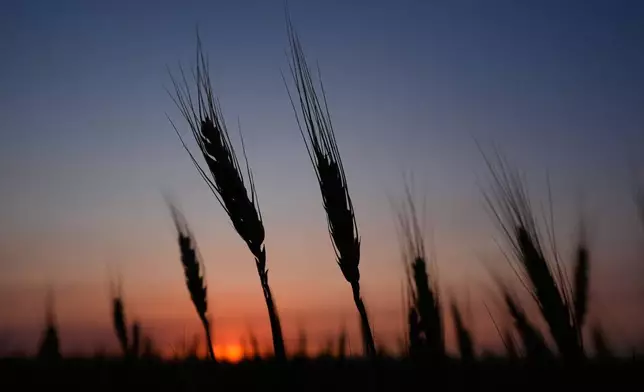
Drought-stressed wheat is silhouetted against the setting sun Friday, May 15, 2026, in a field near Cimarron, Kan. (AP Photo/Charlie Riedel)
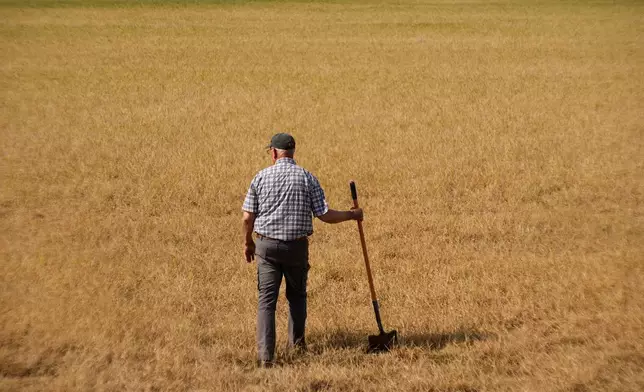
Drought-stressed wheat is silhouetted against the setting sun Friday, May 15, 2026, in a field near Cimarron, Kan. (AP Photo/Charlie Riedel)

Farmer Vance Ehmke checks a wheat field decimated by wheat streak mosaic virus Friday, May 15, 2026, on his farm near Healy, Kan. (AP Photo/Charlie Riedel)
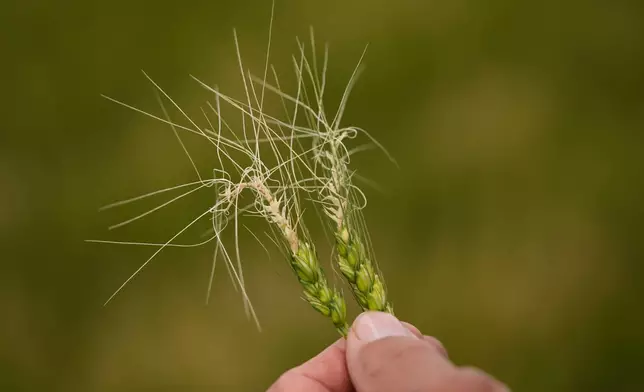
Farmer Vance Ehmke checks a wheat field decimated by wheat streak mosaic virus Friday, May 15, 2026, on his farm near Healy, Kan. (AP Photo/Charlie Riedel)

Farmer Vance Ehmke looks at wheat damaged by a late freeze in one of his fields Friday, May 15, 2026, near Healy, Kan. (AP Photo/Charlie Riedel)
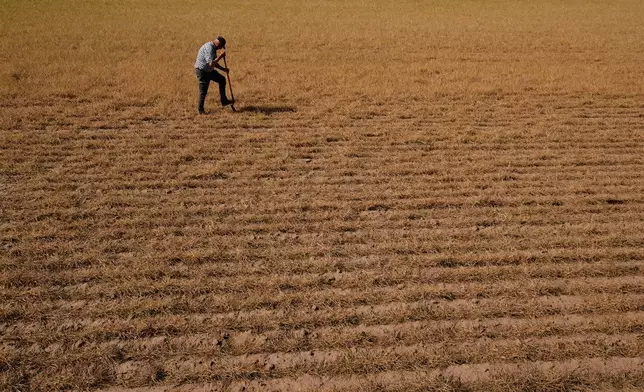
Farmer Vance Ehmke looks at wheat damaged by a late freeze in one of his fields Friday, May 15, 2026, near Healy, Kan. (AP Photo/Charlie Riedel)

Farmer Vance Ehmke checks soil moisture in a wheat field decimated by wheat streak mosaic virus Friday, May 15, 2026, on his farm near Healy, Kan. (AP Photo/Charlie Riedel)
Farmer Vance Ehmke checks soil moisture in a wheat field decimated by wheat streak mosaic virus Friday, May 15, 2026, on his farm near Healy, Kan. (AP Photo/Charlie Riedel)

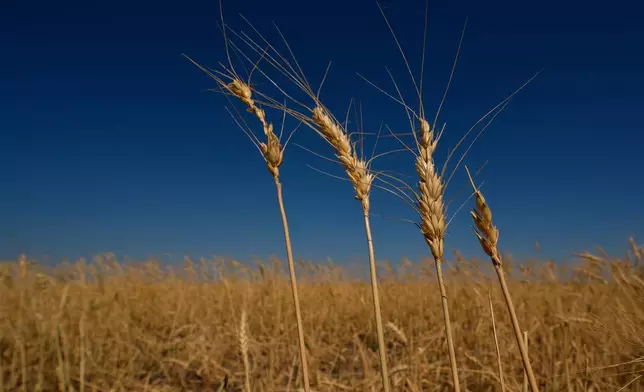
Drought-stressed wheat plants stand in a field near Macksville, Kan., Saturday, May 16, 2026. (AP Photo/Charlie Riedel)
Drought-stressed wheat plants stand in a field near Macksville, Kan., Saturday, May 16, 2026. (AP Photo/Charlie Riedel)

Farmer Vance Ehmke checks a wheat field decimated by wheat streak mosaic virus Friday, May 15, 2026, on his farm near Healy, Kan. (AP Photo/Charlie Riedel)
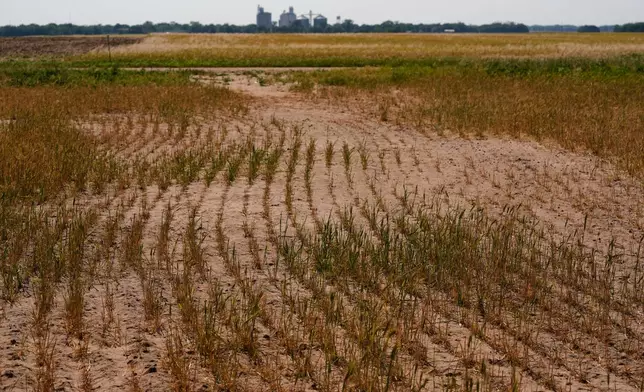
Farmer Vance Ehmke checks a wheat field decimated by wheat streak mosaic virus Friday, May 15, 2026, on his farm near Healy, Kan. (AP Photo/Charlie Riedel)

Wheat plants struggle to survive in a drought-stressed field near Macksville, Kan., Saturday, May 16, 2026. (AP Photo/Charlie Riedel)
Wheat plants struggle to survive in a drought-stressed field near Macksville, Kan., Saturday, May 16, 2026. (AP Photo/Charlie Riedel)

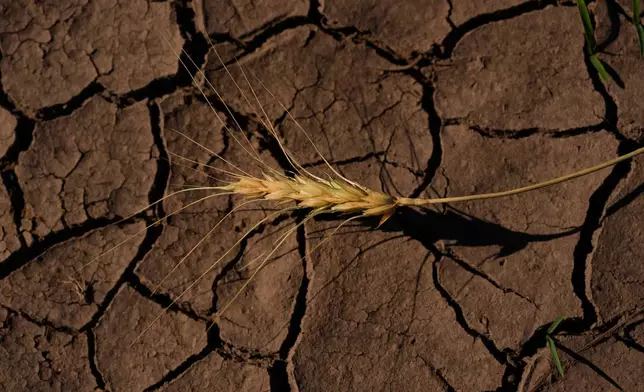
A drought-stressed stalk of wheat lies on a parched field Saturday, May 16, 2026, near Macksville, Kan. (AP Photo/Charlie Riedel)
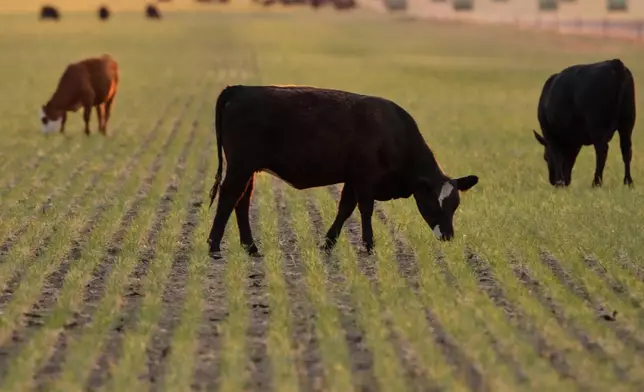
A drought-stressed stalk of wheat lies on a parched field Saturday, May 16, 2026, near Macksville, Kan. (AP Photo/Charlie Riedel)

Cattle graze in a field of abandoned wheat Friday, May 15, 2026, near Cimarron, Kan. (AP Photo/Charlie Riedel)
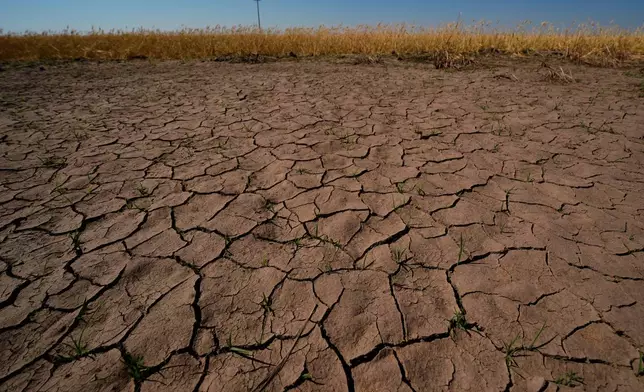
Cattle graze in a field of abandoned wheat Friday, May 15, 2026, near Cimarron, Kan. (AP Photo/Charlie Riedel)

Drought-stressed wheat plants stand adjacent to parched ground in a field near Macksville, Kan., Saturday, May 16, 2026. (AP Photo/Charlie Riedel)
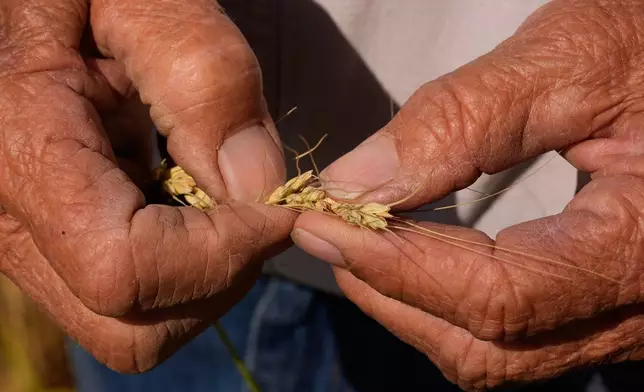
Drought-stressed wheat plants stand adjacent to parched ground in a field near Macksville, Kan., Saturday, May 16, 2026. (AP Photo/Charlie Riedel)

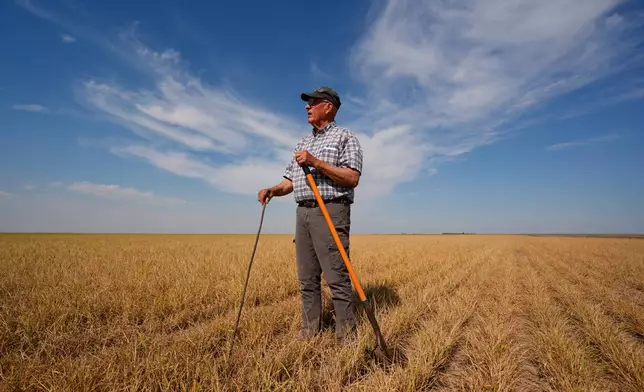
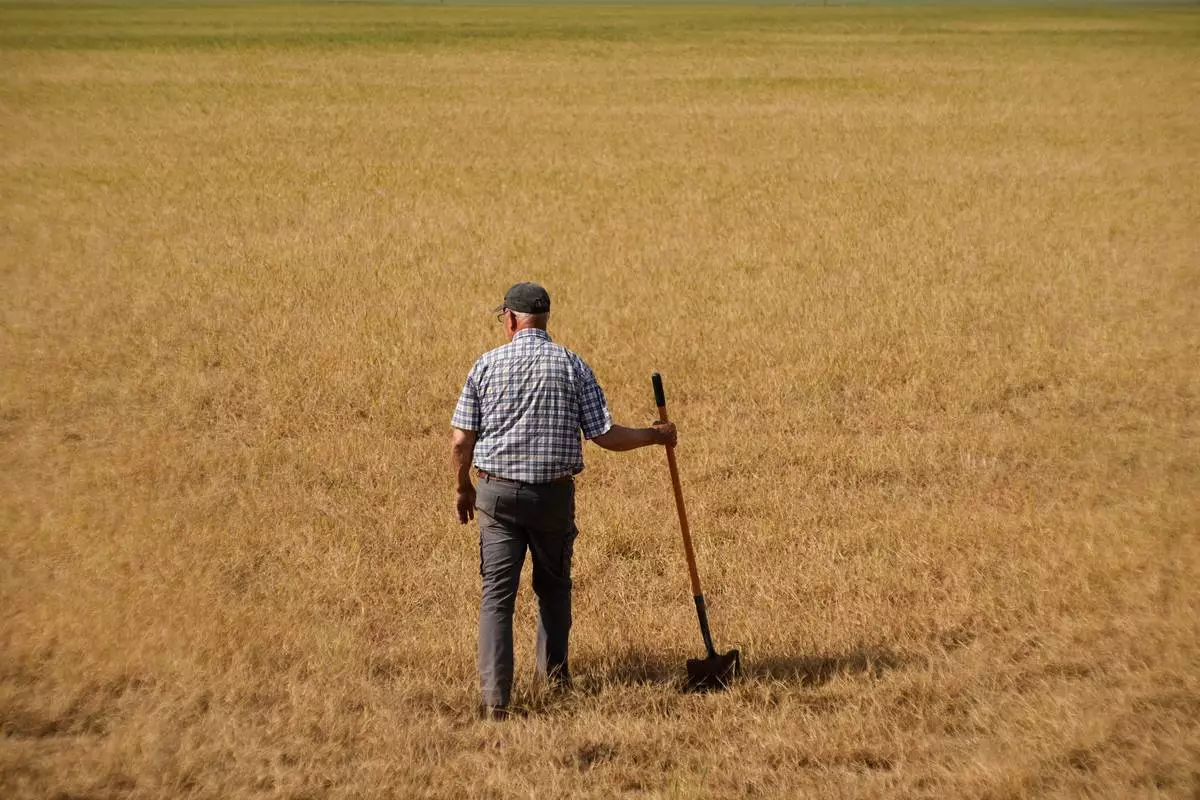
Farmer Orville Williams looks at drought-stressed wheat in one of his fields Saturday, May 16, 2026, near Montezuma, Kan. (AP Photo/Charlie Riedel)
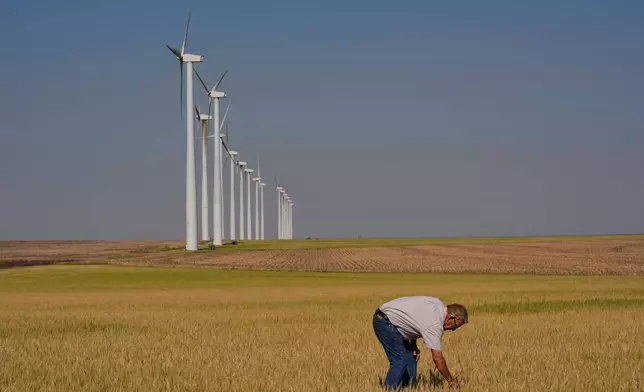
Farmer Orville Williams looks at drought-stressed wheat in one of his fields Saturday, May 16, 2026, near Montezuma, Kan. (AP Photo/Charlie Riedel)
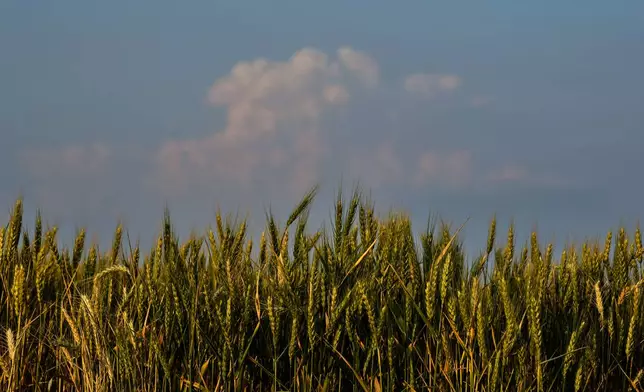
Farmer Orville Williams looks at drought-stressed wheat in one of his fields Saturday, May 16, 2026, near Montezuma, Kan. (AP Photo/Charlie Riedel)

Farmer Orville Williams looks at drought-stressed wheat in one of his fields Saturday, May 16, 2026, near Montezuma, Kan. (AP Photo/Charlie Riedel)

Storm clouds build in the distance beyond a drought-stressed wheat field Friday, May 15, 2026, near Cimarron, Kan. (AP Photo/Charlie Riedel)
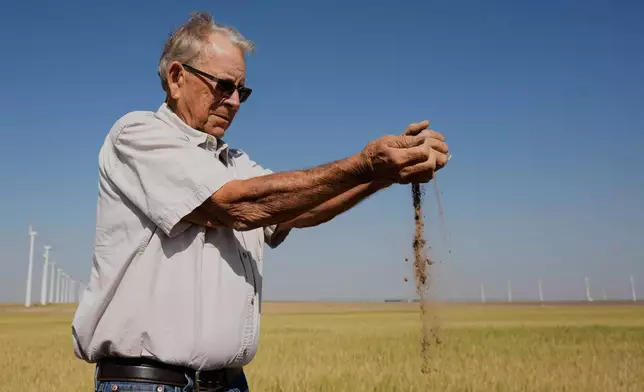
Storm clouds build in the distance beyond a drought-stressed wheat field Friday, May 15, 2026, near Cimarron, Kan. (AP Photo/Charlie Riedel)

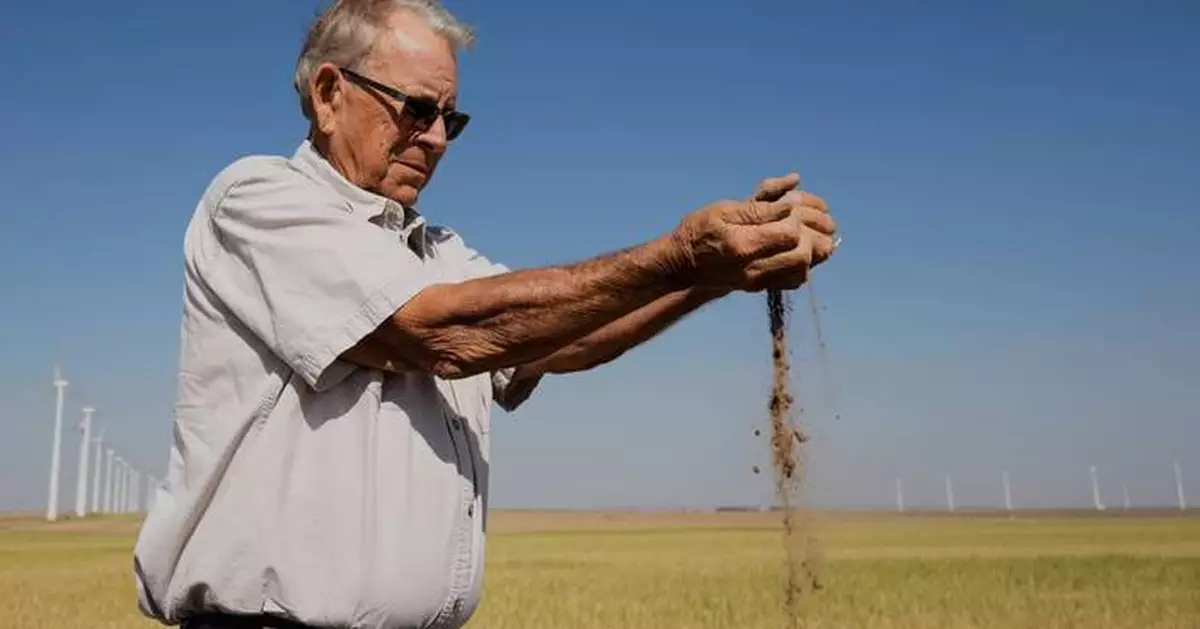
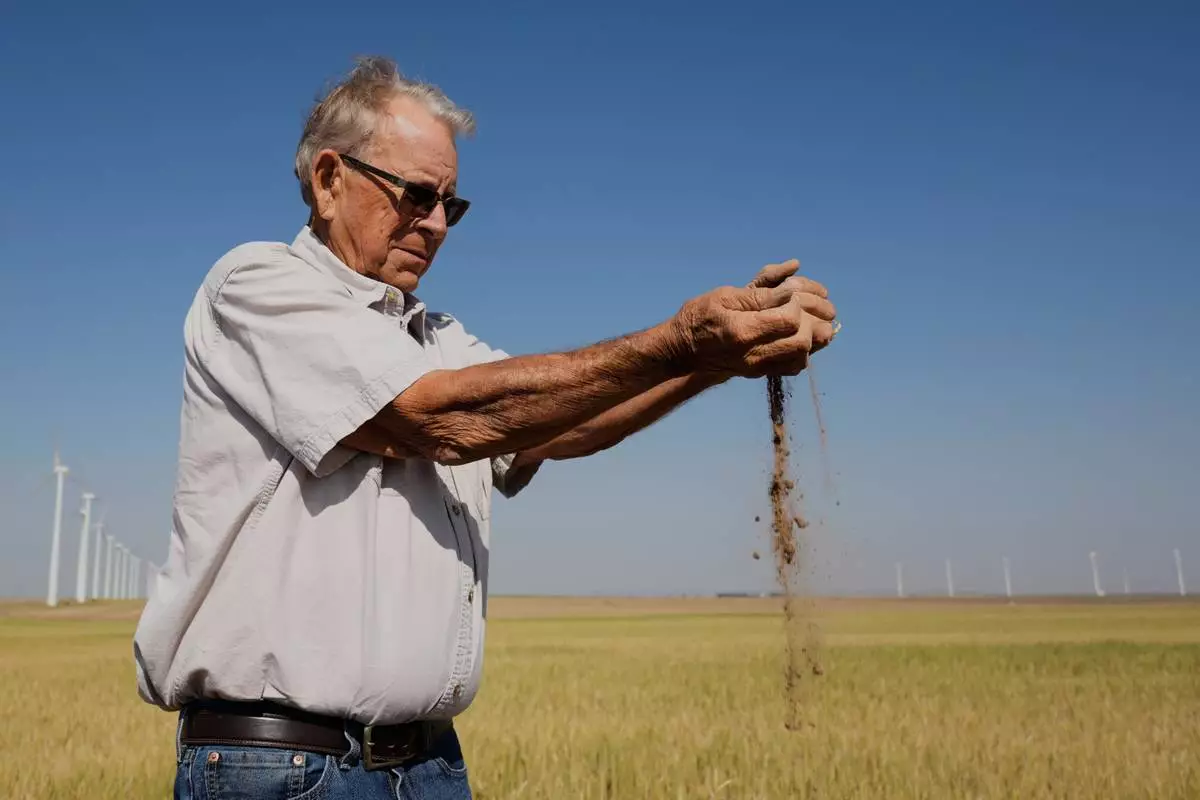
Farmer Orville Williams sifts powder dry soil as he checks the moisture in a drought-stressed wheat field Saturday, May 16, 2026, on his farm near Montezuma, Kan. (AP Photo/Charlie Riedel)

Farmer Orville Williams sifts powder dry soil as he checks the moisture in a drought-stressed wheat field Saturday, May 16, 2026, on his farm near Montezuma, Kan. (AP Photo/Charlie Riedel)

“All in all, it’s not going to be a good year,” said Williams, 76.

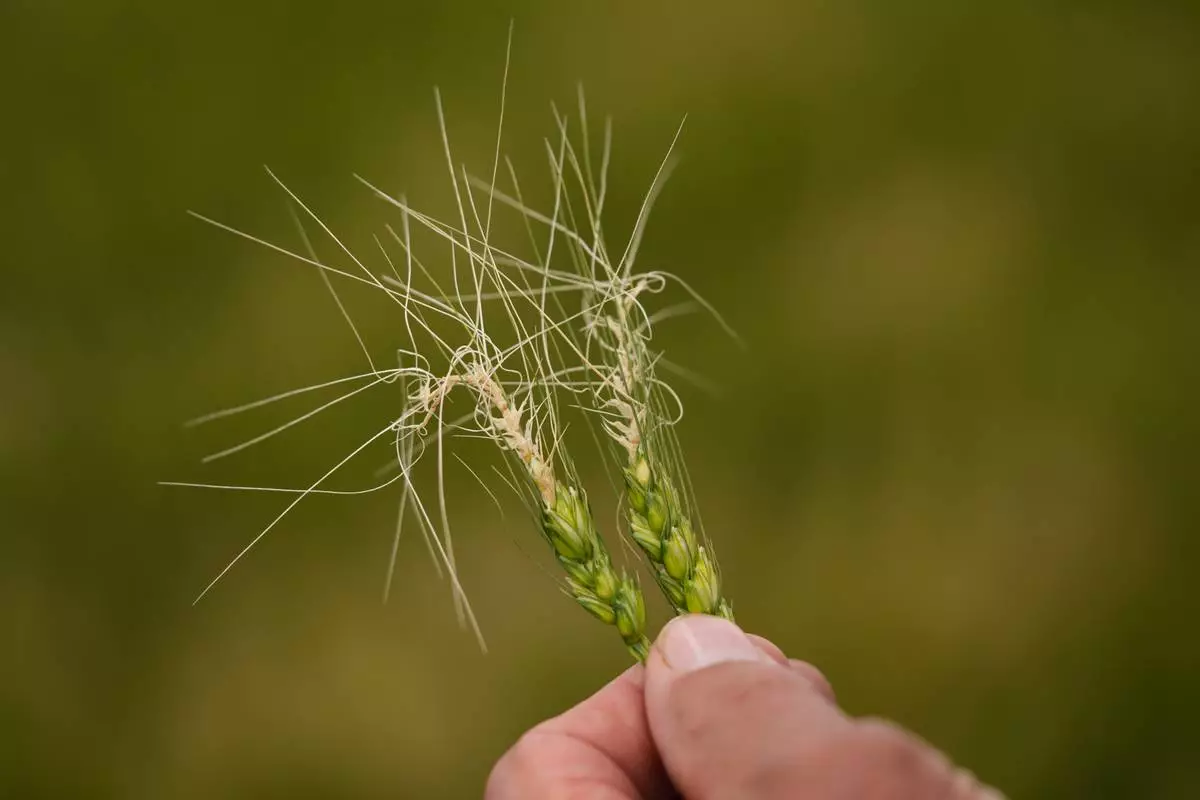
Record-setting drought and hotter-than-average temperatures mixed with sharp drops have impacted much of the U.S. early this year, including the Plains region. Drought conditions have worsened the spread of the wheat streak mosaic virus and barley yellow dwarf virus, which impact the potential of the crop. Combined with climbing input costs related to fertilizer, diesel fuel and tariffs, longtime wheat farmers say they are feeling a lot of pain.

“It’s kind of a double whammy,” Williams added.

Crop estimates underscore just how bad the situation is. Growers will see their smallest wheat crop in terms of production since 1972, according to the U.S. Department of Agriculture; 1.56 billion bushels this year, down 21% from 2025. That’s especially harmful to Kansas, one of the top overall producers of wheat in the U.S.

Only in five of the past 40 years has Kansas' wheat crop been in such a bad state, an analysis of USDA data shows, with 58% of the crop rated as “poor” or “very poor” as of May 17. The last time the fields were in as bad a condition was during a severe drought in 2023.

“It’s very tough conditions that growers are faced with right now,” said Kansas State agronomist Romulo Lolloto. And he said that affects consumers, “whether it is through going to a bakery and having higher bread prices, or whether it’s through losing some of the international market out there for the U.S.”

With this year so bad, many wheat growers have been forced to file for crop insurance or consider whether they can lean on other crops to withstand the uncertainties.

Williams saw close to 100 bushels of wheat per acre irrigated last year, but this year might only have 30 to 40. He splits his wheat crop between irrigated and dryland — for which farmers depend on rainfall and soil moisture — and there, he might only see 10 to 15 bushels per acre.

Williams and other farmers said they know they'll lose money this year. “I guess my attitude is: Stay the course. Don’t make any new purchases,” he added. “And forget your wants and just do your needs.”

Climate change, caused by the burning of gas, oil and coal, has made farming a number of crops increasingly challenging over the years, experts say, and wheat is no exception. Several wheat farmers described worsening extremes this year, including the winter's intense and unseasonable heat, late freezes and an ongoing shortage of rain.

The U.S., meanwhile, has lost ground in the global wheat market to Russia and the European Union; national wheat acreage has dropped over the past several years for a variety of reasons, said Brad Rippey, USDA meteorologist.

“There’s certainly a downward trend for wheat in the Great Plains and elsewhere in the U.S. based on a number of factors, and certainly the weather challenges over the last couple of decades have been a big part of that,” Rippey said.

Still, wheat is the nation’s third field crop as planted acreage, production and gross farm receipts after corn and soybeans, according to the USDA. The U.S. is one of the world’s largest producers by volume of wheat each year, and it’s a major exporter of the crop.

Thousands of U.S. farmers rely on wheat as an important livelihood — and factors outside of their control have made their work more difficult.

The dry conditions sped up how fast the crop grew, USDA data show, not a positive sign for the quality of the harvest.

By the end of the first full week of May, 86% of wheat crops in Kansas had produced a seed head, while 61% was typical in the previous 10 years at the same point in the season. The plant is “genetically programmed” to produce a head before dying, Rippey said, but if they do so too early, the result will often be poor quality.

Only 32.4 million acres (13.1 million hectares) of wheat were planted this year to begin with, and harvested acreage hit just 22 million, marking abandonment, which is when farmers stop tending to a crop before harvesting, at slightly above 32% of this year's wheat crop, according to USDA estimates.

With the exception of the 2022-2023 cycle, there have only been a handful of other years in history where U.S. winter wheat abandonment has been higher, Rippey noted.

In Kansas, about 17% of the crop is being abandoned this year.

“Rain makes grain,” said Mike Nickelson, a wheat and corn farmer in western Kansas. “That's the whole key. We can do the very best we can do and then if we don't get the rain, then it makes it pretty tough.”

Forecasters are predicting a substantial El Nino, a cyclical and natural process in which patches of the equatorial Pacific warm and alter the world’s weather patterns, including rainfall. Because in the U.S. that is expected to mean warmer-than-normal temperatures this summer, it could be months before there is any drought relief.

“It seems like we’re the ones out trying to feed the world and we’re the ones suffering the most,” Nickelson, 60, added. “My son is here farming with me and I’d really like to transition him to help take over the farm. I’m like, really, do I want him to have to do this? I mean, it’s a great life, but man, right now it’s just tough.”

The war in Iran, meanwhile, has sent fuel prices soaring. Williams, the Montezuma farmer, said he drives 150 to 200 miles (240 to 320 kilometers) a day, and diesel is up nearly $2 per gallon from one year ago.

The cost of seed, fertilizer and more is rapidly adding up, too. Some growers bought fertilizer ahead of time for this season, but they worry about the year ahead. Farmers already have been navigating the consequences of the Trump administration’s rocky trade policy.

Nickelson said urea, a type of fertilizer for agriculture, previously cost $400 a ton. He is now paying between $600 and $700 a ton. “You hope to break even, but I’m not sure we’re gonna do that,” he said.

For Ben Palen, a fifth-generation farmer and farming consultant, solutions are tough, and relief feels minimal.

Crop insurance to account for the losses only go so far. The Trump administration has offered one-time bridge payments for qualifying farmers of a variety of crops to aid their increasing costs amid trade disruptions and inflation, but those funds are also limited.

Allowing the wheat to fallow — essentially leaving it unused to prep land for the next crop — or planting something unplanned aren't viable options, either. It's not just a matter of adding more water to the land to try to get wheat to stick, and it's difficult for farmers to change course to another crop at this point in the year.

“It’s a little late now to try to plant something on say, a wheat crop that’s failed on a particular farm,” Palen, 70, said, “because we just don’t have soil moisture to get another crop started.

“This is probably about as challenging of a time to be a farmer that I can recollect,” he added. “It’s a pretty serious situation.”

This story has been updated to correct that wheat production is forecast to be down 21% from 2025, not down to 1.05 billion bushels that year.

St. John reported from Detroit. Associated Press journalists Alyssa Goodman in New York and M.K. Wildeman in Hartford, Connecticut, contributed to this report.

Read more of AP’s climate coverage.

The Associated Press’ climate and environmental coverage receives financial support from multiple private foundations. AP is solely responsible for all content. Find AP’s standards for working with philanthropies, a list of supporters and funded coverage areas at AP.org.
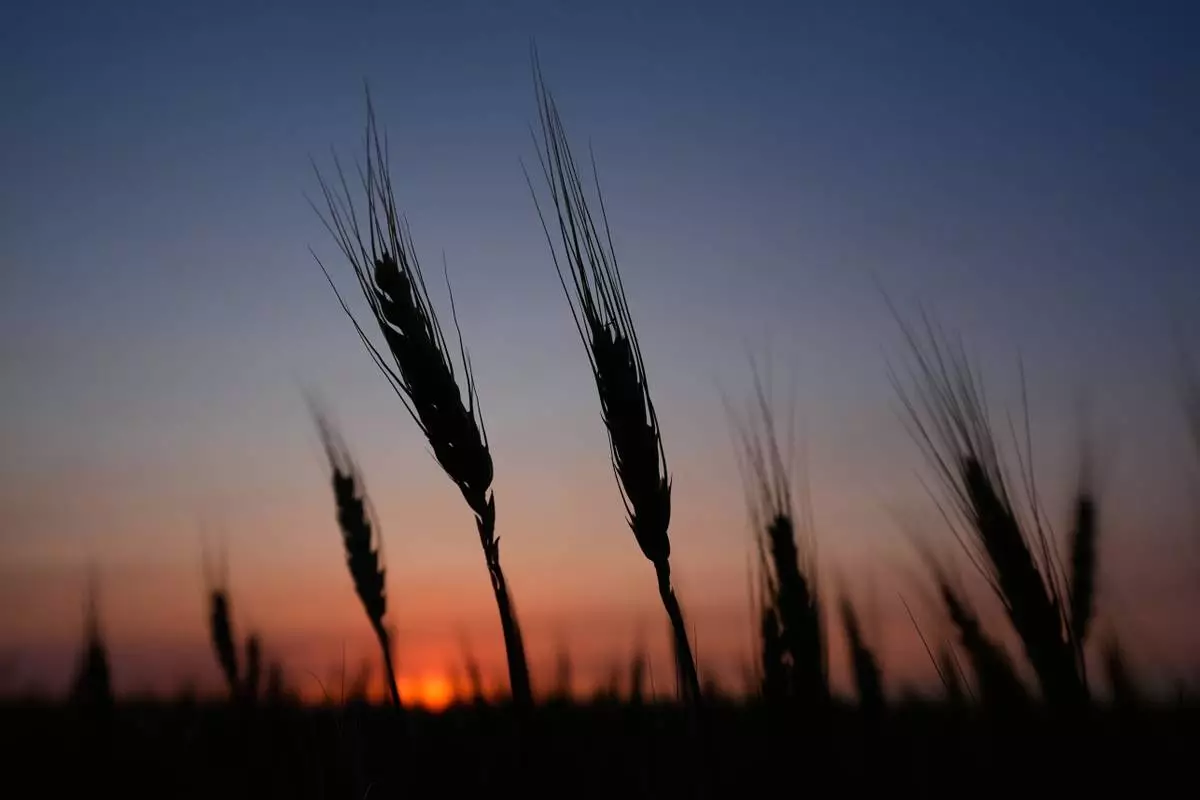
Drought-stressed wheat is silhouetted against the setting sun Friday, May 15, 2026, in a field near Cimarron, Kan. (AP Photo/Charlie Riedel)
Drought-stressed wheat is silhouetted against the setting sun Friday, May 15, 2026, in a field near Cimarron, Kan. (AP Photo/Charlie Riedel)

Farmer Vance Ehmke checks a wheat field decimated by wheat streak mosaic virus Friday, May 15, 2026, on his farm near Healy, Kan. (AP Photo/Charlie Riedel)
Farmer Vance Ehmke checks a wheat field decimated by wheat streak mosaic virus Friday, May 15, 2026, on his farm near Healy, Kan. (AP Photo/Charlie Riedel)

Farmer Vance Ehmke looks at wheat damaged by a late freeze in one of his fields Friday, May 15, 2026, near Healy, Kan. (AP Photo/Charlie Riedel)
Farmer Vance Ehmke looks at wheat damaged by a late freeze in one of his fields Friday, May 15, 2026, near Healy, Kan. (AP Photo/Charlie Riedel)

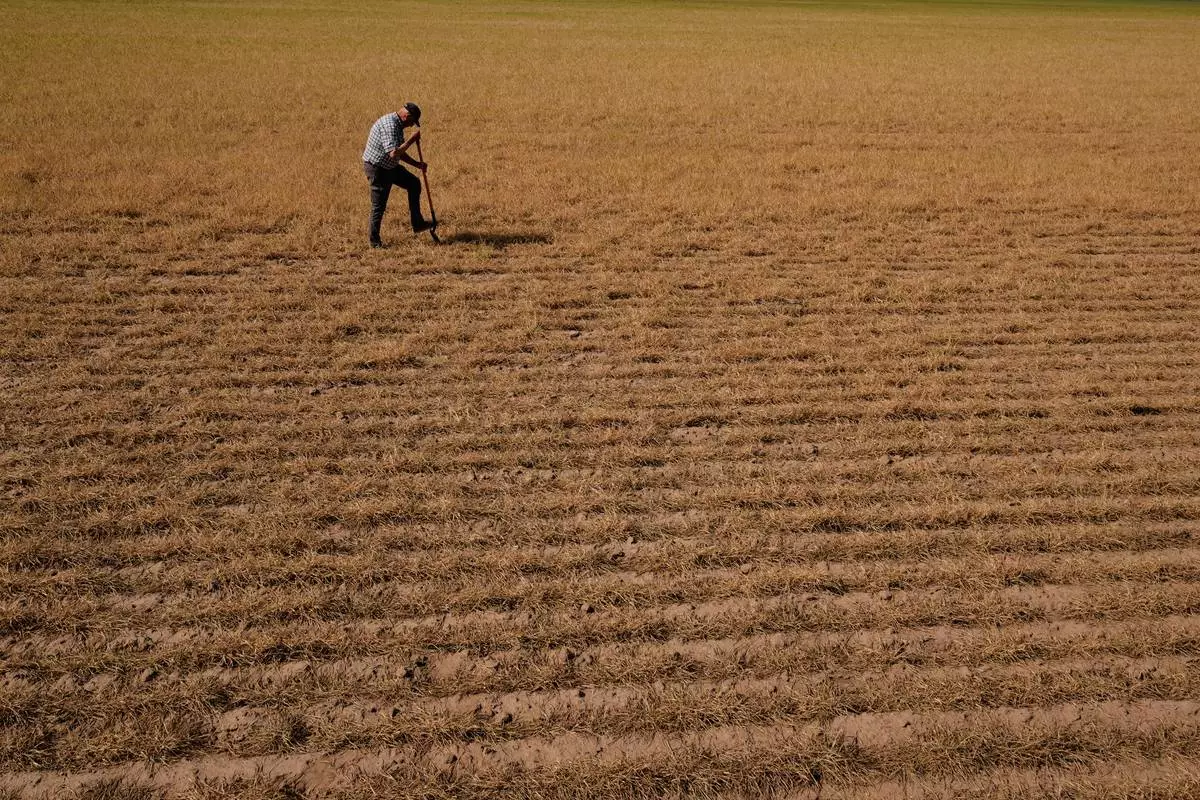
Farmer Vance Ehmke checks soil moisture in a wheat field decimated by wheat streak mosaic virus Friday, May 15, 2026, on his farm near Healy, Kan. (AP Photo/Charlie Riedel)
Farmer Vance Ehmke checks soil moisture in a wheat field decimated by wheat streak mosaic virus Friday, May 15, 2026, on his farm near Healy, Kan. (AP Photo/Charlie Riedel)

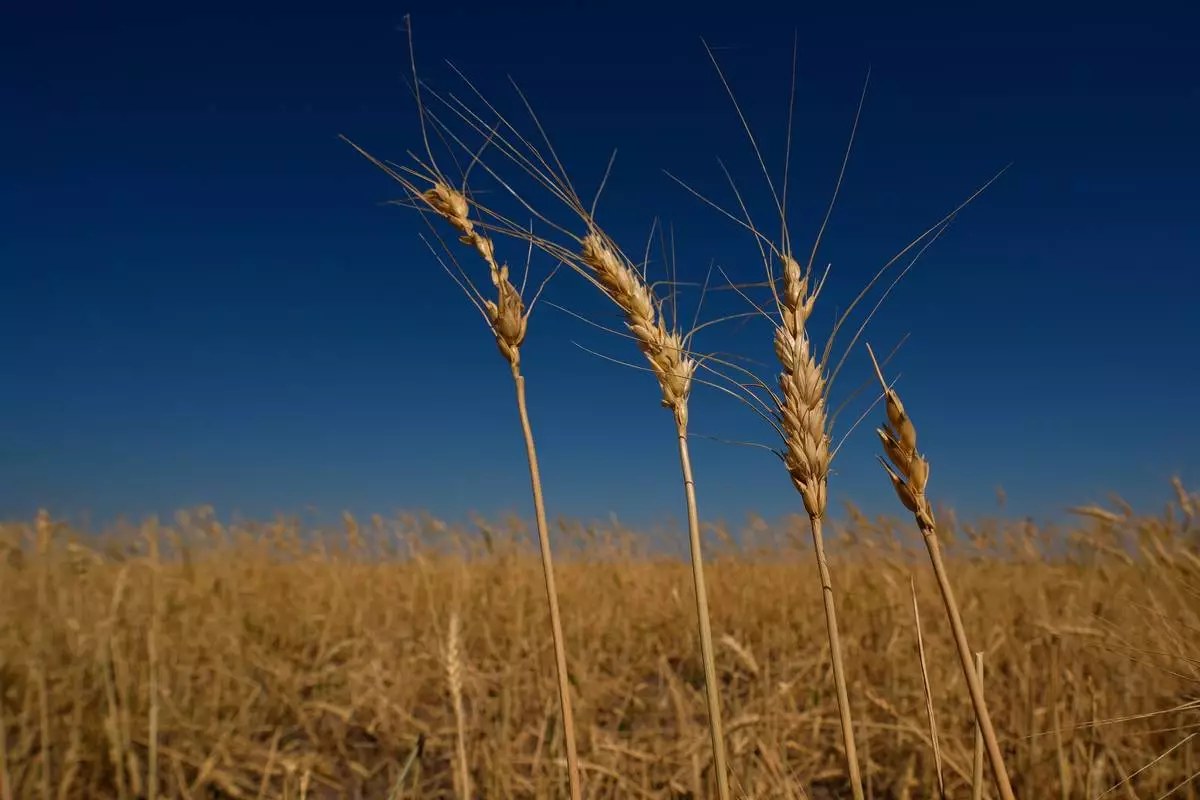
Drought-stressed wheat plants stand in a field near Macksville, Kan., Saturday, May 16, 2026. (AP Photo/Charlie Riedel)
Drought-stressed wheat plants stand in a field near Macksville, Kan., Saturday, May 16, 2026. (AP Photo/Charlie Riedel)

Farmer Vance Ehmke checks a wheat field decimated by wheat streak mosaic virus Friday, May 15, 2026, on his farm near Healy, Kan. (AP Photo/Charlie Riedel)
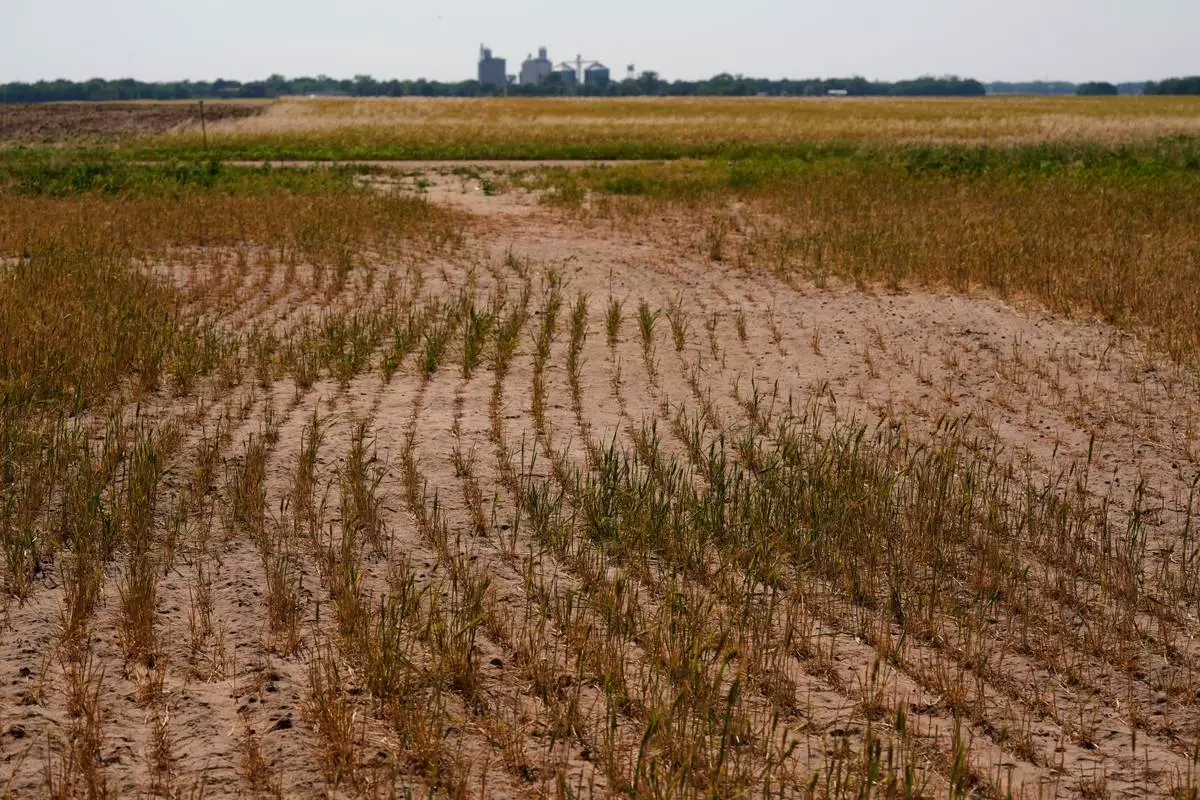
Farmer Vance Ehmke checks a wheat field decimated by wheat streak mosaic virus Friday, May 15, 2026, on his farm near Healy, Kan. (AP Photo/Charlie Riedel)

Wheat plants struggle to survive in a drought-stressed field near Macksville, Kan., Saturday, May 16, 2026. (AP Photo/Charlie Riedel)
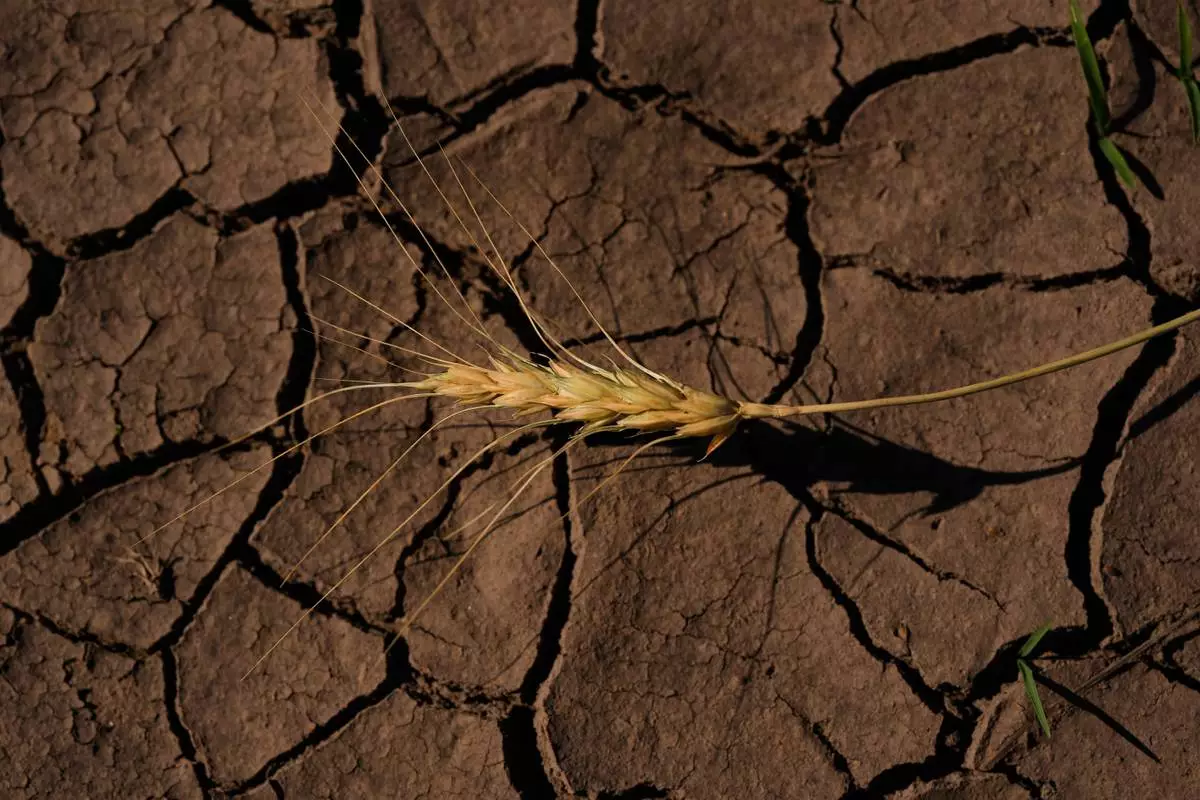
Wheat plants struggle to survive in a drought-stressed field near Macksville, Kan., Saturday, May 16, 2026. (AP Photo/Charlie Riedel)

A drought-stressed stalk of wheat lies on a parched field Saturday, May 16, 2026, near Macksville, Kan. (AP Photo/Charlie Riedel)
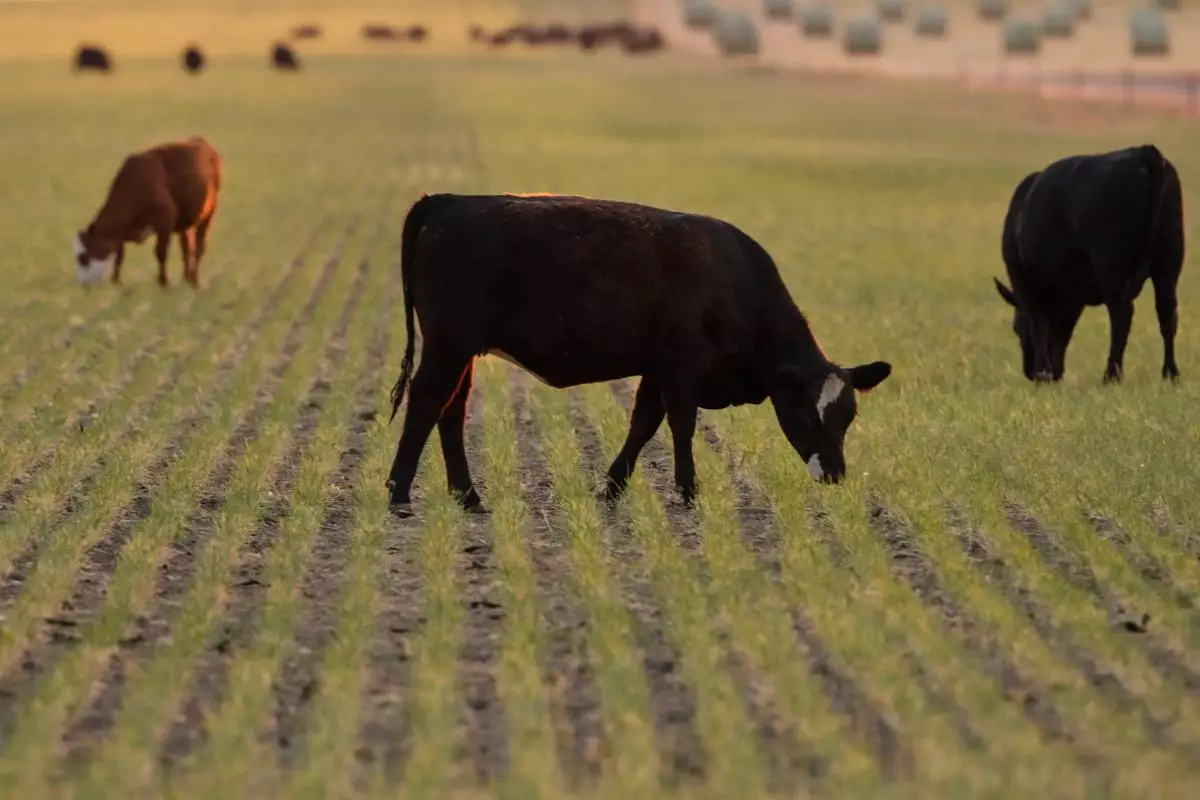
A drought-stressed stalk of wheat lies on a parched field Saturday, May 16, 2026, near Macksville, Kan. (AP Photo/Charlie Riedel)

Cattle graze in a field of abandoned wheat Friday, May 15, 2026, near Cimarron, Kan. (AP Photo/Charlie Riedel)
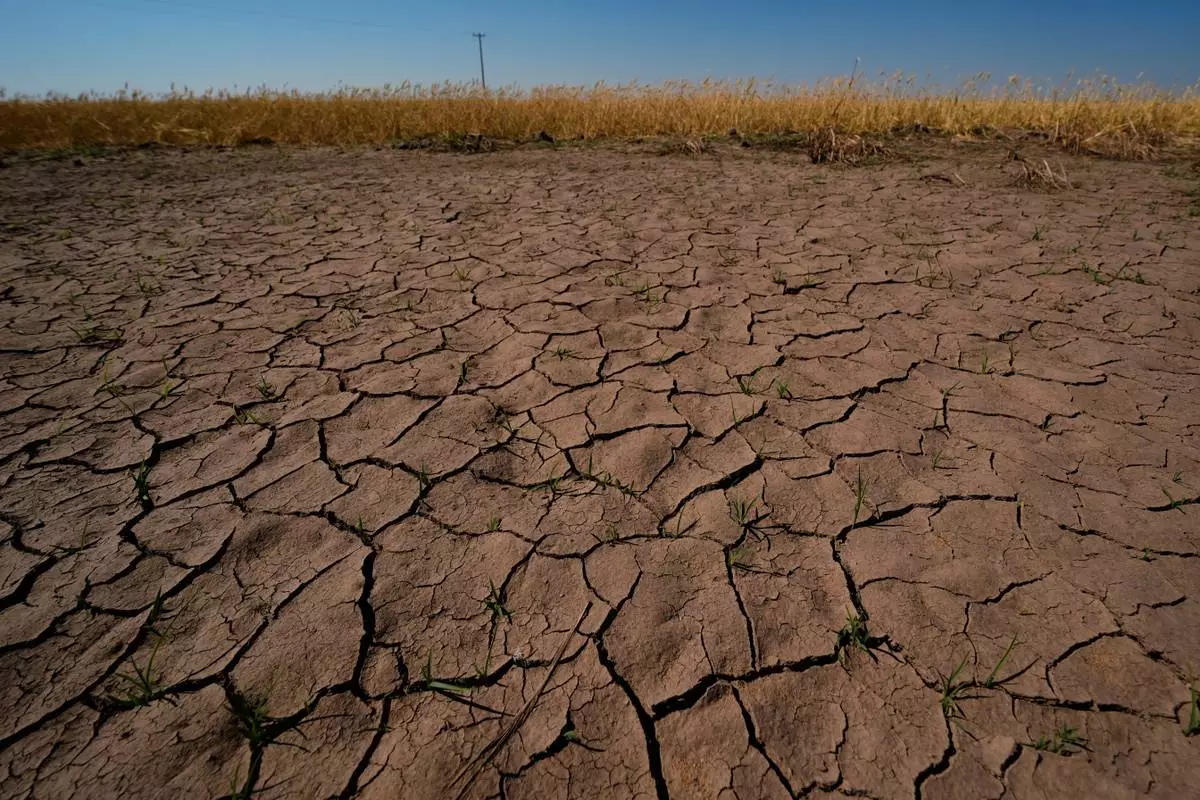
Cattle graze in a field of abandoned wheat Friday, May 15, 2026, near Cimarron, Kan. (AP Photo/Charlie Riedel)

Drought-stressed wheat plants stand adjacent to parched ground in a field near Macksville, Kan., Saturday, May 16, 2026. (AP Photo/Charlie Riedel)
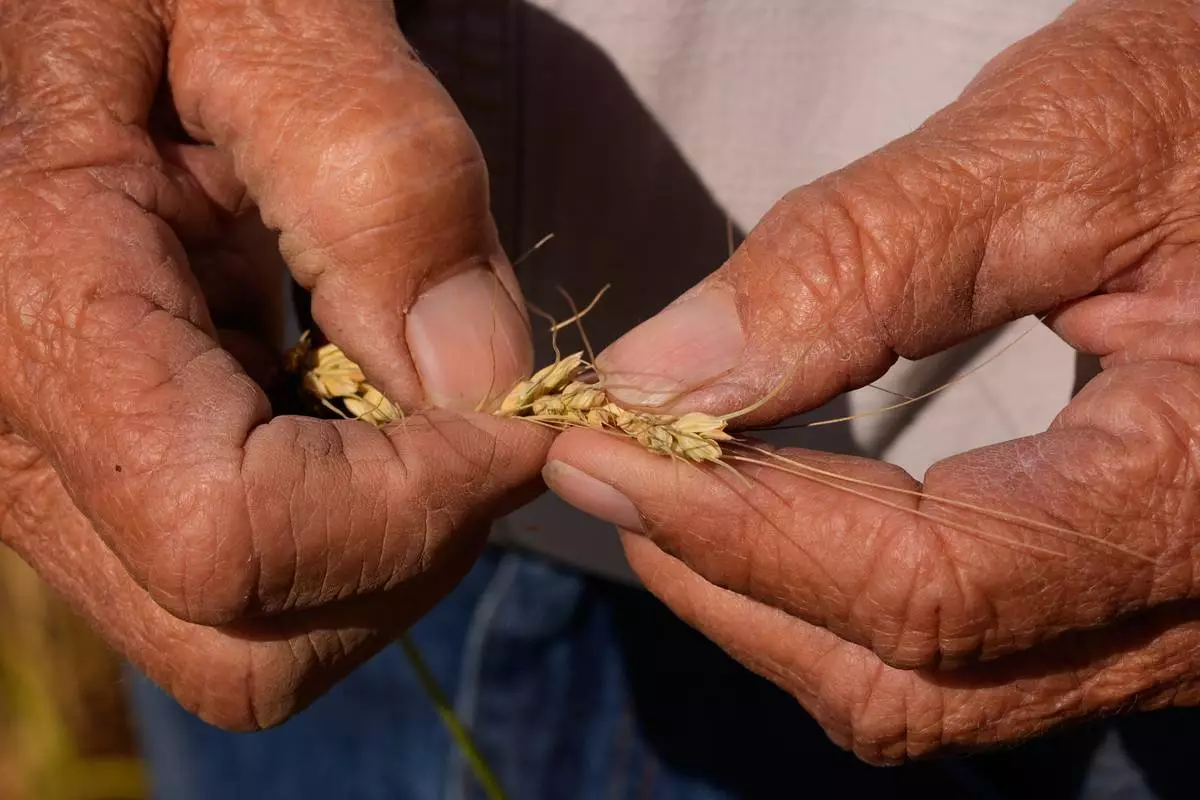
Drought-stressed wheat plants stand adjacent to parched ground in a field near Macksville, Kan., Saturday, May 16, 2026. (AP Photo/Charlie Riedel)

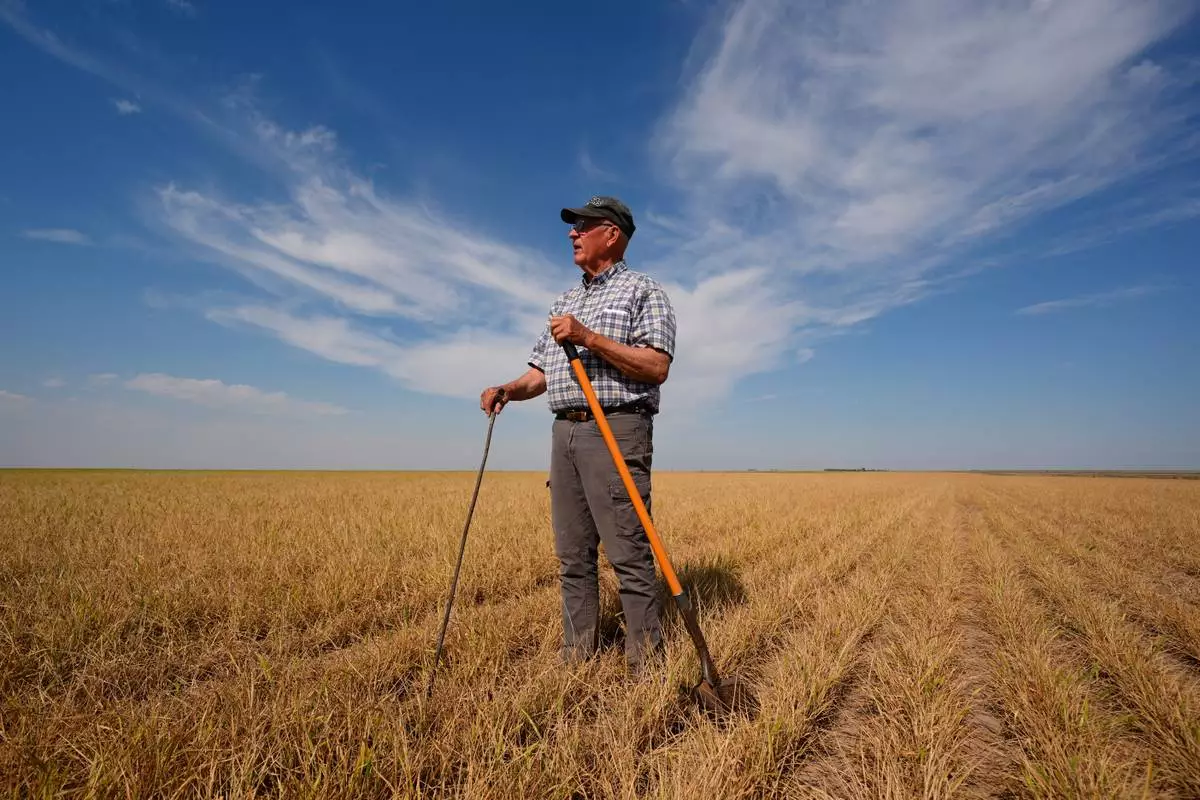
Farmer Orville Williams looks at drought-stressed wheat in one of his fields Saturday, May 16, 2026, near Montezuma, Kan. (AP Photo/Charlie Riedel)
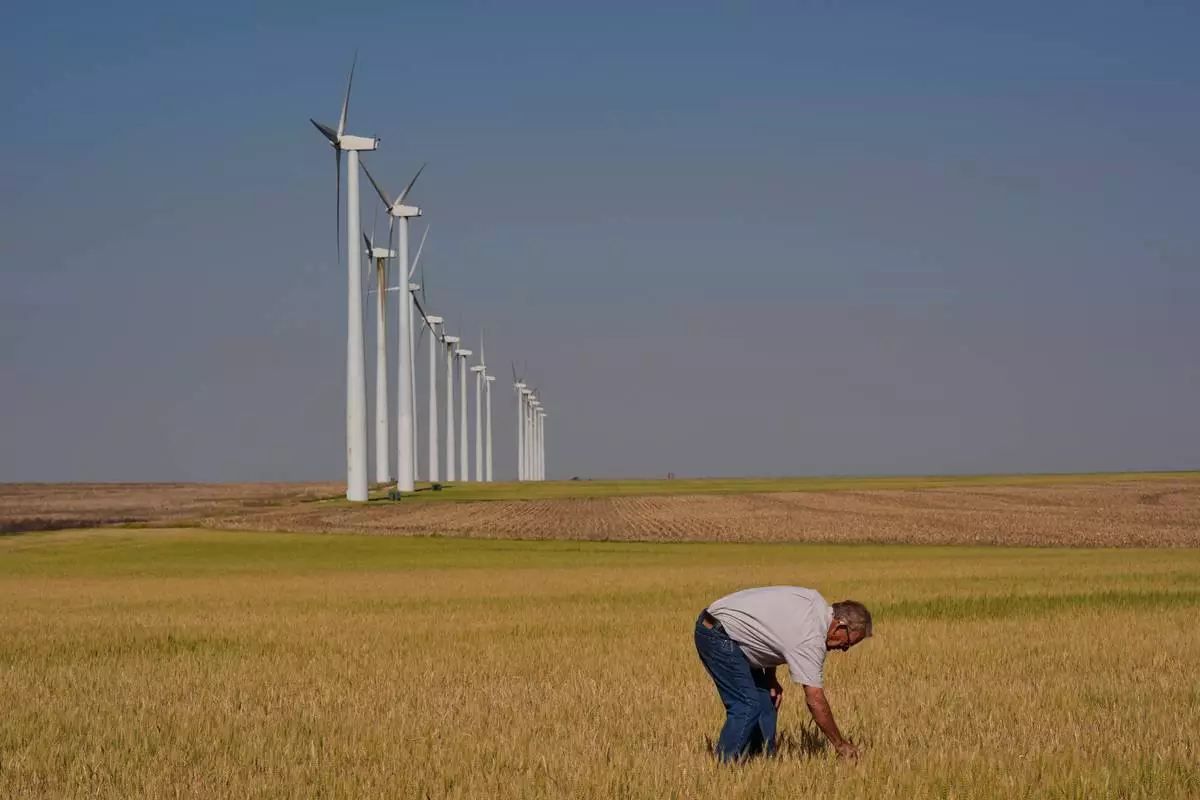
Farmer Orville Williams looks at drought-stressed wheat in one of his fields Saturday, May 16, 2026, near Montezuma, Kan. (AP Photo/Charlie Riedel)
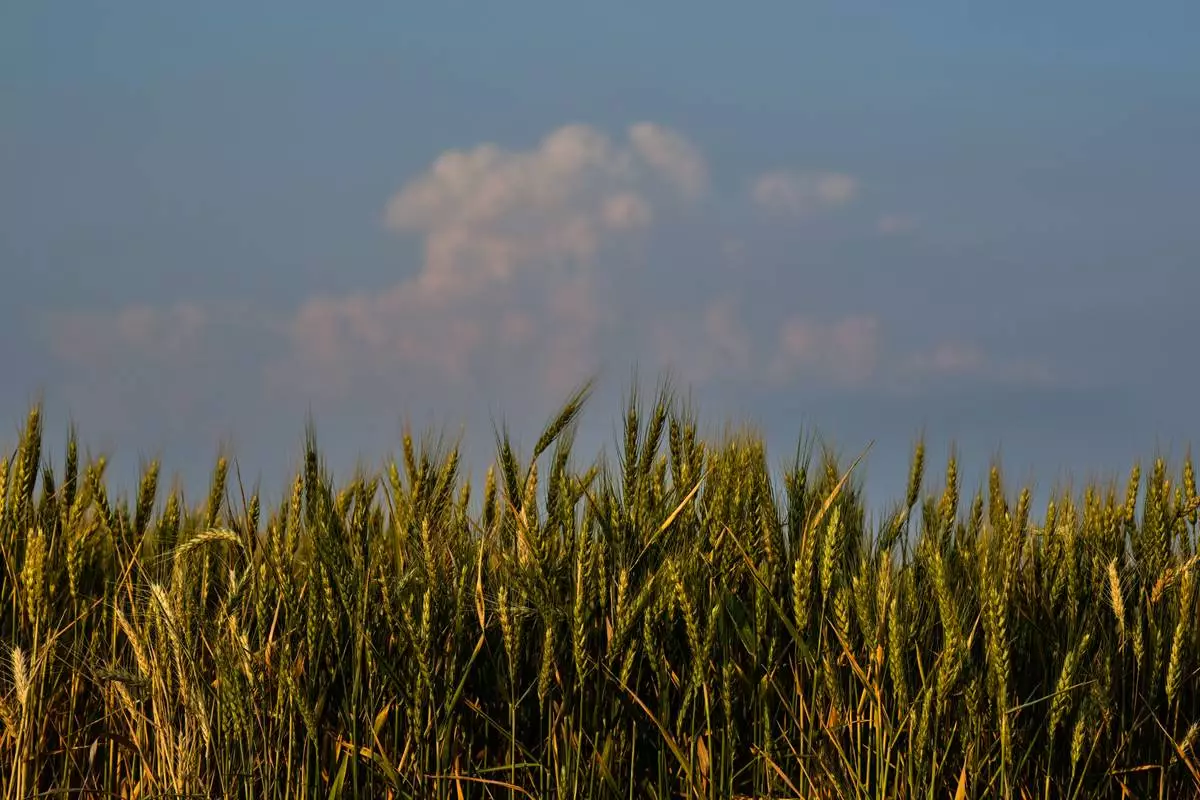
Farmer Orville Williams looks at drought-stressed wheat in one of his fields Saturday, May 16, 2026, near Montezuma, Kan. (AP Photo/Charlie Riedel)

Farmer Orville Williams looks at drought-stressed wheat in one of his fields Saturday, May 16, 2026, near Montezuma, Kan. (AP Photo/Charlie Riedel)

Storm clouds build in the distance beyond a drought-stressed wheat field Friday, May 15, 2026, near Cimarron, Kan. (AP Photo/Charlie Riedel)
Storm clouds build in the distance beyond a drought-stressed wheat field Friday, May 15, 2026, near Cimarron, Kan. (AP Photo/Charlie Riedel)

Farmer Orville Williams sifts powder dry soil as he checks the moisture in a drought-stressed wheat field Saturday, May 16, 2026, on his farm near Montezuma, Kan. (AP Photo/Charlie Riedel)


Farmer Orville Williams sifts powder dry soil as he checks the moisture in a drought-stressed wheat field Saturday, May 16, 2026, on his farm near Montezuma, Kan. (AP Photo/Charlie Riedel)
WASHINGTON (AP) — The Stonewall National Monument, the President's House Site and the Women's Rights National Historic Park are among 11 sites on this year's annual list of the most endangered historic places in the United States compiled by the National Trust for Historic Preservation.

The 2026 list, announced Wednesday, marks America's 250th anniversary with the foundational principle that everyone is created equal as the theme, said Carol Quillen, president and CEO of the nonprofit organization. The 11 sites offer examples of how, over time, Americans have fought against injustice and for equality, she said.

“We wanted to think about those ideas, especially this notion that all human beings are created equal and find places, sometimes unsung places ... that not all Americans routinely think about," Quillen told The Associated Press.

The sites are spread across the United States — from New York and California on the East and West Coasts, to Alabama and Texas in the South, to Michigan in the Midwest and the Four Corners of Arizona, Colorado, New Mexico and Utah in the Rocky Mountain West.

At least three of the sites — Stonewall, the El Corazon church in Texas and President's House in Philadelphia — have been endangered by Trump administration actions.

“We want to save these places," Quillen said, “not just because the bricks and mortar is important but because the stories these places hold are important."

For the first time since the list debuted in 1988, each site on the 2026 list will receive a one-time $25,000 grant to help highlight their connections to the principle that all people are created equal and address the threats they face.

The 11 sites are:

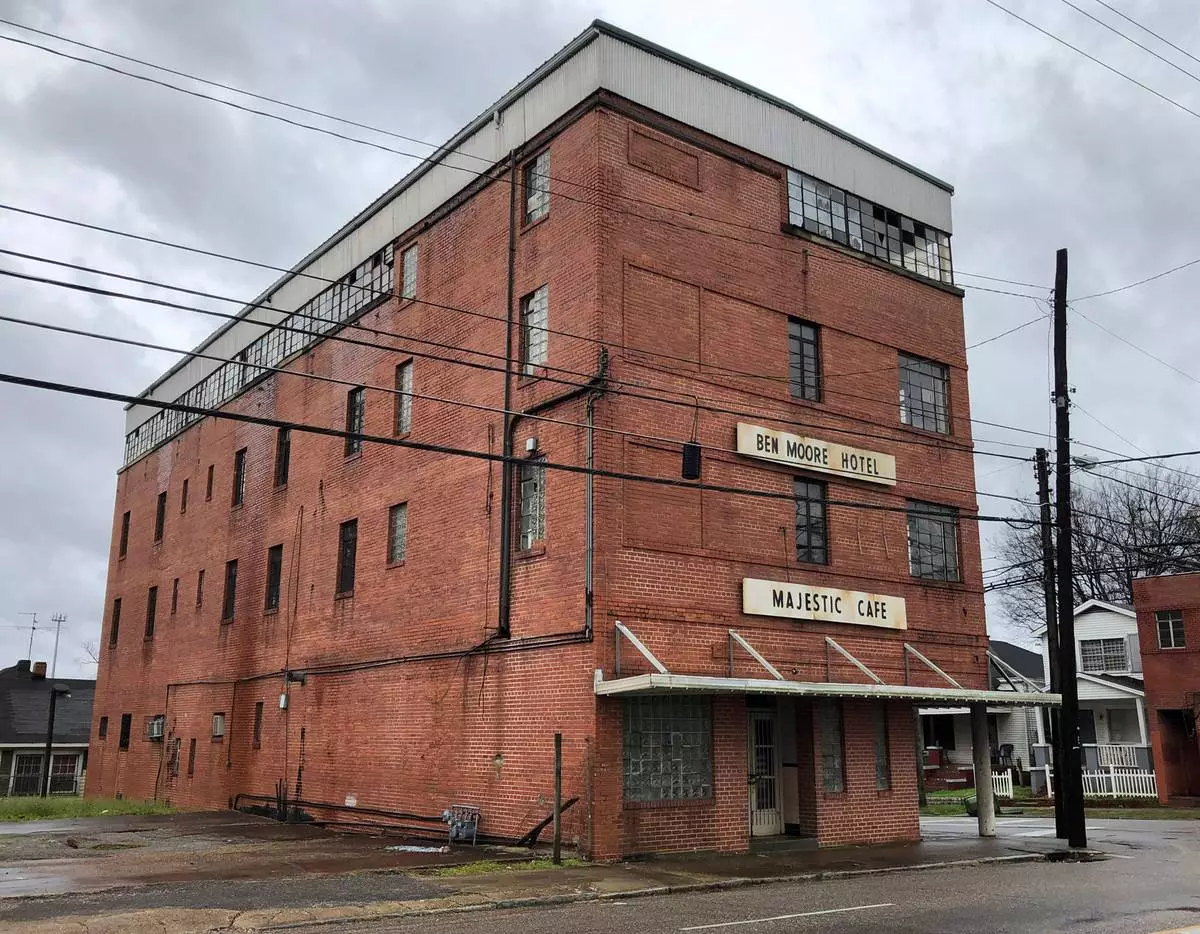
The hotel was a refuge for Black people living under laws that enforced racial separation in the South. Prolonged vacancy has caused structural deterioration and the historic Centennial Hill neighborhood surrounding it faces pressure from development. The hotel housed key players from the Civil Rights Movement, including Dr. Martin Luther King, Jr., and Rev. Ralph Abernathy. The Conservation Fund announced in November that it would help preserve the hotel.

Initially known as the Tule Lake War Relocation Center, it was set up as a camp but later became a segregation center where Japanese Americans who were thought to be disloyal to the United States were imprisoned. The site is now a national monument managed by the National Park Service. Only 37 acres of the 1,100-acre site is protected. Most of it is at risk of permanent alteration from a proposed nearby construction project.

It was the largest immigration port on the West Coast between 1910 and 1940, particularly for immigrants from Asia and the Pacific. Hundreds of thousands were processed, detained and/or interrogated there because of their race. The station currently is threatened by physical, environmental, political and economic factors. Additional funding is needed for structural repairs and programming to increase awareness.

Recognized as the oldest surviving Quaker meeting house in the state, it was built in 1701 to serve as a refuge by a congregation fleeing religious persecution and looking for a safe place to worship. The building has been closed for years and needs significant rehabilitation.

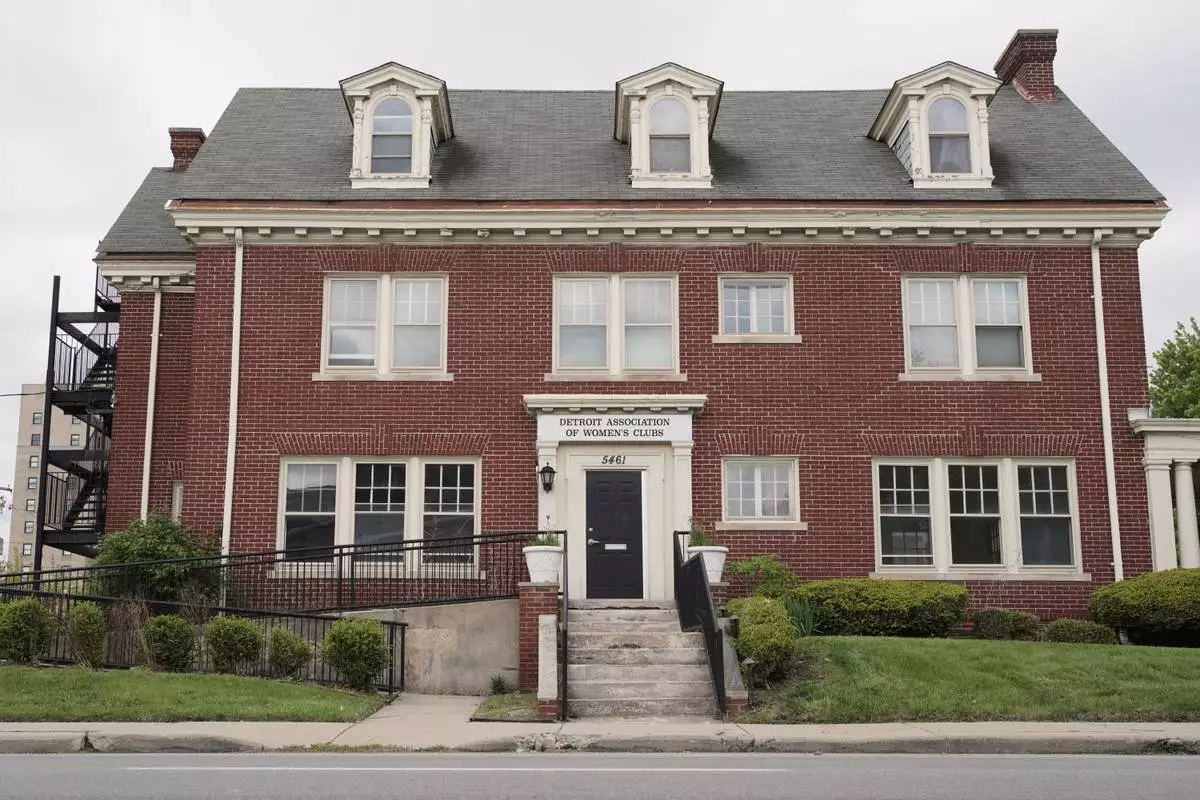
Founded in 1921, the association was one of the first Black organizations in Detroit to own their headquarters building, which was purchased in 1941. But the building has been closed since 2024, when water pipes burst and damaged the interior. Money is needed to help the association reopen the building.

The landscape is an ancestral homeland sustained for over a millennium by the Pueblo and Hopi people, but is threatened by changes to federal land policy that could open up significant portions to oil and gas development. Permanent protections and tribal consultation are needed to protect its cultural integrity.

The park tells the story of the first Women's Rights Convention, held in Seneca Falls, in July 1848. It faces a deferred maintenance backlog of over $10 million. Additional funding and support are needed to help preserve the park as a place to teach visitors about the history of women's rights.

The first and only U.S. national monument dedicated to LGBTQ+ history was the subject of Trump administration actions that saw the rainbow Pride flag removed from its flagpole earlier this year before it was restored. The National Park Service had removed the flag in February, citing federal guidance that limited the agency to displaying only the American, Interior Department and POW/MIA flags. But the Trump administration reversed course in April as it agreed to settle a lawsuit filed by advocacy and historic preservation groups that sought to block the flag's removal.

After Trump returned to office, he ended diversity, equity and inclusion initiatives, and many references to transgender people were excised from the Stonewall monument’s website and materials. Trump’s administration similarly has put national parks, museums and landmarks under a messaging microscope, aiming to remove or alter materials that it says are “divisive or partisan” or “inappropriately disparage Americans.”

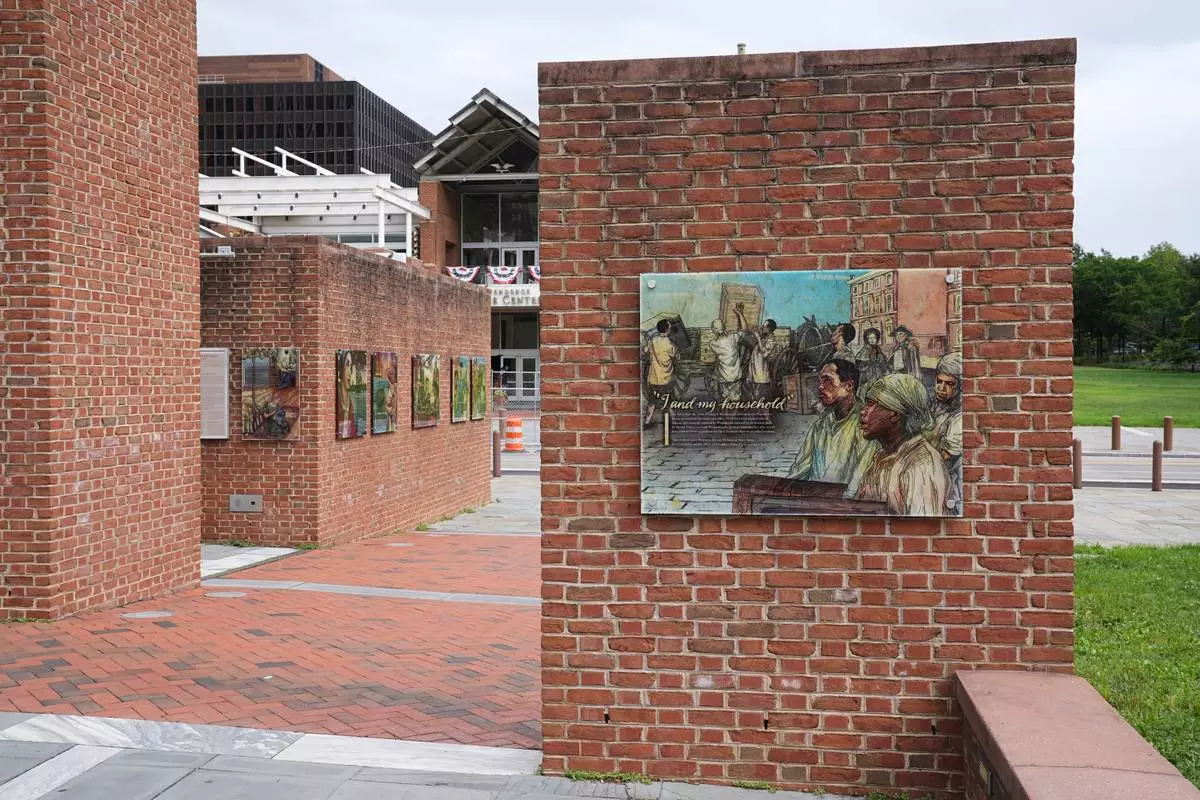
The Trump administration abruptly removed exhibits on the lives of nine people enslaved at the site in the 1790s under George Washington, the first U.S. president, who lived there when Philadelphia served as the nation's capital. The exhibits were taken down as part of a broad effort by the administration to remove from federal properties information it deems “disparaging” to Americans. The issue is currently the subject of litigation between the city and federal government.

The Battle of Hanging Rock was a key battle in the Southern Campaigns of the Revolutionary War and is considered a Patriot victory that helped boost morale and ultimately weaken British control in South Carolina. Only portions of the core battlefield are protected and open to the public, with the area anticipating population growth and increasing development pressures.

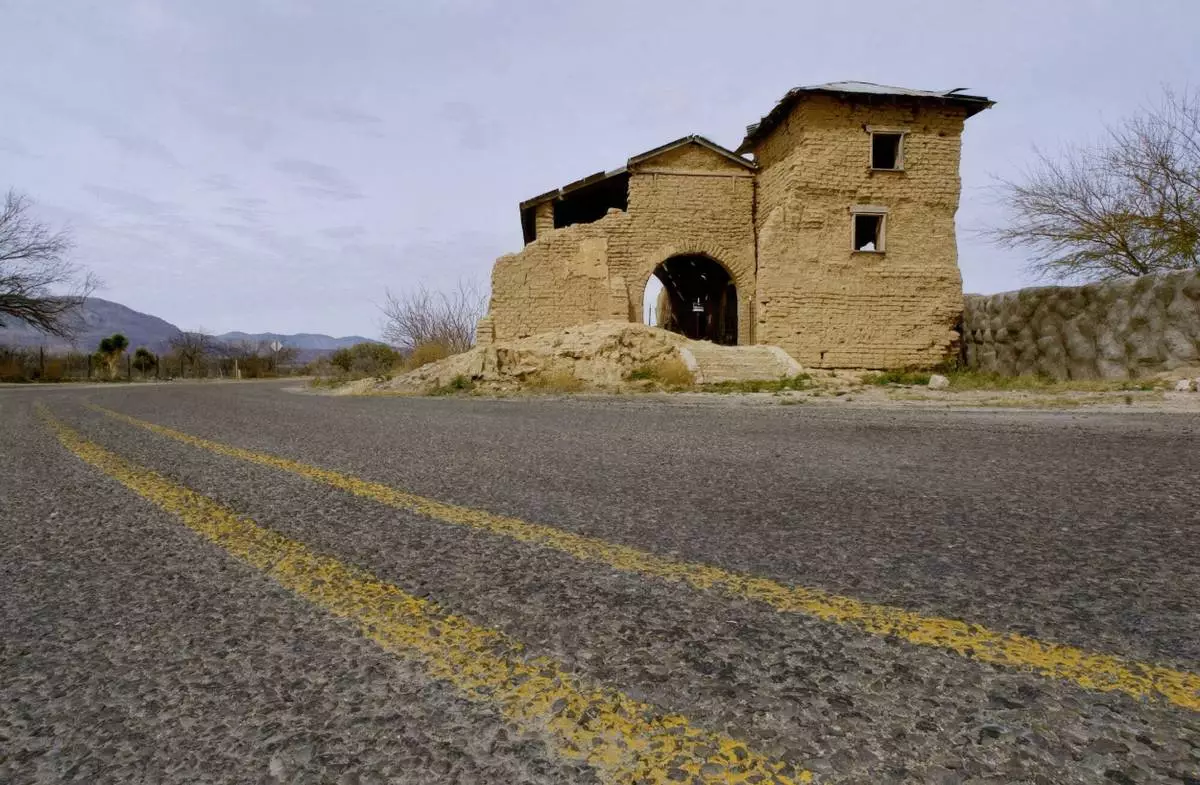
The more than century-old adobe church served as a refuge and place of worship for Mexican and Mexican American farming communities on both sides of the U.S.-Mexico border along the Rio Grande River. Vacant since the 1950s, the structure has benefited from continued restoration provided by the nonprofit Friends of the Ruidosa Church but remains threatened by proposed construction of a U.S. border wall that could come within a few hundred yards of the property.

Carol Quillen, the president of the National Trust for Historic Preservation, poses for a photo, Wednesday, May 13, 2026, in Washington. (AP Photo/Julia Demaree Nikhinson)

Carol Quillen, the president of the National Trust for Historic Preservation, poses for a photo, Wednesday, May 13, 2026, in Washington. (AP Photo/Julia Demaree Nikhinson)

The Detroit Association of Women's Clubs building is seen Wednesday, May 13, 2026, in Detroit. (AP Photo/Mike Householder)

The Detroit Association of Women's Clubs building is seen Wednesday, May 13, 2026, in Detroit. (AP Photo/Mike Householder)

FILE - The closed Ben Moore Hotel, is photographed Feb. 12, 2019, in Montgomery, Ala. (AP Photo/Jay Reeves, File)

FILE - The closed Ben Moore Hotel, is photographed Feb. 12, 2019, in Montgomery, Ala. (AP Photo/Jay Reeves, File)

FILE - Texas State Highway 170 passes The Mission del Sagrado Corazon in Ruidosa, Texas, Feb. 9, 2005. The church once had a second tower on the front left like that one on the right. The pile of mud debris from the collapsed tower can still be seen on the front left. (AP Photo/Tony Gutierrez)

FILE - Texas State Highway 170 passes The Mission del Sagrado Corazon in Ruidosa, Texas, Feb. 9, 2005. The church once had a second tower on the front left like that one on the right. The pile of mud debris from the collapsed tower can still be seen on the front left. (AP Photo/Tony Gutierrez)

FILE - An informational panel is seen at President's House Site Aug. 19, 2025, in Philadelphia. (AP Photo/Matt Rourke)

FILE - An informational panel is seen at President's House Site Aug. 19, 2025, in Philadelphia. (AP Photo/Matt Rourke)

Recommended Articles