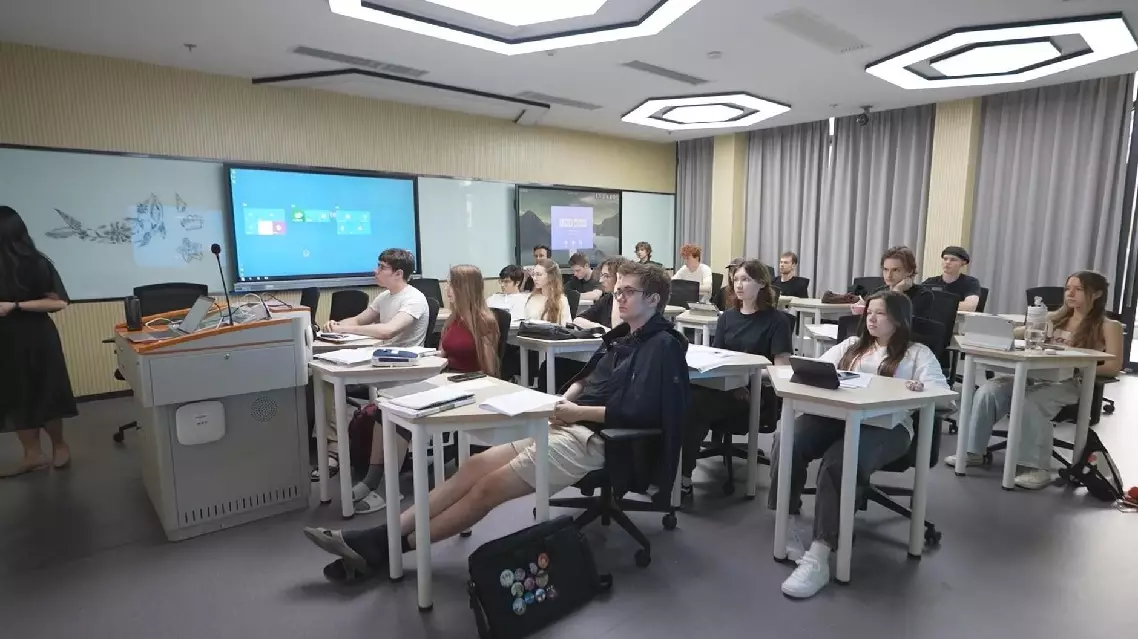
Teachers and students at a Chinese-Russian cooperative university in south China's Shenzhen have hailed how the cross-cultural approach at the institution has helped them to deepen their understanding and broaden their minds through educational exchanges, as the university this year marks its milestone 10th anniversary.
The Shenzhen MSU-BIT University in the southern Guangdong Province was established back in 2016 as a joint venture between the Moscow State University (MSU) and the Beijing Institute of Technology (BIT), two leading academic institutions in their respective countries.
Over the past decade, the university has borne witness to deepening educational cooperation between China and Russia, welcoming thousands of students through its doors.
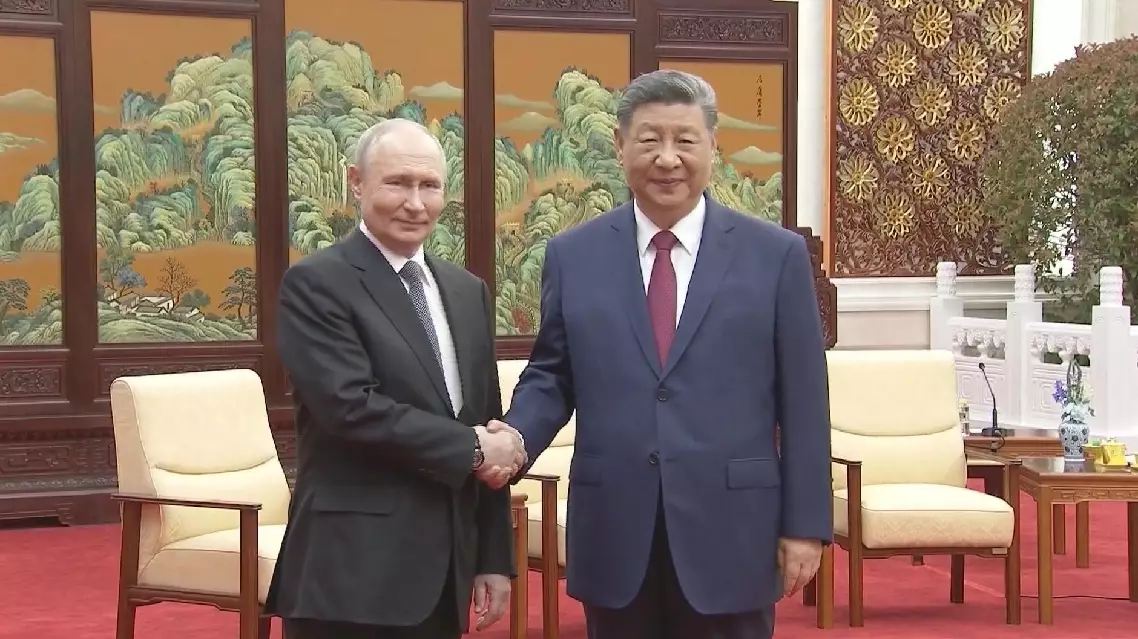
Ties between the two sides are in the spotlight this week as Russian President Vladimir Putin on Wednesday wraps up a two-day state visit to China at the invitation of Chinese President Xi Jinping, with this marking Putin's 25th visit to China.
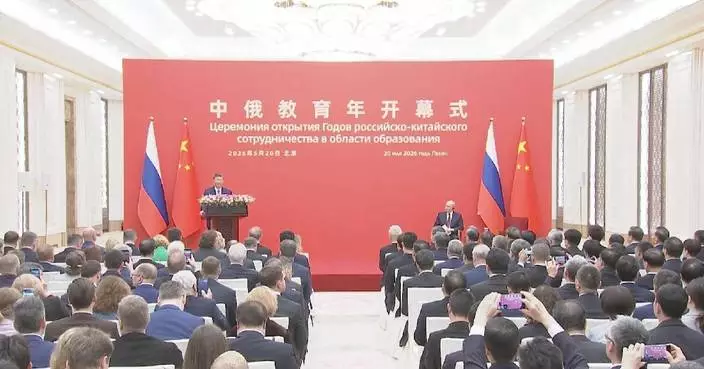
There is also extra emphasis on education with the two countries having designated 2026 and 2027 as the "China-Russia Years of Education", an initiative which is expected to inject new momentum into bilateral exchanges in education and people-to-people cooperation.
Elena Samareva is a senior lecturer who has been teaching the Russian language at the Shenzhen MSU-BIT University since 2019.
For Samareva, the vision of the university's cooperative approach is reflected directly in the classroom, where she has witnessed how deepening educational cooperation between the two countries is shaping students' overall learning experiences.
"Here we try to be a little bit like Russian-style teachers. We understand everything that we were told before coming here, we respect the rules of the country. They don't feel offended or losing face or something like that. They understand that we try to help, and they try to say their opinion without thinking: 'Oh, maybe I say something wrong, or I should keep silent.' No, they try to speak," she said.
As a sign of the university's international ethos, undergraduate courses are taught in Chinese, Russian, and English, with all students required to study Russian.
For many Chinese students, mastering the language can be a significant challenge. Samareva has introduced a range of innovative teaching methods, including bilingual podcasts as part of the Russian language approaches that students say have greatly supported their learning experience.
"Anytime, no matter what, if you have a question and approach a teacher, they will be very considerate and give you an answer," said Liu Chengquan, a student studying economics at the university.
As educational cooperation is continually enhanced, there are now more than 180 universities across China offering Russian language programs. Russia itself hosts over 60,000 Chinese students, while there are more than 20,000 Russian students currently studying in China.
Students from both countries are increasingly benefiting from the expanding bilateral partnership in education.
"The biggest gain is the chance to deeply engage with teachers from different cultural backgrounds. Russian and Chinese academic traditions are different, and so is what you take away from them," said Du Binyuan, another student at the university.
Samareva also spoke of a more immersive style of learning, as students go beyond the textbooks and the classroom to explore culture more deeply, an approach which is helping create stronger bonds between both sides.
"Our students, they're involved in not only in the process of teaching, they're involved in the process of studying everything about Russian culture, I think now it's together. So many, many times I say that I invite you to 'us', not invite you to 'China', for example, to my relatives and so on," she said.
China-Russia educational cooperation empowers teachers, students in Shenzhen